

Headline
OPINION: Ijebu And Their Ojude Oba




By Lasisi Olagunju
Persons who answer Ijebu typically party as hard as they work. They sweat out their heart to make money; they rock their money in ways that add value to their personal and group existence. Their pitch could be high, it could be mid or low; what they choose depends on what point they want to prove. In doing these, they skillfully walk the thin line of balanced responsibility. When Chief Obafemi Awolowo transited to immortality in May 1987, Fuji mega star, Kollington Ayinla, sang about Ijebu’s unmatchable ability to balance their acts. He said “the yams of the Ijebu are six. They sell two; they eat two. The remaining two they give to their gods (Isu méfà ni’su Ìjèbú/ Wón nta méjì; wón nje méji sí’kùn ara won/ Ó l’Órìsà tí wón nfi méjì t’ókù bo…”).
I find them a fascination. I am writing this not because I am Ijebu; I am not one of them. I am a proper Òyó-Yoòbá. Never poor players too; but we are a people who can be loud and subtle at the same time. My lineage is Ìlòkó, Erúmosá omo aj’óbalólele/ Tètù o j’óba l’óhùn èrò (offspring of forebears who never answered the king softly). If you think not speaking softly to the king should have consequences, it means you’ve not heard Oyo say: Màá wí, màá wí/ oba kìí mú òkorin (speak out, the king does not arrest the bard).
Malawians say “life is when you are together, alone you are an animal.” I don’t know if the Ijebu have an anthem – old or new. But I know their oríkì glides with their gait: Oni mi je nu’bu omo Olúweri/ Omo Aj’ebu j’osa de Igbobini/Omo As’ale jeje booni nobinren/A b’aya kun’le tititi (Rovers of the deep sea, offspring of Oluweri/ Rovers of deep waters as far as Igbobini/Whose forebear indulged concubines as if not married/Whereas his home is packed full of women). If you want more of this, my source, Ayinde Abimbola’s ‘Poets as Historians’ has the oríkì in full.
Flavour, the musician in his ‘Big Baller’ asks: “How much is money?” He goes on to assert that “it’s nothing.” Flavour has probably not met them – the Ijebu. They say they are money (Kékeré Ijebu owó/àgbà Ijebu owó). They are wealthy because they don’t walk alone; they bond, holding hands in life and in business. They band in dancing too. They lace their drumbeats with sèkèrè – the netted, rattling gourd which does not go on outings of shame. Their drums, in shrill and mellow tones, remind them of their forebears who had been spending dollars before the Oyinbo man arrived these shores. For them, it is “premium or nothing.” Their neighbours secretly envy them.
MORE FROM THE AUTHOR: OPINION: Tinubu’s ‘Taste’ Gerontocracy
Three days after the Ileya festival last week, the Ijebu-Yoruba, home and abroad, staged their annual breathtaking Ojude Oba festival. Their paramount ruler, the Awujale, Oba Sikiru Adetona, aged and glorious, sat at the event receiving the tens of age-grade groups of his male and female ‘children’. Those ones, the ‘regbe-regbe’, gaily dressed, came around to pay homage to their oba. They do it every year and there is no sign that they will ever get tired of doing so. On horse backs there were ‘aristocrats’ said to be from warrior families in Ijebuland. Others from other illustrious and not so illustrious segments of the land staged their own acts in colours that dim the rainbow. People danced; horses pirouetted; the ground quaked.
They came out heavier this year than they ever did, and so heavy have been the reviews. There have been ‘disputes’ and ‘fights’ on several internet platforms on the event. Some question the ‘sanity’ and the ‘wisdom’ in spending so much just to show how wealthy a people are. Some of the critics insist Ojude Oba is nothing more than an annual display of ostentation and flamboyance. Some say they only come home to party, they don’t build factories and set up businesses at home; others say they should spend on renewing the rust of their city. I reacted in a Yoruba leaders’ WhatsApp group at the weekend that the bonding across age groups that we see yearly at Ojude Oba, to me, trumps all charges of ostentatious display of wealth.
I ask if the value of everything should be calculated in naira and kobo, brick and mortar? One of the greatest bequests of Ancient Greece to the modern world is their art – their drama and festivals. But the drama and festival-loving Greeks were sternly rebuked for investing generously in these ‘wasteful’ items of art. Read David Pritchar’s ‘Costing Festivals’. Pioneer economic historian, August Boeckh, attacked Athenians for “squandering away public revenue in shows and banquets…” Plutarch accused third-century Athenians of spending more on the production of tragedies (drama) than on the maintenance of their empire. Plutarch, in his ‘On the Glory of Athens’ wrote that: “If the cost of the production of each drama were reckoned, the Athenian people would appear to have spent more on the production of ‘Bacchaes’ and ‘Phoenician Women’ and ‘Oedipuses’ and the misfortunes of ‘Medeas and Electras’ than they did on maintaining their empire and fighting for their liberty against the Persian.”
MORE FROM THE AUTHOR: OPINION: Homeless Kids Invade South West
If you are a critic of Ojude Oba and similar festivals, and you hold that Plutarch was right and Boeckh’s judgment justified, think of African literature in English without Greek texts: We have J.P. Clark’s ‘Song of a Goat’ adapted from the Greek’s ‘Agamemnon’ which was authored by Aeschylus. We have Wole Soyinka’s ‘The Bacchae of Euripides’ which has Euripides’ ‘Bacchae’ as its source text. Ola Rotimi’s ‘The Gods Are Not to Blame’ is rooted in Sophocles’ Oedipus Rex. Felix Budelmann’s ‘Greek Tragedies in West African Adaptations’ has a long list of this class of works. Even, ordinarily arrogant western cultures have no problem admitting that Greek tragedies are part of their cultural heritage. Yet, there was a time when expenditures by Ancient Greece on the arts were termed wasteful and thoughtless. One day soon in the future, glamorous Ojude Oba and the other festivals that we pillory today will serve as the cornerstone of our cultural economy.
Ojude Oba started as an extension of the annual Muslim sallah celebrations. Today, it has evolved into a massive secular event so much that even insular Christian Pentecostals soak their souls in it. It should be an applause for that festival that ‘pious’ Christians who won’t eat sallah meat on Sunday saw nothing wrong feasting with Muslims on Tuesday.
We yearly watch these united people going home to ‘display’ without fears. What they do annually is a proverb for other peoples who have abandoned their own hometowns to ‘witches’ and ‘wizards’. Such peoples should ask the Ijebu how is it that they go home and wine and dine and do not get eaten. Ojude Oba teaches a lesson in knowing that what kills is not death but the fear of death.
The Yoruba person ordinarily values home. And, to them, home is where the unbiblical cords and the placentas of a child’s ancestors are buried. You will understand this when you look at the Owu-Yoruba, for instance. Dispersed and scattered everywhere by an avoidable war 200 years ago (1821), they still spend their love on Orile Owu, their destroyed homestead located in present day Osun State. Someone once told me that M.K.O. Abiola, billionaire Egba-Gbagura man, remembered to plant his bookshop somewhere at Ojoo, Ibadan, where his Gbagura story started over two centuries ago.
MORE FROM THE AUTHOR: OPINION: Flying Gods, Lying Prophets And Power Bandits
Justice Kayode Eso (God bless his soul) was an Ijesa man who lived his years mainly in Ibadan. He once laughed at the ignorance of a friend who queried why he had a home in Ibadan, Oyo State, and another in his hometown, Ilesa, Osun State. The experience is captured in the Foreword he wrote in Lillian Trager’s ‘Yoruba Hometowns’ (2001: XI-XII). Justice Eso’s words speak better: “A friend, seeing the picture of my regular residence, was also shown the picture of my second home built in my local community. He could not resist asking why one should have two homes.” The late jurist recounted that experience while discussing questions raised by Trager’s American students on why the Yoruba have so much attachments to their hometowns. The questions, according to Trager, are: “Why do people who no longer live in a place, who may never have lived there, continue to spend their money and time there? What is the motivation for someone who may have an important job, who is well known and involved in urban organizations to come home to a small city or rural town or village?”
Around year 2000 or 2001 when Prince Tunde Ponle was building his MicCom Golf Hotels and Resort in his hometown, Ada, Osun State, I interviewed him and asked him if he did not think the investment could be a waste. He responded that one of his sons also expressed the same fears but his position was that if you have money and you refuse to develop your hometown, when you die, your corpse will be taken to that undeveloped place. I nodded. He looked at me and smiled and we switched to other issues.
My people say that if a child offends the sun outside, they should have the shade of home to run to (bí omodé bá d’áràn oòrùn, o ye kí ó rí ‘bòji ilé sá sí). We also say that a child who throws home away has erected a hanger for tribulation. One Ijesa person told Lillian Trager that “at present in Nigeria, the only place you have security, the only place you can be sure of, is your hometown. That is the place where you are known, and where people will protect you.”
People make money and willfully get lost abroad. But Ijebus do not have that problem of not going back home to celebrate their success and uplift their land. The physical celebration of that spirit is what we see annually in their Ojude Oba. The involvement of their big men and businesses, particularly Dr. Mike Adenuga and his Globacom in sponsoring the event since forever – and till eternity – attests to that spirit. There is no part of Nigeria without big men and women. The difference is in what difference they make in their people’s lives. Social scientists would insist that our federation’s constituent parts are states. Some would say they should be regions; yet, some stress that they are ethnic groups. I say they are communities built on what I.A. Akinjogbin conceptualized as the “ebi system.” When every elephant and every ant in every community take adequate care of the life of their home and of their community, we are likely to have a country.




Headline
Four Nations Back Permanent African Seat On UN Security Council

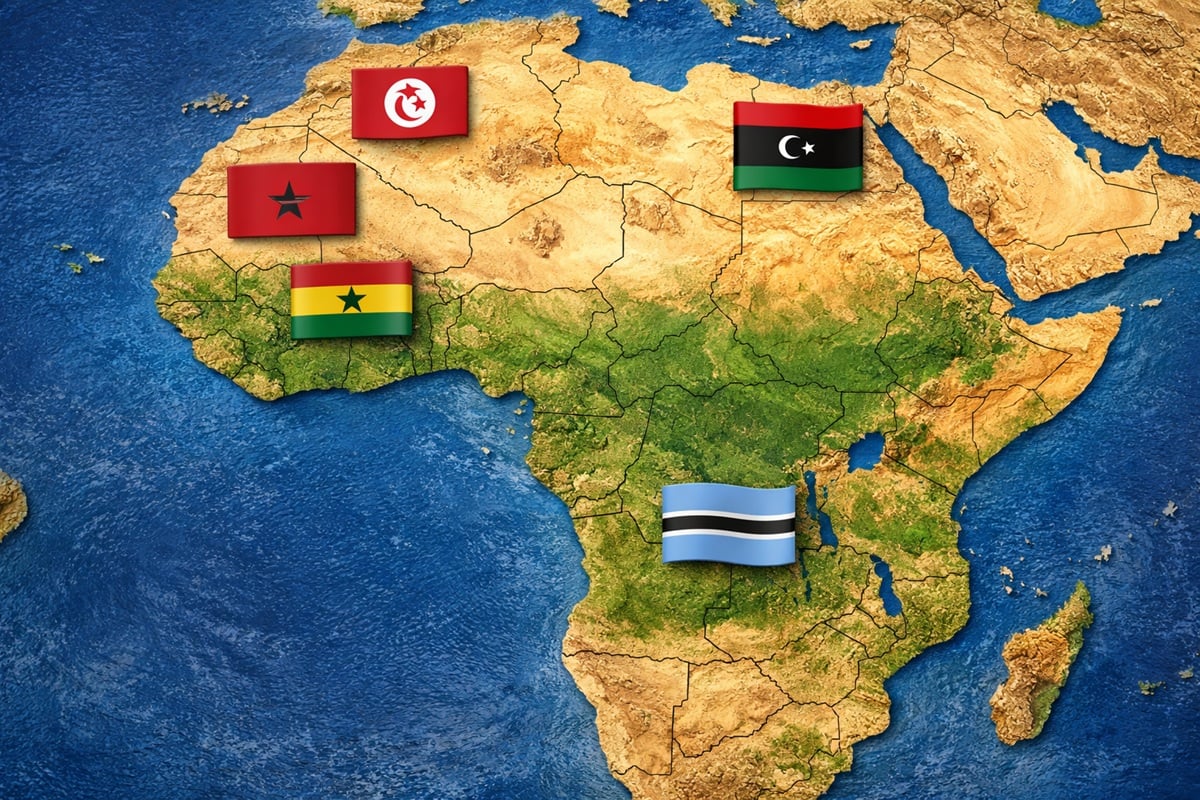
Four nations, Brazil, Germany, India and Japan, have backed a permanent African seat on the United Nations Security Council (UNSC), calling for urgent reform of the Council to reflect contemporary geopolitical realities.
The four countries, under the Group of Four (G4), made their position known in a joint statement issued after their foreign ministers met in New York on Tuesday on the margins of the 81st session of the UN General Assembly.
The ministers said reform of the Security Council had become more necessary than ever, given the increasingly challenging global geopolitical environment.
They said the Council was currently unable to effectively discharge its core responsibility of maintaining international peace and security, with its representativeness, legitimacy, credibility and efficacy in question.
READ ALSO: Six Hidden Health Benefits Of Unsweetened Zobo
According to them, the Council’s eight-decade-old structure was “not reflective of contemporary geopolitical realities” and had become an impediment to addressing present and future challenges to international peace and security.
The ministers stressed that expansion of the Security Council in both the permanent and non-permanent categories was central to meaningful reform.
They called for greater representation of under-represented and unrepresented regions and groups, particularly Africa, Asia-Pacific, and Latin America and the Caribbean.
The four nations also welcomed the reform model presented by the African Group during the Inter-governmental Negotiations (IGN) on Security Council reform in the 80th session of the General Assembly.
READ ALSO: Italy PM Meloni Announces Plan To Ban Niqabs, Burqas In Schools
They reaffirmed their support for Africa’s case for enhanced representation on the Security Council, including in the permanent category.
The ministers, however, expressed concern over the slow pace of negotiations, noting that the IGN process had produced no concrete outcome towards substantive Security Council reform despite 18 years of discussions.
They also expressed reservations over the presentation of what they described as a “bridging proposal” before the commencement of text-based negotiations.
According to them, the proposal failed to take into account the position of a clear majority of UN member states in favour of expansion in both permanent and non-permanent categories.
READ ALSO: Gridlock: Hundred Of Passengers Stranded Along Lokoja-Abuja Road
The ministers further maintained that consensus should not be the benchmark for decision-making on Security Council reform, citing the UN Charter and the mandate of the IGN.
They said Brazil, Germany, India and Japan would work with other reform-oriented groups to develop a consolidated model that reflects the views of the majority of UN member states.
The four countries said commencing text-based negotiations should be treated as a priority towards achieving substantive reform of the Security Council.
They said this would help restore the Council’s representativeness, legitimacy, credibility and effectiveness, while strengthening the multilateral system with the UN at its centre.
READ ALSO: NDLEA Intercepts Colos Shipments From UK, Uncovers Opioids In Loaves Of Bread, Speakers
The ministers also said discussions on reform should not be restricted to the IGN, expressing willingness to engage the wider UN membership through other platforms, including the General Assembly.
They pledged to continue coordinating closely during the 81st session of the General Assembly and directed their officials to follow up on the discussions.
Progress on the issue is expected to be reviewed at the next Director General-level meeting in New Delhi.
Headline
Moving Abroad? Essential Things Nigerians Should Pack Before Leaving Nigeria


Moving abroad from Nigeria is one of those life changes that makes a suitcase suddenly feel much smaller.
What looks like enough luggage in your bedroom can seem painfully limited once you start choosing between clothes, documents, electronics, personal care items and the small things that make an unfamiliar place feel like home.
That is why a good diaspora relocation packing list guide should not be about squeezing everything possible into your bags. It should help you decide what deserves precious luggage space, what can be bought after arrival and what should never go into your suitcase in the first place.
The distinction matters because airlines have strict baggage limits, while destination countries have their own customs rules.
Baggage allowances vary by airline, route, cabin class and aircraft, while individual checked bags are generally recommended not to exceed 23kg for handling reasons. Power banks and spare lithium batteries, for example, must generally remain in carry-on baggage rather than checked luggage.
Start with documents, not clothes
Before thinking about clothing or food, create a secure travel folder for the documents you cannot afford to lose. Your passport, visa or residence documentation, flight information, accommodation details, employment or school documents, insurance information and important contact details should stay accessible throughout the journey.
Carry originals where necessary and keep encrypted digital copies or secure backups of important documents. If you are relocating with children, their birth certificates, school records, vaccination documentation and immigration papers may also be important depending on the destination and circumstances.
Do not put irreplaceable documents in checked luggage. A suitcase can be delayed, misrouted or damaged, but losing access to your passport or immigration paperwork at the same time can turn a manageable travel problem into a serious one.
Pack for your first two weeks, not your entire future
One of the easiest ways to overpack is to imagine every possible situation you might encounter after moving. Resist that temptation. Your first luggage should support your transition, not reproduce your entire Nigerian household overseas.
Pack enough everyday clothes for your initial period, but consider the climate of your destination before filling a suitcase with Nigerian weather essentials. A person moving to the UK in winter, for instance, needs a very different wardrobe from someone moving to a warmer country.
The better strategy is to prioritize versatile clothing that can be layered and reused. Comfortable shoes, underwear, sleepwear, basic toiletries and weather-appropriate outerwear deserve more attention than multiple outfits you may rarely wear.
READ ALSO: UK Skilled Worker Visa: 10 Ways To Prepare For Your Interview
This also reflects advice commonly shared in relocation communities: keep an “open first” collection of essentials so you are not searching through every box or suitcase when you are exhausted after arrival. The practical principle is simple, make your first few days easy before worrying about everything else.
Take the Nigerian items that are genuinely difficult to replace
Food is where relocation packing becomes particularly personal. Nigerians living abroad frequently mention missing familiar foods and ingredients, especially regional items that may be difficult to find or expensive in ordinary supermarkets.
Discussions among Nigerians abroad show that the issue is not necessarily basic rice, pasta or common spices; it is often the distinctive ingredients and flavors associated with home.
That does not mean you should fill an entire suitcase with food.
Instead, prioritise small quantities of dry, commercially packaged items that are legal to import into your destination and that you genuinely use. Depending on the destination, these could include permitted spice blends, seasoning, certain dried ingredients or packaged Nigerian foods.
However, never assume that because something is dry, packaged or commonly carried by other Nigerians, it is automatically permitted. Import rules differ significantly between countries.
For Great Britain, for example, travelers can bring some packaged foods such as biscuits, chocolate, pasta and packaged soup, while meat, dairy, fruits, vegetables, nuts and seeds can be subject to restrictions.
READ ALSO: FULL LIST: US Warns Citizens Against Travelling To 23 Countries
The EU is stricter in several respects. Travelers arriving from outside the EU generally cannot bring meat or dairy products into the bloc, although specific exemptions apply to certain products and circumstances.
So if you are relocating from Nigeria to London, Paris, Amsterdam or another destination, check the destination’s official customs rules before sealing that bag of food.
Do not sacrifice luggage space for easily replaceable goods
A relocation suitcase should contain things that solve a problem, preserve something important or save you meaningful money—not everything you happen to own.
Basic toiletries, ordinary kitchen utensils, cheap hangers, bulky bedding and generic household products can often be purchased after arrival. Carrying large quantities simply because they are cheaper in Nigeria may not make economic sense once excess-baggage charges and limited suitcase space are considered.
The same applies to appliances. Check the electrical system and plug standard of your destination before taking Nigerian appliances abroad. A device that is cheap to replace may not be worth carrying if it is incompatible with the local voltage or requires additional equipment.
Ask yourself a blunt question before packing anything: Would I still pay to transport this if I had to buy extra luggage for it? If the answer is no, leave it behind.
Give electronics and valuables special treatment
Your laptop, phone, chargers, external drives, camera equipment and other essential electronics should be packed with both security and airline rules in mind.
READ ALSO: FULL LIST: Nigeria, 49 Others Affected By US’ $20,000 Visa Bond Policy
Keep valuable electronics in your carry-on whenever the airline permits it. IATA specifically advises passengers not to place valuable or irreplaceable items in checked baggage, while spare batteries and power banks have specific restrictions because of fire risk.
Keep chargers organized in a small pouch rather than scattering them throughout your luggage. If you use several devices, label unfamiliar cables before leaving Nigeria; it sounds trivial until you are sitting in temporary accommodation with three identical USB cables and no idea which one powers your laptop.
Think about health and personal-care essentials
Your relocation luggage should also cover the personal items that may be inconvenient to replace immediately. Prescription medicines, if applicable, should remain in their original packaging and be accompanied by the documentation required by the destination country.
Basic toiletries and personal-care products that you know work for you can be worth carrying in reasonable quantities, particularly during the first few weeks when you are still learning where to shop.
Do not, however, turn your suitcase into a pharmacy. Check the rules of the destination country for medicines and controlled substances before traveling, because something legally purchased in Nigeria may have different restrictions elsewhere.
Leave prohibited and questionable items behind
Some of the worst relocation-packing decisions are made with the assumption that customs officers will not notice.
READ ALSO: Travel Chaos: Air Canada Shut Down By Flight Attendant Strike
That is a dangerous gamble. The UK, for example, prohibits or restricts items including controlled drugs, offensive weapons, certain endangered species and personal imports of meat and dairy products from most non-EU countries.
Food restrictions also deserve serious attention. If you arrive in Great Britain with banned food and declare it, the Border Force can confiscate and destroy it; failing to declare prohibited products can result in penalties or prosecution.
When in doubt, check the official customs guidance for your destination before packing. If an item requires a permit, certificate or declaration, find that out before you arrive at the airport, not while standing in front of a customs officer.
Build one ‘first-night’ bag
Finally, separate the things you will need immediately from everything else.
Your first-night bag should contain a change of clothes, basic toiletries, essential documents, medications, chargers, important electronics and anything else you would need if your checked luggage were delayed. This simple step can save you considerable stress during the first 24 hours.
Your relocation luggage should make your new beginning easier, not burden you with your old life. Pack the things that are valuable, difficult to replace, culturally meaningful or immediately useful. Leave behind what is cheap, bulky and readily available.
Most importantly, remember that your airline’s baggage allowance and your destination country’s customs rules are separate issues. Staying within the weight limit does not mean every item inside the suitcase is legally admissible.
IATA emphasises that baggage conditions remain airline-specific, while governments set their own customs and import requirements.
For Nigerians relocating abroad, the smartest suitcase is therefore not necessarily the heaviest one. It is the one that contains exactly what you will need to begin your new life with less stress, fewer unnecessary expenses and no avoidable customs problems.
(TRIBUNE)
Headline
Why I Forgave Lindsay Clancy For Killing Our Children — Ex-husband Patrick


Patrick Clancy, the ex-husband of Lindsay Clancy, has spoken about his decision to forgive her for the deaths of their three children, saying he feared he would be “eaten up inside forever” if he could not reach a point of forgiveness.
In a new interview with CBS, Patrick said he believed he had done the best he could while his then-wife struggled with mental illness.
“I didn’t know how to manage a [postpartum illness]. I think mental illness has this ability to be tragically deceptive,” he said.
“When it comes to forgiveness, I also felt that if I didn’t get there, I would be eaten up inside forever,” he added.
Lindsay Clancy, a former labour and delivery nurse, was accused of killing the couple’s three children — Cora, five, Dawson, three, and Callan, eight months — in January 2023.
READ ALSO: Former Fox Business Producer Jennifer Eckhart Dies By Suicide
She attended her trial in a wheelchair after suffering permanent paralysis in the aftermath of the incident.
Patrick testified during the trial about his former wife’s mental health struggles following childbirth.
Clancy has never denied killing the children, while her defence argued that she was suffering from postpartum psychosis at the time and was not criminally responsible for her actions.
The case ended in a mistrial after one juror refused to find Clancy not criminally responsible.
Judge William Sullivan, who presided over the trial, has since sealed the jurors’ identities, citing a “real and present” risk of harm.
READ ALSO: NURTW: KWAM1 Settles Long-time Rift Between MC Oluomo, Tafa Sego
The prosecution had alleged that Clancy sent Patrick on an errand before the incident, deliberately removing him from the home.
Patrick became a focus of the trial during its seventh week, when he faced allegations that he was partly responsible for the deaths of the children.
“I think I did the best I could with what I had at the time.” Patrick said. “And I live with the outcome. I live with it every day.”
Speaking about the claims and speculation surrounding him, Patrick said they were “deeply harmful to the legacy of my children” and a “huge distraction from what really matters here, which is perinatal [mental health].”
READ ALSO: Premier League Predictions For Matchweek 5 Fixtures
Patrick has since moved to New York City with his new wife, Rachel Danis, where they hope to find some anonymity and normality.
He said he looks forward to starting a family with his new partner and telling his future children about their siblings.
The case remains unresolved and is scheduled to return to court on September 29 at Plymouth Superior Court in Massachusetts.
(Metro UK)
-

 News4 days ago
BREAKING: Tinubu Extends Working Vacation
-

 Headline4 days ago
How To Format An Academic CV For US Master’s, PhD Applications
-

 News4 days ago
Benue Govt Suspends Muslim Pilgrims Welfare Board Chairman, Secretary
-

 Entertainment4 days ago
Why Funke Akindele Was Not At My Movie Premiere – Kamo State
-

 Politics4 days ago
Crisis Rocks NDC Over Obi-Kwankwaso Campaign Council
-

 Sports4 days ago
5 Football Players Who Excelled In Multiple Positions
-

 News3 days ago
OPINION: The Stranger In APC’s Kitchen
-

 News5 days ago
[OPINION] Wike-APC: Fights Always End Adultery
-

 News4 days ago
FULL LIST: Names Of 37 Illegal Miners Who Died In NSCDC Custody
-

 News5 days ago
Oba Of Benin Tasks Legal Scholars On Judicial Independence, Integrity