

Headline
OPINION: Is This The Renewed Hope Nigerians Subscribed To?




By Richard Asoge
In anticipation to get the economy fixed for growth and development after some years of cankerworm, corruption and leakages, Nigerians came out putting aside propaganda on Saturday, February 25th, 2023 and voted relatively for the presidential candidate of All Progressive Party (APC), Bola Tinubu. The support he got from the people was not unconnected to the way he had built bridges among people of different culture, religion and ethnic groups, how he remodel Lagos during his tenure as governor between 1999 and 2007 and most importantly, how his political wizardry will turn the fortune of the country for good if eventually elected president.
The declaration of ‘subsidy is gone’ in the inaugural speech on May 29th, 2023 by President Bola Tinubu may be a landmark decision considering what had happened in the past in the oil sector but the policy effect thereafter was weighty. Nobody ever thought it can go so deep and far this way before the desired results will be achieved or that the policy effect will be evaluated after some weeks of implementation to consider initiating another policy to absorb, to some extent, the negative effect of the sudden and total subsidy removal on petrol but this was not really so.
While grappling with the effect of the fuel subsidy removal, within two weeks, unification of exchange rate took its stand. Of course, no right-thinking Nigerian having the knowledge of how very few but connected ones were eaten fat from the common patrimony of the nation which persistently made the foreign reserve to nosedive would oppose the unification of exchange rate. The twin effects of the fuel subsidy removal and exchange rate unification with insecurity without another policy measure within three or six months to crowd-out these effects brought us to this ugly situation we find ourself today.
MORE FROM THE AUTHOR: Inflation: Where Are We Going From Here? [OPINION]
We have never had it so high and rapid as far as inflation is concerned in the last 28years. Going by what National Bureau of Statistics published for May 2024 (year on year basis), inflation is 33.95 percent. Breaking it down further into components, food was the most dreaded among them with 40.66 percent on a year on year basis. Agricultural produce is fast declining as a result of insecurity in the hinterland and tropical forests. To make things worse, the current generation of youth do not see faming as a vocation worthy of practicing but spending productive hours on social media.
There is a strong connection between diet and illness. The more nutritious your food is, the higher the immune system to resist any sickness. The current outbreak of cholera in most of the states is traceable to consumption of junks. Average income of individual is far below what can keep life together. Naira has lost its purchasing power and has led many to consume half rotten if not totally rotten foods. Hunger reflects on the faces of individual with no end in sight. An hungry man is an angry man, goes an African proverb. Poverty is getting wider. Only God knows the current position Nigeria occupies among hunger nations. In 2023 it ranked 109 of the 125 selected countries with 28.3percent in the hunger index.
One of the things highlighted to bring relieve to commuters was conversion of vehicles to Compressed Natural Gas (CNG) type. How many vehicles have been successfully converted to CNG? and what is the ratio to the population of vehicles? One year has gone now with no significant success in the conversion ratio to the 2027 target.
MORE FROM THE AUTHOR: 2024 Budget: What Average Nigerian Wants?
Before oil dominated the structure of Nigeria economy, internal factors determined prices of goods and services and not external factors like exchange rate. Recently, crypto currency and related activities joined the external factors. The more an economy is linked to foreign transaction for survival, the higher the risk politically, socially and economically. Believing and placing our local goods and services above foreign ones is a sure cure.
To fight hunger and bring down the foods’ prices, real action of all is needed. Ministry of Agriculture or Departments related to agriculture across the tiers of government must practice agriculture in full scale. Local government, been the closest to the people, must practice farming as their leading business ventures. For those that may not have land to practice, it is not bad to have memorandum of understanding with the neighboring local government or state. In year 2016, Lagos State followed that path during the tenure of Akinwumi Ambode as governor by having an arrangement with Kebbi State under the leadership of Atiku Bagudu in the production of rice branded as ‘Lake Rice’. Other states or entity can copy such model and fine tune it if needed and bring something good out of it. No state is idle without having comparative advantage in one area over others. Continuity of policy is our greatest enemy. Lake Rice production only lasted for six years and nothing of such is heard thereafter.
Now that the revenue of various tiers of government has substantially increased, it shouldn’t be an avenue for political office holders to increase their entitlements at the expense of majority whose activities generated the revenue but opportunity to close deficit gaps of basic infrastructure. This takes me to the new minimum wage being negotiated between Federal Government and Nigeria Labour Congress with other concerned parties. N62,000 been offered as minimum wage by Federal Government or N100,000 been canvassed for by many analysts shouldn’t be the primary concern of most Nigerians but the sustainability and the value of every naira in the market place. if N100,000 or more is sealed and gazette today as new minimum wage but only to realize after two months that $1 goes for N4,000 and every other price of local items assumes exponential rise including items that do not have any foreign input, will it make economic sense? Definitely, none. Another negotiation may not come up until five years. This is why price stability should be a serious concern.
Hope of average Nigerian is renewed when there is food on the table and price stability is ensured.
Richard Asoge
08081492614
chards001@gmail.com




Headline
Four Nations Back Permanent African Seat On UN Security Council

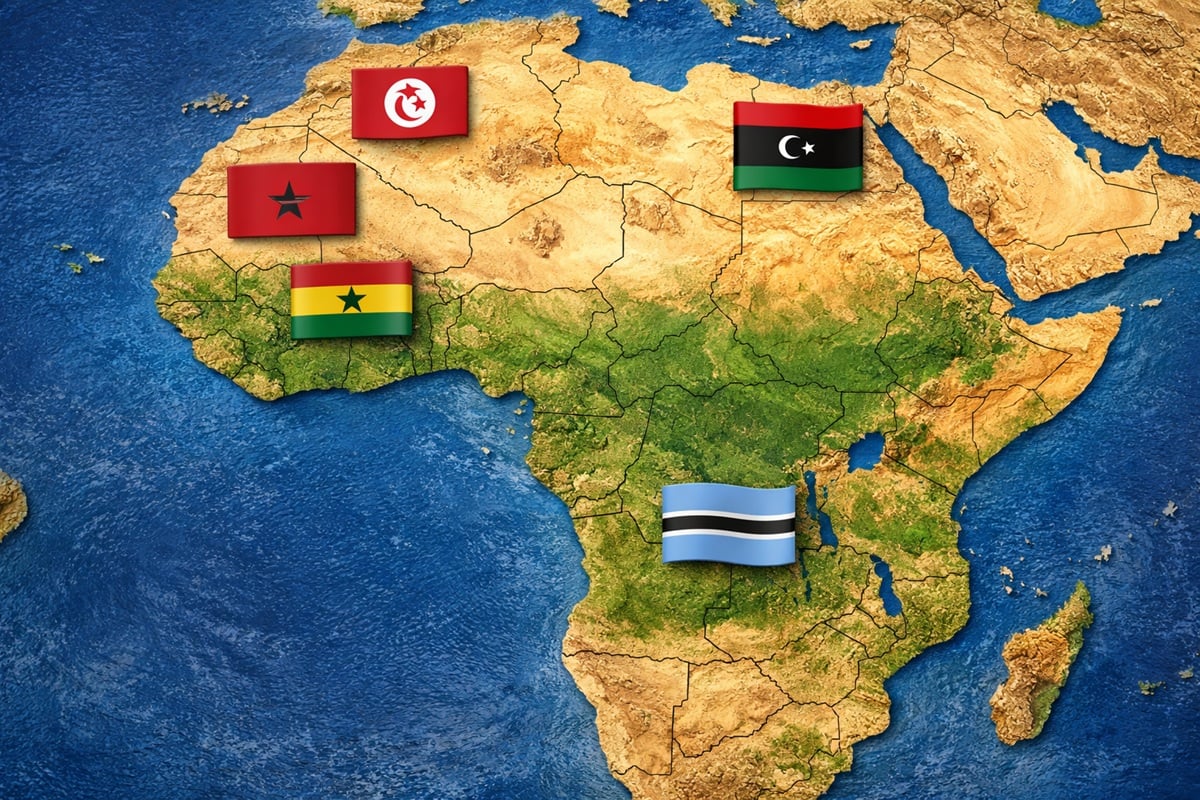
Four nations, Brazil, Germany, India and Japan, have backed a permanent African seat on the United Nations Security Council (UNSC), calling for urgent reform of the Council to reflect contemporary geopolitical realities.
The four countries, under the Group of Four (G4), made their position known in a joint statement issued after their foreign ministers met in New York on Tuesday on the margins of the 81st session of the UN General Assembly.
The ministers said reform of the Security Council had become more necessary than ever, given the increasingly challenging global geopolitical environment.
They said the Council was currently unable to effectively discharge its core responsibility of maintaining international peace and security, with its representativeness, legitimacy, credibility and efficacy in question.
READ ALSO: Six Hidden Health Benefits Of Unsweetened Zobo
According to them, the Council’s eight-decade-old structure was “not reflective of contemporary geopolitical realities” and had become an impediment to addressing present and future challenges to international peace and security.
The ministers stressed that expansion of the Security Council in both the permanent and non-permanent categories was central to meaningful reform.
They called for greater representation of under-represented and unrepresented regions and groups, particularly Africa, Asia-Pacific, and Latin America and the Caribbean.
The four nations also welcomed the reform model presented by the African Group during the Inter-governmental Negotiations (IGN) on Security Council reform in the 80th session of the General Assembly.
READ ALSO: Italy PM Meloni Announces Plan To Ban Niqabs, Burqas In Schools
They reaffirmed their support for Africa’s case for enhanced representation on the Security Council, including in the permanent category.
The ministers, however, expressed concern over the slow pace of negotiations, noting that the IGN process had produced no concrete outcome towards substantive Security Council reform despite 18 years of discussions.
They also expressed reservations over the presentation of what they described as a “bridging proposal” before the commencement of text-based negotiations.
According to them, the proposal failed to take into account the position of a clear majority of UN member states in favour of expansion in both permanent and non-permanent categories.
READ ALSO: Gridlock: Hundred Of Passengers Stranded Along Lokoja-Abuja Road
The ministers further maintained that consensus should not be the benchmark for decision-making on Security Council reform, citing the UN Charter and the mandate of the IGN.
They said Brazil, Germany, India and Japan would work with other reform-oriented groups to develop a consolidated model that reflects the views of the majority of UN member states.
The four countries said commencing text-based negotiations should be treated as a priority towards achieving substantive reform of the Security Council.
They said this would help restore the Council’s representativeness, legitimacy, credibility and effectiveness, while strengthening the multilateral system with the UN at its centre.
READ ALSO: NDLEA Intercepts Colos Shipments From UK, Uncovers Opioids In Loaves Of Bread, Speakers
The ministers also said discussions on reform should not be restricted to the IGN, expressing willingness to engage the wider UN membership through other platforms, including the General Assembly.
They pledged to continue coordinating closely during the 81st session of the General Assembly and directed their officials to follow up on the discussions.
Progress on the issue is expected to be reviewed at the next Director General-level meeting in New Delhi.
Headline
Moving Abroad? Essential Things Nigerians Should Pack Before Leaving Nigeria


Moving abroad from Nigeria is one of those life changes that makes a suitcase suddenly feel much smaller.
What looks like enough luggage in your bedroom can seem painfully limited once you start choosing between clothes, documents, electronics, personal care items and the small things that make an unfamiliar place feel like home.
That is why a good diaspora relocation packing list guide should not be about squeezing everything possible into your bags. It should help you decide what deserves precious luggage space, what can be bought after arrival and what should never go into your suitcase in the first place.
The distinction matters because airlines have strict baggage limits, while destination countries have their own customs rules.
Baggage allowances vary by airline, route, cabin class and aircraft, while individual checked bags are generally recommended not to exceed 23kg for handling reasons. Power banks and spare lithium batteries, for example, must generally remain in carry-on baggage rather than checked luggage.
Start with documents, not clothes
Before thinking about clothing or food, create a secure travel folder for the documents you cannot afford to lose. Your passport, visa or residence documentation, flight information, accommodation details, employment or school documents, insurance information and important contact details should stay accessible throughout the journey.
Carry originals where necessary and keep encrypted digital copies or secure backups of important documents. If you are relocating with children, their birth certificates, school records, vaccination documentation and immigration papers may also be important depending on the destination and circumstances.
Do not put irreplaceable documents in checked luggage. A suitcase can be delayed, misrouted or damaged, but losing access to your passport or immigration paperwork at the same time can turn a manageable travel problem into a serious one.
Pack for your first two weeks, not your entire future
One of the easiest ways to overpack is to imagine every possible situation you might encounter after moving. Resist that temptation. Your first luggage should support your transition, not reproduce your entire Nigerian household overseas.
Pack enough everyday clothes for your initial period, but consider the climate of your destination before filling a suitcase with Nigerian weather essentials. A person moving to the UK in winter, for instance, needs a very different wardrobe from someone moving to a warmer country.
The better strategy is to prioritize versatile clothing that can be layered and reused. Comfortable shoes, underwear, sleepwear, basic toiletries and weather-appropriate outerwear deserve more attention than multiple outfits you may rarely wear.
READ ALSO: UK Skilled Worker Visa: 10 Ways To Prepare For Your Interview
This also reflects advice commonly shared in relocation communities: keep an “open first” collection of essentials so you are not searching through every box or suitcase when you are exhausted after arrival. The practical principle is simple, make your first few days easy before worrying about everything else.
Take the Nigerian items that are genuinely difficult to replace
Food is where relocation packing becomes particularly personal. Nigerians living abroad frequently mention missing familiar foods and ingredients, especially regional items that may be difficult to find or expensive in ordinary supermarkets.
Discussions among Nigerians abroad show that the issue is not necessarily basic rice, pasta or common spices; it is often the distinctive ingredients and flavors associated with home.
That does not mean you should fill an entire suitcase with food.
Instead, prioritise small quantities of dry, commercially packaged items that are legal to import into your destination and that you genuinely use. Depending on the destination, these could include permitted spice blends, seasoning, certain dried ingredients or packaged Nigerian foods.
However, never assume that because something is dry, packaged or commonly carried by other Nigerians, it is automatically permitted. Import rules differ significantly between countries.
For Great Britain, for example, travelers can bring some packaged foods such as biscuits, chocolate, pasta and packaged soup, while meat, dairy, fruits, vegetables, nuts and seeds can be subject to restrictions.
READ ALSO: FULL LIST: US Warns Citizens Against Travelling To 23 Countries
The EU is stricter in several respects. Travelers arriving from outside the EU generally cannot bring meat or dairy products into the bloc, although specific exemptions apply to certain products and circumstances.
So if you are relocating from Nigeria to London, Paris, Amsterdam or another destination, check the destination’s official customs rules before sealing that bag of food.
Do not sacrifice luggage space for easily replaceable goods
A relocation suitcase should contain things that solve a problem, preserve something important or save you meaningful money—not everything you happen to own.
Basic toiletries, ordinary kitchen utensils, cheap hangers, bulky bedding and generic household products can often be purchased after arrival. Carrying large quantities simply because they are cheaper in Nigeria may not make economic sense once excess-baggage charges and limited suitcase space are considered.
The same applies to appliances. Check the electrical system and plug standard of your destination before taking Nigerian appliances abroad. A device that is cheap to replace may not be worth carrying if it is incompatible with the local voltage or requires additional equipment.
Ask yourself a blunt question before packing anything: Would I still pay to transport this if I had to buy extra luggage for it? If the answer is no, leave it behind.
Give electronics and valuables special treatment
Your laptop, phone, chargers, external drives, camera equipment and other essential electronics should be packed with both security and airline rules in mind.
READ ALSO: FULL LIST: Nigeria, 49 Others Affected By US’ $20,000 Visa Bond Policy
Keep valuable electronics in your carry-on whenever the airline permits it. IATA specifically advises passengers not to place valuable or irreplaceable items in checked baggage, while spare batteries and power banks have specific restrictions because of fire risk.
Keep chargers organized in a small pouch rather than scattering them throughout your luggage. If you use several devices, label unfamiliar cables before leaving Nigeria; it sounds trivial until you are sitting in temporary accommodation with three identical USB cables and no idea which one powers your laptop.
Think about health and personal-care essentials
Your relocation luggage should also cover the personal items that may be inconvenient to replace immediately. Prescription medicines, if applicable, should remain in their original packaging and be accompanied by the documentation required by the destination country.
Basic toiletries and personal-care products that you know work for you can be worth carrying in reasonable quantities, particularly during the first few weeks when you are still learning where to shop.
Do not, however, turn your suitcase into a pharmacy. Check the rules of the destination country for medicines and controlled substances before traveling, because something legally purchased in Nigeria may have different restrictions elsewhere.
Leave prohibited and questionable items behind
Some of the worst relocation-packing decisions are made with the assumption that customs officers will not notice.
READ ALSO: Travel Chaos: Air Canada Shut Down By Flight Attendant Strike
That is a dangerous gamble. The UK, for example, prohibits or restricts items including controlled drugs, offensive weapons, certain endangered species and personal imports of meat and dairy products from most non-EU countries.
Food restrictions also deserve serious attention. If you arrive in Great Britain with banned food and declare it, the Border Force can confiscate and destroy it; failing to declare prohibited products can result in penalties or prosecution.
When in doubt, check the official customs guidance for your destination before packing. If an item requires a permit, certificate or declaration, find that out before you arrive at the airport, not while standing in front of a customs officer.
Build one ‘first-night’ bag
Finally, separate the things you will need immediately from everything else.
Your first-night bag should contain a change of clothes, basic toiletries, essential documents, medications, chargers, important electronics and anything else you would need if your checked luggage were delayed. This simple step can save you considerable stress during the first 24 hours.
Your relocation luggage should make your new beginning easier, not burden you with your old life. Pack the things that are valuable, difficult to replace, culturally meaningful or immediately useful. Leave behind what is cheap, bulky and readily available.
Most importantly, remember that your airline’s baggage allowance and your destination country’s customs rules are separate issues. Staying within the weight limit does not mean every item inside the suitcase is legally admissible.
IATA emphasises that baggage conditions remain airline-specific, while governments set their own customs and import requirements.
For Nigerians relocating abroad, the smartest suitcase is therefore not necessarily the heaviest one. It is the one that contains exactly what you will need to begin your new life with less stress, fewer unnecessary expenses and no avoidable customs problems.
(TRIBUNE)
Headline
Why I Forgave Lindsay Clancy For Killing Our Children — Ex-husband Patrick


Patrick Clancy, the ex-husband of Lindsay Clancy, has spoken about his decision to forgive her for the deaths of their three children, saying he feared he would be “eaten up inside forever” if he could not reach a point of forgiveness.
In a new interview with CBS, Patrick said he believed he had done the best he could while his then-wife struggled with mental illness.
“I didn’t know how to manage a [postpartum illness]. I think mental illness has this ability to be tragically deceptive,” he said.
“When it comes to forgiveness, I also felt that if I didn’t get there, I would be eaten up inside forever,” he added.
Lindsay Clancy, a former labour and delivery nurse, was accused of killing the couple’s three children — Cora, five, Dawson, three, and Callan, eight months — in January 2023.
READ ALSO: Former Fox Business Producer Jennifer Eckhart Dies By Suicide
She attended her trial in a wheelchair after suffering permanent paralysis in the aftermath of the incident.
Patrick testified during the trial about his former wife’s mental health struggles following childbirth.
Clancy has never denied killing the children, while her defence argued that she was suffering from postpartum psychosis at the time and was not criminally responsible for her actions.
The case ended in a mistrial after one juror refused to find Clancy not criminally responsible.
Judge William Sullivan, who presided over the trial, has since sealed the jurors’ identities, citing a “real and present” risk of harm.
READ ALSO: NURTW: KWAM1 Settles Long-time Rift Between MC Oluomo, Tafa Sego
The prosecution had alleged that Clancy sent Patrick on an errand before the incident, deliberately removing him from the home.
Patrick became a focus of the trial during its seventh week, when he faced allegations that he was partly responsible for the deaths of the children.
“I think I did the best I could with what I had at the time.” Patrick said. “And I live with the outcome. I live with it every day.”
Speaking about the claims and speculation surrounding him, Patrick said they were “deeply harmful to the legacy of my children” and a “huge distraction from what really matters here, which is perinatal [mental health].”
READ ALSO: Premier League Predictions For Matchweek 5 Fixtures
Patrick has since moved to New York City with his new wife, Rachel Danis, where they hope to find some anonymity and normality.
He said he looks forward to starting a family with his new partner and telling his future children about their siblings.
The case remains unresolved and is scheduled to return to court on September 29 at Plymouth Superior Court in Massachusetts.
(Metro UK)
-

 News4 days ago
BREAKING: Tinubu Extends Working Vacation
-

 Headline4 days ago
How To Format An Academic CV For US Master’s, PhD Applications
-

 News4 days ago
Benue Govt Suspends Muslim Pilgrims Welfare Board Chairman, Secretary
-

 News3 days ago
OPINION: The Stranger In APC’s Kitchen
-

 Entertainment4 days ago
Why Funke Akindele Was Not At My Movie Premiere – Kamo State
-

 Politics4 days ago
Crisis Rocks NDC Over Obi-Kwankwaso Campaign Council
-

 Sports4 days ago
5 Football Players Who Excelled In Multiple Positions
-

 News5 days ago
[OPINION] Wike-APC: Fights Always End Adultery
-

 News4 days ago
FULL LIST: Names Of 37 Illegal Miners Who Died In NSCDC Custody
-

 Headline4 days ago
Italy PM Meloni Announces Plan To Ban Niqabs, Burqas In Schools