
News
[OPINION] Iyaloja Of Benin: Lessons In Cultural Diversity
By Suyi Ayodele
President Theodore Roosevelt, (October 27, 1858-January 1919), was the 26th president of the United States. He served from 1901-1909. When asked to rein in his 19-year-old daughter, Alice, whose conducts had become so embarrassing to the people, the man known as TR, had this to say: “I can do one of two things. I can be President of the United States, or I can control Alice Roosevelt. I cannot possibly do both.”
Children of the mighty and most powerful, in some instances, are pains to their parents. Yoruba sociology of parenting categorises children based on their behaviours in the public. There are some children regarded as àkóìgbà, which refers to the category of children who are patently impervious to correction. An àkóìgbà child, though well-brought up, remains an outcast in behaviour. He or she behaves in manners that negate the home training given from the cradle.
The second categorisation is the àbíìkó or àbíìpabé children. These are the ones whose antisocial behaviours can be excused because the fault lies with poor parenting. An àbíìkó or àbíìpabé child receives no home training and as such, has nothing going on for him or her in terms of good upbringing. In the real street lingo, they are called born throwey (born and throw away).
There are some known as omo òwúrò alé. Children in this category are the ones who were given the normal proper family training but, along the line, abandoned those lofty morals due to bad influence and adopted behaviours that conflict with their family. The beauty of an omo òwúrò alé is that timely intervention can save the situation and bring them back on track.
The worst category is the omo pàpànlagi. Those in this typology are lost, completely – nothing can change them. They attach no importance to family values and have no sense of shame. When an omo pàpànlagi exhibits his or her characters in the public place, the opprobrium is always on the family. Unfortunately, majority of members of his or her family are of good accounts, good characters and enviable dispositions. The question is: how does an omo pàpànlagi acquire the bad behaviour?
When a child displays any character that indicates an error in his or her upbringing, the African society has a way of correcting that. In most cases, the reaction of those who experience the detestable character is to send the unruly child back home. This method, I dare posit, is common in Yorubaland where the saying: Òde la ti únkó omo tí kò ní èkó(a bad child receives lessons in good conduct from outsiders) holds sway.
Back to Alice Roosevelt. Two biographers, Colin McEvoy and Tyler Piccotti, in a July 23, 2025, piece titled: Hunter Biden and the 8 Most Problematic Presidential Children of All Time, say of Alice thus: “Although her actions might seem harmless by today’s standards, Alice Roosevelt was such an unconventional woman during her day that she repeatedly made headlines and caused headaches for her father Theodore Roosevelt…. Alice smoked and swore in public, which was practically unheard of among female socialites at the time. She also attended and placed bets at horse races and took her pet snake to parties. Before William Howard Taft became president, Alice buried a voodoo doll of Taft’s wife Nellie in the White House front yard, earning herself a ban from the nation’s capital.”
Alice was so notorious that she featured again in another article by the Newsweek, The Most Problematic Presidential Children, published a year earlier on June 13, 2024. That notoriety by Alice informed why Americans called on their president to do something about the behaviour of his daughter, and he quipped the opening quote.
Nigeria has its fair share of Alice Roosevelt. Noemie Emery, on June 25, 2003, details misbehaviours of the children of the mighty and powerful in Why Have So Many Presidents’ Kids Gone Wrong? A reading of the portraits of the children mentioned in the piece will resonate with what Nigerians have experienced in the hands of spoilt brats of their leaders. Something close to Emery’s piece occurred the penultimate week in Edo State.
What played out in the sacred palace of the Oba of Benin, last Thursday, between the Benin monarch, Omo N’Oba N’Edo Uku Akpolokpolo Oba Ewuare II, and the self-imposed Iyaloja General of Nigeria, Mrs. Folasade Ojo-Tinubu, daughter of President Bola Ahmed Tinubu, calls for sober reflection.
MORE FROM THE AUTHOR:OPINION: Dangote’s Oily Wars
Every society defines its own structure. The Benin people of Edo State are a peculiar lot. When our elders say how we behave here is a taboo in another land (bí a ti únse níbí, èèwò ibòmíì), they probably have the Benin people in mind.
That is exactly what the Benin sovereign, Oba Ewuare II, did to Mrs. Folasade Ojo-Tinubu, when she came calling to the Benin Palace with the misadventure of Iyaloja of all Edo Markets.
The uniqueness of the Benin Palace lies more in the carriage of the oba. The Omo N’Oba is the epitome of the culture, tradition and custom of the Benin people. In him, the people find their essence. His personage speaks royalty in all ramifications. Thus, what one can do and get away with in many palaces, will no doubt attract severe sanctions if done in the Omo N’Oba’s palace.
If there is any Black nation that still holds to its foundational culture, give it to Benin. Everything in the ancient city, and by its people, revolves round the monarch. He, like the modern-day executive president, is the fountain of honour. The Omo N’Oba owns every inch of Benin land. He creates dukedoms and appoints Dukes to oversee them in trust. He is the law, the judge and jailer!
The Benin palace operates a new level of protocol. For instance, the Omo N’Oba does not wait for anybody. The oba, hailed as Umogun, determines who he sees. And when he sits in his court, the entire kingdom bows in deference. In any of his court sessions, he determines the proceedings. He appoints who to talk and dictates what to say. Benin palace functionaries, at any time, can read the body language of the oba and act accordingly.
Another unique nature of the Benin palace is the way different guests to the ancient palace are treated differently. Beyond the general courtesy extended to guests, the issues to be discussed determine how the king reacts. For issues of less importance, the Omo N’Oba does not speak directly. Especially when it has to do with the tradition of the Benin Kingdom, the place does not place a premium on the personality of the guest. For the oba and his subject, it is Benin tradition before any other thing.
When the oba prays, he calls on God and the ancestors – because without the tradition, there is no kingdom. Therefore, when anyone approaches the palace with any alien tradition different from that handed over by the ancestors, the palace does not spare any effort at setting the record straight.
One of the traditions of the Benin people is that when the oba speaks on any matter, his words become law. No one fights the palace and becomes popular. Whatever the Oba of Benin hates, becomes abhorrent to the entire Benin. Whoever clashes with the oba becomes an enemy of the entire kingdom.
Once a person is declared the enemy of the palace, oghionba, the person immediately becomes a pariah. No Benin son or daughter associates with anyone who has a score to settle with the Uku Akpolokpolo! This is an unwritten code that has passed from generation to generation. There is nothing to show that such will change soon. This is one of the lessons any guest to the palace must learn and understand before venturing to the sacred ground where the Oduma (Lion) of Benin Kingdom resides. ‘Civilisation’ has not succeeded in changing that order!
Albert Lekan Oyeleye, a professor of English Language, taught Pragmatics, Semantics and Discourse Analysis at the University of Ibadan. In his Truth Condition seminar class a few years ago, he posited that meanings are in binary oppositions of plus or minus. He added that when words are spoken, they carry meanings that are not of surface values, called ‘Deep Structure’ in that branch of Linguistics. ‘Deep Structure’ meaning states that one must consider all the variables to be able to arrive at the intended meaning of any spoken word.
When the Omo N’Oba looked at the president’s daughter last Thursday, and said: “You are in Benin, the home of culture. We have our culture here”, my mind raced to Oyeleye’s ‘Deep Structure’ and the binary opposition of meaning. I asked: what was the deep structure implicature of the statement?
If, without being speculative, one applies Oyeleye’s Truth Condition, can one successfully submit that what the Benin monarch told the president’s daughter is: in case you have no culture where you come from, here in Benin, we have our culture? This semantic implicature is further amplified by the next question Oba Ewuare II asked Mrs. Ojo-Tinubu thus: “Do you know the role of Iyeki in Benin culture?”
MORE FROM THE AUTHOR:OPINION: Befriending Bandits
But more importantly, and still in the realms of Pragmatics, when the oba considered the response from the self-styled Iyaloja General of Nigeria, the next step the Benin monarch took, indicated clearly that the issue in discourse is of no importance – indeed an aberration in Benin Kingdom. He simply directed a chief to educate the woman on how Benin runs its market system. “Iyaloja is a bit alien to us here in Benin. I have discussed this matter with my chiefs and those who are knowledgeable”, the Omo N’Oba said, and directed Chief Osaro Idah, the Obazelu of Benin, to educate Mrs. Ojo-Tinubu.
Those who were physically present during the encounter recalled that the Benin monarch was visibly angry – justifiably so. Ever since the encounter, there have been series of activities in Benin City surrounding the issue of Iyaloja of all Edo Markets. The debate in town centres on the misadventure of Mrs. Folasade Ojo-Tinubu to impose on the ancient kingdom of Benin, a strange market structure that makes an individual the head of all markets in Edo State.
In a daring move, Mrs. Ojo-Tinubu had, earlier, before coming to the palace, inaugurated one Pastor Josephine Ibhaguezejele. as the Iyaloja of all markets in Edo State. She did that at the Festival Hall of the Edo State Government House. The Benin Palace had the information in disbelief. It was after the ‘installation’, that the president’s daughter ventured into the sacred palace ground to ask the Omo N’Oba to rally support for Josephine Ibhaguezejele. Sacrilege!
Naturally, such a stranger-than-fiction position would infuriate the palace which had in 2024, kicked against such an anomaly. What gave the Iyaloja General of Nigeria the boldness to go ahead and do what she did? What height of bravado propelled her to visit the palace to ask the Omo N’Oba to rally support for the new Iyaloja of all Edo Markets?
When the Omo N’Oba asked if Mrs. Ojo-Tinubu understood the concept of Iyeki, what the oba was saying was that Edo markets are not without leaders. The only difference is that while, for instance, Mrs. Ojo-Tinubu, could transmute from being an Iyaloja of Lagos to Iyaloja General of Nigeria, no such position exists in Benin, nay the entire Edo State.
According to Benin culture which Oba Ewuare II lectured the president’s daughter on, no single market leader can control another market in Benin. The oba was emphatic when he told Mrs. Ojo-Tinubu that “Iyaloja is a bit alien to us here in Benin. I have discussed this matter with my chiefs and those who are knowledgeable.”
The concept of Iyeki, a pure traditional position, according to Chief Idah who spoke on behalf of the oba, is different from the social and cosmetic Iyaloja General of Nigeria, Mrs. Ojo-Tinubu parades. What the Benin palace told the president’s daughter could pass for an inaugural lecture on cultural diversity.
While anyone without a single store in any market can become Iyaloja General in the culture that produces the like of Ojo-Tinubu, in Benin, and the entire Edo State, no single individual can lord it over other market women in different markets in the state.
More importantly, too, while it is possible for President Tinubu’s daughter to turn the Iyaloja chieftaincy title to a family affair and transmute from being Iyaloja of Lagos, the position formerly held by the late Alhaja Abibat Mogaji, to becoming Iyaloja General of Nigeria, in Benin, an Iyeki (market leader) is the representative of the Oba of Benin in any Benin market. The occupier of that position also carries out some assigned duty for the oba in the market.
This is why Chief Idah, speaking for the oba, tutored Mrs. Ojo-Tinubu: “Iyaloja is alien to us here in Benin. Every Iyeki has a special relationship with the palace. Are you aware of that? Do you know that every Iyeki has a cultural role to perform inside every market?
MORE FROM THE AUTHOR:OPINION: The Clappers They Want In Us
“The Oba does not interfere so long as the Iyeki does what is expected of her in the shrine of a particular market on behalf of the Oba. We are not going to say much, except to explain to you the concept of Iyeki in Benin. Iyeki is independent in every market, like the Oba Market, Ogiso Market, and others. The traders select their leaders from within the market. The Iyekis do more than the role of coordinating traders. There are certain shrines in all the markets. They play certain roles on behalf of the palace. After their selection, they bring the person to the palace for confirmation.
“The novelty of a general Iyeki is alien to Benin custom and tradition. We just believe the Iyaloja is your socio-cultural thing, like you have other clubs. It is not in our culture to have a general Iyeki. Iyeki is particular to each market. No one has the right to control another in a different market. The Iyeki in Oba Market has no role to play in Ogiso Market. The Oba established the market for all in the society.”
Let us go back to Alice Roosevelt. Why would President Tinubu’s daughter flout Benin culture? I ask this question because on April 30, 2024, she had written a letter to Oba Ewuare II, asking him to provide all necessary support for Pastor Isi Ibhaguezejele, as her appointed Iyaloja of all Edo markets.
In the letter, Mrs. Ojo-Tinubu did not just introduce herself as the Iyaloja General of Nigeria but also as: “…the First Daughter of President Bola Ahmed Tinubu (GCFR).” You may wish to ask as I did; what is the import of that family background in a letter seeking support for a venture? What was she trying to tell the oba? Then she went ahead to say:
“With greatest sense of responsibility and utmost regards to our Royal Father, His Royal Majesty, Omo N’Oba N’Edo, Uku Akpolokpolo Oba Ewuare II, The Oba of Benin, I humbly write to introduce PASTOR MRS JOSEPHINE ISI IBHAGUEZEJELE as the Edo State lyeki-Elect.
“With the development, it is her responsibility to see to the day-to-day affairs of the traders in the state (Edo State).Your Majesty, I humbly request that you give your daughter every necessary backing to succeed in this great and noble assignment as I look forward to your fatherly blessing for her to be fruitful in her newly assigned responsibilities.”
Expectedly, the letter, when it became a public document, generated a lot of heat in Benin. All daughters and sons of the Benin Kingdom, at home and in the Diaspora, rose in its condemnation. The agitation was heavy such that the president’s daughter backtracked.
The prevailing situation in Edo State then was not favourable. That was the period Governor Godwin Obaseki of the Peoples Democratic Party (PDP), was holding sway. There was no way the self-imposed Iyaloja General of Nigeria could have appointed a stooge in the state.
But after the September 21, 2024, gubernatorial election which produced the current Governor Monday Okpebholo of the All Progressives Congress (APC), Mrs. Folasade Ojo-Tinubu got her confidence back. Her father’s political party is the ruling party in the state. The rumours of the installation of Pastor Josephine Isi Ibhaguezejele as Iyaloja of Edo markets gained traction. But many did not believe that the venture would be revisited so much so that the Omo N’Oba had earlier rejected it.
Now the president’s daughter has installed an Iyaloja for Edo Markets, with the full support of the Coordinator, Office of Edo State First Lady, Mrs. Edesili Okpebholo-Anani and possibly the Edo State Government tacit support as implied in the use of the Government House Festival Hall. In contrast Oba Ewuare II, Oba of Benin, who by tradition and custom, determines what happens in his kingdom, has said that such a position is alien to Benin tradition. The die is cast! Who blinks first? Who shifts ground: the Benin tradition or the position of “the First Daughter of President Bola Ahmed Tinubu (GCFR)?”
This is where President Tinubu should act. As the father of the Iyaloja General of Nigeria, and as an elder, President Tinubu must tutor his daughter that it is not every cloth that the chameleon imitates. The president must act fast before people begin to ask questions that will interrogate his parenting method for his children.
President Tinubu, this time, cannot speak the way TR spoke when asked to caution his recalcitrant Alice. Tinubu, I submit here without hesitation, must be President of Nigeria and control Folasade at the same time. Unlike TR, our PBAT must “possibly do both.” This is the Toro (half Kobo) I have to loan to the President.



News
Expert Identify Foods That Increase Hypertension Medication’s Effectiveness

Hypertension remains one of the leading causes of premature death worldwide, contributing significantly to heart disease, stroke, and kidney failure. Despite the availability of effective antihypertensive drugs, long-term control of high blood pressure is often challenging because of drug resistance, side effects, and poor adherence.
This has fueled growing scientific interest in complementary strategies that can enhance drug efficacy while minimising toxicity. One promising approach is the combination of conventional antihypertensive medications with herbs and spices in many kitchens.
Recent evidence suggests that augmenting modern antihypertensive drugs with foods rich in p-coumaric acid, a naturally occurring phenolic acid, may offer a novel and effective strategy for blood pressure control.
Phenolic compounds, commonly found in fruits, vegetables, whole grains, and legumes, are known for their antioxidant, anti-inflammatory, and blood vessel–protective properties.
READ ALSO:Russia, China Afraid Of US Under My Administration — Trump
In a study, researchers investigated the combined effects of lisinopril, a widely used antihypertensive drugs and p-coumaric acid on hypertension.
They reported in the Comparative Clinical Pathology that p-coumaric acid enhance the antihypertensive action of lisinopril, potentially allowing for improved blood pressure control without increasing drug dosage.
The study used an established animal model in which hypertension was induced in rats through oral administration of L-NAME, a compound known to suppress nitric oxide production and raise blood pressure.
Following the induction of hypertension, the animals were treated for 14 days with p-coumaric acid (at two different doses), lisinopril alone, or a combination of both.
READ ALSO:Man Suffers Hypertension As Daughter, Grand-daughter Disappear For 10 Years
Untreated hypertensive rats showed significantly elevated activities of key enzymes linked to high blood pressure such as ACE, arginase, acetylcholinesterase, and phosphodiesterase-5 along with increased lipid peroxidation, an indicator of oxidative stress. At the same time, levels of nitric oxide, a critical molecule for blood vessel relaxation, were markedly reduced.
By contrast, rats treated with a combination of lisinopril and p-coumaric acid experienced notable improvements. Blood pressure was better controlled; harmful enzyme activities were reduced, oxidative stress declined, and nitric oxide levels increased. These improvements were mirrored in the tissues the heart compared with untreated hypertensive animals.
They said that the findings suggest that p-coumaric acid may enhance the antihypertensive action of lisinopril, potentially allowing for improved blood pressure control without increasing drug dosage.
This drug–food interaction model is particularly important in the circumstance of long-term hypertension management. Many patients rely on lifelong medication, and strategies that can improve treatment outcomes while reducing side effects are highly desirable.
READ ALSO:Delta Unveils Free Hypertension, Diabetes Screening
The study also reinforces the growing recognition that diet is not merely supportive but can be biologically active in disease control.
The use of medicinal plants and plant-based therapies in the management of hypertension is deeply rooted in traditional medicine across many cultures. While such practices have often existed outside conventional healthcare systems, modern scientific research is now providing evidence-based explanations for their effectiveness.
While these findings are based on animal studies and cannot yet be directly translated into clinical recommendations for humans, they open the door to future research on dietary strategies that can safely complement antihypertensive drugs.
READ ALSO:Why West African Troops Overturned Benin’s Coup But Watched Others Pass
Further clinical studies are needed to determine appropriate dosages, safety profiles, and real-world effectiveness.
In the fight against hypertension, the future may lie not only in new drugs, but also in smarter combinations, where medicine and nutrition work together to deliver better, safer outcomes for patients.
Such nutrition to help maintain healthy blood pressure includes garlic, potatoes, walnuts,tomato and tomato products, legumes and citrus fruits (grapefruits and oranges).
(TRIBUNE)
News
Researchers Develop Treatment For Advanced Prostate Cancer

Researchers at Case Western Reserve University have developed a treatment for advanced prostate cancer that could eliminate a side effect so debilitating that patients often refuse the life-saving therapy.
The innovative approach, according to the researchers, targets prostate cancer cells just as successfully as existing treatments while causing significantly less harm to salivary glands.
For many people with prostate cancer, it relieves the extreme dry mouth that makes speaking, chewing, and swallowing nearly impossible.
According to the findings published in Molecular Imaging and Biology, the treatment targets PSMA (Prostate-Specific Membrane Antigen), a protein present in high numbers on prostate cancer cells.
READ ALSO:Edo Deputy Gov Tasks Lab Scientists On Research, Vaccine Production
Radioligand therapy (RTL) attaches radioactive material to a targeting molecule that acts like a GPS system, guiding the radiation directly to cancer cells while avoiding healthy tissue.
Current PSMA-targeted radioligand therapy is one of the most promising precision cancer treatments for end-stage prostate cancer because it acts as a “smart bomb” that locates and destroys cancer cells.
The downside, however, is that this therapy often causes severe salivary gland damage, resulting in extreme dry mouth that can be so debilitating that patients choose to stop treatment that might save their lives.
James P. Basilion, professor in the Department of Biomedical Engineering at Case Western Reserve and co-leader of the Cancer Imaging Program at the Case Comprehensive Cancer Centre (Case CCC), explained that various strategies to mitigate this side effect have been attempted before, with limited success.
READ ALSO:Nigerian Researcher Develops Wireless Charging Tech For Electric Vehicles
According to the study, PSMA-1-DOTA has a four-fold greater affinity for prostate cancer cells than current therapies.
In addition to having the same tumour-fighting effectiveness as the current standard radioligand therapy, it also significantly reduced damage to the tear and salivary glands, almost eliminating the risk of dry mouth.
This discovery has the potential to significantly alter the treatment of prostate cancer by making PSMA-targeted therapy an earlier intervention rather than a “last resort.”
READ ALSO:Research: Experts Seek Improved Funding Of Monotechnic, Polytechnic Libraries
The research included comprehensive testing on mouse models and in a human patient with metastatic prostate cancer at the Technical University of Munich in Germany.
The patient study confirmed the lab findings, showing the new treatment avoided the salivary glands (potentially preventing dry mouth) while still finding and attacking prostate cancer cells.
The researchers, from now on, are preparing for clinical trials late this year on about 12 prostate patients to validate the promising results and establish the most effective dosing procedures.
(TRIBUNE)
News
Norway ‘Foolishly’ Chose Not To Award Me Nobel Peace Prize Despite Ending Eight Wars — Trump
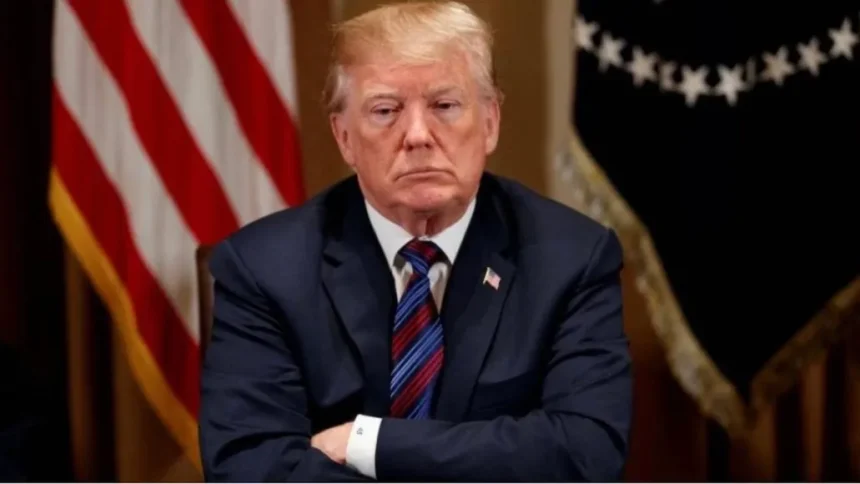
United States President, Donald Trump, has criticised Norway for not awarding him the Nobel Peace Prize, insisting that his actions on global security and diplomacy merited the honour.
In a post on his Truth Social on Wednesday, Trump said his administration compelled NATO members to significantly increase their defence spending, arguing that many countries were previously failing to meet their financial obligations while the United States bore the burden.
He maintained that his intervention pushed allies to raise defence contributions to five per cent of their gross domestic product, a move he described as previously thought impossible.
The president also claimed that his involvement prevented Russia from fully taking over Ukraine, adding that his absence from global affairs would have emboldened Moscow.
READ ALSO:US Senator Proposes Bill To End Dual Citizenship
He further asserted that he single-handedly brought an end to eight wars, a record he said was overlooked by the Nobel committee in Norway, which is a NATO member.
Trump emphasised that his priority was saving lives rather than receiving awards, stating that millions of lives were preserved through his actions.
He warned that without the United States, NATO would command little fear or respect from rival powers such as Russia and China, and expressed doubt that the alliance would come to America’s aid in a moment of need.
Reaffirming his commitment to NATO, Trump said the United States would continue to support the alliance even if that support was not reciprocated.
READ ALSO:Insecurity: US Congressman Riley Moore Reveals Trump’s Mission In Nigeria
He also credited his leadership with rebuilding the US military during his first term and sustaining its strength, describing the United States as the only nation that Russia and China truly fear and respect.
He wrote, “Remember, for all of those big NATO fans, they were at 2% GDP, and most weren’t paying their bills, UNTIL I CAME ALONG. The USA was, foolishly, paying for them! I, respectfully, got them to 5% GDP, AND THEY PAY, immediately.
“Everyone said that couldn’t be done, but it could, because, beyond all else, they are all my friends. Without my involvement, Russia would have ALL OF UKRAINE right now. Remember, also, I single-handedly ENDED 8 WARS, and Norway, a NATO Member, foolishly chose not to give me the Noble Peace Prize. But that doesn’t matter! What does matter is that I saved Millions of Lives.
“RUSSIA AND CHINA HAVE ZERO FEAR OF NATO WITHOUT THE UNITED STATES, AND I DOUBT NATO WOULD BE THERE FOR US IF WE REALLY NEEDED THEM. EVERYONE IS LUCKY THAT I REBUILT OUR MILITARY IN MY FIRST TERM, AND CONTINUE TO DO SO. We will always be there for NATO, even if they won’t be there for us. The only Nation that China and Russia fear and respect is the DJT REBUILT U.S.A. MAKE AMERICA GREAT AGAIN!!! President DJT.”

 News4 days ago
What I Saw After A Lady Undressed Herself — Pastor Adeboye
- Headline4 days ago
PROPHECY: Primate Ayodele Reveals Trump’s Plot Against Tinubu
- Metro4 days ago
Armed Robbers Shot PoS Operator To Death In Edo
- Metro3 days ago
AAU Disowns Students Over Protest
- Business3 days ago
NNPCL Reduces Fuel Price Again
- Metro3 days ago
Edo: Suspected Kidnappers Kill Victim, Hold On To Elder Brother
- Metro4 days ago
Joint Task Force Kills 23 Bandits Fleeing Kano After Attacks
- Politics4 days ago
2027: Rivers APC Pledges To Follow Wike’s Instructions
- Metro3 days ago
Nine Soldiers Feared Dead In Borno IED Explosion
- Metro4 days ago
Gunmen Demand N200m Ransom For Kidnapped Brothers In Edo


