
News
OPINION: Nigerian Leaders And The Tragedy Of Sudden Riches

By Israel Adebiyi
It is my sincere hope that by now, the wives of the 21 local government chairmen of Adamawa State are safely back from their exotic voyage to Istanbul, Turkey, a trip reportedly bankrolled by the local government finances under the umbrella of the Association of Local Governments of Nigeria (ALGON). A journey, we are told, designed to “empower” them with leadership skills. It’s the kind of irony that defines our political culture, an expensive parade of privilege masquerading as governance.
But that is what happens when providence smiles on an ill-prepared man: he loses every sense of decorum, perspective, and sanity.
I am reminded of a neighbour from nearly two decades ago, a simple man who earned his living as a welder in a bustling corner of Alagbado, in Lagos. One day, fortune smiled on him. The details of how it happened are less important than the aftermath. Overnight, this humble tradesman was thrust into wealth he never imagined. His first response was to remodel his one-room face-me-I-face-you apartment. He then bought crates of beverages for his wife to start a small trade. Nights became movie marathons, days were spent entertaining friends and living large. Within a short while, both the beverages and the money were gone. The family consumed what was meant to be sold, and before long, they were back to where they began, broke and disillusioned.
That, in many ways, mirrors the tragedy of Nigerian leadership. It’s the poverty mindset in leadership.
The story of my neighbour is a microcosm of the Nigerian political elite, particularly at the subnational level. When sudden riches come, wisdom departs. When opportunity presents itself, greed takes over. In the past years, since the removal of fuel subsidy and the subsequent fiscal windfall that followed, all levels of governments, particularly both state and local governments have found themselves with more resources than they have had in over a decade. Yet, rather than invest in ideas that would stimulate production, jobs, and infrastructure, what we have witnessed is an epidemic of frivolities, unnecessary travels, wasteful seminars, inflated projects, and reckless spending.
MORE FROM THE AUTHOR:[OPINION] House Agents: The Bile Beneath The Roof
Across the country, the story is similar: councils and states spending like drunken sailors. Suddenly, workshops in Dubai, leadership retreats in Turkey, and empowerment programs that empower nobody have become the order of the day. The sad reality is that many of these leaders lack the intellectual depth, managerial capacity, and moral restraint to translate resources into development. Their worldview is transactional, not transformational.
Nigeria’s tragedy is not the absence of resources; it is the misplacement of priorities. Across the states, billions are allocated to vanity projects that contribute little or nothing to the people’s quality of life. Roads are constructed without drainages and collapse at the first rainfall. Hospitals are built without doctors, and schools are renovated without teachers. Governors commission streetlights in communities without power supply. Council chairmen purchase SUVs in towns where people still fetch water from muddy streams. This is not governance; it is pageantry.
The problem is rooted in a poverty mindset, a mentality that sees power not as a platform for service but as an opportunity for consumption. Like the welder who squandered his windfall, our leaders are more preoccupied with display than development. They seek validation through possessions and patronage. They confuse spending with productivity. After all, these guarantee their re-election and political relevance.
Take for instance, the proliferation of “empowerment” schemes across states and local governments. Millions are spent distributing grinding machines, hair dryers, and tricycles, symbolic gestures that make headlines but solve nothing. In a state where industrial capacity is non-existent and education is underfunded, these programs are nothing but political theatre.
MORE FROM THE AUTHOR:Nigeria @65: A Long Walk To Freedom
Part of the reason for this recurring tragedy is the near absence of accountability. At every level of government, public scrutiny has been deliberately weakened. The legislature, which should act as a check on executive excesses, has become a willing accomplice. Most state assemblies now function as mere extensions of the governor’s office. Their loyalty is not to the constitution or the people, but to the whims of the man who controls their allowances. When oversight is dead, impunity thrives.
The same is true at the local government level. The councils, which should be the closest tier of governance to the people, have become mere revenue distribution centres. Their budgets are inflated with cosmetic projects, while core community needs – clean water, rural roads, primary healthcare, and education – remain neglected. In most states, local governments have been stripped of autonomy, no thanks to the governors, and turned into cash dispensers for political godfathers.
A functioning democracy depends on the ability of citizens and institutions to demand explanations from those in power. Unfortunately, Nigeria has normalised a culture of unaccountability. We applaud mediocrity, celebrate looters, and reward failure with re-election.
Leadership without vision is like a vehicle without direction, fast-moving but going nowhere. Our leaders often mistake motion for progress. A road contract here, a stadium renovation there, a new office complex somewhere, yet the fundamental problems remain untouched.
When a government cannot define its priorities, it becomes reactive, not proactive. It responds to crises rather than preventing them. The consequence is that we keep recycling poverty in the midst of plenty.
Consider the fate of many oil-producing states that have earned hundreds of billions from the 13 percent derivation fund. Despite their enormous earnings, the communities remain among the poorest in the federation. The roads are not just bad but are deathtraps, the schools dilapidated, and the hospitals understaffed. The money vanished into white-elephant projects and political patronage networks.
MORE FROM THE AUTHOR:[OPINION] Rivers: The Futility Of Power And The Illusion Of Victory
Visionary leadership is not about having a title or holding an office; it is about seeing beyond the immediate and investing in the future. It is about building systems that outlive individuals. Sadly, most of our leaders are incapable of such long-term thinking because they are trapped in the psychology of survival, not sustainability.
There is a proverb that says: “The foolish man who finds gold in the morning will be poor again by evening.” That proverb could have been written for Nigeria. Each time fortune presents us with an opportunity, whether through oil booms, debt relief, or global trade openings, we squander it in consumption and corruption.
The subsidy removal windfall was meant to be a moment of reckoning, a chance to redirect resources to development, improve infrastructure, and alleviate poverty. Instead, it has become another tragic chapter in our national story, a story of squandered wealth and wasted potential.
When money becomes available without the corresponding capacity to manage it, it breeds recklessness. Suddenly, every council wants a new secretariat. Every governor wants to build a new airport or flyovers that lead to nowhere. The tragedy is not in the availability of money but in the absence of vision to channel it productively.
MORE FROM THE AUTHOR:Union Gloves vs Corporate Fists: The Dangote–NUPENG Showdown
Nigeria does not lack bright minds; it lacks systems that compel responsibility. What we need is a new civic consciousness that demands accountability from those in power. Citizens must begin to interrogate budgets, question policies, and reject tokenism. Civil society must reclaim its watchdog role. The media must rise above “he said, he said” journalism and focus on investigative and developmental reporting that exposes waste and corruption.
Equally, the legislature must rediscover its purpose. Lawmakers are not meant to be praise singers or contract brokers. They are the custodians of democracy, empowered to question, probe, and restrain executive recklessness. Until they reclaim that role, governance will remain an exercise in futility.
The solution also lies in leadership development. Leadership should no longer be an accident of chance or patronage; it must be a deliberate cultivation of character, competence, and capacity. The tragedy of sudden riches is avoidable if leaders are adequately prepared to handle responsibility.
Ultimately, the change we seek is not just in policy but in mindset. Nigeria must confront the culture of consumption and replace it with a culture of productivity. We must move from short-term gratification to long-term investment, from vanity projects to value creation, from self-aggrandizement to service.
Every generation has its defining moment. Ours is the opportunity to rethink governance and rebuild trust. The tragedy of sudden riches can become the triumph of sustainable wealth, but only if we learn to manage fortune with foresight.
Until that happens, the Adamawa wives will keep travelling, the chairmen will keep spending, and the people will keep waiting for dividends that never come.

News
Children’s Day: Chaos At Ogbe Stadium As Dozens Faint
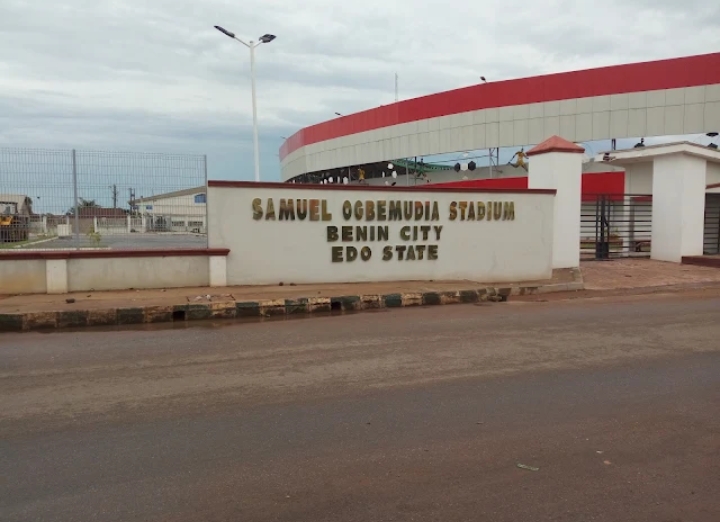
Chaos erupted on Wednesday during the Children’s Day celebration as dozens of students reportedly collapsed following a stampede triggered by the use of pepper spray.
The event,
organised by the Edo State Ministry of Education at the Samuel Ogbemudia Stadium was disrupted after some male students of Ihogbe College allegedly made uncompromising advances towards female students at the venue.
A parent who identified himself as Oboh Emmanuel said, “the behaviour of those uncultured students attracted the attention of bouncers stationed at the stadium as they rebuked the male students.”
Oboh said the affected students later regrouped and attacked the bouncers, leading to a confrontation within the crowded arena.
READ ALSO:Children’s Day: Edo Commits To Child Protection
It was gathered that in the ensuing confusion, the bouncers were reported to have deployed pepper spray in an area occupied by a large number of students.
Several students, particularly female students, reportedly fainted after inhaling the substance, while others sustained injuries after being stepped on during the ensuing melee.
The panic was said to have spread across the stadium as students, teachers and parents scampered for safety.
Many of the affected students were reportedly rushed to the Edo Specialist Hospital for medical attention.
READ ALSO: Egor LG Chair, Ogbemudia, Vice, Osawe Impeached
Reacting to the incident, Chief Press Secretary to Governor Monday Okpebholo, Dr Patrick Ebojele, said the security personnel that fired the tear gas had been detained.
He said all the students, except two, that were rushed to the hospital have been discharged.
Ebojele stated that doctors wanted to observe the students till tomorrow before allowing them to go home.
“The two students are not seriously injured. Doctors want to observe them overnight. Permanent Secretary, Ministry of Education is still at the hospital. The man who used pepper spray has been detained.
“The incident did not happen the way it is being exaggerated. All modalities were put in place to ensure the children enjoyed their day.”
News
Okpebholo Salutes Edo Muslims, Seeks Continued Support, Prayers
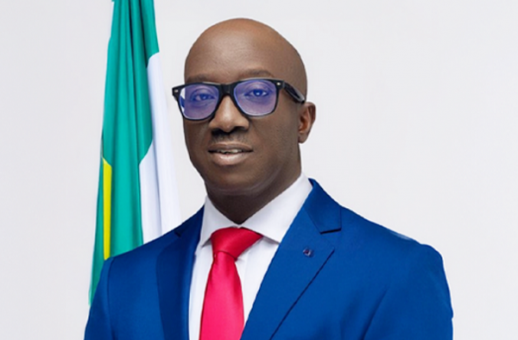
Governor Monday Okpebholo of Edo State has urged Muslims and all Nigerians to continue to pray for peace, unity and progress in the country even as they celebrate the annual Eid-al-Adha
The governor, who was represented by his deputy, Dennis Idahosa, stated this during the annual Eid-al-Adha celebration with Muslim faithfuls held at Government House in Benin City.
He reiterated his administration’s commitment to fairness, inclusivity and equal opportunities for all citizens irrespective of religion and tribe.
READ ALSO:ADC Penetrates Okpebholo’s District As Defections Strengthen Party in Edo Central
According to him, the present administration remains determined to building a government that reflects the diversity of Edo State, noting that competent and qualified Muslims have continued to play vital roles in his government because of their capacity, integrity and commitment to service.
“As a government, we remain committed to fairness, inclusivity and equal opportunity for every Edo citizen, irrespective of religion, ethnicity or political affiliation. This is why quality and competent Muslims are serving in key positions in our administration.”
Okpebholo appreciated the Muslim community in Edo State for their unwavering support and continuous prayers for his administration, noting that such prayers and support have contributed immensely to the peace and steady development being witnessed across the state.
READ ALSO:Okpebholo Felicitates Muslims On Eid-el-Fitr Celebration
He then called on all Nigerians to use the occasion of Eid-al-Adha to pray for the administration of President Bola Ahmed Tinubu, stressing that the country needs collective prayers, unity and cooperation to overcome its present economic and security challenges.
“I urge all Muslims and indeed all Nigerians to use this occasion to pray for our dear nation and for the administration of President Bola Ahmed Tinubu. Nigeria needs our collective prayers, unity and support as we strive to overcome our challenges and build a more prosperous future for all.”
In his remarks, the Chief Imam of Edo State, Abdulfatai Enabulele, applauded the governor for what he described as remarkable developmental strides recorded in less than two years in office.
The cleric commended the administration for ongoing infrastructural development and efforts geared towards improving governance in the state, but appealed to the government to revisit and complete some abandoned projects inherited from the previous administration for the benefit of the people.
News
Children’s Day: Edo Commits To Child Protection
The Edo State Government has reaffirmed its commitment to protecting the rights of children, promoting quality education, and strengthening sports development across the state.
This assurance was given by the governor of Edo State, Monday Okpebholo, during the 2026 Children’s Day Celebration and Governor’s Cup Finale held on Wednesday at the Samuel Ogbemudia Stadium, Benin City.
Addressing pupils, students and teachers,
the governor described children as the pride of Edo State and the future of the nation.
The governor, represented by his deputy, Dennis Idahosa,
noted that the annual celebration provides an opportunity to honour their dreams, talents, and limitless potential.
READ ALSO:Eid-el-Kabir: Edo Deputy Gov Solicits prayers For Okpebholo
Speaking on this year’s Children’s Day theme, “Choose Kindness, Reject Bullying,” the governor said the message was timely and significant, as it emphasizes the need to create safe, supportive, and inclusive environments for children both in schools and communities.
He stated that bullying in all forms — physical, verbal, emotional, or online — has no place in society, adding that the Edo State Government remains fully committed to protecting the rights and dignity of every child.
According to him, the administration will continue to strengthen policies and programmes that promote child protection, discipline, mutual respect, and positive learning environments across schools in the State.
The governor urged children to embrace kindness, compassion, teamwork, and respect for one another, stressing that true strength lies not in intimidation but in empathy, good character, and mutual understanding.

 Metro5 days ago
My Husband Abandoned Me On Our Wedding Night To Attend Political Meeting, I Want Our Marriage Dissolved
- Headline4 days ago
Woman Passes Out After Receiving 100 Strokes Of Cane
- Headline4 days ago
JUST IN: White House Locked Down Briefly As Gunman Opens Fire At Security Checkpoint
- Politics5 days ago
Warri Ijaw Hail INEC Delineation Report, Call For Additional Electoral Wards, Others
- Politics3 days ago
Two Masked Men Gun Down Politician In His Rivers State Hotel
- News3 days ago
More Pain For Nigerians As Cooking Gas Price Increases Nationwide
- News5 days ago
Alleged Terrorism: Court Rejects Defendant’s Bid To Travel Abroad
- Metro5 days ago
My Wife Stop Cooking My Food, Beats Me Black And Blue All the Time, Man Tells Court
- Politics5 days ago
What I’ll Do As President Of Nigeria — Amaechi
- Politics3 days ago
‘Tinubu’s Borrowing In 24 Months Surpasses 55 Years’ Debt Record’


