
News
OPINION: Nigeria’s ‘Sheikh Of The Slaughters’
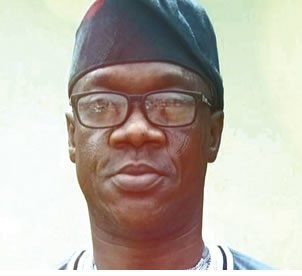
By Suyi Ayodele
The festive period is here, yet one wonders how the sound of fireworks will affect us, given our recent experiences in the hands of terrorists and bandits. I also wonder how the elderly women we saw in the video of the attack and abduction at Eruku town in Kwara State will react to the sound of knockouts this season. This is not the best of times for us. We have never had it this bad. Why does terrorism thrive here, and the government remains flat-footed? Emma Sky provides an answer.
The British adviser to the US military in Iraq states: “Corrupt regimes and terrorists keep each other in business. It’s a symbiotic relationship.” He made this remark while speaking about the connection between terrorists and those in government.
Chapter two of the 270-page book, ISIS: Inside the Army of Terror, written by the American journalist, author and news commentator, Michael Weiss and the columnist for UAE-based English daily, The National, Hassan Hassan, (Pg.20, 2015), opened with the above quote ascribed to Sky. The authors took that route to underscore the claims in many quarters that terrorism is not just a mere game but a transactional enterprise between those in power and the agents of death, the terrorists. The sub-title of that chapter, ‘Sheik of the Slaughters’, tells the story more. It is our today’s headline
The cliche: “to win the battle and lose the war”, often used in military circles, is defined as: “to achieve a minor success or victory, but lose or fail to achieve a larger, more important, or overall goal, especially when the larger failure is at least partly due to the smaller victory.” (Collins COBUILD Idioms dictionary, 3rd edition, 2012)
Nigeria, at the moment, presents a stark reversal of the old saying. Here, we have lost the battle and are dangerously close to losing the war. We sure need Deus ex Machina – the Greek plot device – to serve as denouement and rescue the nation. The bitter truth is that despite extensive propaganda about “technically defeating” terrorism, the terrorists are now firmly among us! Unfortunately, our response so far reflects the same predictable, panic-driven approach of previous years!
Our governments – federal, state and local – do not only negotiate with terrorists. Officials at various levels openly associate with them, attend their social functions and take photographs with individuals responsible for widespread loss of life. Not long ago, there was a report that the government paid a particular terrorist group a substantial sum of money to recover a lethal weapon the blood-sucking demons seized from our military. It was at that time that, if left in the hands of the terrorists, the weapon could be used to shoot down our president’s aircraft!
Most states in the North pay terrorists and bandits in order to maintain a semblance of peace. Farmers and other residents in the region also pay these violent groups simply to plant and harvest their crops. When individuals are kidnapped, ransom is paid, depending on the number, the circumstances and their identities, or governments ‘negotiate’ their release. In some instances, we are told that our security agencies “rescued” victims after “exchange of fire with the abductors.”
MORE FROM THE AUTHOR:OPINION: Yerima And A Soldier Who Never Wore Uniform
Nigeria is in ruins! Pardon the sharpness of that expression, but a milder word seems inadequate! We live in fear, perpetually at the mercy of terrorists and bandits. In the past, we slept with both eyes closed. Over time, we learnt to sleep with one eye closed. Today, we hardly sleep at all – and it is not because we suffer from insomnia, but because those more powerful than the State appear to exert control across the nation from the North to South and East to West! The government is battered, those in authority are overwhelmed!
This is not the time to play politics in Nigeria. The nation is in bad shape. Non-state actors are in control of our affairs. Those we entrust our lives to are practically absent. The leaders are in panic mode just as the governed are marooned on the island of insecurity. The iconoclast rapper, Eedris Abdulkareem, did not see anything when he sang Nigeria jaga jaga. Now is the time the protest song is most relevant!
The humanity in us dictates we should pity President Bola Ahmed Tinubu. The old fox must have realised the wisdom in the caution of our wise ones that no one should sell gravel as goods. The exchange currency is usually in pebbles, our forebears posit. Today’s power wielders in Nigeria know where what is hitting them comes from. They sold sand as goods to Nigerians and Nigeria in 2014, when they politicised the mass ‘abduction’ of school children. Today, they are being paid in the same coins of pebbles (àwon tó ta ojà iyèpè ti ńgb’owó òkúta). This is sad because we are all victims!
The Yoruba indigenous religion, Ifa, in Oyeku Meji, warns that when the enemies gather to wage war against the all-female-inhabited town, no wise man should join the venture (tí wón bá sí’gun Ìlúbìrin, má bã won lo). I once asked an elder to interpret the caution in that Ifa Corpus. His response is very instructive here. The all-female-inhabited town, Ìlúbìrin the elders said, is always calm like the duck in hibernation (Ìlúbìrin máa ńdáke róró bíi pépéye tó sàba). He explained further that the gentle bird does not fight on its own because it is a bird of the women’s cult. It has an unseen army fighting its battles.
That unseen army is what the elders of my place call èsan (vengeance). The Holy writ, the Bible, says: “vengeance is mine; I will repay, says the Lord” (Deuteronomy:32:35). The gods and humans fight on behalf of the duck (àti ebora àti ènìyàn níí ja ìjà pépéye), the elder concluded. We are tempted to ask the leaders of today if they have ever broken the eggs of a duck in hibernation. If they answered in the affirmative, we would ask them to seek help. They need it!
The event of the last one week have further confirmed that Nigeria has moved from the stage of a failed nation. The country feels non-existent! How do those in power today even sleep at night? What comes to mind when they reflect on the roles they played, directly or indirectly, during the orchestrated Chibok schoolgirls’ ‘abduction’ happened on April 14, 2014? What runs through their minds?
MORE FROM THE AUTHOR:OPINION: Pastor Adeboye, Tinubu, Trump And Truth
When the Chibok incident occurred 11 years ago, some of us believed it was a ruse. We argued that shepherding 276 girls from a school would require more than a mere illusion. We reasoned that the ‘abductors’ must have been extraordinarily well-resourced to feed the children while they were supposedly in captivity. We also noted that securing a location to keep them would not have been a simple undertaking. Furthermore, providing medical care in the so-called Sambisa Forest, where we were told they were taken, would have been an even more daunting challenge.
But we were asked to remain silent! When we insisted that the act would eventually return to haunt the perpetrators, harm the entire nation and injure the innocent – who had no part in the dangerous politicking that led to Chibok, we were told to blame the “clueless” President Goodluck Ebele Jonathan. Ironically today, those who once silenced us for suggesting that Chibok was a scam, are now the same set of people claiming that the recent series of schoolchildren kidnapping are political weapons aimed at undermining President Tinubu.
The calamity sweeping across the country today is like the proverbial rain – it spares no one. As the elders say, “A thing that is not sufficient is not allowed to go to waste” (ohun tí ò tó, kìí s’òfò). The North of Nigeria is widely regarded as an educationally disadvantaged. Yet, in that same region, 46 unity schools, all owned by the Federal Government, are now completely shut because terrorists are attacking schools across the 19 northern states! Just when it seemed that the problem was confined to the North, a school in Ekiti State – the Federal Technical College (FTC), Usi Ekiti – was also closed! The question now is: where is safe in Nigeria?
The United Nations Children’s Fund, UNICEF, Safe School Data, (September 2023), reports stated that 723 schools were closed in the North because of insecurity. A few of the schools, the report added, were shut down because non-state actors (terrorists) and Internally Displaced Persons (IDPs) occupied the schools’ premises. It listed states such as Adamawa, Benue, Borno, Katsina, Sokoto Yobe and Zamfara as mostly affected.
Yet we expect students in these schools to compete favourably with their counterparts down South. The campaign to bridge the educational gap between the North and the South has been ongoing for generations, championed by Nigerians of goodwill. Sadly, those for whom others undertake great sacrifices are busy enjoying comfort and abundance!
My concern is that ultimately, the misfortune of the North will be spread in equal measure across the Federation. The daily migration of northern young men and woman, from childhood to adulthood, to the South demonstrates that when the North suffers, it invariably drags the South along.
This is why nobody should adopt the attitude of “it is their problem over there.” The North is eating the bad insect today; the attendant whooping cough of that bad habit will give all of us sleepless nights. This is why we must all set politics aside and join hands in the fight against this menace. If a school could be shut down in Ekiti State because of threat of terrorism, no school in the South-West is truly safe. As the saying goes, when a fellow hunter shouts, “it is coming”, our elders advise that we set our nets in readiness for a catch (ó hún bo, ó hún bò, àwòn làá de dèé).
MORE FROM THE AUTHOR:OPINION: US And FFK’s Drum Of War
The last week has been that of great calamity for Nigerians. It was a week the nation lost a two-star General, Brigadier-General Musa Uba and three other officers, killed by terrorists who ‘captured’ them after they survived an earlier ambush. Ask those who know the art of war, and you will be told that for an officer of the rank of a Brigadier-General to die on the battlefield, not a few other officers and other ranks would have gone! But it happened here, and we shoved it aside, facing other calamities.
Within the same week, almost 400 students were ‘kidnapped’ in Niger and Yobe States by terrorists. The same ‘sheik of the slaughters’ also killed no fewer than 68 Nigerians across some states of the North. In Eruku, 38 worshippers in a church were kidnapped and three others killed! While the government of Kwara State announced on Sunday that the 38 victims had been ‘rescued’, a blog in the locality claimed that the government paid close to N200 million before the victims were released. Whom do we believe, whom do we trust?
On the farm or on the way to the stream and in the comfort of our bedrooms, we all live in the fear of terrorists. If we are not the victims today, we assist our kidnapped neighbours and relations in raising the ransom for their release. Those of them who were unfortunate and died in captivity, we organised their funerals. In most extreme cases, we don’t get their corpses to be buried! Whichever way one views it, we are all victims, helpless victims for that matter! The only question on our lips is: how did we get here?
Just as we are grappling with the closure of those 47 unity schools, the governments of Yobe, Adamawa and Taraba States, ordered that all schools – private or public – operating boarding facilities in the states must close them due to the threat of terrorist attacks! What, then, is the fate of the students of these closed boarding schools? Will the West African sub-regional examination body wait for them when it is time to sit for the regional sub-examination? How can we treat our future this shabbily and still expect Nigeria to develop?
From all indications, and I hope President Tinubu gets this: Nigeria has lost the battle. And by the way things are going, we are on the verge of losing the war. When terrorism and banditry started as a battle pre-2014, and the government of President Jonathan wanted to confront it headlong, many of the actors of today’s power frustrated the efforts for political reasons. Notable leaders from the North said fighting Boko Haram was like fighting the North. We accepted their narratives and looked on while the felons overran Nigeria!
Those who travelled as far as the United States to ask for ‘help’ all in the bid to get rid of Jonathan, are now crying because the same US has noticed that Nigeria is not just a “disgraced” country, but a nation in dire need of help! Many of us still don’t understand why the issue of Nigeria’s sovereignty should be paramount now when 11 years ago, the present handlers of our affairs threw that same principle to the wild dogs! The US assisted them into power. Today, the same American Government has indicated that it would, on its own volition, intervene and put an end to the killings in Nigeria.
What is the reaction of the government? A powerful delegation was sent to the US to go and explain that nothing like genocide is happening here! We die in our hundreds, they say it is not genocide! Do we have to wait till there will be nobody to bury the dead before the realisation will dawn on us? Growing up, we were told that the man with a thorn in his foot limps to meet the man holding the blade. The reverse is the case today in Nigeria.
When our swollen pus-infected foot is visible to the world, our leaders say all is well. However, the truth starring us all in the face is that whether America comes or not, the present government here has lost the battle. If it remains lethargic, it will lose the war in a matter of time. When that happens, our leaders will not merely limp, looking for the man with the razor, they will take a dash in their wobbling tracks seeking help. May it not be too late!



News
Migration Agency Warns Migrants Against Irregular Travel Routes

The International Organisation for Migration (IOM), in collaboration with Giving is Healing Foundation, has sensitised residents of Ayobo in Alimosho Local Government Area of Lagos State on the dangers of irregular migration and the need to embrace legal travel procedures.
Speaking during a sensitisation programme held at Megida Ifelodu Community Development Association in Ayobo, the founder of Giving is Healing Foundation, Mr. Gbolahan Ayediran, warned intending migrants against using illegal travel routes.
Ayediran said many Nigerians desire to migrate abroad in search of better opportunities but often ignore proper procedures, thereby exposing themselves to several dangers.
“Lots of people want to migrate and most of them do it in the wrong direction. The reason for the programme is for us to advise people on how they can migrate in the right way. As much as migration is their right, they should do it correctly,” he said.
READ ALSO:How Wike Rescued Me From Political Oblivion — Oshiomhole
He advised intending travellers to obtain the necessary travel documents before embarking on any journey, noting that such documents include international passports, visas, flight tickets and yellow cards, depending on the destination country.
According to him, migrants should also gather adequate information about their destination countries to enable them make informed decisions before travelling.
Ayediran further highlighted some of the dangers associated with irregular migration, including abuse, exploitation, discrimination and forced labour.
Also speaking, the Chairman of Megida Ifelodu Community Development Association, Elder Mathews Amusan, commended the organisers for enlightening members of the community on safe migration practices.
READ ALSO: He Can’t Fix His Party Let Alone Nigeria – Oshiomhole Blasts Atiku
He urged residents planning to travel abroad to always follow legal migration procedures to avoid falling victim to human trafficking and other migration-related challenges.
One of the participants, Mr. Kolawole Adenoko, said the programme enlightened him on the dangers of irregular migration and the importance of travelling through the proper channels.
He added that he would also educate his relatives and friends on the risks associated with illegal migration.
News
Shatta Wale Bailed Burna Boy From Ghana Prison After Arrest For Smoking Weed – Captan

Ghanian singer, Captan, has claimed that his former record label boss, Shatta Wale, once bailed Nigerian singer Burna Boy out of prison in Ghana after he was allegedly arrested for smoking weed.
Speaking in a recent podcast interview, Captan claimed that Shatta Wale sent him and others to free Burna Boy from police custody.
He also claimed that Shatta Wale and his group once accommodated Burna Boy when he was being hunted by some dangerous men.
READ ALSO: Wale Edun Opens Up After Sack
Captan said, “I once bailed Burna Boy out of prison in Ghana when he was arrested for smoking weed. Shatta Wale sent me and some guys to go and free him from police custody.
“There was a time we also accommodated him when some people were after his life. We helped him settle the case.”
He added that he and Burna Boy are no longer in good terms after the Nigerian artist’s fallout with his mentor, Shatta Wale.
He, however, said he and Shatta Wale are open to reconciling with Burna Boy if he asks for it.
Watch the video here
News
Children’s Day: Chaos At Ogbe Stadium As Dozens Faint

Chaos erupted on Wednesday during the Children’s Day celebration as dozens of students reportedly collapsed following a stampede triggered by the use of pepper spray.
The event,
organised by the Edo State Ministry of Education at the Samuel Ogbemudia Stadium was disrupted after some male students of Ihogbe College allegedly made uncompromising advances towards female students at the venue.
A parent who identified himself as Oboh Emmanuel said, “the behaviour of those uncultured students attracted the attention of bouncers stationed at the stadium as they rebuked the male students.”
Oboh said the affected students later regrouped and attacked the bouncers, leading to a confrontation within the crowded arena.
READ ALSO:Children’s Day: Edo Commits To Child Protection
It was gathered that in the ensuing confusion, the bouncers were reported to have deployed pepper spray in an area occupied by a large number of students.
Several students, particularly female students, reportedly fainted after inhaling the substance, while others sustained injuries after being stepped on during the ensuing melee.
The panic was said to have spread across the stadium as students, teachers and parents scampered for safety.
Many of the affected students were reportedly rushed to the Edo Specialist Hospital for medical attention.
READ ALSO: Egor LG Chair, Ogbemudia, Vice, Osawe Impeached
Reacting to the incident, Chief Press Secretary to Governor Monday Okpebholo, Dr Patrick Ebojele, said the security personnel that fired the tear gas had been detained.
He said all the students, except two, that were rushed to the hospital have been discharged.
Ebojele stated that doctors wanted to observe the students till tomorrow before allowing them to go home.
“The two students are not seriously injured. Doctors want to observe them overnight. Permanent Secretary, Ministry of Education is still at the hospital. The man who used pepper spray has been detained.
“The incident did not happen the way it is being exaggerated. All modalities were put in place to ensure the children enjoyed their day.”

 Headline4 days ago
Woman Passes Out After Receiving 100 Strokes Of Cane
- Headline4 days ago
JUST IN: White House Locked Down Briefly As Gunman Opens Fire At Security Checkpoint
- News3 days ago
More Pain For Nigerians As Cooking Gas Price Increases Nationwide
- Politics3 days ago
Two Masked Men Gun Down Politician In His Rivers State Hotel
- Metro4 days ago
Police Reject N500m Bribe, Recover N7.8bn Illicit Drugs In Lagos
- News3 days ago
FG Declares Two Days Public Holiday For Eid-el Kabir Celebration
- Politics3 days ago
‘Tinubu’s Borrowing In 24 Months Surpasses 55 Years’ Debt Record’
- Politics2 days ago
Court Clears Goodluck Jonathan To Contest 2027 Presidential Election
- News3 days ago
OPINION: Boko Haram Comes South
 News2 days ago
OPINION: Like Oyedokun, We Are All Decapitated


