
News
OPINION: One Kano, Two Emirs
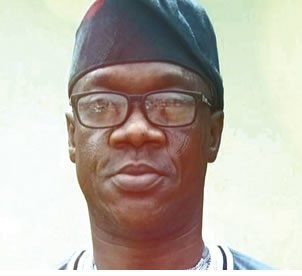
By Suyi Ayodele
There can be only one Oba (king) in a palace. That was how our forebears arranged our traditional settings. The saying in Yoruba that Oba kìí pé méjì láàfin, sùgbón ìjòyè lè pé méfà láàfin (there can be no two kings in a palace but there can be six chiefs), underscores the wisdom of our forebears. Modernity has since changed that. The Nigerian political class has further bastardised the setting. Nowadays, kings sleep as kings and wake up as commoners. Palaces used to be sacred in the days of our fathers. They are no more today! Nothing is sacrosanct anymore in our palaces. History has it that the first time an Oòni of Ife travelled out of his palace, all other obas in Yorubaland vacated their thrones until the Oòni returned. That is our culture; that is our tradition. Nowadays, kings travel from their domains to attend birthday gigs and other ludicrous social gatherings!
Today, our Obas, Emirs and Obis are all over the place chasing contracts and seeking favours from politicians. Monarchs wait for hours in the reception areas just to see common commissioners. Many wait at Government Houses endlessly to book appointments with the almighty governors. From the North to the South, East to West, occupants of our traditional stools are appointees of governors and influential politicians. Many monarchs who are without blue blood got to the thrones because they belong to the right political camp. A large number of them bought their ways to the palaces with good money. We have lost it with our traditional stools, and we may not get it right again; at least, not in this generation!
Kano has been in the news in the last five days. There are two Emirs of Kano in that ancient city now. The two occupy the section of the palace they could grab before the other came. And they did that at the dead of the night. In my place, a man does not enter his house through the window. Emirs of Kano are entering their palaces through the windows, and in the dead of the night. The night is reserved for thieves, the wicked ones and Our Mothers. But Royals now choose the stillness of the night to climb their forebears’ thrones! Kano will never be the same again. This is not a curse, but the reality of the situation now in that commercial city. We have our politicians to thank for that. When a town changes monarchs the way a nursing mother changes diapers, the town cannot be the same again. We have histories to back up this assertion.
MORE FROM THE AUTHOR: OPINION: Minister Tahir Mamman And His Varsity Age Limit
One day in August 1967, Oba Muhamadu Olanipekun, the Zaki of Arigidi Akoko, Ondo State, woke up to a huge noise by his palace. He quickly dressed up. So did his Olori. One of the palace guards rushed into the inner chamber to inform Kabiyesi about the noise. A huge crowd had gathered to attack the palace. That was the second of such in three months; the May 1967 rebellion having been successfully repelled. Zaki was enraged. He went to the inner chamber and came out holding the powers Arigidi gave to him when he was enthroned. A man dies but once. Kabiyesi would not be disgraced twice by the same people. Enough is enough! But the Olori had a different idea. She went on her knees, chanting Kabiyesi’s praise names. She told the Oba the enormous powers he was holding. She affirmed the potency of the wand in the king’s hands. She said Kabiyesi could destroy the entire people if he wished. That was why he was their Zaki. Then she added a caveat. If Kabiyesi used the power he was holding, he would be like the fabled hunter, who killed an elephant with his fila (cap). She told Kabiyesi the wise saying of the elders: ojó kan ni òkìkí ode a fi fìlà p’erin (the fame of the hunter who kills an elephant with his cap lasts but one day). She besought Kabiyesi to leave the palace.
She assured His Majesty that in years to come, the same people would come begging him to come back to the throne. Reason prevailed. Kabiyesi went back to the inner recesses of his ancestors to break kola nuts. Olori went outside to meet the people. She begged that the Zaki should be allowed to leave the palace in peace. The people agreed. Kabiyesi and his household departed. A few loyalists from Imo and Agbaluku Quarters of the town joined those from Arigidi Oja Quarters (royal family) to follow Zaki Olanipekun out of town. The mob set the palace ablaze! All attempts to install a new Zaki from outside the Arigidi Oja quarters were unsuccessful. The town drifted. Development became stalled and stunted. Twenty-five years later, the elders of Arigidi Akoko came together. They needed development in the town. But first, the injustice of the past must be corrected. They sent for Zaki Muhamadu Olanipekun. They begged for forgiveness. In 1992, just as his Olori predicted 25 years earlier, the Arigidi people brought back their Zaki to the throne. A visit to Arigidi Akoko today shows that a town can only develop when there is peace.
Ooni Ogboru was the forebear of the Giesi ruling house of Ile-Ife. He was on the throne for over 70 years, according to history. His chiefs got pissed off because he had stayed too long on the throne. They wanted fresh blood. So, they conspired and got Ooni Ogboru dethroned. They did that by asking the old monarch to come to Atiba Square to see an object. As soon as the Ooni got to the square, they shut the palace doors against him. The old monarch knew that there would be repercussions for the treachery. He did not fight. Rather, he relocated to a place known as Ife-Odan, and he settled down with his family members and loyal subjects who followed him. Rejoicing that they had gotten rid of the old monarch, the chiefs appointed a new Ooni. But calamity struck, not once, multiple times! In six months, six different Oonis, or Ooni designates died! Nobody knew what killed them. Emissaries were sent to Kabiyesi, Ooni Ogboru to come back to the throne. The old man refused. Instead, he sent his son, Giesi to be the next Ooni. That was when the town began to enjoy stability.
MORE FROM THE AUTHOR: OPINION: Tinubu, Scrap The Scam
Before Ooni Ogboru, there was Alaafin of Oyo, Alaafin Ajuan or Ajaka, who was also dethroned. The people accused him of being too peaceful. They needed an Oba who would be a warmonger. They chased Alafin Ajaka out and banished him to Igbodo. Sango, his younger brother, was installed as Alaafin. And for seven years, Alaafin Sango showed the people what is known in the street parlance as shege. For the seven years he was on the throne, the entire Oyo Kingdom fought battles upon battles. The oba was too restless. At his death, Sango was deified, till date. The people then made a comparison. They knew the peaceful era of Ajaka was more desirable. So, they sent for him and crowned him Alaafin for the second time. But then, Ajaka had become a changed man. According to The Rev. Samuel Johnson’s account of the second reign of Ajaka, the Alaafin waged about 1,060 wars! (See The History of the Yorubas, page 175-183).
One of the ‘current’ Emirs of Kano, Sanusi Lamido Sanusi II, also known as Muhammadu Sanusi II or Khalifa Sanusi II, became the Emir of Kano on June 8, 2014. He succeeded his late great-uncle, Ado Bayero. Due to his inability to control his tongue; as he carried on the way he was when he was the Governor, Central Bank of Nigeria (CBN), the government of Abdullahi Umar Ganduje dethroned him on March 9, 2020. His cousin, Aminu Ado Bayero, was enthroned in his stead. The dethronement of Sanusi Lamido Sanusi II followed that of his grandfather, Mohammadu Sanusi I, who was deposed in 1963, having reigned as the Emir of Kano for just nine years. The beneficiary of that deposition was Sanusi I’s brother, Ado Bayero. It was therefore not shocking, when upon the dethronement of Sanusi Lamido Sanusi II in 2020, his nephew, Aminu Ado Bayero, was appointed the Emir. In Kano, it has always been the case of Gambari pa Fulani, ko lejo ninu (when a Hausa man kills a Fulani man, there is no case).
MORE FROM THE AUTHOR: OPINION: Northern Nigeria’s Paedophilic Mass Weddings
Ever since the June 9, 2020, removal of Sanusi Lamido Sanusi II as the Emir of Kano, the city has been on the edge. A section of the city loyal to the deposed emir never left anyone in doubt that it would do anything possible to bring back the former CBN governor to the throne. The opportunity came when in the 2023 governorship election in the state, Ganduje could not win the state for his All Progressives Congress (APC), and the state slipped into the hands of Ganduje’s estranged godfather, Rabiu Kwankwanso’s New Nigeria People’s Party (NNPP), and Abba Kabir Yusuf became the governor. From May 29, 2023, the new governor, Yusuf, has dedicated his energy and state resources to undoing everything Ganduje did in his eight years. One of such was the last Friday event when the governor signed the bill passed by the Kano State House of Assembly, abolishing the five new emirates Ganduje created in 2020, into law. By that singular act, Aminu Ado Bayero ceased to be the Emir of Kano and Sanusi Lamido Sanusi II, who was dethroned as the 14th Emir of Kano, was returned as the 16th Emir of Kano. Since Friday, May 24, 2024, till date, Kano has been on edge. Ado Bayero, obviously backed by shielded federal power, also returned to Kano as the Emir. In Kano today, while Sanusi Lamido Sanusi II occupies the main palace in the city (Gidan Rumfa Palace), Bayero occupies the Nasarawa Palace in the same city! The question to ask is: who is the authentic Emir of Kano?
While the next few months would, no doubt, witness a lot of legal fireworks in Kano and other courts across the northern state, one thing that is certain is that wherever the pendulum swings, the Kano throne has lost its virginity! The sacredness of that throne is lost, I daresay, forever. I do not know why Sanusi Lamido Sanusi, who accepted his dethronement in 2020 with equanimity, fought behind the scenes to come back. I equally wouldn’t know why Aminu Ado Bayero would abandon the doctrine of his faith that Allah gives, and Allah takes, to want to do a fight-to-finish in this matter. All that my mind tells me is that there is something enticing about the Kano throne that the royals are not telling us. Why are royals not behaving as nobles again? Wherever Ganduje is today, I need someone to tell him that the legs of the corpse he buried four years ago are sticking out of the grave!



News
UK Court Closes Diezani Trial As Jury Prepares Verdict
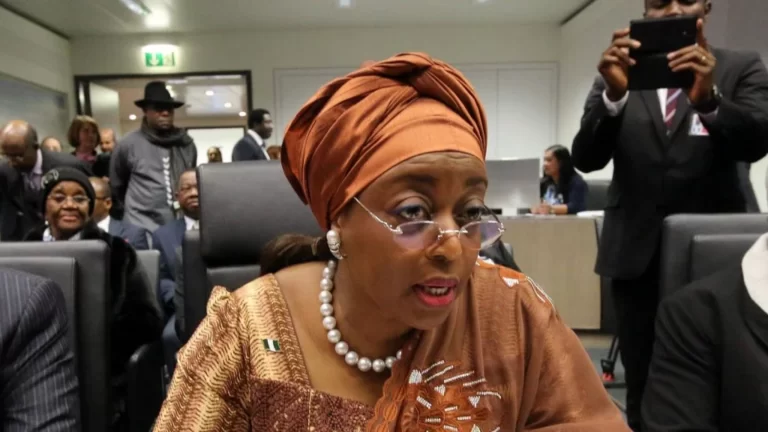
The defence and prosecution have closed their cases in the ongoing trial of former Nigerian Minister of Petroleum Resources, Diezani Alison-Madueke, at the Southwark Crown Court in the United Kingdom, with a jury now set to deliver its verdict later this week.
Alison-Madueke is standing trial alongside oil executive Olatimbo Ayinde and her brother, Doye Agama, on a five-count charge bordering on alleged bribery. All three defendants have pleaded not guilty.
British prosecutors allege that the former minister received bribes in the form of luxury items and high-value properties from oil industry actors seeking favourable treatment in the award of oil contracts during her tenure between 2010 and 2015.
The prosecution maintains that such benefits were improperly received and argues that there is no documentary evidence supporting claims of reimbursement or legitimate financial transactions backing the alleged transfers.
READ ALSO:Court Orders Final Forfeiture Of UK Property Linked To Useni, Ozekhome
In his closing submissions, defence counsel Jonathan Laidlaw accused the prosecution of failing to charge alleged bribe givers and relying on what he described as incomplete and unreliable evidence.
He questioned the handling of evidence from a 2015 raid on Alison-Madueke’s Abuja residence, alleging procedural irregularities, including the absence of key officials during the operation and lack of photographic records of items in their original locations.
Laidlaw further argued that critical documents that could support the defence case—such as records relating to reimbursements and official ministerial duties—were missing. He also faulted the prosecution’s reliance on evidence linked to Nigeria’s Economic and Financial Crimes Commission (EFCC), while challenging its rejection of parts of the same material in relation to co-defendant Ayinde.
He also disputed claims that official travel and financial records relating to the former minister were unavailable, describing the prosecution’s position as inconsistent.
READ ALSO:UK Rolls Out Digital Visit Visas For Nigerians
Responding, lead prosecutor Alexandra Healy maintained that oil executives provided improper benefits to the former minister while their companies benefited from lucrative state contracts. She argued that such arrangements were incompatible with public office and unsupported by any documentary evidence of reimbursement.
Healy further referenced a £1 million payment linked to businessman Benedict Peters, describing the use of intermediary structures as a deliberate attempt to conceal the nature of the transaction.
She also noted that Alison-Madueke had been aware of the investigation for nearly a decade.
With both sides having completed their submissions, the jury is expected to return its verdict later this week.
News
Sleep Timing Irregularity Could Double Risk Of Heart Attack, Experts Warn

Experts have warned that going to bed at different times each night, particularly during midlife, could be an early warning sign of future heart problems.
New research from the University of Oulu found a strong link between irregular bedtimes and an increased risk of major cardiovascular events, especially among people who spend less than eight hours in bed each night.
According to the study, individuals whose sleep schedules varied widely and whose time in bed was under eight hours faced roughly twice the risk of serious heart-related events compared with those who maintained more regular routines.
In contrast, irregular wake-up times did not show a clear association with cardiovascular problems.
READ ALSO:Eating Takeout Food Often May Increase Heart Disease Risk — Study
Major cardiovascular events examined in the study included conditions requiring specialised medical care, such as heart attack and ischaemic stroke.
The research, published in BMC Cardiovascular Disorders, followed 3,231 individuals born in northern Finland in 1966. Their sleep habits were monitored over a one-week period at age 46, while their health outcomes were tracked for more than a decade using healthcare register data.
Researchers measured sleep duration and timing using activity monitors that recorded how long participants remained in bed. The findings pointed to bedtime consistency as a particularly important factor for heart health.
Laura Nauha, a postdoctoral researcher at the University of Oulu, explained that earlier studies had already linked irregular sleep patterns to cardiovascular risks.
READ ALSO:Sleeping Late Can Trigger Heart Disease Later In life, Scientists Warn
However, she noted that this study is the first to show that variability in bedtime, wake-up time, and the midpoint of the sleep period are independently associated with major cardiovascular events.
According to Nauha, everyday routines play a major role in shaping long-term heart health.
“Maintaining a regular sleep schedule is one factor that most of us can influence,” she said.
“Our findings suggest that the regularity of bedtime, in particular, may be important for heart health. It reflects the rhythms of everyday life and how much they fluctuate,” Nauha added.
(Nigerian Tribune)
News
NMA Threatens N1bn Suit Against EFCC Over Alleged Assault On UUTH Professor

The Nigerian Medical Association, NMA, Akwa Ibom State Council, has concluded plans to initiate a one billion naira suit against the Economic and Financial Crimes Commission, EFCC, over the alleged assault of its member, Professor Eyo Ekpe, a Professor of Cardiothoracic Surgery at the University of Uyo Teaching Hospital, UUTH.
This was among the 10 resolutions reached by the body at the end of its emergency virtual meeting on Tuesday in respect of the arrest and alleged assault of Professor Ekpe by the commission.
Recall that EFCC operatives, on the grounds of authenticating a medical report presented by a suspect, were said to have invaded the hospital and subsequently arrested Prof. Ekpe under demeaning circumstances.
It was gathered that when the professor was accosted by the official, he told him that the office was already processing the request. However, the official allegedly went outside, mobilised other colleagues, and returned to hound the professor away after allegedly beating him and making him cry in public.
READ ALSO:EFCC Arraigns Two Over Alleged N8.9m Investment Fraud In Anambra
At a press conference held at Doctors’ Mess, Udoudoma, Uyo, on Wednesday, the NMA Chairman, Prof. Aniekan Peter, who also suffered during the crisis, said it was a slap on the integrity of the NMA as a body to allow anyone assault their member, not to talk of a professor who was only carrying out his lawful duties of saving lives and imparting knowledge.
Reading a communiqué endorsed by the chairman and the secretary, Dr Ighorodje Edesiri, respectively, the assistant secretary of the union expressed dismay that there has been a recurring pattern of harassment and assault of medical professionals and members of the association by security agencies within the state, adding that the union would no longer condone such acts.
The union, while observing that there was no formal invitation extended to Prof. Ekpe or the leadership of the NMA before the incident, described the act as barbaric, degrading, inhuman, and a gross violation of the sanctity of the hospital environment, thereby putting staff and patients at risk and undermining the dignity of the medical profession.
READ ALSO:EFCC Arrests Edo Traditional Ruler, One Other For Alleged fraud
The union, which has since embarked on an indefinite strike, said members would not return to work unless the EFCC tenders an apology to the assaulted professor, chairman, and members of the NMA, and identifies and prosecutes the officials who carried out the operation.
The union further stated that it has resolved not to offer any medical services to EFCC officials or their relatives, as they have chosen the path of cruelty against their member.
The communiqué read in part: “We observed that Prof. Eyo Ekpe was apprehended within the premises of UUTH by masked EFCC operatives who physically assaulted him, beat him to the point of bleeding, and handcuffed him alongside other doctors and hospital staff who attempted to intervene.
READ ALSO:EFCC Arraigns Ex-NRC MD Over Alleged $385,000, N165m Fraud
“Prof. Peter, Akwa Ibom NMA chairman, was shoved and exposed to teargas when he approached the scene seeking clarification from the operatives. Hospitals are sacred environments meant for the preservation of life and should not be subjected to violent invasions by security agencies.
“We shall institute legal action against the EFCC with a demand for damages in the sum of one billion naira (N1,000,000,000) for the physical, emotional, professional, and institutional damages caused. Congress further emphasised that this action shall serve as a deterrent against future harassment, intimidation, or assault of medical practitioners by any security agency. The association reaffirmed its commitment to protecting the welfare, dignity, and safety of all its members.”

 Politics4 days ago
BREAKING: NDC Zones Presidency
- Politics5 days ago
Crisis Hits APC Govs Forum As 18 Rejects Uzodinma’s Removal
- Sports5 days ago
Turkey: Galatasaray Give Condition To Sell Victor Osimhen
- News4 days ago
Presidency Reveals Details Of Ribadu’s Meeting With US VP, Secretary Of State
- News3 days ago
Edo Bags NECO Excellence Award
- Politics2 days ago
APC Clears Wike Loyalists, Disqualifies All Fubara-aligned Aspirants For State Assembly
- Metro4 days ago
My Wife Goes To Mountains To Pray, Denies Me Sex For 9yrs
- Headline4 days ago
Gas Prices In US Edge Down After Two Weeks Of Increases
- Headline4 days ago
‘Pioneer Of Cable TV News’: Key Facts About CNN Founder, Ted Turner
- Metro4 days ago
‘My Wife Deserted Me 4 Months After We Got Married, Took To Prostitution Abroad’


