
News
OPINION: Oshiomhole In A Fight Between The Elephant And The Pit
By Tony Erha
‘Okuo imose”, “no fight is attractive” – all fight is ugly, according to the Edo people. If a fight doesn’t pluck the teeth it would drip the noise of red blood. That is why pundits were apprehensive and had to caution Dangote Refinery and the Petrol and Natural Gas Senior Staff Association of Nigeria (PENGASSAN) to a sound reasoning, over the sack of 800 of its workers by Dangote, which was followed by a strike action that was later called-off. The fisticuff was intensified as the National Union of Petroleum and Gas Workers of Nigeria (NUPENG), joined the spat by supporting PENGASSAN.
Like the American freestyle wrestling, where partakers fight with anything they lay their hands upon, a melee, a-free-for-all in which no one seems to know the real opponents. The fallout of the Dangote and PENGASSAN fight has unsettled Nigerians. The Benins would say “ama re fi ekpa arie gb’ ihue”; “the fisticuffs hadn’t started when the nose bled blood”. For the hapless consumer public is still at the mercy of the raging feud after the settlement. Indeed, the grass suffered where two elephants fought dirty. Buyers of Dangote products are still groaning under a surge of cooking gas price, from about N1,000 to N3,200 per kg.
Dangote Refinery’s kingpin, Aliko Dangote, who has huge investment monies flowing in his veins, vowed to a showdown with the PENGASSAN and NUPENG. Do not take my calmness for cowardice; Aliko seemed to have said, flinging his hat into the ring. “…There is no fight I have never won…” he boasted, whereas he actually won several and lost some, in the monopoly business with fellow competitors.
It was a rivalry fight between the Elephant and the Pit, when the Elephant arrogates to being the largest land animal; and the Pit boastful he is the hugest depth in the ground. The Pit threatens to swallow the Elephant and the Elephant determined to cover up the Pit. Finally on the encounter, the Pit that swallows the Elephant wouldn’t swallow more animals, nor will the Elephant live to swallow another pit.
MORE FROM THE AUTHOR:OPINION: ‘Ikhueki’, Benin Market Women Are At War!
In wrestling and boxing of exchange of punches and slams, America’s loquacious president and all-time wrestling and boxing promoter, Donald Trump, is well-known. One of the memorable grim and tricky fights of the tempest Trump was when he dragged his fellow promoter from the ringside to the dais, and beckoned on others to instantly shave his head, to the wild delight of wrestling fans across the globe. Realising that he had truly missed out from his rasmatazz in promoting competitive boxing and wrestling, an intoxicating Trump had recently arranged for a cage-wrestling showdown to mark one of his official events in a US presidential venue. When a lion king thirsts for the blood and flesh of prey, as he no longer go hunting, he claws to his own tongue to a consolatory leak of his own blood to quench his lust for blood.
Adams Aliu Oshiomhole, Nigeria’s former labour leader and ex-governor of Edo State, was dragged into the fight with his comment that PEGASSAN erred declaring a strike action without a second thought for the majority poor, who were bound to suffer the strike’s consequences. PENGASSAN and NUPENG thereby saw Oshiomhole as entering the fight arena as in ‘Enter the Dragon’, an epic film in which Chuck Norris; a famous kickboxer sorted it out with Bruce Lee, the late iconic martial artiste. It was somewhat absurd for NUPENG to point menacingly at Oshiomhole, declaring him a ‘persona non grata’ and placed a ban on him from all NUPENG’s activities, whereas the oil union was only one amongst the over 41 affiliate unions that constituted his command of the Nigerian Labour Congress (NLC), with him as its two term president.
Now, Oshiomhole seems better placed having resumed his pro-people stand, with his current valuable contributions to it in the Senate’s chamber. But NUPENG is irritated that one of their own could attempt to stop the mongoose from killing the snakes that had all along been killed for gains and superiority sakes. Do the organised labour trust Oshiomhole, vice versa? It’s likened to the crusading music of the late musician Joseph Osayomore; “Who know man naim dey kill man” (one’s enemy is his friend). Although Oshiomhole left active labour activism about two decades ago, he’s probably the same ‘adamant Adams’ who knows the strength and pitfalls of regimental unionism, where men in khaki are soldier ants.
Why will NUPENG, led by William Akporeha, its president, be so unfair banning their former leader from speaking in their public fora, knowing that speaking in the function of the organized labour was the most effective pills he takes to get well?
MORE FROM THE AUTHOR:OPINION: Endless Season Of Guns, Terror And Uncertainties
Oshiomhole may not be a ringside promoter to Dangote and his mercantile, in the fight-to-finish with the PENGASSAN and NUPENG warlords, as he was accused of, nor for a ravaging workers union, than for a weary public that is a usual butt of undue strikes by insensitive workers’ and endless monopoly by businesses. A suspicious PENGASSAN and NUPENG, even though are rightly condemned for anti-people stand, by their inept strike, might have made a valid point that leaders, whose words sometimes (if not often) conflict with the good examples they preach, set the bad example for others to follow.

In a game of survival, like the odd one currently faced by the Super Eagles, in their bid to qualify for the world cup, a Gernot Roy, Nigeria’s former coach, who was booted out, and now leading the national team of the Republic of Benin, would open Nigeria’s football secrets to his newest side, as NUPENG also think their leaders are to Dangote. And is an irony that Gernot Roy is a decider of the fate of Nigeria, in the Super Eagles final match with the Benin team for the world cup carnival.
Like Trump, Oshiomhole is ‘very slippery’ as he has in common a showmanship, raw courage and the resilience of a marathoner. Oshiomhole is ‘a giant’ who’s physical and determined. Sufuyan Ojeifo, a prolific writer and journalist, once called him ‘dynamite that comes in pieces’; while I add ‘dynamite that turns a mass into pieces’. For a man who trains so rigorously, and does drills which most young men can hardly do, I was terrified when Oshiomhole, unlike a pugilist promoter in a prematch talk-show, angrily warned Reuben Abati, the Arise TV presenter, that he would punch him to puff-puff’ (swollen pie), with a black-eye and calluses, for slandering him.
If the fight between the Dangote petroleum outfit and the oil unions was in the interest of the public, and not for their selfish interests, all wouldn’t be bothered. Union workers usually orchestrate strike actions, only when it comes to their welfare, whilst staple oil derivative products are still beyond reach , notwithstanding that Nigeria is one of the leading oil producing countries of the world, that are starved of its products.



News
NMA To Withdraw Medical Services In Edo Over Kidnapped Colleagues
The Nigeria Medical Association (NMA), Edo State Branch, has threatened to withdraw medical services across the state, effective from Saturday, 10 January, 2026.
This followed the recent abduction of two medical doctors on January 1st and 2nd, 2026.
Chairman of the NMA Edo State branch, Dr. Eustace Oseghale, in a statement made available to newsmen in Benin on Friday, stated that the withdrawal of services was a direct consequence of the abduction of their colleagues and a reflection of the heightened sense of vulnerability among medical practitioners in the state.
READ ALSO:Doctors’ Strike Continues As NARD Demands Fair Deal, Better Pay
Oseghale, on behalf of the NMA, called for immediate release of the abducted doctors and implementation of measures to prevent future incidents.
The statement reads: “This incident raises concerns about healthcare professionals’ safety in Edo State, threatening their lives and undermining healthcare delivery.
“We demand the immediate release of our abducted colleagues as well as enhanced security protocols for Edo State residents and regular engagement between NMA Edo and the Edo State Government on security concerns.”
READ ALSO:Edo Targets 2.2 Million Children For Measles, Rubella Vaccination
The NMA Chairman, while insisting on withdrawal of services statewide if their demands aren’t met, stressed that a safe working environment is crucial for healthcare providers.
“We’ll continue to withhold services until our demands are met and colleagues are safe.
“We urge a swift resolution and the safe return of our colleagues. Security operatives should take this seriously, as they’ll be held responsible for the consequences of our action,” Oseghale said.
News
Edo Targets 2.2 Million Children For Measles, Rubella Vaccination
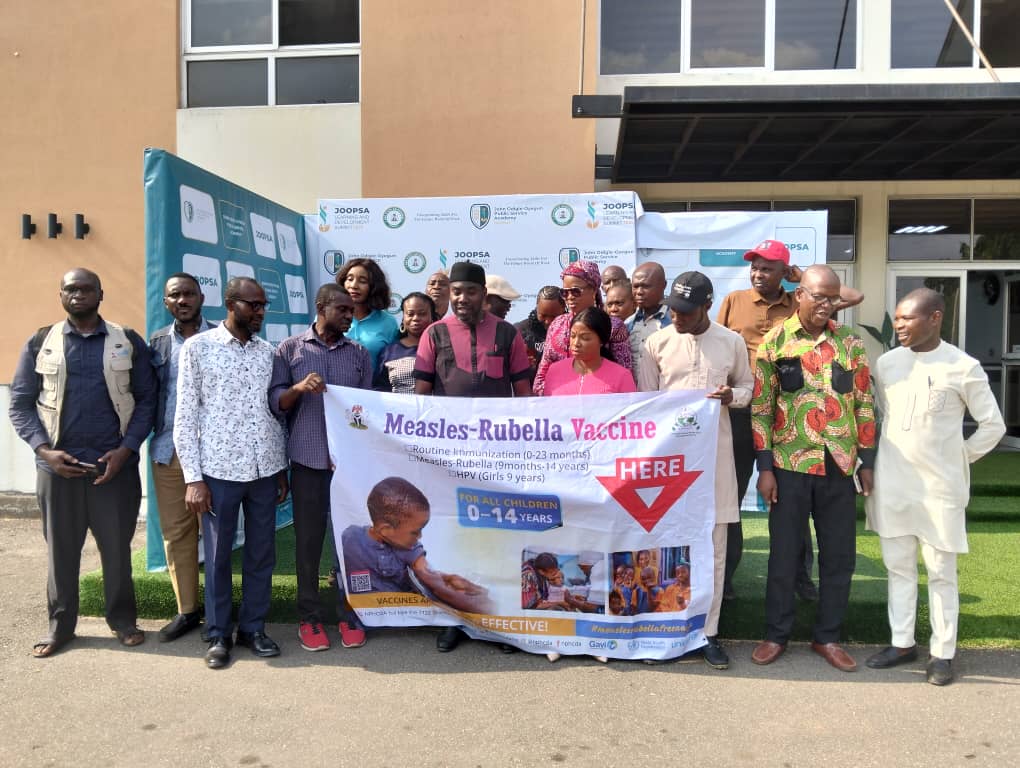
The Edo State Government says it is targeting about 2.2 million children aged between 0 and 14 years for measles and rubella vaccination across the state.
The Director of Disease Control and Immunization at the Edo State Primary Health Care Development Agency, Dr. Eseigbe Efeomon, who disclosed this during stakeholders’ sensitisation meeting in Benin City, said this would be done in collaboration with development partners.
Efeomon, while noting that the vaccination exercise scheduled to hold simultaneously from January 20 to January 30, 2026, across the 18 local government areas of Edo State at designated health facilities and temporary vaccination posts, said the campaign aims to contribute significantly to the reduction of measles and rubella in Nigeria.
He explained that achieving this target requires increased population immunity through sustained vaccination.
READ ALSO:Man Arrested In Edo For Alleged Abduction Of 4-year-old
Dr. Efeomon stressed that only qualified and certified health workers would be recruited as vaccinators because the vaccines are injectable.
According to him, the vaccination strategy would involve fixed posts and temporary fixed posts, and vaccination cards would be issued to all vaccinated children as proof, which parents and caregivers are advised to keep for future reference.
He added that vaccination teams would visit schools, churches, mosques, markets, motor parks, internally displaced persons’ camps and other public places, while children who receive the vaccine would be finger-marked to prevent double vaccination.
He reiterated that the overarching goal of the campaign is to drastically reduce rubella incidence nationwide and protect children from preventable diseases through effective immunisation coverage.
READ ALSO:Edo widow-lawyer Diabolically Blinded Over Contract Seeks Okpebholo’s Intervention
Also speaking, the World Health Organization Local Government Facilitator, Mr. Ajaero Paul, described measles and rubella as major causes of death and congenital abnormalities among children globally.
He said both diseases are preventable through the measles-rubella vaccine, which he described as safe and effective,
He added that sustained advocacy is critical to reducing child mortality and lifelong disabilities.
On his part, UNICEF Social and Behavioural Change Health Officer, Yakubu Suleiman, emphasised that the measles-rubella vaccine is safe and effective for all children aged nine months to 14 years.
READ ALSO:Edo: Suspected Kidnappers Kill Victim, Hold On To Elder Brother
He stated that the government has fully paid for the vaccines, making them available at no cost to all eligible children in government health facilities across the state.
Suleiman explained that vaccination not only protects individual children but also safeguards communities from deadly vaccine-preventable diseases such as measles and rubella.
He added that even children who had previously received the measles vaccine should still be given the measles-rubella vaccine and appealed to schools and other key stakeholders to support the campaign to ensure that no child is left behind.
News
Togo, Niger, Benin Owe Nigeria Over $17.8m For Supplied Electricity – NERC

Nigeria’s electricity regulator has disclosed that three neighbouring countries, Togo, Niger and Benin, are indebted to Nigeria to the tune of $17.8 million, equivalent to more than N25 billion at prevailing exchange rates, for power supplied under bilateral electricity agreements.
The Nigerian Electricity Regulatory Commission, NERC, made this known in its Third Quarter 2025 report, which reviewed market performance within the Nigerian Electricity Supply Industry, NESI.
According to the report, the international customers were billed a total of $18.69 million by the Market Operator for electricity supplied during the third quarter of 2025. However, only $7.125 million was paid, leaving an unpaid balance of $11.56 million for the period under review.
NERC also revealed that the same international offtakers had outstanding legacy debts amounting to $14.7 million from previous quarters. Of this amount, $7.84 million was settled, leaving a residual balance of $6.23 million.
READ ALSO:Expert Identify Foods That Increase Hypertension Medication’s Effectiveness
When combined with the Q3 2025 shortfall, the total outstanding debt stood at $17.8 million, which translates to about N25.36 billion at an exchange rate of N1,425 to one US dollar.
The regulator identified the international electricity customers as Compagnie Énergie Électrique du Togo, Société Béninoise d’Énergie Électrique of Benin Republic, and Société Nigérienne d’Électricité of Niger Republic.
NERC stated that the three utilities collectively paid just $7.125 million against the $18.69 million invoice issued for electricity supplied in the third quarter, resulting in a remittance performance of 38.09 per cent.
This meant that more than half of the billed amount remained unpaid at the close of the quarter.
READ ALSO:Electricity Workers Threatens Shutdown Over Staff Brutality
The commission explained that the electricity exported to the three countries was generated by grid-connected Nigerian generation companies and delivered through cross-border bilateral power supply arrangements.
By contrast, NERC reported a stronger payment performance among domestic bilateral customers. According to the report, local customers paid N3.19 billion out of the N3.64 billion invoiced for the same quarter, representing a remittance rate of 87.61 per cent.
The regulator further noted that some bilateral customers, both international and domestic, made additional payments to offset outstanding invoices from earlier quarters.
READ ALSO:Reps Ask NERC, DISCOs To Reverse Band A Tariff Hike
Specifically, the Market Operator received $7.84 million from international customers and N1.3 billion from domestic customers in settlement of previous obligations.
Beyond bilateral transactions, NERC disclosed that Nigeria’s 11 electricity distribution companies remitted a total of N381.29 billion to the Nigerian Bulk Electricity Trading Plc and the Market Operator in the third quarter of 2025. This was out of a cumulative invoice of N400.48 billion, translating to an overall remittance performance of 95.21 per cent.
The commission said the figures were derived from reconciled market settlement data submitted as of December 18, 2025, as part of its statutory evaluation of the commercial health and performance of the electricity market.

 News5 days ago
What I Saw After A Lady Undressed Herself — Pastor Adeboye
- Headline5 days ago
PROPHECY: Primate Ayodele Reveals Trump’s Plot Against Tinubu
- Metro5 days ago
Armed Robbers Shot PoS Operator To Death In Edo
- Business3 days ago
NNPCL Reduces Fuel Price Again
- Metro4 days ago
AAU Disowns Students Over Protest
- Metro5 days ago
Joint Task Force Kills 23 Bandits Fleeing Kano After Attacks
- Politics5 days ago
2027: Rivers APC Pledges To Follow Wike’s Instructions
- Metro4 days ago
Edo: Suspected Kidnappers Kill Victim, Hold On To Elder Brother
- Metro4 days ago
Nine Soldiers Feared Dead In Borno IED Explosion
- Headline2 days ago
Russia Deploys Navy To Guard Venezuelan Oil Tanker Chased By US In Atlantic


