

News
OPINION: Sprit Pardons Kindred Spirits

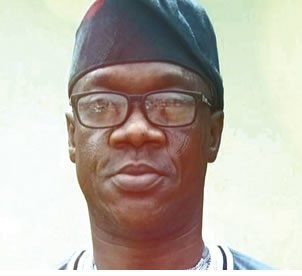


By Suyi Ayodele
The elders of my place caution that the sacrificial àkàrà should not be given to an emèrè to share. When you ask why, they respond that she will merely make her kindred spirits the sole beneficiaries. And when that happens, the elders further caution, the tragedy (ultimate death), which the sacrifice is designed to avert will eventually happen.
Having shared this traditional caution, I would like to turn to my own childhood experiences. Growing up in the hinterland can be fun. In my part of Yorubaland, we have special children called Emèrè. They are mostly females. Emèrè are not Àbíkú which the Igbo call Ogbanje. The difference here is that while a typical abiku dies and returns to the same parents as many times as he or she can muster before he or she is ‘overpowered’, an emèrè remains a pain in the neck of her parents through frequent and indeterminable illnesses. The illnesses don’t kill her but merely drain the resources of her parents. Powerful children, Yoruba metaphysics says that emèrè are husbands of witches (emèrè ni oko àjé) because they are stronger and more ‘wicked’!
Emèrè children are treated specially, most times, with utmost attention. They are fragile in looks and conduct. Thay are also particularly spoilt in the real sense of the Yoruba concept of àkébàjé. Parents offer sacrifices to appease them to stay here on earth. Our belief is that emèrè children have their kindred spirits waiting for them by the gates of heaven. If an emèrè eventually dies, it is believed that a replacement might not come easily. Everything is therefore done to prevent such a tragic end.
So, to keep them alive with their suffering parents, sacrifices, known in the local dialect as òsè, are offered. The sacrificial items, mostly small edibles ranging from groundnuts to sugarcane; èkuru (white moi moi) to àkàrà, are prepared and offered to children who are in the same age bracket as the emèrè. After the preliminary prayers, the emèrè is asked to share the items to the ever-joyous children who sing traditional praise chants for her.
But there is a strange practice in the sharing of the sacrificial edibles. While all the other items are given to the ‘celebrant’ to share, the akara is never given to her. The explanation for this exception is illustrated in the saying that nobody gives the sacrificial àkàrà for the emèrè to share; otherwise, she will simply give it to her kindred spirits to pave the way for her journey to the great beyond (A kìí fún emèrè ní àkàrà òsè pín kí ò má baà pin fun egbé è láti pa ònà òrun mô).
In our elementary Government classes from Form Three to Form Five of those days, the then Miss Folake Afolabi, and Messrs Abayomi Oduntan and Vice Principal Ojo, repeatedly, listed what they called “The Presidential Powers of an Executive President.” We were taught that an Executive President is both the Head of State and Head of Government, a fountain of honour; he declares state of emergency; assents to and vetoes bills; declares wars and signs treaties and has the prerogative of mercy, among almost twenty of such powers.
MORE FROM THE AUTHOR:OPINION: Befriending Bandits
On the Prerogative of Mercy, we were told that an Executive President has the right to pardon a convict on the death row. And once pardoned, such a beneficiary can no longer be held in relation to the offence(s) that led to his or her conviction.
President Bola Ahmed Tinubu exercised his Prerogative of Mercy power last week and set free 147 ex-convicts. The controversy that greeted that act is one that will not abate in a hurry. In all the comments for and against the action by the President, everyone, including the President’s ‘political enemies’, agreed that Tinubu’s action was, and is, within the ambit of the law. The constitution allows him to extend pardon to any manner of convicts, and his action cannot be subjected to any judicial review. Good enough.
However, the grey area in the review of the President’s exercise of his prerogative of mercy has to do with the morality that informed the choices of some of the ex-convicts President Tinubu set free. Majority of the people who frowned at the list of the beneficiaries of the President’s ‘kindness’ argued, and very correctly too, that the huge percentage the president allocated to convicts of drug-related offences, speaks volumes of the President’s disposition to the fight against narcotics in the nation.
The argument here is that of the 147 convicts President Tinubu pardoned, 60 of them are those who were convicted and sentenced to various terms of imprisonment for dealing in hard drugs. A simple arithmetic puts that figure at 40.8 percent of the total number of 147 beneficiaries! Many, justifiably, concluded that if not for anything, Mr. President should have exercised discretion in freeing those drug lords.
Reviewing the arguments for and against this latest action of President Tinubu, I drew inspiration from the words of wisdom by our elders as quoted above that one should not give the sacrificial àkàrà òsè to an emèrè to share. Of the “Executive Powers of an Executive President” those good teachers of yore taught us, the one that looks more like an àkàrà òsè (sacrificial àkàrà) is the prerogative of mercy. In the hands of an emèrè president, who causes the people pain and agony, draining their meagre resources by the minute, that power can be easily abused. The morality of 60 drug offenders benefiting from the list of 147 pardoned ex-convicts flies in the face of decency!
Colleen Shogan, a former Senior Executive at the Library of Congress, US Senate, on December 2, 2022, wrote: “The History of the Pardon Power: Executive Unilateralism in the Constitution.” In the article, which was published by The White House Historical Association under the Rubenstein Center Scholarship, said that when the exercise of the clemency power is not used discretionally, the one who wields the power suffers public opprobrium. Hear her:
MORE FROM THE AUTHOR:[OPINION] Olubadan Ladoja: His Tenacity, His Triumphs
“Gerald Ford’s 1974 pardon of Richard Nixon was arguably the most famous exercise of executive clemency in American history. After Ford’s pardon of Nixon, his approval rating fell over twenty points in the ensuing days. Many political analysts conclude that Ford never recovered from the pardon, thus severely damaging his chances to win election to the White House in 1976.” She added that Ford’s explanation “that he granted the pardon as an act of mercy to Nixon and for the broader purpose of restoring domestic tranquillity in the nation after Watergate”, could not salvage the situation.
Imo Udofa, Professor of Law, University of Uyo, reinforces Shogan’s arguments. In his “The Abuse of Presidential Power of Pardon and the Need for Restraints”, published in the Beijing Law Review, Vol 19, No 2, June 2018, Udofa argues that “The power of pardon is virtually unfettered and unchecked by formal constraints in most jurisdictions, thereby rendering it susceptible to abuse.”
Udofa further states that “The recent exercise of presidential power of pardon by the current American President, Donald Trump, by granting pardon to Joe Arpaio (a former sheriff of Maricopa County, Arizona, who was found guilty in July 2017 of criminal contempt for defying a judge’s order against prolonging traffic patrols targeting immigrants) has rekindled the discussion on the uses and abuses of the pardon power…. It has been argued that Arpaio should have been allowed to serve his punishment, and the presidential pardon amounted to a presidential endorsement of the criminal contempt for which Arpaio was punished.”
In Nigeria, the teacher of law says the case of President Goodluck Ebele Jonathan’s “pardon of Chief D.S.P. Alamieyesigha, former Governor of Bayelsa State, convicted of several corruption charges, remains the most controversial exercise of presidential pardon power in the country.”
He posits further that while “The power to grant pardon is of ancient origin and recognised today in almost every nation…. However, in recent times, the pardon power has been abused as political and other extraneous factors tend to determine its application. It has also been seen as capricious and inaccessible by ordinary people. The usefulness of the power has seriously been dented by lack of control and checks in most jurisdictions, including Nigeria.”
“Sacred” as prerogative of mercy is, Udofa says its application should be alongside “checks and guiding principles.” I add here: with utmost discretion!
The US for instance, punishes tax evasion and drug-related offences severely. On drugs, the US would go to any length to get the culprit to book. That was why, against international conventions, the administration of President George H.W. Bush ordered the invasion of Panama in an operation codenamed “Operation Just Cause” and had President Manuel Antonio Noriega Moreno (February 11, 1934 – May 29, 2017), simply Noreiga, ‘kidnapped’ on January 3, 1990, on the accusation of dealing in hard drugs. In that operation, the US used over 200,000 US troops to effect Noriega’s arrest. His eventual trial in 1991, tagged “trial of the century” by the US Drug Enforcement Administration, earned the Panamanian president 40 years in jail!
MORE FROM THE AUTHOR:[OPINION] Iyaloja Of Benin: Lessons In Cultural Diversity
Noreiga’s travails, suspect as they were, are lessons in how a nation that wants to grow treats felons. After his jail term was reduced to 17 for “good behavior” in the US, Noriega was extradited to France in 2010, where he was convicted and sentenced to seven years of imprisonment for money laundering. By 2011, France extradited him to Panama, where he was imprisoned having been tried in absentia in the 1990s for the crimes he committed while his dictatorship in Panama lasted. He carried that ignominy to his grave!
Political theorists and analysts believe that Noriega was punished not necessarily for being a drug baron, but for his audacity to stop spying for Big Brother, the US! This side of the Noriega’s coin notwithstanding, the former dictator of Panama was punished home and abroad for every crime he committed against the State. That is how society moves from bad to good. A system that places politics above the wellbeing of the people and asks felons to walk freely irrespective of the irreparable damage they have caused, cannot move forward.
This is what President Tinubu did, when he set free drug offenders in his latest half-thought presidential clemency. In case the president does not realise it, by making drug barons 40.8 percent of his clemency list, Mr. President has sent the wrong signal that here, in Nigeria, crime pays. Why nobody in Tinubu’s Presidency considered the collateral damages those ex-drug convicts have done to the public shows how reflective this government could be. That nobody considered the number of children in various rehab centres because of the activities of the freed drug peddlers interrogates the depth of advice the President gets!
But more importantly, and most troubling is the lead President Tinubu has given to those who believe till the second coming of the Messiah, that the President’s past was tainted. They can now go to town with the did-we-not-say-so cliche. Our elders say when a man is accused of having a long intestine, he has the responsibility to curtail his gastronomic tendencies (tí a bá pe ènìyàn ní abífun ràdàràdà, ó ye kí ó pa ìfun rè mó).
Again, they submit that a man accused of being a petty thief should not be seen playing with a goat’s kid in a dark corner of the village (a kìí pe ènìyàn l’ólè kó máa fi omo ewúré seré l’ókùnkùn). How the wisdom in these sayings of our ages got lost on President Tinubu when the committee he was said to have constituted for the purpose presented the list of those to benefit from his presidential pardon such that almost half of the list are drug convicts, beats one’s imagination. One is heavily tempted to believe that this is a case of paddy paddy, ala someone helping someone!
Nothing brings home the caution that we should not allow an emèrè to share the àkàrà òsè so that she will not give it to her kindred spirits more than the pardon of the 60 drug offenders by President Tinubu. How his ‘political opponents’ will not draw a correlation between the perceived reputation of the President in the social world, and the pardon of 60 drug lords would be the eighth wonder of this age.
By that indiscretion, 60 notorious drug dealers are out on the streets without any encumbrance! What are the implications? Your guess is as good as mine! How the President would explain that he did not free those drug felons to pave way for their return journeys to the underworld of drug trafficking is a herculean task. And I take a bet: Presido go explain tire, but we no go understand!




News
Migration Agency Warns Migrants Against Irregular Travel Routes


The International Organisation for Migration (IOM), in collaboration with Giving is Healing Foundation, has sensitised residents of Ayobo in Alimosho Local Government Area of Lagos State on the dangers of irregular migration and the need to embrace legal travel procedures.
Speaking during a sensitisation programme held at Megida Ifelodu Community Development Association in Ayobo, the founder of Giving is Healing Foundation, Mr. Gbolahan Ayediran, warned intending migrants against using illegal travel routes.
Ayediran said many Nigerians desire to migrate abroad in search of better opportunities but often ignore proper procedures, thereby exposing themselves to several dangers.
“Lots of people want to migrate and most of them do it in the wrong direction. The reason for the programme is for us to advise people on how they can migrate in the right way. As much as migration is their right, they should do it correctly,” he said.
READ ALSO:How Wike Rescued Me From Political Oblivion — Oshiomhole
He advised intending travellers to obtain the necessary travel documents before embarking on any journey, noting that such documents include international passports, visas, flight tickets and yellow cards, depending on the destination country.
According to him, migrants should also gather adequate information about their destination countries to enable them make informed decisions before travelling.
Ayediran further highlighted some of the dangers associated with irregular migration, including abuse, exploitation, discrimination and forced labour.
Also speaking, the Chairman of Megida Ifelodu Community Development Association, Elder Mathews Amusan, commended the organisers for enlightening members of the community on safe migration practices.
READ ALSO: He Can’t Fix His Party Let Alone Nigeria – Oshiomhole Blasts Atiku
He urged residents planning to travel abroad to always follow legal migration procedures to avoid falling victim to human trafficking and other migration-related challenges.
One of the participants, Mr. Kolawole Adenoko, said the programme enlightened him on the dangers of irregular migration and the importance of travelling through the proper channels.
He added that he would also educate his relatives and friends on the risks associated with illegal migration.
News
Shatta Wale Bailed Burna Boy From Ghana Prison After Arrest For Smoking Weed – Captan


Ghanian singer, Captan, has claimed that his former record label boss, Shatta Wale, once bailed Nigerian singer Burna Boy out of prison in Ghana after he was allegedly arrested for smoking weed.
Speaking in a recent podcast interview, Captan claimed that Shatta Wale sent him and others to free Burna Boy from police custody.
He also claimed that Shatta Wale and his group once accommodated Burna Boy when he was being hunted by some dangerous men.
READ ALSO: Wale Edun Opens Up After Sack
Captan said, “I once bailed Burna Boy out of prison in Ghana when he was arrested for smoking weed. Shatta Wale sent me and some guys to go and free him from police custody.
“There was a time we also accommodated him when some people were after his life. We helped him settle the case.”
He added that he and Burna Boy are no longer in good terms after the Nigerian artist’s fallout with his mentor, Shatta Wale.
He, however, said he and Shatta Wale are open to reconciling with Burna Boy if he asks for it.
Watch the video here
News
Children’s Day: Chaos At Ogbe Stadium As Dozens Faint


Chaos erupted on Wednesday during the Children’s Day celebration as dozens of students reportedly collapsed following a stampede triggered by the use of pepper spray.
The event,
organised by the Edo State Ministry of Education at the Samuel Ogbemudia Stadium was disrupted after some male students of Ihogbe College allegedly made uncompromising advances towards female students at the venue.
A parent who identified himself as Oboh Emmanuel said, “the behaviour of those uncultured students attracted the attention of bouncers stationed at the stadium as they rebuked the male students.”
Oboh said the affected students later regrouped and attacked the bouncers, leading to a confrontation within the crowded arena.
READ ALSO:Children’s Day: Edo Commits To Child Protection
It was gathered that in the ensuing confusion, the bouncers were reported to have deployed pepper spray in an area occupied by a large number of students.
Several students, particularly female students, reportedly fainted after inhaling the substance, while others sustained injuries after being stepped on during the ensuing melee.
The panic was said to have spread across the stadium as students, teachers and parents scampered for safety.
Many of the affected students were reportedly rushed to the Edo Specialist Hospital for medical attention.
READ ALSO: Egor LG Chair, Ogbemudia, Vice, Osawe Impeached
Reacting to the incident, Chief Press Secretary to Governor Monday Okpebholo, Dr Patrick Ebojele, said the security personnel that fired the tear gas had been detained.
He said all the students, except two, that were rushed to the hospital have been discharged.
Ebojele stated that doctors wanted to observe the students till tomorrow before allowing them to go home.
“The two students are not seriously injured. Doctors want to observe them overnight. Permanent Secretary, Ministry of Education is still at the hospital. The man who used pepper spray has been detained.
“The incident did not happen the way it is being exaggerated. All modalities were put in place to ensure the children enjoyed their day.”
-

 Headline4 days ago
Woman Passes Out After Receiving 100 Strokes Of Cane
-

 Headline4 days ago
JUST IN: White House Locked Down Briefly As Gunman Opens Fire At Security Checkpoint
-

 News3 days ago
More Pain For Nigerians As Cooking Gas Price Increases Nationwide
-

 Politics3 days ago
Two Masked Men Gun Down Politician In His Rivers State Hotel
-

 Metro4 days ago
Police Reject N500m Bribe, Recover N7.8bn Illicit Drugs In Lagos
-

 News3 days ago
FG Declares Two Days Public Holiday For Eid-el Kabir Celebration
-

 Politics3 days ago
‘Tinubu’s Borrowing In 24 Months Surpasses 55 Years’ Debt Record’
-

 Politics2 days ago
Court Clears Goodluck Jonathan To Contest 2027 Presidential Election
-

 News3 days ago
OPINION: Boko Haram Comes South
-

 News2 days ago
OPINION: Like Oyedokun, We Are All Decapitated
