
News
OPINION: The 1966 Coup And The Macbeth Tragedy

Chief Richard Osuolale Akinjide, Minister of Education in the First Republic, under Tafawa Balewa, and Minister of Justice under Alhaji Shehu Shagari, Queen Counsel and one of the most brilliant lawyers ever in Nigeria, stood before Justice Olujide Somolu. Somolu was Chief Justice of the Western State. Akinjide was a known Samuel Ladoke Akintola sympathizer and a staunch member of the NNDP in the Western Region. The Brigadier General Robert Adeyinka Adebayo government of the Western State had set up an inquiry into the running of the First Republic. In doing this, it established the Somolu Tribunal in 1967. Though officially known as the Tribunal of Inquiry into the Assets of Public Officers and Other Persons in the Western State, it was a judicial commission to investigate the assets of politicians, public officers, and officials of the former Western Region.
Akinjide stood as counsel to J. O. Adigun, Minister of Lands in the Akintola government. Adigun was one of the five founders of the Action Group who later went apostate, de-linking from the Awolowo group. He gave evidence on his acquisition of nine properties, five of which were Crown lands. The proceedings received adequate projection in the newspaper press of the time. Two stories on this proceeding were published on the front page of the Tribune newspaper of October 20, 1967 with the titles, Policy maker: ‘Adigun held 5 crown plots’ and ‘This probe will serve a lesson.’
Akinjide then stood up to respond to allegations of Adigun’s multiple ownership of Crown Lands. There was absolutely nothing wrong with somebody acquiring more than one Crown land, he told Justice Somolu. He then quoted from Shakespearean Macbeth where it was said, according to him, that “every man is ambitious to enrich himself.”
Justice Somolu had an instant reply to Akinjide. He had said curtly, “But tragedy was the end of Macbeth!” That tragedy seems to be the defining end of military rule in Nigeria, as well as its civilian equal who now rule Nigeria.
Details of Adigun’s lands and property acquisitions in Lagos, Ibadan and Ogbomoso, which ran into several thousands of pounds were published in AG-sympathetic newspapers. They were ostensibly published to buttress the claim that the Akintola government was replete with ministers and officials who enriched themselves at the expense of the public.
On the morning of January 15, 1966, the five, now famous, young and idealistic Majors in the Nigerian Army — Kaduna Nzeogwu, Emmanuel Ifeajuna, D. Okafor, C. I. Anuforo and Adewale Ademoyega — executed their planned first military coup in the country. In his coup speech, Nzeogwu said the coup plotters had slated for elimination the “ten-percenters, homosexuals and feudal lords”. If the dry bones of Nzeogwu could look back today, he would be sorry to have killed Nigeria’s patriarchs of saints. Those in power today abhor percentages. They steal in totality. Nigeria’s rulers today are neither homo, bi, nor hetero in their sexual fascinations. They have conquered all the sexes. Their political footstools have gone beyond fiefdoms. The hearts of Nigerians are firmly padlocked, swallowed, and now swimming in the deep oceans of their bellies.
MORE FROM THE AUTHOR:[OPINION] Jan 1 Resolutions: Why I Write What I Write
With the assassination of Sylvanus Olympio on January 13, 1963 in Lome, then Togoland, now Togo, making him the first civilian president victim of a wave of military coups that would soon sweep across Africa in the 1960s, Nigeria, its neighbour, should have trodden the earth with greater circumspection. Didn’t our elders say, the whip a wife-beater husband administered on his older wife, kept securely on the rafters, is reserved for his most recent consort?
Last Thursday, stumps in place of arms, eye for eyes, healed scars of holes dug by gun pellets, and long, sorrowful faces signposted Nigeria’s long walk through a scorching desert of military rule. As symbolic wreaths were laid in memory of fallen soldiers, January 15 afforded Nigeria opportunity to assess the green khaki, the black jackboots and the oppressive berets of soldiers. The comparative hopelessness of civil rule today puts the grim reality in perspective.
As Prof Eghosa Osaghae wrote in his book, The Crippled Giant: Nigeria Since Independence, (1998) the military phenomenon is central to any analysis of Nigerian politics today. Young, ambitious military officers have always cited imbalances in the polity as alibi for their strikes.
The January 15, 1966 coup was a bloody, fierce, definitive and watershed turn-around in the annals of the history of Nigeria. It took the lives of 22 people, including the prime minister.
By 1966, there were three elephants in the Nigerian room. They were tribalism, nepotism and corruption. It must be borne in mind that this triad ills, the elephants that the Five Majors claimed necessitated their strike, represented a euphemistic appraisal of the ills that plagued the First Republic.
In the Western Region, the coup received popular supports, especially from majority of United Progressive Grand Alliance (UPGA) supporters who saw it as a government that had come to rescue the region from Akintola’s NNDP. The perceived ethnic colour of the killings riled the north, leading to the second retaliatory coup in July of the same year. The anger against the coup was palpable. First reason behind the North’s anger was the ethnic pattern of the killings. Its major political leaders, indeed its two most powerful politicians, Prime Minister Balewa, as well as Premier, Ahmadu Bello, and its leading military officers, were killed.
Second was what the North saw as the exuberant air of conquest displayed by Igbo residents in the North after the coup. The one that riled the north most, and which compounded its anger, were posters that appeared in some parts of the North showing Nzeogwu standing on the fallen corpse of the Sardauna. The third prong of disaffection for the government of Major General Johnson Aguiyi-Ironsi, who took over after the coup, and his ethnic stock, was the ethnic interpretations of the killings projected by the British Broadcasting Corporation (BBC). The fourth reason why the North’s anger was propelled was that Aguiyi-Ironsi was perceived as displaying suspicious actions, post-coup.
MORE FROM THE AUTHOR:OPINION: You Be Terrorist, I No Be Terrorist!
Western Region was however generally happy with the coup and counter-coup. As the Nigeria-Biafra war raged, the war of politicians of the rested First Republic, spread like bushfire in the harmattan. Apparently confirming the Nzeogwu coupists’ allegation of massive corruption in that Republic, the new military administration set up the Somolu tribunal to investigate allegations of corruption and illegal acquisition of wealth by politicians of the First Republic.
Mrs. Faderera Akintola, wife of the late Premier, had her ample share of the riposte. Faderera was a fierce woman reported to always have a pistol in her handbag. She was the woman Awolowo reported in his autobiography, during the swearing-in of Sikiru Adetona as the Awujale of Ijebu on April 2, 1960, as complaining about how a rude crowd of party supporters was shouting “Up Awo!” at Akintola’s appearance in Ijebu-Ode for the Awujale installation. Akintola, said Awolowo, had promised his wife that he would rid the region of the name “Awo” in six months. Some persons also alleged that Faderera, nee Awomolo, of Igbajo in current Osun State, believed in an eye for an eye. One day when he suggested the rout of a political opponent, Akintola was reported to have grimaced and said, “Faderera, you don’t even know more than elimination! If we eliminate this, eliminate that, who else would we administer in the region?”
So, on her day before the Somolu tribunal investigating the Wrought Iron (Nig) Ltd., a company in which she was alleged to have purchased shares worth £22,636 in the name of ‘Aibinu Omotara,’ Faderera was grilled. On September 13, 1967, the headline of one of the stories in the Nigerian Tribune newspaper was, “I lost my husband, yet…’: Akintola (Mrs) sobs at probe”.
Nigeria and China’s agricultural cooperation Nigeria’s economic instability’ Nigerian map EMTL revenue Nigeria’s home birth rate Nigeria on feed and fodder revolution Megacorp Index (NMX-100) Nigeria’s sustainability agenda Country of Particular Concern Nigerian map investment in Nigeria Cleric blames economic woes on ineptitude of leadership
Some members of the Akintola government were also tried by the tribunal. The major headline of the Tribune of the same September 13 was, Juju display at assets probe. It was some celebration of the collapse of the erstwhile rulers of the West. Newspapers also devoted front pages to scintillating stories that erupted from the Somolu tribunal. When Oba Claudius Akran, former Minister of Finance under Akintola, appeared at the tribunal, his statement made the front page of the Tribune’s edition of September 16, 1967. It was, I didn’t know it’s govt money: Akran takes turn. The story painted Akran as a patently corrupt man who acquired several thousands of pounds in assets, property and savings which were “above his legitimate income between 1960 and January 1966.”
On October 21, 1967, Oba Akran again came under focus, having attended the Somolu tribunal the previous day. From the sublime, to the hilarious and humorous, the complicity of the Akintola NNDP-led government in the morass that eventually came upon the Western region was feasted upon by newspapers that were sympathetic to the defunct AG. In one of its front page stories with the title, Account Akran’ll give in heaven (October 21, 1967, Nigerian Tribune), the newspaper reported verbatim the cross-examination sessions between Akran and the counsel for the tribunal, an account which though hilarious, brought out the complicity of Akran in the huge theft of the region’s money. Stolen money was alleged to be about £2million. In another front-page story on the tribunal which was entitled, Akran says, I dealt in £ thousands, the former Finance Minister said he never dealt in any amount that was less than £1,000. In the midst of very poor people, this report was almost tantamount to casting leprosy on a public figure.
MORE FROM THE AUTHOR:OPINION: Can Tinubu, Our Eddie Kwansa, Now Come Home?
The lead story of the Tribune of February 7, 1968, still reporting the Somolu tribunal, was the arrest of the Western region Minister for Works and Ports, Chief Adebiyi Adeyi. He was said to have been arrested for having the sum of £73,000 in his custody. A screaming headline, £73,000 funds in private pocket: Adeyi in custody, as well as another one underneath it entitled, Lakanmi sheds tears, were published in the Tribune of February 7, 1968. Mr. Emmanuel Lakanmi was the Chairman of the Western Region Housing Corporation and Justice Somolu had issued a bench warrant for his arrest for contempt of the tribunal.
However, the Somolu tribunal’s actions were heavily contested in court. They resulted in landmark legal cases which interrogated the untrammeled powers of the military government over the judiciary. One of them was the Lakanmi v. AG Western State which ran up to the Supreme Court in 1970. In this landmark case, Chief Lakanmi challenged the forfeiture of his assets.
The 1968 Somolu Tribunal has, however, remained a watershed in history, a cornerstone of anti-corruption efforts of government in post-independence Nigeria. It also signposts a flashpoint of the conflict of military might and the rule of law under military rule.
Today, the Nigerian opposition claims that the Somolu Tribunal version in operation now is the EFCC. As those in government and their clapping community rejoice that those opposed to their government like Abubakar Malami, are “eating their breakfast”, only God knows what would happen to them, too when and if another government that is unfavourable to them takes over the mantle of office later. It is always the pattern in Nigerian politics.
While Nzeogwu and his fellow coupists identified three elephants in the room of Nigeria in 1966, those elephants have not disappeared, 60 years after. The ethnic suspicions between the north and the southern parts of Nigeria, whose foundation was laid during colonial rule, escalated during the First Republic, have worsened. From Gowon, to Murtala Mohammed, Olusegun Obasanjo, the brief spell of civilian administration of the Second Republic and the eventual coming of the military in Babangida, Sani Abacha and Abdulsalami Abubakar, the incubus of divisiveness that has gripped Nigeria from the days of colonial administration has never stopped. Even with the advent of the Fourth Republic, with five presidents having ruled Nigeria, sectarian violence, insurgency, banditry and kidnapping, with roots in British rule, are yet to abate, indeed assuming scary dimensions.
Since Nzeogwu, other elephants have since entered the Nigerian room. They are the coup of hunger, selfish political elites and political office holders who are not just profiteers but vultures and scavengers. They are the Macbeth tragedy of civil rule. May the souls of Nzeogwu and his revolutionary colleagues continue to rest in peace.



News
Shatta Wale Bailed Burna Boy From Ghana Prison After Arrest For Smoking Weed – Captan
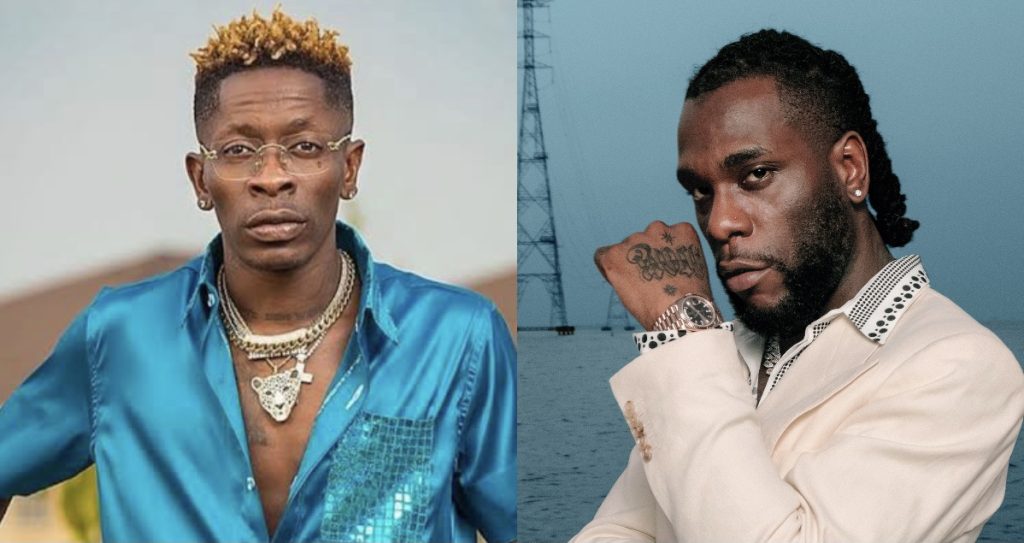
Ghanian singer, Captan, has claimed that his former record label boss, Shatta Wale, once bailed Nigerian singer Burna Boy out of prison in Ghana after he was allegedly arrested for smoking weed.
Speaking in a recent podcast interview, Captan claimed that Shatta Wale sent him and others to free Burna Boy from police custody.
He also claimed that Shatta Wale and his group once accommodated Burna Boy when he was being hunted by some dangerous men.
READ ALSO: Wale Edun Opens Up After Sack
Captan said, “I once bailed Burna Boy out of prison in Ghana when he was arrested for smoking weed. Shatta Wale sent me and some guys to go and free him from police custody.
“There was a time we also accommodated him when some people were after his life. We helped him settle the case.”
He added that he and Burna Boy are no longer in good terms after the Nigerian artist’s fallout with his mentor, Shatta Wale.
He, however, said he and Shatta Wale are open to reconciling with Burna Boy if he asks for it.
Watch the video here
News
Children’s Day: Chaos At Ogbe Stadium As Dozens Faint
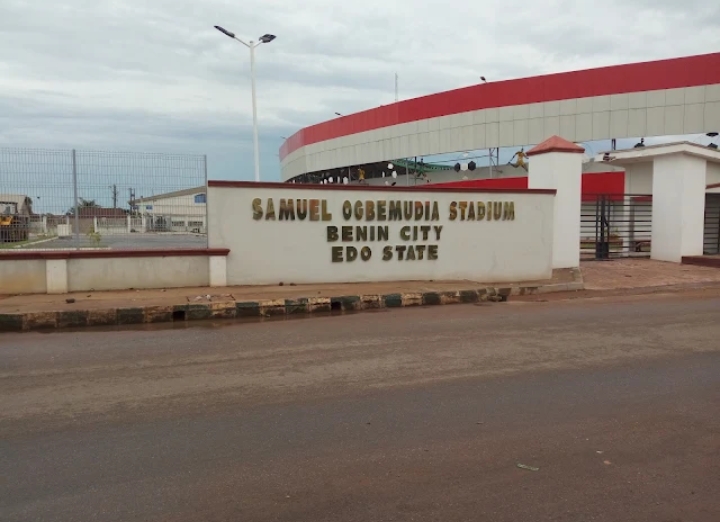
Chaos erupted on Wednesday during the Children’s Day celebration as dozens of students reportedly collapsed following a stampede triggered by the use of pepper spray.
The event,
organised by the Edo State Ministry of Education at the Samuel Ogbemudia Stadium was disrupted after some male students of Ihogbe College allegedly made uncompromising advances towards female students at the venue.
A parent who identified himself as Oboh Emmanuel said, “the behaviour of those uncultured students attracted the attention of bouncers stationed at the stadium as they rebuked the male students.”
Oboh said the affected students later regrouped and attacked the bouncers, leading to a confrontation within the crowded arena.
READ ALSO:Children’s Day: Edo Commits To Child Protection
It was gathered that in the ensuing confusion, the bouncers were reported to have deployed pepper spray in an area occupied by a large number of students.
Several students, particularly female students, reportedly fainted after inhaling the substance, while others sustained injuries after being stepped on during the ensuing melee.
The panic was said to have spread across the stadium as students, teachers and parents scampered for safety.
Many of the affected students were reportedly rushed to the Edo Specialist Hospital for medical attention.
READ ALSO: Egor LG Chair, Ogbemudia, Vice, Osawe Impeached
Reacting to the incident, Chief Press Secretary to Governor Monday Okpebholo, Dr Patrick Ebojele, said the security personnel that fired the tear gas had been detained.
He said all the students, except two, that were rushed to the hospital have been discharged.
Ebojele stated that doctors wanted to observe the students till tomorrow before allowing them to go home.
“The two students are not seriously injured. Doctors want to observe them overnight. Permanent Secretary, Ministry of Education is still at the hospital. The man who used pepper spray has been detained.
“The incident did not happen the way it is being exaggerated. All modalities were put in place to ensure the children enjoyed their day.”
News
Okpebholo Salutes Edo Muslims, Seeks Continued Support, Prayers
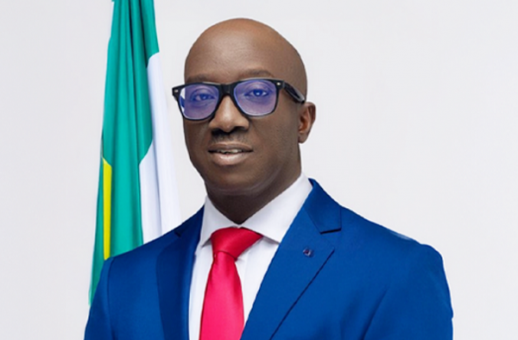
Governor Monday Okpebholo of Edo State has urged Muslims and all Nigerians to continue to pray for peace, unity and progress in the country even as they celebrate the annual Eid-al-Adha
The governor, who was represented by his deputy, Dennis Idahosa, stated this during the annual Eid-al-Adha celebration with Muslim faithfuls held at Government House in Benin City.
He reiterated his administration’s commitment to fairness, inclusivity and equal opportunities for all citizens irrespective of religion and tribe.
READ ALSO:ADC Penetrates Okpebholo’s District As Defections Strengthen Party in Edo Central
According to him, the present administration remains determined to building a government that reflects the diversity of Edo State, noting that competent and qualified Muslims have continued to play vital roles in his government because of their capacity, integrity and commitment to service.
“As a government, we remain committed to fairness, inclusivity and equal opportunity for every Edo citizen, irrespective of religion, ethnicity or political affiliation. This is why quality and competent Muslims are serving in key positions in our administration.”
Okpebholo appreciated the Muslim community in Edo State for their unwavering support and continuous prayers for his administration, noting that such prayers and support have contributed immensely to the peace and steady development being witnessed across the state.
READ ALSO:Okpebholo Felicitates Muslims On Eid-el-Fitr Celebration
He then called on all Nigerians to use the occasion of Eid-al-Adha to pray for the administration of President Bola Ahmed Tinubu, stressing that the country needs collective prayers, unity and cooperation to overcome its present economic and security challenges.
“I urge all Muslims and indeed all Nigerians to use this occasion to pray for our dear nation and for the administration of President Bola Ahmed Tinubu. Nigeria needs our collective prayers, unity and support as we strive to overcome our challenges and build a more prosperous future for all.”
In his remarks, the Chief Imam of Edo State, Abdulfatai Enabulele, applauded the governor for what he described as remarkable developmental strides recorded in less than two years in office.
The cleric commended the administration for ongoing infrastructural development and efforts geared towards improving governance in the state, but appealed to the government to revisit and complete some abandoned projects inherited from the previous administration for the benefit of the people.

 Metro5 days ago
My Husband Abandoned Me On Our Wedding Night To Attend Political Meeting, I Want Our Marriage Dissolved
- Headline4 days ago
Woman Passes Out After Receiving 100 Strokes Of Cane
- Headline4 days ago
JUST IN: White House Locked Down Briefly As Gunman Opens Fire At Security Checkpoint
- Politics5 days ago
Warri Ijaw Hail INEC Delineation Report, Call For Additional Electoral Wards, Others
- Politics3 days ago
Two Masked Men Gun Down Politician In His Rivers State Hotel
- News5 days ago
Alleged Terrorism: Court Rejects Defendant’s Bid To Travel Abroad
- Metro5 days ago
My Wife Stop Cooking My Food, Beats Me Black And Blue All the Time, Man Tells Court
- News3 days ago
More Pain For Nigerians As Cooking Gas Price Increases Nationwide
- Politics5 days ago
What I’ll Do As President Of Nigeria — Amaechi
- Politics3 days ago
‘Tinubu’s Borrowing In 24 Months Surpasses 55 Years’ Debt Record’


