
Headline
OPINION: Tinubu, ECOWAS And Its Rebellious Boys
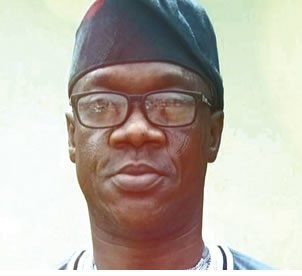
I danced on Sunday when President Bola Ahmed Tinubu was re-elected as Chairman of ECOWAS. I rejoiced because his re-election will give him an opportunity to correct one of his errors that has made life miserable for Nigerians. And that was the way he handled the Niger Republic crisis of last year. In his acceptance speech, Tinubu asked President Bassirou Faye of Senegal and President Faure Gnassingbe of Togo, to go and appeal to Mali, Burkina Faso and Niger Republic to return to ECOWAS. I give it to Tinubu on this. This is what we say in our street lingo as one’s brain “return to factory setting!” This move, a departure from his last year’s initial gragra of threatening to fight those three countries, especially, the Niger Republic, over the coups that took place there, shows that someone is thinking in this government for the first time. The security of those three countries, known as members of the G5-Sahel region, to the peace of Nigeria, cannot be overemphasised.
When, Niger Republic, for instance, staged its coup against the government of President Mohammed Bazoum, and Tinubu was calling the meeting of ECOWAS Command Chiefs almost daily, many Nigerians warned him of the futility of those efforts. The North made it abundantly clear to the president then that a war with Niger Republic would amount to a war with the North. They explained that northerners share the same ancestry with Nigeriens. A friend who travelled to Gaidam in Yobe State told me that the CFA of Niger Republic was a legal tender in those parts of Nigeria. He said that when he bought some balls of akara from a seller and offered her a N1,000 note, the seller, in giving him back his balance, added some Niger Republic currency to the money she gave to him. Another colleague on that trip, who happens to know that that is normal up North, quickly intervened by exchanging the CFA with Naira notes! That is the affinity that Tinubu was trying to unsettle with his threat of war with the Niger Republic.
That empty grandstanding had its implications. One of them is the influx of bandits and other felons to Northern Nigeria. The least intelligent student of International Diplomacy knows that the collapse of Libya led to an increase in the number of armed men to other African countries. The Liptako-Gourma region – where the Mali, Burkina Faso and Niger borders meet – is believed to be the most ravaged by armed rebellion in recent years. Forcing Mali, Burkina Faso and Niger Republic to leave ECOWAS further compounded the problem. The simple implication is that with their Saturday, September 16, 2023, mutual defence pact, the three countries divorced themselves from ECOWAS. The pact, known as Alliance of Sahel States, was designed to defend one another against any external attack. That broke the bone of ECOWAS.
MORE FROM THE AUTHOR: OPINION: Let Kenyans Enjoy Their Kenya
Many who postulated that the treaty would not stand have come to realise that it was a huge mistake. The lesson there is that never threaten today’s kids with expulsion; they will leave home permanently. Now ECOWAS wants those guys back, but they are not ready to come back. Now we are in trouble because those three countries provide a shield for us from the ravages of the Sahel. From their geography, they cover us from Libya. Nigeria now must worry about the security implications of not having friendly countries as a buffer against small and big arms from North Africa, particularly Libya. That is what indiscretion can cause! President Faye of Senegal told Tinubu this much when he visited Abuja on May 15, 2024. Faye, at the meeting with Tinubu, said ECOWAS must reopen talks with the guys in Mali, Burkina Faso and Niger Republic with a view to bringing them back to the ECOWAS fold. Omar Touray, President of ECOWAS Commission, amplified the importance of the return of the three countries to the regional fold when he said that Faye’s position “is in the spirit of engagement that our leaders believe should continue. Because we don’t only share borders, we share families, we share communities, and the leaders are determined to do everything possible to keep our community together. ECOWAS is not about heads of state. It’s a community of people that must stay together.”
The new ECOWAS position towards the ‘Three Rebels’ runs contrary to the argument by Folahanmi Aina, an Associate Fellow at the Royal United Services Institute, London, United Kingdom, who on October 24, 2023, barely a month after the Sahel countries signed their military pact, posited that the pact was bound to fail. His thesis is that the Alliance of Sahel States “is focused more on stoking anti-French sentiment than fighting violent extremism.” He states further that: “Collectively, these states do not have what it takes militarily and economically to fight off the threat of violent extremism, let alone guarantee the sustenance of a defense pact, given the logistical technicalities involved. Even more important is that they lack the state capacity to address the underlying root causes of violent extremism, some of which include deteriorating socio-economic conditions such as poverty, youth unemployment, inequality, illiteracy, poor governance, and environmental degradation. Their institutions are simply too weak…. The new Alliance of Sahel States is bound to fail given that it is built on a faulty foundation—a reaction to a perceived threat from France rather than a proactive posture toward the real threat of violent extremism. However, its potential to embolden would-be putschists across West Africa should not be ignored.”
The chickens have come home to roost for ECOWAS and its misadventure of threat of war. Nigeria now is in dire need of a peaceful Sahel Region if it must fight insurgency in its land and get its farmers to go back to till the land. Murtala Ahmed Rufa’i, author of the Usmanu Danfodiyo University, Sokoto’s seminal series, “I am a Bandit: A decade of Research in Zamfara State Bandits’ Den”, notes that the vast forests of Sokoto, Zamfara and Niger States alone have about 60,000, terrorists with 120 commanders. The implication here is that each ‘commander’ controls 500 terrorists. If these figures are distributed to all the 19 states of the north, one can imagine the havoc this has consistently wreaked on the local populace. If Niger Republic, for instance, decides to look the other way, while felons use its borders to flux into Nigeria, your guess is as good as mine.
MORE FROM THE AUTHOR: OPINION: Onitiri-Abiola And The Madness In Ibadan
This is why I think Nigerians should mount pressure on President Tinubu to eat the humble pie and personally approach the coupists in Mali, Burkina Faso and Niger Republic to get them to come back to ECOWAS. This appeal is as urgent as the errand of the king. This is not the time to delegate responsibility. President Tinubu should know that his pronouncements when the Niger Republic coup happened in 2023 aggravated the ECOWAS crisis. His threat of war and symbolic meetings of ECOWAS Command Chiefs in Abuja sent the wrong signals. He who assists the tortoise to climb a tree should also be available to assist in bringing it down. This is not an assignment to delegate. Nigerians are hungry.
There are food shortages everywhere. Simple Economics says when demand is higher than supply, there will be inflation. If farmers return to their farms without molestation, food will be abundant. Adding hunger to our current litany of woes is a recipe for disaster.
“My people can no longer afford to buy a mudu of rice to eat. You will not believe it. People now prefer to eat leaves like zogale, rama, and drink water. They don’t have money to buy foodstuff!” A traditional title holder in Birnin-Gwari, Kaduna State, was quoted to have uttered these words last week.
If anyone is in doubt that there is hunger in the land, the above quoted sentences should clear your doubt! Nigerians are becoming herbivorous daily. The Nigerian Tribune, in its Monday, July 9, 2024, edition, did a comprehensive report on “How insurgency, banditry worsen food prices.” Birnin-Gwari Local Government Area (LGA) of Kaduna State is one of the biggest LGAs in the state. It is equally, unarguably, the food basket of the state with the production of crops like maize, guinea corn, millet, and rice in commercial quantities. The council area is also described as the “most traumatised” LGA, with terrorists, bandits and kidnappers constantly on the prowl. Commuters have abandoned the Birnin-Gwari Road which hitherto served as the link between the North and the South-West because of the activities of these felons.
MORE FROM THE AUTHOR: OPINION: Fubara, Wike And Day I Broke Duck’s Eggs
Still speaking on the food crisis in the area, the report states, “Farming activities in the area have gone down as a result of banditry. Bandits have taken over the farms from the locals. The production of crops like maize, guinea corn, millet, and rice, which the area is noted for, has become history.” Sallau Ibrahim, one of the farmers in the locality, volunteered the information. In that same Birnin-Gwari, which used to be the source of food supply to the state and other states of the Federation, last week, “a bag of maize was sold at N90,000, while a bag of local rice sold at N105,000, and beans at N85,000.” Why? Ibrahim, again, explained that many farmers in the area had been killed and scores abducted by bandits who usually stormed their communities to carry out the nefarious activities without challenge. Even in places where the farmers were not killed and allowed “access to their farmlands, they (bandits) imposed taxes or levies on them before they could harvest the crops.” Those who could not afford the imposed tax abandoned their farms. The result is the high cost of food items in the markets.
The hunger has nothing to do with the voodoo economic policies of President Tinubu’s government. The Hallelujah orchestra of the government should at least relax now that they know it is not their tin god that is solely responsible for the hunger we all face. However, the Tinubu government is not totally blameless! The hunger in the land is caused not by scarcity of food items but by their unaffordable prices occasioned by the intractable insecurity across the country as well as the prohibitive costs of transporting the food items to end users! The foreign Exchange rate also has nothing to do with it. The simple issue here is insecurity. Farmers don’t go to their farms any longer. Many have resorted to subsistence farming on their available spaces around their homes. At least Madam Remi Tinubu, the wife of the president, demonstrated that in her new video of how to plant vegetables around our homes and their benefits for our “digestive track”!
Nigeria is a huge joke. The First Lady is encouraging us to farm around our homes. I chuckled at the garrulousness of her new-found love for farming. For instance, how many residents of Aso Rock will that vegetable garden feed, and for how long? So, if we all cultivate vegetable gardens, shall we equally grow our yams, beans and run our own rice farms and mills too? What about those living in face-me-I-face-you apartments? How many Nigerians own their houses, in the first place? How many landlords will allow gardens around their property? But I love the video all the same. It gives an idea of how those guys up there thinking.
READ ALSO: FULL LIST: Lagos Gets 13 New Band A Feeders
Nigeria is experiencing acute food shortage at the moment because of insecurity. This should be of ultimate concern to those in authority instead of the promotion of gardens around our homes. If we don’t tackle those bandits, terrorists, herders and kidnappers who make farming almost impossible in the bushes, they will soon hit our towns and those Madam Tinubu’s vegetable gardens around our homes will pale into insignificance. The news report under reference here is comprehensive enough. It shows that food insecurity is not a problem of the North alone. Down South too, people can no longer farm. I stumbled on a video of herders who reared their cows into a maize farm in Ikere Ekiti the other time. Someone also sent another video of a deliberate grazing on a cassava and maize farm in Egbe town of Kogi State. The farmers in the two videos could not do anything. Millions of naira invested in those ventures got wasted. Who will persuade those victims to go back to the farm? Little wonder that in Ado Ekiti, a friend told me on Saturday that a set of five tubers of yam was sold at N25,000!
The South-East has the best of vegetable cuisines. Someone once said that vegetables were introduced to the South-East gastronomy during the civil war. Faced with acute shortage of food supply, the people resorted to eating all manners of shrubs. Some died, and many survived. The people studied the leaves that had no toxic properties while the war lasted and added them to their list of ingredients. Nigeria is not at war at the moment; but people in Birnin-Gwari are already eating leaves and drinking water because they can no longer afford the prices of the food items. These are people who used to be the producers of those items before terrorists, bandits and kidnappers took over their land. How soon will that spread to the south, if not already there? This is why our leaders should move away from the banausic issue of planting gardens to tackling the issue of insecurity that has made real farming almost impossible. Enough of egbelekokmiyo vegetable gardens in Aso Rock Villa. Let’s get our real farmers back to the land!



Headline
‘Pioneer Of Cable TV News’: Key Facts About CNN Founder, Ted Turner
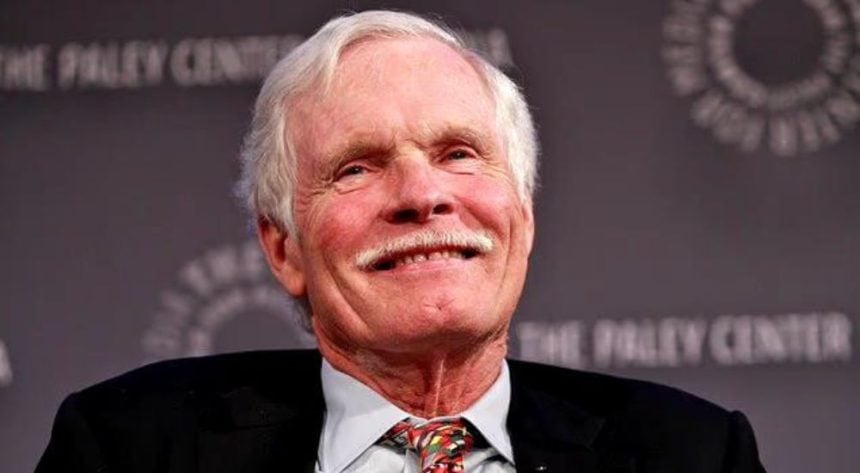
Ted Turner, the media businessman who founded CNN died at the age of 87. He died peacefully on Wednesday, surrounded by family, according to Turner Enterprises.
Contents
Launched 24-hour news television
Built a media network
Expanded through sports
Recognition and influence
Philanthropy and global causes
Environmental efforts
Health and later years
Early career path
Leadership and legacy
Personal life
Exit from business
Family
Below are key facts about his life and impact:
Launched 24-hour news television
Turner founded CNN on June 1, 1980, introducing the first 24-hour news channel and changing how audiences follow global events.
READ ALSO:CNN To Layoff 200 Staff Amid Attempts To Modernise Business
Built a media network
He moved from billboards into broadcasting, turning an Atlanta TV station into a national superstation in 1976. His business later grew to include CNN International, TNT, Turner Classic Movies and Cartoon Network.
Expanded through sports
Turner invested in sports broadcasting and owned teams including the Atlanta Braves and the Atlanta Hawks, using television to reach wider audiences.
Recognition and influence
In 1991, he was named Time magazine’s Man of the Year for his role in shaping modern news coverage.
Philanthropy and global causes
He founded the United Nations Foundation and supported campaigns against nuclear weapons. In 1997, he pledged $1 billion to the United Nations.
READ ALSO:CNN President, Jeff Zucker Resigns After Failing To Disclose Secret Affair With Colleague
Turner supported conservation work, including reintroducing bison in the United States, and backed environmental education through the “Captain Planet” cartoon.
Health and later years
In 2018, Turner revealed he had Lewy body dementia. He also recovered from a mild case of pneumonia in early 2025.
Early career path
He took over his father’s billboard company at 24 after his father’s death and later expanded into radio and television, despite limited experience in journalism.
“I worked until 7 o’clock, and when I got home the news was over,” he once said. “So I missed television news completely. And I figured there were lots of people like me.”
Leadership and legacy
READ ALSO:CNN Reporter Protests Nigeria’s $215 Single Entry Visa Fee
“Ted was an intensely involved and committed leader, intrepid, fearless and always willing to back a hunch and trust his own judgement,” Mark Thompson, Chairman and CEO of CNN Worldwide, said in a statement. “He was and always will be the presiding spirit of CNN. Ted is the giant on whose shoulders we stand, and we will all take a moment today to recognize him and his impact on our lives and the world.”
Personal life
Turner married actress Jane Fonda in 1991, and they later divorced after 10 years, though they remained close.
“I would never love anyone like I love him,” she said. “But I just couldn’t keep moving in his world, along the surface for the rest of my life. I knew that I would get to the end of my life and regret not doing the things that I also needed to do for me.”
Exit from business
He sold his company to Time Warner in 1996 and later stepped away following its merger with AOL.
Reflecting on his life, Turner once said: “I lost Jane. I lost my job here. I lost my fortune, most of it. Got a billion or two left. You can get by on that if you economize.”
Family
He is survived by his five children, 14 grandchildren and two great-grandchildren.
Headline
Iran’s Nationwide Internet Shutdown Hits 70 Days

NetBlocks, a monitoring group, has disclosed that an internet shutdown enforced by the Iranian regime has entered its 70th day, severing key access from swathes of the population under the shadow of war.
NetBlocks reported on Friday that the blackout has now surpassed 1,656 hours, marking more than two months since US-Israeli strikes pounded Tehran and escalated across the Middle East.
“Digital connectivity is vital in times of crisis,” NetBlocks said in a post on X. “Limiting service harms those most in need – people with disabilities, students, small businesses and the general public.”
READ ALSO:US Underestimated Iran Before War – France’s Bardella
According to CNN, Iran imposed a separate internet shutdown on the country’s 92 million people earlier this year, when it launched the most lethal crackdown on anti-government protesters since the Islamic Republic’s founding 47 years ago.
CNN further reports that the latest blackout has cut off another potential lifeline for Iranian residents faced with high unemployment and economic pressure exacerbated by the US-Israeli campaign.
(CNN)
Headline
Gas Prices In US Edge Down After Two Weeks Of Increases

The cost of a gallon of regular gas in the United States (US) has edged down a little more than a penny to $4.55.
According to AAA’s readings, this marks the first decline in the average gas price after 15 straight days of increases.
The decline is minuscule compared to the large increases in gas prices over the last two weeks.
According to CNN, gasoline costs rose an average of nearly 4 cents a day during that period and had several daily increases of between 7 and 9 cents.
READ ALSO:Gas Station Explosion Rocks Calabar, Scores Injured, Property Destroyed
Also Read: Trump insists US-Iran ceasefire intact despite recent exchange of fire
CNN also reports that based on past gas spikes, it will likely take weeks for gas prices to get down below $4 a gallon.
The report, however, states that a previous two-week stretch of gas price declines only shaved 14 cents off the average price, taking the average price to $4.02, before the recent 15-day run of increases.
READ ALSO:Tinubu Signs Executive Order To Protect Nigeria’s Oil & Gas Revenue
According to CNN, it could take months for the average price to fall below $3 per gallon, as it did before the war in Iran.
CNN further reports that only one state – Oklahoma – now has an average price of less than $4 a gallon, and its average stands at $3.98. California has the highest average price at $6.16.
(CNN)

 Politics4 days ago
BREAKING: NDC Zones Presidency
- Sports5 days ago
Turkey: Galatasaray Give Condition To Sell Victor Osimhen
- News4 days ago
Presidency Reveals Details Of Ribadu’s Meeting With US VP, Secretary Of State
- News3 days ago
Edo Bags NECO Excellence Award
- Politics2 days ago
APC Clears Wike Loyalists, Disqualifies All Fubara-aligned Aspirants For State Assembly
- Metro4 days ago
My Wife Goes To Mountains To Pray, Denies Me Sex For 9yrs
- Headline4 days ago
Gas Prices In US Edge Down After Two Weeks Of Increases
- Headline4 days ago
‘Pioneer Of Cable TV News’: Key Facts About CNN Founder, Ted Turner
- Metro4 days ago
‘My Wife Deserted Me 4 Months After We Got Married, Took To Prostitution Abroad’
- Metro5 days ago
16 Passengers Lose Lives In Lokoja–Okene Highway Tragedy


