
News
OPINION: Vultures And Hornbills Of The North
By Suyi Ayodele
In my place, we say one vegetable does not chase another out of the plate. South-South’s Edikang ikong soup is a practical illustration of that saying on inclusiveness. Has northern Nigeria ever heard of this other saying among the Yoruba?: Should Ogedengbe (Ijesha war General) be tending his ware of beads while Aduloju (Ado Ekiti war leader) is exhibiting his guns and bullets at same time? (Sé é ye kí Ògèdèngbé maà pa àte ìlèkè, kí Adúlójú maá pa àte ìbon ní Adó Èwí?). This caution speaks to war-baiting and the two warriors’ capacities to inflict maximum damages if war breaks out. Almost all of northern Nigeria is facing existential problems today. That should be enough soup on their plate there, but no. Their hunter, with an elephant on his head, is busy digging for crickets of agencies and departments. Security should be of prime importance to the leaders of the region instead of knocking their heads on the wall over inconsequential issues of relocation of some government agencies and parastatals from Abuja to Lagos.
The North is angry with the government of President Bola Ahmed Tinubu. The region’s anger, misplaced and infantile as it is, should not be treated with levity, especially by an ambitious person like President Tinubu. It is certain that the North will not wean itself of its perilous selfishness easily, and anytime soon! That is embarrassing, given the level of poverty in the region. By now, it should be common knowledge to southern Nigerians that the last nationalist lives down South. In all the northern elite’s calculations, Nigeria is secondary whenever northern interest or agenda is concerned. For an average leader of the North, the ‘region’ comes first before the entity known as Nigeria. But that has not translated to the economic or social development of the zone. The North still remains a region where the majority live in abject poverty and deprivation, and a very few live in affluence. That is the contrast of the north and in the north. So, who do the north’s elite speak for whenever they mouth “marginalisation of the north?”
Anytime the North is out of power at the centre, it sings songs of war. The only thriving business of the region is the government. The poverty in the zone takes the back seat as long as the power equation is concerned. The leaders up there have started singing the usual war song. Led by its new day ‘commander-in-chief of northern interest, Senator Alli Ndume of Borno State, the north has warned President Tinubu that his decision to relocate some departments of the Central Bank of Nigeria (CBN) and the Federal Airports Authority of Nigeria (FAAN) from Abuja to Lagos, would have “political consequences.” Tinubu is a politician. Most politicians, especially in this season of the locusts, are greedy. They hardly finish their breakfast before asking what will be served for lunch and dinner. It is obvious to the blind that President Tinubu has his eyes fixed on his second term. It doesn’t matter if he has not even completed the first year of his first four-year term. Or, if his first eight months in office have been rudderless and disastrous on virtually all fronts. It is useless advising the president to focus on governance first and leave second term.
FROM THE AUTHOR: OPINION: Restructure Nigeria Before We All Die
The North knows this, and that is why it has come out with the threat. How does one advise President Tinubu at this period? The counsel of our elders in this regard is that no one advises his relation not to aspire to inherit his father’s chieftaincy title. So, President Tinubu has every reason to be worried about the “political consequences” of his decisions on CBN and FAAN. Ndume is like the proverbial tadpole dancing on the surface of the water. We all know that its drummers are beneath. This time around, the drummers are obvious and audacious. The Arewa Consultative Forum (ACF), the Northern Elders Forum (NEF), and the Arewa Youth Forum (AYF) are all out with their proverbs of war. If you ask me what my reaction is, I will tell you straight on that Ndume and his gang are like the goat that scratches the ground with its hoofs. It cannot, and will not devour its owner.
If there is any time President Tinubu has my support 100 per cent in the last eight months, it is on the decision to move those CBN and FAAN departments to Lagos. The threat from the North becomes irrelevant here, for me. Whatever fear anyone down South may be nursing over the threat by the North over the relocation of those departments in the CBN and the FAAN is because the rest of the country has over-indulged the North. The region, expectedly, has become like a spoilt brat that needs to be placated anytime it cries for candies. If I were President Tinubu, I would go ahead and relocate those departments to Lagos and move others to other different locations where they will give the nation more economic advantages. Tinubu should look into the NNPCL and move some of its departments to Port Harcourt, Calabar, Uyo, Warri, or Yenagoa, where they can operate optimally Nigeria does not explore a single barrel of crude from Abuja. Why then should we have all the departments of the NNPC in Abuja? President Tinubu should go ahead and dare the Ndumes of this world. If I were him, I would challenge the ACF and its appendage, the NEF, and also give the gloves to the AYF to come to the ring. I assure the president that nothing will happen, as we say on the streets! Any policy that will serve public interest should be implemented without batting an eyelid. The “consequences” of the decisions will be borne by all. In case President Tinubu is becoming scared, let me encourage him with this folk song: Tinubu dakun má mikàn, a p’agbo yí o ká (2ce) (Tinubu, please don’t be perturbed; we have formed a ring around you). Gbogbo ènìyàn rere únbe léhìn re ò (All men of goodwill are behind you). Tinubu dakun má mikàn, a pagbo yí o ká (Tinubu, please don’t be perturbed; we have formed a ring around you).
This is not about the ethnicity of the president. Even at that, I owe the North or whoever no apology for speaking this way. A time will come when enough will be enough. The North must come to that realisation one day that Nigerians need one another. Nobody has the monopoly of threat. What is at stake? 2027? May God keep us together beyond that date. Ndume and his northern leaders should know by now that Nigeria is like the proverbial calabash, which is turned upside down. If it cannot be opened, it can be broken. That is how far the north and its over-indulged elders and leaders have pushed the rest of the country. And if I may ask, which North are Ndume and Alhaji Bashir Dalhatu, Chairman, Board of Trustees of ACF talking about? Does it include Benue and Plateau States, Taraba, and Nasarawa? Those states have, in the last eight years, become the killing fields of the same North. Incidentally, the massacre in those states started when a ‘core northerner’, the most lethargic General Muhammadu Buhari, became president. Go to Benue and Plateau States today and ask the people there, which one they prefer, between their lives and the relocation of some CBN and FAAN departments to Lagos. They will ask you to take away Abuja itself and give them back their lives that are being daily snuffed out by the same untrained children of the North! Maybe we should tell Ndume and Dalhatu and others in their mould to wake up and smell the coffee. The North of the late Sardauna of Sokoto, Alhaji Ahmadu Bello, is gone.
FROM THE AUTHOR: T. B. Joshua: Let The Dead Rest [OPINION]
I challenge the leadership of ACF to organise a referendum today and see how many states across the River Niger would opt to remain in the North. There is a saying in my place that three years after the community has ceased from following one, one will still be hearing the sounds of footsteps! That is the illusion that is making Ndume talk about “consequences.” The Borno senator should look back and count the number of the people that are behind him in this his northern agenda. The North and its leaders, I will advise, need to reassure the people of Plateau, Benue, Taraba and Nasarawa States that their lives count before they can convince them that they are being ‘marginalised’ by a Yoruba man.
And come to think about Abuja and its headship of Nigeria as the Federal Capital Territory (FCT). Whatever Abuja is today, these weeping northern leaders have the South, nay, the South-West, to thank for it. It is bad to have people who are either not good students of history or forgetful students of history to speak for a people. That is exactly what Ndume and his gang are. In the alternative, they could deliberately be mischievous because of their self-serving tendencies; and pretend not to have read, or heard that the Yoruba nation, which they are accusing of marginalising Abuja and the North, made Abuja happen in the first place. How could an otherwise brilliant Senator Ndume have forgotten the 1953 Constitutional Conference in London, where the Avatar, Chief Obafemi Awolowo, in his best advocacy, called for a centralised and neutral capital for Nigeria outside Lagos? Awolowo’s Action Group (AG) backed up the advocacy with several publications, the most notable of them being the pamphlet: “Lagos Belongs to the West”. In that piece, the AG and its leaders argued thus: “A large area of land should be acquired by the Federal Government near Kafanchan, which is almost central geographically, and strategically safe comparatively, for the purpose of building a new and neutral capital. The new capital should be built on a site entirely separate from an existing town so that its absolute neutrality may be assured. Being the property of the federal government, it would automatically be administered by it in the same way as Washington, D.C. in the USA or Canberra in Australia. Such a capital would be a neutral place indeed.”
There are libraries and archives, including the British Council in Kaduna, where the north and its leaders can get copies of the material. Incidentally, the political forebears of the same North that is shouting today fought Awolowo and others who proposed the new federal capital then to a standstill! Is it not ironic that the ones who helped in sharpening the teeth of the north are the first victims of the north’s bite?
FROM THE AUTHOR: OPINION: Yahoo Boys And Destiny
I think, and I am being sincere about this: the Borth is pushing its luck too far. It is not every time the region will be threatening the rest of us at the slightest provocation. Most unfortunate, in this case, is the fact that the North’s threat over the relocation of those departments of parastatals is unwarranted. It saddens one to note that the North keeps putting its dagger at the tiny, fragile rope that binds the nation together. The region keeps on acting as if it is the air the rest of the country breathes. If, for instance, 2027 comes and the rest of the country feels that the North wants to undermine them, what do the Ndumes and Dalhatus of the North think will happen?
In case the North decides to continue with its recalcitrance and insists that President Tinubu would suffer “political consequences” over the CBN and FAAN issue, permit me to impose on the region’s leaders, the wisdom in this saying of my elders: “Igun balè ó hún f’orin pòwe (The vulture lands and turns every song to a proverb). Àkàlàmàgbò balè ó únsòrò ìjà (The ground hornbill lands and it is talking about fighting). Bó bá dì’jà tán Igún á wulè pà lórí (When the fight breaks out, the vulture will simply go bald-headed). Gòngò Àkàlàmàgbò á yo léhìn orùn, gbogbo ayé á rí (The goitre scar of the ground hornbill will show at the back of its neck for the entire world to behold). Give or take, if anything happens to the tender oneness of this nation, the north has everything to lose. The North and its leaders will be exposed for who they are because the region suffers more in a disunited Nigeria. Should that happen, the elite of the North will have no Abuja to run to when their masses come after them to ask daring questions! By then, “The Lady of Means” would no longer bring her wealth to service the extravagance of the north and its leaders. The implications will be too grave for them. The real “consequences” will be felt up north. Like Prophet Micah says in the Holy Writ, (Micah 6:8), we have shown you, o man, what is good and what is bad; choose and choose well!



News
Nigeria To Get Fresh $9.5m Abacha Loot From UK’s Jersey
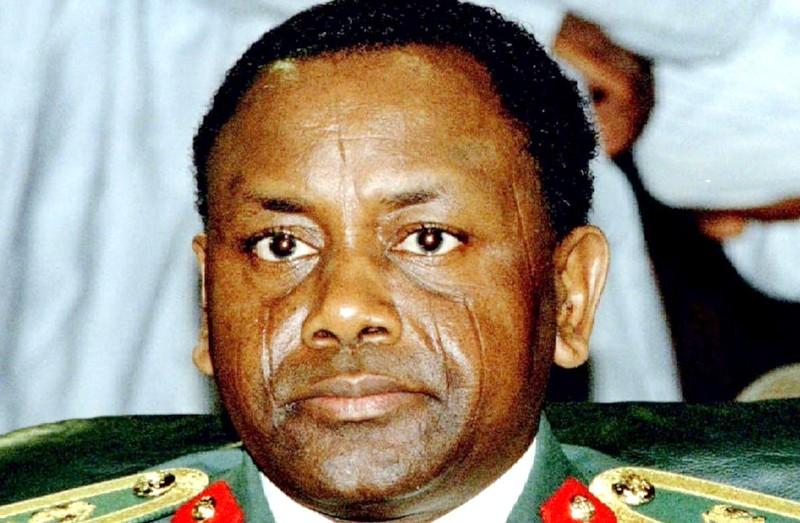
Nigeria to receive fresh $9.5 million (£7 million), believed to be stolen funds linked to former military Head of State, Sani Abacha, from the United Kingdom’s Jersey.
According to the BBC, Jersey has agreed to repatriate the fund to the Nigerian government.
The money, described as proceeds of “tainted property,” is said to be part of the vast fortune stolen by Abacha, who ruled Nigeria between 1993 and 1998.
READ ALSO:How I Transited From Abacha’s Friend To prisoner — Lamido
The funds were kept in a bank account in Jersey and had been tied up in legal proceedings for several years.
Although the assets were first recovered during the administration of former President Goodluck Jonathan, court challenges stalled their return to Nigeria. Progress was made in December 2025 when Jersey’s Attorney-General, Mark Temple, signed a memorandum of understanding, MoU, with Nigerian authorities to enable the repatriation.
The latest agreement builds on two earlier arrangements between Jersey and Nigeria that led to the return of more than $300 million (£230m) in recovered assets.
News
Niger CP Presents Cheques Of Over N56m To Families Of Fallen Police Officers

The Niger State Commissioner, CP Adamu Abdullahi Elleman, has presented cheques to the tune of ₦56,942,985 to 20 families of deseaced police personnel who died in active service between 2023 and 2024.
Presenting the cheques to the benefiacries in Minna, Elleman said the gesture is part of the IGP’s Group Life Assurance Scheme, aimed at supporting families of deceased officers.
Condoling with the families, the CP said, “The deceased personnel are not forgotten and their memory will always be fresh in our minds, as they remain in the thoughts and prayers of the Command.”
READ ALSO:Imo Police Arrest Man Accused Of Defilement In Viral Video
He further advised the beneficiaries to put the cheques to judicious use so as to honour the wishes and memory of the fallen officers.
“We pray for God’s blessings in all you do with the token you have received . Even though, no amount of money can be equated to the lives of the personnel, the token is just a gesture to ameliorate and assist the families, ” the CP said.
He further urged them to see the Command as their home, and always visit whenever they are in need of assistance while wishing them a safe journey back to their various destinations.
News
[OPINION] Osimhen: The Arrogance Of A Ghetto Hero

Tunde Odesola
Before the raving hawk disappeared into the sunny afternoon sky, the mother hen caught a glimpse of it just in time. Squawking and clucking, the brown mother hen sounded a throaty alarm, frantically calling on her 11 chicks, who sprinted into the sanctuary of her warm wings, where they brooded, peeping through the safety of feathers.
Like witches, hawks on predatory flights don’t make a noise. The screaming and scampering of mother hen after an attack is the first telltale of tragedy. The second telltale is the sight of a dangling chick in clutchy claws, rising helplessly skywards.
On that fateful day, the mother hen brooded her chicks out of sight from a hovering hawk. But a particularly arrogant and belligerent chick called OsinmHEN slipped through the mother’s tail end and decided to play in the hot afternoon sand, chest puffed, shoulders raised like Aso Rock fence.
The hawk sighted the stray prey and flew higher up, and away, out of sight. The mother hen monitored the ravenous hawk with red-alertness, assured her chicks were safe underneath.
Then it happened.
With the swiftness of a whirlwind, the hawk suddenly swept downwards, like a missile deployed from a military jet, grabbing OsinmHEN with both claws, but the protection of the mother hen was comprehensive. In a jiffy, she sprang and smashed into the predator midair, making it lose both balance and grip. And OsinmHEN fell off to safety, limping back under the mother’s brood.
Furious, the mother hen scolded the petulant OsinmHEN, saying it could have ended up in the belly of the hawk if not for providence. Then, as mothers do when warnings fail, mother hen reached for a myth told by Ifa scholar, Ifayemi Elebuibon.
“Listen,” she said, voice laden with solemn grief. “Let me tell you about Ọ̀kẹ́rẹ́.”
“Once upon a forest,” the mother hen began, “a mother squirrel received a warning from Ifa: ‘keep your son indoors for seven days, death prowls’. However, on the third day, Baby Squirrel sprinted out from the family burrow, waving his bushy tail from one tree to another. The forest was quiet. ‘There are no predators,’ he thought.
“He didn’t hear the gun. But the forest did. The boom shook leaves loose from branches.
“When she heard the shot, Iya Ọ̀kẹ́rẹ́, the mother squirrel, ran deeper into the burrow, looking for her son. Little ọ̀kẹ́rẹ́ was nowhere in sight. Panic gripped the mother. She couldn’t sleep. So, she went in search of her son all evening and all night. As she was returning home, hiding behind trees, she stopped in front of the hunter’s house, out of sight.
“Behold, by a flickering firelight, she saw the hunter and his family having a dinner of pounded yam and egusi. From behind a fallen trunk, she peered. And she saw the head of her son floating in the family soup, and the hunter grabbed the head, stroked it ‘ko, ko’ in the plate to shake off some egusi, before airlifting it to the mouth.
MORE FROM THE AUTHOR:[OPINION] Siyan Oyeweso: Lessons In Virtue And Vanity
“Iya Ọ̀kẹ́rẹ́ shook her head and shed the tears of a mother, saying: ‘Orí ọ̀kẹ́rẹ́ koko láwo, bí a wí fún ọmọ ẹni, ọmọ ẹni a gbọ́.’”
Of the mother hen’s 11 chicks, only OsinmHEN refused to understand the Ọ̀kẹ́rẹ́ myth and the consequences of disobedience. Blinded by arrogance, OsinmHEN, who thinks himself a hawk, is bound to walk the path of self-destruction soon again.
And so, in the distant Moroccan city called Fez, Nigeria’s Super Eagles fearsome striker, Victor Osimhen, replayed the ancient tragedies of OsinmHEN and Ọ̀kẹ́rẹ́.
It was in a round of 16 match against Mozambique at the ongoing African Cup of Nations soccer tournament, Super Eagle Osimhen exhibited the traits of Super Chicken OsinmHEN. Nigeria was leading 3-0, and Osimhen had scored two of the three goals, with fellow striker Ademola Lookman scoring the opening goal and providing two assists.
In a moment of arrogant madness, Osimhen, who once hawked ‘pure water’ and sold newspaper in the city of Lagos, pushed away the hand of his cautioning captain, Wilfred Ndidi, and launched a verbal attack on his more decorated teammate, Ademola Lookman, pointing accusing finger at him, as he belched, “No try am again, no try am again,” like a member of the renowned union of road transport workers.
In the glare of a shell-shocked world, Osimhen proved once again that you may take a lizard from Olusosun to Turkey, it will never become a crocodile. No matter how long irú (locust beans) stays in the soup, it will not lose its smell.
Let’s imagine for a moment that Lookman had the temperament of Yomi Peters, the dreadful Stationery Stores FC of Lagos playermaker, notorious for beating up referees. Known as Mudashiru Atanda, Peters changed his name to Yomi Peters when he came back from suspension for head-butting referee Bolaji Festus Okubule. In the 1980-1990 era of rampant fan attacks, many referees feared Peters more than they feared fans.
In the height of his arrogance, if he played in the national team of yesteryears, Osimhen could never have pushed away former captains of the national team, such as Chairman Christian Chukwu, Segun Odegbami, Stephen Keshi, Yobo Joseph, Sunday Oliseh, Austin Eguavoen, etc., as he shoved aside captain Ndidi, before unleashing unnecessary assault on Lookman.
Can he shove aside any of Tarila Okorowanta, Etin Esin, Daniel Amokachi, Taribo West, Bright Omokaro and Sunday Eboigbe, or launch a verbal assault on them? Osimhen no go try am, walahi. Otherwise, di match for turn into a mixed martial free-for-all, with players losing their teeth.
Were it not for emotional maturity on the part of Ndidi and Lookman, Osimhen, by his childish attitude, would have put a knife to the bond of unity in the team, and things would have fallen apart because a house divided against itself can never stand.
MORE FROM THE AUTHOR:[OPINION] Tinubu: Ade Ori Okin Befits KWAM 1, Not Awujale Crown
Osimhen’s outburst sheds light on how people in positions of authority look down on people they consider beneath them. It is an on-the-pitch reenactment of how Nigerian security agencies, military and police, especially, oppress fellow Nigerians just because they bear guns.
This oppressive mindset formed the motivation behind a retired Chief of Naval Staff, Vice Admiral Awwal Zubairu Gambo, grabbing a large portion of unapproved land in Abuja, building on it a sprawling edifice that his life’s savings cannot justify, yet turned around to deploy armed soldiers to guard the property when FCT authorities asked him to provide approval documents for the land.
Raised in the Olusosun ghetto of Lagos, Osimhen, as a child, had seen an established pattern of ‘might is right’ in everyday Nigeria and has imbibed loud talk, threat and arrogance as a way of life. Osimhen was the one who went on social media to curse his coach, Finidi George, and Nigerian Football Federation members over a misunderstanding.
He said, “Ẹni ku’re, walahi talahi (It shall not be well with you in God’s name). I don lose all the respect wey I get for dat man (Finidi).” He burst into a Yoruba curse, “Ti alale ba ni ko da fun yin, alaro o ni ye yin, meaning ‘if the evening god decrees goodness for you, morning god will decree evil for you’. Ogun kill anybody, anybody wey dey believe all those nonsense. I tell am (Finidi) say make I come camp, make I come follow di boys dem talk. Make I come follow dem dey. I spoke with my fellow teammates, too. Wetin im (Finidi) tell me, ‘Oh no, you know, you have to be with the family; oh dis, oh dat. (So,) I go dey live my life dey go, I face my life dey go. But team don lose now, una wan find person wey dey at fault, na me wey dey nurse my injury una come think say una wan put my name because of say Super Eagles get two bad games, I know how many injuries weyI don use play. Ẹni ku’reni ku’re se! All of una no go die better. I no go allow one person to come and say, ‘you can’t beg Osimhen to come and play, wetin bi say you can’t beg wetin?’”
Three months after Osimhen’s outburst, Finidi reacted, saying, “The meeting we had, we never talked about Osimhen at all. The only time Osimhen’s name came up was when the minister talked about hearing about indiscipline while we were at the AFCON, and he mentioned Osimhen’s name.
“It was in that meeting, I think one of the officials, I don’t know who, called him or sent him a message because they wanted to save their heads as the minister was very furious about the team not doing well.
“Someday, he is going to realise it’s not true. I think they used him because they wanted to save their heads because of bad results. It’s better they talked about Finidi George than the real issues, and it’s quite unfortunate that he came up live and said those things.
“I sent him a message to tell him that’s not the best way to go about lying. From that point, I didn’t hear from him; he didn’t apologise. Since then, I’ve moved on. I wish everybody well.”
A more emotionally mature player would not have taken to social media to rant against his coach on such a misunderstanding, an action which further reinforces Osimhen’sarrogant mentality because he did not rant against Napoli FC authorities when they blocked his move away from the club. He knows very well that doing so might affect his career.
What Osimhen fails to realise is that his on-field and off-field antics put a question mark on his emotional intelligence – an asset in modern football. As the world has become a cyber village, the actions of popular personalities are splashed on social media, enabling football scouts, in Osimhen’s own case, to see what elite footballers are up to.
MORE FROM THE AUTHOR:OPINION: Aláàfin Ọ̀yọ́ Cuddling A Dead Empire (1)
Exposing the volatility of Osimhen’s emotional state, his viral outburst against Finidi showed him threatening to beat up those with him when he was recording the video over what he deemed as interference during the recording. For someone who emerged from such a humble beginning as Osimhen, a modicum of humility is expected to temper their life.
The Lookman and Finidi episodes are not the only avoidable clashes Osimhen has had in his soccer career. During a World Cup qualifier in Uyo, Akwa Ibom, Osimhen walked out on his teammates after Zimbabwe equalised, owing to goalkeeper Nwabali’s mistake in the dying minutes of the match. If he was annoyed that Nigeria drew the match, why did he not score enough goals to ensure victory for the Super Eagles? On countless occasions, Nwabali had saved the Super Eagles’ blushes when he (Osimhen) and other outfield players failed to live up to expectations. Tactically speaking, Nwabali contributed more to the Super Eagles than Osimhen during the World Cup qualifiers.
To describe Osimhen’s tantrums as passion is to call a two-year-old baby who loves playing with fire, as courageous. Indulgence breeds impunity. Indulgence in collective sports breeds disunity and kills team spirit.
Sharing his thoughts with me, a colleague and sports aficionado, Adekunle Salami, described Osimhen as ranking among the five best strikers in the world today. He said, “Every striker wants to score. Every midfielder wants to lay that match-defining pass, every defender wants to make that goal-thwarting block. Football is a passionate game. However, in all of this, football is a game that operates on a strict code of conduct because so many people, children especially, watch it.
“Therefore, players must be seen to be of good conduct. I love Osimhen. I love his dedication to the national team, but he must show respect to his fellow teammates. We must remember Osimhen is from the slum. He was taught life’s hard lessons on the street. Struggling has been a way of life for him; we must remember that. But this is not to give room for the bad attitude he is exhibiting. He should have waited for the game to end and then gone to Lookman and told him about how he felt. We were leading 3-0, and you have scored twice, what else do you want? Some people have not scored. Akor has not scored.
“After the Mozambique match, all the players prayed together. He just stormed out of the field, threw his accreditation away, and went to the dressing room. He even threatened to leave for Turkey. They should have allowed him to go. He is the one who would be hurt, not Nigeria. It is a privilege to play for Nigeria; he must not abuse the privilege. He cannot misbehave in Galatasaray, his Turkish team, because they have a code of conduct. Osimhen has grown in this disrespectful and distasteful behaviour because he was never sanctioned.”
Another sports guru, Festus Abu, said the issue should not be overflogged, adding that such things happen in football. “It is one of those things in football. But it becomes worrisome when it turns into a recurring decimal. The coach and his team should ensure that the incident does not escalate into an albatross. I hope Osimhen has learnt his lessons.”
Nothing blinds like arrogance. Ademola Lookman, whom Osimhen talked disrespectfully to on the pitch, is even more decorated than him. Lookman plays for a bigger club in a bigger league and has made more impact in Europe than Osimhen, scoring a hat-trick in a European Cup final. In the ongoing competition, Lookman has scored the same number of goals as him, but has more goal contributions, earning him two Man-of-the-Match awards.
Osimhen, bring your shoulders down, biko.
Email: tundeodes2003@yahoo.com
Facebook: @Tunde Odesola
X: @Tunde_Odesola

 Business4 days ago
NNPCL Reduces Fuel Price Again
- News2 days ago
How To Calculate Your Taxable Income
- Metro4 days ago
AAU Disowns Students Over Protest
- Metro4 days ago
Edo: Suspected Kidnappers Kill Victim, Hold On To Elder Brother
- Headline2 days ago
Russia Deploys Navy To Guard Venezuelan Oil Tanker Chased By US In Atlantic
- Metro4 days ago
Nine Soldiers Feared Dead In Borno IED Explosion
- Metro2 days ago
JUST IN: Court Grants Malami, Wife, Son N500m Bail Each
- Metro2 days ago
Edo widow-lawyer Diabolically Blinded Over Contract Seeks Okpebholo’s Intervention
- Entertainment2 days ago
VIDEO: ‘Baba Oko Bournvita,’ Portable Drags His Father, Alleges Bad Parenting, Extortion
- Politics2 days ago
2027: Details Of PDP Leaders, Jonathan’s Meeting Emerge


