

News
OPINION: We Are All Àmúpìtàn

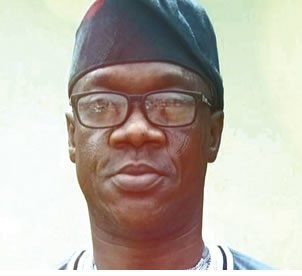


By Suyi Ayodele
Àmúpìtàn – the one whose deeds will be retold in history. If you answer this name, wisdom dictates that you should be conscious of what history holds for you in future. Every human being is an Àmúpìtàn; there is no exception.
Names are significant in the African worldview. Every child is what his name denotes. The wise men of my native land posit that Ìbí ni a únmo iràn (one’s birth denotes one’s ancestry). That axiom remains valid to date because a child sired in the home of wisdom will never go to the house of the foolish to learn
I know of a great Àmúpìtàn. He died about 39 years ago. However, his many deeds while on this side of the planet are celebrated in stories about the greatness of mankind.
I will tell just one of the many deeds of Oba Òjó Àmúpìtàn Olúyeyè Òjoyèbugiòtèwó (he who ascends the throne and uproots the tree of conspiracy) Amélilájetùotùo (he who eats the cow alongside its horns). He was the penultimate Onísè of Odò Orò Èkìtì. The following narrative is presented from the perspective of a narrator as a minor participant.
Odò Orò Èkìtì in the early 70s witnessed a fierce battle between two cousins who jostled for the chieftaincy title of Olókòjú (head of the community’s traditional army). From ancient times, the two cousins have rotated the title. At one point, one of the cousins wanted to make the title his permanent inheritance.
The other cousin kicked against the idea. So, when the title became vacant following the demise of the occupier from the other homestead, the cousin who insisted that the rotational tradition must be respected presented a candidate. The other side, which produced the immediate past Olókòjú, also presented a candidate.
The matter got to a head, and the Onísè-in-Council stepped in. Oba Àmúpìtàn Olúyeyè ruled that the tradition must be sustained. The influence of the other cousin paled into insignificance as the Onísè stood his ground and installed a new Olókòjú from the rightful family according to the rotation history. While the animosity between the two cousins remained, Oba Àmúpìtàn Olúyeyè was at peace with himself and the ancestors because he did the right thing.
Fast forward to the 1981 masquerade festival in the town. As young folks, we were following our favourite masquerade known as Aao (diviner), dancing and soliciting money from townsmen and women, who generously gave to us.
As we moved from one quarter to another, the masquerade party ran into one of the elites of the town. He was working in Gboko, the traditional headquarters of Tiv, Benue State. The man just returned from Western Germany, where he studied.
We stopped his brand-new Peugeot 504 SR salon car, as we were wont to do. We sang and danced. The man would not budge. After a few minutes, we left him. The party moved a few metres away from him and someone raised one of the songs of the elders, to wit: Sékésekè mu (let the handcuffs hamper him)/Àbà mumùmu, àbà (let the pin-it-on-a-spot hinder him)/Kó má le lo (may he not be able to move)/Àbà mumùmu, àbà.
MORE FROM THE AUTHOR:OPINION: Remi Tinubu And Itsekiri’s Egbele-ekokimiyo
For whatever reason, the car stopped working. The man alighted, did all he could, but the car went dead. We kept dancing. And after about five minutes, another person raised another song of the elders, a derisive but potentially esoteric song, asking the bird to take flight.
Probably, that song did the magic as the man entered the car, started the ignition and the car roared to life. Now, the man in question happened to be a younger brother of one of the influential leaders of the other family that lost the early 70s Olókòjú chieftaincy contest.
We were just about leaving the masquerade groove, when policemen arrived. All the adults in the masquerade party were arrested. Among those arrested was a cousin, who happened to be the son of the leader of the family that won the chieftaincy contest a decade earlier.
The community stepped in and ordered the complainant to withdraw the matter from the police. All parties were taken to the palace; a sizable crowd gathered to watch the adjudication. The man was called to state his case.
He alleged that the masquerade party used an object to touch his car, giving the onomatopoeic sound of: “Ò fi ikàn kan bí ìwo kan okò mi kekeke (he used a horn-like object to tap my car), láti ígbá yen ni orí ti ùn fó mi kekeke (ever since, I have been having a nagging headache). The crowd giggled!
One of the palace chiefs asked the elderly fellow to shut his trap. He added that the man should be ashamed of himself if mere children would be the ones to mesmerize him with a ‘horn-like object at his age!
When asked to state our case, the one who spoke on behalf of the masquerade party narrated exactly what happened. The elders asked us to sing the two songs we sang while the encounter happened. We did. Oba Àmúpìtàn Olúyeyè and his chiefs exchanged glances, whispered among themselves, and appointed the chief who spoke earlier to speak on behalf of the throne.
The chief upbraided the complainant for behaving as if he did not know the tradition as it related to the masquerade festival. He added that the town would have punished him for the sacrilege of calling the police on children observing tradition but would allow it to slide because he had never been found flouting the tradition of the people.
As for the young folks, they were cautioned to know who to ask for money next time. And for the two songs, the chief dismissed them as mere “eré omode” (a child’s play), with no esoteric connotations, and asked us to apologise to the man for showing disrespect to him. We did instantly by prostrating, chorusing: “E má bínú sir” (Don’t be offended). The entire crowd chorused Kàbìyèsí, thinking that the matter was over. That was not to be.
As the king made to leave, the influential elder brother of the complainant stepped forward. He told the sitting that he had something to say. The chief, who spoke earlier, asked him to table whatever he had to say. The influential man shocked the gathering. Hear him:
MORE FROM THE AUTHOR:OPINION: The War Of Hubris In Iran
“Kàbìyèsí,” he said, “mo ti dáríji gbogbo àwon omode wòn yí àfi omo Luku.” (I have forgiven all the children except the son of Luke) There was pin-drop silence. The king sighed, the town chorused kàbìyèsí. A chief rose and chanted the panegyrics of the king. Then Oba Àmúpìtàn Olúyeyè took over. It was traditional jurisprudence at its best, when the Oba spoke.
Oba Àmúpìtàn Olúyeyè asked all the arrested youths to step forward. They did. He asked the influential man to point out the one he had not forgiven. He did, pointing at my late cousin and mentor. The king asked the others to go back to the crowd. They did, leaving ‘Omo Luku’ and the elderly man. Attention shifted to them. Silence!
Oba Àmúpìtàn Olúyeyè broke the silence. Pointing his horsetail at the influential man, he said, mentioning the man’s name: “Omo Luku le hìí (this is Luke’s son), ó yá, wí sí ha uhun kò se yàtò sí hì han egbé rè (now tell us the offence he committed that is different from that of his mates). Stalemate! A chief chanted: Òdio (another praise name), and the town answered: Kábíyèsí.
The influential man knew there was a problem. He blabbed about ‘Omo Luku’ being the most aggressive of the masquerade party that day. The king asked anything more, and the elderly man kept quiet. Oba Àmúpìtàn Olúyeyè shook his head, his chiefs hailed Ajìwàjiwa ìlèkè (the one who dangles like expensive coral beads).
Who was the never-to-be-forgiven ‘Omo Luku’? He was no other person than the first son of Baba Luke, one of the leaders of the family that won the aforementioned chieftaincy contest of the early 70s!
When the king spoke again, he was direct; no prevarication. He told the influential man to be ashamed of himself for resurrecting an old grievance over a chieftaincy title that occurred over a decade ago. He asked him what type of elder he intended to be.
The upbraiding was greeted intermittently with the King’s panegyrics: “Igirabatalókun” (the big tree that sprouts from the ocean), “Ukú” (Death), and “Èkejì Òrìsà” (the second-in-command to the deity). The king waved his horsetail. The praise chants stopped.
Then he continued. Oba Àmúpìtàn Olúyeyè said that he was tempted to revisit the sacrilege committed with the invitation of the police by the influential man. The man sensed danger. He went on all fours. His younger brother and other members of his lineage present followed. The king kept silent. His praises rent the air once more. He raised the horsetail, the third time and silence followed.
He pronounced that he would let go but warned that never should anybody ever raise the issue of the Olókòjú chieftaincy matter because it was dead and forgotten. Oba Àmúpìtàn Olúyeyè rose. His chiefs followed him to the inner recess.
The town chorused Kàbìyèsí. The youths broke into a jubilant party, singing: “Ta ló so pé a Ò ní baba” (who says we have no father)/”káì a ní baba” (stop it, we have a father)/Àmúpìtàn Olúyeyè baba wa (Àmúpìtàn Olúyeyè is our father)/Káì a ní baba (stop it, we have a father).
MORE FROM THE AUTHOR:OPINION: History Tinubu Should Have Learnt
This particular story brought out the finest in Oba Àmúpìtàn Olúyeyè. This particular adjudication stands out among the many other good deeds of the late king. At the most critical moment, he spotted where mischief lay. He knew the implications of allowing the influential man to revisit old wounds that had the tendency to divide the community.
At his coronation, Oba Àmúpìtàn Olúyeyè picked the appellation, Òjoyèbugiòtèwó (he who ascends the throne and uproots the tree of conspiracy). At birth, he was named Àmúpìtàn (he whose deeds will be retold in history). Our elders say a child’s name is a pointer to his character (Orúko omo ni ro omo). Oba Àmúpìtàn Olúyeyè knew he could not act contrary to the connotative and denotative nuances of his name.
When duty called, he placed fairness, justice and the unity of the people above other sentiments. Oba Àmúpìtàn Olúyeyè knew when to wield the big stick and do what was right. He understood that being the community’s umpire, his watchwords must be justice and fairness. He did justice in the matter under reference because he was an Àmúpìtàn, the one whose deeds will be a positive reference point in history.
The king was not swayed by position; he was not persuaded by personality. He wanted a positive side of history whenever his reign was mentioned. The Olókòjú of his era had since joined the sage like Oba Àmúpìtàn Olúyeyè did too. Today, the title has gone back to the other family that was aggrieved in the 70s without acrimony because an Àmúpìtàn did what was right, noble and just. History is kind to his name, almost four decades after he had transitioned!
There is another Àmúpìtàn in modern-day Nigeria. On this Àmúpìtàn’s shoulder lies the fate of over 200 million Nigerians. His pronouncements as the head of the nation’s electoral umpire can make or mar the nation. His decisions, actions and inactions have the capacity to break Nigeria or bind it together in unity.
Will this new Àmúpìtàn’ answer his name and occupy the positive side of history? Or will he do otherwise so that in years to come, every reference to his name will be on the deficit side of our political ledger as a nation?
Just as the eyes of all indigenes of the town were on Oba Òjó Àmúpìtàn Olúyeyè when it was most critical for him to adjudicate in a matter that had the potential of polarising the community, the entire nation looks up to Professor Joash Òjó Àmúpìtàn (SAN), the Chairman of the Independent National Electoral Commission (INEC), over the delisting of the leadership of the African Democratic Congress (ADC), from the portal of the electoral umpire last Thursday.
Everything favours Professor Àmúpìtàn to be on the positive side of history. He is well lettered, rising to the position of a professor in academics. The Yoruba translation of professor is Òjògbón (the wise one). In the legal profession, the gods have been kind to him as he rose to the pinnacle of his career as a Senior Advocate of Nigeria (SAN). The INEC Chairman is both a teacher and a lawyer. Therefore, he has no excuse not to be fair, just and noble!
Nigeria is on edge. I hope Professor Àmúpìtàn realises that. A time like this does not allow the coronation of a tyrant as President. Again, I hope Àmúpìtàn knows that he has unconsciously, by delisting the ADC leadership from INEC’s portal, loaned himself to that political perfidy of having President Bola Ahmed Tinubu as the sole candidate of the January 2027 presidential election. This is not the time for diplomacy; the nation’s temperament at the moment abhors such a possibility!
MORE FROM THE AUTHOR:OPINION: City Boys And Ìjímèrè’s Battle Cry
It is unfortunate and equally saddening that those who rose to power with the credentials of democrats are today turning out to be worse than the baldhead-tyrants Nigerians sacrificed their lives to chase away! Professor Àmúpìtàn holds the four aces; he should not hide behind the proverbial one finger of a court order.
The INEC Chairman should not strike the match his appointing authority handed over to him because the nation is in a combustible state. A spark is all that is required, and the whole nation will be aflame! If this sounds pessimistic, sorry, I don’t know the gentleman-way to say it!
It will be an insult to the academic and professional credentials of Professor Àmúpìtàn if he should require a pocket lawyer to educate him that he is not in any position to interpret any court judgement or rulings. He must have taught the numerous students that passed through his tutelage that same jurisprudence. He must have argued such a position before several courts! Why he, at the twilight of his career, chose to do otherwise, is unexplainable!
But if he lacks that knowledge, I impose on him the teachings of the Master of the Rolls, Lord Denning (January 23, 1899-March 5, 1999), who posited that ‘fairness’ is a “bold spirit” that implores “judges to achieve justice and fairness in the individual case, even if it required challenging established legal precedents or strict, technical interpretations of the law”, and placed premium on “reason and justice over rigid legal formalism, often acting as a champion for the ‘little man’ against powerful institutions; preferring to see that ‘justice is done’ rather than strictly adhering to procedural technicalities.”
As a professor and SAN, Àmúpìtàn has adorned himself in white apparel. By accepting the INEC chairmanship in the Tinubu administration, the Kogi-born egghead elected to walk in the stall of palm oil sellers. He needs nobody to counsel him to be circumspect on how he walks through the slippery path history has set before him; otherwise, he gets stained! As a professor and SAN, Àmúpìtàn has seen it all. The INEC chairmanship is a mere jara; a very dispensable credential that adds no value to his already-made personality! Again, I hope he knows that.
The option to choose to be remembered on the positive or negative side of history is his to make. If I were him, I would ask the Appeal Court to decide what it meant by “status quo ante bellum” rather than being interpretative. And it is not too late to do that. If the INEC Chairman got the electoral processes right, his name would remain Àmúpìtàn. If on the other hand, he elected to do otherwise, he would have himself to blame.
What Nigerians want is a process that allows every candidate or political party the opportunity to go to the field and seek the mandate of the people via a free, fair and open election. Nigerians will not accept any establishment-induced technical knockout of any political party. If by any stretch of imagination, the INEC under Àmúpìtàn comes out as a biased umpire, I take a bet: the name, Àmúpìtàn, will assume a new multi-syllabic phonological realisation of À-mú-pì-tàn-bu-rú-kú (the one whose deeds will be retold in bad history). Let Àmúpìtàn choose and choose right!




News
UNIMAID, Federal Polytechnic Matriculate 82 Degree Students

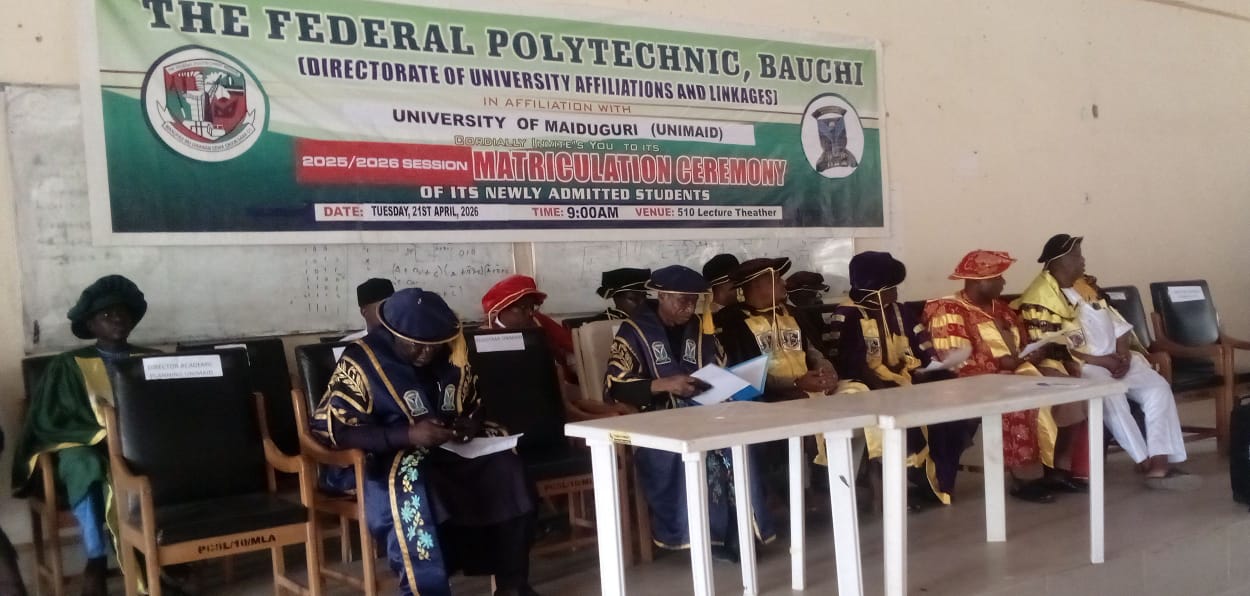
University of Maiduguri (UNIMAID) in affiliation with the Federal Polytechnic, Bauchi has matriculated 82 students into the degree programmes across five courses.
Speaking during the matriculation ceremony at the Federal Polytechnic Bauchi on Tuesday, Professor Muhammad Laminu Mele, the Vice chancellor, University of Maiduguri, charged the matriculated students to strictly adhere to the rules and regulations guiding the two institutions to enable them achieve the set objectives.
The VC, who was represented by Professor Muhammad Ahmad Waziri, Deputy Vice Chancellor Academic Services, warned that any student or group of students trying to breach the peace of the two institutions would face the full wrath of the law.
READ ALSO:NEDC Hands Over Mega School To Bauchi Govt
The Don further assured that the University and its affiliated institutions would continue to make easy access to higher quality education to the teeming population across the country.
In a remark, the Rector of the Polytechnic, Alhaji Sani Usman, said they were affiliated with the university to pursue academic excellence, describing the affiliation as a huge pillar in the education reforms.
READ ALSO:Bauchi Govt, UNICEF Strengthen Education Platforms To Improve Learning Outcomes
The Rector, who was also represented by Dr. Dalhatu Saidu, the Deputy Rector of the Polymeric, commended the university of Maiduguri for not only improving the UNIMAID’s conducive learning environment but expanding the horizon to different higher institutions of learning across Nigeria.
He therefore advised the newly matriculated students to pursue knowledge, to interact freely with the Polytechnic staff, be vigilant and be a brother’s keeper, adding that this would help to achieve the desired objectives.
The affiliated courses included BSc Mass Communication, BSc Accountancy, BSc Public Administration, BSc Business Administration and BSc Banking and Finance respectively.
News
Trouble Looms As Egbesu Group Drags FG To Court Over Resource Control, Others

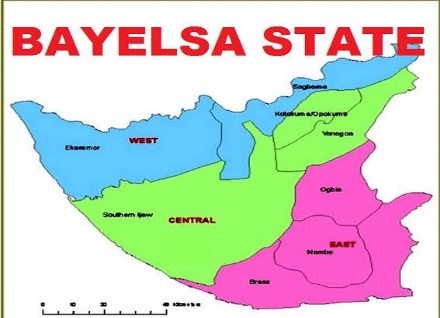
Group known as Supreme Egbesu Assembly (SEA) has dragged the Federal Government and the National Assembly to a Federal High Court, Yenagoa, over failure to create additional 24 Local government councils in Bayelsa State as the need for Ijaw to control natural resources in its territory.
The Originating Summons marked: FHC/YNA/CS/63/2026 was filed on Tuesday April 21, 2026 by the plaintiffs including; Felix Tuodolo, Weri Digifa, Ebi Waribigha, Kabowei Akamade, Rosebella Jackson, Thomas Jacklloyd, Primrose Kpokposei, David Imole and Welman Warri at the Federal High Court Yenagoa.
Joined as defendants in the suit are the National Assembly, the Clerk of the National Assembly and the Attorney General of the Federation.
In the court documents, the Egbesu Assembly premised their action on the alleged failure of the federal government particularly the National Assembly to deliberate, approve and amend the relevant provisions of the 1999 Constitution (as amended).
This, according to them, is to allow for resource control as well as the creation of additional LGAs in the state to fulfil the requirements in line with the Constitution.
READ ALSO:FG Bans Unauthorized Use Of Ambassador Title
The group is therefore seeking, among others, the amendment of the constitution by the National Assembly to allow for the right to resource control.
The Supreme Egbesu Assembly described the suit action as a promise kept.
Mranwh, In a press statement announcing the institution of the lawsuit on Tuesday, the Egbesu Assembly recalled that, on 12th February 2026, it wrote to both the Federal Government and the National Assembly wherein its gave a 21-Day ultimatum for the duo to respond to the age-long demands for resource control and creation of additional LGAs or face a lawsuit.
The statement partly reads: “Recall that on 12th February 2026, we did inform you that we have written to the National Assembly and the federal government on the need for the creation of an additional 24 Local Government Areas in Bayelsa State as well as the control of our God-given natural resources in Ijaw territory.
“We promised that if the National Assembly and or federal government did not respond to these age-long demands, we were going to seek legal actions to address our demands.
READ ALSO:
“We gave a time frame of twenty-one days for them to respond to us—we got no response!
“Today the Supreme Egbesu Assembly (SEA) has kept to its promise.
“We instituted an action at the Federal High Court Yenagoa against the National Assembly and the Federal Government after the expiration of the 21 days. Today we were in court for the first hearing of both cases.”
According to the group, creation of additional local government areas for Bayelsa is as old as the creation of the State itself.
The SEA maintained that “there is nowhere in any democracy where a state is limited to just 8 LGAs: more pathetic is the fact that Bayelsa State is an oil bearing State.
“Bayelsa State presently has twenty four Rural Development Authorities (RDA) which can be easily converted to Local Government areas thereby making the State eligible to participate in the sharing of allocation and the development of their areas for the purpose of justice and equity.
READ ALSO:
“Gentlemen, we wish to inform you that our suit on Resource Control is a revival of our age long agitation.”
The group further stated that Nigeria can no longer operate a system where contributors to the national coffers are not in charge of their resources.
The group added that the lawsuit is therefore for the Ijaw people.
“The Ijaw Nation must be free from all economic strangulation carried out against them by successive Governments,” they added.
The SEA called on all Ijaws to be steadfast and resolute, and continue to support the process by attending all court sessions, stating that “your solidarity is very vital at this point of time in our history. “
The group also called on other Ijaw organizations, communities, Niger Delta people, organizations and all people of goodwill “to join in the march to control and manage our despoiled and mismanaged natural resources.”
News
BREAKING: Tinubu Sacks Wale Edun, Dangiwa As Ministers

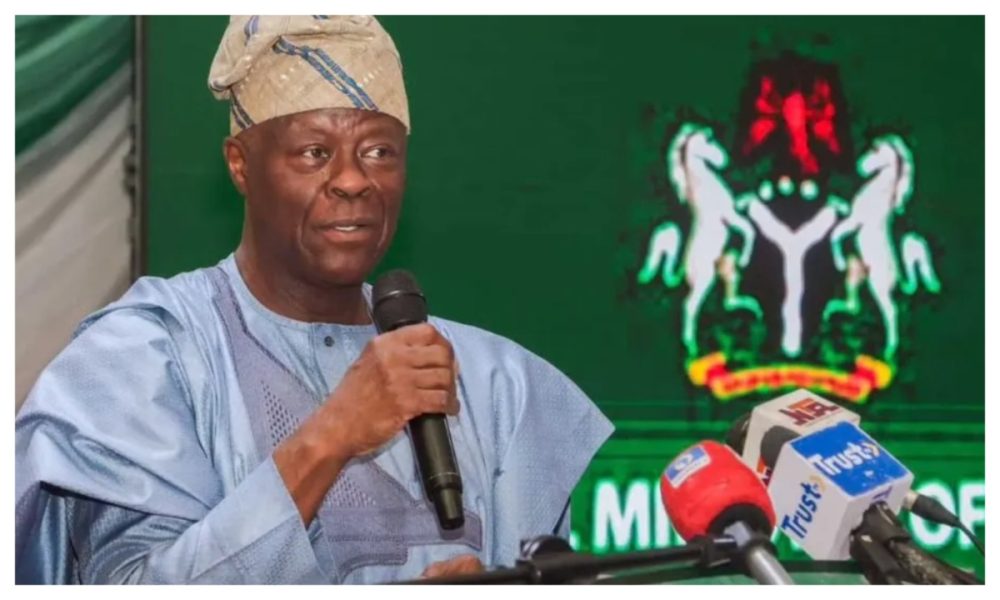
President Bola Tinubu has approved a minor reshuffle of the Federal Executive Council, removing the Minister of Finance and Coordinating Minister of the Economy, Wale Edun, and the Minister of Housing and Urban Development, Ahmed Dangiwa, from their cabinet positions.
Special Adviser, Media and Publicity to the Secretary to the Government of the Federation, Yomi Odunuga, said the development was contained in a memo signed by the
Secretary to the Government of the Federation, George Akume.
According to the memo, Taiwo Oyedele has been appointed as the new Minister of Finance and Coordinating Minister of the Economy.
Also appointed is Dr. Muttaqha Darma as Minister-designate for Housing and Urban Development.
READ ALSO:VIDEO: I Took Over Leadership From Myself; The Late Buhari Is Me — Tinubu
The memo directed the outgoing ministers to complete handover processes to their respective successors or supervising officials.
It stated that all handing over and taking over activities must be concluded on or before the close of business on Thursday, 23rd April, 2026.
Explaining the decision, Akume said the changes were aimed at improving coordination and strengthening delivery across key sectors of the economy under the Renewed Hope Agenda.
“These changes are aimed at strengthening cohesion, synergy in governance as well as achieving more impactful delivery on the economy to Nigerians, through the Renewed Hope Agenda,” Akume stated.
READ ALSO:VIDEO: Tinubu Till 2031, City Boy Movement Members Declare At Bayelsa Rally
He added that President Tinubu acted in line with his constitutional powers as provided under Sections 147 and 148 of the 1999 Constitution (as amended).
The SGF also conveyed the President’s appreciation to the outgoing ministers for their service to the nation and wished them well in their future endeavours, noting that the process of cabinet reinvigoration would remain continuous.
The statement further noted that Taiwo Oyedele was appointed as Minister of State for Finance in March 2026, while Edun was among the ministers appointed on August 16, 2023.
-

 News5 days ago
BREAKING: JAMB To Release First Batch Of 2026 UTME Results Midnight
-

 News4 days ago
World Bank Flags ‘Hidden Spending System’ Diverting Over N34.53tn Of Nigeria’s Revenue
-

 News5 days ago
Popular Nigerian Broadcast Journalist Is Dead
-

 News5 days ago
FG Bans Unauthorized Use Of Ambassador Title
-

 News4 days ago
VIDEO: I Took Over Leadership From Myself; The Late Buhari Is Me — Tinubu
-

 Metro5 days ago
Police Inspector Arrested For Armed Robbery Dies From Bullet Wounds
-
News3 days ago
FG Slams Import Ban On 17 Items In New Fiscal Policy
-

 Politics5 days ago
2027: Why Tinubu Should Be Scared – ADC
-

 News4 days ago
Guard Your Admission Carefully – Registrar Urges Newly Matriculated Students
-

 Headline5 days ago
Oil Prices Drop After Iran Reopens Strait Of Hormuz
