
News
[OPINION]Farotimi: A Trial Of The Supreme Court

By Lasisi Olagunju
Adeola was a destitute woman with neither a surname nor a known relative who died at 1:15 p.m. on Friday, 29 June, 1888 at the Colonial Hospital in Lagos. She was buried at 4 p.m. the following day at Ereko Cemetery, Lagos. The manner of her death on Friday and burial on Saturday was to soon put the entire colonial establishment from Lagos to London on ‘trial’. A police officer had, some days earlier, found the woman “huddled up in an Ereko market shed, utterly helpless and in a ‘bad state of health.’”
Her story: She was just Adeola – no other name. She had no living person she could remember as a relation. About 30 years earlier (1858), she had been bought as a slave at Ikorodu market by a man from Beshe (Ibese?) who later converted her to a ‘wife.’ She had a child for the man but life soon happened to her in more devastating details. One after the other, the ‘husband’ died, the child died too. She became lonely and alone, ill and terribly diseased. Her case became like the sentry of Apomu who lost his divination nuts to thieves, had his wife snatched, and, in horror, watched his last item of survival taken by a bad dog that escaped and slipped into a deep well. “It is time to leave this town!” the man cried.
Utterly broken Adeola left Beshe for Lagos in search of hope and cure for everything that ailed her. She arrived in Lagos on 4 June, 1888. It was because she knew nobody and had no one in Lagos that she found ‘home’ in that market shed where the police officer found her. With that police officer, favour appeared to have found her as she was moved to the Colonial Hospital and was admitted as a patient. If she thought her prayer answered at that point she was wrong. Her story changed on 20 June, 1888 when the senior of the two Oyinbo doctors at the hospital wrote on her treatment sheet: DNI (Discharged, Not Improved). The doctor said she was an “incurable” and “no good could be done for her by treatment” and got her removed from the hospital. And “like a log of wood”, she was taken out of the facility on a stretcher taken far away from the hospital, and “pitched out of the stretcher” like dirt and left to die in the bush.
A man and his carpenter saw everything from the top of a house they were reroofing. They reported what they saw to the authorities who intervened and ordered the woman to return to the hospital by 5 p.m. the following day, 21 June. Adeola was reported dead on 29 June and buried by the evening of the following day. Then trouble started. The Lagos public got to know of everything that happened to the poor woman from the day she was first admitted to the hospital and the day she was reported dead and buried. It became a big human rights issue. Governor Moloney demanded explanations from the hospital and was not satisfied with what he was told. The matter went to a coroner who ordered the exhumation of the corpse. My historian wrote that “when the coffin was opened, the jury was struck by the observation that the body was found placed in a lateral decubitus. This was very unusual, and gave rise to the suspicion that the woman might have been encoffined before life petered out of her.” To be “encoffined before life petered out” of one is to be buried alive.
MORE FROM THE AUTHOR: OPINION: Mass Murder On River Niger[Monday Lines]
The jury tried the case and indicted all the key hospital personnel involved, including the doctor who wrote DNI on her diet sheet. Then the coroner, friend and messmate of one of the doctors, stepped in and annulled the verdict of the jury and cleared all the indicted persons. That was done because the woman was a nobody who had nobody. Lagos as a city became enraged and a huge rally of 374 persons was held inside the Town Hall of Lagos on 9 July, 1888. It was from that meeting that the people of Lagos addressed an appeal petition to the Secretary of State for the Colonies in London who took over the case and ordered the governor of Lagos to implement the jury’s verdict and relieve the chief culprits of their duties. They were sacked. The pauper woman finally got justice. Her story is fully told in Adelola Adeloye’s ‘African Pioneers of Modern Medicine’ (1985); check page 60 through page 71. I got the story from that book; the various quotes I used are from its pages.
Scroll up again and read the Adeola case; the higher the appeal went, the better the reasoning, the surer the justice. Today, nothing in our courts is cast in law. The 1888 scandal happened well before Nigeria became a country. The Lagos public fought the injustice in Lagos for the nameless underdog. When Lagos compromised on truth and justice, the people took the case to London, fought and won in a very comprehensive way. The unfortunate woman in the story was the very definition of underdog. She had nothing; no full name; no address, no blood or bloodless relation. Everyone who fought for her did not know her from anywhere. She was a complete pauper with no material value to anyone. Yet, she got the people behind her and got justice. She was the underdog in the contest for space in the Colonial Hospital. She lost the battle of life but won the war of justice. She had her day, even after she died.
Americans have a day dedicated to almost everything. The third Friday in December of every year is their National Underdog Day. They’ve celebrated their underdog Fridays since 1976. The next one holds on 20 December, 2024. And, if you are a Nigerian, I am sure you’ve heard or come across ‘underdog’ more than once in the last one week. If you haven’t, it means you’ve not been following the war between Chief Afe Babalola, SAN and firebrand lawyer, Dele Farotimi. One, a senior advocate; the other, a subaltern in legal practice. Like in all contests, figures of speech have been flying like Saddam Hussein’s Scud missiles and George H. W. Bush’s Patriots. I heard the junior lawyer being called an underdog, the big man the top dog. I’ve also come across the expression: every underdog would have their day.
MORE FROM THE AUTHOR: OPINION: In Defence Of Nepotism [Monday Lines]
Nigerians are bitterly divided between Chief Afe Babalola and Dele Farotimi. Each side thinks it is right. I read some comments and commentaries and shuddered. The extreme positions being taken and the measures being canvassed remind one of the contents of Edward P. Cheyney’s 1913 article on ‘The Court of Star Chamber’ of 17th century England: “The law-officers of the crown were especially inclined to prosecute offenders against the dignity of judges or other persons connected with the courts. An angry litigant who in 1602 attempted to stab a lawyer who had spoken against him was brought before Star Chamber and sentenced to have his ears cut off and to be imprisoned for life. One man had his ears nailed to the pillory at Westminster for traducing Lord Chief Justice Popham; another was sent to the pillory for saying Lord Dyer was a corrupt judge, another for writing a letter to Coke charging him with chicanery in practice, still others for writing a letter to the Mayor of Wallingford charging him with injustice, and for speaking disrespectfully to the Lord Mayor of London in the wrestling place at Clerkenwell…” The pillory in that piece was a wooden device for displaying and shaming convicts. It was known in Anglo-Saxon times as “catch-neck”, the French called it the pillorie. If you were sentenced to the pillory, your punishment included being abused by ecstatic members of the public and being pelted with filth, including rotten eggs. We’ve seen much of that in the last one week.
I have not read Farotimi’s book but I listened to some of his online appearances on this matter. His words are extreme just as the reaction of Afe Babalola to them. And, while I was wondering if a journalist like me should be read saying anything on this matter because it is already in court, subjudice, I watched Chief Babalola’s lawyers waiving aside that rule and addressing a press conference in Ado Ekiti on Friday. They took the top lawyer’s case before the court of public opinion. I am not blaming them; we live in a constantly changing world in which the Internet is the super jury. The landscape has changed forever. Babalola’s lawyers said Farotimi was angered because he lost his client’s case to their chief’s client before the Supreme Court in 2013. That was eleven years ago! Lawyers must have very long memories – like elephants – for them to have sustained a war this long.
And, it is from Chief Babalola’s case, as presented by his lawyers at the press conference, that I picked my item of interest – how the Supreme Court did this work and created this war. From what I read, it would appear that the Supreme Court was the edá rat that sparked the blaze which our firefighters are dealing with. “You will recall that 254 hectares (of land) were sold to the Gbadamosi Eletu family. However, instead of the 254 hectares, Honourable Justice Kumai Bayang Aka’ahs, JSC, who wrote the lead judgment, recorded 10 hectares in error,” Chief Babalola’s lawyer told the media. Now, listen. Nigeria’s topmost court wrote “ten hectares” when it should have written “254 hectares” and delivered it as its judgment in that contentious land case on 13 July, 2013. I read that and got confused. Figures 10 and 254 neither sound alike nor do they compare in values. So, where did the error come from? The Supreme Court is not a one-man tribunal. There were at least four other justices on that panel. Not one of them saw the mistake of their leading colleague; they all endorsed the error, lock, stock and barrel. The court later corrected this on 18 March, 2014 – that was eight months after the judgment. It blamed the discrepancy on what our law calls “clerical error.” Then this Farotimi-Babalola war started, assailing reputations and curtailing freedoms.
MORE FROM THE AUTHOR: OPINION: The Shuffle In Abuja [Monday Lines]
We are ruling our world in manners that are at variance with how we met it. The British who created this country worked better in the administration of justice. I wrote earlier that in the Adeola scandal case above, the higher the appeal went, the better the reasoning, the surer the justice. Even in places where sharia ruled, the British encouraged discipline, diligence and competence. In Ilorin, an Alkali was dismissed in 1912 “because he could neither read nor write Arabic.” In the same Ilorin, the colonial government removed Chief Alkali Mallam Salihu sometime in the 1930s and replaced him with Mallam Muhammad Dan Begori (Belgore) because inquiry showed that he had been “extremely negligent in his supervision of the clerical work of his subordinates.” H. O. Danmole’s ‘The Alkali Court in Ilorin Emirate during Colonial Rule’ published in the Trans-African Journal of History (1989) contains those details, including the quotes.
Now, you would want to ask: The justices who professed the 10-hectare-for-254-hectare error at our Supreme Court in 2013, where are they today and what were the consequences of their mistake which now proves costlier than they could ever have imagined? The man who wrote the error retired in December 2019. How does he feel hearing all these about his error? The others who concurred with him, what do they feel? The Supreme Court itself, in the name of which those lords of the law acted, is it proud of what is happening? The criminal cases that branched out of their “clerical error” and filed last week, if they eventually go up to the Supreme Court, how is the court going to sit on them? The Body of Benchers, if a student of the Nigeria Law School wrote ten hectares where he was supposed to write 254 hectares, would they reward such a student with a call to the Nigerian Bar?
While I waste my time asking those questions, the battle between the forces of Chief Afe Babalola and those of Dele Farotimi rages on. And, it is not one between David and Goliath. No. Both are losing at the same time. They are both underdogs being tried in two parallel courts – one at the law court; the other at the court of public opinion. Unfortunately, both are not doing fine at all, but they are unyielding. I pity the two sides. They are pitched in a no-win duel while the rats who sparked the fight enjoy their suya, sip their coke, and pick their teeth. In the play, ‘Topdog/Underdog’ by American playwright, Suzan-Lori Parks, two brothers lose everything they fight over – woman, inheritance, everything. “Screaming in agony” is how a critic describes the cries of one while the other is too dead to hear his brother’s too-late regrets.



News
Shatta Wale Bailed Burna Boy From Ghana Prison After Arrest For Smoking Weed – Captan

Ghanian singer, Captan, has claimed that his former record label boss, Shatta Wale, once bailed Nigerian singer Burna Boy out of prison in Ghana after he was allegedly arrested for smoking weed.
Speaking in a recent podcast interview, Captan claimed that Shatta Wale sent him and others to free Burna Boy from police custody.
He also claimed that Shatta Wale and his group once accommodated Burna Boy when he was being hunted by some dangerous men.
READ ALSO: Wale Edun Opens Up After Sack
Captan said, “I once bailed Burna Boy out of prison in Ghana when he was arrested for smoking weed. Shatta Wale sent me and some guys to go and free him from police custody.
“There was a time we also accommodated him when some people were after his life. We helped him settle the case.”
He added that he and Burna Boy are no longer in good terms after the Nigerian artist’s fallout with his mentor, Shatta Wale.
He, however, said he and Shatta Wale are open to reconciling with Burna Boy if he asks for it.
Watch the video here
News
Children’s Day: Chaos At Ogbe Stadium As Dozens Faint

Chaos erupted on Wednesday during the Children’s Day celebration as dozens of students reportedly collapsed following a stampede triggered by the use of pepper spray.
The event,
organised by the Edo State Ministry of Education at the Samuel Ogbemudia Stadium was disrupted after some male students of Ihogbe College allegedly made uncompromising advances towards female students at the venue.
A parent who identified himself as Oboh Emmanuel said, “the behaviour of those uncultured students attracted the attention of bouncers stationed at the stadium as they rebuked the male students.”
Oboh said the affected students later regrouped and attacked the bouncers, leading to a confrontation within the crowded arena.
READ ALSO:Children’s Day: Edo Commits To Child Protection
It was gathered that in the ensuing confusion, the bouncers were reported to have deployed pepper spray in an area occupied by a large number of students.
Several students, particularly female students, reportedly fainted after inhaling the substance, while others sustained injuries after being stepped on during the ensuing melee.
The panic was said to have spread across the stadium as students, teachers and parents scampered for safety.
Many of the affected students were reportedly rushed to the Edo Specialist Hospital for medical attention.
READ ALSO: Egor LG Chair, Ogbemudia, Vice, Osawe Impeached
Reacting to the incident, Chief Press Secretary to Governor Monday Okpebholo, Dr Patrick Ebojele, said the security personnel that fired the tear gas had been detained.
He said all the students, except two, that were rushed to the hospital have been discharged.
Ebojele stated that doctors wanted to observe the students till tomorrow before allowing them to go home.
“The two students are not seriously injured. Doctors want to observe them overnight. Permanent Secretary, Ministry of Education is still at the hospital. The man who used pepper spray has been detained.
“The incident did not happen the way it is being exaggerated. All modalities were put in place to ensure the children enjoyed their day.”
News
Okpebholo Salutes Edo Muslims, Seeks Continued Support, Prayers
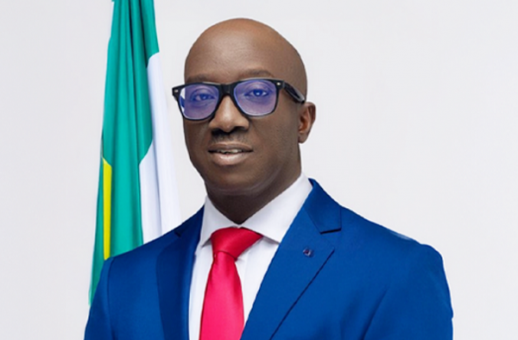
Governor Monday Okpebholo of Edo State has urged Muslims and all Nigerians to continue to pray for peace, unity and progress in the country even as they celebrate the annual Eid-al-Adha
The governor, who was represented by his deputy, Dennis Idahosa, stated this during the annual Eid-al-Adha celebration with Muslim faithfuls held at Government House in Benin City.
He reiterated his administration’s commitment to fairness, inclusivity and equal opportunities for all citizens irrespective of religion and tribe.
READ ALSO:ADC Penetrates Okpebholo’s District As Defections Strengthen Party in Edo Central
According to him, the present administration remains determined to building a government that reflects the diversity of Edo State, noting that competent and qualified Muslims have continued to play vital roles in his government because of their capacity, integrity and commitment to service.
“As a government, we remain committed to fairness, inclusivity and equal opportunity for every Edo citizen, irrespective of religion, ethnicity or political affiliation. This is why quality and competent Muslims are serving in key positions in our administration.”
Okpebholo appreciated the Muslim community in Edo State for their unwavering support and continuous prayers for his administration, noting that such prayers and support have contributed immensely to the peace and steady development being witnessed across the state.
READ ALSO:Okpebholo Felicitates Muslims On Eid-el-Fitr Celebration
He then called on all Nigerians to use the occasion of Eid-al-Adha to pray for the administration of President Bola Ahmed Tinubu, stressing that the country needs collective prayers, unity and cooperation to overcome its present economic and security challenges.
“I urge all Muslims and indeed all Nigerians to use this occasion to pray for our dear nation and for the administration of President Bola Ahmed Tinubu. Nigeria needs our collective prayers, unity and support as we strive to overcome our challenges and build a more prosperous future for all.”
In his remarks, the Chief Imam of Edo State, Abdulfatai Enabulele, applauded the governor for what he described as remarkable developmental strides recorded in less than two years in office.
The cleric commended the administration for ongoing infrastructural development and efforts geared towards improving governance in the state, but appealed to the government to revisit and complete some abandoned projects inherited from the previous administration for the benefit of the people.

 Metro5 days ago
My Husband Abandoned Me On Our Wedding Night To Attend Political Meeting, I Want Our Marriage Dissolved
- Headline4 days ago
Woman Passes Out After Receiving 100 Strokes Of Cane
- Headline4 days ago
JUST IN: White House Locked Down Briefly As Gunman Opens Fire At Security Checkpoint
- Politics5 days ago
Warri Ijaw Hail INEC Delineation Report, Call For Additional Electoral Wards, Others
- Politics3 days ago
Two Masked Men Gun Down Politician In His Rivers State Hotel
- News5 days ago
Alleged Terrorism: Court Rejects Defendant’s Bid To Travel Abroad
- Metro5 days ago
My Wife Stop Cooking My Food, Beats Me Black And Blue All the Time, Man Tells Court
- News3 days ago
More Pain For Nigerians As Cooking Gas Price Increases Nationwide
- Politics5 days ago
What I’ll Do As President Of Nigeria — Amaechi
- Politics3 days ago
‘Tinubu’s Borrowing In 24 Months Surpasses 55 Years’ Debt Record’


