

News
Outrage Over World Bank’s Report On Poverty In Nigeria

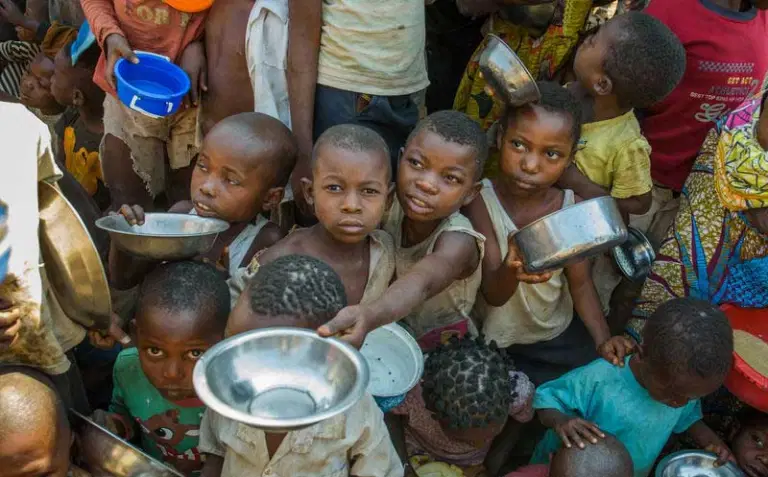


The World Bank’s verdict on Nigeria’s poverty level has attracted widespread outcry, with some interest groups demanding urgent action to avoid a poverty-induced economic meltdown.
The International Monetary Fund and the World Bank, at the just-concluded 2025 Spring meetings in Washington, D.C., United States of America, painted a gloomy picture of Nigeria’s economic outlook in the short to medium term.
Among the highlights was the downgrading of the country’s economic growth forecast, with an indication that the country’s economic policy reforms are largely ineffective in addressing inclusive growth. The institutions ended with a declaration that poverty rate in the country would increase by 2027.
Speaking to Financial Vanguard at the end of the World Bank/ IMF meetings economy observers and Civil Society Organisations, CSOs, expressed embarrassment over Nigeria’s rating in the Spring meetings.
While outlining the key challenges they also made recommendations aimed at salvaging the economy from the looming danger predicted by the global institutions.
Meanwhile, commenting on the World Bank’s verdict on Nigeria’s economy, President of the Nigerian Association of Chambers of Commerce, Industry, Mines, and Agriculture (NACCIMA), Dele Oye, proposed some short-term interventions that could help shield Nigeria’s vulnerable population and make meaningful progress in the fight against poverty.
But while expressing concerns about the World Bank’s verdict, the ActionAid Nigeria (AAN) said it was unsurprised by the grim projections of the World Bank.
The Country Director, AAN, Andrew Mamedu, said, “ActionAid Nigeria is deeply concerned, yet unsurprised, by the grim projections from the World Bank’s April 2025 Africa’s Pulse report, which forecasts a 3.6 percentage point increase in Nigeria’s poverty rate by 2027.
“Governance remains Nigeria’s greatest obstacle. The World Bank has clearly highlighted the country’s poor performance on governance indicators such as government effectiveness, accountability, and political stability, which remain among the weakest in Africa.
Public institutions continue to fail in managing resources and delivering basic services, which is also widening the trust deficit between citizens and government.
”Institutions like the National Assembly, Judiciary, and others, who are supposed to hold the government accountable and ensure resources are available for the people, are rather making routine approvals and focus on issues that do not support the populace.
”While poverty deepened, the federal, state governments and lawmakers prioritised luxury over lives, budgeting billions for new SUVs and renovation of offices.
”President Tinubu’s administration has continued to sidestep meaningful structural reforms, pushing social protection rhetoric that barely scratches the surface, while ignoring the real cries of the people.
”So, the World Bank is right to raise the alarm, but Nigerians have been raising it long before now.
”Let it be clear: the current trajectory will only fuel further migration, brain drain, instability, and disillusionment. Nigeria is at risk of becoming the global capital of extreme poverty, despite being Africa’s largest economy.
”While the government may claim economic progress, the reality is that the rich are getting richer, benefiting from policies like those in the banking sector where profits have soared to N3.41 trillion, while the poor are getting poorer.
”This is not inclusive growth. Reforms must ensure that the most vulnerable benefit.”
It’s a sobering picture for Nigeria — Adeyanju
Also speaking to Financial Vanguard on the World Bank’s verdict on Nigeria’s economy, a human rights lawyer and activist, Deji Adeyanju, said, “The World Bank’s Africa’s Pulse report for April 2025 paints a sobering picture for Nigeria, forecasting a 3.6 percentage point increase in poverty by 2027, driven by structural economic weaknesses, overreliance on oil, and national fragility.
”This projection highlights a harsh reality: Nigeria, despite being Africa’s largest economy, remains a global epicenter of poverty, hosting 15% of the world’s extremely poor population, with over 106 million Nigerians living below the $2.15 per day threshold in 2024.
“Nigeria’s poverty crisis is both deep and multifaceted, characterized by income poverty, multidimensional deprivation, and stark inequality.
READ ALSO: World Bank Expresses Concern Over Nigeria’s Data, Statistics Quality
”Key data points illustrate the scale of the challenge: In 2023, 38.9% of Nigerians (approximately 87 million people) lived below the national poverty line, making Nigeria the world’s second-largest poor population after India. By 2024, 106 million Nigerians were in extreme poverty, reflecting a persistent upward trend.
“Inflation, driven by food and fuel price spikes, erodes purchasing power. ”The naira’s 40% depreciation in 2024 amplified import costs, disproportionately affecting the poor.
“Insecurity disrupts agricultural production, displaces communities, and deters investment, particularly in northern Nigeria, where poverty is most acute.
“With 3.5 million Nigerians entering the labor force annually, weak job creation and entrepreneurial prospects drive unemployment and emigration, further entrenching poverty”.
All the signs of poverty, economic failures are present — CISLAC
Also speaking to Vanguard on the World Bank’s poverty rating for Nigeria, the Executive Director, Civil Society Legislative and Advocacy Centre, CISLAC, Awual Rafsanjani said, “This report coming from the World Bank is not surprising to us because all the signs are there. We have been advising the Nigerian government to carry out better reforms, economic reforms to address poverty, inequality, and ensure financing for development, and block or reduce or minimize opportunities for corruption and embezzlement.
”There’s no way you can have this kind of tendency of reckless spending, looting, excessive borrowing for just personal consumption or diversion, and lack of productivity in the economy without adverse consequence. ”Even our trade and investment is not yielding the result it’s supposed to yield, and definitely this projection by the World Bank will not be a surprising thing.
“In most of our States, the governors and the leadership are not harnessing the resources in their States. Rather they embark on gigantic unproductive projects just for the sake of taking money away, not for addressing gaps in education, in healthcare system, and even in the infrastructure.
”If this kind of mindset is continued, there’s no way you can deal with the issues of poverty and inequality because if the whole idea of governance is to grab the resources, is to steal the money, is to institutionalize impunity and recklessness in governance, definitely you will continue to witness more Nigerians experiencing poverty”.
How Nigeria can avoid the poverty crises — NACCIMA
Meanwhile, NACCIMA boss, Oye, who is also the current Chairman of the Organised Private Sector of Nigeria (OPSN), has made some recommendations on how Nigeria can escape the World Bank’s poverty prediction saying, “The government should implement well-structured and targeted stimulus packages focused on vulnerable populations”.
Such measures, according to him, should include cash transfers, food assistance programmes, and direct support to small and medium enterprises (SMEs) to stimulate job creation.
He stated further: “Independent monitoring and thorough evaluation must be instituted across all processes to curb instances of abuse and corruption.
“Given that a significant proportion of Nigerians rely on agriculture for their livelihoods, there is a need for targeted investment in this sector. Subsidising inputs, providing long-term single-digit credit, and expanding training programmes can help increase food security and foster sustainable livelihoods.
“Expanding access to microfinance for small businesses, cooperatives, and entrepreneurs will promote self-employment and help reduce poverty.
“Facilitating favourable lending conditions specifically for women and youth is crucial, alongside the urgent development of youth-targeted capital to address the ongoing trend of the “Japa Syndrome”.
“Establishing robust vocational and skills training programmes for the unemployed and underemployed will enhance employability and support new entrepreneurs in high-demand sectors.
“Improving infrastructure, particularly in rural areas, will increase market access for farmers and small businesses, leading to increased incomes and, ultimately, poverty reduction.
“There is a need to introduce tax incentives for businesses investing in underserved regions and for those prioritising local employment.
READ ALSO: World Bank Approves Fresh $700m Loan For Nigeria
“Public-private partnerships should be encouraged to finance economic development initiatives, leveraging combined resources and expertise for efficient delivery of social impact.
“Expanding social safety nets, which include unemployment benefits and healthcare access, will provide much-needed relief to those facing financial distress and support their pathways to recovery.
“It is vital for the government to act swiftly and decisively to restore peace and security, especially in rural communities, thereby creating a stable environment for agricultural productivity and investment.
“Nigeria should reduce its reliance on raw material exports and instead prioritise adding value through local manufacturing.”
Govt should address key drivers of poverty — Muda Yusuf
In a comment sent to Vanguard, the Chief Executive Officer of the Centre for the Promotion of Private Enterprise (CPPE), Dr Muda Yusuf, said Federal Government should take bold steps to address the key drivers of poverty to prevent the gloomy prediction by World Bank from coming to pass.
His words: “This kind of statement from the World Bank can only be conditional, because if the government does the right things, then the situation will not be as gloomy as it has been presented.
“If the government is able to address the key drivers of poverty, then the poverty situation may not deteriorate beyond what it is. If anything, it could be reversed. We have seen it done in other countries like China, where a lot more people have been taken out of poverty because of the kind of policies and governance that are in place.
“So, I think it’s more about how effectively we are able to address the social issues in the country. Therefore, we should be looking at drivers of poverty and how to correct them
“The first, in my view, is to address the rising cost of living. These are essentially the costs of food, energy, transportation, logistics and many other basic things that the poor consume.
“It is the increasing cost of living that makes a lot of people drop into poverty. If we are able to moderate the costs, then many more people will be able to live above poverty. These variables I mentioned are the critical issues as far as the cost of living is concerned.
“The second major thing that the government can do to ensure that this gloomy prediction does not come true is to address the macroeconomic management dimensions of the drivers of poverty. By this, I mean how well the government is able to tame inflation through its macroeconomic policies. Inflation is the greatest enemy of the poor.
“So, this means that we should be worried about the growth of fiscal deficit, reducing the debt level and debt servicing commitments which often squeezes the fiscal space. We should worry about growing money supply which is also, many times, inflationary.
“The third point is that the government should address the issue of productivity because when we have an economy where productivity is an issue, it affects everybody – both the small and large businesses. Because productivity determines the ability to be able to create wealth, to create value. It determines how much effort we need to put in to achieve a particular outcome.
“So, we need to ensure that we create the environment that enhances productivity. And at the centre of that is government investment in infrastructure – energy, logistics, roads, railway system, power sector e.t.c.
“Then the structure of government expenditure, particularly the social sector investment, that is investment in education and health. This is happening already but we need to do a lot more.
“And to prevent more people from falling into poverty is the responsibility of all tiers of government – federal, state and local government have roles to play. If they don’t spend resources available to them in a way to alleviate poverty, then the poverty situation may get worse.
“Another point is to watch the population growth. There is a need to ensure proper sensitization of citizens to reduce their fertility rate without necessarily offending their religious or cultural sensibilities. We should find a way to deal with that.
“We need to address the issue of insecurity. The growing insecurity led may people into poverty because it has affected their cost of living. That’s why many of them have ended up in IDP camps. So, tackling insecurity is one key way of tackling the problem of poverty.
“And finally, is the issue of corruption. Corruption is depleting the resources that belong to the people. When we have situations where resources meant for the people, either at the local government level, state or federal level, are cornered by a few for their own selfish ends, then it contributes to poverty.
“Because the opportunity cost of the resources that have been stolen or diverted for personal goals means that a lot of key commitments of government to infrastructure, education or health will suffer.
“So, we should be looking at the drivers of poverty and looking at how we can address those drivers. If we can address them, then we will not end up in that pessimistic position as proposed by the World Bank.”
Stop playing politics with people’s lives — AAN
While making some recommendations on the ways out of poverty, ActionAid Nigeria (AAN) called on the Federal Government to “Stop playing politics with people’s lives and fully strengthen and expand social protection, including universal cash transfers and food support for the most vulnerable”.
They also called for protection of smallholder farmers by tackling insecurity and ensuring access to markets, inputs, and tools to boost local food production.
They recommended further: “Scrap all non-essential public spending particularly the outrageous allocations to government officials’ lifestyles and channel funds to education, healthcare, and job creation; Stabilise the economy through transparent and people-centred fiscal and monetary policies that protect the purchasing power of citizens”.
READ ALSO: 5 Most Expensive Passports In the World
Making his own recommendations, Adeyanju stated: “To reverse the World Bank’s projected poverty increase by 2027, Nigeria must implement transformative, inclusive, and sustainable reforms.
“Diversify the Economy: Reduce oil dependence by investing in agriculture and technology, supporting agribusiness and job creation.
“Improve public spending transparency and engage citizens in budgeting to enhance governance; Invest in security and conflict prevention to stabilize regions and promote economic activities; Increase funding for education and healthcare to improve productivity and living standards; Support small and medium enterprises through financial incentives and incubation programs; Maintain tight monetary policies and subsidize essential goods to alleviate cost-of-living pressures.
“The World Bank’s forecast of rising poverty in Nigeria by 2027 is a clarion call for urgent action. By diversifying the economy, strengthening governance, expanding social protection, and investing in human capital and security, Nigeria can not only avert the projected poverty increase but also chart a path toward inclusive prosperity.”
Small-scale businesses need to be supported — CISLAC
CISLAC’s boss, Rafsanjani, outlined a battery of measures for averting the economic dangers facing Nigeria.
According to them, “The government needs to be deliberate in terms of its trade and investment opportunity to get Nigerians to engage in both local and national as well as international businesses, so the Small-scale businesses need to be supported, improved so that people can be actually busy doing work, not relying only on the government job that is not even coming.
“So this means that the ease of doing business has to be properly implemented.
“The last issue that I want to also suggest is that agriculture has been a major preoccupation job for Nigerians in the past but because of the insecurity, the farmers are not able to go to their farms and produce food for consumption in the country and also be able to send it out and that also militates the poverty that we see around because when people cannot even farm, they cannot eat, they cannot really take care of their basic needs of just survival and shelter because of the fact that insecurity has made it impossible for them to work and then be able to produce food for the country.”
READ ALSO: World Bank Forecasts Another Global Recession
Govt not serious in addressing poverty — Global Rights
In her comments, the Executive Director, Global Rights Nigeria, Abiodun Baiyewu, said, “Nigeria’s poverty gap has in the past three years risen exponentially and currently half of the nation lives below poverty line.
”I don’t think that the government has invested enough to reduce the current poverty level or even more importantly to prevent further decline. But should they be serious about addressing them and pulling Nigerians out of poverty, here are some obvious actions to take; ”Strengthen Social Protection Programmes: Expanding and enhancing social safety nets can provide immediate relief to vulnerable populations. For instance, the government has secured a $2.25 billion loan from the World Bank, allocating $800 million for a cash transfer program aimed at assisting up to 70 million Nigerians affected by recent economic reforms.
”Our worry is that like previous cash transfers, corruption and mismanagement will whittle away the $800 million. ‘However, more practical and sustainable steps to take would include investing in social safety nets like access to social security services for the unemployed, affordable housing, improving access to electricity, access to nutritious food particularly for children, ensuring the efficient and transparent implementation of such initiatives.
”Supporting small and medium-sized enterprises (SMEs) and improving access to finance can also stimulate job creation. Again, such investment should include greater infrastructural capacity.
”For example, the electricity sector in Nigeria as it currently stands is inimical to development and cannot leverage industrial growth.
”Predictability is also essential for businesses to thrive. Policies need to be stable and predictable.
“Enhance Agricultural Productivity
“Investing in agricultural infrastructure, providing access to modern farming techniques, and facilitating market access can increase productivity and incomes for a good chunk of the population.
”Lessons can be drawn from countries like Niger, where strong growth in the agricultural sector is projected to reduce extreme poverty from 45.3% in 2024 to 35.8% by 2027.
”Apart from lack of access to modern farming techniques, the bane of agriculture in Nigeria is insecurity and the lack of an efficient transportation system. Deal with those two and more people would invest in agriculture”.
(Vanguard)




News
Xenophobic Attacks: Oshiomhole Tells FG To Retaliate Against South African Companies In Nigeria

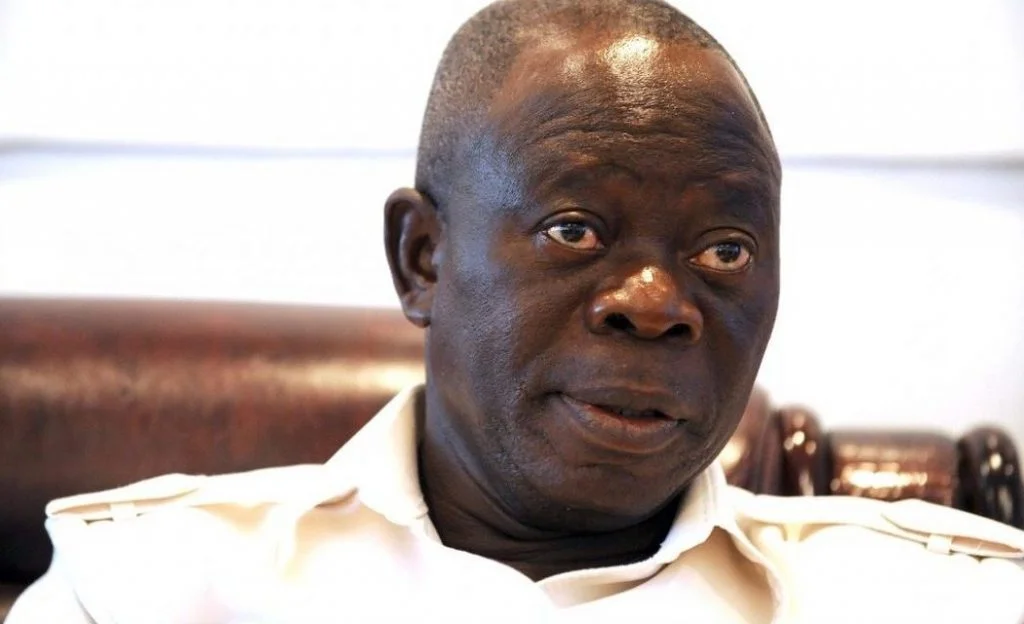
Senator Adams Oshiomhole has called on the Federal Government to retaliate against South African businesses operating in Nigeria following the recent attacks on Nigerians in South Africa.
Speaking during plenary on Tuesday, Oshiomhole said the Federal Government should consider revoking the working license of South African owned companies such as MTN and DSTV.
He argued that Nigeria must respond firmly to what he described as persistent hostility against its citizens.
READ ALSO:South Africa To Investigate ‘Mystery’ Of Planeload Of Palestinians
“I am not going to shed tears. If you hit me, I hit you. I think it is appropriate in diplomacy. It is an economic struggle,” Oshiomhole said.
He argued that while some South Africans accuse Nigerians of taking their jobs, Nigerians should return home and take over employment opportunities created by major South African companies operating in the country, including MTN and DSTV.
“When we hit back, the President of South Africa will not only talk but will also go on his knees to recognise that Nigeria cannot be intimidated.
READ ALSO:South African Ambassador Found Dead Outside Paris Hotel
“We will not condone any life being lost. If a crime has been committed under the South African law they have the right to bring any such person to justice, but to kill our people as if we are helpless, we will not allow that,” Oshiomhole added.
DAILY POST reports that several Nigerians in South Africa have reportedly been attacked, and their businesses destroyed, in ongoing xenophobic attacks in the country.
News
IGP Orders Officers Display Name Tag On Uniform, Gives Update On State Police

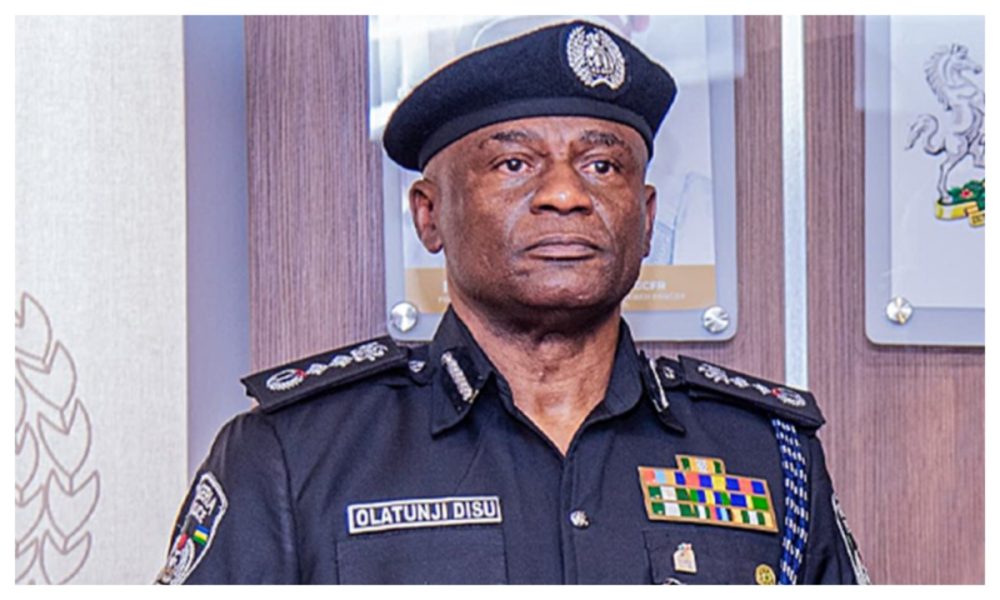
The Inspector General of Police, IGP, Tunji Disu, has ordered all police personnel to always have their name tags on their uniforms for easy identification.
Disu disclosed that only police personnel who are undercover are exempted from displaying their name tags.
Speaking on Tuesday, Disu said: “All police officers should have their name tags. All of us on the high table have our names apart from the undercover among us so if you look at all the Commissioners of Police we have our name tags, so it’s not our standard.
READ ALSO:
“All the Commissioners of Police are here and that is why we called this meeting, we have list of things like this that we will want to discuss with the Commissioners of Police, we have told them earlier and we will still let them know that every that happens within their area of jurisdiction falls under their control.”
On the issue of state police, the IGP said: “Since we got the signal that the Federal Government of Nigeria intend to establish State Police and since we are the federal police, we decided to take the bull by the horn and put down our own side of what we believe on how the state police should be run.
“A lot of things were taken into consideration, a lot of comparative analysis was done and it has been transmitted to the National Assembly.”
News
Court Orders SERAP To Pay DSS Operatives N100m For Defamation

The High Court of the Federal Capital Territory has ordered a non-governmental organization, the Socio-Economic Rights and Accountability Project, SERAP, to pay N100 million as damaged to two operatives of the Department of the State Services, DSS, for unjustly defaming them in some publications.
The court also ordered SERAP to tender public apologies to the defamed officers,
Sarah John and Gabriel Ogundele, in two national newspapers, two television stations and its website.
Besides, the organization was also ordered to pay the two operatives N1 million as cost of litigation and 10 percent post-judgment interest annually on the judgment sum until it’s fully liquidated.
Justice Yusuf Halilu of the High Court of the Federal Capital Territory gave the order on Tuesday while delivering judgment in a N5.5 billion defamation suit instituted against SERAP by the DSS operatives.
The judge found SERAP liable for unjustly defaming the two DSS operatives with allegations that they unlawfully invaded its Abuja office, harassed and intimidated its staff, in September 2024.
READ ALSO:How We Arrested Terror Suspect Who Threatened To Kill Students, Teachers In Abuja — DSS
In the offending publication on its website and Twitter handle, SERAP alleged that the two operatives unlawfully invaded and occupied its office with sinister motives.
The judge held that the publication was in bad taste especially from an organization established to promote transparency and accountability, as nothing in the publication was found to be truthful.
The DSS staff had listed SERAP as 1st defendant in the suit marked CV/4547/2024. SERAP’s Deputy Director, Kolawole Oluwadare, was listed as the 2nd defendant.
In the suit, the claimants – Sarah John and Gabriel Ogundele – accused the two defendants of making false claims that they invaded SERAP’s Abuja office on September 9, 2024..
Counsel to the DSS, Oluwagbemileke Samuel Kehinde, had while adopting his final address in the mater urged the judge to grant all the reliefs sought by his client in the interest of justice.
READ ALSO:DSS Arrests Suspected Gunrunner, Recovers 832 Rounds Of Ammunition
He admitted that although the names of the two claimants were not mentioned in the defamation materials, they had however established substantial circumstances that they are the ones referred to in the published defamation article by SERAP on its website.
The counsel submitted that all ingredients of defamation have been clearly established and the offending publication referred to the two officials of the secret police.
However, SERAP, through its counsel, Victoria Bassey from Tayo Oyetibo, SAN, law firm, asked the court to dismiss the suit on the ground that the two claimants did not establish that they were the ones referred to in the alleged defamation materials.
She said that SERAP used “DSS officials” in the alleged offending publication, adding that the two claimants must establish that they are the ones referred to before their case can succeed.
Similar arguments were canvassed by Oluwatosin Adefioye who stood for the second defendant, adding that there was no dispute in the September 9, 2024 operation of DSS in SERAP’s office.
READ ALSO:Alleged Cyberstalking: DSS Plays Video Evidence In Sowore’s Trial
He said that since SERAP in the publication did not name any particular person, the claimants must plead special circumstances that they were the ones referred to as the DSS officials.
Besides, he said that there is no organization by name Department of State Services in law, hence, DSS cannot claim being defamed adding that the only entity known to law is National Security Agency.
The claimants had in the suit stated that the alleged false claim by SERAP has negatively impacted on their reputation.
The DSS also stated, in the statement of claim, that, in line with the agency’s practice of engaging with officials of non-governmental organisations operating in the FCT to establish a relationship with their new leadership, it directed the two officials – John and Ogunleye – to visit SERAP’s office and invite them for a familiarization meeting.
The claimants added that in carrying out the directive, John and Ogunleye paid a friendly visit to SERAP’s office at 18 Bamako Street, Wuse Zone 1, Abuja on September 9 and met with one Ruth, who upon being informed about the purpose of the visit, claimed that none of SERAP’s management staff was in the country and advised that a formal letter of invitation be written by the DSS.
READ ALSO:DSS, Police Partner NCCSALW To End Terrorism, Mop Up Illegal Arms
John and Ogundele, who claimed that their interactions with Ruth were recorded, said before they immediately exited SERAP’s office, Ruth promised to inform her organisation’s management about the visit and volunteered a phone number – 08160537202.
They said it was surprising that, shortly after their visit, SERAP posted on its X (Twitter) handle – @SERAPNigeria – that officers of the DSS are presently unlawfully occupying its office.
The claimant added, “On the same day, the defendants also published a statement on SERAP’s website, which was widely reported by several media outfits, falsely alleging that some officers from the DSS, described as “a tall, large, dark-skinned woman” and “a slim, dark skinned man,” invaded their Abuja office and interrogated the staff of the first defendant (SERAP).
John and Ogundele stated that “due to the false statements published by the defendants, the DSS has been ridiculed and criticised by international agencies such as the Amnesty International and prominent members of the Nigerian society, such as Femi Falana (SAN)”.
“Due to the false statements published by the defendants, members of the public and the international community formed the opinion that the Federal Government is using the DSS to harass the defendants.”
READ ALSO:SERAP To Court: Stop CBN From ‘Implementing ‘Unlawful, Unjust ATM Fee Hike’
They added that the defendants’ statements caused harm to their reputation because the staff and management of the DSS have formed the opinion that the claimants did not follow orders and carried out an unsanctioned operation and are therefore, incompetent and unprofessional.
The claimants therefore prayed the court for the following reliefs: “An order directing the defendants to tender an apology to the claimants via the first defendant’s (SERAP’s) website, X (twitter) handle, two national daily newspapers (Punch and Vanguard) and two national news television stations (Arise Television and Channels Television) for falsely accusing the claimants of unlawfully invading the first defendant’s office and interrogating the first defendant’s staff.
“An order directing the defendants to pay the claimants the sum of N5 billion as damages for the libellous statements published about the claimants.
“Interest on the sum of N5b at the rate of 10 percent per annum from the date of judgment until the judgment sum is realised or liquidated.
“An order directing the defendants to pay the claimants the sum of N50 million as costs of this action.”
-

 Politics3 days ago
2027: Tinubu’s Re-election May Put An End To Nigeria — Baba Ahmed Warns
-

 Metro4 days ago
I’m A Street Girl’ – Bimbo Ademoye Clashes With Area Boys [VIDEO]
-

 News5 days ago
VIDEO: Moment S’Court Recognises David Mark-led ADC Leadership
-

 Politics4 days ago
Senatorial Seat: Ogbakha-Edo Warns Against Imposition Of Candidates In Edo South
-

 Politics4 days ago
BREAKING: 2027: Former Adamawa APC Guber Candidate, Aishatu Binani Defects To NDC
-

 Business3 days ago
JUST IN: Nigerian Filling Stations Reduce Fuel Price After Hike
-

 Entertainment4 days ago
Actress Eniola Badmus Gets New Federal Appointment
-

 Metro5 days ago
VIDEO: Policemen Filmed Assaulting Individual In Viral Clip
-

 Metro5 days ago
Robbers Raid Imo Catholic Church, Steal Holy Communion Materials
-

 News4 days ago
10 African Countries With Highest Petrol Prices In Prices In April 2026
