
News
Police Rescue Infant Abducted By Neighbour In Rivers
Operatives of the Rivers State Police Command have rescued a six-month-old child, Lucky Sunday, who was kidnapped over a month ago by a co-tenant of the child’s parents at their residence on Anekelane Street in the Mile 2 axis of Diobu in Port Harcourt, Rivers State.
Recall that the suspect, simply identified as Mr Erica, abducted the infant on Sunday, 29 September 2024, and reportedly fled with the child to Uyo, the capital of Akwa Ibom State.
The Rivers State Police Command has been on his trail ever since, spreading their dragnet to ensure his arrest and prosecution.
The manhunt for the fleeing suspect finally paid off when detectives attached to the Mile 1 Police Division trailed him to Uyo, leading to his arrest and transportation back to Port Harcourt.
READ ALSO: Court’s Directive To Halt Federal Allocations To Rivers Unconstitutional – Ijaw National Congress
It was gathered that during interrogation, the prime suspect revealed to the police that he sold the baby for N3.6 million to an unidentified female buyer who took the child to Enugu State.
Following a discreet investigation, detectives attached to the Mile 1 Police Division rescued the child on Sunday, 3 November 2024, and arrested the buyer and four other accomplices, bringing the total number of suspects to six, all of whom are currently detained at the Mile 1 Police Station in Port Harcourt.
The father of the child, Anekan Sunday, confirmed the rescue of his baby and the arrest of the six suspects, stating, “Yes, I saw my baby yesterday (Sunday). But the police didn’t allow me to take him yet because they said they wanted to go to court.
“The suspect who took the baby and the others have been arrested. They are six in all, and they are at the Mile 1 Police Division.”
READ ALSO: EFCC Arrests Ex-Delta Governor, Okowa Over Alleged Fraud
When contacted, the spokesperson for the State Police Command, Grace Iringe-Koko, confirmed the rescue of the child and the arrest of the suspects, stating that it is a child trafficking syndicate.
Iringe-Koko, a Superintendent of Police, also revealed that the prime suspect had previously sold his own biological child before abducting that of his neighbour.
She stated, “It is a case of a child trafficking syndicate that our men have busted.
“The man sold his own biological son and also abducted another child, whom he sold for N3.6 million to a lady.
“But the lady claimed she went to an orphanage to register the child for adoption in Enugu State. The child was adopted here in Port Harcourt and sold to her.
READ ALSO: Court Jails ‘Professor’ For Attempting To Write UTME For Daughter
“The child has been rescued. The suspect and five others have been arrested, and investigations are ongoing.”
Meanwhile, a rights advocate and National Coordinator of the Centre for Basic Rights Protection and Accountability, Prince Wiro, has commended the police for their due diligence in rescuing the child and arresting the six suspects.
Wiro stated, “We sincerely commend the officers attached to the Mile 1 Police Division for the rescue of the child. It shows a high level of professionalism and due diligence.
“We believe that the officers deserve an award from the police authority in the state. We equally urge the police to arraign any of the arrested suspects found culpable during the investigation in court for justice to be served as a deterrent to others who may want to take the same line of action.”



News
OPINION: Nigeria Deserves A President Donald Trump
By Suyi Ayodele
“I spoke with AJ on the phone to personally convey my condolences… He assured me that he is receiving the best care in the hospital.” From wherever he then was, President Bola Ahmed Tinubu relayed that Anthony Joshua, the British-born boxer of Nigerian descent involved in a recent car accident, had told him he was receiving the best medical attention in Nigeria.
Yet, with something as ordinary as a headache, the same president routinely jets out of the country for treatment, sometimes to the United Kingdom, sometimes to France, sometimes to destinations left undisclosed. No one asks Mr. President why he can not stay behind and partake of that same “best care in the hospital” available at home.
Instead, we busy ourselves with tallying the number of days he spends abroad, and when the arithmetic is done, we move on. Nothing more is demanded; nothing more is explained.
So, if tomorrow a President Donald Trump were to bar Nigerians from travelling to the United States for medical treatment, we would promptly denounce him as a racist. Yet the very next day, we would assemble a cultural troupe to welcome home a medical tourist president, one who left Nigeria quietly, without telling us what ailed him, and returned triumphantly after treatment abroad.
That is our lot; the predicament of a people wedded to decay and decadence. And it is precisely this contradiction, this ritual of self-deception, that makes it easy for some world leaders to dismiss Nigeria as a disgraced country.
President Trump is a man many love to hate. And justifiably too. The man attracts ‘hatred’ for himself as if his mission on earth is to do what many consider ‘despicable.’
I, however, have a different opinion about the man who rules America at the moment. I see him as more of an American patriot than the brute many people project him to be. I don’t see anything wrong in a president asking non-nationals to go back and fix their own countries. That, to me, is the central message of the Trump Presidency. My understanding of his philosophy on governance is that citizens should hold their leaders accountable, rather than fleeing their countries.
This is one of the reasons I hardly argue about Nigeria and its numerous failing institutions with any Nigerian living outside the shores of the country, especially those who japa less than 20 years ago. My position is simple: if you know that Nigeria is being run by the best of men now, just pack your bags and baggage and come back home. A friend once asked me why I don’t see anything wrong in “the racist called Trump”, and I responded by asking him to come back home and enjoy our nationalist president. If farming is an easy venture, blacksmiths will not sell hoes and cutlasses. Those are the words of our elders.
MORE FROM THE AUTHOR:OPINION: Don Pedro And Beautiful Benin
Three days into the New Year 2026, President Trump opened the New Year on a very good note for the people of Venezuela. Venezuelans, at home and in the diaspora, woke up that Saturday, January 3, 2026, morning to discover that they had no president. Trump, using the sophisticated American soldiers in the US elite corps, invaded Venezuela in the dead of the night and abducted, if you like, kidnapped President Nicolás Maduro and his wife. Surprisingly, the people rejoiced at the news!
The husband and wife were in bed when the American soldiers came calling. One can picture how startled they were when they saw the strange faces in their inner room. The shock, especially when Maduro had, less than a month ago, boasted that he was safe and secure and dared America to come after him, is better imagined! What if the couple were making out when the intruders arrived?
Hours later, Trump boasted of the feat as “an extraordinary military operation,” during which “air, land, and sea were used to launch a spectacular assault. And it was an assault like people have not seen since World War Two.” He then described the operation as “…. One of the most stunning, effective and powerful displays of American military might and competence in American history” as the Venezuelan military capacities were “rendered powerless”, and “…. the men and women of our military working with US law enforcement successfully captured Maduro in the dead of night.” Could this be the reason why our elders advise that when one’s mother’s co-wife is older, one must call her mother (Tí ìyàwó ìyá eni bá ju ìyà eni lo, ìyá làá pèé).
A great public speaker, Trump warned that “This extremely successful operation should serve as a warning to anyone who would threaten American sovereignty or endanger American lives.” He listed those to be warned to include Cuba, saying, “I think Cuba is going to be something we’ll end up talking about because Cuba is a failing nation right now, a very badly failing nation. And we want to help the people. It’s very similar in the sense that we want to help the people in Cuba.”
Trump is a consummate power wielder. He did not forget Colombia. It is a known fact worldwide that Colombia and drugs are Siamese twins. If President Maduro of Venezuela could be ‘captured’ because he was accused of importing cocaine to America, the Colombian President, Gustavo Petro, President Trump warned, should “watch his ass”, because “He’s making cocaine and they’re sending it into the United States, so he does have to watch his ass.”
We must get this right from the start. No law permits what President Trump did in Venezuela. The invasion of the presidential palace and the kidnapping of President Maduro and his wife are bad in all ramifications. America is not the world police. At least, the United Nations (UN), that toothless world bulldog, Charter does not permit such an infraction. The sovereignty of Venezuela was raped by Trump. The sanctity of the human person of President Maduro was violated. Oh, yes, I must add this: the solemnity of the bedroom of Maduro and his wife was desecrated! What if Maduro and his wife had slept naked, as most couples do?
Article 2(4) of the UN Charter prohibits any member state from using force against the territorial integrity (sovereignty) of an independent country. The Charter, in Article 51, only allows the use of force in self-defence, while Articles 24 and 25 permit only the Security Council to use joint or collective force against any independent nation that threatens world peace. So, where did President Trump derive the power to invade another country, pick up the incumbent president, and transport him to America in handcuffs, as he did to President Maduro of Venezuela?
MORE FROM THE AUTHOR:OPINION: My Man Of The Season
I have read many comments about the Trump Presidency. This recent action in Venezuela added fuel to the inferno of hatred for the American President. If Nigerians in the Diaspora in America were to choose who governs God’s Own Country, Trump would not have smelled the presidency. In fact, he would not have been elected as the mayor of any city. But unfortunately for the entire world, the American people, or, as someone argued, ‘the American skewed system’, elected Trump as president. Everybody, haters or lovers alike, would have to deal with that fact.
From day one, Trump never hid his identity. He never pretended to be a gentleman. He did not tell anyone that he would run America for foreigners. His ‘Make America Great Again’ (MAGA) mantra is self-explicit. America would be for Americans, he promised. And he has lived up to that. That is honesty in its illiterate form! If you ask me, that is the type of president every nation deserves. No pretence, no diplomacy; all that matters is American interests. I wish Nigeria had such a President, the one who thinks, sleeps and dreams of Nigeria. We have been unfortunate with the selfish individuals that we have had as leaders. The present crop of transactional leaders is the very worst in our recent history.
If I were to choose a president for Nigeria, I would not think twice before picking a character like Trump. A man who places the nation’s interest above any other consideration is the man after my heart. This is what is lacking in Africa, and particularly in Nigeria. A nation that has no defined national interest is bound to be in ruins, like most nations of Africa.
Nigeria has the capacity, in all ramifications, to be great. What we lack is a president who is purposeful, courageous and above all, patriotic. We can imagine that our military became suddenly effective and efficient only after Trump ‘invaded’ Sokoto and cleared out a good number of terrorists. Yet again, nobody is asking what went wrong before the coming of Trump.
I have read so much about the sovereignty of Venezuela. I have no problem with that. But the one question I keep asking the proponents of national sovereignty is: at what time does the respect for a nation’s sovereignty stop? If, for instance, the sovereignty of Nation A threatens the peace of Nation B, what should Nation B do? Should it act in the interest of its own peace or fold its hands while the rudderless nation A acts anyhow?
If President Maduro was exporting drugs to America as Trump alleged, what should be the response of President Trump? I also find it curious that many who talked about the sanctity of the American judiciary in the case involving President Tinubu and the Chicago University certificate are the same set of people saying Maduro would not get justice in America! What a people!
After the ‘capture’ of President Maduro, the American President said that the US would “run” Venezuela. Many said that Trump was only interested in Venezuelan crude oil. Trump himself did not deny that. His press conference after Maduro had been taken into custody was clear enough. America had a huge investment profile in the oil sector of Venezuela. One of the responsibilities of President Trump, and this is applicable to all presidents, is the protection of the American economy at home and abroad. If the US investments are threatened in Venezuela because of the activities of Maduro, would Trump not be failing in his responsibility if he did not act in the name of sovereignty?
MORE FROM THE AUTHOR:OPINION: Nigerian Soldiers In Benin Republic
Nnamdi Kingsley Akanni, a professor of International Law and Diplomacy, Rivers State University, in a 2019 paper on “The Concept of Sovereignty in International Law and Relations,” suggests that the concept of sovereignty may be a ruse after all. According to him, “The paper found that what third world countries enjoy is not sovereignty but ‘sovereignty on dictated terms’ of the so-called developed powers.”
The erudite scholar states further that at the end of the research exercise, “The paper also found that smaller States are not accorded protection from developed countries and that until that is done, the concept of sovereignty will continue to be elusive to smaller nations.” He then recommends “…that the UN should take proactive steps to give greater recognition and voice to developing countries as well as offering them the platform to assert their sovereignty in line with international law.”
What the scholar is saying here is that the concept of ‘sovereignty’ exists only when the developed countries are involved. When there is a conflict of interest between the world superpowers and any of the developing or ‘disgraced’ countries of the world, the principle of “Just War” applies. This is why Trump is going to get away with the Saturday invasion of Venezuela and the impending similar exercises in Cuba and Colombia, as the American President hinted.
If the UN wakes up today and gets its mojo back to interrogate Trump on Venezuela, the US can simply hide under the cover of the principle of ‘Just war’ as the invasion of Venezuela and the ‘capture’ of its president satisfied the jus ad bellum requirements of the ‘just cause’, just intention’; ‘just peace’; reasonable chance of success’; and ‘expected benefits outweighing anticipated cost.’. We don’t need a seer to predict that many drug-friendly leaders across the globe will think twice before making America their ‘depots.’ Trump took the American oath of office to protect American interests. This is why there has been no serious condemnation of the invasion in the US today.
The invasion of Venezuela is a lesson for third-world countries. The argument that Trump took that decision because of the last Venezuelan election and economic interest is noble in my opinion. That is what he was elected to do: protect America and its interests world over.
In Africa, in general, and in Nigeria in particular, let our leaders learn to develop our lands. Let those saddled with the responsibilities of paddling our canoes do so with utmost patriotism. And more importantly, let those who want to lord it over us do so through free and fair elections. Otherwise, we will all clap and celebrate should Trump decide to ‘capture’ and ship all undesirable elements with questionable character to America for trial. Venezuelans set the precedent on Saturday when they trooped to the streets in jubilation at the news of the removal of Maduro!1
News
Oyo Traditional Ruler Suspended Over Alleged Illegal Mining
The Oyo State Government has suspended the Sobaloju of Ofiki, Chief Jacob Sobaloju, following allegations linking him to illegal mining activities and breaches of Executive Order 001/2023, which governs mining operations within the state.
The state government said the action was taken to protect the public interest and preserve government-gazetted assets.
In a suspension letter issued by the Ministry of Local Government and Chieftaincy Matters and signed by the Director of Chieftaincy Matters, Mr Olajire A.M., the traditional ruler was accused of contravening the executive order and forest reserve regulations by allegedly issuing consent letters to mining firms without lawful authorisation.
READ ALSO:Fire Ravages Residential Building In Oyo
The letter further alleged that Chief Sobaloju permitted mining activities within government-reserved forest areas and facilitated unauthorised mining operations, actions said to be in violation of extant laws and regulations.
According to the ministry, the monarch was suspended from the palace of the Onitọ of Ito with effect from Monday, January 5, 2026, pending the outcome of investigations.
The suspension was described as a precautionary step to ensure an unhindered and credible investigation process.
READ ALSO:Police Arrest Islamic Cleric With Human Flesh In Oyo
The correspondence, titled “Re: Complaint against Chief Sobaloju of Ofiki for violation of State Executive Order, Forest Reserve Regulations and encouraging trespassing of government gazetted assets,” stated that the allegations bordered on violations of Executive Order 001/2023 and unlawful encroachment on state-owned assets.
Chief Sobaloju was also directed to immediately cease all mining-related activities, including the issuance of consent letters, avoid interference with the investigation, and make himself available to investigators whenever required.
The Oyo State Government reaffirmed its zero-tolerance stance on illegal mining and related infractions, warning that any individual found culpable would be sanctioned in line with the law.
News
Why I Resigned As CIGM Boss – Arogundade Breaks Silence
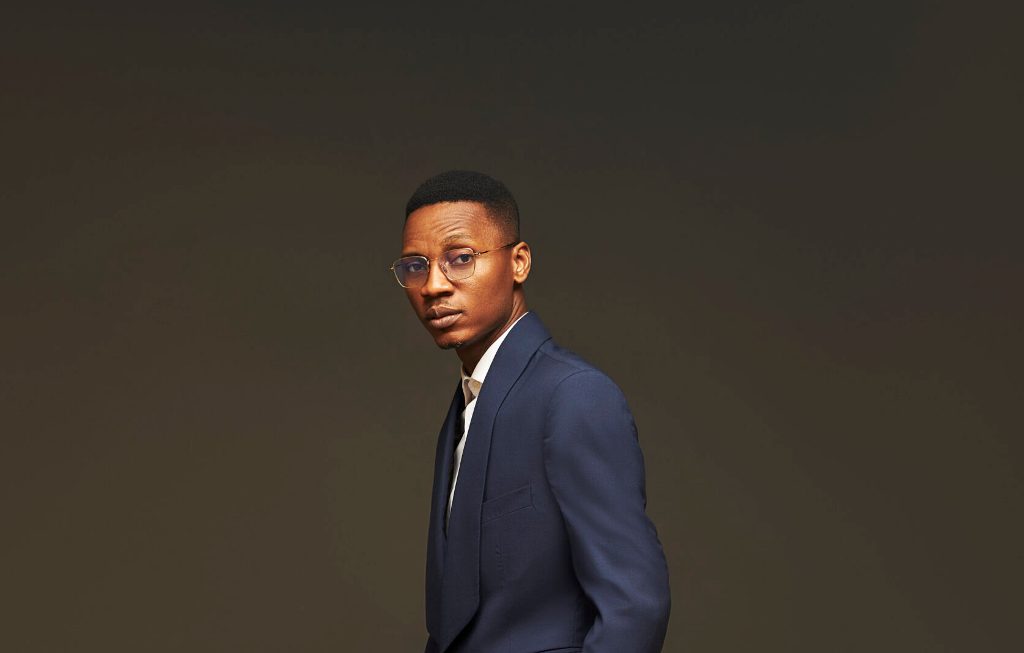
Jubril Arogundade, former senior executive of CIG Motors, has clarified the circumstances surrounding his departure from the company.
He explained that his exit was voluntary and motivated by concerns over corporate governance, not misconduct.
Recall that Arogundade resigned from his position on December 2, 2025, citing persistent issues with internal controls, financial management, and regulatory compliance.
READ ALSO:Resign As Minister, Face Your Obsession With Rivers – APC National Secretary Slams Wike
“I resigned from my position at CIG Motors after careful reflection and in line with due process,” he said.
“It is therefore deeply concerning that my voluntary exit has been publicly mischaracterized. My decision was guided by principle and professional responsibility.”
He explained that over a sustained period, he had raised concerns internally about corporate governance gaps, growing debt, and unresolved regulatory obligations but did not see meaningful corrective action.
READ ALSO:Nine Soldiers Feared Dead In Borno IED Explosion
“As a Nigerian professional, I take governance, compliance, and institutional responsibility very seriously,” Arogundade said.
“When internal efforts to address these matters did not yield results, I chose to resign rather than compromise on standards that I believe are fundamental to sustainable business.”
Addressing reports linking him to financial impropriety, Arogundade said, “I have nothing to hide and welcome any lawful, independent, and objective review of my conduct during my tenure. Contrary to public insinuations, no regulatory or law enforcement agency has contacted me regarding these claims, and I remain fully available to cooperate should any legitimate inquiry arise.”

 News2 days ago
What I Saw After A Lady Undressed Herself — Pastor Adeboye
- Headline2 days ago
PROPHECY: Primate Ayodele Reveals Trump’s Plot Against Tinubu
- Metro2 days ago
Armed Robbers Shot PoS Operator To Death In Edo
- Politics2 days ago
Why Kano Governor Postponed Formal Defection To APC
- Metro2 days ago
Joint Task Force Kills 23 Bandits Fleeing Kano After Attacks
- Metro1 day ago
AAU Disowns Students Over Protest
- Metro2 days ago
Gunmen Demand N200m Ransom For Kidnapped Brothers In Edo
- Metro1 day ago
Edo: Suspected Kidnappers Kill Victim, Hold On To Elder Brother
- Entertainment2 days ago
Anthony Joshua Returns To UK In Private Jet
- Politics2 days ago
2027: Rivers APC Pledges To Follow Wike’s Instructions


