
News
OPINION: Nigerian Soldiers In Benin Republic
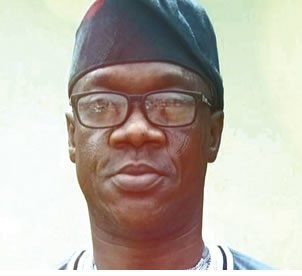
By Suyi Ayodele
I have been asking if whatever President Bola Tinubu did in Cotonou on Sunday is worth celebrating. My mind keeps racing to the now extinct town of Àpá and how its legend, the one who could have saved the town, abandoned it to help other villages and towns survive to the detriment of his own place of birth.
The legend is short. Ògún, the god of iron, whom many praise as “Ògún Onírè” (Ògún the one from Ìrè Èkìti), history says, was never a native of Ìrè Èkìtì. His hometown is known as Àpá. But the town is no more because its neighbours waged war against it till no single soul remained.
According to the story, a renowned Babaláwo, Ológbòjígòlò, who would have saved the town, also failed because he did not follow the instruction given to him by Ifa. When Ológbòjígòlò set out on his divination voyage, he asked three junior diviners, Èhìnìwàmowò (I look the future from the past), Mowòréré (I look intently) and Mowòjojo (I look deeply), to ask Ifa what the journey held for him.
Ifa, the three diviners told Ológbòjígòlò, said that the old Babaláwo would prosper on the journey if he avoided eating overripe kolanut and marrying two women no matter how prosperous he became. No sacrifice was required, just obedience.
The first place of call was Àpá. Ológbòjígòlò found the town in ruins. He wondered where Ògún was when neighbours waged war against his town. Those left said that Ògún elected to save other communities at the expense of his own. Ológbòjígòlò elected to help, and he did according to the Babaláwo he was. When another war broke out between Àpá and one of its neighbours, Àpá people prevailed. And that pattern continued till the town became lively, full of people, again.
But as years went by, Ológbòjígòlò became rich and powerful. His taste changed. He started eating overripe kolanut. He married another woman to join the one that followed him to Àpá. The second wife, a kolanut seller, became his favourite. Trust women. Within months of becoming Ológbòjígòlò’s wife, the new wife had obtained all the necessary information about how Apa found its mojo at war fronts.
Pronto, the woman escaped Apa and told her people the secret behind Àpá’s successes at battles. At the next war, Apa was defeated, the town burned down, and Ológbòjígòlò was captured. He had to escape, using magic.
By the time Ògún heard the bad news, there was nothing he could do. The story says that was why Ògún could not return to his homeland and settled in Ìrè, where he had earlier committed murder over an empty keg of palm wine! Every strongman, who leaves his homestead in distress to defend another, ends up not having a home to return to! That, the narrator, says, is the didacticism in the story.
The people of Benin Reublic woke up on the morning of Sunday, December 7, 2025, to martial music on their radio and television stations. Some daredevil soldiers, led by Colonel Pascal Tigri, were on air, announcing that they had taken over the government of the tiny West African country. Then Bola Tinubu’s Nigeria moved in and crushed them.
MORE FROM THE AUTHOR:OPINION: Nigeria’s ‘Sheikh Of The Slaughters’
Like Ògún, President Tinubu left the insecurity bedevilling Nigeria to go and play god in Benin Republic on Sunday. And his men are asking us to praise him! So, our President has the capacity to deploy troops to troubled spots the way he did last Sunday? He has the willpower to order the Nigerian Armed Forces to go and quell a rebellion in a neighbouring country, yet he lacks the same mojo when it comes to confronting Boko Haram, terrorists and bandits in our backyards?
Nigeria is heavily pregnant. Its Expected Delivery Date (EDD) is close. The nation waits in bated breath. We keep vigils, we pray non-stop. Nigerians hardly sleep with their two eyes closed. Many of us don’t sleep at all. The expectation is palpable. Will the pregnancy deliver good or evil? Nobody knows; nobody is sure.
Then the news came. Our midwife has loaned out the nation’s delivery channel to another pregnant woman! Mo gbé, someone ululated! Who does that? Another echoed. What do you call this type of behaviour? Someone else asked in disbelief.
The answer came rushing at us from the fortified Aso Rock Villa where our President and Commander-in-Chief, Bola Ahmed Tinubu, resides. “President Bola Ahmed Tinubu has commended the gallantry of Nigeria’s military on Sunday for responding swiftly to the request by the Government of the Republic of Benin to save its 35-year-old democracy from coup plotters who struck at dawn today.” That was the opening paragraph of the ‘Press House Statement’ endorsed by Bayo Onanuga, President Tinubu’s spokesman.
The Benin Republic shares a border with Nigeria. That should be one of the borders our new Minister of Defence, General Christopher Gwabin Musa (Rtd), said we should fence to ward off terrorists and bandits. Whatever happens in Cotonou, the capital city of the Republic of Benin, has its multiplying effects on Abuja, our Federal Capital Territory (FCT).
The news of the military takeover in the Republic of Benin rattled President Tinubu. That feeling is natural. The Republic of Benin under the leadership of Patrice Guillaume Athanase Talon, and Nigeria under Tinubu share one common denominator. It is called rudderless leadership! Many argue that the situation in the Republic of Benin appears even better than what we have here in Nigeria. What do we make of that? Is there a difference between leprosy and scabies (sé ìyàtò wà nínú ètè àti èyi bí)?
A successful military putsch in the Republic of Benin is a bad omen for Nigeria. President Tinubu must naturally panic at such scary news. When one’s mate dies suddenly, one is cautioned to interpret the signal correctly. The semblance of democracy in the Benin Republic is 35 years old. Its Nigerian counterpart is 26 years old. If Talon is successfully shoved aside via the barrel of the gun, Abuja would no longer sleep peacefully. The situation became more precarious given that not quite a month ago, Nigeria claimed that it foiled a coup in its embryo.
So, President Tinubu did what endangered species in such circumstances should do. Without any recourse to the national Assembly (he shouldn’t worry about those lots in Abuja anyway), the President answered his appellation as the Commander-in-Chief. He scrambled some Nigerian Air Force (NAF) fighter jets and ordered them to Cotonou. He did not stop there. The President mobilised some men in our Infantry and marched them to the Benin Republic.
MORE FROM THE AUTHOR:OPINION: Yerima And A Soldier Who Never Wore Uniform
The order was clear. The mission was defined. And the instruction was unambiguous. ‘Flush out the rebels and restore democracy’, Tinubu presumably roared. Within hours, the assignment was completed. The order was carried out with military precision and mathematical accuracy. Within hours, the ragtag soldiers holding the Benin Republic by the jugular were routed!
Our NAF fighter jets were something else in the Beninois airspace. The noise of the jets sent shivers through the weak spines of the rebels. They fled in all directions. The Nigerian foot soldiers also entered Cotonou seamlessly. They were sights to behold. They fanned out in quick order, taking over the entire television and radio houses! Who is an epileptic person in the face of the one who dies completely (tani ńjé akúwárápá níwájú eni tó kú yányán)?
Back home, Tinubu beat his chest. His hangers-on hailed him. ‘Mr. President, you have done fantastically well’, they praised the president. Onanuga rushed to his computer room and typed on, his wine-soaked fingers dancing yoyo on the keyboard. He wrote:
“President Tinubu commends Nigeria’s Armed Forces for protecting democracy in the Benin Republic… Today, the Nigerian armed forces stood gallantly as a defender and protector of constitutional order in the Republic of Benin on the invitation of the government…They have helped stabilise a neighbouring country and have made us proud of their commitment to sustaining our democratic values and ideals since 1999…”
Onanuga did not forget to tell us that the requests for intervention from the Government of Benin came through “a verbal note!” He added that “President Tinubu first ordered Nigerian Air Force fighter jets to enter the country and take over the airspace to help dislodge the coup plotters from the National TV and a military camp where they had regrouped.”
Our Chief of Defence Staff (CDS), General Olufemi Oluyede, he further disclosed, “said all the requests have been fulfilled, with Nigerian ground forces now in Benin”, with the caveat: “Ours is to comply with the order of the Commander-in-Chief of our armed forces, President Tinubu.” The import here is strong. All Tinubu needs to do is to give the order and our soldiers will simply obey!
Minutes after Onanuga’s statement, Tinubu’s clappers-club members went to town. We should celebrate the President’s swiftness and dexterity, they said. Only a strategist like President Tinubu could have saved a nation in distress the way he did in the Republic of Benin. To them, and they want us to believe, Tinubu has done what Napoleon could not do! The Hallelujah boys are all over the place, their noise deafening!
We have said it times without number in the past. What is lacking in the fight against insecurity in Nigeria is not manpower. What we lack is the political willpower of those in authority to do that which is noble, right and of good conscience. Because Tinubu’s Presidency is threatened, because he could suffer the same fate as his fellow lethargic President in the Republic of Benin , he suddenly realised that he could order our troops with specific and definite order and get results within hours!
MORE FROM THE AUTHOR:OPINION: Pastor Adeboye, Tinubu, Trump And Truth
Onanuga said “the Nigerian armed forces stood gallantly as a defender and protector of constitutional order in the Republic of Benin…They have helped stabilise a neighbouring country….” We may yet ask him when is he going to pen such lofty words about the dexterity of our armed forces’ dexterity in curtailing and containing terrorism in Nigeria? If our soldiers (Army and Air Force) are so good, why has Boko Haram endured since 2009? How come the jets that would not work in Nigeria suddenly became superlative in the Republic of Benin? Why have we not used the same jets on the bandits holding Nigeria and Nigerians bound to violence?
On a personal note, nothing in me would support military rule, anywhere in Africa! And it stops at that. Methinks that beyond the emotional condemnation of the soldiers trying to leave their barracks for the government houses in Africa, we also need to ask what our civilian leaders are doing wrongly to warrant the military venturing into government.
This is the fundamental issue that we should address. President Tinubu, by his Sunday action, has demonstrated beyond doubt that with the right attitude to governance, Nigeria can suppress the activities of terrorists, bandits and Boko Haram within hours! The question is: will politics ever allow him to act so decisively here in Nigeria?
This is why Nigerians should become more affirmative in asking the President to answer his name as the Commander-in-Chief of our Armed Forces. President Tinubu should stop playing Ògún while our Apa remains in ruins. Good enough, he has ‘saved’ democracy in the Republic of Benin. We appreciate the fact that, like Onanuga penned, “Nigeria stands firmly with the government and people of the Republic of Benin.” Now is the time for President Tinubu to stand firmly with the people of Nigeria, the ones who elected him their leader. This is what he was elected to do.
I hate, and very deeply too, the allusion to the diplomatic big-daddy-posture of Nigeria in the Benin Republic affairs. I personally feel sad that while Nigerians are killed in their hundreds daily by terrorists and bandits, with little or no help from our armed forces and with the President being notoriously flatfooted, the same President mobilised material and human resources to far way Cotonou to fight renegade soldiers who took control of government over there.
I keep asking what benefit democracy serves in Nigeria when our people are slaughtered daily and the few soldiers we have are on a mission to the Republic of Benin just because our President entered panic mode! What happens, God forbid, if for instance, the military strikes in Ghana tomorrow, and in Cameroon day after? How many men do we have to deploy? How many fighter jets?
The beauty of the whole Sunday exercise is that President Tinubu has justified our claim that his greatest undoing is his predilection to place politics above the people’s welfare. The only time he felt genuinely threatened, he did the needful by sending Nigerian troops to flush out the coupists in Benin Republic. We should all feel nauseated!
At the risk of fitting into the figure of those Jesus Christ upbraided in Luke 4:23, I say on behalf of the hapless and helpless Nigerians who die daily in the hands of terrorists, “…physician (President Tinubu), heal thyself: whatsoever we have heard done in Capernaum (Benin Republic), do also here in thy country (Nigeria).”



News
Children’s Day: Chaos At Ogbe Stadium As Dozens Faint

Chaos erupted on Wednesday during the Children’s Day celebration as dozens of students reportedly collapsed following a stampede triggered by the use of pepper spray.
The event,
organised by the Edo State Ministry of Education at the Samuel Ogbemudia Stadium was disrupted after some male students of Ihogbe College allegedly made uncompromising advances towards female students at the venue.
A parent who identified himself as Oboh Emmanuel said, “the behaviour of those uncultured students attracted the attention of bouncers stationed at the stadium as they rebuked the male students.”
Oboh said the affected students later regrouped and attacked the bouncers, leading to a confrontation within the crowded arena.
READ ALSO:Children’s Day: Edo Commits To Child Protection
It was gathered that in the ensuing confusion, the bouncers were reported to have deployed pepper spray in an area occupied by a large number of students.
Several students, particularly female students, reportedly fainted after inhaling the substance, while others sustained injuries after being stepped on during the ensuing melee.
The panic was said to have spread across the stadium as students, teachers and parents scampered for safety.
Many of the affected students were reportedly rushed to the Edo Specialist Hospital for medical attention.
READ ALSO: Egor LG Chair, Ogbemudia, Vice, Osawe Impeached
Reacting to the incident, Chief Press Secretary to Governor Monday Okpebholo, Dr Patrick Ebojele, said the security personnel that fired the tear gas had been detained.
He said all the students, except two, that were rushed to the hospital have been discharged.
Ebojele stated that doctors wanted to observe the students till tomorrow before allowing them to go home.
“The two students are not seriously injured. Doctors want to observe them overnight. Permanent Secretary, Ministry of Education is still at the hospital. The man who used pepper spray has been detained.
“The incident did not happen the way it is being exaggerated. All modalities were put in place to ensure the children enjoyed their day.”
News
Okpebholo Salutes Edo Muslims, Seeks Continued Support, Prayers
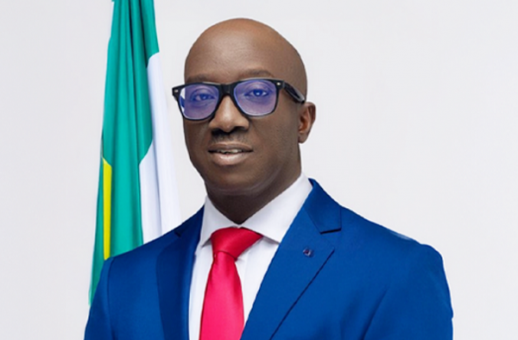
Governor Monday Okpebholo of Edo State has urged Muslims and all Nigerians to continue to pray for peace, unity and progress in the country even as they celebrate the annual Eid-al-Adha
The governor, who was represented by his deputy, Dennis Idahosa, stated this during the annual Eid-al-Adha celebration with Muslim faithfuls held at Government House in Benin City.
He reiterated his administration’s commitment to fairness, inclusivity and equal opportunities for all citizens irrespective of religion and tribe.
READ ALSO:ADC Penetrates Okpebholo’s District As Defections Strengthen Party in Edo Central
According to him, the present administration remains determined to building a government that reflects the diversity of Edo State, noting that competent and qualified Muslims have continued to play vital roles in his government because of their capacity, integrity and commitment to service.
“As a government, we remain committed to fairness, inclusivity and equal opportunity for every Edo citizen, irrespective of religion, ethnicity or political affiliation. This is why quality and competent Muslims are serving in key positions in our administration.”
Okpebholo appreciated the Muslim community in Edo State for their unwavering support and continuous prayers for his administration, noting that such prayers and support have contributed immensely to the peace and steady development being witnessed across the state.
READ ALSO:Okpebholo Felicitates Muslims On Eid-el-Fitr Celebration
He then called on all Nigerians to use the occasion of Eid-al-Adha to pray for the administration of President Bola Ahmed Tinubu, stressing that the country needs collective prayers, unity and cooperation to overcome its present economic and security challenges.
“I urge all Muslims and indeed all Nigerians to use this occasion to pray for our dear nation and for the administration of President Bola Ahmed Tinubu. Nigeria needs our collective prayers, unity and support as we strive to overcome our challenges and build a more prosperous future for all.”
In his remarks, the Chief Imam of Edo State, Abdulfatai Enabulele, applauded the governor for what he described as remarkable developmental strides recorded in less than two years in office.
The cleric commended the administration for ongoing infrastructural development and efforts geared towards improving governance in the state, but appealed to the government to revisit and complete some abandoned projects inherited from the previous administration for the benefit of the people.
News
Children’s Day: Edo Commits To Child Protection
The Edo State Government has reaffirmed its commitment to protecting the rights of children, promoting quality education, and strengthening sports development across the state.
This assurance was given by the governor of Edo State, Monday Okpebholo, during the 2026 Children’s Day Celebration and Governor’s Cup Finale held on Wednesday at the Samuel Ogbemudia Stadium, Benin City.
Addressing pupils, students and teachers,
the governor described children as the pride of Edo State and the future of the nation.
The governor, represented by his deputy, Dennis Idahosa,
noted that the annual celebration provides an opportunity to honour their dreams, talents, and limitless potential.
READ ALSO:Eid-el-Kabir: Edo Deputy Gov Solicits prayers For Okpebholo
Speaking on this year’s Children’s Day theme, “Choose Kindness, Reject Bullying,” the governor said the message was timely and significant, as it emphasizes the need to create safe, supportive, and inclusive environments for children both in schools and communities.
He stated that bullying in all forms — physical, verbal, emotional, or online — has no place in society, adding that the Edo State Government remains fully committed to protecting the rights and dignity of every child.
According to him, the administration will continue to strengthen policies and programmes that promote child protection, discipline, mutual respect, and positive learning environments across schools in the State.
The governor urged children to embrace kindness, compassion, teamwork, and respect for one another, stressing that true strength lies not in intimidation but in empathy, good character, and mutual understanding.

 Metro5 days ago
My Husband Abandoned Me On Our Wedding Night To Attend Political Meeting, I Want Our Marriage Dissolved
- Headline4 days ago
Woman Passes Out After Receiving 100 Strokes Of Cane
- Headline4 days ago
JUST IN: White House Locked Down Briefly As Gunman Opens Fire At Security Checkpoint
- Politics5 days ago
Warri Ijaw Hail INEC Delineation Report, Call For Additional Electoral Wards, Others
- Politics3 days ago
Two Masked Men Gun Down Politician In His Rivers State Hotel
- News3 days ago
More Pain For Nigerians As Cooking Gas Price Increases Nationwide
- News5 days ago
Alleged Terrorism: Court Rejects Defendant’s Bid To Travel Abroad
- Metro5 days ago
My Wife Stop Cooking My Food, Beats Me Black And Blue All the Time, Man Tells Court
- Politics5 days ago
What I’ll Do As President Of Nigeria — Amaechi
- Politics3 days ago
‘Tinubu’s Borrowing In 24 Months Surpasses 55 Years’ Debt Record’


