
Business
REVEALED: How $6 Billion NNPC Debt Is Causing Petrol Supply Hiccups
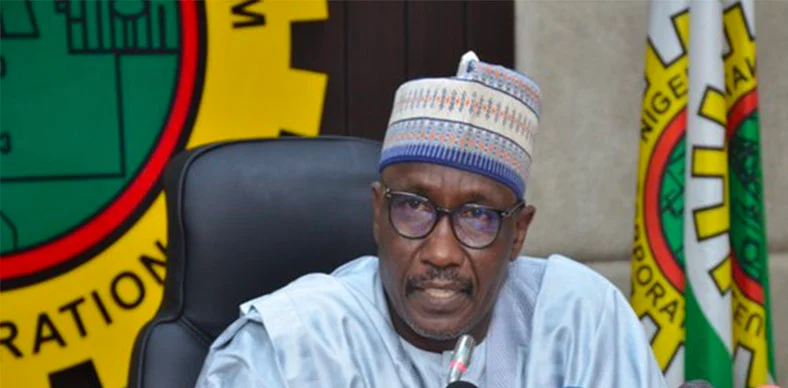
Global suppliers of petrol are no longer enthusiastic about supplying the product on credit to the Nigeria National Petroleum Company Limited (NNPCL) due to piling debts, Sunday Vanguard has learnt.
Competent industry sources told our correspondent last night that NNPCL, which solely imports the product using supply agents, is apparently weighed down by over $6 billion in debt, which the firm has not settled over time.
The setback, according to informed sources, is apparently responsible for the lingering hiccups in fuel supply in recent weeks, our correspondent gathered.
One of the sources familiar with the PMS importation into the country revealed that, at the moment, no fewer than five vessels which were primed to supply petrol to Nigeria have refused to discharge the product to NNPC due to fear that they would not be paid cash on delivery.
READ ALSO: Why Ex-Akwa Ibom REC, Igini Was Reluctant To Meet Akpabio At NBA Conference Revealed
The insider pointed out that the mounting debt has heightened the pressure on the petroleum company, which has now resorted to rationing its stock and appealing to its long-term suppliers to not cut off supply.
A senior official at the NNPC, who spoke on the condition of anonymity, said the company is struggling to supply dealers due to a shortage of products at its disposal.
The official lamented: “Bulk sales of ships and trucks to depot owners have slowed down in the last five days due to shortage of supply”.
The source added that no bulk sales had taken place since Tuesday, resulting in the scarcity in the downstream sector.
Another NNPC staff told this newspaper that fuel shortage, which resulted in the long queues being experienced in the last two months, was principally caused by the reduction in supply of products by suppliers who are being owed by the Nigerian oil firm.
READ ALSO: Refinery Saga: NNPCL Supplies Insufficient Crude Oil To Us, Dangote Cries Out
The top official admitted: “I was aware that at some points in mid-August, the Federal Government had to come in by giving money to NNPC to defray some of the outstanding liabilities and boost the confidence of the suppliers to continue.
“However, what was paid was about $300 million, which only helped us get some reprieve for about a week before the queues fully returned,” he said.
Credit transaction common in the oil business – NNPC
Responding, the Chief Corporate Communications Officer of NNPCL, Mr Femi Soneye, said it was a common practice in the global oil industry to trade on credit but would not say more than that.
Soneye said: “In the oil trading business, transactions are often carried out on credit; so it is normal to have outstanding balances at certain times.
“Additionally, through our subsidiary, NNPC Trading, we maintain open trade credit lines with several traders.”
But when asked to confirm the exact amount the company owes its PMS suppliers, the spokesperson declined, saying, “I will need some time to provide you with the exact amount”.
VANGUARD



Business
Again, Dangote Refinery Hikes Fuel Price

Dangote Refinery has increased the ex-depot price of petrol by N75, bringing the price up to N1,350 per litre from the previous price of N1,275.
This is the first fuel increase by the Refinery in the month of May.
READ ALSO:JUST IN: Dangote Refinery Reduces Petrol Price
This latest development is coming seven days after the refinery raised its ex-depot price from N1,200 to N1,275 per litre.
Recall that the refinery on April 29 increased the ex-depot price of petrol by N75.
Business
Why We Sited Our Multi-Billion Naira Automobile Firm Branch in Benin – Skyewise Group CEO

Dr. Elvis Abuyere, Chief Executive Officer and Managing Director of Skyewise Group, an automobile firm, has explained the reason for establishing a branch of the company in Benin City, the Edo State capital, describing the ancient city as “a growing economy full of enormous potential for vibrant youth.”
He added that the company considers Edo State one of the most interesting states, noting that the decision aligns with its long-term vision.
Abuyere, who spoke in Benin on Monday while taking journalists on a tour of the new automobile facility, said:
“We started very small — from Abuja to Lagos and now Benin. It is a joy and privilege for us to have completed this amazing regional office with Skyewise Group.”
READ ALSO:BREAKING: Wike Picks Alabo George For Rivers Governorship
According to him, beyond the automobile business, Skyewise Group is in Benin to invest in real estate, logistics, youth empowerment, and credit management. “Aand also to lend our support to what the Edo State Government is doing, knowing the fact that there is an agenda,” he added.
The young CEO urged youths in Nigeria, particularly those in Edo State, to embrace entrepreneurship, stressing that “we believe it is the future of Africa,” especially Nigeria.
He said Nigeria stands as the giant of Africa and that its youth must take bold steps in the entrepreneurship landscape.
According to Abuyere, to ensure Edo youths actualise their entrepreneurial potential, the company has prepared soft loans to help them start businesses, adding that Skyewise Group is not limited to automobile operations.
READ ALSO:Senatorial Seat: Ogbakha-Edo Warns Against Imposition Of Candidates In Edo South
He said: “More importantly to us is youth empowerment. We want our youth to be empowered, and this is where the Skyewise Foundation comes in.
“We believe the future of Africa is entrepreneurship, and that future lies in the hands of the young people of Nigeria. We want to empower them to stand the test of time, build something meaningful, and reduce unemployment and insecurity in our land.
“I believe we need to begin taking bold steps by refining the mindset of our young people. We need to give them a sense of belonging and direction.
“We have been addressing the liquidity gap in society by providing microloans to support businesses in our environment and in Benin City.”
When asked why he chose Benin City for the multi-billion naira automobile firm, Abuyere noted: “I think this is the first automobile showroom in Edo State where you can see a car lifted from the ground floor to the first floor and beyond.”
Business
JUST IN: Nigerian Filling Stations Reduce Fuel Price After Hike
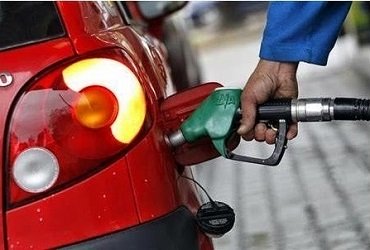
Nigerian filling stations reduced their Premium Motor Spirit price on Saturday, barely 24 hours after the hike.
Checks by DAILY POST showed that Ranoil, Empire Energy, and other filling stations in Abuja adjusted their petrol pumps to N1,365 and N1,375 per litre respectively, down from N1,440 per litre on Friday.
This means that petroleum marketers dropped their fuel price by N65 and N75 per litre. DAILY POST reports that the move was to attract patronage from customers.
Recall that three days ago, Nigerian filling stations had raised their petrol pump price to between N1,365 and N1,440 nationwide after Dangote Refinery and depot owners increased ex-depot prices to around N1,275 and N1,290 per litre.
According to DAILY POST, while the Nigerian National Petroleum Company Limited and MRS Bovas filling stations raised their petrol price to around N1,365 per litre, others adjusted theirs above N1,440 per litre.
READ ALSO:Drivers Protest Fuel Increase, Raise Fares in Benin
However, with the latest fuel price reduction by Ranoil and Empire Energy, the majority of filling station outlets now dispense petrol between N1,365 and N1,375 per litre.
This development comes as the ripple effect of crude oil prices continues to impact Nigeria’s domestic fuel price.
Brent and West Texas Intermediate crude rose to $114 and $105 per barrel before dropping to $108 and $101 after the filing of this report.

 Politics5 days ago
Fubara Clears Air On ‘Defection’ To NDC [VIDEO]
- News4 days ago
Gun Battle In Oyo Forest As Police Disrupt ₦10m Ransom Collection Plot
- Politics3 days ago
Four Fubara Loyalists Disqualified As APC Clears 21 For Rivers Reps Primaries
- News5 days ago
Ex-power Minister Jailed 75 Years Over Fraud
 Metro4 days ago
Drama As Teenagers Stage Secret Wedding With N3,000 Bride Price
- News3 days ago
Lagos Sanctions 15 Money Lending Companies For Sharp Practices
- Politics3 days ago
2027: Court Rebukes Plaintiff, Lawyer In Suit Against Jonathan, Awards N1m Fine
- Politics5 days ago
2027: Daniel-Abiodun Feud Deepens Over Senatorial Ticket For Ogun East
- News4 days ago
PAP Sends Additional 15 Scholarship Beneficiaries For Post-Graduate Studies In UK
- Politics5 days ago
2027: APC Clears Delta Speaker, Disqualifies 36 Aspirants


