
News
Tribune At 75: A Bouquet Of Stories [Monday Lines]

By Lasisi Olagunju
It happened that the NCNC-controlled Ibadan District Council (IDC) under the chairmanship of Alhaji Adegoke Adelabu chose a Saturday, 7 January, 1956, to sit. The council took a decision at that meeting to suspend the salaries of the Olubadan, Oba I. B. Akinyele; Otun Olubadan, Chief Yesufu Kobiowu and the Balogun, Chief Salawu Aminu. Councillor Yinusa Ladoja who moved the motion for the suspension said the offence of the three was that they had not been attending the council’s meeting regularly.
The council passed another motion declaring that Chief E.A. Adeyemo, its treasurer, “should henceforth be known as Mr. Adeyemo” and that if the Chief was against being called a Mr, he should resign his position as the IDC treasurer. The same IDC had earlier appointed and installed an ‘Olubadan’ without recourse to the regional government. The audacity of power in that action could not prevail, it failed. The war of salary suspension was a continuation of that botched putsch.
Some persons and institutions exist to fight other people’s wars. The archives are full of Nigerian Tribune’s wars against powers and principalities. The Olubadan vs IDC war above is one of such. From that point till victory came the way of the harassed, Tribune did not sheathe its sword. As the victims of power scrambled to ward off the impudence of local politics, the battle became that of the newspaper and its operatives. And, it needs not be said that the palm trees of Ijaye till today bear scars of Ogunmola’s war. Olubadan Isaac Akinyele and his chiefs prevailed on that occasion and on other matters. Indeed, each of those chiefs, at God’s appointed time, later rose to become the Olubadan.
What do you give an old man who has everything? Ralph Waldo Emerson asks the poet to bring his poem, the painter his picture, the shepherd his lamb. But how about presenting the old poet his own poem, the singer his song, and the painter his painting exploits as proof of their worthy existence? A newspaper lives by telling stories of events as they break – and commenting on them. The reports may be pleasant – they are seldom pleasant. They may be gory and bad – bad news are good news. How well they sing and how long they have stood against the elements tell of a bard’s success. I retold the story above in celebration of Tribune’s 75 years of consequential existence.
A good newspaper is a recorder of history and a predictor of the future. Let us go to another Tribune exclusive; the report of a crime that was committed 63 years ago:
‘The Head on A Bike’ was the lead story of the Nigerian Tribune of Tuesday, 7 November, 1961. It was the report of the murder of a 38-year-old Muslim priest who was killed on Saturday, 4 November, 1961 in Iperu, Remo Division of the old Western Region. The man met his death while he was going to the mosque for his early morning prayer. Who did it? One Kehinde, aged 27, did it and owned the crime. I reproduce, verbatim, the story as published by the Nigerian Tribune 63 years ago:
“A first-hand account of the development which followed the beheading of the priest was given the Tribune yesterday by Mr. Subomi Balogun, crown counsel in the Western Nigeria Ministry of Justice. He ran into the assassin while he (the assassin) was still conveying the preacher’s head on a bicycle. ‘It was a terrible situation,’ the counsel exclaimed.
MORE FROM THE AUTHOR: OPINION: In Defence Of Nepotism [Monday Lines]
“Mr. Balogun said he was returning from Lagos when he found a man on a bicycle with a human head dripping blood. A crowd of people were trailing after him as he progressed towards the police station with a cutlass shining in his hand. The crown counsel then drove straight to the station, announced himself, and requested that the Nigeria Police be contacted immediately to take up the matter.
“‘Soon, the man came in, placed the head down and put his foot on it,’ the crown counsel added. The constables broke up in commotion and not until the assassin threw down his cutlass that the constable reentered the station. But there were no Nigeria Police around.
“On his way to Ibadan, however, the counsel saw some traffic policemen and instructed them to proceed to Iperu to take up the matter.
“’I asked them to report to my ministry as soon as investigations are completed but we are yet to receive a report,’ Mr. Subomi Balogun added.” End of story.
Now, you may be wondering why I picked that gory news report for this piece? The interest went beyond the oddity of a murderer holding aloft the head of his victim. The victim was neither a celebrity nor a public figure and the event happened in a small rural community where newspapers might not sell. Yet, the Tribune used the news as its lead story. Did you also notice the name of the crown counsel in the story? Subomi Balogun. I noted the lawyer’s impressive sense of duty – he didn’t have to do all he did there in pursuit of justice for the victim and the villain. The lawyer’s initiatives at that scene and his success going forward taught lessons in how diligence in youth could lead to greatness later in life.
When it turned 20 in 1969, the Nigerian Tribune ran an editorial in which it reminded itself of its founding promise and pledged itself to it: “When this newspaper was founded in November 1949, its founder chose for it an appropriate title. In Roman history the tribune of the people was one of two or ten officers chosen by the people to protect their liberties against senate and consuls. And this is the role which the Nigerian Tribune has been playing…The greatest tragedy that could befall a newspaper is for that newspaper to change its basic character and become mealy-mouthed in response to oppression and pressures. For that would be a gross and unforgivable betrayal of the trust of its readers and advertisers. That tragedy will NEVER befall this newspaper.”
MORE FROM THE AUTHOR: OPINION: Petrol Price As Slow Poison [Monday Lines]
I was not there when the story of the Nigerian Tribune started 75 years ago. But if a child did not meet an event, he would meet its account. And I am here now. What birthday gift can be better for a 75-year-old than a recap of the good they have done? Here, today, I reproduce stories which even Tribune itself may not remember it ever told. Events may be local in setting but history teaches us that no event that has made it into a newspaper of value is, with the benefit of hindsight, local. That is why I started this tribute with the Ibadan story.
In politics, if the northern Nigerian woman voted yesterday and will vote tomorrow, she has the Nigerian Tribune to thank. You will find it difficult to believe that years after independence, the northern establishment still foot-dragged on granting women of that region the right to vote. And, you know, the northern region was not just today’s North East and North West. It started from Offa and Erin Ile, pure, secular Yoruba towns, stretching northwards through Benue, Plateau, to the borders with Niger Republic and Chad. Women in all those places were banned from voting in general elections. And they were in an independent country. The Nigerian Tribune went all out shouting from the rooftops: “Give them the votes.”
I quote from its editorial of Thursday, 25 March, 1965: “It has become a habit whenever we talk of the desirability of giving votes to the women in the North, the temporary rulers of that region will tell us that this inalienable right of the women would be conceded only when the Northern potentates want it. This is a wrong approach… After all, voting is not obligatory either in our constitution or statute. If the Sardauna and his co-travellers do not want their wives in purdah to go out for voting at election time, they can so order as husbands and wives. On the other hand those whose hands are not tied down by religious susceptibility MUST be given the right to vote. It is as simple as that.”
For making that noise, and championing that cause, the paper, its owners and its journalists were abused and accused of ‘goading’ the north into a precipitate action on a matter that was for the region to decide. But the Tribune said no, a citizen’s right to vote would never be a regional issue, it was constitutional and national. The newspaper fought and won that war. The results are in the millions of votes which today give the north bragging swags of numerical advantage. So, when we write and we are abused by today’s temporary rulers and their minions, we shrug them off because we have the past to reassure and console us that we are right, they are wrong.
When elections became very costly and increasingly scandalous as we have them now, the Nigerian Tribune did not keep quiet. I read a 1965 editorial carrying a brutal title: ‘White Elephant Elections.’ Sometime in the early 1960s, the northern regional government barred civil servants from acquiring more than one plot of land to build petrol stations. The Nigerian Tribune praised that action but declared, in another editorial, that politicians who made the law needed it more than the hapless civil servants.
MORE FROM THE AUTHOR: OPINION: The Waist Beads Of Olajumoke [Monday Lines]
Courage and diligence and abundance of grace are ingredients of success in life. Decades of loyalty to its goals, fidelity to truth garnished with the right dose of intransigence, gave the Nigerian Tribune reasons for its existence. It will be 75 years old on Saturday this week. The paper’s story is a story of struggle and survival in the midst of thorns and thistles of politics, of business and, even of life.
The Chicago Tribune was founded in 1847 – a century plus two years before the birth of its Nigerian namesake. It came clutching a statement of principles which emphasized a newspaper’s reason for existence: “…to present the news of the day, to foster commerce and industry, to inform and lead public opinion, and to furnish that vital check upon government which no constitution has ever been able to provide.” When it celebrated its 175th anniversary, it proudly announced that it had spent all its years “carrying out the mission of delivering the truth every day.” The Nigerian Tribune, since its birth in 1949, has been doing exactly that. It is a citizen of Nigeria domiciled in Ibadan, Western Nigeria. It has come a long way reporting local and national, fighting big and small wars that test the will of courage. Where and when it faltered, it admitted its errors, made amends and moved on. In all its battles, the integrity of its founder – and of all its owners, plus the incredibly fierce loyalty of generations of its workforce and readers have been the bulwark of its defence. It is the reason why it is alive to celebrate its 75th anniversary this week Saturday.
When I sauntered into Ibadan in May 1995 to pick up this job at the Tribune House, there were other options in that city. There was a newspaper called Third Eye which paid double what Tribune offered. There was the Daily Sketch nestled comfortably between Cocoa House and Kingsway building, and not far from a high-rise glass building called Broking House. Today, those other papers exist as mere memories. What killed them?
Leo Bogart’s ‘Newspapers in Transition’ published in The Wilson Quarterly in 1982 reads like it was written for the Lagos-Ibadan press of today. “The fallen giants in the business have been stricken by the sickness of their home cities…,” he wrote. When an American evening newspaper, the Minneapolis Star, was rested in April 1982, its editor, Stephen Isaacs, was asked by American monthly news trade magazine, Editor & Publisher (E&P), what he thought the future of the newspaper press looked like. Isaacs looked deep into space and said: “What do I see ahead? I talked to many publishers recently and was startled by the number who have in effect told me that the newspaper business is a dying industry. A dinosaur. Some will survive – the very big and the very small – but the in-betweens are going to face rough going in the electronic era…” His inner eye was sharp. Between that time – 42 years ago – and now, a lot of water has escaped the media dam down into nothingness.
Against all odds, the Nigerian Tribune has survived these past 75 years. What are the secrets? Lawrence Pinkham, professor of history and journalism, suggests that a newspaper won’t have problems safeguarding its existence if it manages to find ways to balance “the double necessity of staying in business and staying in journalism.” That is one dilemma that wracks the present as it wrecked the past and threatens the future.
By age and reputation, the Tribune is firmly established as Nigeria’s authentic newspaper of record. The sheer volume and the integrity of its archives qualify it as a national asset. The authenticity of its past and position, the wisdom in its age, the independence of its opinion and the audacity of its truth have combined to hoist it on a pedestal of importance. Go to the archives and check the names that have written for it: Bisi Onabanjo, Lateef Jakande, Gani Fawehinmi, Tai Solarin, Justice Adewale Thompson, Wumi Adegbonmire, Tola Adeniyi, Banji Ogundele, Banji Kuroloja, Biodun Oduwole, Folu Olamiti, Garba Shehu, Shehu Sani, Yinka Odumakin, Pius Adesanmi. What I have taken here is a risk. The list I wrote is incomplete. I beg for the forgiveness of the unlisted. I had to name names as a sample of the goodly heritage we carry.
At the DAME awards event in Lagos last year, Mr Eluem Emeka Izeze, many years Editor-in-Chief of The Guardian walked up to me, congratulated me on winning the Informed Commentary category of the awards the fourth time consecutively. He said the Tribune historically was famed as the king of uncompromising commentary and column writing in Nigeria. He particularly congratulated the newspaper and its columnists on their keeping alive the Ibadan content of the Lagos-Ibadan press axis. It is a privilege we have. We also owe it as a debt to the past and a duty to the future.
It is sweet to celebrate with Tribune at 75. But it is also a challenge, daunting in its demands. After it survived its darkest moment, its founder, Chief Obafemi Awolowo, christened the Nigerian Tribune Apamaku (survivor). What does it mean to refuse to die? Celebrating Tribune’s 50 years of existence in his Uncle Bola’s Column in the Sunday Tribune of 7 November, 1999, Chief Bola Ige wrote that the heritage we have defies fear. More importantly, our bequest
exalts excellence and promotes industry. Uncle Bola wrote: “Obafemi Awolowo and his Tribune have no place for lazy writers or those who could not research whatever they wrote. Every one of us who writes for or in the Tribune must never forget this, especially in today’s Nigeria which is befuddled with mediocrity and lack of seriousness.” This explains why we write what we write. Why we publish what we publish. It should also explain why the Tribune refused to die yesterday and won’t die tomorrow. Happy 75th birthday.



News
Shatta Wale Bailed Burna Boy From Ghana Prison After Arrest For Smoking Weed – Captan

Ghanian singer, Captan, has claimed that his former record label boss, Shatta Wale, once bailed Nigerian singer Burna Boy out of prison in Ghana after he was allegedly arrested for smoking weed.
Speaking in a recent podcast interview, Captan claimed that Shatta Wale sent him and others to free Burna Boy from police custody.
He also claimed that Shatta Wale and his group once accommodated Burna Boy when he was being hunted by some dangerous men.
READ ALSO: Wale Edun Opens Up After Sack
Captan said, “I once bailed Burna Boy out of prison in Ghana when he was arrested for smoking weed. Shatta Wale sent me and some guys to go and free him from police custody.
“There was a time we also accommodated him when some people were after his life. We helped him settle the case.”
He added that he and Burna Boy are no longer in good terms after the Nigerian artist’s fallout with his mentor, Shatta Wale.
He, however, said he and Shatta Wale are open to reconciling with Burna Boy if he asks for it.
Watch the video here
News
Children’s Day: Chaos At Ogbe Stadium As Dozens Faint
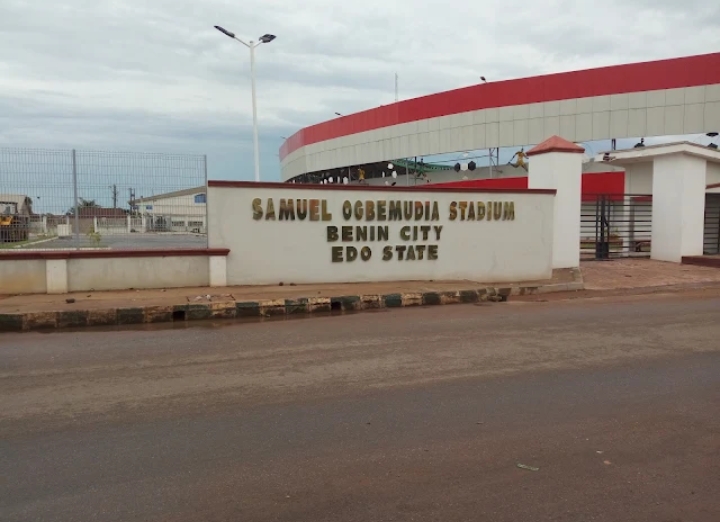
Chaos erupted on Wednesday during the Children’s Day celebration as dozens of students reportedly collapsed following a stampede triggered by the use of pepper spray.
The event,
organised by the Edo State Ministry of Education at the Samuel Ogbemudia Stadium was disrupted after some male students of Ihogbe College allegedly made uncompromising advances towards female students at the venue.
A parent who identified himself as Oboh Emmanuel said, “the behaviour of those uncultured students attracted the attention of bouncers stationed at the stadium as they rebuked the male students.”
Oboh said the affected students later regrouped and attacked the bouncers, leading to a confrontation within the crowded arena.
READ ALSO:Children’s Day: Edo Commits To Child Protection
It was gathered that in the ensuing confusion, the bouncers were reported to have deployed pepper spray in an area occupied by a large number of students.
Several students, particularly female students, reportedly fainted after inhaling the substance, while others sustained injuries after being stepped on during the ensuing melee.
The panic was said to have spread across the stadium as students, teachers and parents scampered for safety.
Many of the affected students were reportedly rushed to the Edo Specialist Hospital for medical attention.
READ ALSO: Egor LG Chair, Ogbemudia, Vice, Osawe Impeached
Reacting to the incident, Chief Press Secretary to Governor Monday Okpebholo, Dr Patrick Ebojele, said the security personnel that fired the tear gas had been detained.
He said all the students, except two, that were rushed to the hospital have been discharged.
Ebojele stated that doctors wanted to observe the students till tomorrow before allowing them to go home.
“The two students are not seriously injured. Doctors want to observe them overnight. Permanent Secretary, Ministry of Education is still at the hospital. The man who used pepper spray has been detained.
“The incident did not happen the way it is being exaggerated. All modalities were put in place to ensure the children enjoyed their day.”
News
Okpebholo Salutes Edo Muslims, Seeks Continued Support, Prayers
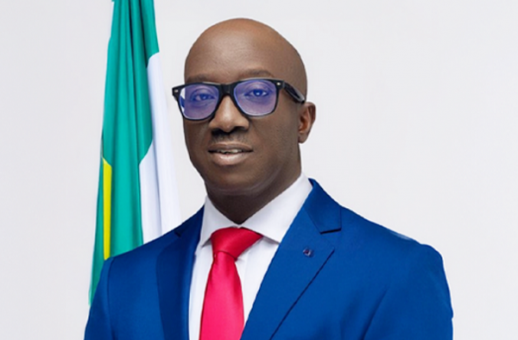
Governor Monday Okpebholo of Edo State has urged Muslims and all Nigerians to continue to pray for peace, unity and progress in the country even as they celebrate the annual Eid-al-Adha
The governor, who was represented by his deputy, Dennis Idahosa, stated this during the annual Eid-al-Adha celebration with Muslim faithfuls held at Government House in Benin City.
He reiterated his administration’s commitment to fairness, inclusivity and equal opportunities for all citizens irrespective of religion and tribe.
READ ALSO:ADC Penetrates Okpebholo’s District As Defections Strengthen Party in Edo Central
According to him, the present administration remains determined to building a government that reflects the diversity of Edo State, noting that competent and qualified Muslims have continued to play vital roles in his government because of their capacity, integrity and commitment to service.
“As a government, we remain committed to fairness, inclusivity and equal opportunity for every Edo citizen, irrespective of religion, ethnicity or political affiliation. This is why quality and competent Muslims are serving in key positions in our administration.”
Okpebholo appreciated the Muslim community in Edo State for their unwavering support and continuous prayers for his administration, noting that such prayers and support have contributed immensely to the peace and steady development being witnessed across the state.
READ ALSO:Okpebholo Felicitates Muslims On Eid-el-Fitr Celebration
He then called on all Nigerians to use the occasion of Eid-al-Adha to pray for the administration of President Bola Ahmed Tinubu, stressing that the country needs collective prayers, unity and cooperation to overcome its present economic and security challenges.
“I urge all Muslims and indeed all Nigerians to use this occasion to pray for our dear nation and for the administration of President Bola Ahmed Tinubu. Nigeria needs our collective prayers, unity and support as we strive to overcome our challenges and build a more prosperous future for all.”
In his remarks, the Chief Imam of Edo State, Abdulfatai Enabulele, applauded the governor for what he described as remarkable developmental strides recorded in less than two years in office.
The cleric commended the administration for ongoing infrastructural development and efforts geared towards improving governance in the state, but appealed to the government to revisit and complete some abandoned projects inherited from the previous administration for the benefit of the people.

 Metro5 days ago
My Husband Abandoned Me On Our Wedding Night To Attend Political Meeting, I Want Our Marriage Dissolved
- Headline4 days ago
Woman Passes Out After Receiving 100 Strokes Of Cane
- Politics5 days ago
Warri Ijaw Hail INEC Delineation Report, Call For Additional Electoral Wards, Others
- Headline4 days ago
JUST IN: White House Locked Down Briefly As Gunman Opens Fire At Security Checkpoint
- Politics3 days ago
Two Masked Men Gun Down Politician In His Rivers State Hotel
- News5 days ago
Alleged Terrorism: Court Rejects Defendant’s Bid To Travel Abroad
- Metro5 days ago
My Wife Stop Cooking My Food, Beats Me Black And Blue All the Time, Man Tells Court
- News3 days ago
More Pain For Nigerians As Cooking Gas Price Increases Nationwide
- Politics5 days ago
What I’ll Do As President Of Nigeria — Amaechi
- News3 days ago
FG Declares Two Days Public Holiday For Eid-el Kabir Celebration


