

News
Union Gloves vs Corporate Fists: The Dangote–NUPENG Showdown




By Israel Adebiyi
The impasse between the Nigeria Union of Petroleum and Natural Gas Workers (NUPENG) and the Dangote Refinery has at last been calmed, thanks to the intervention of the Federal Government. For days, the matter stirred debates in homes, offices, and market squares, with Nigerians asking where the truth lay. At first glance, it seemed to be a straightforward struggle for workers’ rights, but beneath the chants of solidarity and the stern defenses of corporate efficiency lies a bigger question about where our national interest truly resides.
The constitutional foundation is clear. Section 40 of the 1999 Constitution of the Federal Republic of Nigeria (as amended) provides that “every person shall be entitled to assemble freely and associate with other persons, and in particular he may form or belong to any political party, trade union or any other association for the protection of his interests.” On the surface, therefore, NUPENG’s position that workers in the Dangote Refinery should have the right to unionize appears unassailable. Rights, however, do not operate in isolation; they must be exercised with responsibility and with due regard for broader societal implications.
Dangote, on his part, argued from the perspective of efficiency, discipline, and streamlined management. His position reflects the concern of many private investors in Nigeria who see unions not always as partners in progress but as instruments of disruption. The fear is not theoretical. The country has endured decades of industrial actions that cripple essential services, often at great cost to the very citizens unions claim to protect. In this light, Dangote’s resistance may not be a desire to trample on rights, but rather an attempt to avoid the familiar cycle of strikes and standoffs that have strangled other vital sectors.
MORE FROM THE AUTHOR:OPINION: 200k – The Shameful Prize For Academic Excellence
This tension raises an important question about the role of unions in Nigeria today. Historically, unions have been the moral compass of industrial society. They emerged to fight exploitation, to ensure fair wages, and to secure humane conditions of service. In many parts of the world, they remain engines of progress and defenders of justice. But the Nigerian experience has too often revealed another picture. For decades, our government-owned refineries remained in comatose state, swallowing billions of dollars in endless turnaround maintenance exercises without yielding a single barrel of refined product. Salaries were still paid, union offices remained open, but the voice of labour was curiously faint. There were no nationwide pickets demanding accountability, no strikes to compel government action, no campaigns to rescue the sector from ruin. Silence prevailed. The unions were alive, but they appeared comfortable in a system that rewarded failure.
Contrast that with the arrival of a private giant, a refinery built with vision, audacity, and sheer resilience against Nigeria’s hostile investment climate. Suddenly, the unions rediscovered their voice. They sang solidarity songs and raised placards, anchoring their grievance not on unpaid salaries or unsafe conditions, but on the right to membership. It is here that many Nigerians began to sense hypocrisy. Where was this passion when government after government wrecked our refineries and denied Nigerians the dignity of energy sufficiency? Why does the urgency to act appear strongest only when a private-sector initiative threatens the comfort zones of labour cartels? As the adage goes, “It is not every shout of fire that comes from a burning house; sometimes it comes from a kitchen disturbed.”
The problem with this form of unionism is that it begins to mirror the same oppression it claims to fight. In many Nigerian markets, traders’ unions act as cartels, fixing prices, intimidating dissenters, and distorting the natural balance of willing seller and willing buyer. Instead of protecting livelihoods, they suffocate them. This is not unlike the present standoff in the oil and gas sector, where the noble idea of protecting workers’ rights appears entangled with the less noble ambition of protecting turf and revenue through membership dues. The ordinary Nigerian is left wondering: who union help? The buyer who cannot afford inflated prices? The worker whose voice is often drowned in the politics of union executives? Or the society that pays the price when productivity is disrupted?
MORE FROM THE AUTHOR:OPINION: Ezekwesili, The NBA, And The Mirror Of Truth
None of this suggests that Dangote should be sanctified or given a blank cheque. Investors, no matter how ambitious or patriotic, are not immune to the temptations of overreach. It is possible to seek efficiency at the expense of fairness, or to pursue discipline at the cost of liberty. The Constitution must be respected, and the rights of workers must not be undermined in the name of corporate ambition. But balance is essential. Rights must coexist with responsibility, and unions must rediscover their higher calling.
The bigger picture is what should concern us most. Nigeria stands at a crossroads. A working refinery capable of reducing our import bills, creating jobs, stabilizing the naira, and boosting our pride is a national priority. Any action, whether from unions or from corporate actors, that frustrates this goal is ultimately against the interest of the people. The adage says, “When two elephants fight, it is the grass that suffers.” In this case, the elephants are NUPENG and Dangote, and the grass is the Nigerian people, weary from years of fuel scarcity, inflation, and economic hardship.
What is needed is not confrontation but cooperation. Strong unions can and should coexist with strong companies. Around the world, the most competitive firms are often those that engage constructively with organized labour, ensuring that productivity and fairness walk hand in hand. Nigerian unions must learn to wield their power not as a bludgeon but as a lever for progress. They must fight for safety, equity, inclusiveness, and opportunity, not merely for compulsory membership. Investors, in turn, must recognize that respecting rights and upholding dignity is not a burden but a foundation for long-term stability.
In the end, the test is simple: which path best serves Nigerians? Not the preservation of union dues, not the preservation of corporate control, but the preservation of national interest. If unions can return to their nobility and investors can temper ambition with fairness, then the people win. And that, in the final analysis, is the only victory that matters.




News
Man Charged After Fatal Southall Collision
A 20-year-old man has been charged after a fatal road collision in Southall, west London, which claimed the life of a 17-year-old passenger.
The Metropolitan Police said officers were called at about 1:04 a.m. on Saturday, September 19, following reports of a collision involving a Ford Mustang on South Road, Southall.
Officers attended the scene alongside paramedics from the London Ambulance Service and firefighters from the London Fire Brigade.
Despite efforts by emergency responders, 17-year-old passenger Ranbir Singh died at the scene.
His next of kin have been informed and are being supported by specialist officers.
READ ALSO:
Another passenger, a 26-year-old man, sustained serious injuries in the collision and remains in hospital, according to police.
The driver of the vehicle, Sukhveer Singh, 20, of Townsend Road, Southall, was arrested at the scene.
He was subsequently charged on Sunday, September 20, with causing death by dangerous driving, aggravated vehicle taking and dangerous driving.
He was also charged with driving otherwise than in accordance with a licence and using a vehicle without insurance.
Singh appeared before Uxbridge Magistrates’ Court on Monday, September 21, and was remanded in custody.
He is due to appear at the Old Bailey on Monday, October 19.
READ ALSO:
Detective Inspector Fiaz Janjua, from the Serious Collision Investigation Unit, said: “This is a truly tragic incident in which a young man has lost his life and another remains in hospital with serious injuries.
“Our deepest sympathies remain with Ranbir’s family and friends, who continue to be supported by specially trained officers. during this extremely difficult time.
“While a man has now been charged in connection with this collision, our investigation remains ongoing and we are continuing to establish the full circumstances leading up to the incident.
READ ALSO:
“I would ask anyone who witnessed the collision, the manner of driving beforehand, or the movements of the Ford Mustang in the Southall area during the early hours of Saturday, 19 September, to come forward.”
Police are particularly appealing to anyone who may have CCTV footage, doorbell recordings, mobile phone footage or dashcam recordings that could assist the investigation.
The Met urged anyone with information to contact police on 101, quoting reference 01/8080469/26.
The force said the investigation remains ongoing as detectives work to establish the circumstances leading up to the collision.
(MetPolice)
News
Iranian Airlines Hit By US Sanctions As Oil Prices Rise On Saudi Attacks

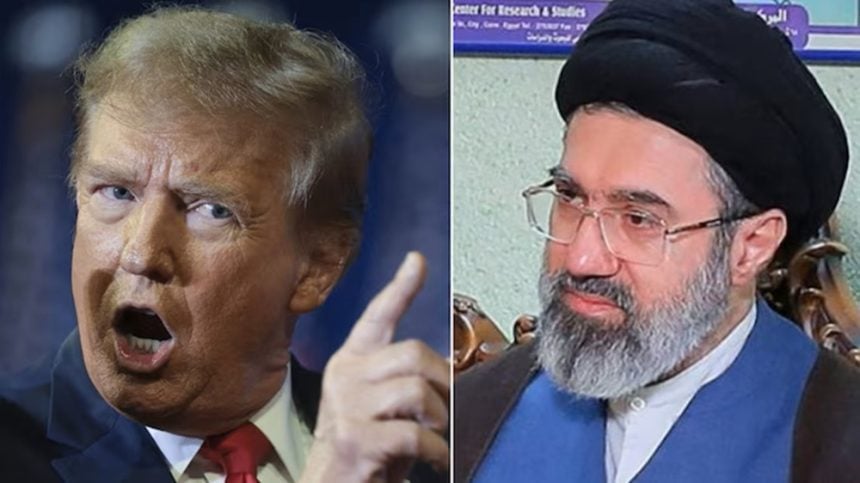
Iranian airlines have been barred from operating in several neighbouring countries following the implementation of new US sanctions, as the wider Middle East conflict continued to put pressure on regional energy supplies and push oil prices higher.
The United Arab Emirates suspended all flights operated by Iranian airlines until further notice after a US deadline for companies around the world to stop doing business with Iran’s aviation sector expired.
Iran’s Tasnim news agency also reported that flights to Oman, Georgia, Azerbaijan and Baghdad had been halted. Iranian authorities were reportedly working to redirect some services to Najaf in Iraq.
The measures are part of a broader US effort to isolate Iran economically by imposing sanctions on companies in third countries that continue doing business with Iranian firms.
Washington had set September 23 as the deadline for companies worldwide to comply with restrictions targeting Iranian airlines, with the stated aim of grounding Iran’s entire civilian aircraft fleet.
READ ALSO: Iran War Is ‘Small Potatoes’ For US – Trump
The restrictions have already affected Iran’s international air links, with Tehran’s Imam Khomeini Airport showing scheduled services to countries including Afghanistan, Armenia, China, Iraq, Pakistan, Tajikistan and Turkey, but no flights to or from several Gulf states.
Iran has warned that neighbouring countries complying with the US restrictions could face retaliation.
A senior Iranian official warned on Wednesday that airports in countries enforcing the ban could be made “unusable”.
The latest sanctions came as tensions across the region continued to affect global energy markets.
Oil prices rose sharply on Thursday after Yemen’s Iran-backed Houthi fighters launched missile attacks against Saudi Arabia, raising fresh concerns about disruptions to crude supplies.
READ ALSO: Iran Plans New Restricted Gulf Zone As Hormuz Tensions Rise
Saudi Arabia said it intercepted six ballistic missiles fired by the Houthis towards areas including Taif and the Yanbu region on the Red Sea.
Yanbu is particularly important to Saudi Arabia’s oil-export strategy because the port provides an alternative route for crude when shipments through the Strait of Hormuz are disrupted.
Brent crude futures settled at $106.60 a barrel, gaining $3.52, or 3.4 per cent, while US West Texas Intermediate crude rose $2.45, or 2.7 per cent, to settle at $94.61.
Both benchmarks had risen by about 5 per cent at their session highs. Brent recorded its highest closing price since September 15, while the gain represented WTI’s first rise after six consecutive sessions of losses.
The price increase came despite signs that diplomatic efforts between Washington and Tehran could eventually ease pressure on oil supplies.
READ ALSO: Iran Executes Man Accused Of Aiding US, Israel
Reuters reported that US and Iranian negotiators in New York were exploring a possible phased agreement under which Iran would reopen the Strait of Hormuz while the United States eased its economic blockade of Iran.
The Strait of Hormuz is a crucial global oil route and its disruption has been a major factor behind the volatility in energy markets during the conflict.
The prospect of negotiations helped crude prices retreat from their intraday highs.
The wider conflict has also affected Saudi Arabia’s ability to export crude. Saudi Arabia has been using its East-West pipeline to divert oil towards the Red Sea after disruptions to Gulf shipping routes. The country has been working to restore export capacity through Yanbu.
READ ALSO: Burutu Ex-Aspirants Trash Vote Of Confidence On Takeme, Demand Probe Of ₦23.7bn Council Funds
Meanwhile, the latest US sanctions threaten to deepen Iran’s economic isolation.
President Donald Trump previously described the expanded sanctions strategy as “economic D-Day”, referring to Washington’s attempt to increase pressure on Tehran by targeting companies outside Iran that continue to do business with sanctioned Iranian entities.
Iranian authorities have warned that the sanctions and wider blockade could worsen the country’s economic difficulties.
The latest developments have therefore created two competing pressures for oil markets: continued military escalation around major energy infrastructure and shipping routes could push prices higher, while progress in US-Iran negotiations and a reopening of the Strait of Hormuz could ease supply concerns.
(Reuters)
News
Report: UK Considers Raising Tax-free Allowance To £15,570


The UK government is reportedly considering increasing the personal income tax allowance from £12,570 to £15,570, a move that could leave millions of workers with more disposable income and prevent most state pensioners from paying tax on part of next year’s pension increase.
The proposal, reported by Sky News citing The Telegraph, would represent the first increase in the personal allowance in five years. The threshold has remained frozen at £12,570 since 2021.
If implemented, the new threshold would be close to the level the allowance might have reached had it continued rising instead of being frozen.
The proposal is being considered by Chancellor John Healey and Prime Minister Andy Burnham, according to the report. It was suggested by Labour donor and Ecotricity owner Dale Vince.
READ ALSO: UK Inflation Rises To Five-month High, Putting Pressure On Bank Of England
Vince said: “If Labour wants to get the economy moving, it should put money into the pockets of people who will spend it.”
He added: “Raising the personal allowance to £15,570 would give millions of people a meaningful boost, with the biggest benefit going to those on the lowest incomes.”
He proposed funding the measure through changes to capital gains tax and by ending interest payments on Bank of England reserves.
“We can pay for it by making the tax system fairer – starting with capital gains and the billions we currently hand to banks in interest,” Vince said.
READ ALSO:Fish Virus Outbreak Hits UK Facilities
However, the government has not confirmed that the proposal will be included in the upcoming Budget.
A Treasury spokesperson said decisions on taxation were matters for the Chancellor to announce at fiscal events, rather than issues the department would “routinely comment on rumour, speculation or proposals”.
The proposed increase could also address an issue facing pensioners.
The UK’s state pension is expected to rise by 3.9% next April under the government’s triple lock system, which guarantees an annual increase based on whichever is highest among inflation, average wage growth or 2.5%.
Provisional wage figures show growth of 3.9%, meaning the full new state pension could increase from £12,547.60 to about £13,036.60.
READ ALSO:Over 150 UK Flights Cancelled After Air Traffic Glitch
That would put the state pension above the current £12,570 personal allowance by approximately £457.
For pensioners with total retirement income below £50,270, that amount would normally be subject to the basic 20% income tax rate, potentially resulting in an annual tax bill of about £91.40.
Increasing the personal allowance to £15,570 would place the projected state pension below the new threshold, meaning pensioners would not pay income tax on the state pension itself, assuming they had no other taxable income.
The proposal comes as the government faces pressure over its finances ahead of the next Budget.
READ ALSO:Top 10 Degrees That Provide Fastest Payback In UK
Official figures showed that the UK public sector borrowed £18.3bn in August, the second-highest borrowing figure recorded for the month. Borrowing for the financial year so far was also £8.1bn above the level forecast by the Office for Budget Responsibility.
The government is therefore expected to face difficult decisions over taxation and spending when the Chancellor delivers the Budget.
Other possible tax changes under discussion include changes to capital gains tax and the proposed high-value council tax surcharge on expensive properties.
No decision on the personal allowance has been announced, and the final policy will depend on the Chancellor’s Budget decisions.
(skynews)
-

 News4 days ago
BREAKING: Tinubu Extends Working Vacation
-

 News5 days ago
Six Hidden Health Benefits Of Unsweetened Zobo
-

 News5 days ago
How 36 Nigerian States Got Their Names
-

 News5 days ago
2027: Step-by-step Guide To Applying For INEC Ad Hoc Staff Recruitment
-

 Headline4 days ago
How To Format An Academic CV For US Master’s, PhD Applications
-

 Headline5 days ago
Nigerian Man Jailed After Masturbating In Front Of Woman On UK Train
-

 News4 days ago
Benue Govt Suspends Muslim Pilgrims Welfare Board Chairman, Secretary
-

 News5 days ago
Stop Acid Reflux Pain: Foods You Must Ban From Your Kitchen
-

 News3 days ago
OPINION: The Stranger In APC’s Kitchen
-

 Headline5 days ago
Mother Admits To Having Sex With Son ‘Only 100 Times’