
News
Warri Delineation: Ijaw, Urhobo Protest, Urge Presidency To Off Its Hand
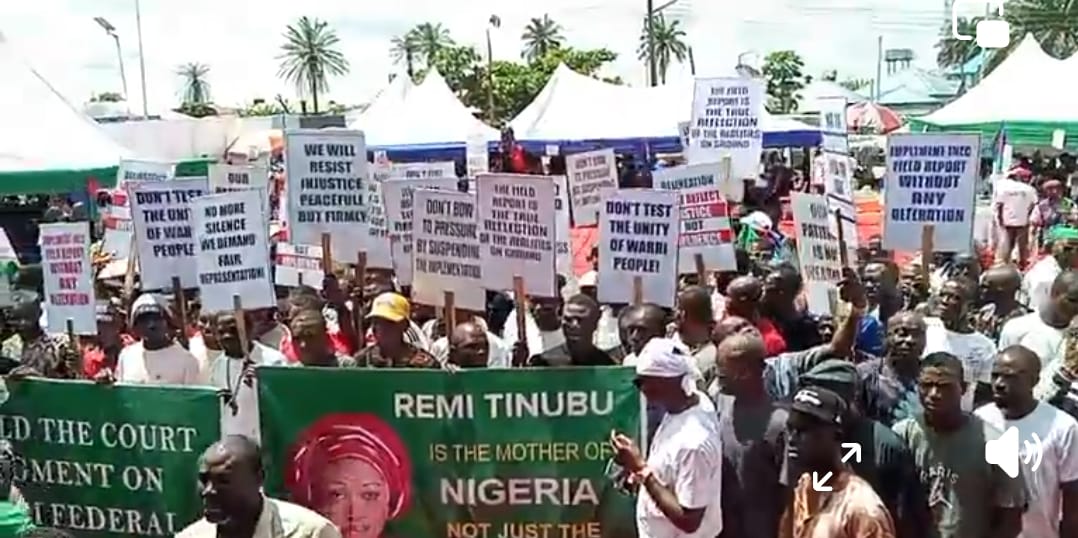
People from the Ijaw and Urhobo ethnics extraction in Warri Federal Constancy of Delta State took to the street to protest what they alleged external interference including the presidency on the recent delineation of the constituency by the Independent National Electoral Commission, INEC.
Speaking during the protest, today, 16th May, 2025, the protesters drawn from the two ethnic nationalities said that certain forces were working against this constitutional mandate, which according to them, has raised tensions across the region.
The protest was part of the activities marking the Adaka Boro Remembrance Day, which was held at Chief Tunde Playground in Warri, where they made a joint declaration.
They, therefore, appealed to the external forces trying to interfere in the outcome of the recent delineation to off their hands and allowed INEC to complete the delineation exercise in accordance with the Supreme Court judgment.
READ ALSO: Delineation: Warri Ijaw Commends INEC, Says Itsekiri Protesting Out Of Ignorance
They said for over a decade, they have consistently called on INEC to uphold truth and justice by correcting what they have long described as a lopsided and unjust delineation that disproportionately favored the Itsekiri ethnic group.
According to them, consequently, their quest culminated in a landmark judgment by the Supreme Court on December 2, 2022, which ordered a fresh delineation exercise in Warri North, Warri South, and Warri South-West LGAs—without which no further elections should be conducted in the area.
Below is the full text of their statement:
JOINT REACTION OF THE IJAWS AND URHOBOS OF WARRI FEDERAL CONSTITUENCY ON RECENT DEVELOPMENTS RELATING TO THE SUPREME COURT ORDERED FRESH DELINEATION OF ELECTORAL WARDS AND POLLING UNITS AND THE DISTORTED ACTIONS OF THE ITSEKIRI NATION
It is no longer news that the Supreme Court was clear in its unanimous judgment of 2nd December 2022 that INEC should delineate afresh all the electoral Wards and polling units in Warri North, Warri South and Warri South West Local Government Areas that made up the Warri Federal constituency of Delta State without which there should be no subsequent election in the area. The order is a condition absolute and a prerequisite for future elections. The implication of this is that, in the eyes of the law and in actual fact, no electoral wards or polling units exist in the Warri Federal Constituency currently. Failure of INEC to complete the process of the fresh delineation portends grave danger and risks of no election in the federal constituency in 2027 and beyond. This will have cascading effects on the 2027 elections in Delta South Senatorial District and by implication Delta state in general.
The recent actions of the Itsekiri Nation in seeking to influence the President of the Federal Republic of Nigeria, by casting insinuations and putting undue pressure on his wife, Her Excellency, Senator (Mrs.) Oluremi Tinubu is not only highly inappropriate but also a gross misrepresentation of the unity and integrity of our national politics. The Itsekiri’s attempts to leverage the maternal lineage of the First Lady to coerce the President into making certain political decisions is a blatant and unjustified move. It should be seen for what it is, an opportunistic move and crass attempt at ethnic baiting. We believe the President and the First Lady with solid democratic credentials will not fall for this ill-conceived and mischievous lure to reduce them.
We are confident that the President will not lean to their mischief as that would be paramount to a total disregard for the Constitution. Mr. President should understand that everyone matters. This same scenario played out when the first ill-fated delineation exercise was conducted with ruthless regards for the true picture of what was on ground, the then government was very quick to adopt it but now that the error is being corrected, the government is dragging its feet because of family ties. This will be bringing yourself down Mr President. We are a very law abiding and peaceful people and we have patiently followed the rule of law up to this time. When the Ijaws approached the court in the suit leading to the Supreme Court judgment in 2011, an Ijaw man, Goodluck Jonathan was the President, but the Ijaws did not put undue pressure on him to subvert national institutions for ethnic gain.
Therefore, be rest assured that we will not fold our hands and be bullied as we watch a replay of what happened before. That an unfair delineation was being used all this while does not mean we should allow it to continue. Nobody sits and watch while their house is on fire.
It is important to recognize that H.E. Senator (Mrs.) Oluremi Tinubu, the wife of the President, holds the esteemed position of the Mother of the Nation and should be respected as such. She should not be seen to be bias in the issue of fresh delineation in Warri because of her maternal ties as that will be abuse of office. And it would be tantamount to being seen as mother of some persons instead of mother of Nigeria.
Her role transcends ethnic and regional politics, embodying the collective aspirations and dignity of all Nigerians. Any attempt to exploit her maternal origins for political manipulation undermines the sanctity of her office and the unity of the Nigerian people. It is a reckless and dangerous move incubated in the bowels of tribal chauvinism. It should be seen as a crude attempt to burden the amiable first lady and mother of the Nation.
We are also watching with keen interest how the Itsekiris are clandestinely working with Mrs. Daisy Danjuma, the wife of General T.Y. Danjuma to coerce the NSA and Mr. President, to help them achieve their selfish agenda of nullifying the painstaking work of INEC and frustrate the implementation of the Supreme Court judgment. This ill-conceived effort to manipulate the implementation of a Supreme Court order through personal and familial connections must be condemned in the strongest possible terms. It is anti-democratic and a recipe for political unrest and conflict, which may plunge the entire Niger Delta into anarchy.
On the issue of the Independent National Electoral Commission (INEC) and the recent fieldwork in the Warri Federal Constituency, we want to unequivocally state that, the INEC’s fieldwork is an accurate reflection of the demographic and electoral realities in the federal constituency between the different ethnic groups. Though, the Itsekiris got more than what they deserve.
It is in the interest of democracy, national stability, and growth that, we must adhere to the principles of democratic norms, highlighted by certain key determinants that cannot be sacrificed – chiefly amongst others – An inclusive and equitable society, where everyone is free and rights respected. Responsiveness to the marginalization of others with a view to make them heard. Implementation of citizens’ rights to vote and participate in democratic governance and the rule of law.
In fact, contrary to claims made by certain elements, the population of the Itsekiri within the Warri Federal Constituency is not more than 10,000 people, as any thoroughly implemented head count will show. INEC’s decision to allocate them 21 wards across the three Warri local governments is an over-generous and magnanimous acknowledgement of their minority presence. This allocation should be seen as a demonstration of the commission’s commitment to inclusiveness, not a compromise of the INEC delineation process.
It is important to state that the federal government should not be intimidated by the threats of the Itsekiri in shutting down a 28,000-barrel-per-day facility in Ogidigben. This should not be a reason for their illegal demands to be given undue attention. The Federal Government must recognize that, the Ijaw and Urhobo people of Warri Federal Constituency, host far more extensive oil facilities. We want to state in clear terms that, we have the capacity to shut down 30 oil facilities within a day and simultaneously, but are only threading the path of peace. We should not be pushed to the wall.
Our strength is not to be underestimated, and it is our resolve to engage reasonably within the confines of the laws. However, we will not stand idly by while attempts are made to manipulate or undermine our economic and political rights. The Ijaw and Urhobo people will not be pushed into a corner or cowed by intimidation.
We are using this medium to draw the attention of the National Security Adviser that our peaceful resolve should not be taken as weakness. The recent invite by the NSA office for a round table discussion with the Ijaws, Itsekiris and Urhobos of Warri must be done with caution, as Chief Ayiri Emami, a self-acclaimed Ologbotsere of Warri had earlier boasted openly in a press conference that he has the ears of the NSA and true to his talk our people have been invited. We do not want to preempt any possible outcome of this meeting, but we strongly warned that those who will be attending the said meeting must not compromise on anything that will subvert the genuine decision of INEC. In any case, what does the office of NSA have to do with INEC? We hope this is not a ploy to aid a particular nationality over others. That would not be in the interest of Nigeria and our democratic journey.
Recently, an Itsekiri gun runner, Mr. Micah Polo, a former British Soldier, who acted on the instructions of the Itsekiri Monarch, was arrested alongside other of his cohorts by DSS with well over 57 AK-47 rifles and pump-action guns. However, information at our disposal is that the Itsekiri Monarch who in connivance with top security brass had earlier freed the same gun runner who was caught training Itsekiri militias is still making frantic efforts to sweep the matter under the carpet. It is an open secret that, Chief Brown Mene acted on the instructions of the Olu to take the said Micah Polo on bail from the security agents during his first arrest. Today, the same Traditional ruler, who is supposed to be behind bars, is working freely and riding on scooters as if nothing happened. Is he above the law? We are watching to know, if the DSS and other Security agencies will fail to take appropriate actions on this matter involving the Olu and Micah Polo and others.
Finally, we strongly urge all concerned parties, especially the office of the NSA, to respect the independence and impartiality of INEC and to refrain from any further attempts to manipulate or distort the delineation process ordered by the Supreme Court.
The Nigerian people deserve a transparent and democratic delineation system that reflects the true will of the electorate, free from coercion, intimidation, or undue influence. INEC as a constitutionally independent and unbiased umpire, let her decision on this matter be final and Mr President must not involve himself with this. It is a known practice that, whoever that is not satisfied with the decision of INEC should go to court, just as the Ijaws did and pursued their case for more than ten years.
Mr. President, a stitch in time, as they say, saves nine! Let the right actions be taken and not the other way round in the interest of peace.



News
Eating Takeout Food Often May Increase Heart Disease Risk — Study
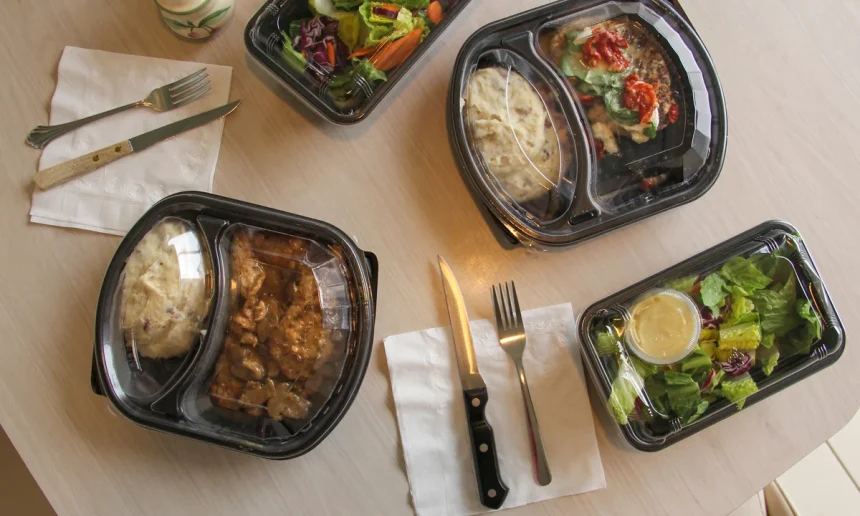
Research suggests that higher takeout food consumption may increase a person’s risk of cardiovascular disease, like heart disease.
In a new study, published in Food Science & Nutrition, researchers said eating takeout food too often can influence systemic inflammation that underlies much cardiovascular disease.
The study of over eight thousand people in the 2009 to 2018 U.S. National Health and Nutrition Examination Survey (NHANES) found that those who eat greater amounts of takeout food are likely to have various elevated risk factors for heart disease.
They were interviewed in their homes and also visited a mobile examination centre, where they recalled their food intake, received cardiometabolic health assessments, and had blood collected.
READ ALSO:23 Ships With Fuel, Food Items To Arrive Lagos Ports – NPA
Mammograms may predict heart disease risk in women — Study
The researchers found a correlation between the amount of takeout food a person consumes and their likelihood of developing chronic low-level inflammation, a key driver of cardiovascular pathology.
Deaths from cardiovascular disease and the consumption of takeout foods are both on the rise, and while that does not prove a causal relationship, the study explores whether there is a connection between the two.
The study tracked degrees of systemic inflammation according to the Dietary Inflammatory Index (DII), a scale that quantifies the risk of inflammation related to the intake of specific dietary substances.
READ ALSO:Food Security: 14,000 Smallholder Farmers To Benefit From N4bn Smart Agriculture Training In Bauchi
The three major takeaways from the analysis included that a higher level of takeout food consumption corresponded to an unfavourable cardiometabolic profile consisting of lower HDL, as well as higher triglycerides, fasting glucose, serum insulin, and insulin resistance.
Jayne Morgan, MD, cardiologist and Vice President of Medical Affairs in a reaction, who was not involved in the study, explained that “Takeout food raises the cardiovascular risk not because of one ingredient, but because of a predictable combination of nutrients, additives, and preparation methods that adversely affect blood pressure, lipids, insulin sensitivity, inflammation, and endothelial function.”
“This includes excess sodium that increases blood volume and blood vessel stiffness, and unhealthy fats, usually saturated fats or trans fats, that increase cholesterol level and atherosclerosis, a condition that can lead to heart attack and stroke.”
Michelle Routhenstein, Preventive Cardiology Dietitian at Entirely Nourished, also not involved in this study, declared, “It is also important to recognise that frequent takeout use often reflects broader lifestyle pressures such as demanding schedules, limited access to cooking resources, irregular meals, and disrupted sleep, all of which can quietly compound cardiovascular risk.”
News
How To Identify Fake Kiss Condoms In Circulation
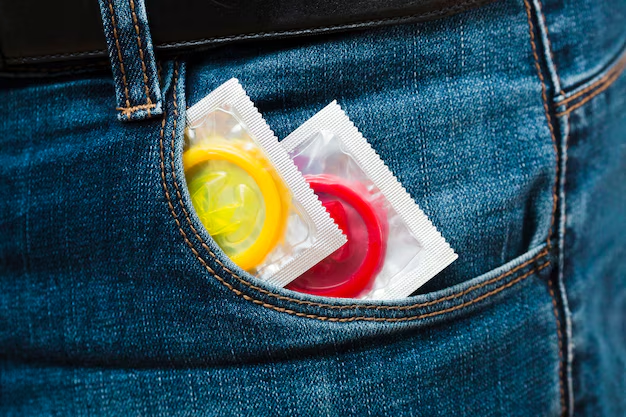
The National Agency for Food and Drug Administration and Control (NAFDAC) has recently warned Nigerians about the circulation of counterfeit Kiss brand condoms in major markets across the country.
Contents
Original DKT Kiss condoms
Fake Kiss condoms
In a public alert published on its website recently and referenced as Public Alert No. 042/2025, the agency said the warning followed information received from DKT International Nigeria, a non-governmental organisation involved in contraceptive social marketing and HIV/AIDS prevention.
NAFDAC stated, “The National Agency for Food and Drug Administration and Control is notifying the public about the sale and distribution of fake Kiss condoms in various Nigerian markets.
“The information was received from the MAH-DKT International Nigeria, a leading non-governmental organisation focused on contraceptive social marketing. Its mission is to provide Nigerians with affordable and safe options for family planning and HIV/AIDS prevention.
“The fake Kiss condoms have been reported to be found in Onitsha Market, Idumota Market, Trade Fair Market, and various markets in Kano, Abuja, Uyo, Gombe, Enugu, and others.”
READ ALSO:Married Man Denies Wife At Brazil Concert To Kiss Tems On Stage [VIDEO]
Kiss condom is a brand of male latex condoms designed to offer sexual protection, including the prevention of unwanted pregnancy and sexually transmitted infections such as HIV, gonorrhoea and syphilis.
To help consumers avoid counterfeit products, NAFDAC outlined key differences between original and fake Kiss condoms.
Original DKT Kiss condoms
The original product comes in a light red box pack with clear instructions printed on the lower part of the pack, including single-use warnings and storage and caution information. The box contains detailed medical device information, including MDSS GmbH, Germany, and a complete Nigerian address at Isolo Industrial Layout, Oshodi-Apapa Expressway.
The condom pack is light red, with the word “Kiss” closely written on six lines. The wallet outer pack is lighter red, carries the Oshodi-Apapa address, manufacturer details, and a clear product description beside the condom image. The hidden flap includes revision dates, medical device details, and caution information, while the wallet inner contains detailed instructions and eight bullet points under important notes.
READ ALSO:Lagos Names Mandy Kiss Anti-drug Abuse Ambassador
The original condom is large, oval-shaped, well-lubricated, and has a large teat end for semen collection.
Fake Kiss condoms
In contrast, fake Kiss condoms come in darker-coloured box packs with little or no additional information. Some boxes are plain white inside and lack condom images. The address is wrongly listed as 42, Montgomery Road, Yaba, Lagos, while the manufacturer’s address is incomplete or missing. Storage and caution information is absent.
The condom pack is darker, with “Kiss” loosely written on five lines and wide spacing. The condom strip is longer than the original. The wallet outer pack is also darker red, carries incorrect or missing addresses, lacks colour wave designs, and shows inconsistencies in barcode lines. Medical device and caution information are missing, and the hidden flap contains no details.
Inside the wallet, information is summarised with only six bullet points. The fake condom is thinner, round-shaped, less lubricated, and has a smaller teat end.
(TRIBUNE)
News
Lagos: Police Arrest 14 Suspected Traffic Robbers On Lekki-Epe Expressway
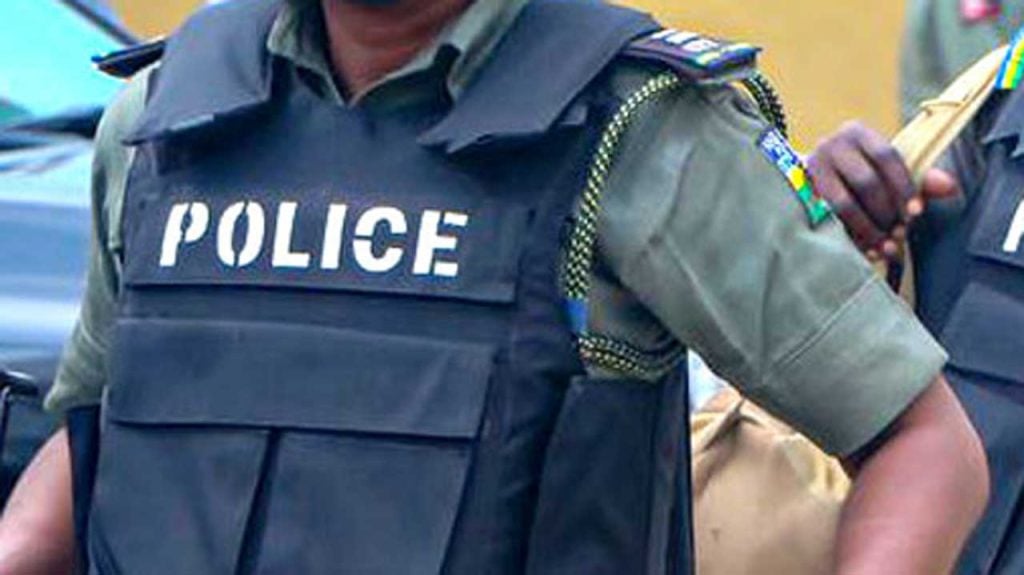
Fourteen persons suspected to be involved in traffic-related robbery have been arrested at various points along the Lekki-Epe Expressway in Lagos over the past two weeks.
The arrests were confirmed on Tuesday by the Lagos State Police Command spokesperson, SP Abimbola Adebisi, via a post on her official X handle, @AbimbolaShotayo.
According to her, operatives of the Command’s Tactical Squad based in Elemoro carried out the operations that led to the suspects’ apprehension.
READ ALSO:VIDEO: Chaos As Last-minute Shoppers Overwhelm Lagos Balogun Market
She explained that the arrests followed sustained patrols and intelligence-driven operations aimed at curbing criminal activities associated with traffic congestion and improving the safety of motorists and other road users along the busy corridor.
Adebisi noted that the development reflects the Command’s determination to strengthen security and uphold law and order on the Lekki-Epe axis, adding that the Tactical Squad has continued to proactively identify crime-prone areas and respond swiftly to threats posed by criminal elements.
She called on residents and commuters to support police efforts by providing timely and credible information that could assist in preventing and detecting crime.
READ ALSO:VIDEO: Chaos As Last-minute Shoppers Overwhelm Lagos Balogun Market
“Security is a shared responsibility. Members of the public are encouraged to stay alert and promptly report any suspicious movements or activities to the nearest police station,” she said.
The police spokesperson further reassured residents and road users of the Command’s commitment to maintaining aggressive patrols and security operations to protect lives and property in the area.
She reiterated the Command’s community policing message, “See Something, Say Something,” stressing the importance of cooperation between the police and the public in sustaining peace and security.

 News3 days ago
BREAKING: Anthony Joshua Involved In Road Accident
- News4 days ago
Ex-Edo Gov Obaseki Reacts As His Cousin Is Beaten, Stripped
- Politics3 days ago
You’re Not 001 – Wike Rubbishes Claims Of Fubara Being APC Leader In Rivers
- Metro4 days ago
Obaseki Beaten, Stripped In Edo
- Politics3 days ago
Wike Speaks On Defecting To APC
- Politics3 days ago
JUST IN: INEC Excludes PDP From Ekiti Governorship Election
- Politics3 days ago
Go To Hell, You Didn’t Pay My School Fees – Wike Hits Seyi Makinde
- News3 days ago
NAF Neutralizes Bandits At Turba Hill, Kachalla Dogo Sule Camps
- News3 days ago
Doris Ogala: How Pastor Chris Knelt Before Church, Begged For Forgiveness [Video]
- News3 days ago
Nigerian Army Finally Reveals Details Of US Military-led Airstrikes In Sokoto


