
News
Waterways: A Plea Against Suicide[OPINION]
By Suyi Ayodele
December 15, 1970, was a terrible day in South Korea. The Asian country lost 362 of its citizens to a boat mishap. The South Korean ferryboat known as Namyoung, sailed out of Busan River, in Seogwipo-si, on December 12, 1970. It had on board, 338 passengers and crew members, heading towards Seongsampo Port in Jeju Island. The boat, according to the report, sank about 28 nautical miles (approximately 45 kilometres) away from Yeosu and Jeollanam.
The sinking of the ferryboat was blamed on overloading. It was said to have 150 crates of tangerines on one side, which made it tilted. The entire cargo capacity of Namyoung was 150 tons. But as at the time it sank, it had 500 tons! The ancient wisdom states: “Greed fills the boat, but the sea claims the excess.” That was the fate Namyoung suffered. The sea ate up 326 of its passengers and the cargo therein because, as the elders are wont to say: “A boat that carries too much sinks under its own weight!”
The death that will kill a farmer, our elders say, lives right at the tips of the yam heaps. Every profession has its hazards. Life on the river, they say, is the easiest. There are many Nigerians today, especially our brothers and sisters along the coastlines, who depend on the river. The river is their life. I watched some lads in the river at Gbelebu, an Izon community in Edo State, about three weeks ago. Daring children! They were even playing games inside the river and were happy about it.
I equally noticed the various wooden boats by the bank of the river. Across the river, my friend pointed to Ijaw Arogbo in Ondo State. The community people, he announced, travelled about in those boats. A close look at the wood called boats, fitted with something that looked like grinding machines, were metal patches used in sealing the holes in the boats. Yet people use them as means of transportation, forgetting the injunction that “trusting an old boat is gambling with unseen leaks.”
My appreciation of those ‘boats’ I saw by the Gbelebu River rose after the news filtered in on Friday, November 29, 2024, about another boat mishap in Kogi State end of the Niger River. Yes, the boats I saw at Gbelebu are smaller ones. But no one can tell how many passengers they carry. What are their passenger capacities in the first instance? Who assesses their water-worthiness? There was no presence of any official of the National Inland Waterways Authority (NIWA), in that locality. The people are their safety officers; they are the regulators and authority. God forbid any mishap in that axis!
In the last three months, over 150 Nigerians have been lost to boat accidents. On September 16, 2024, over 40 passengers of an ill-fated boat died in Gummi Local Government area of Zamfara State. The seafarers were sailing on the Bakin Kasuwa River in Uban Dakawaki town, when their boat capsized. Till date, no one knows the size of the boat, its capacity and any safety measure(s) put in place by the operators. All we know is that over 40 bodies were recovered. How many are truly missing?
MORE FROM THE AUTHOR: OPINION: The War Of Governors And Deputies
Barely a month later, on October 4, 2024, another accident happened on the Gbajiibo River in Mokwa Local Government Area of Niger State. A boat, loaded with 300 passengers, capsized. By the first rescue operation, 70 bodies were recovered, with 150 others rescued alive. It was gathered that because the accident happened at night, rescue operations became hampered. The fate of the remaining 80 passengers is yet to be ascertained! Officials of the NIWA and the National Emergency Agency (NEMA), were said to be “searching for the remaining missing passengers.”
One interesting thing about the Mokwa boat tragedy is that the accident happened at about 8.30pm, a time such a wooden boat without any navigational equipment, should not be sailing! That is in tandem with the saying of the old men of Greece that “A boat without light courts the shadows of the deep.” The water transportation code set out for operators of such boats stipulate that no such boat should be in the waters at night. The question is, who authorised that movement? Where were the water marshals and those in charge of safety on the waters?
Lagos Area Manager of NIWA, Mrs. Sarat Braimah, while commenting on the incident, said the four water marshals deployed to the Gbajiibo River where the incident occurred had already closed from duty for the day and left. NIWA, under the present management, has done a lot to bring sanity to water travel in Nigeria. But I suggest a 24-hour deployment of marshals. People disobey laws, including transportation codes put in place for their own safety. They misbehave big time under the cover of darkness and commit suicide. That is why water marshals should be on duty day and night.
Nigerians don’t learn from histories, no matter how sordid they are. While the nation was still smarting from the Mokwa incident, another boat mishap took place in Kogi State on Friday, November 29, 2024. The capsized boat was said to be carrying marketers from Eve in Kogi State to Katcha Market in Niger State. Over 22 dead bodies were recovered after the initial rescue operation, and many more are still missing!
There are common denominators with all the boat mishaps recorded above and many others not mentioned here. The boats are all wooden, old, rickety and overloaded. Again, the operators flagrantly disobeyed navigational codes! But, most saddening is the culpability of the passengers, dead or alive, who boarded the boats with the ancient mentality of soole, the cheap means of transportation whereby passengers circumvent the laws.
Yes, life gives cheaper alternatives! But, most often than not, the cheaper alternative also comes with its own risks! How are we sure that the over 300 passengers cramped in a rickety wooden boat on the river were not victims of soole mentality! Why on earth would anyone subscribe to the idea of being parked like a sardine in a boat? What level of poverty would make people take unnecessary risks? Why would anyone be in a boat without any navigational equipment at night? More importantly, why would anyone venture near the water without a life jacket?
MORE FROM THE AUTHOR: OPINION: Ambition Without Plans
Braimah, the Lagos NIWA boss, said that night sailing by rickety wooden boats with overloaded passengers is a major problem of the body. It is a problem that NIWA should confront frontally. NIWA should step up its game and ensure that the ban on night sailing is enforced with grave consequences for offenders.
Enough of countless deaths on our waters! There are senators, members of House of Representatives and legislators from the various states, Houses of Assembly, who have those riverine areas as their constituencies. It is not just enough to answer “Distinguished” as an appellation when the bearer cannot do anything distinguishable. There is nothing “Honourable” if the one who carries the prefix is not honourable enough to attend to the basic needs of his or her constituents.
We have had “Constituency Project” budgets running into billions of Naira, approved for lawmakers at all levels. Can we appeal to them to stop providing only grinding machines, wheelbarrows and shoe-repairing kits?
How much does it cost to purchase modern boats built with local fibre and equipped with navigational equipment? Is it not cheaper, more honourable and humane to keep these locals alive with good boats than to organise a mass burial for them? We need to beg our politicians to learn how to set their priorities right.
Every community has peculiar needs. The peculiar need of a fishing community and water dwellers is a good means of transportation. The people who live and get their sustenance from the waters probably don’t need Okadas (motorcycles). Good boats and other safety kits would be of more delight to them. The “Distinguished” and the “Honourables” have enough constituency project funds to take care of that. Happily, it is not something they will be doing frequently!
It is a pity, and most unfortunate, that thousands of lives have been lost to boat mishaps as we have in road accidents. NIWA and other agencies can put all the measures in place to ensure safety on the waters. They can also run as many jingles and safety awareness campaigns as they can. But the responsibility to live is that of the people.
It is suicidal for anyone to board a rickety boat and be cramped with hundreds of others in the manners we had in those mishaps. It amounts to sheer personal irresponsibility for anyone to be on a boat without a safety vest! “A life jacket”, the saying goes, “doesn’t judge the depth of the water.” This underscores the importance of safety.
It is equally unthinkable that anyone would agree to be shipped in a boat at night without any navigational equipment! Dangers loom at night hence the seamen of old state that “the sea at night hides its teeth; only the cautious will see the dawn.”
MORE FROM THE AUTHOR: OPINION: South-West, Run, Ganduje Is Coming
Some of the boats that capsized were said to have taken to the creek routes to dodge the water marshals, and in the process, collided with trees and other objects. It will be difficult to blame the government and its agencies for that!
We need that reorientation to get to know that in the search for cheap alternatives, Nigerians must place their personal safety concerns as priority. We need to collectively stop the death on old wooden boats because “an old boat may remember the sea, but its cracks betray the journey.”
Nigerians must consciously put an end to the killing soole mentality. Agreed that the government has failed in its responsibilities towards the citizenry, however, it is unfathomable that anyone would embark on a night journey on the sea in a bad boat without safety codes and measures! This is what my people call: ó kù sí owó olè, ó kù sí owó olóko (both the thief and the farmer are guilty).
Nations learn from past mistakes South Korea, again, recorded yet another boat accident on April 16, 2014. In the accident involving a ferryboat MV Sewol, 304 passengers out of the 476 onboard the boat perished. Of the figures, 250 were said to be students of the Danwon High School in Ansan. This accident led to the enactment of the Serious Accident Punishment Act (SAPA), which imposes accountability on the safety culture of corporate bodies, operators of water transportation inclusive.
SAPA generally, is not all about maritime safety, its principles, letters and application of the safety accountability spelt out hold company executives accountable for any mishap that occurs at the workplace due to negligence.
By the Act, if workers aboard a ship are injured due to negligence in safety protocols and procedures, the act could be invoked and the erring companies punished. This Act and its application would do us well in Nigeria, where everyone feels that he can get away with anything.
But above all, everybody should be encouraged to obey the laws. And the lawmakers themselves must be ready to enforce them. If the laws on safety on our waterways are not adequate, the idle lawmakers in Abuja should be asked to make more laws like the South Korea’s SAPA
May Nigeria never experience untimely and avoidable deaths as we have had in the scenarios above. May God grant the souls of the departed rest.



News
NiMet Warns Of Flash Flooding In 19 States

The Nigerian Meteorological Agency (NiMet) has warned that 19 states across the country may experience flash flooding.
In an advisory issued yesterday, NiMet said increased surface runoff and flash flooding could occur during heavy early rains due to dry and hardened soils that prevent water from properly soaking into the ground.
The agency listed the states likely to be affected as Zamfara, Nasarawa, Kwara, Oyo, Lagos, Ogun, Ekiti, Delta, Imo, Anambra, Enugu, Ebonyi, Akwa Ibom, Cross River, Rivers, Edo, Ondo, and Bayelsa.
NiMet said the possible impacts include flooded roads, traffic disruption, damage to homes, farmlands, and infrastructure, blocked drainage systems, power outages, telecommunication disruptions, and increased risks of injuries and water-borne diseases.
READ ALSO:Meningitis: NiMet Lists High-risk States
The agency advised residents to clear blocked drainage and stay updated with weather and flood alerts.
NiMet also cautioned motorists and pedestrians against driving or walking through flooded areas.
The agency asked relevant authorities and stakeholders to strengthen coordination, preparedness, and emergency response measures to reduce flood-related risks.
“An informed community is a prepared community. Know the risks and act early,” the advisory read.
READ ALSO:NiMet Predicts Three-day Rain, Thunderstorms From Monday
The Federal Government had warned that 14,118 communities in 33 states and the Federal Capital Territory (FCT) are at risk of severe flooding in 2026.
The states include Abia, Adamawa, Anambra, Bauchi, Bayelsa, Benue, Borno, Cross River, Delta, Ebonyi, Edo, Enugu, Gombe, Imo, Jigawa, Kaduna, and Kano.
Others are Kebbi, Kogi, Kwara, Lagos, Nasarawa, Niger, Ogun, Ondo, Osun, Oyo, Plateau, Rivers, Sokoto, Taraba, Yobe, and Zamfara, and the FCT.
READ ALSO:NiMet Predicts 3-day Thunderstorms, Rains
Meanwhile, Nimet and the National Emergency Management Agency (NEMA) have intensified efforts to improve disaster management in the country with plans to develop a national early warning system roadmap.
The move was announced yesterday during a courtesy visit by the Director General of NEMA, Zubaida Umar, to the Director General of NiMet, Charles Anosike, at the NiMet headquarters in Abuja.
Mrs Umar applauded NiMet for the timely release of the 2026 Seasonal Climate Prediction and its consistent weather forecasts, noting that the agency had recorded significant improvements under Prof. Anosike’s leadership.
News
‘Nothing New’ – Wike Defends Houses For Judges, Dismisses NBA Criticism
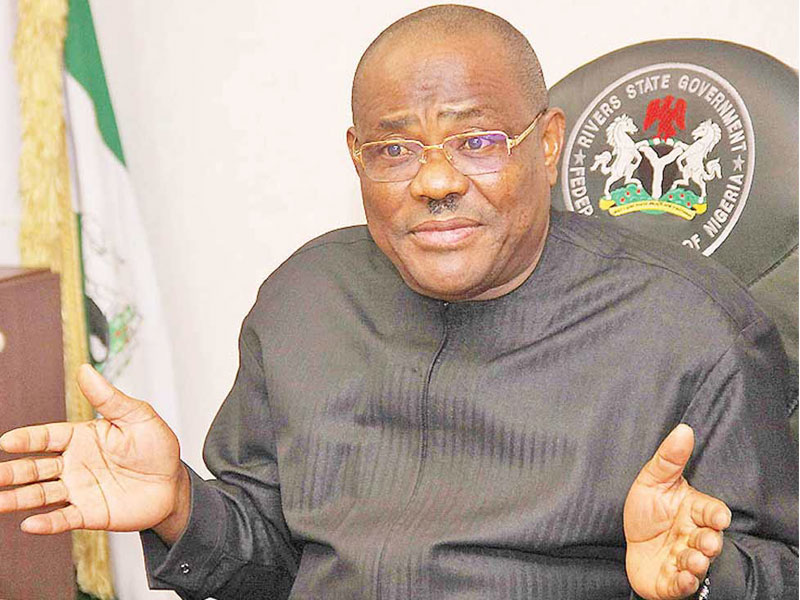
Federal Capital Territory, FCT, Minister, Nyesom Wike, on Friday defended the construction of houses for judges and justices in Abuja, dismissing concerns that the projects could compromise the independence of the judiciary.
Wike spoke after inspecting ongoing judicial infrastructure projects, including judges’ residences, the Court of Appeal Abuja Division and proposed residential projects for judges of the Industrial Court and the Code of Conduct Tribunal.
The minister’s remarks followed criticisms reportedly raised by the Nigerian Bar Association (NBA) over executive involvement in the provision of infrastructure for the judiciary.
Rejecting the concerns, Wike argued that government provision of facilities for judicial officers was neither new nor a threat to judicial autonomy.
He said: “The mere fact that the executive constructs buildings does not mean it will interfere with the judiciary.
READ ALSO:2027: Wike Opens Up On Preferred Rivers Guber Candidate
“We have built public houses for the National Assembly and for the judiciary before. The Supreme Court was built by government. So there is nothing new in this.”
Wike accused the NBA leadership of inconsistency, alleging that the association frequently sought financial support from state governments for its conferences and activities while criticising government interventions in the judiciary.
“All they are interested in is when state governments will sponsor NBA activities. If governments fund their conferences, does that mean they are no longer independent?” he queried.
He maintained that the FCT Administration would not be distracted from implementing projects designed to improve the welfare and working conditions of judges and justices.
“This is a voluntary act by government to make judicial officers comfortable and focused on their work. It is not done to erode judicial independence,” the minister added.
READ ALSO:Open Bank Account In PDP Name, See What Will Happen – Wike Dares Turaki Faction
Wike said the projects formed part of activities lined up to mark President Bola Tinubu’s third anniversary in office.
He expressed satisfaction with the completion level of the judges’ quarters, describing the project as well executed and nearly ready for inauguration.
“We’ve seen the judges’ quarters beautiful. I’m very elated that the job was done well. The houses are well furnished and almost 99 per cent ready,” he stated.
The minister also disclosed that preparations had begun for the groundbreaking ceremony of residences for judges of the Industrial Court and the Code of Conduct Tribunal.
However, he expressed dissatisfaction with aspects of the finishing at the Court of Appeal Abuja Division project, despite its advanced stage of completion.
READ ALSO:Trump Tired Of War In Iran – Shehu Sani
“Almost 90 per cent complete, but I must say it’s not the quality I expected. I have told the contractor that several errors must be corrected before inauguration,” he said.
Wike assured that the administration would continue monitoring contractors to ensure all projects are delivered according to specification and within schedule.
“All the promises that have been made, we are going to fulfil them. That is why we are going around to inspect and ensure contractors are ready,” he added.
News
LASG Fixes Dates For Public Service Exams, Releases CBT Guidelines

The Lagos State Government, through the Ministry of Basic and Secondary Education and the Lagos State Examinations Board, has released the timetable and guidelines for the 2026 Public Service Examinations.
In a statement by the Lagos State Government, the announcement, which aligns with a prior circular from the Head of Service with Ref No: CIR/HOS/’26/005 dated January 21, 2026, sets out key instructions for candidates preparing for the exercise.
The examinations will hold between Tuesday, May 12 and Tuesday, May 19, 2026, at the Lagos State Public Service Staff Development Centre (PSSDC), Magodo, Lagos.
They include the Compulsory Examination for all cadres in the State Public Service, the Combined Confirmation/Promotion Examination for Clerical Officers II (CO II) and Clerical Assistants (CA), as well as the External Secretarial Examination.
READ ALSO:Lagos Begins 2026 Civil Service Promotions
According to the board, candidates are expected to begin printing their examination slips from Tuesday, May 5, 2026, through the official portal using their registration login details.
The slip will contain key information such as each candidate’s exam date and time.
“All candidates are required to present valid identification at the examination centre. Acceptable forms of identification include Staff Identity Cards, National Identification Number (NIN) slips, and Lagos State Residents Registration Agency (LASRRA) cards,” the statement said.
Candidates are also required to bring printed copies of their examination slips to the venue and must strictly follow the date and time allocated to them.
READ ALSO:Why Tinubu Didn’t Attend Project Commissioning In Lagos —Presidency
The board further advised candidates to acquaint themselves with basic computer skills ahead of the exercise, as the examinations will be conducted using a Computer-Based Test, CBT, format.
It also warned that dressing must be formal, adding that inappropriate dressing will not be allowed at the examination centre.
Candidates were urged to comply fully with all instructions to ensure a smooth and orderly process.
“The Lagos State Examinations Board urges all candidates to comply fully with these guidelines to ensure a smooth and orderly examination process,” the statement added.

 News5 days ago
BREAKING: Wike Picks Alabo George For Rivers Governorship
- Business4 days ago
Why We Sited Our Multi-Billion Naira Automobile Firm Branch in Benin – Skyewise Group CEO
- Politics4 days ago
JUST IN: Why I left ADC For NDC With Kwankwaso – Peter Obi Opens Up
- Politics4 days ago
BREAKING: 17 ADC Reps Follow Join NDC
- Entertainment5 days ago
Why I Stopped Attending Church Service – Funke Akindele
- Business3 days ago
Again, Dangote Refinery Hikes Fuel Price
- News3 days ago
Xenophobic Attacks: Nigerian Students To Picket MTN, MultiChoice, Other Businesses
- News4 days ago
OPINION: APC’s Politics Of Consensus
- Entertainment5 days ago
‘My Mum Started Quoting Bible’ — Shank Sparks Debate After Tattoo Confession
- News3 days ago
IGP Orders Officers Display Name Tag On Uniform, Gives Update On State Police


