
News
‘Why Academic Research Rarely Makes Headlines’

Researchers must do more than publish academic papers if they want their findings to influence public debate, government decisions and people’s lives, Taiwo George, Online Editor of Daily Trust, has said.
He argued that researchers must establish what was new about their findings, who they affected and why the public should care.
He spoke at a research communication symposium organised by AmplifyITT, where he challenged academics to communicate their findings in ways that journalists and ordinary people could understand.
“A research is not automatically a story. It becomes a story when you uncover what matters, who it affects, what it reveals, and what should happen next,” he said.
George identified discovery, significance, human impact, context and credibility as key elements that determine whether research findings attract media attention.
He said newsrooms received large volumes of information daily and had to prioritise what deserved coverage.
He explained that journalists were unlikely to give attention to information that had already been widely circulated without offering a fresh perspective.
He said research must also demonstrate why its findings matter to people’s everyday experiences, noting that readers were more likely to engage with issues they could relate to.
Using research on public trust in the police as an example, George said people would naturally be interested in findings that examined an institution with which they had direct or indirect experiences.
On credibility, he said journalists needed to establish the methodology, sample size, data and limitations of a study before relying on its findings.
READ ALSO: How To Format An Academic CV For US Master’s, PhD Applications
“As a reporter, as a journalist, the only currency I have is trust,” he said.
He stressed that media organisations depended on public confidence in the accuracy of their reports.
George identified academic jargon, weak communication, lack of context and failure to identify the intended audience as major reasons research findings failed to become news stories.
He said researchers sometimes published papers without adequately explaining their implications.
This, he noted, leaves journalists to struggle with technical language and the task of identifying what the findings meant to the public.
He also listed questions journalists typically ask when examining research, including who funded the study, how it was conducted, what the findings confirmed, their limitations and their implications for government and society.
His position was reinforced by Dr Rilwan Abiola Kolawole, a lecturer in the Department of Communication and Language Arts at the University of Ibadan, who said the problem facing Nigerian research was not necessarily a lack of knowledge but the failure to communicate it to society.
Kolawole lamented that important discoveries made within universities rarely reached the wider public, leaving many research findings unused or inaccessible.
“How many of our researches are gathering dust?” he asked.
He argued that there must be a stronger connection between universities and the public through effective communication.
He identified journalists as a critical link in that relationship.
He said the media could translate complex academic findings into information that ordinary people could understand and use.
READ ALSO: Romanian Defence Minister Quits After Admitting Error In Academic Record
According to him, much of the language researchers use is designed for their academic colleagues rather than the wider society.
He urged researchers, particularly those in medicine and the sciences, to communicate in simpler language and relate their findings to issues people could readily understand.
Kolawole also criticised the barriers created by some academic journals, especially foreign ones.
He said researchers sometimes had to pay as much as $1,000 to make their work accessible, even when it was done by them, while other publications restricted access to subscribers.
He called on Nigerian universities to explore ways of making locally produced research more accessible instead of relying excessively on foreign journals.
With the 2027 general elections approaching, he urged researchers to make evidence-based studies of political and presidential candidates available to the public to support informed electoral decisions.
Also speaking, Izak Mina, a South African media consultant and former editor with the South African Broadcasting Corporation’s Digital News, called for structured partnerships between journalists and research institutions to improve factual reporting.
Mina said his experience in the broadcaster’s planning and research unit demonstrated how access to experts and research materials could strengthen newsroom coverage.
He said the unit, which supported about 17 radio stations, four to five television stations and online services across 11 languages, identified experts and available research on topical issues and made them accessible to reporters, producers and presenters.
The initiative, he said, helped journalists establish the factual basis of their reports, develop fresh angles and sometimes discover entirely new stories.
READ ALSO: Researchers Develop Treatment For Advanced Prostate Cancer
He cited a partnership with South Africa’s Council for Scientific and Industrial Research to develop an election prediction model.
He said scientists appeared on air to explain its projections, which came within about one percentage point of the final results for most political parties in the country’s last election.
Mina, however, said collaboration could be undermined by the communication gap between the two professions.
“Reporters often don’t understand scientists’ language. And the other way around, scientists don’t understand what journalists want and are often upset about how journalists use their work,” he said.
He recommended training programmes that would expose journalists to basic scientific principles and help researchers understand the demands of news production, including the need for concise explanations and accessible headlines.
Mina said such engagement should not end with training, but should also involve bringing journalists and researchers together to understand one another’s professional expectations.
He further advocated the use of research to strengthen media policy, citing the M20 initiative, an advocacy platform focused on information integrity, freedom of expression, media viability and the role of journalists in society.
He said the initiative was working with research organisations across Africa to develop policy briefs on information integrity, climate change reporting, artificial intelligence and journalism, and media viability.
Prof. Jerry Ugwuanyi, Deputy Vice-Chancellor of the Federal University of Environment and Technology, said Nigeria’s challenge extended beyond communicating research to translating academic findings into practical solutions, products and services.
He estimated that Nigeria produced about 70,000 indexed journal articles annually, but said much of the research remained basic and was largely driven by the need for academic promotion rather than immediate problem-solving.
READ ALSO: FG Approves N4bn For 158 TETFUND Research Projects
“Most academics don’t get promoted because they are great teachers. They get promoted because they produce knowledge,” he said.
Ugwuanyi explained that research could be basic, applied, exploratory or translational.
He noted that while basic research expands knowledge, applied research addresses identified problems and translational research converts findings into usable products and services.
He said Nigeria needed stronger partnerships among universities, research institutes, government and industry to move research beyond academic publications.
The don compared Nigeria’s research output with South Africa’s.
He said the latter produced about 36,000 indexed journal articles but recorded greater translation of findings into practical applications.
“The reason is not that their academics are better. The reason is that the risk appetite is higher amongst their industrialists,” he said.
He identified limited industrial investment and reluctance to take risks as obstacles to commercialising research, asking: “Who is going to pay for the valorization?”
READ ALSO: UNILORIN Emerges Nigeria’s Best Varsity In Research Quality
He said universities and research institutes were establishing incubation centres to identify promising findings and develop pilot projects, but argued that industrialists and investors must be willing to support their movement into the market.
Dr Olufemi Owolabi, Senior Special Assistant to the Ekiti State Governor, said research findings could influence public policy when they were presented in clear, practical recommendations and delivered to the right decision-makers at the appropriate time.
Drawing from his experience as an investigative journalist and government policy adviser, Owolabi said researchers should begin by asking what they wanted the government to do differently as a result of their findings.
“What exactly do you want the government to do differently because of this research?” he asked.
He said government institutions already had access to numerous research reports, but many were too lengthy and lacked clear recommendations that could guide action.
Owolabi illustrated the influence of research on government decisions with a review of Ekiti State’s transition committee report following the change of administration in 2022.
He said the report recommended an annual five per cent increase in capital expenditure allocation, following which the state increased its capital expenditure share from about 30 per cent to 40 per cent in the 2023 fiscal year.
The symposium was convened by James Ojo Adakole, founder of AmplifyITT, to strengthen communication between researchers, journalists and other stakeholders and improve the public use of research findings.



News
Edo LIFE-ND Clinches Three Awards At 18th National Agricultural Show

The Edo State Livelihood Improvement Family Enterprises in the Niger Delta (LIFE-ND) Project has won three awards at the 18th National Agricultural Show held from 16th to 20th November 2026 at the National Agricultural Show Ground, Tudun-Wada Community, Karu LGA, Nasarawa State.
The five-day event, organised by the National Agricultural Foundation of Nigeria (NAFN), was themed “Building a Resilient Nigerian Agrifood System: Empowering Farmers, Mobilising Investment and Driving Innovation for Food Security and Shared Prosperity.”
Edo LIFE-ND showcased six major commodities and their respective agribusiness value chains: cassava, rice, fishery, poultry, plantain and cocoa, highlighting the processes from production and processing to final consumption.
READ ALSO: NDDC, LIFE-ND Commend Edo Project Over Impact On Rural Livelihoods
The Edo State delegation comprised the State Project Coordinator, Mr. John Omoruyi; State Agribusiness Promotion Officer, Mrs. Grace Iredia-Amedu; and two LIFE-ND farmers, Stellamaris Olounomeh and Pius Okoh.
In recognition of its outstanding participation, the Edo State LIFE-ND Project received three awards:
Second Position: Fisheries Aquaculture.
Second Position: Agencies under the Federal Ministry of Agriculture and Food Security.

READ ALSO: LIFE-ND To Expand Operations To Eight More LGAs In Edo
Third Position: Fisheries Technology.
The awards further highlight the Edo LIFE-ND Project’s commitment to promoting agribusiness development, strengthening commodity value chains, supporting incubatees and improving rural livelihoods.
The achievement also reinforces the Project’s contribution to food security, enterprise development and sustainable livelihood improvement through the Agribusiness Incubation Programme.
News
Jimmy Odukoya Sues Sister, Pastors, Asks Court To Declare Removal Illegal
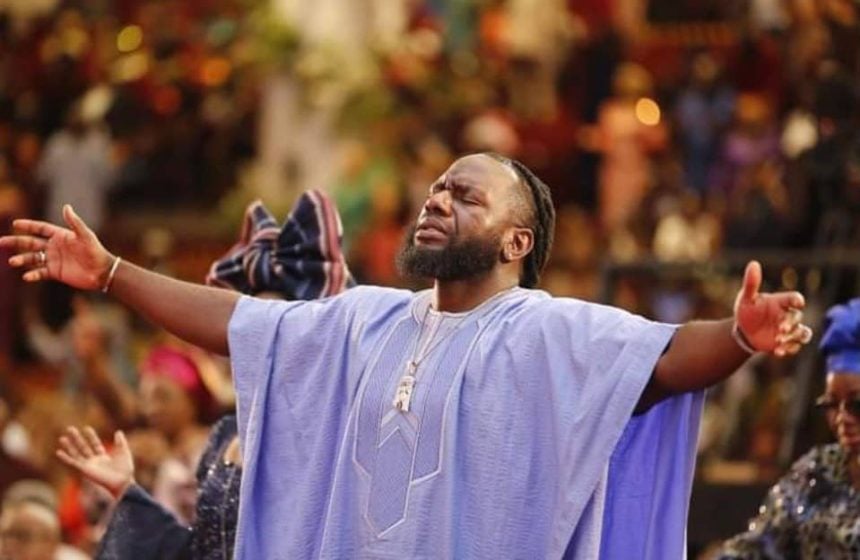
The senior pastor of the Fountain of Life Church, Jimmy Odukoya, has approached the Federal High Court in Lagos to challenge his removal from office, asking the court to declare the decisions leading to his ouster invalid.
Odukoya filed the suit alongside the incorporated trustees of the church against his sister, Tolu Odukoya, and seven other individuals, including members of the church’s board of trustees.
The case, marked FHC/LAG/CS/1568/2026, was instituted on Friday. The respondents are Tolu Odukoya, Biodun Balogun, Biodun Awosika, Rotimi Okpaise, Tobi Enuha, Gbenga Onabanjo, Fred Ohiani and Akin Osinbajo.
At the centre of the legal dispute are resolutions reached at meetings organised by the “Concerned Trustees of the Fountain of Life Church” on January 22, February 28 and November 16, 2026.
READ ALSO: Fountain OF Life Breaks Silence On Alleged Seal Of Church Premises
Odukoya and the incorporated trustees are asking the court to determine whether the resolutions from the three meetings are invalid and have no binding effect on the church.
The suit also questions the authority of the board of trustees or any other organ of the church to alter or bypass provisions of the church’s constitution without following the prescribed amendment procedure.
One of the questions submitted for the court’s determination reads:
“Whether without compliance with Article XI, Section 60(a) (c) of The Constitution of Fountain of Life of Life Church as Amended by a Special Resolution dated January 16, 2003, the Board of Trustees of the Fountain of Life Church and/or any other organ of the church can by a decision or resolution of the Board or such other organ amend, override and/or bypass a clear and express provision of The Constitution of Fountain of Life Church as Amended by a Special Resolution dated January 16, 2003,” part of the suit reads.
READ ALSO: Fountain Of Life Church Sealed By Police Leadership Crisis Deepens
Another issue raised in the case concerns whether the board could remove the senior pastor through a resolution without following the procedure stipulated in the church’s constitution.
The claimants asked the court to determine the matter in light of Articles VII, Section 39 and Article VIII, subsections 45(c) and (g) of the constitution.
The second question reads: “Whether having regard to the provisions of Articles VII, Section 39 read together with Article VIII subsections 45(c) and (g) of The Constitution of Fountain of Life Church as Amended by a Special Resolution dated January 16, 2003, the Board of Trustees of Fountain of Life Church could by just a resolution remove the Senior Pastor without recourse to the procedure specifically highlighted by Section 39 (b) of The Constitution of Fountain of Life Church as Amended by a Special Resolution dated January 16, 2003.”
News
Why I Failed To Resuscitate Dead Toluwanisings — Arrested Prophet

A cleric, Prophet Moses Idowu, who went on social media to announce his move to resurrect the popular gospel singer, Olayemi Bayonle Bolaji, (Toluanisings) from death, has admitted going beyond what he was ordered to do by God. He said he was pushed by boldness and zeal to see the deceased alive again. He said that the great love he had for the singer and the hope to see him come to his church to sing added to his faith to pray for him as prompted by God in a dream.
Prophet Moses was arrested by the Monitoring Unit in Oyo State Police Command following a petition that he was desecrating the memories of the popular gospel singer Olayemi Bayonle Bolaji (Toluanisings) with his posts on the social media and his visit to the morgue where the corpse of the gospel was kept, with the claim that he had the spiritual powers to return him to life.
The Police Public Relations Officer, DSP Olayinka Ayanlade, in a statement, had said that “in the course of the incident, Prophet Moses recorded a video of the deceased’s body and subsequently circulated the footage on social media without the consent or authorisation of the deceased’s family, thereby subjecting the remains to indignity and causing further distress to the bereaved family.”
The PPRO stated further: “Beyond the unauthorised recording and publication of the deceased’s body, the suspect also allegedly made publications accusing the deceased’s wife, Mrs Olayemi Elizabeth Damilola, and his manager of being responsible for the death, without any substantiated evidence to support such claims.”
In an investigation by Saturday Tribune, the pastor said that the dream he had in the night after the singer’s death made him make the move to pray life back into him, but added that he did not obey the caveat, which was for him not to attempt the prayer if the body had been put in the mortuary.
READ ALSO: Toluwanisings: UCH Breaks Silence On Narrative About Singer’s Death
In an interview with the Saturday Tribune, the pastor, who expressed regret for using social media, said that he was moved to do the prompting by God through the dream he had. Moses, 43, who hails from Idi iroko in Ogun State but has a ministry in Ibafo after answering God’s call in 2019, said that his love for Toluwanisings and zeal to see him alive again made him to take the steps, despite a condition given by God in the dream that the deceased’s body should not be put in the morgue before the prayers to revive him.
According to the pastor, “on the fateful day Toluwanisings died, we first heard the rumour that he slumped, and his death was later confirmed. That night, after I prayed, I slept. While sleeping, I had a dream in which I saw Toluwanisings’s spirit. An elderly being appeared to me and told me that the gospel singer’s spirit had yet to be separated from him and could still be revived. The elderly being said that if someone could recall his spirit into his body when he had not been deposited in a morgue, he would come back to life, and the prayers should be before seven days. I answered that I was willing to do it. Then I woke up and recorded a video in the morning in which I said that I would need six servants of God to make seven in number with me, or eight of them that would make nine with me, for the spiritual task. I also urged people to share the video, get in contact with the deceased’s family and ask them to call me before his body would be taken to the mortuary.”
Continuing, he said: “I didn’t get any response the following day, but two days later, some people started calling me that they had a similar dream. I was so interested in Toluwanisings being alive because I love him and was one of his fans. I already had a plan to invite him to sing in my church during one of our programmes.
“When it was almost seven days, I recorded a video to seek the deceased’s address since no one contacted me from his family. I got it from the comments and I left Ibafo for Ibadan. That was the mistake I made because he had been taken to the morgue, but the overconfidence (igboya) and zeal (ìtara) that I had, with a strong faith that God could still do it, made me still act on the dream.
“When I came, I saw his Personal Assistant who told me Toluwanisings was already gone. I asked him if he had faith that the dead could be restored back to life, and he said yes, but that he had been kept in a morgue. I told him I still have faith that God could still do it as I also wanted him back to life. I told him to let us try and see what God would do. I requested for one to two hours to pray on Toluwanisings’ body and he agreed, telling me to go ahead of him.
READ ALSO: What He Feared Most Affected Him, Woli Agba Speaks On ToluwaniSings’ Death
“As I waited in front of the mortuary, and many people following me on Facebook and TikTok were calling me excitedly, waiting to hear that he had woken up, I did another video to inform the PA that I was waiting for him. When he came, he took me to the mortuary attendant who said he could only give me a maximum of 10 minutes. Since I was already there, I decided to still try my best, believing that nothing is impossible with God.
“I asked for water and poured it on my palm with the anointing oil I brought. We went into the morgue and his body was pulled out of the storage drawer a little. I placed my palm on his head and started praying.
“When it was 10 minutes after I started, the mortuary attendant told me that it was time for me to leave. The following day, the PA called me and expressed his displeasure with the video I made in front of the mortuary which he said he just saw. I apologised and immediately deleted it, but, unfortunately, the video seemed to have been shared.
“He called me again the next day and I told him that though I had deleted it, it might have been shared. Then I asked my contact that I wanted to speak with the family to bring the corpse out of the cold chamber completely so that his spirit would enter his body. I said this because the morgue I went in to pray was very cold and the body was frozen, but the contact didn’t call me back. Then, I made up my mind to go to his burial place to attempt praying life into the body but was called by other servants of God. I told them that I didn’t intend to be there if not approved by the family, and had taken my mind off it when my contact didn’t get back to me. Later, I was told that I turned Toluwanisings’ body into content on social media.”
The pastor said that he also saw a video where the PA was castigated for allegedly not showing enough concern for the singer’s death, which made him post one himself, accusing the PA of not giving him adequate attention when he was in Ibadan to pray for the deceased to come back to life.
READ ALSO: OPINION: Toluwanisings’ Death And Social Media Prosecutors
“After the video, I noticed that my Facebook had been blocked and I couldn’t access it again. Two days later, police came to arrest me, and I was interrogated,” Prophet Moses stated.
Saying that he never thought things could turn out the way it did, he stated further: “It’s not that I wanted to trend with the videos as being alleged. Toluwanisings was one of the gospel singers that I love. I had the plan to invite him to my church to sing. Also, the dream I had gave me boldness. It maybe that I lost control of myself at that point. He would not be the first gospel singer that would die. I just have special love for him. I didn’t know things would turn out this way. I did not have the covenant to run more than God. I should have stopped when his body was already in the morgue, but the feelings I had that he should have life again pushed me.
“I have learnt a lot about the usage of social media indiscriminately. I didn’t have the adequate knowledge. And the videos I posted were taken beyond my thoughts. I regret everything. I’m the only one suffering now. Everyone has disappeared. I have also learnt to obey God’s promptings alone and not go beyond what He instructs me to do. I was disobedient.
“I have been appealing to his family and friends, and I’m still doing so. They should forgive me.”
In an update, Saturday Tribune learnt that Prophet Moses was arraigned in court last Friday on a four-count charge bordering on the unlawful recording and publication of false information, unlawful publication of defamatory matter, improperly offering indignity to the dead human body by recording and publishing its image without the consent and authority of the family, and conduct likely to cause a breach of public peace.
The matter was adjourned till December 2 for further proceedings.
READ ALSO: OPINION: Toluwanisings: Envy + Jealousy = Wickedness
Relatedly, one Oladapo Joshua Dunmininu who was arrested last Thursday was also charged to court along with Pastor Moses on the same day over similar offences.
Dunmininu allegedly published videos in which he accused Toluwanisings’ PA and members of his family of being responsible for his death, thereby further spreading allegations against individuals already affected by the loss.
Investigation by the police, according to the PPRO, revealed that the blogger proceeded to produce and circulate videos containing unsubstantiated allegations concerning the deceased, his wife and other family members, despite being aware of an undertaking signed by the concerned parties restraining individuals from making publications, whether in print or through any other medium, concerning the deceased. This was in addition to several warnings and cautions issued by both the family and the police against the circulation of unverified information.
Despite these interventions, the suspect reportedly went ahead with the publications.
The charges against him bordered on the publication of false news on Facebook, unlawful publication of defamatory matter and conduct likely to cause a breach of public peace. The court adjourned the matter to December 11 for further proceedings.
(TRIBUNE)

 News3 days ago
JUST IN: Senate Directs Clerk To Forward State Police Bill For Tinubu’s Assent
- Headline3 days ago
FULL LIST: Canada Names Eight Nigerians In $4.5m Luxury Car Theft Syndicate
- News4 days ago
IYC Zones, Chapters Forum Gets New Leadership
 News4 days ago
OPINION: Tinubu And The Children Of Anger From The North
- News3 days ago
TRENDING: UI, UNILORIN, UNILAG Trade Jabs Over Master’s Degree As JAMB, WAEC Join Online Banter
- News3 days ago
DStv Opens Every Channel To All Subscribers For One Month
- Headline3 days ago
US Police Declare Kemi Olunloyo’s Son Wanted Over Alleged Abduction, Shooting
- News3 days ago
Fountain Of Life: Who Is Kunle Areogun, Late Pastor Odukoya’s Preferred Successor?
- News3 days ago
9 Early Signs Of Ovarian Cancer You Should Never Ignore
- News3 days ago
Murder Trial: Delta Court Reserves Judgment On Five Dismissed Policemen


