
News
Why I Accepted To Serve in Tinubu’s Cabinet — AGF Lateef Fagbemi
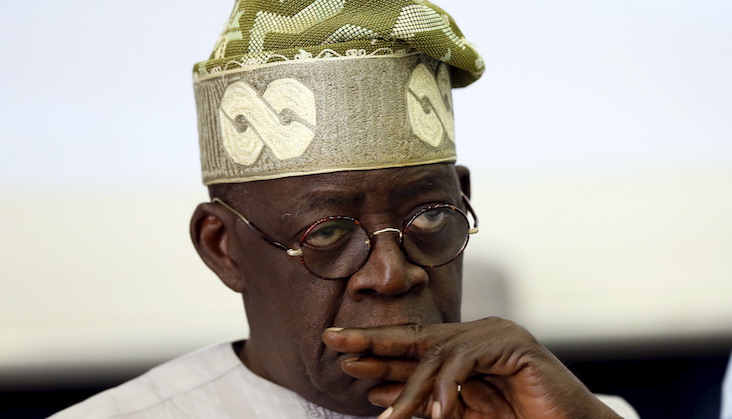
The Attorney General of the Federation and Minister of Justice, Lateef Fagbemi has revealed why he accepted to serve in the cabinet of President Bola Tinubu.
According to the legal luminary, he accepted to serve in the administration of President Tinubu in order to contribute his quota to the progress and development of the country.
The Senior Advocate of Nigeria who said he was surprised by his nomination as a minister because he did not lobby for it, added that the time had come for the professionals and technocrats in the country not to leave the business of governance alone to the politicians but join the fray to make a change
Fagbemi spoke in Ado-Ekiti, the Ekiti state capital at the weekend when he was hosted to a reception by members of the Emmanuel Chambers led by the leader and founder of the Afe Babalola University, Aare Afe Babalola, SAN.
The event was attended by top lawyers in the country including Chief Akin Olujimi, SAN ; Chief Niyi Akintola,SAN ; Adebayo Adenipekun,SAN and the national secretary of the All Progressives Congress, Senator Ajibola Bashiru.
READ ALSO: Infrastructural Deficit: Oshiomhole Tasks Edo Indigenes On Active Participation In Politics
The minister, who was the second lawyer from the chambers to be made Attorney General of the Federation after Chief Akin Olujimi, explained that he was already collating views and ideas of stakeholders towards having a blueprint for the nation’s justice system in line with the agenda of the president for the country.
While commending his colleagues and friends for organizing the reception, he stated that the contributions of Afe Babalola to his success and achievement in the legal profession were immeasurable and unmatched, promising not to disappoint the chambers in his new role.
According to him, “I did not submit any application nor lobby to be made the minister. I know a lot of people have been insinuating and I can say that I don’t know anything about the ministerial nomination. The president told me that, ‘ don’t allow anyone to deceive you, I want you that is why I appointed you. In fact, I did not have a CV as of the time I was nominated because I have never needed it in my life and when I got to the DSS , they were surprised I didn’t have a prepared CV.
“I have accepted this responsibility and all I need is your advice. We cannot all be saying the way they(Politicians) have been doing it we don’t like it , then you leave them. I am not a politician but we should be there to make a change in our country.
READ ALSO: Another Nollywood Actor Is Dead
“Getting to a position is not the issue but maintaining the status of such a position is the issue and that is why I said it is a challenge because I know hopes are high. As I mentioned earlier, you don’t just come out and say this is what I will do, you must also follow up with how you will do it. And that is why all the critical stakeholders are being engaged to have their inputs, harmonize their views, then come out with what I will call a blueprint, in line with the Mr President’s Renewed hope agenda.”
On the call for a transformation of the country by speakers at the event, Fagbemi emphasized the need for the three tiers of government to collaborate and bring ideas together for the effective growth and development of the nation.
“The issue of transformation of the country is not a one man business. People make the mistake of thinking that it belongs to the federal government alone, that is not correct. The correct position is to appreciate the fact that Nigeria is a federation and when you talk about a federation, each segment has to man its post.
“In order to have any meaningful impact, progress and development, you need to engage each of these tiers of government to be on the same page and sing from the same hymn so that we can all present what I will call comprehensive development or progress in the nation,” he said.
READ ALSO: FOIA: Community Leaders Trained, Challenged To Hold Govt Accountable
Speaking, the ABUAD founder, Afe Babalola eulogized the achievements of Fagbemi in the legal profession since he joined his Emmanuel chambers in 1985 as corps member and conferred with the rank of SAN at the age of 37.
He called on the new Attorney general to use his office to engineer the needed change in the political system in the country with a new constitution , which he said would help the nation survive its current challenges across major sectors.
The renowned lawyer said, “I know Lateef Fagbemi, he is an uncommon man doing uncommon things and achieving uncommon results. He is a pride to the chambers because he had learnt how to turn things around.
“ While the government may be studying the situation, the truth is that Nigerians are becoming more and more impatient. The age long adage is that we should not treat leprosy with the drugs meant for scabies. I repeat that what we need is a New Constitution.
“I believe that with his experience , Lateef Fagbemi can turn things around and build a new Nigeria through a new constitution under which politics shall no longer be regarded as a transactional business.”
On his part, the Ekiti state governor, Biodun Oyebanji who hailed Babalola for the achievements recorded by his chambers in the legal profession by producing two Attorneys General, urged the minister to remain committed in upholding the principle of justice, fairness and the rule of law in the country.
VANGUARD



News
PAP Sends Additional 34 Foreign Post-graduate Scholarship Beneficiaries To UK Varsities

The Presidential Amnesty Programme (PAP) has deployed an additional 34 foreign post-graduate scholarship beneficiaries to various universities in the United Kingdom for the 2025-2026 academic year.
This was contained in a statement made available to newsmen in Warri by Mr Igoniko Oduma, Special Assistant on Media to Dr. Dennis Otuaro, the Administrator, PAP.
According to the statement, the scholars’ programmes include data science, fintech analytics, cyber security, international energy law and policy, construction project management, public health, agri-food technology, electrical and petroleum engineering, among others.
The statement added that more foreign post-graduate scholars will be sent to UK universities in the current academic session.
“In December 2025, nine students, who were the first set of offshore post-graduate scholarship developments by the PAP Administrator, Dr Dennis Otuaro, for the 2024-2025 academic year, graduated from their various programmes in UK universities.
READ ALSO:PAP Scholarship Scheme Vehicle For Better Future For Niger Delta —Otuaro
“Otuaro has deployed over 9000 students to universities within and outside Nigeria for different industry-relevant programmes since he assumed office in March 2024,” the statement partly reads.
Speaking at the pre-departure orientation programme for the scholars at the PAP headquarters in Abuja, on Thursday, Otuaro said that the large-scale deployment was aimed at making the Niger Delta a knowledge-driven region.
He said that his leadership reinvigorated the programme to give it a new momentum in service delivery to the people of the region based on the mandate of President Bola Tinubu.
Otuaro said, “We are sending all of you for post-graduate studies in various universities in the United Kingdom.
“The PAP now has a new momentum and direction because of the repositioning and broad reforms that we carried out in line with the mandate of His Excellency, President Bola Ahmed Tinubu GCFR.
READ ALSO:Otuaro Tasks Media On Objective Reportage
“The objective behind the huge scholarships deployment is to ensure that we develop the needed human capital to transform the Niger Delta and generate knowledge-wealth.
“We want to develop relevant manpower in critical disciplines for our region and by extension, the country, because you are expected to contribute your quota to national development after successful graduation.”
The PAP boss, who was represented at the event by his Technical Assistant, Mr Edgar Biu, advised the scholars to study hard to achieve academic excellence in their various fields of research.
According to him, the scholars have an obligation to justify the Federal Government’s investment in their education and future.
READ ALSO:I’m Not Distracted By Anti-Niger Delta Elements, Says PAP Boss, Otuaro
He reiterated his warning that beneficiaries should not take for granted the opportunity to further their academic pursuits in the interest of the Niger Delta and indeed the country.
Otuaro expressed appreciation to President Tinubu for his “enormous interest and support for the Programme”, particularly the approval of an upward review of the programme’s budget from N65billion to N150billion.
He also expressed gratitude to the National Security Adviser, Mallam Nuhu Ribadu, for his impeccable guidance and supervision of the programme’s initiatives.
Otuaro, therefore, cautioned the scholars to obey their host country’s laws and the rules and regulations of their various institutions, stressing that they are ambassadors of Nigeria, the Niger Delta and their communities and families.
Highpoint of the orientation programme was the presentation of laptops to the scholars to help them in their studies.
News
Industrial Court Bars Resident Doctors From Strike

The National Industrial Court in Abuja has issued an interim injunction restraining the Nigerian Association of Resident Doctors (NARD) and its agents from embarking on any form of industrial action, including strikes, go-slows, picketing, or preparatory steps for protest, from Monday, January 12, 2026.
Justice E.D. Subilim ordered that the injunction remain in force pending the hearing of the motion on January 21. The suit was filed by the Attorney General of the Federation (AGF) and the Federal Government against NARD, its president, Dr Mohammad Suleiman, and Dr Shuaibu Ibrahim.
The court order comes days after resident doctors at the Usmanu Danfodiyo University Teaching Hospital (UDUTH), Sokoto, declared their full support for the nationwide strike announced by NARD over the government’s alleged failure to honour critical welfare and training agreements.
UDUTH doctors cited the non-reinstatement of five disengaged resident doctors at the Federal Teaching Hospital, Lokoja, unpaid promotion and salary arrears, and incomplete implementation of the Professional Allowance Table as key grievances. Other unresolved issues include withheld specialist allowances, delayed house officers’ salaries, postgraduate training certification delays, and deteriorating hospital infrastructure.
READ ALSO:Resident Doctors Suspend Strike, Issue Fresh Four-week Ultimatum
However, NARD had on Tuesday noted that there was no going back on the industrial action, insisting that the strike is necessary and not politically motivated. Speaking in Abuja, Dr Suleiman said the withdrawal of services from midnight on Monday is a response to “unmet commitments, shifting government positions and worsening working conditions for resident doctors, not partisan considerations.”
He argued that none of the demands outlined in the Memorandum of Understanding signed with the Federal Government on November 27, 2025, have been implemented.
“Every issue is either at the same point where it was when we signed the MoU or we have even gone backwards,” Dr Suleiman said, adding that claims by the Ministry of Health that some issues had been resolved were misleading.
He further challenged the government to show where N90 billion, allegedly allocated in the 2026 budget for health workers’ professional allowances, has been provided.
READ ALSO:Doctors’ Strike Continues As NARD Demands Fair Deal, Better Pay
The association also demanded the immediate reinstatement of the five disengaged resident doctors at FTH Lokoja with full back pay and rejected plans to redeploy them elsewhere.
Other grievances include delayed promotion arrears across 62 tertiary institutions, non-recognition of specialist certificates, and outstanding salary and allowance payments affecting nearly 40 percent of resident doctors.
While NARD remains open to dialogue and has appealed to President Bola Ahmed Tinubu for decisive intervention, it warned that unless concrete action is taken, the planned industrial action will go ahead, potentially disrupting healthcare services nationwide. Dr Mujitaba Umar, President of the UDUTH chapter, described the situation as “difficult but unavoidable,” while the chapter’s General Secretary, Dr Muhammad Abdulrahman Hassan, urged the Federal Government to act swiftly “in the interest of the Nigerian populace and the healthcare system.”
News
Nigeria To Get Fresh $9.5m Abacha Loot From UK’s Jersey
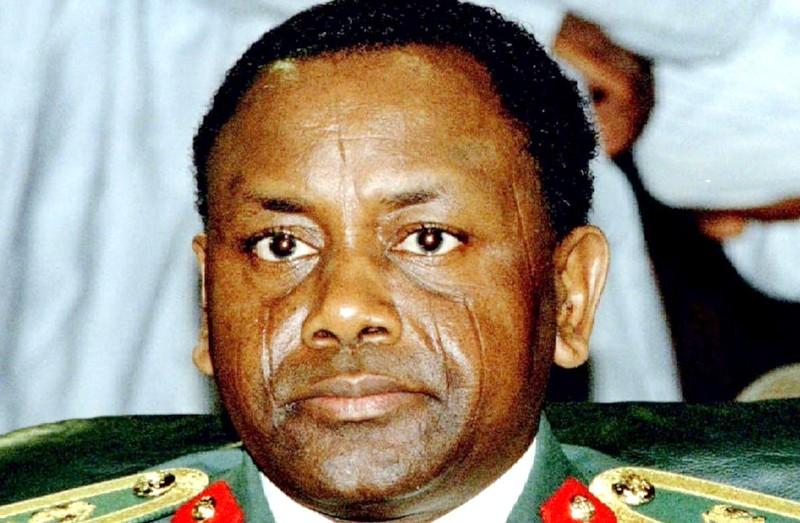
Nigeria to receive fresh $9.5 million (£7 million), believed to be stolen funds linked to former military Head of State, Sani Abacha, from the United Kingdom’s Jersey.
According to the BBC, Jersey has agreed to repatriate the fund to the Nigerian government.
The money, described as proceeds of “tainted property,” is said to be part of the vast fortune stolen by Abacha, who ruled Nigeria between 1993 and 1998.
READ ALSO:How I Transited From Abacha’s Friend To prisoner — Lamido
The funds were kept in a bank account in Jersey and had been tied up in legal proceedings for several years.
Although the assets were first recovered during the administration of former President Goodluck Jonathan, court challenges stalled their return to Nigeria. Progress was made in December 2025 when Jersey’s Attorney-General, Mark Temple, signed a memorandum of understanding, MoU, with Nigerian authorities to enable the repatriation.
The latest agreement builds on two earlier arrangements between Jersey and Nigeria that led to the return of more than $300 million (£230m) in recovered assets.

 News3 days ago
How To Calculate Your Taxable Income
- Business4 days ago
NNPCL Reduces Fuel Price Again
- Metro4 days ago
AAU Disowns Students Over Protest
- Metro4 days ago
Edo: Suspected Kidnappers Kill Victim, Hold On To Elder Brother
- Headline3 days ago
Russia Deploys Navy To Guard Venezuelan Oil Tanker Chased By US In Atlantic
- Metro2 days ago
Edo widow-lawyer Diabolically Blinded Over Contract Seeks Okpebholo’s Intervention
- Metro3 days ago
JUST IN: Court Grants Malami, Wife, Son N500m Bail Each
- Entertainment3 days ago
VIDEO: ‘Baba Oko Bournvita,’ Portable Drags His Father, Alleges Bad Parenting, Extortion
- Metro4 days ago
Nine Soldiers Feared Dead In Borno IED Explosion
- Politics3 days ago
2027: Details Of PDP Leaders, Jonathan’s Meeting Emerge


