

Business
15 Things To Know About The Domestic Dollar Bond

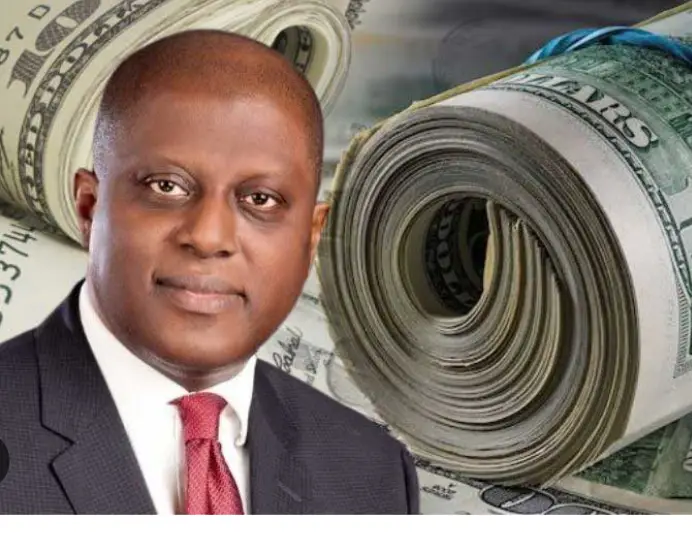


The Federal Government of Nigeria has successfully issued a $500 million domestic dollar bond with an attractive 9.75% interest rate for investors.
This inaugural bond in the Nigerian capital market is designed to support infrastructure development, promote financial inclusion, and strengthen the domestic securities market.
1. Minimum Investment
The minimum investment is $10,000 with increments of $1,000 thereafter.
2. Interest Rate
The bond offers a 9.75 percent interest rate, paid semi-annually. For a $10,000 investment, investors can expect $487.5 in interest every six months for five years, with the principal returned at the end of the term.
3. Issuance Purpose
The Federal Government’s domestic dollar bond, a $2 billion programme to be raised in four batches of $500 million each.
The bond aims to support infrastructure development, financial inclusion, and deepen the domestic securities market. The proceeds will be invested in critical sectors of the economy, subject to presidential approval and National Assembly appropriation.
4. Eligible Investors
Nigerians, non-Nigerians resident in Nigeria, Nigerians in the diaspora, and Qualified Institutional Investors.
5. Issuance Duration
The offer was open from August 19 to August 30.
6. Bond Tenor
The bond has a five-year tenor.
7. Tax Benefits
Interest on the bond is exempt from Company Income Tax, Personal Income Tax, and Capital Gains Tax.
8. Investment Advantages
Local investors enjoy higher returns compared to domiciliary account interest rates. For Nigerians in the diaspora, it offers higher returns than in their countries of residence.
READ ALSO: 5 Clever Ways To Outsmart Lagos Traffic
9. Risk
Government securities are considered risk-free due to government backing.
10. Listing
The bond is listed on the Nigerian Exchange Limited (NGX) and FMDQ OTC Securities Exchange Limited.
11. Financial Advisers and Issuing Houses
Meristem Capital Limited, Stanbic IBTC, and Vetiva are the issuing houses, with United Capital as the lead. The African Finance Corporation is the global coordinator, with Constant Capital and Iron Capital as financial advisers.
12. Differentiation from Local FGN Bonds and Eurobonds:
The domestic dollar bond is issued locally in dollars and has a minimum investable amount of $10,000, while Eurobonds are issued abroad in foreign currencies and have a $200,000 minimum subscription amount .
READ ALSO: Police Confirm Arrest Of 97 Shi’ites Over Attack On Officers In Abuja
The domestic bond not only lowers the barrier of entry for several thousands of Nigerians, it also offers better returns to investors in Nigerian Eurobonds.
At 9.75 percent, the coupon of the five-year domestic dollar bond exceeds the 9.58 percent yield on the Federal Government’s $1.25 billion 2029 Eurobond which matures in five years’ time.
The FGN bonds are local bonds denominated in naira, so its interest and capital is paid in naira.
13. Payment Method
Payment is made of both capital and interest is made in dollars through the Nigerian banking system and electronic transfers.
14. Bank Verification Number (BVN)
Investors, including those in the diaspora, are required to provide their BVN.
15. Payment Method
Payment is made of both capital and interest is made in dollars through the Nigerian banking system and electronic transfers.




Business
Again, Dangote Refinery Hikes Fuel Price


Dangote Refinery has increased the ex-depot price of petrol by N75, bringing the price up to N1,350 per litre from the previous price of N1,275.
This is the first fuel increase by the Refinery in the month of May.
READ ALSO:JUST IN: Dangote Refinery Reduces Petrol Price
This latest development is coming seven days after the refinery raised its ex-depot price from N1,200 to N1,275 per litre.
Recall that the refinery on April 29 increased the ex-depot price of petrol by N75.
Business
Why We Sited Our Multi-Billion Naira Automobile Firm Branch in Benin – Skyewise Group CEO


Dr. Elvis Abuyere, Chief Executive Officer and Managing Director of Skyewise Group, an automobile firm, has explained the reason for establishing a branch of the company in Benin City, the Edo State capital, describing the ancient city as “a growing economy full of enormous potential for vibrant youth.”
He added that the company considers Edo State one of the most interesting states, noting that the decision aligns with its long-term vision.
Abuyere, who spoke in Benin on Monday while taking journalists on a tour of the new automobile facility, said:
“We started very small — from Abuja to Lagos and now Benin. It is a joy and privilege for us to have completed this amazing regional office with Skyewise Group.”
READ ALSO:BREAKING: Wike Picks Alabo George For Rivers Governorship
According to him, beyond the automobile business, Skyewise Group is in Benin to invest in real estate, logistics, youth empowerment, and credit management. “Aand also to lend our support to what the Edo State Government is doing, knowing the fact that there is an agenda,” he added.
The young CEO urged youths in Nigeria, particularly those in Edo State, to embrace entrepreneurship, stressing that “we believe it is the future of Africa,” especially Nigeria.
He said Nigeria stands as the giant of Africa and that its youth must take bold steps in the entrepreneurship landscape.
According to Abuyere, to ensure Edo youths actualise their entrepreneurial potential, the company has prepared soft loans to help them start businesses, adding that Skyewise Group is not limited to automobile operations.
READ ALSO:Senatorial Seat: Ogbakha-Edo Warns Against Imposition Of Candidates In Edo South
He said: “More importantly to us is youth empowerment. We want our youth to be empowered, and this is where the Skyewise Foundation comes in.
“We believe the future of Africa is entrepreneurship, and that future lies in the hands of the young people of Nigeria. We want to empower them to stand the test of time, build something meaningful, and reduce unemployment and insecurity in our land.
“I believe we need to begin taking bold steps by refining the mindset of our young people. We need to give them a sense of belonging and direction.
“We have been addressing the liquidity gap in society by providing microloans to support businesses in our environment and in Benin City.”
When asked why he chose Benin City for the multi-billion naira automobile firm, Abuyere noted: “I think this is the first automobile showroom in Edo State where you can see a car lifted from the ground floor to the first floor and beyond.”
Business
JUST IN: Nigerian Filling Stations Reduce Fuel Price After Hike

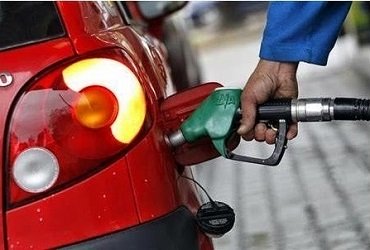
Nigerian filling stations reduced their Premium Motor Spirit price on Saturday, barely 24 hours after the hike.
Checks by DAILY POST showed that Ranoil, Empire Energy, and other filling stations in Abuja adjusted their petrol pumps to N1,365 and N1,375 per litre respectively, down from N1,440 per litre on Friday.
This means that petroleum marketers dropped their fuel price by N65 and N75 per litre. DAILY POST reports that the move was to attract patronage from customers.
Recall that three days ago, Nigerian filling stations had raised their petrol pump price to between N1,365 and N1,440 nationwide after Dangote Refinery and depot owners increased ex-depot prices to around N1,275 and N1,290 per litre.
According to DAILY POST, while the Nigerian National Petroleum Company Limited and MRS Bovas filling stations raised their petrol price to around N1,365 per litre, others adjusted theirs above N1,440 per litre.
READ ALSO:Drivers Protest Fuel Increase, Raise Fares in Benin
However, with the latest fuel price reduction by Ranoil and Empire Energy, the majority of filling station outlets now dispense petrol between N1,365 and N1,375 per litre.
This development comes as the ripple effect of crude oil prices continues to impact Nigeria’s domestic fuel price.
Brent and West Texas Intermediate crude rose to $114 and $105 per barrel before dropping to $108 and $101 after the filing of this report.
-

 Politics4 days ago
2027: Tinubu’s Re-election May Put An End To Nigeria — Baba Ahmed Warns
-

 Politics5 days ago
BREAKING: 2027: Former Adamawa APC Guber Candidate, Aishatu Binani Defects To NDC
-

 Business4 days ago
JUST IN: Nigerian Filling Stations Reduce Fuel Price After Hike
-

 Politics5 days ago
Senatorial Seat: Ogbakha-Edo Warns Against Imposition Of Candidates In Edo South
-

 Entertainment5 days ago
Actress Eniola Badmus Gets New Federal Appointment
-

 News2 days ago
BREAKING: Wike Picks Alabo George For Rivers Governorship
-

 News3 days ago
OPINION: Why South Africans Murder Nigerians In Cold Blood
-

 Politics4 days ago
NDC Speaks On Peter Obi, Kwankwaso Joining Party
-

 News4 days ago
2027: Pastor Adeboye Speaks On Nigeria’s Next President
-

 Politics5 days ago
2027: Pondi, Otuaro, Other Delta South Stakeholders, Endorse Senator Joel-Onowakpo For Second Term
