
News
Call For Suspension Of Amnesty Boss: Ex-agitators Demand Arrest Of Persons Blackmailing Ndiomu
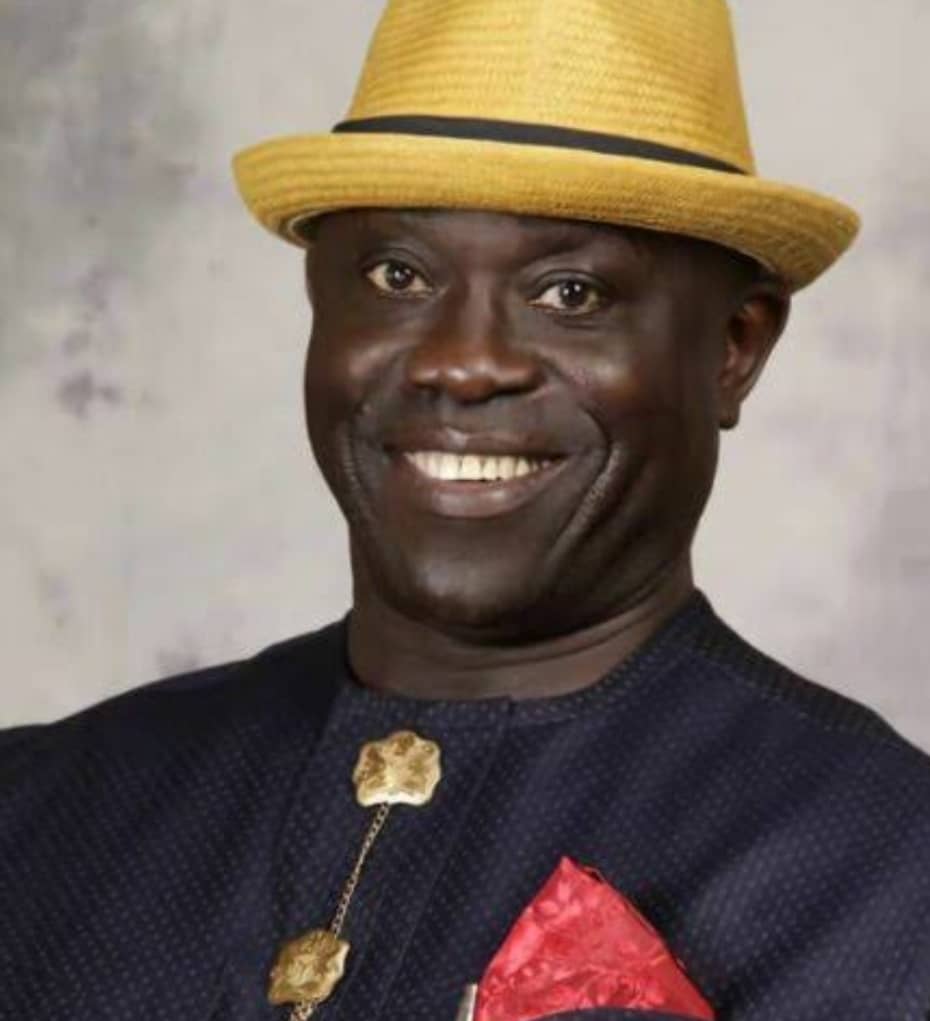
Ex-agitators from first, second and third phases of the Presidential Amnesty Programme (PAP) have called on security agencies to unmask the identities of “enemies of the Niger Delta” blackmailing PAP’s Interim Administrator, Maj.-Gen. Barry Ndiomu.
The ex-agitators recalled that they earlier raised the alarm that enemies of the region had launched a campaign of calumny against President Muhammadu Buhari, the National Security Adviser (NSA) and Ndiomu to discredit their achievements in PAP.
The ex-agitators’ joint statement was signed on Monday by the Chairman, Presidential Amnesty Strategic Communication Committee (STRACOM), Mr. Nature Dumale and the National President, first phase Ex-agitators; Henry Ekes, Ovuru (aka Egbema 1).
READ ALSO: Saboteurs Against Presidential Amnesty Reforms – General Ndiomu
The stakeholders in the statement, which was also signed by Heads of First Phase Ex-Agitators, Rivers, Granville Ideye; Bayelsa, Ebite Ifiemi; Second Phase, Sylvester Tambo and National Chairman, Third Phase, Gen. Tonye Bobo, described the attack against Ndiomu as criminal and unwarranted.
Dumale, who read the statement in Port Harcourt, said in their recent antics, the detractors circulated a report claiming that the Niger Delta elders and traditional rulers petitioned Buhari and asked for the suspension of Ndiomu over alleged corrupt practices.
He said names contained in the report were fictitious and could neither be traced to any elder nor traditional ruler in the Niger Delta.
Dumale insisted that all the allegations contained in the report were as fictitious, false and preposterous as the faceless individuals making the claims.
He said: “The only interpretation to the action of these faceless individuals and groups is that they are desperately trying to stoke crisis in the Niger Delta.
“They want the Buhari’s administration to further lose credibility by targeting the only region that has remained peaceful despite the turbulence and separatist agitations in other parts of the country.
“Using the revered traditional institutions to make false claims about one of the most illustrious sons of the Niger Delta like Ndiomu is criminal and blackmail taking too far. This is why we are calling on security agencies to investigate these characters, unmask their identities and arrest them”.
Dumale said all ex-agitators were behind Ndiomu and his efficient management of the amnesty programme especially after all their investigations into allegations levelled against him gave him a clean bill of health.
He said traditional rulers in the Niger Delta, elders, chiefs and other stakeholders had also thrown their weight behind Ndiomu for sanitising PAP and sustaining the peace in the region.
Dumale said: “We, again, warn that we, the owners of PAP, will not fold our arms and allow few unscrupulous elements, whose source of corrupt enrichment in PA, had been blocked by Ndiomu’s ongoing reforms, to continue to stoke crisis in the region.
“As we strive to unmask the identities of these people and their sponsors, we are calling on the Inspector-General of Police, the National Intelligence Agency, the Department of State Security and other security agencies to go after them.
“The scaremongering of these agents of darkness is designed to cause riot, disrupt the mainstay of the country’s resources and disorganise the forthcoming elections in the region.
READ ALSO: Economic Discourse Series: FG Urged To Strengthen Presidential Amnesty Programme
“These people are crisis merchants, who only make money by instigating violence. They derive pleasure to see people die. They sponsor protests and cash in on violent agitation for relevance.
“We call on members of the public to disregard these allegations. PAP has monthly budget of N5bn, which covers stipends for all ex-agitators, overhead cost and other expenses. How can one still steal the kind of money contained in the allegations of these people?”



News
NAF Launches Attack On Terrorists In Borno
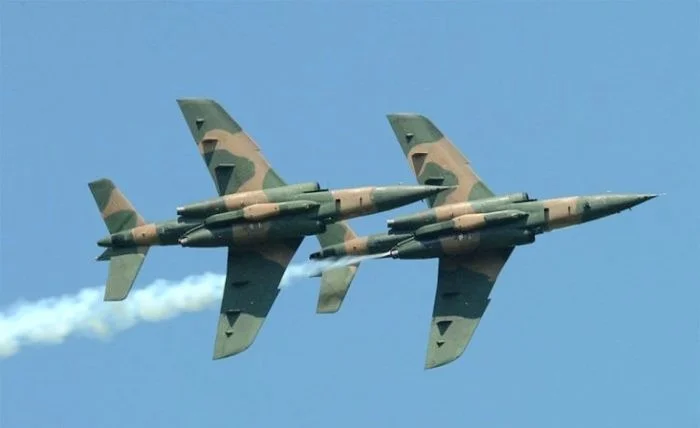
The Nigerian Air Force, NAF, operating as part of the joint task force of Operation Hadin Kai, has carried out a coordinated air interdiction at AbbagaJiri in the Timbuktu Triangle, Borno State.
According to Air Commodore Ehimen Ejodame, Director of Public Relations and Information of NAF, the air strikes successfully paved the way for ground troops.
He explained that the operation was based on actionable intelligence from multiple sources, which confirmed the presence of terrorists, their structures, and concealed logistics facilities in the area.
Ejodame stated that NAF air assets were deployed in integrated surveillance and precision strike roles to target identified threats.
READ ALSO:NAF Hits Bandit Logistics Hub, Neutralises Many In Zamfara
The operation aimed to degrade terrorist capabilities, deny them sanctuary, and shape the battlefield for ground forces, all while strictly adhering to rules of engagement and protecting civilians.
He added, “The Identified terrorist structures were decisively engaged and destroyed, denying the terrorists freedom of action, while a follow-up engagement neutralised armed elements observed converging on the location.”
“Subsequent advances by ground troops into the area confirmed the effectiveness of the air strikes and validated the success of the joint air–land operation.”
Speaking on the mission, Chief of the Air Staff (CAS), Air Marshal Sunday Aneke, said, “The success of the mission reflects the NAF’s resolve to dominate the air domain in support of joint operations.”
READ ALSO:NAF Hits Bandit Logistics Hub, Neutralises Many In Zamfara
Aneke further emphasized that the operation highlighted the service’s commitment to providing precise and decisive air power in support of ground forces.
In his words, “We will continue to deny terrorists freedom of movement, sanctuary, and logistics wherever they seek to hide. Air operations will remain relentless and intelligence-driven.”
“Our operations are carefully planned and intelligence-led, ensuring maximum effect on hostile elements while safeguarding innocent civilians.”
READ ALSO:NAF Announces Two-hour Road Closure In Abuja For 10km Walk
“The Nigerian Air Force will sustain pressure until terrorist networks are completely dismantled.”
He further noted that the operation showcased NAF’s aggressive stance, precision employment of airpower, and dedication to sustained joint operations.
Aneke added that such missions play a crucial role in enabling ground troops to maintain momentum and deliver decisive outcomes against terrorist networks threatening lives, property, and Nigeria’s national security.
News
Lagos Parks To Close For Maintenance – State Govt
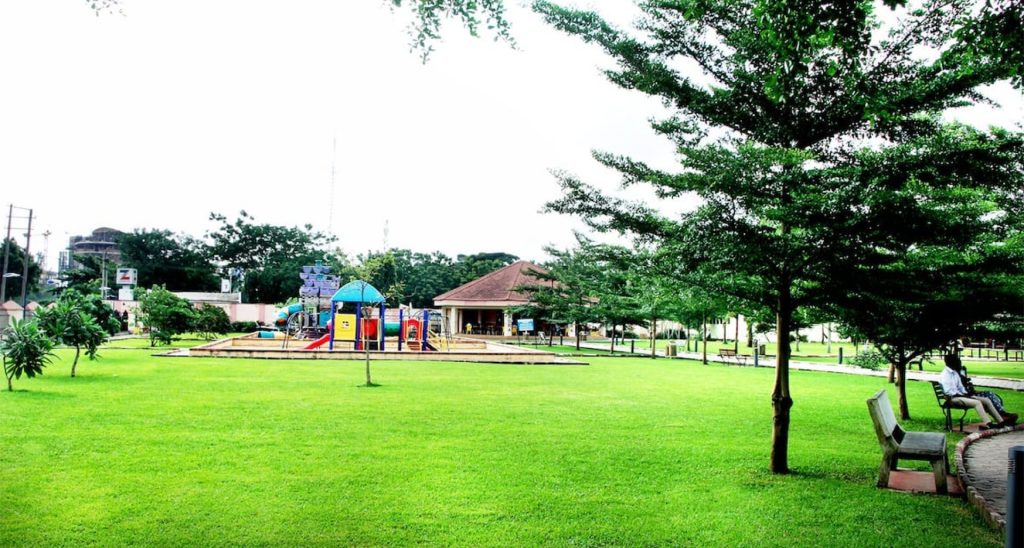
The Lagos State Parks and Gardens Agency, LASPARK, has announced that all public parks under its management across the state will be temporarily closed for routine maintenance and upgrades.
In a statement released on January 9 and shared via its official platforms early Saturday, LASPARK said, “All parks under our management will be closed to the public from January 12 to January 31, 2026.
“This follows increased visitor activity during the recent festive season.”
The agency listed several popular recreational spots that will be affected, including “Ndubisi Kanu Park, Alausa JJT Park, Dr. Finnih Abayomi Park in Oregun, and all other LASPARK-managed parks across Lagos State.”
READ ALSO:
Explaining the reason for the closure, LASPARK added, “The temporary shutdown is necessary to carry out essential landscaping, facility repairs, and general upgrades to ensure that our parks remain safe, clean, and enjoyable for residents and visitors.”
The agency also stressed that the exercise aligns with its broader mandate, noting, “This maintenance programme is part of our commitment to providing well-maintained green spaces that promote relaxation, wellness, and environmental sustainability.”
LASPARK assured residents that “all parks will reopen at the end of the maintenance period.”
News
PAP Sends Additional 34 Foreign Post-graduate Scholarship Beneficiaries To UK Varsities

The Presidential Amnesty Programme (PAP) has deployed an additional 34 foreign post-graduate scholarship beneficiaries to various universities in the United Kingdom for the 2025-2026 academic year.
This was contained in a statement made available to newsmen in Warri by Mr Igoniko Oduma, Special Assistant on Media to Dr. Dennis Otuaro, the Administrator, PAP.
According to the statement, the scholars’ programmes include data science, fintech analytics, cyber security, international energy law and policy, construction project management, public health, agri-food technology, electrical and petroleum engineering, among others.
The statement added that more foreign post-graduate scholars will be sent to UK universities in the current academic session.
“In December 2025, nine students, who were the first set of offshore post-graduate scholarship developments by the PAP Administrator, Dr Dennis Otuaro, for the 2024-2025 academic year, graduated from their various programmes in UK universities.
READ ALSO:PAP Scholarship Scheme Vehicle For Better Future For Niger Delta —Otuaro
“Otuaro has deployed over 9000 students to universities within and outside Nigeria for different industry-relevant programmes since he assumed office in March 2024,” the statement partly reads.
Speaking at the pre-departure orientation programme for the scholars at the PAP headquarters in Abuja, on Thursday, Otuaro said that the large-scale deployment was aimed at making the Niger Delta a knowledge-driven region.
He said that his leadership reinvigorated the programme to give it a new momentum in service delivery to the people of the region based on the mandate of President Bola Tinubu.
Otuaro said, “We are sending all of you for post-graduate studies in various universities in the United Kingdom.
“The PAP now has a new momentum and direction because of the repositioning and broad reforms that we carried out in line with the mandate of His Excellency, President Bola Ahmed Tinubu GCFR.
READ ALSO:Otuaro Tasks Media On Objective Reportage
“The objective behind the huge scholarships deployment is to ensure that we develop the needed human capital to transform the Niger Delta and generate knowledge-wealth.
“We want to develop relevant manpower in critical disciplines for our region and by extension, the country, because you are expected to contribute your quota to national development after successful graduation.”
The PAP boss, who was represented at the event by his Technical Assistant, Mr Edgar Biu, advised the scholars to study hard to achieve academic excellence in their various fields of research.
According to him, the scholars have an obligation to justify the Federal Government’s investment in their education and future.
READ ALSO:I’m Not Distracted By Anti-Niger Delta Elements, Says PAP Boss, Otuaro
He reiterated his warning that beneficiaries should not take for granted the opportunity to further their academic pursuits in the interest of the Niger Delta and indeed the country.
Otuaro expressed appreciation to President Tinubu for his “enormous interest and support for the Programme”, particularly the approval of an upward review of the programme’s budget from N65billion to N150billion.
He also expressed gratitude to the National Security Adviser, Mallam Nuhu Ribadu, for his impeccable guidance and supervision of the programme’s initiatives.
Otuaro, therefore, cautioned the scholars to obey their host country’s laws and the rules and regulations of their various institutions, stressing that they are ambassadors of Nigeria, the Niger Delta and their communities and families.
Highpoint of the orientation programme was the presentation of laptops to the scholars to help them in their studies.

 News3 days ago
How To Calculate Your Taxable Income
- Metro3 days ago
Edo widow-lawyer Diabolically Blinded Over Contract Seeks Okpebholo’s Intervention
- Headline3 days ago
Russia Deploys Navy To Guard Venezuelan Oil Tanker Chased By US In Atlantic
- Politics2 days ago
APC Leaders, Tinubu/Shettima Group Call For Wike’s Removal As FCT Minister
- Metro4 days ago
JUST IN: Court Grants Malami, Wife, Son N500m Bail Each
- Entertainment4 days ago
VIDEO: ‘Baba Oko Bournvita,’ Portable Drags His Father, Alleges Bad Parenting, Extortion
- Politics3 days ago
2027: Details Of PDP Leaders, Jonathan’s Meeting Emerge
- Politics2 days ago
Wike A ‘Pestilence’ On Rivers, I Resigned Because Of It – Ex-Commissioner
- News3 days ago
Expert Identify Foods That Increase Hypertension Medication’s Effectiveness
- Politics2 days ago
Wike: Why Removing Fubara Will Be Difficult – Ex-Commissioner


