
News
‘Disclose Details Of SIECs’ Members, LGA Results’, Or Face Legal Action, SERAP Tells 36 Governors
Socio-Economic Rights and Accountability Project (SERAP) has urged Nigeria’s 36 state governors “to promptly disclose details of chairmen and members of the State Independent Electoral Commissions (SIECs) in the states, including their qualifications and political affiliations, if any, and the mechanisms of their appointment.”
SERAP urged the governors “to provide to disclose the details of the results of local government elections conducted in their states since 1999, and the voters’ register for any such elections.”
SERAP also urged the governors “to clarify and explain how your states have complied with the requirements of the Nigerian Constitution 1999 [as amended] and international standards on the conduct of periodic local government elections in your states, including the details of any law regulating such elections in your states.”
The Chairman of the Independent National Electoral Commission (INEC), Professor Mahmood Yakubu had last week alleged that “the conduct of local government elections in virtually all states has become mere coronation of candidates of the ruling parties.”
In a Freedom of Information request dated 1 June, 2024 and signed by SERAP deputy director Kolawole Oluwadare, the organisation said: “State governors have the constitutional responsibility to establish and allow independent electoral commissions to conduct local government elections fairly and impartially.”
SERAP said: “The reported interference by state governors in the operations of SIECs and apparent manipulation of local government elections are clearly incompatible with Nigerians’ right to effectively participate in their own government.”
According to SERAP, “Governors’ reported interference in the operations of SIECs and manipulation of local government elections have seriously undermined the sanctity and integrity of the electoral process and public trust and confidence in the process, as well as the integrity of the country’s democracy.”
READ ALSO: Reject Wike’s Plan To Spend N15bn On ‘Befitting Residence’ For VP, SERAP Tells Akpabio
The letters, read in part: “Local government elections in several states are susceptible to manipulation by governors. The appointment process of chairmen and members of SIECs and the operations of these commissions are shrouded in secrecy.”
“We would be grateful if the recommended measures are taken within 7 days of the receipt and/or publication of this letter. If we have not heard from you by then, SERAP shall consider appropriate legal actions to compel you, your states and SIECs to comply with our requests in the public interest.”
“State governors have also reportedly continued to undermine the enjoyment of people’s right to participate in their own government.”
“The combined effect of the Nigerian Constitution 1999 [as amended], the Electoral Act, and the country’s international obligations is the requirement that local government elections must be organized by a truly independent and impartial electoral body.”
“Human rights treaties also require states parties including Nigeria to ensure the independence and impartiality of national electoral bodies responsible for the management of elections, as well as to promote the establishment of the necessary conditions to foster citizen participation.”
“The Nigerian Constitution, Freedom of Information Act, and the country’s human rights obligations rest on the principle that citizens should have access to information regarding their public institutions’ activities.”
READ ALSO: SERAP, BudgIT, Others Drag CBN To Court Over Cybersecurity Levy
“The crisis confronting Nigerian elections and lack of public trust and confidence in local government elections can be addressed only if the elections are conducted by independent and impartial state electoral commissions and in accordance with the Nigerian Constitution and international standards.”
“Confidence in the country’s electoral process is increasingly on the decline. Many Nigerians are expressing concerns about the credibility and integrity of local government elections in your states.”
“The major problem facing the country’s democracy is the lack of respect for Nigerians’ right to participation and the concomitant lack of trust in election results. If citizens do not believe in the election process, then the entire system of democratic government becomes a questionable enterprise.”
“As its name suggests, SIEC is expected to maintain independence or absolute neutrality. SIECs must not only be independent and impartial, but must also be seen to be independent and impartial.”
“However, the mere fact that SIEC has “independent” in its name does not in itself make it independent. What makes an institution truly independent and impartial are its attributes and characteristics, and the credibility and transparency of the appointment process.”
“Your states have a legal responsibility to promote and guarantee the integrity, credibility, and independence of SIECs, and to ensure that the electoral commissions are free from political and other interferences.”
“The credibility and legitimacy of elections depend in part on the integrity and competence of the body conducting the process, and the transparency of the appointment process for SIECs.”
READ ALSO: SERAP Drags Akpabio, Oshiomhole, Others To Court, Wants Their Salaries, Pensions Stopped
“You have constitutional and international obligations to ensure the independence of SIEC and build the confidence of the electorate and political parties in local government elections, and to promote public confidence in the appointment of SIECs’ chairmen and members.”
“According to our information, the Chairman of the Independent National Electoral Commission (INEC), Prof. Mahmood Yakubu recently stated that, “the conduct of Local Government elections in virtually all the states has become mere coronation of candidates of the ruling parties.”
“The 36 SIECs in the country are responsible for the election of 768 local government chairmen and 8,747 councillors totalling 9, 515 constituencies.”
“SERAP is concerned that SIECs lack the capacity and independence to effectively and efficiently perform their constitutional and statutory functions.”
“Many of the SIECs have no functional offices in the local government areas in their states and cannot recruit their own permanent staff. In some states, the SIECs are either not properly constituted, have no security of tenure or their critical functions have been taken over by government officials.”
“Some SIECs are only constituted on the eve of elections and dissolved thereafter. They are also severely under-resourced.”
“Section 197(1)(b) of the Nigerian Constitution provides for the establishment of the State Independent Electoral Commission. 197(2) provides that ‘the composition and powers of each body established by subsection (1) of this section are as set out in Part II of the Third Schedule to this Constitution.’ According to section 198, states are to appoint chairman and members of SIECs.
“Section 200(1)(a) of the Nigerian Constitution provides that members of SIECs ‘shall not be a member of a political party.’ Section 202 provides for the independence of SIECs, and makes clear that the exercise of their powers “shall not be subject to the direction and control of any other authority or person.”



News
MOWAA: Okpehbolo Receives Edo Assembly Resolution Indicting Obaseki

Edo State Governor, Monday Okpebholo, received report and resolutions of the Edo State House of Assembly which indicted former Governor Godwin Obaseki on the Museum of West African Art (MOWAA) and the Radisson Hotel projects.
Recall that the Edo Assembly raised a five-man committee to investigate funding and ownership of both projects following a request by Governor Okpebholo.
Okpebholo, who spoke after receiving the report said its findings and recommendations would be fully implemented.
Okpebholo said the Economic and Financial Crimes Commission (EFCC) would be invited to further examine issues raised in the recommendations.
READ ALSO:MOWAA: Why I Will Not Appear Before Edo Assembly Panel — Obaseki
According to him, the Edo State Government has significant stakes in the MOWAA and Radisson Blu hotel having invested ₦3.8bn respectively in both projects.
He said changes in the structure and nomenclature of the MOWAA project made the investigation unavoidable.
Okpebholo said it was unacceptable to suggest Edo State has only 10 per cent stake in the Radisson Blu hotem despite investing over ₦28bn.
“Edo State has spent over ₦3.8 billion on this project, yet some people are saying the state has no stake in it. That is totally unacceptable. I will work with your recommendations and forward them to the relevant authorities to investigate what truly happened. We will also involve the EFCC.
READ ALSO:MOWAA Controversy: Edo Assembly Threatens Arrest Warrant On Obaseki, Others
“Our investment in this project is over ₦28 billion. We must invite the EFCC to step in and determine if this is how businesses are conducted in Nigeria,” he said.
In its recommendations passed by the Assembly, the five-man committee headed by Hon Addeh Isibor, urged the Edo State Government to take possession of both projects.
It asked Governor Okpebholo to contract competent hands to complete renovation of the Hotel and take all steps to put the Hotel to use.
The recommendations urged the Edo State Government to revoke “the fraudulent Certificate of Occupancy to the property issued in the name of Hospitality Investment and Management Company Limited and revert same to the Edo State Government that purchased the property.
READ ALSO:Edo Assembly Charges Contractor Handling Ekekhuan Road To Accelerate Work
“That the Edo State Government initiate legal action and work with relevant Anti-graft Agencies to retrieve both the complete statement of account and the balance of the Seventeen Billion, Five Hundred Million Naira (N17,500,000,000.00) Bond proceeds still in the possession of the Escrow Agents. Meristen Trustees Limited and Emerging Africa Trustees Limited.
“The title to the MOWAA Property having never been revoked, same remains the property of the Central Hospital, Benin City
“That the Edo State Government immediately takes all necessary step to put the property to good use in the best and overriding public interest of the people of Edo State.”
Speaker of the Assembly, Hon. Blessing Agbebaku, said the facts about MOWAA and Radisson Blu Hotel were now clearly documented in resolutions and outcomes.
News
Sheikh Gummi Sues Two Over Alleged False Facebook Publication

Prominent Islamic scholar, Sheikh Ahmad Gummi, has approached the Chief Magistrate Court in Kaduna, seeking the issuance of a criminal direct complainant summons against two Facebook users over alleged criminal conspiracy, attempt to cause public disturbance and criminal defamation.
The application, filed at the Chief Magistrate Court sitting on Ibrahim Taiwo Road, Kaduna, listed the defendants as George Udom and Bello Isiaka.
According to him, the defendants allegedly published a “Breaking News” statement on their respective Facebook pages on December 23, 2025, between 7:00 am and 10:00 am, attributed to him, threatening that the family of the Minister of Defence, General Christopher Musa, would be eliminated if military operations against bandits were not stopped.
Gummi alleged that the publication was falsely attributed to him, as his photograph was allegedly used alongside the statement, giving the impression that he issued the threat against the Defence Minister.
READ ALSO:Nigeria Army Alone Cannot Defeat Bandits — Sheikh Gumi
The Islamic scholar stated that following the publication, he received numerous phone calls from concerned members of the public who believed he authored the statement and was attempting to intimidate the Minister of Defence in the discharge of his official duties.
He further maintained that the publication portrayed him as a troublemaker and a threat to public peace, despite his long-standing reputation as a cleric known for preaching peace and harmony within and outside Nigeria.
The complainant argued that the alleged publication was capable of inciting public disorder in Kaduna State, particularly Southern Kaduna, and could expose him to danger by presenting him as a prime suspect in the event of any attack on the Defence Minister’s family.
READ ALSO:Insecurity: What Sheikh Gumi Told Me After Visiting Bandits Hideouts — Obasanjo
He also contended that the actions of the defendants amounted to an attempt to cause public disturbance and criminal defamation of his character.
Dr Gummi told the court that the alleged acts contravened Sections 59, 57, 372, 116 and 117 of the Kaduna State Penal Code Law, 2017.
The application, dated December 24, 2025, was filed by a team of lawyers led by Suleiman Danlami Lere, with the complainant urging the court to summon the defendants to answer to the allegations.
News
JUST IN: Kano Lawmaker, Sarki Aliyu Daneji, Dies Hours After Colleague’s Passing
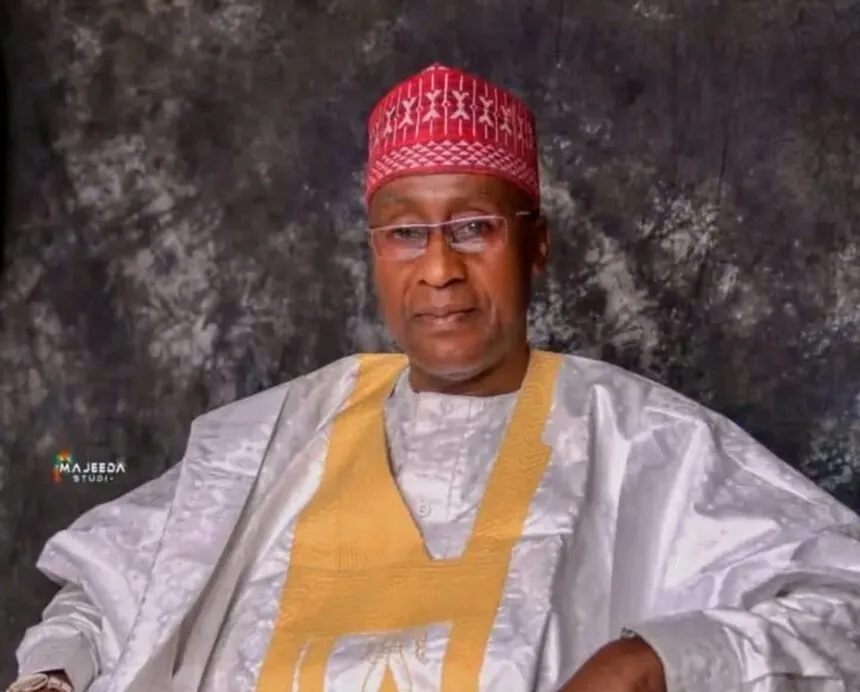
Hon. Sarki Aliyu Daneji, the lawmaker representing Kano Municipal in the Kano State House of Assembly, died on Wednesday, barely hours after the death of his colleague, Hon. Aminu Sa’adu Ungogo.
The Director-General, Media and Public Relations, Government House, Kano, Sanusi Bature Dawakin Tofa, confirmed Daneji’s death to journalists in Kano.
Daneji’s demise came shortly after the passing of Hon. Ungogo, who was the Chairman of the House Committee on Appropriations and represented Ungogo Local Government in the Assembly. Ungogo, a member of the New Nigeria Peoples Party (NNPP), reportedly died after a brief illness.
READ ALSO:JUST IN: Former Edo Information Commissioner Is Dead
He was said to have been at the Kano State House of Assembly earlier in the day, attending a committee meeting before his death.
The sudden loss of the two lawmakers within a short interval has thrown the Kano State House of Assembly into mourning, with colleagues, party members and constituents expressing shock and grief over the tragic development.

 News2 days ago
PHOTOS: New Era In Furupagha-Ebijaw As Okpururu 1 Receives Staff Of Office
- Metro4 days ago
JUST IN: Former Edo Information Commissioner Is Dead
- News1 day ago
UBTH CMD Marks 120 Days In Office, Expresses Commitment To Providing Conducive Working Environment
- News2 days ago
FG Declares Public Holidays For Christmas, New Year Celebrations
- News5 days ago
Coordinator, Edo First Lady Office, Majority Leader, Rights Lawyer, Others Bag 2025 Leadership Award
- News5 days ago
[OPINION] Tinubu: Ade Ori Okin Befits KWAM 1, Not Awujale Crown
- News2 days ago
OPINION: Gumi And His Terrorists
- Metro4 days ago
She Grabs, Pulls My Manhood Anytime We Fight — Husband
- News2 days ago
FIRS Confirms NIN As Tax ID
 News2 days ago
OPINION: My Man Of The Season


