
Politics
Experts Kick As 40 Presidential Panels Gulp N20bn
Over N20bn was earmarked for presidential committees supervised by the Office of the Secretary to the Government of the Federation between 2015 and April 2023, findings by The PUNCH have shown.
Experts have frowned at the amount the current administration had spent on funding committees.
Speaking, Research Director, Centre for China Studies, Abuja, Charles Onunaiju, said although committees were ad-hoc vehicles to address evolving issues, most had only usurped roles belonging to existing agencies while failing to deliver results.
“We do not see what they have achieved in terms of results and service delivery. Committees, in my view, are supposed to be engaged on issues that are generally not expected or for whom we do not have statutory institutions or organs to deal with.
READ ALSO: 2023 Polls: Candidates From 10 Parties File 436 Petitions
“But we have seen that some committees have become a hybrid, accountability processes are opaque and they are not held accountable under the traditional process.
“They have been, more or less, usurping roles of traditional government institutions. So, it is not out of place to see that they have gulped so much money and returned so little in terms of service delivery,” he observed.
A development economist and public affairs analyst, Aliyu Ilias, argued that existing ministries, departments and agencies could undertake some committee functions if given the room.
Ilias said, “There are no committees that a director in a ministry cannot spearhead. That is why we have special duties.
“You recall that the National Social Investment Programme was eventually transferred to the humanitarian ministry.
READ ALSO: Edo Election Tribunal Receives 13 Petitions
“These monies are uncalled for because you cannot put your hand to what they are doing exactly and they are meant to last for some time. So, it is better to pick from the ministries, departments and agencies.”
On his part, a foundation member of the All Progressives Congress, Osita Okechukwu, argued that the committees were essential ingredients of policy formulation.
“We cannot formulate policies in the marketplace. So, it is always more beneficial to society when the committees are primarily made up of experts in that area.
“That is why it becomes important to set up committees so that the policy in question will be reviewed upside down until the government says ‘this is the best model or strategy that we should use to pursue a given policy to achieve a given result’.
READ ALSO: Presidential Poll: Atiku Files Petition, Insists Tinubu Not Qualified To Contest
“It is as they say in the parliamentary language that most results are not achieved in the general house, but at the committee levels because a few good heads can bring up good ideas and present them to the general house,” Okechuwu said.
The Office of the Secretary to the Government of the Federation could not be reached at the time of filing this report.
This came as the President, Major General Muhammadu Buhari (retd.), inaugurated at least 40 committees and councils to drive various government agendas, since assuming office in 2015
The committees comprise various sectors: education, health, security, the digital economy, and the civil service.
Most recently, the President inaugurated a 14-member Steering Committee on Petroleum Products Supply and Distribution management to address fuel scarcity, a 56-member National Advisory Committee on Women’s Economic Empowerment and the Presidential Transition Council to usher in a new government on May 29.
READ ALSO: Tribunal Dismisses Petition Against Obaseki, Three Others Pending
Others include the National Steering Committee of the National Poverty Reduction with Growth Strategy, an 18-member Presidential Steering Committee on Alternate School Programme, the Health Sector Reform Committee with Vice President Yemi Osinbajo as Chairman, the reconstitution of the Standing Committee on National Honours Award, a 17-member committee for the development of Nigerian football, amongst others.
In 2022, the President inaugurated an 11-member presidential committee on the national economy and a Presidential Steering Committee on reviewing the Integrated Payroll and Personal Information System, the Treasury Single Account, and the Government Integrated Financial Management System.
In the same year, the President also set up a committee to consider the demands of the Academic Staff Union of Universities in the Union’s eight-month faceoff with the Federal Government.
He also inaugurated the National Council on Climate Change, the Nigeria End Malaria Council, in line with the African Union Assembly Declaration for the Establishment of EMCs continent-wide.
On August 19, 2022, while receiving the Central Working Committee of the Association of Senior Civil Servants of Nigeria at the State House, Buhari revealed that he had created a committee to harmonise salaries in the Public Service.
He also set up a 27-man Presidential Council on Digital Economy and E-government, the reconstitution of the membership of the governing body of the National Anti-doping Committee and the Presidential Committee on the Repatriation, Return and Resettlement of Internally Displaced Persons in the North-East of Nigeria.



Politics
Why We’re Impeaching Fubara — Rivers Assembly

The Rivers State House of Assembly has given reasons for the ongoing impeachment proceedings against Governor Siminalayi Fubara.
The Majority Leader of the Assembly, Major Jack, said the decision to impeach the governor and his deputy was based on their alleged persistent violation of the peace agreement brokered by President Bola Tinubu.
Jack made the allegation during plenary on Thursday while presenting the report detailing acts of misconduct against the governor.
READ ALSO:BREAKING: Rivers Assembly Initiates Impeachment Proceedings Against Gov Fubara
According to him, Governor Fubara and his deputy had repeatedly disregarded the resolutions reached during reconciliation efforts aimed at restoring stability in the state.
He accused the two leaders of running the affairs of government without commitment to transparency and good governance.
“The governor and his deputy have continued to act in a manner that undermines democratic principles and accountability,” Jack said.
READ ALSO:[BREAKING] Fubara Vs Wike: Tension As Rivers House Of Assembly Suddenly Resumes Plenary
He further alleged that the peace deals facilitated by President Tinubu were breached on several occasions, including agreements reached during reconciliation meetings held in December 2023 and another in 2025.
Jack insisted that the continued failure of the governor and his deputy to honour the terms of the peace accord necessitated the impeachment process currently before the Assembly.
Politics
‘We’ll Do Everything To Stop It’ – APC Rejects Fubara’s Impeachment

The All Progressives Congress, APC, Rivers State chapter, has vehemently rejected the move by the State House of Assembly to impeach Governor Siminalayi Fubara and his deputy.
The Assembly had earlier on Thursday commenced an impeachment process against Fubara over alleged misconduct.
The impeachment notice is expected to be issued to the governor and his deputy in the next seven days.
READ ALSO:[BREAKING] Fubara Vs Wike: Tension As Rivers House Of Assembly Suddenly Resumes Plenary
Reacting, the Rivers APC, in a statement issued by its Publicity Secretary, Darlington Nwauju, rejected the move.
“Our position as at today on this matter is that we solemnly reject the resort to an impeachment process against our governor and his deputy.
“It will be totally untenable for our party to keep quiet when an obvious hangover from strifes that occurred within the PDP are allowed to resurface in our great party,” Darlington said.
He added that the ruling party “will do everything possible to ensure that the Government of Rivers State, which is an APC government, is not destabilized”
Politics
Rivers Crisis: Bad People Won’t Prevail Over Us – Wike
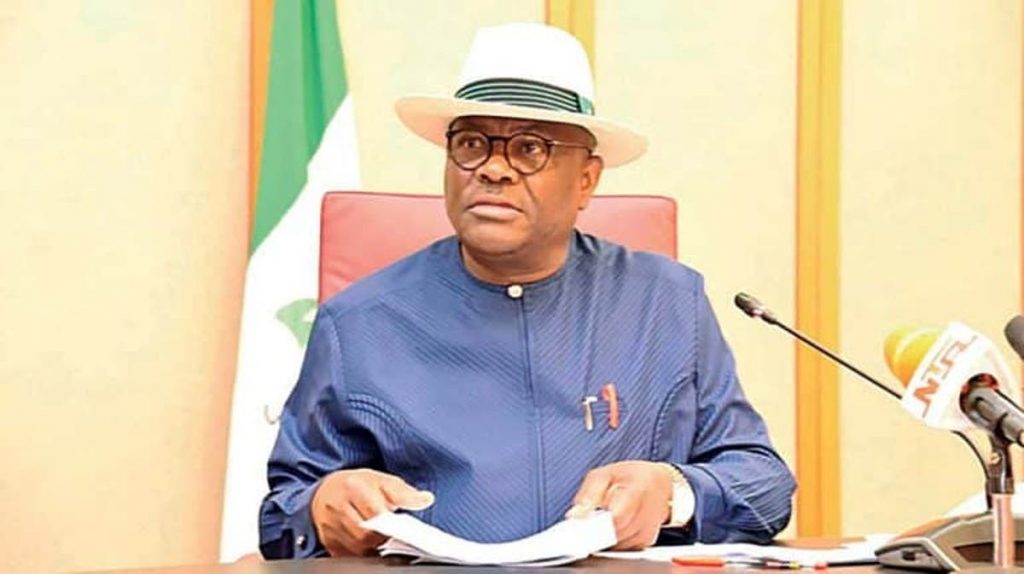
The Minister of the Federal Capital Territory, FCT, Nyesom Wike, says God will not allow “bad people” prevail in Rivers State.
Wike made the statement on Thursday during his ‘thank-you-visit’ to the Bonny Island area of Rivers State.
“I appreciate you because you have shown me love and shown that you are people that can be trusted.
“I have told people that I don’t believe in generalizing, if for example somebody in Bonny disappoints you, you said Bonny people are bad, that’s very wrong.
READ ALSO:BREAKING: Rivers Assembly Initiates Impeachment Proceedings Against Gov Fubara
“There are different kinds of people.There are places you have armed robbers, you have good people who stay there. So you can’t say because someone is bad so everyone there is bad. That’s not it.
“The good people are more in number than the few people who want to rub us black, but God, in His infinite mercy, will not allow evil to prevail over light,” he said.
Wike’s statement is coming after the Rivers State House of Assembly began impeachment proceedings against Governor Siminalayi Fubara.

 News4 days ago
What I Saw After A Lady Undressed Herself — Pastor Adeboye
- Headline4 days ago
PROPHECY: Primate Ayodele Reveals Trump’s Plot Against Tinubu
- Metro4 days ago
Armed Robbers Shot PoS Operator To Death In Edo
- Business3 days ago
NNPCL Reduces Fuel Price Again
- Metro3 days ago
AAU Disowns Students Over Protest
- Metro5 days ago
Joint Task Force Kills 23 Bandits Fleeing Kano After Attacks
- Politics5 days ago
2027: Rivers APC Pledges To Follow Wike’s Instructions
- Metro3 days ago
Edo: Suspected Kidnappers Kill Victim, Hold On To Elder Brother
- Metro3 days ago
Nine Soldiers Feared Dead In Borno IED Explosion
- Metro2 days ago
JUST IN: Court Grants Malami, Wife, Son N500m Bail Each


