
News
Hiccups: What You Need To Know

By Silver Yeibake
Hiccups, or singultus, are involuntary contractions of the diaphragm muscle. It is an abnormal breathing pattern.
Normal breathing is possible as the diaphragm, a muscle directly under the lungs that separates the chest from the abdomen, works together with other chest muscles by contracting and relaxing in a controlled manner, allows air to enter and leave the lungs at a fixed amount and rate.
Irritation of this major muscle makes it contract involuntarily, causing a sudden intake of air, which is then stopped by the vocal cords (a set of soft tissues in our throat that is involved in voice generation) closing, resulting in the the characteristic “HIC” sound
Hiccups are normally harmless and transitory, but they can be annoying and disruptive. The condition usually lasts a few minutes but can persist for up to 2 days.
READ ALSO: AUTISM: What You Need To Know
Although the specific cause of hiccups are not always evident, they can be provoked by several events such as eating too rapidly, eating large meals, consuming carbonated beverages, hot ir spicy food, indigestion, excessive alcohol intake, smoking, bad odours, abrupt temperature changes, emotional stress and pregnancy.
Frequent and prolonged hiccups (lasting more than 2 days) are triggered by diseases like oesophagitis (inflammation of the gullet), pneumonia (inflammation of the lungs), pleurisy (inflammation of the coverings of the lungs), stroke, brain tumour, thyroid disease, kidney disease, some epilepsy medicines, nicotine gum, chest and abdominal surgeries.
READ ALSO: Food Poisoning: What You Need To Know
To relieve hiccups, several measures are designed to disrupt the abnormal breathing pattern and restore normal respiration. These include breathing into a paper bag, sipping ice-cold or hot water, holding of breath, taking of deep breaths, eating a spoonful of sugar, sit down and lean forward over the knees, suck on a slice of lemon.
When hiccups are prolonged (chronic forms) or are severe enough to affect sleep, rest, eating, drinking, or other important functions, the patient should consult competent medical experts for proper evaluation and treatment is necessary.
Dr. Yeibake, Weriwoyingipre Silver, a
Senior Registrar, Faculty Of Pediatrics, West Africa College of Physician (WACP), writes from Yenagoa, Bayelsa State.



News
OPINION: The Day Friendship Died

By Israel Adebiyi
There is a peculiar kind of pain that comes when two people who once spoke in whispers begin to shout at each other in the marketplace. It is not just the quarrel that hurts. It is the knowledge that both parties know where the bodies are buried. In our clime, we are often warned about who to trust with secrets. Journalists are frequently accused, unfairly, of being incapable of discretion. Even clergymen are sometimes mentioned in hushed tones. Yet experience has shown that the most dangerous custodians of secrets are politicians. When political love turns sour, confidentiality dies first.
Politics has a way of turning men into archivists of one another’s sins. When alliances are strong, secrets are locked away like family heirlooms. When alliances break, those same secrets are dragged into the sun and weaponised. It is why Nigerian politics often feels less like a contest of ideas and more like a theatre of betrayals. The louder the quarrel, the deeper the intimacy that once existed.
The widening gulf between former Rivers State governor and now Minister of the Federal Capital Territory, Nyesom Wike, and Oyo State Governor Seyi Makinde belongs squarely in this tradition. Their falling out is not just another political disagreement. It is the unravelling of a friendship forged in the heat of opposition politics and sustained by mutual suspicion of a party they once believed had lost its moral compass. Today, that friendship lies in ruins, and the Peoples Democratic Party wanders like an orphan unsure of who will lead it home.
Not too long ago, Wike and Makinde spoke the same political language. They were comrades in rebellion, leaders of the G5 governors who openly defied their party’s presidential candidate in 2023. Together with Samuel Ortom, Ifeanyi Ugwuanyi and Okezie Ikpeazu, they insisted that the PDP had violated its own sense of balance and fairness. They framed their revolt as a moral stand, not personal ambition. In that season, Makinde was often the quieter, more measured voice, while Wike was the thunder that shook the room. But thunder and silence were working toward the same end.
What held them together was not affection but necessity. Politics has always been a marriage of convenience, and like many such unions, it thrives only while interests align. The cracks between Wike and Makinde began to show once the election dust settled and the G5 project lost its urgency. With Atiku Abubakar defeated and Bola Tinubu installed as president, the question became what next. That was where the paths diverged.
Makinde remained in the PDP, speaking the language of reform, independence and internal rebirth. Wike, on the other hand, crossed the aisle, accepted a powerful ministerial role, and began to speak with the confidence of a man who believes he has finally found a system that appreciates his political weight. In itself, that choice was not the problem. Nigerian politics is littered with ideological migrations. The problem was the loose tongue that followed.
MORE FROM THE AUTHOR:OPINION: Fubara, Adeleke And The Survival Dance
In a recent disclosure, Makinde lifted the curtain on a high level meeting involving President Tinubu, Wike, the President’s Chief of Staff, Femi Gbajabiamila, and other officials. According to the Oyo governor, the moment that meeting turned from routine to revealing was when Wike reportedly pledged to hold the PDP for Tinubu ahead of the 2027 elections. It was not just the audacity of the statement that stunned Makinde. It was the silence that followed. The president, Makinde said, did not ask for such loyalty, nor did he encourage it.
In that moment, the illusion of shared purpose collapsed. Makinde made it clear that while he respected Wike’s personal political choices, he could not be part of any arrangement that reduced the PDP to a pawn in another party’s chess game. For him, that was a line that could not be crossed. It was not merely about party loyalty. It was about the survival of democratic competition itself.
Given his political temperament, Wike is unlikely to take kindly to the public airing of private conversations. A forceful response, complete with his own version of events and pointed questions about Makinde’s sincerity and political courage, should be expected. What this kind of exchange usually produces is a familiar pattern: accusations, counter-accusations, selective memory and moral grandstanding, each man speaking with the confidence of someone who knows the other too well.
This is how political betrayals often unfold. The elders say that when two brothers fight, strangers are invited to count their teeth. In exposing one another, Wike and Makinde have not only diminished themselves but also further weakened a party already struggling for relevance. The PDP today feels like a house where the elders are busy quarrelling while the roof leaks.
The tragedy is not just that these men cannot reconcile. It is that they no longer seem interested in trying. Politics has taught them that public disagreement attracts attention, sympathy and leverage. Silence is no longer a virtue. The louder the fight, the stronger the signal to allies and adversaries alike. In this climate, restraint is mistaken for weakness.
MORE FROM THE AUTHOR:OPINION: Wike’s Verbal Diarrhea And Military Might
We have seen this script before. In Edo State, the once unbreakable bond between Adams Oshiomhole and Godwin Obaseki collapsed in spectacular fashion. What followed was not a debate over policy or governance philosophy but a parade of allegations and counter allegations. Oshiomhole turned on Obaseki with a ferocity that shocked even seasoned observers. His wife was dragged into the mud, personal matters were weaponised, and the private became brutally public. It was a masterclass in political scorched earth tactics.
What that episode revealed, and what the Wike Makinde saga confirms, is how casually Nigerian politicians treat secrets once loyalty expires. Words are spoken without restraint, meetings are narrated selectively, and private pledges are denied or exaggerated depending on convenience. In such an environment, trust becomes a scarce commodity. Today’s ally is tomorrow’s accuser.
For the PDP, the consequences are dire. A party that once bestrode the political landscape like a colossus now looks disoriented. Its leading figures speak in different tongues. Some flirt openly with the ruling party. Others preach resistance without offering a roadmap. The internal contradictions are no longer hidden. They are debated openly by men who once pretended unity.
An orphaned party is a dangerous thing. Without clear leadership or shared vision, it becomes vulnerable to infiltration, manipulation and irrelevance. The PDP’s inability to manage internal dissent has left it exposed. Wike’s proximity to power and Makinde’s insistence on independence represent two competing instincts within the party. Neither seems willing to yield.
There is an old saying that when the drumbeat changes, the dancer must adjust his steps. The PDP’s problem is that its drummers are beating different rhythms. Some want accommodation. Others want confrontation. Without consensus, the party risks becoming a footnote in future elections, remembered more for its internal quarrels than its contributions to democracy.
MORE FROM THE AUTHOR:OPINION: Nigeria And The Echoes Of A People Unheard
The personal feud between Wike and Makinde matters because it symbolises this broader crisis. Their words carry weight. Their actions send signals. When they speak loosely, they embolden others to do the same. When they expose private conversations, they normalise betrayal as political strategy.
Yet, one is tempted to ask whether reconciliation is still possible. History suggests that political enemies can become allies again when interests realign. Today’s betrayal can become tomorrow’s handshake. But trust, once broken, is not easily repaired. The crack in the mirror remains even after it is glued.
Perhaps the lesson here is not about who is right or wrong but about the cost of unguarded alliances. The elders also say that a friend who knows your weakness holds your destiny in his hands. Nigerian politicians have mastered the art of intimacy without loyalty. They embrace quickly and separate violently.
As the nation watches this latest drama unfold, there is entertainment, yes, but also exhaustion. Nigerians are tired of politics as personal warfare. They yearn for substance, for ideas, for leadership that rises above vendetta. Every public spat chips away at public confidence.
The PDP still has a choice. It can continue down this path of mutual destruction, or it can find a way to impose discipline, restore trust and redefine purpose. Whether Wike and Makinde will be part of that rebirth remains uncertain. What is clear is that their feud has already done damage.
In the end, betrayal is not always about knives in the back. Sometimes it is about words spoken too freely, secrets shared too carelessly, and bridges burned too eagerly. When former friends become public enemies, everyone loses. And when a party loses its compass, it wanders until something stronger replaces it.
For now, the PDP wanders. Its loudest sons are talking past each other, not to each other. The marketplace is noisy, the whispers are gone, and the secrets are out. Whether wisdom will return before it is too late is a question only time can answer.
News
Accept Free Flights, $3,000 Cash To Leave Or Risk Arrest – US Tells Illegal Immigrants
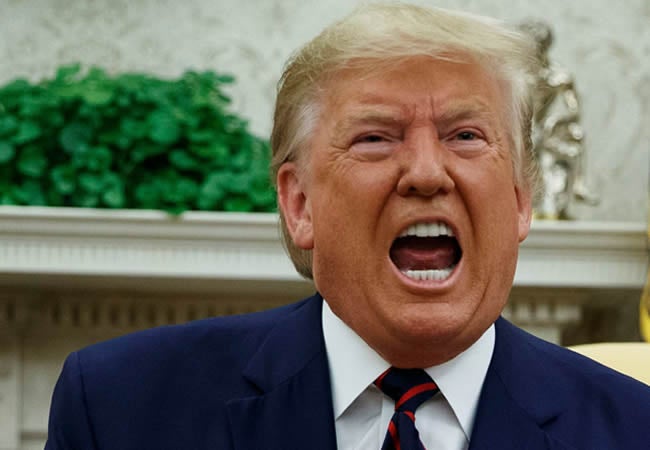
The United States government has announced a Christmas self-deportation incentive, offering undocumented immigrants free flight tickets and a $3,000 cash bonus to voluntarily leave the country before the end of the year.
The announcement was made in a statement released on Monday, December 22, by the Department of Homeland Security (DHS), which warned that undocumented immigrants who ignore the offer risk arrest, forced deportation, and a lifetime ban from re-entering the United States.
According to the DHS, undocumented immigrants who enrol in the programme before December 31 will receive fully funded travel arrangements to their home countries, along with a $3,000 stipend.
“Illegal aliens who sign up to self-deport through the CBP Home app by the end of the year will receive a $3,000 stipend in addition to a free flight home,” the department said.
READ ALSO:
The initiative is being implemented through the CBP Home mobile application, which allows undocumented immigrants to register for voluntary departure. Participants will also benefit from waived civil fines and penalties related to overstaying or previous failure to leave the country.
DHS said the policy has already yielded significant results, with a marked increase in voluntary departures.
“Since January 2025, approximately 1.9 million illegal aliens have voluntarily self-deported, with tens of thousands using the CBP Home programme,” the statement said.
Homeland Security Secretary Kristi Noem described the initiative as a temporary goodwill gesture tied to the Christmas season, noting that the incentive had been tripled for the holidays.
READ ALSO:
“During the Christmas season, the US taxpayer is generously tripling the incentive to leave voluntarily, offering a $3,000 exit bonus, but only until the end of the year,” Noem said.
She warned that those who fail to take advantage of the offer would face strict enforcement measures.
“Illegal aliens should take advantage of this gift and self-deport. If they don’t, we will find them, arrest them, and they will never return,” she said.
The DHS assured interested migrants that the process is straightforward and fully handled by the government.
“Self-deportation through the CBP Home app is fast, free, and easy. DHS will take care of everything, including travel arrangements,” the department said.
The agency reiterated that undocumented immigrants who ignore the programme would be subject to arrest, forced removal, and permanent restrictions on future entry into the United States.
News
Benue: Five Killed As Suspected Herdsmen Attack Ortese, Block Major Road

No fewer than five youths have reportedly lost their lives in a deadly attack attributed to suspected Fulani herdsmen in Ortese, Guma Local Government Area of Benue State.
According to local accounts, the assailants barricaded the Ortese–Yogbo road during the attack, ambushing and killing the victims at the scene.
Several other residents were said to have been forcibly taken to undisclosed locations.
The assault has sparked widespread fear in the community, with residents expressing concern over their safety as tensions continue to rise.
READ ALSO:Forest Reserve: Okpebholo Broker Peace Between Host Communities, Investors
Community sources revealed that additional bodies are being found in nearby areas, further worsening the situation.
As of the time of filing this report, security agencies have not released an official statement on the incident, although investigations are ongoing and efforts are underway to restore calm in Ortese and surrounding communities.

 Metro4 days ago
JUST IN: Former Edo Information Commissioner Is Dead
- News4 days ago
Former Delta North senator Peter Nwaoboshi Dies
- News1 day ago
PHOTOS: New Era In Furupagha-Ebijaw As Okpururu 1 Receives Staff Of Office
- News4 days ago
[OPINION] Tinubu: Ade Ori Okin Befits KWAM 1, Not Awujale Crown
- Metro4 days ago
She Grabs, Pulls My Manhood Anytime We Fight — Husband
- News4 days ago
Coordinator, Edo First Lady Office, Majority Leader, Rights Lawyer, Others Bag 2025 Leadership Award
- News4 days ago
Delta Speaker Advocates Strict Legislative Protection Of N’Delta Environment
- News1 day ago
FG Declares Public Holidays For Christmas, New Year Celebrations
- News15 hours ago
UBTH CMD Marks 120 Days In Office, Expresses Commitment To Providing Conducive Working Environment
- Metro4 days ago
Why I Charged My Husband Money For Sex —Woman


