
News
OPINION: Wike’s Verbal Diarrhea And Military Might

By Israel Adebiyi
Power, in its rawest form, is a test of character. It exposes the nobility or the nakedness of a man’s soul. Few public figures in contemporary Nigeria embody this paradox more vividly than Nyesom Wike, the current Minister of the Federal Capital Territory and former Governor of Rivers State. For years, Wike has walked the corridors of power like a man possessed by his own echo, thunderous, dramatic, and unrepentantly confrontational. The recent viral video of his verbal clash with a young military officer in Abuja did not surprise many. It was merely the latest episode in a long-running drama that reveals the flaws of a man whose tongue often runs faster than his wisdom.
In Yoruba parlance, there is a saying: “Eni tí ọ̀rọ̀ rẹ̀ ju òye rẹ̀ lọ, àìníyàn ló ń dá.” – “He whose words outrun his wisdom is courting disgrace.” Wike’s public life has been a theatre of that truth. From Port Harcourt to Abuja, his words have been both his power and his undoing.
As Governor of Rivers State, Wike ruled with the swagger of an emperor and the vocabulary of a street fighter. He earned the moniker “Mr. Projects,” and indeed, his tenure was dotted with visible infrastructural strides. But beneath the shine of concrete lay the shadows of fear and intimidation. He hounded political opponents, mocked rivals, and often reduced governance to the vulgar display of verbal warfare. To disagree with him was to invite a tongue-lashing; to stand up to him was to be publicly shamed. The Yoruba have another proverb for such temperament: “Bí ọba bá nà á ní kó má fò, àgbàlagbà ló ní kó má jókòó” (“When the king flogs you and says you must not cry, only elders tell you to sit down.”) Power without empathy, after all, is tyranny in democratic clothing.
Traditional rulers were not spared his tongue, nor were clerics whose sermons did not flatter his politics. The pulpit, the palace, and the public square all felt the sting of his verbal excesses. It was as though Wike mistook aggression for authority. And in a political culture that too often confuses loudness for leadership, he found applause where rebuke was deserved. Yet, “Bí a bá ń pè orí burúkú ní ‘adé,’ ó máa ń rò pé òun ló ń jẹ́ ọba” (“When a fool is constantly hailed as king, he soon forgets his folly.”)
When President Bola Tinubu appointed him as FCT Minister, many wondered how a man with such combustible temperament would manage a city as complex and delicate as Abuja. The capital, after all, is not a political playground but the seat of the nation’s dignity. But Wike carried his Rivers temperament into the heart of power. In less than a year, Abuja has witnessed more demolitions than decorum, more decrees than dialogue. At every turn, he has spoken more like a conqueror than a public servant.
MORE FROM THE AUTHOR:OPINION: Trump Of War
The recent altercation with a 24-year-old military officer, caught on video, offered a perfect metaphor for his style. The scene was classic Wike – loud, animated, confrontational – but what made it unforgettable was the quiet defiance of the young soldier who stood his ground. The officer’s composure, his disciplined refusal to be cowed by political bluster, was the moral turning point. For once, Wike’s verbal missiles bounced off the shield of institutional dignity. It was as if the spirits of Nigeria’s fatigued citizens found expression in that soldier’s calm defiance – a reminder that power must bow before order, not the other way around.
The Yoruba say, “Àgbà tó ń sọ̀rọ̀ bí ọmọ kékeré, ọmọ kékeré á gbọ́ pé àwọn yóò jọ ṣeré” (“When an elder speaks like a child, the young will mistake him for a playmate.”) Wike’s behavior in that viral clip stripped the office of its dignity. His lack of restraint not only disrespected the uniform but desecrated the values of leadership itself. The soldier’s uniform represents sacrifice; his silence, discipline; and his stance, institutional integrity. That a federal minister would exchange words so loosely with a young officer is not just an issue of temperament – it is a failure of self-governance.
Temperament, indeed, is the hidden face of leadership. A man’s true power is not in how loudly he commands but in how calmly he corrects. Wike’s monthly media engagements – once an opportunity to engage citizens and showcase accountability – soon degenerated into televised outbursts. He berated journalists, mocked political opponents, and turned governance into a stage for self-advertisement. It is said that the Presidency, weary of the embarrassment, quietly halted the briefings. One can only imagine the relief of aides who no longer had to brace themselves for the next verbal explosion.
In another Yoruba saying, “Ìbínú kò jẹ́ kí ọba jẹ́ aláàánú” (“Anger does not allow a king to be merciful.”) Wike’s anger, too easily provoked and too publicly displayed, has long clouded his judgment. Yet the essence of power is not in the fear it inspires but in the respect it earns. The greatest leaders in history were not those who shouted the loudest but those who led with quiet conviction. The soft-spoken often outlast the loud-mouthed because, as the Yoruba remind us, “Oro buruku to bá jé títí, adùn ni yóò dá” (“Even bitter words, if spoken with patience, will end sweetly.”)
The Abuja episode also calls attention to the need for institutional supremacy over personal might. Nigeria’s enduring tragedy is that men often see themselves as greater than the offices they occupy. We build strong individuals but weak systems, and when those individuals fall, the institutions crumble with them. But as Yoruba wisdom teaches, “A kì í jẹ́ kí òpó ọmọ ènìyàn dàgbà ju àgọ́ lọ” (“We do not allow the child of a person to grow taller than the camp.”) No one, however powerful, should be above the rules of engagement.
MORE FROM THE AUTHOR:[OPINION] AMUPITAN- “His-Story” Beckons
This is why the conduct of that young soldier deserves commendation. In choosing duty over deference, he reminded us that respect for the uniform is non-negotiable. Every insignia on that khaki represents years of sacrifice, discipline, and loyalty to the nation. To belittle it, no matter one’s rank, is to insult the Republic itself. The Yoruba have a proverb that aptly fits this: “Àṣọ àgbà ni ìyàwó ń wọ, kó mọ̀ pé a kì í rí tìkára ẹni tí ó tójú” (“A bride wearing her mother’s cloth must remember she didn’t weave it herself.”) The power Wike wields is not personal; it is borrowed authority. To wear the garment of public office with arrogance is to forget that the garment belongs to the people.
Equally troubling is the recurring use of armed might to pursue private or political objectives, from land enforcement to silencing dissent. When the coercive instruments of state become tools in the hands of temperamental men, democracy trembles. The military, police, and paramilitary institutions must never be drawn into the theatrics of power or personal vendettas. “Ogun tí a bá dá lórí èké, òtítọ́ ni yóò ṣẹgun” (“The war waged on falsehood will always be won by truth.”)
Nigeria must now return to the discipline of process. When institutions are respected, the law becomes sacred. When personalities dominate, the state becomes an extension of ego. Wike’s episode should not be dismissed as mere drama; it is a symptom of a larger sickness – the collapse of restraint among those entrusted with authority. The lesson is simple: when powerful men act without decorum, they shrink the dignity of governance and weaken the faith of citizens in democracy itself.
One hopes that Wike, if only for a moment, reflects on this encounter. True power is not in shouting down a soldier; it is in mastering one’s temper. Leadership demands silence as much as speech, grace as much as grit. “Bí ọba bá ń sunkún, àwòko kì í rẹ́rìn-ín” (“When a king weeps, the parrot does not laugh.”) There are moments when restraint is the greatest show of strength.
In the end, that young officer did more than defend a piece of land; he defended the idea that Nigeria must be governed by institutions, not personalities. He reminded the nation that authority must be exercised with humility, not hubris. The Yoruba have the final word: “Àgbà tó bá ní kó fi ọwọ́ kan ọ̀run, ẹni tí ń dí ọwọ́ rẹ̀ ni yóò bínú” (“When an elder tries to touch the sky, it is those holding his hand that will feel the strain.”) Wike’s latest outburst strained not only his image but the very institution he represents.
Perhaps it is time the minister learned that power is most dignified when it is quiet, and that the loudest drum often bursts first. For in the theatre of governance, words are not weapons; they are mirrors. And when the man in power looks into that mirror and sees only himself, he has already lost the people.



News
Shatta Wale Bailed Burna Boy From Ghana Prison After Arrest For Smoking Weed – Captan

Ghanian singer, Captan, has claimed that his former record label boss, Shatta Wale, once bailed Nigerian singer Burna Boy out of prison in Ghana after he was allegedly arrested for smoking weed.
Speaking in a recent podcast interview, Captan claimed that Shatta Wale sent him and others to free Burna Boy from police custody.
He also claimed that Shatta Wale and his group once accommodated Burna Boy when he was being hunted by some dangerous men.
READ ALSO: Wale Edun Opens Up After Sack
Captan said, “I once bailed Burna Boy out of prison in Ghana when he was arrested for smoking weed. Shatta Wale sent me and some guys to go and free him from police custody.
“There was a time we also accommodated him when some people were after his life. We helped him settle the case.”
He added that he and Burna Boy are no longer in good terms after the Nigerian artist’s fallout with his mentor, Shatta Wale.
He, however, said he and Shatta Wale are open to reconciling with Burna Boy if he asks for it.
Watch the video here
News
Children’s Day: Chaos At Ogbe Stadium As Dozens Faint

Chaos erupted on Wednesday during the Children’s Day celebration as dozens of students reportedly collapsed following a stampede triggered by the use of pepper spray.
The event,
organised by the Edo State Ministry of Education at the Samuel Ogbemudia Stadium was disrupted after some male students of Ihogbe College allegedly made uncompromising advances towards female students at the venue.
A parent who identified himself as Oboh Emmanuel said, “the behaviour of those uncultured students attracted the attention of bouncers stationed at the stadium as they rebuked the male students.”
Oboh said the affected students later regrouped and attacked the bouncers, leading to a confrontation within the crowded arena.
READ ALSO:Children’s Day: Edo Commits To Child Protection
It was gathered that in the ensuing confusion, the bouncers were reported to have deployed pepper spray in an area occupied by a large number of students.
Several students, particularly female students, reportedly fainted after inhaling the substance, while others sustained injuries after being stepped on during the ensuing melee.
The panic was said to have spread across the stadium as students, teachers and parents scampered for safety.
Many of the affected students were reportedly rushed to the Edo Specialist Hospital for medical attention.
READ ALSO: Egor LG Chair, Ogbemudia, Vice, Osawe Impeached
Reacting to the incident, Chief Press Secretary to Governor Monday Okpebholo, Dr Patrick Ebojele, said the security personnel that fired the tear gas had been detained.
He said all the students, except two, that were rushed to the hospital have been discharged.
Ebojele stated that doctors wanted to observe the students till tomorrow before allowing them to go home.
“The two students are not seriously injured. Doctors want to observe them overnight. Permanent Secretary, Ministry of Education is still at the hospital. The man who used pepper spray has been detained.
“The incident did not happen the way it is being exaggerated. All modalities were put in place to ensure the children enjoyed their day.”
News
Okpebholo Salutes Edo Muslims, Seeks Continued Support, Prayers
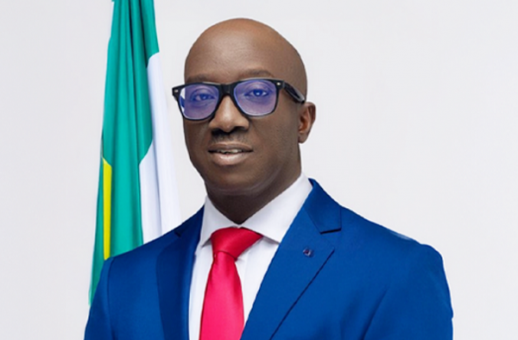
Governor Monday Okpebholo of Edo State has urged Muslims and all Nigerians to continue to pray for peace, unity and progress in the country even as they celebrate the annual Eid-al-Adha
The governor, who was represented by his deputy, Dennis Idahosa, stated this during the annual Eid-al-Adha celebration with Muslim faithfuls held at Government House in Benin City.
He reiterated his administration’s commitment to fairness, inclusivity and equal opportunities for all citizens irrespective of religion and tribe.
READ ALSO:ADC Penetrates Okpebholo’s District As Defections Strengthen Party in Edo Central
According to him, the present administration remains determined to building a government that reflects the diversity of Edo State, noting that competent and qualified Muslims have continued to play vital roles in his government because of their capacity, integrity and commitment to service.
“As a government, we remain committed to fairness, inclusivity and equal opportunity for every Edo citizen, irrespective of religion, ethnicity or political affiliation. This is why quality and competent Muslims are serving in key positions in our administration.”
Okpebholo appreciated the Muslim community in Edo State for their unwavering support and continuous prayers for his administration, noting that such prayers and support have contributed immensely to the peace and steady development being witnessed across the state.
READ ALSO:Okpebholo Felicitates Muslims On Eid-el-Fitr Celebration
He then called on all Nigerians to use the occasion of Eid-al-Adha to pray for the administration of President Bola Ahmed Tinubu, stressing that the country needs collective prayers, unity and cooperation to overcome its present economic and security challenges.
“I urge all Muslims and indeed all Nigerians to use this occasion to pray for our dear nation and for the administration of President Bola Ahmed Tinubu. Nigeria needs our collective prayers, unity and support as we strive to overcome our challenges and build a more prosperous future for all.”
In his remarks, the Chief Imam of Edo State, Abdulfatai Enabulele, applauded the governor for what he described as remarkable developmental strides recorded in less than two years in office.
The cleric commended the administration for ongoing infrastructural development and efforts geared towards improving governance in the state, but appealed to the government to revisit and complete some abandoned projects inherited from the previous administration for the benefit of the people.

 Metro5 days ago
My Husband Abandoned Me On Our Wedding Night To Attend Political Meeting, I Want Our Marriage Dissolved
- Headline4 days ago
Woman Passes Out After Receiving 100 Strokes Of Cane
- Politics5 days ago
Warri Ijaw Hail INEC Delineation Report, Call For Additional Electoral Wards, Others
- Headline4 days ago
JUST IN: White House Locked Down Briefly As Gunman Opens Fire At Security Checkpoint
- News3 days ago
More Pain For Nigerians As Cooking Gas Price Increases Nationwide
- Politics3 days ago
Two Masked Men Gun Down Politician In His Rivers State Hotel
- Metro5 days ago
My Wife Stop Cooking My Food, Beats Me Black And Blue All the Time, Man Tells Court
- News5 days ago
Alleged Terrorism: Court Rejects Defendant’s Bid To Travel Abroad
- Politics5 days ago
What I’ll Do As President Of Nigeria — Amaechi
- News3 days ago
FG Declares Two Days Public Holiday For Eid-el Kabir Celebration


