
News
New Electricity Tariff: Full List Of Ikeja Electric 45 Band A Areas

The Nigerian Electricity Regulatory Commission, on Wednesday, approved a sharp increase in electricity tariffs for customers classified under Band A.
Customers in this category will now be charged N225 per kilowatt-hour (KW/h). It is a significant rise from the previous rate of N66 electricity tariff.
This was revealed by Musliu Oseni, the Vice Chairman of NERC. You can read the full list of Band A electricity tariff areas across the country HERE.
Below are the 45 areas that fall within the Band A under Ikeja Electricity Distribution Company, IKEDC:
1. 11-IjuINJ-T2-Water Works Abule Egba WATER WORKS COMPOUND IJU
2. 11-IjuINJ-T1-Galilee Abule Egba OLOWOLAJUOGBON , POPOOLA, BEHIND ELLIOT AND PART OF OBAWOLE
3. 11-ShashaINJ-T1-Coker Estate Akowonjo COKER ESTATE ( SEGUN ADEKOYA AND UNITY STREET)
4. 11-HilltopINJ-T1-Hilltop Akowonjo (BOLA DADA, ANJORIN STREETS ) HILLTOP ESTATE
5. 11-AlimoshoINJ-T4-Akowonjo Akowonjo FAKOYA, ISIBA OLUWO & GORDLOVE
6. 11-AlimoshoINJ-T4-FHA Akowonjo 5TH AVENUE, 34 RD
7. 11-AlimoshoINJ-T8-Alimosho Akowonjo OLUWALOGBON & WILLIAMS ESTATE
8. 11-Adekunle FajuyiINJ-T1-Oduduwa Ikeja ADEKUNLE FAJUYI WAY, ODUDUWA WAY, ODUDUWA CRESCENT, SASEGBON STREET, SOBO AROBIODUN STREET, REMI FANI KAYODE AVENUE
9. 11-IlupejuINJ-T4-Ikorodu Ikeja APAPA OWORONSHOKI EXPRESSWAY, IKORODU ROAD, ISMAIL ESTATE, IYA OLOYE CRESCENT, IJAOLA STREET, ONIGBONGBO AKERELE STREET, ONIGBONGBO OLAIDE BENSON STREET, ONIGBONGBO
10. 11-PTCINJ-T2-Awuse Ikeja TOKUNBO MACAULAY, EMMANUEL KESHI, OGUNYE ZONE
11. 11-OjoduINJ-T1-Ojodu Ikeja ISHERI ROAD, OGUNNUSI STREET, AINA STREET, OREMETA STREET
12. 11-Adekunle FajuyiINJ-T1-Isaac John Ikeja ISAAC JOHN ROAD, LADOKE AKINTOLA STREET, OBA DOSUMU STREET, AJISAFE STREET
13. 11-OjoduINJ-T2-Express Ikeja OMOLE ESTATE, PHASE 1, ISERI ROAD, OMOFEDA STREET, BABATUNDE LADEGA STREET
14. 11-OgbaINJ-T1-Ijaye Ikeja IJAIYE HOUSING ESTATE, PENCINEMA, OBA OGUNJI ROAD, OGBA, LSDPC ESTATE, AGEGE, DIDEOLU ESTATE, OGBA, IJAIYE MEDIUM ESTATE, AGEGE IJAIYE ROAD, AGEGE, AKILO ROAD, OFF IJAIYE ROAD, DAIRY FARM ESTATE, IJAIYE ROAD
15. 11-OjoduINJ-T2-River Valley Ikeja OMOLE ESTATE, PHASE 1, ISERI ROAD, OMOFEDA STREET, BABATUDE LADEGA STREET
16. 11-MarylandINJ-T1-PTC Ikeja IKORODU ROAD, EMMANUEL STREET, MARYLAND, ADEREBIGBE SHITTA STREET, TOLA ADEWUNMI CRESCENT, WASINMI STREET, MOBOLAJI BANK ANTHONY WAY, SHONIBARE ESTATE, G.CAPPA ESTATE, MARYLAND CRESCENT
17. 11-OgbaINJ-T1-Isokoko Ikeja ADEYEMI STREET, OGBA, AJIGBOTINU STREET, OJOKORO, AGEGE, SHIABA STREET, AGEGE, OLUSEYE-ARE STREET, ABIOLA MODEL MARKET, OGBA
18. 11-Adeniyi JonesINJ-T1-Adeniyi Jones Ikeja ADENIYI JONES STREET, ADEKUNLE FAJUYI CRESCENT, ALLI BALOGUN STREET, AKINOLA COLE CRESCENT, LADIPO OLUWOLE STREET, ASHOGBON STREET
19. 11-PTCINJ-T1-Opebi Ikeja POLICE COLLEGE, IKEJA, MOBOLAJI BANK ANTHONY WAY IKEJA, TOYIN STREET, IKEJA, OLA AYINDE STREET, MKO ABIOLA CRESCENT, IKEJA, ESOMO CLOSE, OFF TOYIN STREET, TOKUNBO ALLI STREET, OLUFUNMILOLA OKIKIOLU STREET, ALABI CRESCENT, OFF TOYIN STREET
20. 11-IlupejuINJ-T1-Rida Plastic Ikeja RIDA PLASTIC INDUSTRIES, APAPA OWORONSHOKI EXPRESSWAY
21. 11-IlupejuINJ-T1-ATM Ikeja ALH ADEJUMO AVENUE ADEYEMI BERO CRESCENT
22. 11-SecretariatINJ-T2-Agidingbi Ikeja LATEEF JAKANDE ROAD AGIDINGBI ROAD, IKEJA
23. 11-SecretariatINJ-T2-UAC Ikeja BILLINGS WAY, OREGUN, MOBOLAJI JOHNSON AVENUE, ABAYOMI STREET, SANYAOLU STREET, NEW SECRETARIAT ROAD
24. 11-SecretariatINJ-T1-Omole Ikeja HAKEEM BALOGUN WAY, JUSTICE G.B.A. COKER ESTATE, ALAUSA, OBAFEMI AWOLOWO WAY, ALAUSA CIPM AVENUE, ALAUSA, CELESTIAL CHURCH STREET, AMARA OLU STREET
25. 11-OgbaINJ-T2-Ifako Ikeja ACME ROAD, OGBA, AKILO ROAD, OGBA, AJUMOBI STREET, WEMCO ROAD, OGBA, SURULERE STREET GUINNESS ROAD, OGBA, VANNI CLOSE, OGBA
26. 11-OgbaINJ-T2-Mangoro Ikeja AKANNI DOHERTY STREET, HENRY CARR AVENUE, ALH ALLI LANE, OGBA ROAD, AGEGE
27. 11-OgbaINJ-T3-Oba Akran Ikeja OBA AKRAN ROAD, SAPARA WILLIAMS STREET
28.11-OdogunyanINJ-T2-Odokekere Ikorodu OLD IKORODU SHAGAMU ROAD, NAZARETH ROAD, AGODO ALARA COMMUNITY, EZE STREET, UNITY ROAD, POWERLINE ROAD, 2ND SAWMILL WOOD MARKET ODOKEKERE, IREAKARI IGBOSORO COMMUNITY, FOKANBALE COMMUNITY, COMFORT CDA.
29. 11-OdogunyanINJ-T1-Centex Ikorodu ISOCARE INDUSTRIES ROAD, MATECO INDUSTRIES WEST AFRICA, INDUSTRIAL ESTATE ODONGUYAN.
30. 11-Lagos HomsINJ-T1-Estate Oshodi LAGOS HOMES ESTATE ALONG LASU-ISHERI ROAD
31. 11-ItireINJ-T2-Canal Oshodi LATEEF ADEGBOYEGA STREET, NIYI ONILARI STREET, AGO PALACE WAY
32. 11-MagodoINJ-T1-Emmanuel Keshi Shomolu KOLA AMODU/BASHIRU SHITTU
33. 11-MagodoINJ-T1-Shangisha Shomolu TOKUNBO MACAULAY, EMMANUEL KESHI, OGUNYE ZONE
34. 11-MarylandINJ-T1-Okupe Shomolu AROWOJOGBE ESTATE,SUNMOLA,IBIRONKE,OKUNOLA AINA,AJOSE
35. 11-MagodoINJ-T1-Owulade Shomolu ABAYOMI OWULADE,ADETOROADELAJA
36. 11-IgbobiINJ-T3-Railway Shomolu ADESHINA STREET, PART OF TINUBU ROAD, PART OF VONO ROAD, KAYODE
37. 11-IgbobiINJ-T2-Igbobi Shomolu NATIONAL ORTHOPAEDIC HOSPITAL
38. 11-IgbobiINJ-T2-Market Shomolu SHIPEOLU STREET, OGUNTOLU, AND EYO STREET.
39. 11-MagodoINJ-T2-Bashiru Shomolu BASHIRU SHITTU, OMOLE PHASE 2 ESTATE, CMD ROAD
40. 11-MarylandINJ-T3-Demurin Shomolu IKOSI ROAD, ALADELOLA, TAIKE, SOME PART OF KETU BUS STOP, HASSAN STREET
41. 11-IlupejuINJ-T3-Coker Shomolu ASSOCIATION AVENUE, COKER ROAD, OLORUNFUMI STREET, OREMEJI, WILMER ESTATE.
42. 11-Ilupeju BypassINJ-T1-Bypass Shomolu ILUPEJU BYPASS, UPPER PART OF OF TOWN PLANNING,
43. 11-Ilupeju
BypassINJ-T1-Obanikoro Shomolu OLATUNDE AYOOLA,JOF ESTATE,TREM CHURCH,OBANIKORO ESTATE,IKORODU ROAD.
44. 11-IlupejuINJ-T3-Palmgrove Shomolu PALMGROOVE ESTATE,IKORODU ROAD,AFOLABI LESSI,OLUSOJI IDOWU.
45. 11-Ilupeju BypassINJ-T1-Industrial Shomolu TOWN PLANNING, SURA MOGAJI, ESTHER OSHINYEMI, INDUSTRIAL AVENUE
Wrongly bill?
Meanwhile, the regulator has directed all Electricity Distribution Companies, DisCos, to provide as much clarity as possible to all affected customers.
For instance, on the new electricity tariff, NERC said: “All customers wrongly billed at the new rate should be refunded through energy tokens no later than Thursday the 11th of April 2024. And (they should) file evidence of compliance with the Commission by the 12th of April 2024.

News
Out-of-school: Group To Enroll Adolescent Mothers In Bauchi
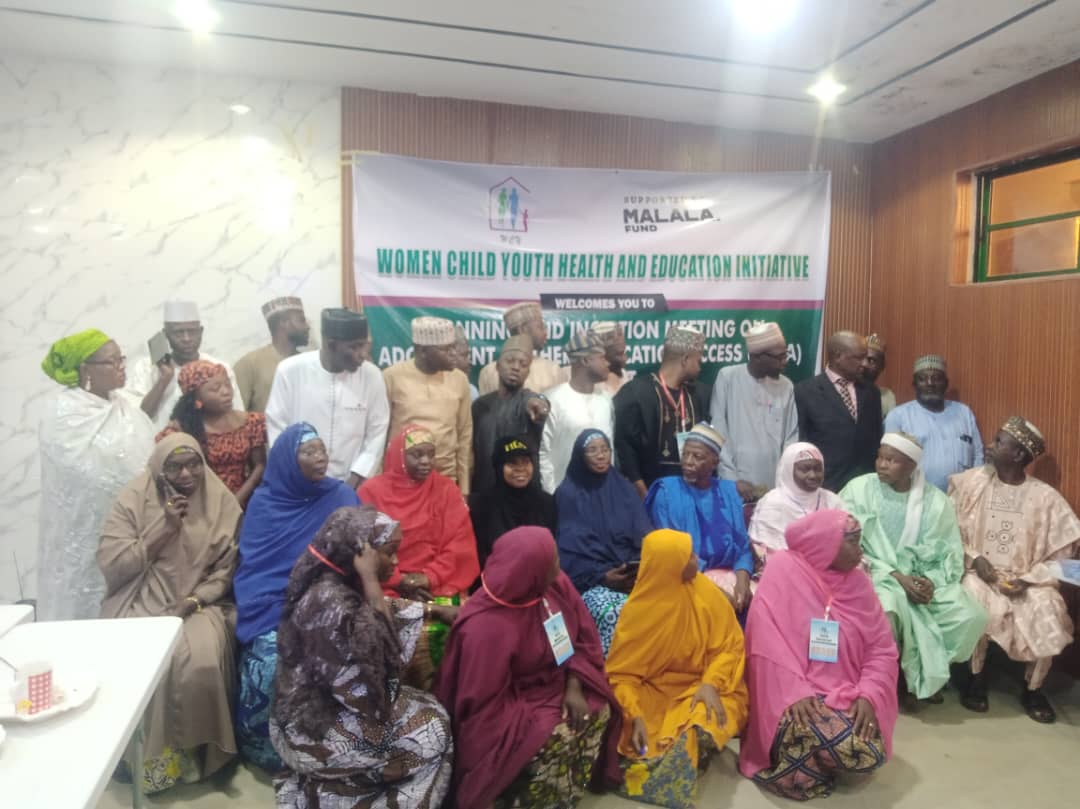
Women Child Youth Health and Education Initiative (WCY) with support from Malala Education Champion Network, have charted a way to enroll adolescent mothers to access education in Bauchi schools.
Rashida Mukaddas, the Executive Director, WCY stated this in Bauchi on Wednesday during a one-day planning and inception meeting with education stakeholders on Adolescent Mothers Education Access (AMEA) project of the organisation.
According to her, the project targeted three Local Government Areas of Bauchi, Misau and Katagum for implementation in the three years project.
She explained that all stakeholders in advancing education in the state would be engaged by the organisation to advocate for Girl-Child education.
READ ALSO:Maternal Mortality: MMS Tackling Scourge —Bauchi Women Testify
The target, she added, was to ensure that as many as married adolescent mothers and girls were enrolled back in school in the state.
“Today marks an important step in our collective commitment to ensuring that every girl in Bauchi state, especially adolescent who are married, pregnant, or young mothers has the right, opportunity, and support to continue and complete her education.
“This project has been designed to address the real and persistent barriers that prevent too many adolescent mothers from returning to school or staying enrolled.
“It is to address the barriers preventing adolescent mothers from continuing and completing their education and adopting strategies that will create an enabling environment that safeguard girls’ rights to education while removing socio-cultural and economic obstacles,” said Mukaddas.
READ ALSO:Bauchi: Auto Crash Claimed 432, Injured 2,070 Persons In 1 Months — FRSC
She further explained to the stakeholders that the success of the project depended on the strength of their collaboration, the alignment of their actions, and the commitments they forge toward the implementation of the project.
Also speaking, Mr Kamal Bello, the Project Officer of WCY, said that the collaboration of all the education stakeholders in the state with the organisation could ensure stronger enforcement of the Child Rights Law.
This, he said, could further ensure effective re-entry and retention policies for adolescent girls, increased community support for girls’ education and a Bauchi state where no girl was left behind because of marriage, pregnancy, or motherhood.
“It is observed that early marriage is one of the problems hindering girls’ access to education.
READ ALSO:Bauchi: Auto Crash Claimed 432, Injured 2,070 Persons In 1 Months — FRSC
“This organisation is working toward ensuring that girls that have dropped out of school due to early marriage are re-enrolled back in school,” he said.
Education stakeholders present at the event included representatives from the state Ministry of Education, Justice, Budget and Economic Planning and Multilateral Coordination.
Others were representatives from International Federation of Women Lawyers, Adolescent Girls Initiative for Learning and Empowerment (AGILE), Bauchi state Agency for Mass Education, Civil Society Organization, Religious and Traditional institutions, among others.
They all welcomed and promised to support the project so as to ensure its effective implementation and achieve its set objectives in the state.
News
OPINION: Fubara, Adeleke And The Survival Dance

By Israel Adebiyi
You should be aware by now that the dancing governor, Ademola Adeleke has danced his last dance in the colours of the Peoples Democratic Party. His counterpart in Rivers, Siminalayi Fubara has elected to follow some of his persecutors to the All Progressive Congress, after all “if you can’t beat them, you can join them.”
Politics in Nigeria has always been dramatic, but every now and then a pattern emerges that forces us to pause and think again about where our democracy is heading. This week on The Nation’s Pulse, that pattern is what I call the politics of survival. Two events in two different states have brought this into sharp focus. In both cases, sitting governors elected on the platform of the same party have found new homes elsewhere. Their decisions may look sudden, but they reveal deeper issues that have been growing under the surface for years.
In Rivers, Governor Siminalayi Fubara has crossed into the All Progressives Congress. In Osun, Governor Ademola Adeleke has moved to the Accord Party. These are not small shifts. These are moves by people at the top of their political careers, people who ordinarily should be the ones holding their parties together. When those at the highest levels start fleeing, it means the ground beneath them has become too shaky to stand on. It means something has broken.
A Yoruba proverb captures it perfectly: Iku to n pa oju gba eni, owe lo n pa fun ni. The death that visits your neighbour is sending you a message. The crisis that has engulfed the Peoples Democratic Party did not start today. It has been building like an untreated infection. Adeleke saw the signs early. He watched senior figures fight openly. He watched the party fail to resolve its zoning battles. He watched leaders undermine their own candidates. At some point, you begin to ask yourself a simple question: if this house collapses today, what happens to me? In Osun, where the competition between the two major parties has always been fierce, Adeleke was not going to sit back and become another casualty of a party that refused to heal itself. Survival became the most reasonable option.
His case makes sense when you consider the political temperature in Osun. This is a state where the opposition does not sleep. Every misstep is amplified. Every weakness is exploited. Adeleke has spent his time in office under constant scrutiny. Add that to the fact that the national structure of his party is wobbly, divided and uncertain about its future, and the move begins to look less like betrayal and more like self-preservation.
MORE FROM THE AUTHOR:OPINION: Wike’s Verbal Diarrhea And Military Might
Rivers, however, tells a slightly different story. Fubara’s journey has been a long lesson in endurance. From the moment he emerged as governor, it became clear he was stepping into an environment loaded with expectations that had nothing to do with governance. His political godfather was not content with being a supporter. He wanted control. He wanted influence. He wanted obedience. Every decision was interpreted through the lens of loyalty. From the assembly crisis to the endless reconciliation meetings, to the barely hidden power struggles, Fubara spent more time fighting shadows than building the state he was elected to lead.
It soon became clear that he was governing through a maze of minefields. Those who should have been allies began to treat him like an accidental visitor in the Government House. The same legislators who were meant to be partners in governance suddenly became instruments of pressure. Orders came from places outside the official structure. Courtrooms turned into battlegrounds. At some point, even the national leadership of his party seemed unsure how to tame the situation. These storms did not come in seasons, they came in waves. One misunderstanding today. Another in two weeks. Another by the end of the month. Anyone watching closely could see that the governor was in a permanent state of emergency.
So when the winds started shifting again and lawmakers began to realign, those who understood the undercurrents knew exactly what was coming. Fubara knew too. A man can only take so much. After months of attacks, humiliations and attempts to cage his authority, the move to another party was not just political. It was personal. He had given the reconciliation process more chances than most would. He had swallowed more insults than any governor should. He had watched institutions bend and twist under the weight of private interests. In many ways, his defection is a declaration that he has finally chosen to protect himself.
But the bigger question is how we got here. How did two governors in two different parts of the country end up taking the same decision for different but related reasons? The answer goes back to the state of internal democracy in our parties. No party in Nigeria today fully practices the constitution it claims to follow. They have elaborate rules on paper but very loose habits in reality. They talk about fairness, but their primaries are often messy. They preach unity, but their caucuses are usually divided into rival camps. They call themselves democratic institutions, yet dissent is treated as disloyalty.
MORE FROM THE AUTHOR:OPINION: Nigerian Leaders And The Tragedy Of Sudden Riches
Political parties are supposed to be the engine rooms of democracy. They are the homes where ideas are debated, leaders are groomed, and future candidates are shaped. In Nigeria, they increasingly look like fighting arenas where the loudest voices drown out everyone else. When leaders ignore their own constitutions, the structure begins to crack. When factions begin to run parallel meetings, the foundation gets weaker. When decisions are forced down the throats of members, people begin making private plans for their future.
No governor wants to govern in chaos. No politician wants to be the last one standing in a sinking ship. This is why defections are becoming more common. A party that cannot manage itself cannot manage its members. And members who feel exposed will always look for safer ground.
But while these moves make sense for Adeleke and Fubara personally, the people they govern often become the ones left in confusion. Voters choose candidates partly because of party ideology, even if our ideologies are weak. They expect stability. They expect continuity. They expect that the mandate they gave will remain intact. So when a governor shifts political camp without prior consultation, the people feel blindsided. They begin to wonder whether their votes carry weight in a system where elected officials can switch platforms in the blink of an eye.
This is where the politics of survival becomes dangerous for democracy. If leaders keep prioritizing their personal safety over party stability, the system begins to lose coherence. Parties lose their identity. Elections lose their meaning. Governance becomes a game of musical chairs. Today you are here. Tomorrow you are there. Next week you may be somewhere else. The people become bystanders in a democracy that is supposed to revolve around them.
Rivers and Osun should serve as reminders that political parties need urgent restructuring. They need to rebuild trust internally. They need to enforce their constitutions consistently. They need to treat members as stakeholders, not spectators. When members feel protected, they stay. When they feel targeted, they run. This pattern will continue until parties learn the simple truth that power is not built by intimidation, but by inclusion.
MORE FROM THE AUTHOR:The Audacity Of Hope: Super Eagles And Our Faltering Political Class
There is also the question of what these defections mean for governance. When governors are dragged into endless party drama, service delivery suffers. Time that should be spent on roads, schools, hospitals, water projects and job creation ends up being spent in meetings, reconciliations and press briefings. Resources that should strengthen the state end up funding political battles. The public loses twice. First as witnesses to the drama. Then as victims of delayed or abandoned development.
In Rivers, the months of tension slowed down the government. Initiatives were stalled because the governor was busy trying to survive political ambush. In Osun, Adeleke had to juggle governance with internal fights in a crumbling party structure. Imagine what they could have achieved if they were not constantly looking over their shoulders.
Now, as both men settle into new political homes, the final question is whether these new homes will provide stability or merely temporary shelter. Nigeria’s politics teaches one consistent lesson. New alliances often come with new expectations. New platforms often come with new demands. And new godfathers often come with new conditions. Whether Adeleke and Fubara have truly found peace or simply bought time is something only time will tell.
But as citizens, what we must insist on is simple. The politics of survival should not become the politics of abandonment. Our leaders can fight for their political life, but they must not forget that they hold the people’s mandate. The hunger, poverty, insecurity and infrastructural decay that Nigerians face will not be solved by defection. It will be solved by steady leadership and functional governance.
The bigger lesson from Rivers and Osun is clear. If political parties in Nigeria continue on this path of disunity and internal sabotage, they will keep losing their brightest and most strategic figures. And if leaders keep running instead of reforming the system, then we will wake up one day to a democracy where the people are treated as an afterthought.
Governors may survive the storms. Parties may adjust to new alignments. But the people cannot keep paying the price. Nigeria deserves a democracy that works for the many, not the few. That is the real pulse of the nation.
News
Human Rights Day: Stakeholders Call For More Campaigns Against GBV
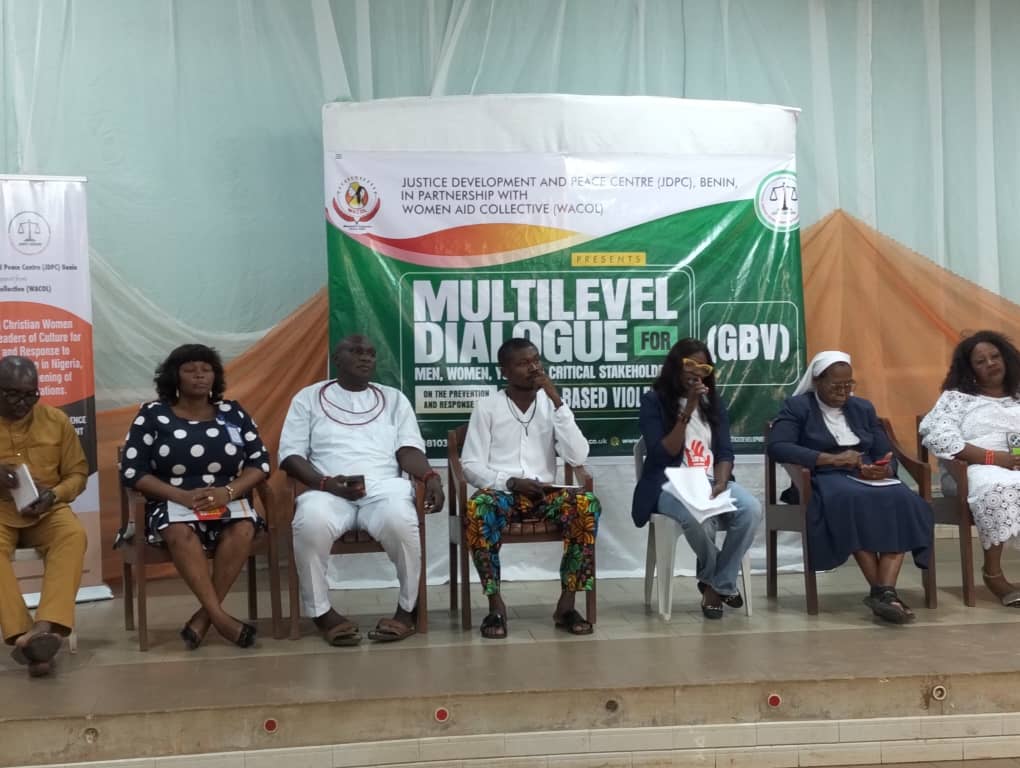
Panel of discussants at an event to commemorate the International Human Rights Day, 2025 on Wednesday called for more campaigns against Gender-Based Violence, adding that it must start from the family.
The panel of discussants drawn from religious and community leaders, security agents, members of the civil society community, chiefs, etc, made the call in Benin in an event organised by Justice Development & Peace Centre (JDPC), Benin, in collaboration with Women Aid Collective (WACOL) with the theme: Multilevel Dialogue for Men, Women, Youth and Critical Take holders on the Prevention and Response to Gender-Based Violence (GBV).
The stakeholders, who said causes of GBV are enormous, called for more enlightenment and education in the family, community and the religious circle.
Security agents in the panel charged members of the public to report GBV cases to security agents regardless of the sex Involved, adding: “When GBV happens, it should be reported to the appropriate quarters. It doesn’t matter if the woman or the man is the victim. GBV perpetrators should not be covered up, they must be exposed. We are there to carry out the prosecution after carrying out the necessary investigation.”
READ ALSO:World Human Rights Day: CSO Tasks Govt On Protection Of Lives
Earlier in his opening remarks, Executive Director, JDPC, Rev. Fr. Benedicta Onwugbenu, lamented that (GBV) remains the most prevalent in the society yet hidden because of silence from victims.
According to him, GBV knows no age, gender or race, adding that “It affects people of all ages, whether man or woman, boy or girl.”
“It affects people from different backgrounds and communities, yet it remains hidden because of silence, stigma, and fear. Victims of GBV are suffering in silence.”
On her part, Programme Director, WACOL, Mrs. Francisca Nweke, who said “women are more affected, and that is why we are emphasising on them,” stressed “we are empowering Christian women and women leaders of culture for prevention and response to Gender-Based Violence in Nigeria through the strengthening of grassroots organisations.”

 Politics4 days ago
JUST IN: Tinubu Holds Closed-door Meeting With Rivers, Ebonyi Govs
- News4 days ago
Why My Lineage Qualifies Me For Awujale Throne — K1 De-Ultimate
- Politics4 days ago
Tinubu, Six APC Governors Hold Closed-door Meeting At Aso Villa
- News5 days ago
How I and Obey’s Son Escaped Getting Caught In Benin’s Coup —Dele Momodu
- News4 days ago
Group Wants Edo AG Professorship Investigated
- News4 days ago
Gbaboyor’s Allegations Against Otuaro Baseless, Malicious — PAP Office
- Politics3 days ago
JUST IN: Fubara Dumps PDP For APC
- News4 days ago
Step-by-step Guide On How To Register For 2026 UTME
- News3 days ago
Otuaro: IPF Urges Reps To Take Caution Over Arrest Threat
- News4 days ago
FG Offered 4,000 Pregnant Women Free C-section – Report


