
News
Nigeria Air MD Breaks Silence On Controversial Aircraft
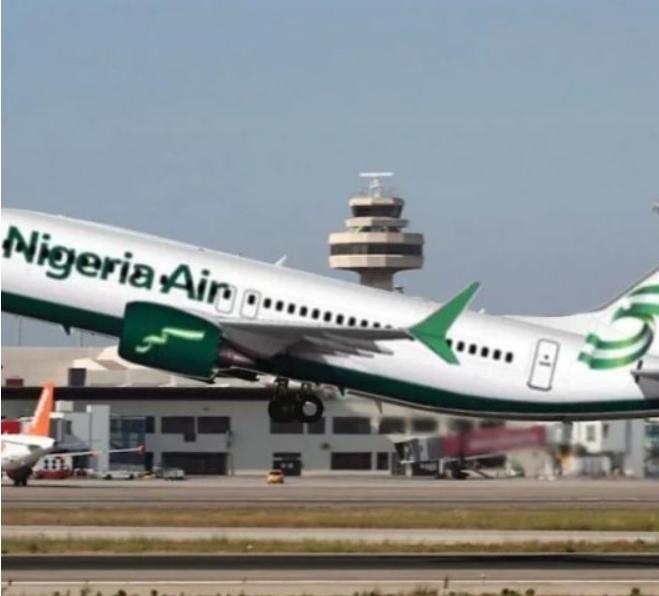
The Managing Director of Nigeria Air, Dayo Olumide has disclosed that the aeroplane that landed at the Nnamdi Azikiwe International Airport, Abuja on 26th May 2023, was a chartered one from Ethiopia.
Olumide disclosed this while answering questions from the senators on Monday, adding that it was launched in 2018 and his own responsibility was to secure an operating certificate for the airline.
Olumide said, “It is a pleasure to be here and to finally make our position known where I can clarify all the misconceptions regarding Nigeria Air as it pertains to the technical aspects of it.
“As you know this airline was launched with the logo in 2018. Several things have transpired since then that have nothing to do with me.
READ ALSO: BREAKING: Reps Declare Nigeria Air Launch A Scam
“I was invited last February, my mandate is to secure an air operating certificate for the airline not necessarily to operate the airline but to secure a licence to fly. And that is entirely my responsibility.”
The Chairman of the Committee on Aviation, Senator Olujimi expressed displeasure of the committee when she said that the entire arrangement of the Nigeria Air was shrouded in suspicion.
In responding to Olujimi’s question, Olumide said the aircraft that flew into the country that day did not need a licence, so it was hired.
He said, “I will like to address your question first before I go on. The aircraft that came in and left was a legitimate charter flight. Anyone of us here if we have a destination wedding in Senegal, we can charter an aircraft.
READ ALSO: JUST IN: Senate Grants Tinubu’s Request To Appoint 20 Special Advisers
“You don’t need to have a licence to do that, you just charter an aircraft, an aircraft you paid for it, it will be brought here, take your passengers and off you go.
“And that is what we did. But in this case, it was to unveil. Ever since 2018, all you have ever seen about Nigeria Aircraft were pictures, and drawings, not the real aircraft, and we thought it was time to show what the real aircraft will look like and also to let shareholders know.
“You see we have institutional investors, they are not in aviation, but they are putting their money for 10 or 15 years and to exit may be at the premium. So they need to see what the actual aircraft will look like.
“So we brought it in here to show them what the aircraft will look like. Then the social media dimension came into it.
“It is an Ethiopian-registered one. Why is it Ethiopian-registered? To operate aircraft in Nigeria, they must be Nigerian registered; on 5th November. That aircraft was not on 5th November registered because it was a chartered flight and it came in with just a few day’s clearance and off it went.
READ ALSO: Tinubu Will Turn Nigeria’s Economy Around, Says Jimoh Ibrahim
“For us to get that licence which is my mandate, we must among other things have three aircraft before the NCA will give us a licence and those three aircraft must be Nigerian-registered aircraft.”
“For us to get that licence which is my mandate, we must among other things have three aircraft before the NCA will give us a licence and those three aircraft must be Nigerian-registered aircraft.”
“There are five steps that one goes through to have a licence. We have gone from the first one to the second one but the problem is that when you change what we call post holders.
“Post holder is a technical term for director of maintenance, chief pilot, when you change them and replace them completely, you have to go back to phase one to interview them to be compliant to the authority, to the civil authority. But haven gone back to phase one doesn’t mean you have done anything thing wrong. That is a correct and normal process.
“So when this aircraft came on a chartered flight, everybody said we have launched Nigeria Air.
“There are learned people in the aviation industry who could have countered that when social media came out, they chose not to.”



News
Lagos: Police Arrest 14 Suspected Traffic Robbers On Lekki-Epe Expressway
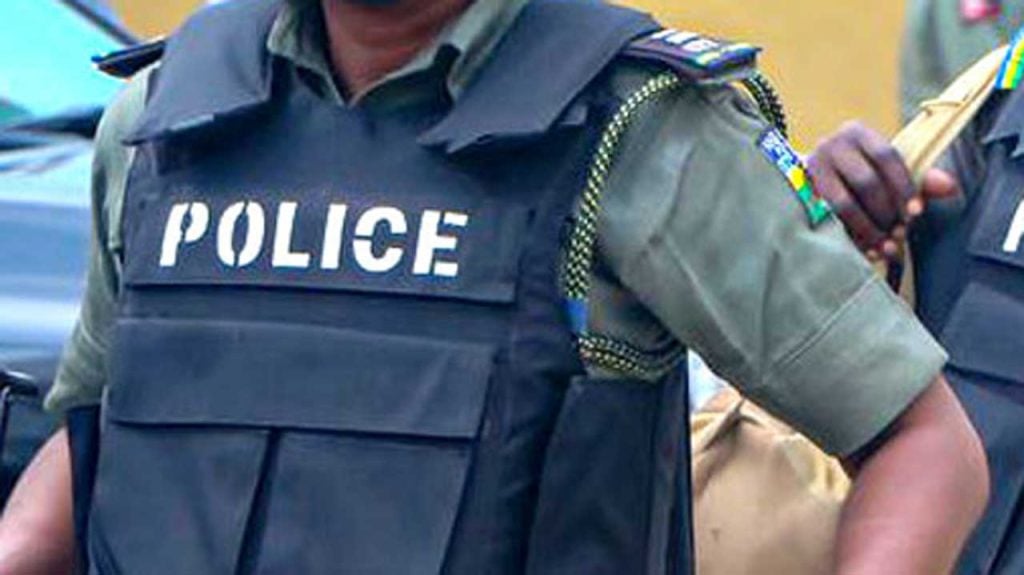
Fourteen persons suspected to be involved in traffic-related robbery have been arrested at various points along the Lekki-Epe Expressway in Lagos over the past two weeks.
The arrests were confirmed on Tuesday by the Lagos State Police Command spokesperson, SP Abimbola Adebisi, via a post on her official X handle, @AbimbolaShotayo.
According to her, operatives of the Command’s Tactical Squad based in Elemoro carried out the operations that led to the suspects’ apprehension.
READ ALSO:VIDEO: Chaos As Last-minute Shoppers Overwhelm Lagos Balogun Market
She explained that the arrests followed sustained patrols and intelligence-driven operations aimed at curbing criminal activities associated with traffic congestion and improving the safety of motorists and other road users along the busy corridor.
Adebisi noted that the development reflects the Command’s determination to strengthen security and uphold law and order on the Lekki-Epe axis, adding that the Tactical Squad has continued to proactively identify crime-prone areas and respond swiftly to threats posed by criminal elements.
She called on residents and commuters to support police efforts by providing timely and credible information that could assist in preventing and detecting crime.
READ ALSO:VIDEO: Chaos As Last-minute Shoppers Overwhelm Lagos Balogun Market
“Security is a shared responsibility. Members of the public are encouraged to stay alert and promptly report any suspicious movements or activities to the nearest police station,” she said.
The police spokesperson further reassured residents and road users of the Command’s commitment to maintaining aggressive patrols and security operations to protect lives and property in the area.
She reiterated the Command’s community policing message, “See Something, Say Something,” stressing the importance of cooperation between the police and the public in sustaining peace and security.
News
OPINION: Don Pedro And Beautiful Benin
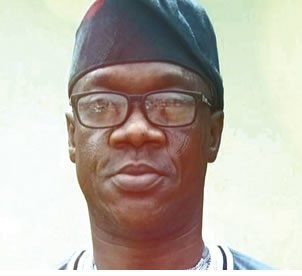
By Suyi Ayodele
A few years ago, a telecommunications outfit set out to erect a Base Transceiver Station (BTS) at the back of the palace of Oba of Benin. The coordinate fell on Alaka Street, directly behind the palace. Civil works commenced and completed without incident. The next phase involved assembling the tower components of the 75-metre mast. As the riggers worked, the structure began to take shape within hours. However, as the tower rose and became taller than any building in the surrounding area, trouble began.
A group of Benin Palace chiefs arrived and issued an immediate ‘stop work’ order. The riggers climbed down, and the company’s management intervened. Explaining the directive, the chiefs said that the height of the tower would enable anyone on the tower to see the inner recesses of the palace, especially the section where the Oba’s harem lives! They stressed that Benin custom and tradition would not permit such a situation. They noted that around the palace, expansive as it is, no structure is allowed to be taller than the palace itself. The development resulted in a stalemate.
The reigning Oba then, Omo N’Oba N’Edo Uku Akpolokpolo, Oba Erediauwa, was contacted. The company pleaded with him to intervene. A diplomat par excellence, Oba Erediauwa listened to all the parties. He agreed with the submissions of his palace chiefs from the Ewebo and Ibiwe groups. Then, he also considered the economic, social and developmental effects of the telecommunications towers on the people of Benin, his subjects, and other residents.
Oba Erediauwa said that since the mast would be of immense benefits to the people and since the company had committed so much money into the venture, it would not be fair to ask the company to rig down. But more importantly, Oba Erediauwa reasoned, the people would lose should the construction of the mast be disallowed. He then found a middle way for the problem to be resolved.
Oba Erediauwa ordered that whenever the company’s engineers and riggers intended to climb the tower, they should first notify the palace. By doing so, the monarch said that he would have sufficient time to inform his wives and instruct them to stay indoors for the duration of the work. Everyone present at the meeting chorused Oba gha to kpere (Long live the Oba). Till date, that mast is still standing, and fully operational, contributing to the economic and social development of Benin City.
Yet another encounter with Oba Erediauwa. A few years after the Alaka Street mast erection, the company needed to optimise its network around Ring Road. The problem was that from the Sapele and Sokponba Roads ends of the Ring Road, there used to be a blind spot that cut off communication as one drove to negotiate either Forestry, Mission or Oba Market Roads. The technical unit of the company suggested a booster BTS around the Ring Road. The coordinate fell on the Benin Museum ground and the Roll Out managers negotiated with the museum and got a spot for the mast.
As the excavation work for the civil engineering structure began, a new set of Benin Palace Chiefs appeared. They contended that the entire Benin Museum ground was the bedroom of Omo N’Oba Ovonramwen Nogbaisi of the 1897 Benin Massacre episode. The chiefs added that any excavation beyond two metres would not be allowed as some traditional items were buried in that vicinity. The company needed at lease a 20-metre excavation for its pilling for the four legs of the tower.
The chiefs agreed that such a length of excavation would only be allowed after certain rituals were performed. They fixed the ritual items at N2 million. When the negotiation to beat down the cost failed, an ex-member of staff of the museum, whose mother was a Benin princess, intervened and approached the Oba.
MORE FROM THE AUTHOR:OPINION: Nigeria’s ‘Sheikh Of The Slaughters’
Again, Oba Erediauwa agreed with his chiefs that the museum ground is sacred and any digging beyond two metres would require certain rituals to be performed. Then, having listened to the reasons why a new mast was needed and confirmed that he had received reports of the blind spot in communication around the Ring Road, he agreed that a new mast was desirable. The monarch was shown the picture of the pine tree mast to be erected and how effectively it blended with the vegetation in the museum ground. He then asked why the company was not willing to perform the rituals.
The company’s representatives told the Omo N’Oba about the cost. The Oba kept quiet for a while. Then he addressed his chiefs in the Benin Language. Thereafter, he spoke: “My chiefs have agreed that N50,000 will be enough for the ritual items. Give them and after they have done what they need to do, continue with your work. Thank you, thank you, thank you.” Today, Oba Erediauwa has long joined his ancestors, but the mast is standing gidigba on the museum ground and the blind spot is eliminated! May the soul of Oba Erediauwa continue to occupy its rightful position among his forebears, Ise!
I have brought out these two narratives to show that justice, fairness and civility reside in the Palace of Oba of Benin. During the height of the misrule of the expired Head of State, General Sani Abacha, when his deputy, General Oladipo Diya and other top military brass were arrested for a phantom coup plot, it is on record that of all the traditional rulers who visited Abacha in Aso Rock Villa, only Oba Erediauwa and the late Awujale of Ijebuland, Oba Sikiru Kayode Adetona, refused to make comments. The two monarchs said that having listened to Abacha, they needed to also hear from Diya and his fellow detainees. When that request was declined, the two kings departed Abuja without saying anything about the coup plot. That is tradition, that is culture.
Today, a lot of issues are happening in Benin and the name of Omo N’Oba Ewuare II, the current king is being dragged to them. The Benin throne, unarguably, is one of the last vestiges of the pride of the African Race. The dignity of that throne is too significant to an average Black man for the negative narratives in Benin now. Any child of history, any proud son and daughter of the Black Race, must be worried, greatly troubled and very apprehensive that the revered Benin throne is being mentioned in many negative forms recently.
On a personal note, I would be long dead before I would believe that the Oba of Benin would mobilise, in any slightest imagination, thugs, parading as keepers of Benin tradition and custom, to attack diplomats as it happened two months ago during the ceremony organised at the premises of the controversial Museum of West African Art (MOWAA) for some diplomats and other arts enthusiasts. Unfortunately, the characters who caused such a monumental embarrassment claimed to have acted in the interest of the Benin Palace.
The issue of MOWAA had hardly died down when another set of street urchins, acting in the name of defending the Benin monarch, stormed a football field and kidnapped one of the prominent sons of Benin, Dr Don Pedro Obaseki. The excuse given was that in his closing remarks at a function in the United Kingdom sometime ago, Obaseki ended his contributions with the clause: “Edo gha to kpere” (Long live the Edo people) instead of the usual salutation of “Oba gha to kpere” (Long live the Oba of Benin).” (Long live the Oba). For that infraction, Obaseki was declared an Oghion-Oba (enemy of the Oba) He was beaten and stripped to his boxers before he was dragged to the palace and ended up at the Oba Market Police Station.
The most disturbing aspect of the ugly incident is the claim by Obaseki that while he was in that humiliating position “inside the Oba Palace, I was slapped, beaten, gagged, and forced to kneel while naked. While in this condition, I attempted to plead for my life and dignity as the Oba drove past me.” I earnestly pray that this account is an exaggeration. I cannot not believe that the Omo N’Oba drove past one of his sons in such a degrading state. It is inconceivable that the Omo N’Oba would be informed of such a commotion within the palace and fail to inquire into it or address it appropriately. May Benin Palace never degenerate to that level; may the gods and ancestors never permit it.
That said, I sincerely believe that Omo N’Oba Ewuare II must do something about the men going about harassing people all in the name of the Palace. No African child in his or her right senses would subscribe to any insult directed at any king, more so the Oba of Benin. An average sensible Benin child knows the grave implications of the Benin Palace declaring him or her as an enemy.
MORE FROM THE AUTHOR:OPINION: Nigerian Soldiers In Benin Republic
With the known acrimonious issues between the current Esama of Benin Kingdom, Chief Gabriel Osawaru Igbinedion, and the immediate Oba Erediauwa, the monarch never declared Igbinedion an Oghion-Oba because he knew the implications. The consequences of anyone becoming an enemy of the Oba of Benin go beyond the Biblical fourth generation! That is the culture. So, the question is: where did these men derive the power to declare anyone the enemy of the Oba when the Omo N’Oba himself has not made such a declaration?
It beats commonsense that in the 21st century, a group of people would descend to the level of barbarism exhibited on Sunday, December 28, 2025, in the stripping of Don Pedro Obaseki, and dragging him from Igbesanmwan Street through Holy Aruosa Church to Ring Road and the ancient Benin Palace all because he allegedly disparaged Benin culture! In my over a quarter of century residence in Benin, I have yet to come across any Benin culture that allows such an animalistic behaviour.
Every tribe has its good, bad and ugly. Benin is no exception. But I must confess here: If you are looking for civilisation and culture, visit Benin. It is no fun when the Benin forebears submit that Aghasoghe Edo, Edo Odion (When you get to Edo- Benin- Edo is still senior). They did not stop there. They added Aghase Edo, Edo Yere’re (When you get to Benin, Benin is still far), to show how complex the culture of the people can be. Benin home and in the Diaspora, have utmost regard for their Oba and believe that Edo Noba ye (Benin is where the Oba resides) and no other place, hence, they conclude Edo ni mose (Benin is beautiful)!
Where the king resides is where justice inhabits and is upheld. Benin cannot be beautiful when we keep recording these ugly incidents in torrents! This is why Oba Ewuare II must act. This is the reason why Umogun, the Uku Akpolokpolo must come out and denounce these charlatans. The time for the Oba to roar like the Ogidigan (great warrior) that he is, is now! Enough of the embarrassment, enough of the image denting. All that is required to end the trend is for the Omo N’Oba to issue a public statement distancing himself from anyone engaged in such barbaric acts. May the gods and the ancestors grant Oba Ewuare II the wisdom to pilot the affairs of his subjects peacefully. Oba gha to kpere Ise!
Sweet Christmas gift of death from America
Otokunado! That is a Benin street lingo. It simply means he who talks and acts the same way (talk and do). If President Donald Trump of America needs an appellation, Otokunado fits perfectly! My old boss has a saying when anything pleasant happens: E sweet my belle.
The Christmas Day bombing of the enclave of the terrorist of the Islamic State of Iraq and Syria (ISIS) in Sokoto State by the American Government, in line with President Trump’s promise, is one event one should not forget easily. It does not matter if America informed President Bola Tinubu before the bombing or it did not inform him. It doesn’t even matter if the claims by the Tinubu administration that it supplied the intelligence to America turned out to be another of the numerous bovine propagandas by the government.
My people say: ró aso mó ìdí, ró ìdí mó aso, kí ìdí má ti s’òfo ni (tie the wrapper round the waist or tie the waist round the wrapper, just ensure the waist is not exposed). The most important news is that the enclaves of the felons were bombed and many of them died! Nigerians should just allow our government to keep telling itself the narratives it chooses to propagate. We should not bother about why the Federal Government, and our Military could not use the same ‘intelligence’ it supplied the American Military, or why Aso Rock waited for President Trump to announce the encounter before it issued its usual nauseating statement!
If an average Nigerian does not know the truth, the nation which carried out the bombing knows how it did it and how many people knew about the plan. President Tinubu, while joining the victory dance, should be encouraged to ponder on the saying of the elders of my place to wit: Alágbò so àgbò sí ojú ebo, oníkálukú dé ibè fi wúre; ebora mo ohùn Alágbò, ebora mo ohún eni tó únwúre ( A man brings a ram to the shrine for sacrifice and another one takes it to pray for goodness from the deity. The deity knows the voice of the ram provider and the voice of the one using it to pray). While thanking him for the Christmas gifts of death to the most undesirable felons sent to hell, can we remind President Trump that a New Year gift of greater measure would not be a bad idea!
God bless the United States of America and God bless the Federal Republic of Nigeria. Hell to terrorists, the world over!
MORE FROM THE AUTHOR:OPINION: Man-of-the-people, Man-of-himself
Makinde and Fayose: The dog and its puppies
Governor Seyi Makinde of Oyo State and his erstwhile friend, former Governor Ayodele Fayose of Ekiti State, are in the news. They are fighting today because they no longer share the same political ideology. Ironically, Fayose still claims to be a member of the People’s Democratic Party (PDP). That itself defines who our politicians are. I don’t know if I am the only one feeling like puking each time Fayose or his new paymaster, Nyesom Wike, the Minister of the Federal Capital Territory (FCT), claim to be in the PDP. The idea is too disgusting for me.
Fayose is after Makinde because the latter said he would not be supporting President Tinubu in 2027. Another disgusting fact is that Makinde in 2023 supported Tinubu against the PDP’s presidential candidate, Abubakar Atiku. How the PDP accommodated that rebellion beats my imagination till this minute. The ex-Ekiti State governor is pissed off because Makinde had the effrontery to declare that he would not be backing Fayose’s god in 2027. To show how an ‘ingrate’ Makinde has turned out to be, Fayose said that the Oyo State governor collected a whopping N50 billion for the Bodija, Ibadan, bomb disaster, and gave the victims a paltry N4.5 billion.
Like he claimed years ago when he said that the late General Muhammadu Buhari would die by the minute, Fayose again added in 2025 that he had the evidence of the payment of the N50 billion to Governor Makinde. When he was dared to publish the evidence, like his front page announsorials of Buhari’s imminent death, Fayose published what turned out to be a request for the sum of N50 billion by the Oyo State Government for the Bodija bomb blast victims.
Did Fayose read the document? Or did his aides read it before it was published? How on earth would a man of Fayose’s standing equate a request memo to actual disbursement when the memo itself is self-explanatory? But he is Fayose and only an Ayodele Fayose could arrive at such a laughable conclusion. That, however, is not my worry here.
I must confess that I was scandalised when Makinde’s media aide, Dr Suliman Olanrewaju, issued a rejoinder, explaining how much was given, how much was disbursed to the victims directly and how the rest was used or is being used. Why would anyone trouble himself to dignify Fayose with a response over a matter that the public has turned to a joke?
Even from President Tinubu’s camp, not a few of them are having fun about how ridiculous Fayose could be when it comes to producing documentary evidence to back up his numerous spurious claims. The same gang that gave Fayose the fake pictures of a ‘dead’ Buhari on a London hospital bed also gave him the information of a N50 billion donation and the ‘evidence’ he published! They told a father that his child is stupid, and he answered that it was fine as long as he was not dead. Pray, what kills faster than stupidity?
Someone I discussed the Makinde-Fayose debacle with asked me what would have been my advice if Governor Makinde had consulted me over the matter. My response was a simple saying of our elders. Those men of wisdom say: A dog that eats its puppies should never be engaged to guard a corpse (Ajá tó ńje omo è, a kìí té òkú tìí).
My interlocutor asked me to explain, and I said if the governor had sought my advice, I would simply send him the last month’s video of Fayose’s mother lamenting that the ex-Ekiti State governor and his children were about sending her out of the house Fayose gave to her to stay. I also said that I would add the videos of Fayose’s younger brother, Isaac Fayose, and the last of his siblings, and ask Governor Makinde to watch and determine the character of the man who is fighting him. It is not every issue that requires a response.
The character of the one raising an issue counts and counts very importantly. A man who could treat his mother and siblings shabbily would not spare anyone. Those men of knowledge in my place caution that when you see a man who intentionally steps on his own cloth, know that he can set yours on fire. That would have been my closing remarks to Governor Makinde!
This is wishing you a fruitful New Year. See you in 2026, Insha Allah!
News
Nigerian Govt Launches LG Proof Of Address To Improve Citizen Identification
The Federal Government has officially rolled out the Local Government Proof of Address, POA, project, an initiative designed to strengthen national security, improve citizen identification, and enhance service delivery across the country.
The project, initiated by the Association of Local Governments of Nigeria, ALGON, was formally approved through a circular issued by the Office of the Secretary to the Government of the Federation, OSGF, with reference number 5964B/S,13/VBA/T.IIIA/704.
According to the circular, the POA scheme took effect from October 1, 2025. However, implementation is at various stages in different federal and state Ministries, Departments and Agencies, MDAs.
According to the circular, under the new arrangement, all federal and state Ministries, Departments and Agencies, MDAs, government-owned corporations, and public institutions are mandated to replace the long-standing use of utility bills as proof of residence with the standardized Proof of Address issued at the local government level.
READ ALSO:FULL LIST: FG Selects 20 Content Creators For Tax Reform Education
The circular explained that the POA project aligns with President Bola Tinubu’s eight-point development agenda, particularly, in the areas of governance reform, security enhancement, and institutional efficiency.
It is domiciled in the Office of the Secretary to the Government of the Federation, with the Nigerian Postal Service, NIPOST, serving as the coordinating federal agency.
“For years, the reliance on utility bills as proof of residence has posed major challenges. Many Nigerians do not have utility bills in their names, while others rely on outdated or shared documents that do not accurately reflect their current place of residence.
“In the same vein, the increasing use of digital services and prepaid utilities has further reduced the reliability of utility bills as a credible verification tool,” the circular stated.
READ ALSO:FG Offered 4,000 Pregnant Women Free C-section – Report
Also, it noted that while the National Identification Number, NIN, remains a critical component of Nigeria’s identity management framework, a significant number of NIN records do not capture current or accurate residential addresses, limiting their effectiveness for residency verification, security profiling, and service planning.
“The POA is therefore designed to fill this critical gap by providing verified, location-specific, and up-to-date address information directly linked to local governments.
“The POA framework places residency verification at the grassroots, where local authorities have better knowledge of their communities. By anchoring address verification at the local government level, the initiative is expected to improve community-level intelligence, crime prevention, emergency response, and population data accuracy,” it added.
READ ALSO:FG Approves N54tn MTEF For 2026 To 2028
Beyond security, the circular noted that POA data is expected to deliver wide-ranging benefits, including improved public service delivery, equitable resource allocation, disaster management planning, urban development, social intervention targeting and financial inclusion.
The circular directed state governments to lead awareness and sensitisation efforts within their jurisdictions, with technical and institutional support from the OSGF, NIPOST, and ALGON.

 Headline4 days ago
JUST IN: US Forces Bomb Terrorists Camps In Nigeria
- News5 days ago
Okpebholo Slams ₦25bn Libel Suit On Edo PDP Chairman
- Headline4 days ago
US Dept Of War Shares Video Of Air Strikes In Nigeria
- News4 days ago
PHOTOS: SGF George Akume Weds Ooni’s Ex-Queen
- News1 day ago
BREAKING: Anthony Joshua Involved In Road Accident
- News4 days ago
Trump’s Airstrikes: Halt Military Cooperation With US Immediately – Sheikh Gumi Tells Tinubu Govt
- News2 days ago
Ex-Edo Gov Obaseki Reacts As His Cousin Is Beaten, Stripped
- News4 days ago
Shehu Sani Reacts To Trump’s Military Strikes In Nigeria
- Headline4 days ago
U.S. Lawmaker Reacts To Nigeria, U.S. Airstrikes
- News5 days ago
YULETIDE: UBTH CMD Charges Nigerians To Be Hopeful In Coming Year


