

News
Nigeria Missing As IMF Lists Africa’s Fastest-growing Economies



The International Monetary Fund has revealed that Nigeria is not among Africa’s fastest-growing economies, as countries such as Benin Republic, Côte d’Ivoire, Ethiopia, Rwanda, and Uganda continue to lead the continent’s growth trajectory in the world.
The IMF said the five countries are now among the world’s fastest-expanding economies, buoyed by sustained policy reforms, improved fiscal management, and investments in infrastructure and manufacturing.
The Director of the IMF’s African Department, Abebe Selassie, disclosed this during the launch of Sub-Saharan Africa’s latest Regional Economic Outlook at a press briefing monitored by our correspondent on Thursday.
He said Benin, Côte d’Ivoire, Ethiopia, Rwanda, and Uganda are among the world’s top-performing economies, crediting their strong growth to fiscal reforms and macroeconomic stability.
The Director also noted that overall growth in Sub-Saharan Africa is projected to stabilise at 4.1 per cent in 2025, with a modest pick-up expected in 2026, powered by macro stabilisation and reform efforts in key economies.
Selassie said, “Six months ago, our assessment highlighted the region’s strong efforts and that growth had exceeded expectations last year. But we also noted sudden realignment of global priorities and increasing turbulent external conditions, marked by weaker demand, softer commodity prices and tighter financial markets. Today, these global headwinds continue to test the region’s recovery and resilience.
“Sub-Saharan Africa’s economic growth, we now estimate, is expected to hold steady at 4.1% this year, with a modest pick-up expected in 2026. In our view, this reflects ongoing progress in macroeconomic stabilisation and reform efforts across the major economies in the region.
“It is important to note that several countries in the region, Benin, Côte d’Ivoire, Ethiopia, Rwanda, Uganda, are among the fastest-growing economies in the world.”
This omission comes despite the IMF’s recent upward revision of Nigeria’s growth forecast, projecting the economy to expand by 3.9 per cent in 2025, driven by higher oil output, improved investor confidence, and a more supportive fiscal policy.
The updated figures reflect a 0.5 percentage point increase from its previous forecast and signal renewed optimism about the country’s medium-term economic prospects.
In July, the IMF revised Nigeria’s economic growth projection for 2025 upward to 3.4 per cent, a 0.4 percentage point increase from the 3.0 per cent forecast published in its April 2025 World Economic Outlook.
The National Bureau of Statistics also reported last month that Gross Domestic Product grew by 4.23 per cent year-on-year in real terms in the second quarter of 2025.
The figure marks a notable improvement from the 3.48 per cent growth recorded in the corresponding period of 2024, reflecting modest gains from increased oil output, recovery in key non-oil sectors, and easing inflationary pressures.
However, the IMF’s verdict indicates that the growth remains below potential, and the government is urged to deepen structural reforms, improve electricity supply, curb inflation, and expand non-oil revenue through industrial diversification and better tax administration
“We still have quite a few resource-intensive countries and conflict-infected countries continuing to face significant challenges with only modest gains in per capita incomes. The external environment remains challenging, global growth is slowing, and commodity prices are diverging. Notably, oil prices are declining, while the price of copper, coffee and gold are fairly elevated.”
READ ALSO:World Bank Remains Nigeria’s Top Creditor As Debt Hits N152.4tn — DMO
The fund also raised concern over rising financial vulnerabilities in Nigeria and other Sub-Saharan African countries, warning that governments’ growing dependence on domestic bank borrowing poses increasing risks to financial stability.
Selassie revealed that many governments are forced to turn to domestic banks as external financing dries up, deepening the “sovereign-bank nexus.” In about half of the cases, the IMF estimates that public debt is now held by domestic financial institutions, a trend that heightens risks to banking sector stability.
He explained that as access to external financing tightens, several African governments have turned to domestic lenders to sustain public spending, a trend he described as a double-edged sword that could strain banks’ balance sheets and deepen the link between public debt and financial sector risks.
“It has been really good to see the region showing strong resilience. But this will continue to be tested in the coming months. Pressure points include rising debt service costs, which are crowding out development spending, a shift towards domestic financing that has deepened the sovereign bank nexus, inflation that has eased at the regional level but remains in double digits in quite a few countries in the region, and external buffers that are under pressure and need to be rebuilt.
“Against this backdrop, we see two broad policy priorities. The first is domestic revenue mobilisation. This is very important to increase our country’s potential, the significant potential to be tapped here also, and the reforms that need to be considered here include modernising tax systems through digitalisation, streamlining inefficient tax expenditures, and strengthening enforcement via targeted compliance strategies.
“And importantly, these efforts must go beyond technical adjustments. It will be essential to build public trust in tax institutions, strengthen institutional capacity, and conduct careful impact assessment, including distributional analysis, to ensure that these reforms are both effective and equitable.
“The IMF, of course, remains committed to supporting the region. Since 2020, we have disbursed nearly $69bn, including about $4bn so far this year. Our capacity development efforts also remain substantial, with countries in the region amongst the largest recipients of technical assistance.”
Selassie warned that in countries with high debt levels and elevated interest rates, stress could spill over into banks’ balance sheets. He called on governments to strengthen regulatory oversight, capital buffers, and ensure that public finance trajectories reduce the likelihood of harmful spillover over the years.
READ ALSO:World Bank To Nigerians: Don’t Oppose, Reverse Current Economic Reforms
“On the issue of domestic banks’ vulnerabilities to rising public debt levels. So again, this is a point that we’ve been highlighting for several years. At this moment, we estimate that about half of the total public debt is held by domestic institutions. This has gone up over the years. As always, it’s a double-edged sword. As access to external financing has declined over the years, our countries, our governments have been able to turn to domestic banks, have had to turn to domestic financial institutions to sustain spending levels, to sustain economies.
“That has been a source of resilience, but we are now seeing a situation where there are significant vulnerabilities, and in particular in those countries where public debt is at very elevated levels, the risk of distress is higher, we are seeing some pressures on bank balance sheets, or there could be potential pressures on bank balance sheets.
“So again, it varies from country to country, the extent to which there are vulnerabilities, but it is an area of some concern in those countries where public debt is high, where interest rates are high, and we’re working with governments to make sure that there is a robust regulatory framework, robust capitalisation plans for banks, and of course first and foremost, the first line of defence, making sure that public finances are in a healthy trajectory to ensure that their spillovers are limited,” the director explained.
He added that Inflation remains stubborn in several countries, even as the regional average eases. And external buffers, such as foreign reserves, are under stress and in urgent need of replenishment.
Selassie warned that the region’s recovery is under pressure from external turbulence, weaker global demand, volatile commodity prices, and tighter global financial conditions.
He cited declining oil prices even as metals like copper, coffee, and gold remain elevated.
While a few countries, such as Kenya and Angola, have regained access to international capital markets, the IMF cautioned that tariff increases from the U.S. and the expiry of preferential trade access under AGOA erode growth prospects.
The impending sharp decline in foreign aid further constrains low-income and fragile states, limiting their fiscal flexibility.
To reinforce resilience, the IMF laid out two broad policy priorities, “Domestic revenue mobilisation, via modernising tax systems (especially through digitalisation), pruning inefficient tax expenditures, and reinforcing compliance.”
READ ALSO:World Bank Lists Challenges For Incoming FG, Drops Growth Rate Forecast
But Selassie emphasised that such reforms must also build public trust, institutional capacity, and include distributional impact assessments.
He said, “Debt management; increasing transparency, reinforcing public financial management, publishing comprehensive debt data, and improving budget oversight. These measures, he argued, will help reduce borrowing costs and unlock innovative financing options.”
Turning his attention to Nigeria, the IMF analyst noted that the decline in inflation is consistent with ongoing monetary tightening and a more flexible exchange rate regime. But he warned that inflation remains sticky due to a “level shift”, meaning prices have settled at higher levels. He urged continued policy discipline to hit targets.
“So starting with inflation in Nigeria, we find the decline in inflation consistent with the tightening of policies that have been undertaken in recent years, particularly on the monetary policy front, but also the effect of the exchange rate adjustment that took place over the last year or so and more, having come through the system. So it is consistent with the policy calibration and we are encouraged by it, but I think there are still some ways to go, towards the government’s target.
“Public debt is high, of course, in many countries in the region. Right now we estimate about 20 countries to be in a situation of high risk of debt distress. This comprises about 14 countries at high risk of debt distress and another six in actual debt distress.”
The IMF stressed that boosting growth is key to making debt servicing affordable, and that not all nations face identical challenges, hence the need for tailored policy frameworks.
Selassie also spotlighted illicit financial flows, urging countries to identify leakages (trade mis-invoicing, capital outflows, tax evasion) and adopt reforms targeting their root causes.
“Lastly, on illicit financial flows, I think, you know, this is the nature of, you know, what comprises things that we consider illicit financial flows vary. Some of it is just simple trade, you know, leakages to do with capital outflows.
READ ALSO:Why We Wrote World Bank Over FG’s Proposed $800 Million Loan — Activist Reveals
“Others have related to, you know, people trying to circumvent the tax system. Still others are completely illegal flows, you know, related to corruption or other flows. So I think, you know, the way to tackle this is to identify what the source of the particular flows is and tackle them through reforms.
“So, again, a lot of the reforms, the direction of reforms that countries are pursuing should go in a way to help address many of these challenges that we are seeing in terms of illicit financial flows.”
Finally, he warned that while market access is improving, borrowing conditions remain expensive. Governments should treat costly external borrowing cautiously and always anchor decisions on a sound medium-term fiscal path.
Despite these warning signs, the IMF commended the region’s resilience and ongoing reform efforts, saying that progress in fiscal consolidation, exchange rate flexibility, and monetary tightening in major economies like Nigeria has helped stabilise growth and ease inflationary pressures.
“On the challenges related to policy in the U.S., I mean, first thing to note is that the fallout from the higher tariffs that have been imposed in the U.S. has not been as bad as we had feared back in April. So the global economy has weathered.
“And importantly, we have not seen other countries, you know, going in the same vein of raising tariffs. So that’s encouraging. Second, you know, this said, countries that are exporting to the U.S. and that are relying on significant exports to the U.S. and they are limited, will be facing higher barriers to trading to the U.S. So, some thinking about, you know, how to reorient these flows, finding different ways to address this challenge will be needed in those countries.
READ ALSO:Nigeria’s Poverty Reduced By Seven Per Cent – World Bank
“One of the striking things about African trade is that when we trade with each other, increasingly we tend to trade in more manufactured goods, higher value-added goods. When we trade with the rest of the world, we are exporting natural resources. So there’s actually a big plus in terms of trading with each other, and there’s a big benefit to be had from promoting intra-Africa trade, so I think this is also an opportunity to work in those kinds of areas,” he concluded.
Meanwhile, the International Monetary Fund has commended Nigeria’s ongoing fiscal and monetary policy reforms, describing the country’s policy direction as “broadly positive” amid signs of easing inflation and improving foreign exchange transparency.
Officials of the IMF’s Fiscal Affairs Department and Monetary and Capital Markets Department made the remarks during the presentation of the Fiscal Monitor and Global Financial Stability Report on the sidelines of the 2025 IMF/World Bank Annual Meetings in Washington, DC.
The IMF said Nigeria’s fiscal stance is currently neutral, meaning that government spending and taxation are balanced in a way that supports monetary efforts to tame inflation without stifling growth.
“Currently what we are projecting for Nigeria is a neutral fiscal stance,” said Davide Furceri, Division Chief at the IMF’s Fiscal Affairs Department. “We think that this neutral fiscal policy stance is also consistent in helping monetary policies to reduce inflation.”
Furceri praised the Nigerian government’s reforms in recent years, especially in tax administration and expenditure efficiency, noting that such efforts have helped to simplify the tax code, reduce burdens on businesses, and cut wasteful spending.
READ ALSO:JUST IN: World Bank Okays $1.57bn Loan For Nigeria
“Nigeria has done quite a lot in the past years,” he added. “Many of the laws that have been passed have tried to streamline tax codes, reduce tax expenditures, and ease the burden on businesses and low-income households. These are policies that go in the right direction.”
He explained that beyond revenue mobilisation, Nigeria could achieve faster economic gains by improving the efficiency and composition of public spending, especially by channelling more funds into social protection to reduce vulnerability among low-income groups.
Presenting the Global Financial Stability Report, the IMF’s Director of Monetary and Capital Markets, Tobias Adrian, said Nigeria’s recent exchange rate adjustments and tighter monetary policy had improved policy credibility and strengthened external buffers.
“Exchange rates are important buffers to adjust the domestic economy relative to shocks,” Adrian said. “A depreciating exchange rate is not necessarily a bad thing; it may actually be a good thing to restore equilibrium. We have indeed seen in Nigeria many steps to strengthen policy frameworks, such as on the monetary policy side.”
He added that the IMF generally supports more flexible exchange rates for economies like Nigeria’s, noting that such flexibility helps cushion the impact of external shocks and restore balance in the foreign exchange market.
Supporting this position, Assistant Director at the IMF, Jason Wu, said Nigeria’s economic trajectory had improved significantly over the past year, helped by higher revenues and stronger FX reserve management.
“Revenue collection has strengthened in Nigeria and transparency in terms of FX reserve positions has improved,” Wu said. “All of this has contributed to lower inflation, from more than 30 per cent last year to 23 per cent this year, as well as improved FX reserve positions. So the direction of travel appears to be positive.”
The IMF, however, warned that despite these positive developments, Sub-Saharan Africa continues to face external headwinds, including the risk of another round of capital flow volatility that could affect economies with weak fundamentals.
“While growth has been pretty strong and capital flows are resuming, the previous surge-and-retrenchment cycles could happen again,” Wu warned. “When that happens, it could expose some of these economies to vulnerabilities, particularly when foreign investments retrace.”
He urged African countries to consolidate fiscal discipline, strengthen debt management, and deepen structural reforms to reduce vulnerability to external shocks.
“It is important for countries to continue to improve fundamentals on the fiscal and monetary policy side, but also in terms of developing more structural policies, like revenue mobilisation, debt management and hopefully also support from the international community,” Wu added.
(PUNCH)




News
Xenophobic Attacks: Oshiomhole Tells FG To Retaliate Against South African Companies In Nigeria

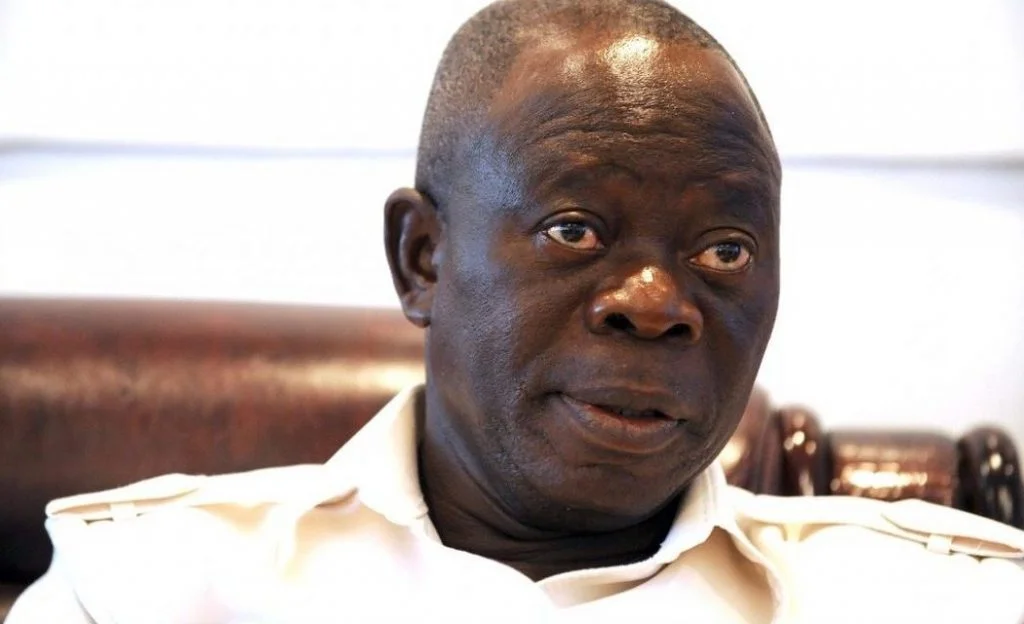
Senator Adams Oshiomhole has called on the Federal Government to retaliate against South African businesses operating in Nigeria following the recent attacks on Nigerians in South Africa.
Speaking during plenary on Tuesday, Oshiomhole said the Federal Government should consider revoking the working license of South African owned companies such as MTN and DSTV.
He argued that Nigeria must respond firmly to what he described as persistent hostility against its citizens.
READ ALSO:South Africa To Investigate ‘Mystery’ Of Planeload Of Palestinians
“I am not going to shed tears. If you hit me, I hit you. I think it is appropriate in diplomacy. It is an economic struggle,” Oshiomhole said.
He argued that while some South Africans accuse Nigerians of taking their jobs, Nigerians should return home and take over employment opportunities created by major South African companies operating in the country, including MTN and DSTV.
“When we hit back, the President of South Africa will not only talk but will also go on his knees to recognise that Nigeria cannot be intimidated.
READ ALSO:South African Ambassador Found Dead Outside Paris Hotel
“We will not condone any life being lost. If a crime has been committed under the South African law they have the right to bring any such person to justice, but to kill our people as if we are helpless, we will not allow that,” Oshiomhole added.
DAILY POST reports that several Nigerians in South Africa have reportedly been attacked, and their businesses destroyed, in ongoing xenophobic attacks in the country.
News
IGP Orders Officers Display Name Tag On Uniform, Gives Update On State Police

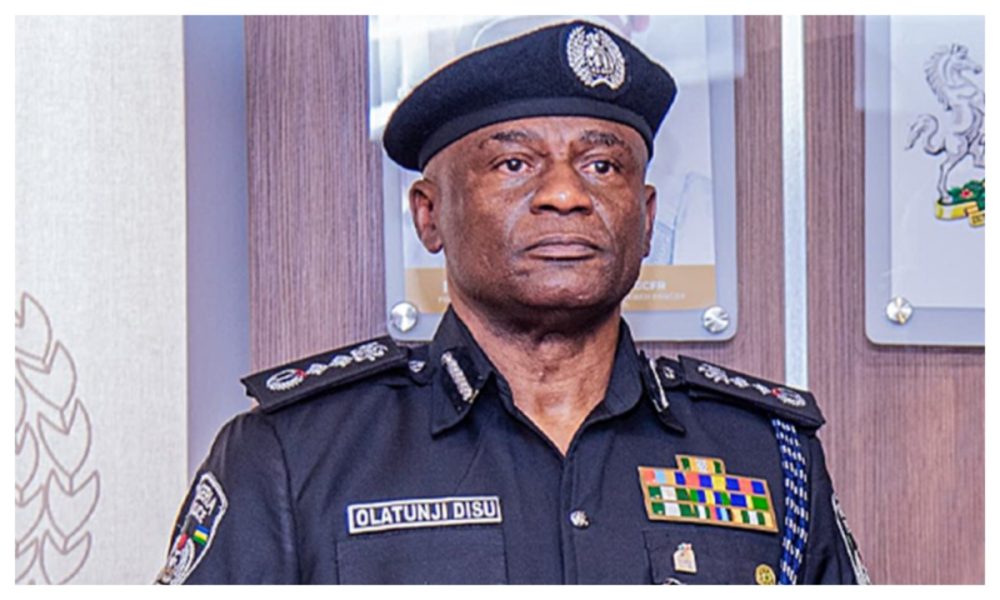
The Inspector General of Police, IGP, Tunji Disu, has ordered all police personnel to always have their name tags on their uniforms for easy identification.
Disu disclosed that only police personnel who are undercover are exempted from displaying their name tags.
Speaking on Tuesday, Disu said: “All police officers should have their name tags. All of us on the high table have our names apart from the undercover among us so if you look at all the Commissioners of Police we have our name tags, so it’s not our standard.
READ ALSO:
“All the Commissioners of Police are here and that is why we called this meeting, we have list of things like this that we will want to discuss with the Commissioners of Police, we have told them earlier and we will still let them know that every that happens within their area of jurisdiction falls under their control.”
On the issue of state police, the IGP said: “Since we got the signal that the Federal Government of Nigeria intend to establish State Police and since we are the federal police, we decided to take the bull by the horn and put down our own side of what we believe on how the state police should be run.
“A lot of things were taken into consideration, a lot of comparative analysis was done and it has been transmitted to the National Assembly.”
News
Court Orders SERAP To Pay DSS Operatives N100m For Defamation
The High Court of the Federal Capital Territory has ordered a non-governmental organization, the Socio-Economic Rights and Accountability Project, SERAP, to pay N100 million as damaged to two operatives of the Department of the State Services, DSS, for unjustly defaming them in some publications.
The court also ordered SERAP to tender public apologies to the defamed officers,
Sarah John and Gabriel Ogundele, in two national newspapers, two television stations and its website.
Besides, the organization was also ordered to pay the two operatives N1 million as cost of litigation and 10 percent post-judgment interest annually on the judgment sum until it’s fully liquidated.
Justice Yusuf Halilu of the High Court of the Federal Capital Territory gave the order on Tuesday while delivering judgment in a N5.5 billion defamation suit instituted against SERAP by the DSS operatives.
The judge found SERAP liable for unjustly defaming the two DSS operatives with allegations that they unlawfully invaded its Abuja office, harassed and intimidated its staff, in September 2024.
READ ALSO:How We Arrested Terror Suspect Who Threatened To Kill Students, Teachers In Abuja — DSS
In the offending publication on its website and Twitter handle, SERAP alleged that the two operatives unlawfully invaded and occupied its office with sinister motives.
The judge held that the publication was in bad taste especially from an organization established to promote transparency and accountability, as nothing in the publication was found to be truthful.
The DSS staff had listed SERAP as 1st defendant in the suit marked CV/4547/2024. SERAP’s Deputy Director, Kolawole Oluwadare, was listed as the 2nd defendant.
In the suit, the claimants – Sarah John and Gabriel Ogundele – accused the two defendants of making false claims that they invaded SERAP’s Abuja office on September 9, 2024..
Counsel to the DSS, Oluwagbemileke Samuel Kehinde, had while adopting his final address in the mater urged the judge to grant all the reliefs sought by his client in the interest of justice.
READ ALSO:DSS Arrests Suspected Gunrunner, Recovers 832 Rounds Of Ammunition
He admitted that although the names of the two claimants were not mentioned in the defamation materials, they had however established substantial circumstances that they are the ones referred to in the published defamation article by SERAP on its website.
The counsel submitted that all ingredients of defamation have been clearly established and the offending publication referred to the two officials of the secret police.
However, SERAP, through its counsel, Victoria Bassey from Tayo Oyetibo, SAN, law firm, asked the court to dismiss the suit on the ground that the two claimants did not establish that they were the ones referred to in the alleged defamation materials.
She said that SERAP used “DSS officials” in the alleged offending publication, adding that the two claimants must establish that they are the ones referred to before their case can succeed.
Similar arguments were canvassed by Oluwatosin Adefioye who stood for the second defendant, adding that there was no dispute in the September 9, 2024 operation of DSS in SERAP’s office.
READ ALSO:Alleged Cyberstalking: DSS Plays Video Evidence In Sowore’s Trial
He said that since SERAP in the publication did not name any particular person, the claimants must plead special circumstances that they were the ones referred to as the DSS officials.
Besides, he said that there is no organization by name Department of State Services in law, hence, DSS cannot claim being defamed adding that the only entity known to law is National Security Agency.
The claimants had in the suit stated that the alleged false claim by SERAP has negatively impacted on their reputation.
The DSS also stated, in the statement of claim, that, in line with the agency’s practice of engaging with officials of non-governmental organisations operating in the FCT to establish a relationship with their new leadership, it directed the two officials – John and Ogunleye – to visit SERAP’s office and invite them for a familiarization meeting.
The claimants added that in carrying out the directive, John and Ogunleye paid a friendly visit to SERAP’s office at 18 Bamako Street, Wuse Zone 1, Abuja on September 9 and met with one Ruth, who upon being informed about the purpose of the visit, claimed that none of SERAP’s management staff was in the country and advised that a formal letter of invitation be written by the DSS.
READ ALSO:DSS, Police Partner NCCSALW To End Terrorism, Mop Up Illegal Arms
John and Ogundele, who claimed that their interactions with Ruth were recorded, said before they immediately exited SERAP’s office, Ruth promised to inform her organisation’s management about the visit and volunteered a phone number – 08160537202.
They said it was surprising that, shortly after their visit, SERAP posted on its X (Twitter) handle – @SERAPNigeria – that officers of the DSS are presently unlawfully occupying its office.
The claimant added, “On the same day, the defendants also published a statement on SERAP’s website, which was widely reported by several media outfits, falsely alleging that some officers from the DSS, described as “a tall, large, dark-skinned woman” and “a slim, dark skinned man,” invaded their Abuja office and interrogated the staff of the first defendant (SERAP).
John and Ogundele stated that “due to the false statements published by the defendants, the DSS has been ridiculed and criticised by international agencies such as the Amnesty International and prominent members of the Nigerian society, such as Femi Falana (SAN)”.
“Due to the false statements published by the defendants, members of the public and the international community formed the opinion that the Federal Government is using the DSS to harass the defendants.”
READ ALSO:SERAP To Court: Stop CBN From ‘Implementing ‘Unlawful, Unjust ATM Fee Hike’
They added that the defendants’ statements caused harm to their reputation because the staff and management of the DSS have formed the opinion that the claimants did not follow orders and carried out an unsanctioned operation and are therefore, incompetent and unprofessional.
The claimants therefore prayed the court for the following reliefs: “An order directing the defendants to tender an apology to the claimants via the first defendant’s (SERAP’s) website, X (twitter) handle, two national daily newspapers (Punch and Vanguard) and two national news television stations (Arise Television and Channels Television) for falsely accusing the claimants of unlawfully invading the first defendant’s office and interrogating the first defendant’s staff.
“An order directing the defendants to pay the claimants the sum of N5 billion as damages for the libellous statements published about the claimants.
“Interest on the sum of N5b at the rate of 10 percent per annum from the date of judgment until the judgment sum is realised or liquidated.
“An order directing the defendants to pay the claimants the sum of N50 million as costs of this action.”
-

 Politics4 days ago
2027: Tinubu’s Re-election May Put An End To Nigeria — Baba Ahmed Warns
-

 Metro5 days ago
I’m A Street Girl’ – Bimbo Ademoye Clashes With Area Boys [VIDEO]
-

 Politics4 days ago
Senatorial Seat: Ogbakha-Edo Warns Against Imposition Of Candidates In Edo South
-

 Politics4 days ago
BREAKING: 2027: Former Adamawa APC Guber Candidate, Aishatu Binani Defects To NDC
-

 Business3 days ago
JUST IN: Nigerian Filling Stations Reduce Fuel Price After Hike
-

 Entertainment4 days ago
Actress Eniola Badmus Gets New Federal Appointment
-

 News5 days ago
10 African Countries With Highest Petrol Prices In Prices In April 2026
-

 News1 day ago
BREAKING: Wike Picks Alabo George For Rivers Governorship
-

 News3 days ago
2027: Pastor Adeboye Speaks On Nigeria’s Next President
-

 Politics4 days ago
2027: Pondi, Otuaro, Other Delta South Stakeholders, Endorse Senator Joel-Onowakpo For Second Term
