

News
OPINION: Akpabio, Akpoti-Uduaghan In Court Of Public Opinion



By Suyi Ayodele
Counsel: ‘Miss Gibson, in this dwelling on Van Buren Street where you live, which the President owns, is there any means of private access one could use to go from downstairs to the upstairs or vice versa?’
Witness: ‘Do you mean, is there some kind of private stairway or hidden passage by which the President and I could have seen one another without being seen by others?’
Counsel: ‘I will request you to refrain from rewording or redefining my questions, Miss Gibson. I mean precisely what I asked. Did the President have any private means of getting to your quarters or you to his?’
Witness: ‘No. Unless he used a ladder-or the vine that grows on the back wall – but I doubt if the President is, or ever was, that athletic or romantically foolhardy.’
“The spectators in the gallery roared with laughter, and some stamped and whistled.” (Pages 666-667).
The above quotes are from Irving Wallace’s Avant-garde novel, The Man 1964). The episodic novel is about the impeachment proceedings against the very first Black President of the United States of America, Douglas Dilman. Fictional as The Man is, its closeness to the literary device of verisimilitude makes it a compelling and unputdownable work of art!
The closest to its plots in real life is the December 19, 1998, impeachment of President Bill Clinton by the United States House of Representatives of the 105th United States Congress on the allegations contained in the two articles of impeachment bothering on “Lying on Oath” and “Obstruction of Justice” in the Clinton-Monica Lewinsky sexual harassment saga.
Writers are prophets. Irving Wallace (March 19, 1916-June 29, 1990) was one. Thirty-four years after the American novelist wrote the fiction about the impeachment of an American President by the US congress and his acquittal by the US Senate on allegation of sexual immorality, Clinton came face to face with the predicament predicted in the fiction, The Man!
The only difference, however, is that while the fictional President Douglas Dilman was a Black man, Clinton is Caucasian. Both ‘Presidents’ were saved by the US Senate which voted 66 against and 34 for, in the case of President Dilman; and 50 against and 50 for, in the case of President Clinton. To impeach an American President, the movers of the impeachment must secure 67 votes from the senators.
One interesting thing about the fictional and real impeachment motions in the above two cases is the fact that at the last minute, when the trials were hot in the US Senate, both Dilman and Clinton, against protestations from the counsels, volunteered to defend themselves, their integrity and the sanctity of the American Presidency!
The duo surrendered themselves to the hostile scrutiny of the House Managers, who, during cross-examinations, asked questions that went deep into the beings of the personalities. But at the end of the day, the essence of American Democracy was upheld and the sanctity of the US Presidency preserved. Little wonder that America progresses irrespective of the personal failings of its leaders.
Miss Wanda Gibson in the opening quotes was the suspected mistress of President Dilman. Those opposed to the coming of Dilman, a Black President in the Oval Office, concluded that Gibson and Dilman being singles, and having been close friends for five years, there was no way they would not have gotten into some levels of intimacy.
MORE FROM THE AUTHOR: IBB: He Who Borrows Till The Creditor Forgets [OPINION]
Gibson’s response under cross-examination above, and the subsequent one (page 669) to wit: (‘Of people like you, Mr. Manager, who might think him too black for me, and me too white for him, and who might cry out that our union would be mongrelizing the Congress, where he was once a member, or the white House, where is now the President…” , nailed the trial and secured victory for Dilman!
I have taken the pain to review The Man here because of its relevance to the current happening in the Nigerian Senate between the Senate President, Godswill Akpabio, and the senator representing Kogi Central Senatorial District, Natasha Akpoti-Uduaghan. Like Dilma who was also accused of sexual immorality against his White House Social Secretary, Miss Sally Watson, Senate President Akpabio is being accused of sexual harassment by a fellow senator, Akpoti-Uduaghan. What do we make of this?
Before we dwell on that, permit a little exercise in sexuality and power here. Pau-Michael Foucault (October 15, 1926-June 25, 1984), a French historian and philosopher, did seminal work on “The History of Sexuality” (1976). In an article published on “The Atlas Society” on Foucault’s Sexuality, especially on the Frenchman’s Theory of Desire, Foucault asserted that “any time desire is present (presumably including sextual desire), the Power Relation is already present.” The philosopher had earlier posited that sex and power “both hold to a juridico-discursive (a model that views power as negative, repressive and based on violence) concept of power that sees power as essentially negative, something that constrains us or holds us back…”
These positions on those two human virtues or vices, appear, unfortunately, tally with the Irish poet and playwright, Oscar Wilde (October 16, 1854-November 30, 1900), who submitted that “Everything in the world is about sex except sex. Sex is about power.” How true? How many men of power, or men-in-power are disciplined enough to draw a line between their influence and their sexual urges? How many men of power have gone down because of women and what is between their laps?
Senator Godswill Akpabio is no doubt swimming in a stormy water which is also infested with wild crocodiles, this time. I want to sincerely believe that the Senate President is not under any illusion that this matter is one that will go away easily.
Again, I also do sincerely hope that Akpabio is aware that it is not only his reputation that is at stake here but that of the institution he represents – the Senate. If he has those understandings, I expect that the number three man in the country will do that which is noble, transparent and allow all due processes to take their course so that justice will not only be done but will be seen to have been done!
At this juncture, I don’t think it is proper for anyone desirous of seeing the end and truth of this matter to pitch tent with any of the gladiators in this case. It would have been a different matter if the two gladiators were not responsibly married. The fact that their spouses had come out to defend them also makes the matter messier.
MORE FROM THE AUTHOR: OPINION: Gambaryan’s Flower Of Thorns
However, there are certain things that cannot be allowed to go away just like that; our sentiments notwithstanding. Chiefly amongst them is the antecedents of the two people involved in this dirty fight. For Senator Akpabio, the odds are against him when it comes to the issue of his relationship with the opposite sex and his propensity towards becoming an incurable misogynist! The same thing with Akpoti-Uduaghan and her almost every-day-skirt-pulling tale!
We shall not forget here Senator Akpabio’s 2020, encounter with Joy Nunieh, the former Acting Managing Director of the Niger Delta Development Commission (NDDC), who alleged that Akpabio tried to get fresh with her at a guest house in the Apo area of the Federal Capital Territory (FCT).
During that encounter while Akpabio was the Minister of the Niger Delta, Nunieh claimed that she had to slap the Akwa Ibom senator, and boasted to have held the exclusive trophy of the first, and possibly, the only woman to have slapped Akpabio! The feeble response from Akpabio then was the fact that Nunieh was not married to one man! How is that an issue, or the concern of the senator? Does a woman, being “not married to one man” give licence for another man to touch her inappropriately?
This is why I think that Senator Akpabio will do himself and the Senate a lot of good if he allows this new accusation from Senator Akpoti-Uduaghan to be thoroughly investigated. And he must allow that! The Senate President must, as a matter of necessity, and in line with good conscience and good convention, first withdraw, or restrain the Senate Committee on Ethics, Privileges and Public Petitions, from going ahead with the probe of the alleged misconduct against Akpoti-Uduaghan until the probe of the allegation of sexual harassment is dispensed with.
More importantly, Senator Akpabio must show good example by stepping aside from the office of the Senate President while the probe of the allegation of sexual harassment is determined! Nothing can be fairer; nothing can be more just! He must personally appear before any panel set up to investigate this matter. Presidents Dilman and Clinton did the same. Senate President Bukola Saraki also set the precedent in the 8th Senate. Akpabio should not and must never be an exception!
And for the Senate Beauty Queen, and self-acclaimed Cinderella, Akpoti-Uduaghan, one can only hope that the Kogi State Senator will realise that she cannot continue to accuse every man who crosses her path as being interested in what is between her laps! It is no longer funny that every man wants to have the beautiful senator ‘Take care of him’, as she alleged against the Senate President.
Methinks Senator Akpoti-Uduaghan needs to do a retrospection on why every man would want to get intimate with her. Granted that she is beautiful, but she is not the first meteor in our Senate! The Nigerian Senate had had more beautiful women before, and it still has. What is the issue with her such that men with suspected acrobatic libidos will not allow her to rest?
I asked this question because in the past, Natasha Akpoti-Uduaghan once alleged that Reno Omokri, former aide to President Goodluck Ebele Jonathan, made passes at her. The allegation was later discovered to be a lie from the pit of hell as Omokri was in the far away United States on an official assignment the day the senator claimed the sexual overtures took place in Abuja!
MORE FROM THE AUTHOR: OPINION: Buhari’s Poverty Of Truth
Now it is Senator Akpabio. But that does not mean that Akpoti-Uduaghan’s current allegation is not true. My worry is what if Akpabio proved, the way Omokri did, that Akpoti-Uduaghan lied? What will be left of her reputation? Natasha says she has all to prove that Akpabio wanted her to warm his bed; I pray, and fervently too, that the Kogi senator is not just grandstanding. I wish she could prove, and convincingly too, that Senator Akpabio’s third element is not as disciplined as the position the Senate President occupies!
This now takes us to the coming into the fray of Mrs. Unoma Ekaette Akpabio, wife of the Senate President, and High Chief Emmanuel Uduaghan, husband of Akpoti-Uduaghan. Mrs. Akpabio, in defending her husband, has equally gone to court, asking for N350 billion in damages.
Without prejudice to the matter, I wish to state here that it would have been a lot better if Madam Ekaette allowed Senator Akpabio to defend himself and thereafter seek legal redress. The only exception here is if Mrs. Akpabio wanted to convince us that her husband would naturally come home to tell her if he had any urge towards any woman! That is funny!
Mrs. Akpabio said her husband is “a disciplined and a jovial man.” I don’t question that. But I think she should read more of Foucault, knowing that her husband is the third most powerful person in the country, today. Also, and more importantly, the assertion by Ryan Guzman “that every man is a sucker for women with beautiful eyes” could be useful here. She doesn’t have to share the sentiments in the philosophies above!
However, I find it instructive, the warning by Akpoti-Uduaghan, while responding to Mrs. Akpabio, that what would be revealed would shock the Senate President’s wife. Whatever it is, I feel, and strongly too, that Mrs. Uduaghan should have allowed her husband to prove his innocence while she held prayers for the truth of the matter to come out at the end of the day.
But if I find Mrs. Akpabio’s response funny, especially the insinuation that her husband is too “disciplined” to lift another woman’s skirt, the response of High Chief Emmanuel Uduaghan, left me dumbfounded! I still would like to ask who advised the Warri High Chief to pen that response?
I have read High Chief Uduaghan’s response a couple of times and I keep asking on each occasion: what sort of man goes to another man making passes at his wife to ask, “respectfully” the libidinous character “…to extend the courtesy and respect my wife deserves while also honouring the friendship between us. We reached an understanding and agreed to resolve the issue amicably.” How ‘amicable’ can such a reconciliation be with a man who wants to explore and exploit another man’s well?
That was what the Itsekiri High Chief penned in his response to the allegation. An African man confirmed that his wife “confided in me about her interactions with the Senate President.” And all he could do is to approach “the matter with the utmost maturity and responsibility, as it is my duty as a traditional leader who has immense respect for constituted authority and upholds core family values to foster peace and harmony.” Then he added that “despite this agreement, my wife continued to express concerns about the harassment she has endured from the Senate President.” That is an African man! That is an Itsekiri High Chief talking about the man alleged to have asked, continuously, his (High Chief) wife to pull down her skirt!! Wonderful!!!
May my mind never play the ‘evil spirit’ on me on a Tuesday morning! I tried unsuccessfully to ask my Itsekiri friends if they have anything close to Magun (climb not), Tesho (strong and weak) and Alemaro (permanent turgidity) in their local pharmacies! What would have been a better response to a randy fellow, whose libido can only be satisfied with the inner recesses of a married man, than to send him back to his maker or make him permanently inactive in the down region? Oh, ‘evil spirit’, I cast you to the bottomless pit!
Jokes apart. The whole issue rests squarely on Senate President Akpabio. He must be civil, civilised and decent in the way he handles this matter. Professor Itse Sagay (SAN) has words of advice for him in this circumstance. He says: “In developed societies like Western Europe, the United States, United Kingdom and Canada, he (Akpabio) would have been asked to step down, but have we developed to that level? I don’t know.” Senator Godswill Akpabio owes this generation, and the ones coming, the onerous responsibility to answer the professor’s poser. Mr. Senate President, I ask: HAVE WE DEVELOPED TO THAT LEVEL?




News
Xenophobic Attacks: Oshiomhole Tells FG To Retaliate Against South African Companies In Nigeria

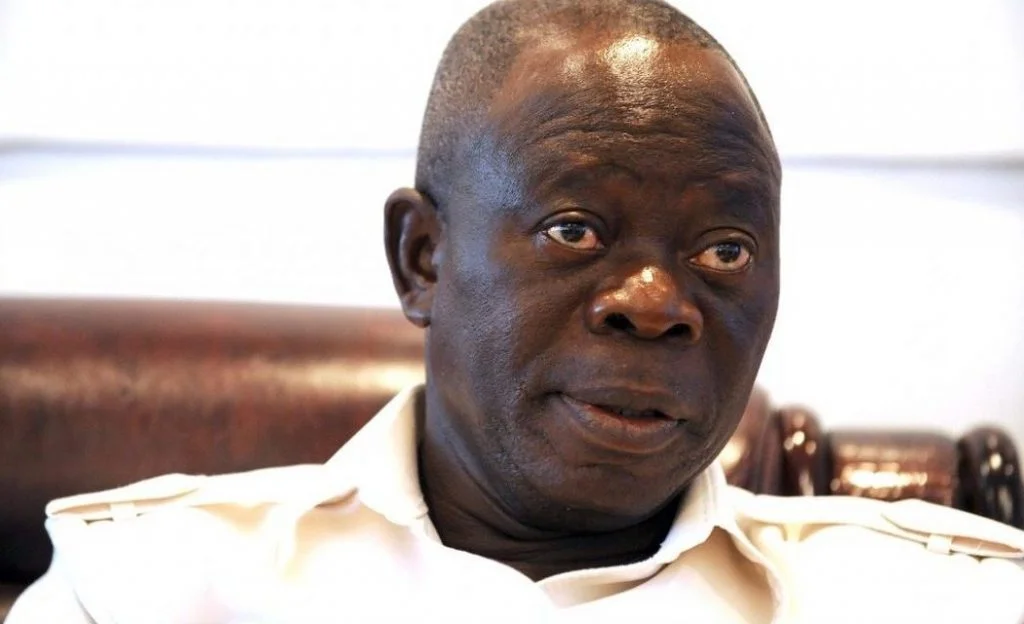
Senator Adams Oshiomhole has called on the Federal Government to retaliate against South African businesses operating in Nigeria following the recent attacks on Nigerians in South Africa.
Speaking during plenary on Tuesday, Oshiomhole said the Federal Government should consider revoking the working license of South African owned companies such as MTN and DSTV.
He argued that Nigeria must respond firmly to what he described as persistent hostility against its citizens.
READ ALSO:South Africa To Investigate ‘Mystery’ Of Planeload Of Palestinians
“I am not going to shed tears. If you hit me, I hit you. I think it is appropriate in diplomacy. It is an economic struggle,” Oshiomhole said.
He argued that while some South Africans accuse Nigerians of taking their jobs, Nigerians should return home and take over employment opportunities created by major South African companies operating in the country, including MTN and DSTV.
“When we hit back, the President of South Africa will not only talk but will also go on his knees to recognise that Nigeria cannot be intimidated.
READ ALSO:South African Ambassador Found Dead Outside Paris Hotel
“We will not condone any life being lost. If a crime has been committed under the South African law they have the right to bring any such person to justice, but to kill our people as if we are helpless, we will not allow that,” Oshiomhole added.
DAILY POST reports that several Nigerians in South Africa have reportedly been attacked, and their businesses destroyed, in ongoing xenophobic attacks in the country.
News
IGP Orders Officers Display Name Tag On Uniform, Gives Update On State Police

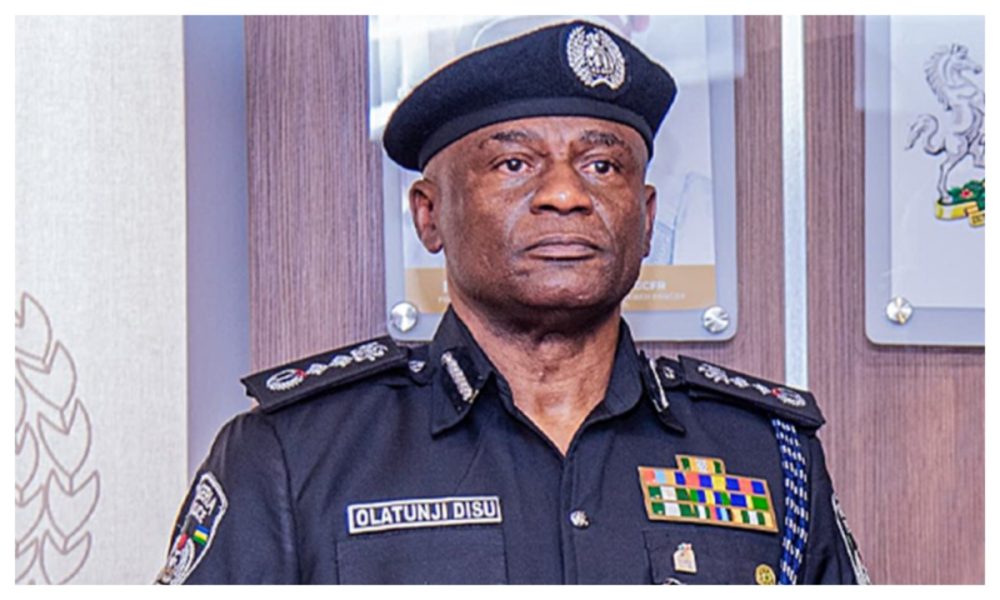
The Inspector General of Police, IGP, Tunji Disu, has ordered all police personnel to always have their name tags on their uniforms for easy identification.
Disu disclosed that only police personnel who are undercover are exempted from displaying their name tags.
Speaking on Tuesday, Disu said: “All police officers should have their name tags. All of us on the high table have our names apart from the undercover among us so if you look at all the Commissioners of Police we have our name tags, so it’s not our standard.
READ ALSO:
“All the Commissioners of Police are here and that is why we called this meeting, we have list of things like this that we will want to discuss with the Commissioners of Police, we have told them earlier and we will still let them know that every that happens within their area of jurisdiction falls under their control.”
On the issue of state police, the IGP said: “Since we got the signal that the Federal Government of Nigeria intend to establish State Police and since we are the federal police, we decided to take the bull by the horn and put down our own side of what we believe on how the state police should be run.
“A lot of things were taken into consideration, a lot of comparative analysis was done and it has been transmitted to the National Assembly.”
News
Court Orders SERAP To Pay DSS Operatives N100m For Defamation
The High Court of the Federal Capital Territory has ordered a non-governmental organization, the Socio-Economic Rights and Accountability Project, SERAP, to pay N100 million as damaged to two operatives of the Department of the State Services, DSS, for unjustly defaming them in some publications.
The court also ordered SERAP to tender public apologies to the defamed officers,
Sarah John and Gabriel Ogundele, in two national newspapers, two television stations and its website.
Besides, the organization was also ordered to pay the two operatives N1 million as cost of litigation and 10 percent post-judgment interest annually on the judgment sum until it’s fully liquidated.
Justice Yusuf Halilu of the High Court of the Federal Capital Territory gave the order on Tuesday while delivering judgment in a N5.5 billion defamation suit instituted against SERAP by the DSS operatives.
The judge found SERAP liable for unjustly defaming the two DSS operatives with allegations that they unlawfully invaded its Abuja office, harassed and intimidated its staff, in September 2024.
READ ALSO:How We Arrested Terror Suspect Who Threatened To Kill Students, Teachers In Abuja — DSS
In the offending publication on its website and Twitter handle, SERAP alleged that the two operatives unlawfully invaded and occupied its office with sinister motives.
The judge held that the publication was in bad taste especially from an organization established to promote transparency and accountability, as nothing in the publication was found to be truthful.
The DSS staff had listed SERAP as 1st defendant in the suit marked CV/4547/2024. SERAP’s Deputy Director, Kolawole Oluwadare, was listed as the 2nd defendant.
In the suit, the claimants – Sarah John and Gabriel Ogundele – accused the two defendants of making false claims that they invaded SERAP’s Abuja office on September 9, 2024..
Counsel to the DSS, Oluwagbemileke Samuel Kehinde, had while adopting his final address in the mater urged the judge to grant all the reliefs sought by his client in the interest of justice.
READ ALSO:DSS Arrests Suspected Gunrunner, Recovers 832 Rounds Of Ammunition
He admitted that although the names of the two claimants were not mentioned in the defamation materials, they had however established substantial circumstances that they are the ones referred to in the published defamation article by SERAP on its website.
The counsel submitted that all ingredients of defamation have been clearly established and the offending publication referred to the two officials of the secret police.
However, SERAP, through its counsel, Victoria Bassey from Tayo Oyetibo, SAN, law firm, asked the court to dismiss the suit on the ground that the two claimants did not establish that they were the ones referred to in the alleged defamation materials.
She said that SERAP used “DSS officials” in the alleged offending publication, adding that the two claimants must establish that they are the ones referred to before their case can succeed.
Similar arguments were canvassed by Oluwatosin Adefioye who stood for the second defendant, adding that there was no dispute in the September 9, 2024 operation of DSS in SERAP’s office.
READ ALSO:Alleged Cyberstalking: DSS Plays Video Evidence In Sowore’s Trial
He said that since SERAP in the publication did not name any particular person, the claimants must plead special circumstances that they were the ones referred to as the DSS officials.
Besides, he said that there is no organization by name Department of State Services in law, hence, DSS cannot claim being defamed adding that the only entity known to law is National Security Agency.
The claimants had in the suit stated that the alleged false claim by SERAP has negatively impacted on their reputation.
The DSS also stated, in the statement of claim, that, in line with the agency’s practice of engaging with officials of non-governmental organisations operating in the FCT to establish a relationship with their new leadership, it directed the two officials – John and Ogunleye – to visit SERAP’s office and invite them for a familiarization meeting.
The claimants added that in carrying out the directive, John and Ogunleye paid a friendly visit to SERAP’s office at 18 Bamako Street, Wuse Zone 1, Abuja on September 9 and met with one Ruth, who upon being informed about the purpose of the visit, claimed that none of SERAP’s management staff was in the country and advised that a formal letter of invitation be written by the DSS.
READ ALSO:DSS, Police Partner NCCSALW To End Terrorism, Mop Up Illegal Arms
John and Ogundele, who claimed that their interactions with Ruth were recorded, said before they immediately exited SERAP’s office, Ruth promised to inform her organisation’s management about the visit and volunteered a phone number – 08160537202.
They said it was surprising that, shortly after their visit, SERAP posted on its X (Twitter) handle – @SERAPNigeria – that officers of the DSS are presently unlawfully occupying its office.
The claimant added, “On the same day, the defendants also published a statement on SERAP’s website, which was widely reported by several media outfits, falsely alleging that some officers from the DSS, described as “a tall, large, dark-skinned woman” and “a slim, dark skinned man,” invaded their Abuja office and interrogated the staff of the first defendant (SERAP).
John and Ogundele stated that “due to the false statements published by the defendants, the DSS has been ridiculed and criticised by international agencies such as the Amnesty International and prominent members of the Nigerian society, such as Femi Falana (SAN)”.
“Due to the false statements published by the defendants, members of the public and the international community formed the opinion that the Federal Government is using the DSS to harass the defendants.”
READ ALSO:SERAP To Court: Stop CBN From ‘Implementing ‘Unlawful, Unjust ATM Fee Hike’
They added that the defendants’ statements caused harm to their reputation because the staff and management of the DSS have formed the opinion that the claimants did not follow orders and carried out an unsanctioned operation and are therefore, incompetent and unprofessional.
The claimants therefore prayed the court for the following reliefs: “An order directing the defendants to tender an apology to the claimants via the first defendant’s (SERAP’s) website, X (twitter) handle, two national daily newspapers (Punch and Vanguard) and two national news television stations (Arise Television and Channels Television) for falsely accusing the claimants of unlawfully invading the first defendant’s office and interrogating the first defendant’s staff.
“An order directing the defendants to pay the claimants the sum of N5 billion as damages for the libellous statements published about the claimants.
“Interest on the sum of N5b at the rate of 10 percent per annum from the date of judgment until the judgment sum is realised or liquidated.
“An order directing the defendants to pay the claimants the sum of N50 million as costs of this action.”
-

 Politics4 days ago
2027: Tinubu’s Re-election May Put An End To Nigeria — Baba Ahmed Warns
-

 Metro5 days ago
I’m A Street Girl’ – Bimbo Ademoye Clashes With Area Boys [VIDEO]
-

 Politics5 days ago
Senatorial Seat: Ogbakha-Edo Warns Against Imposition Of Candidates In Edo South
-

 Politics4 days ago
BREAKING: 2027: Former Adamawa APC Guber Candidate, Aishatu Binani Defects To NDC
-

 Business3 days ago
JUST IN: Nigerian Filling Stations Reduce Fuel Price After Hike
-

 Entertainment4 days ago
Actress Eniola Badmus Gets New Federal Appointment
-

 News5 days ago
10 African Countries With Highest Petrol Prices In Prices In April 2026
-

 News1 day ago
BREAKING: Wike Picks Alabo George For Rivers Governorship
-

 News3 days ago
OPINION: Why South Africans Murder Nigerians In Cold Blood
-

 News4 days ago
2027: Pastor Adeboye Speaks On Nigeria’s Next President
