
News
[OPINION] AMUPITAN- “His-Story” Beckons

By Israel Adebiyi
There is something about names that our generation has slowly forgotten – their power, their prophecy, their weight in defining purpose. In the African worldview, a name is never an accident; it is a covenant. Our forebears named their children with deliberation, believing that words shape destiny. They did not simply call a child by what sounded beautiful; they invoked meaning, heritage, and expectation. That is why the Yoruba man, in a blend of philosophy and poetry, says, “Orúkọ ń rò ènìyàn” – a name molds its bearer.
It was this philosophy that filled my mind recently while interacting with members of the National Youth Service Corps Editorial CDS. During the introductions, one of the names that caught my attention was “Ajobiewe.” It instantly set off a train of thought – could there be a shared essence between names like “Ajobiewe” and “Eweje”? Were these mere titles of grace, or metaphors for destiny? In that moment, I was reminded again that our ancestors were intentional people; they named not just for identification, but for instruction.
That meditation on names became even more striking with the emergence of a new Chairman of the Independent National Electoral Commission (INEC): Joash Ojo Amupitan. His surname, AMUPITAN, loosely translates to “the one whose life will tell stories or bear testimonies.” It is an uncommon name, but in a nation desperate for uncommon results, perhaps Providence is sending a message. For too long, the stories from Nigeria’s electoral body have been grim – tales of betrayal, manipulation, and distrust. But with Amupitan, Nigeria stands once again at the threshold of possibility: can this man become the positive story we have waited to tell?
To understand the task before the new INEC boss, one must first confront the ruins of public perception. Few institutions in Nigeria suffer as much credibility deficit as the electoral commission. From one election cycle to another, INEC has been accused of playing foot soldier to political interests, shifting goalposts midway, and delivering outcomes that mock the people’s will. It is a sad irony that the very institution meant to uphold democracy is often viewed as its greatest saboteur.
The distrust is generational. From the annulled 1993 election that shattered the hopes of millions, to the bitterly contested 2007 and 2019 polls, Nigerians have seen enough to be skeptical. Even the 2023 general election, heralded by promises of technological innovation through the BVAS and IReV systems, ended in disillusionment for many. Citizens who had hoped that technology would outsmart human manipulation were left heartbroken by what they perceived as selective transparency. Confidence in the system has been badly eroded.
MORE FROM THE AUTHOR:OPINION: Nigeria And The Echoes Of A People Unheard
This is the “itan” – the story – that Amupitan inherits. And it is not a flattering one. Yet therein lies his mandate: to rewrite the narrative, to tell a story different from those who came before him.
History has a way of testing every man it calls. For Amupitan, this appointment is both an opportunity and a trial. It is an opportunity to restore faith in one of Nigeria’s most important democratic institutions; but it is also a trial of character, courage, and conviction. He must choose whether to be remembered as another custodian of a broken system or as the one who dared to fix it.
In doing so, he must first recognize that electoral credibility does not rest merely on gadgets or grand pronouncements. It rests on integrity and institutional will. A thousand reforms mean little if those who implement them lack the courage to stand by the truth.
The new INEC Chairman must, therefore, prioritize transparency and communication. He must understand that Nigerians are not asking for perfection, but for honesty. He must rebuild confidence, not through press conferences, but through consistent and verifiable actions that prove the commission’s neutrality. Every election supervised by INEC, every rerun, every by-election must bear the unmistakable stamp of fairness.
The truth is that many of INEC’s failures stem not from technical limitations, but from internal rot. A structure compromised from within cannot deliver credibility externally. The new chairman must therefore embark on a bold internal reform – one that enforces discipline, integrity, and accountability within the ranks of electoral officers.
Every election year, Nigerians hear of “compromised ad-hoc staff,” “tampered results,” or “missing materials.” These are not coincidences; they are the consequences of a weak enforcement culture. To change the story, Amupitan must clean the house. He must be willing to confront the entrenched interests within the institution that have grown fat on impunity.
MORE FROM THE AUTHOR:OPINION: Nigerian Leaders And The Tragedy Of Sudden Riches
There is also the urgent need to strengthen collaboration with civil society groups and the media. These watchdogs are not enemies of the commission; they are partners in accountability. Opening INEC’s processes to scrutiny will not weaken it – it will legitimize it. Transparency, after all, is the oxygen of democracy.
Technology, while essential, is not the silver bullet. The BVAS, the IReV, and other innovations introduced in recent years have shown both their potential and their limits. Machines can transmit data, but they cannot transmit conscience.
Amupitan must, therefore, pair technological innovation with ethical reform. There must be stronger vetting and training of ad-hoc staff, better communication with party agents, and clearer contingency plans for network failures and litigation. The aim is not just to conduct elections, but to conduct credible ones that leave no room for avoidable suspicion.
No democracy survives long when the people lose faith in the ballot. That is Nigeria’s greatest danger – not coups, not protests, but apathy. When citizens begin to believe that their votes no longer matter, they retreat from the civic space, and democracy slowly dies.
Amupitan’s task, then, is not just administrative; it is spiritual. He must rekindle belief. He must make Nigerians dream again of elections where competence triumphs over manipulation, and where winners celebrate without the sour taste of stolen mandates.
This will require humility – the willingness to listen to public grievances, admit institutional lapses, and take corrective action promptly. Leadership in INEC must shed arrogance and embrace service.
But even as we place demands on the new INEC Chairman, we must also turn to the political class. Electoral credibility is not the sole responsibility of the umpire; it is the collective responsibility of all who play the game. Politicians who see public office as a do-or-die affair undermine democracy more than any faulty server could.
MORE FROM THE AUTHOR:The Audacity Of Hope: Super Eagles And Our Faltering Political Class
Nigeria’s political actors must learn to win honorably and lose gracefully. They must stop weaponizing ethnicity, religion, and violence to subvert the people’s will. For once, the pursuit of power should give way to the pursuit of purpose.
The judiciary, too, must rise above compromise. When courts deliver judgments that contradict the spirit of democracy, they do not just decide cases – they shape national destiny.
Democracy is not a spectator sport. Citizens cannot demand accountability from institutions they do not engage with. Nigerians must therefore reclaim ownership of the process. From voter registration to election day monitoring, the people must be involved, informed, and insistent.
Civil society must keep the pressure on. The media must continue to tell the stories that matter, without fear or favor. And ordinary Nigerians must understand that participation is power – the ballot, when used with conviction, is still mightier than the bullet.
Names, after all, are prophecies. Amupitan – the one who will be used to tell stories. The question is: what story will be told of him? Will it be another lamentation of lost opportunity, or a narrative of national redemption?
In a time when Nigeria’s democracy trembles under the weight of cynicism, his appointment is an invitation to hope. The story he writes will not be written with ink, but with integrity; not with words, but with actions.
At the end of his tenure, may the stories told of him not be of betrayal and bitterness, but of courage and credibility. May his name – Amupitan – indeed become a testimony, not just for himself, but for a nation that desperately needs one.



News
Children’s Day: Chaos At Ogbe Stadium As Dozens Faint

Chaos erupted on Wednesday during the Children’s Day celebration as dozens of students reportedly collapsed following a stampede triggered by the use of pepper spray.
The event,
organised by the Edo State Ministry of Education at the Samuel Ogbemudia Stadium was disrupted after some male students of Ihogbe College allegedly made uncompromising advances towards female students at the venue.
A parent who identified himself as Oboh Emmanuel said, “the behaviour of those uncultured students attracted the attention of bouncers stationed at the stadium as they rebuked the male students.”
Oboh said the affected students later regrouped and attacked the bouncers, leading to a confrontation within the crowded arena.
READ ALSO:Children’s Day: Edo Commits To Child Protection
It was gathered that in the ensuing confusion, the bouncers were reported to have deployed pepper spray in an area occupied by a large number of students.
Several students, particularly female students, reportedly fainted after inhaling the substance, while others sustained injuries after being stepped on during the ensuing melee.
The panic was said to have spread across the stadium as students, teachers and parents scampered for safety.
Many of the affected students were reportedly rushed to the Edo Specialist Hospital for medical attention.
READ ALSO: Egor LG Chair, Ogbemudia, Vice, Osawe Impeached
Reacting to the incident, Chief Press Secretary to Governor Monday Okpebholo, Dr Patrick Ebojele, said the security personnel that fired the tear gas had been detained.
He said all the students, except two, that were rushed to the hospital have been discharged.
Ebojele stated that doctors wanted to observe the students till tomorrow before allowing them to go home.
“The two students are not seriously injured. Doctors want to observe them overnight. Permanent Secretary, Ministry of Education is still at the hospital. The man who used pepper spray has been detained.
“The incident did not happen the way it is being exaggerated. All modalities were put in place to ensure the children enjoyed their day.”
News
Okpebholo Salutes Edo Muslims, Seeks Continued Support, Prayers
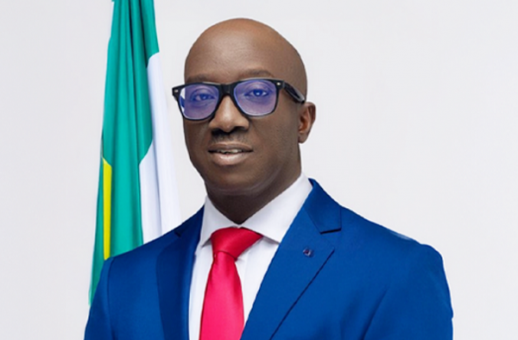
Governor Monday Okpebholo of Edo State has urged Muslims and all Nigerians to continue to pray for peace, unity and progress in the country even as they celebrate the annual Eid-al-Adha
The governor, who was represented by his deputy, Dennis Idahosa, stated this during the annual Eid-al-Adha celebration with Muslim faithfuls held at Government House in Benin City.
He reiterated his administration’s commitment to fairness, inclusivity and equal opportunities for all citizens irrespective of religion and tribe.
READ ALSO:ADC Penetrates Okpebholo’s District As Defections Strengthen Party in Edo Central
According to him, the present administration remains determined to building a government that reflects the diversity of Edo State, noting that competent and qualified Muslims have continued to play vital roles in his government because of their capacity, integrity and commitment to service.
“As a government, we remain committed to fairness, inclusivity and equal opportunity for every Edo citizen, irrespective of religion, ethnicity or political affiliation. This is why quality and competent Muslims are serving in key positions in our administration.”
Okpebholo appreciated the Muslim community in Edo State for their unwavering support and continuous prayers for his administration, noting that such prayers and support have contributed immensely to the peace and steady development being witnessed across the state.
READ ALSO:Okpebholo Felicitates Muslims On Eid-el-Fitr Celebration
He then called on all Nigerians to use the occasion of Eid-al-Adha to pray for the administration of President Bola Ahmed Tinubu, stressing that the country needs collective prayers, unity and cooperation to overcome its present economic and security challenges.
“I urge all Muslims and indeed all Nigerians to use this occasion to pray for our dear nation and for the administration of President Bola Ahmed Tinubu. Nigeria needs our collective prayers, unity and support as we strive to overcome our challenges and build a more prosperous future for all.”
In his remarks, the Chief Imam of Edo State, Abdulfatai Enabulele, applauded the governor for what he described as remarkable developmental strides recorded in less than two years in office.
The cleric commended the administration for ongoing infrastructural development and efforts geared towards improving governance in the state, but appealed to the government to revisit and complete some abandoned projects inherited from the previous administration for the benefit of the people.
News
Children’s Day: Edo Commits To Child Protection
The Edo State Government has reaffirmed its commitment to protecting the rights of children, promoting quality education, and strengthening sports development across the state.
This assurance was given by the governor of Edo State, Monday Okpebholo, during the 2026 Children’s Day Celebration and Governor’s Cup Finale held on Wednesday at the Samuel Ogbemudia Stadium, Benin City.
Addressing pupils, students and teachers,
the governor described children as the pride of Edo State and the future of the nation.
The governor, represented by his deputy, Dennis Idahosa,
noted that the annual celebration provides an opportunity to honour their dreams, talents, and limitless potential.
READ ALSO:Eid-el-Kabir: Edo Deputy Gov Solicits prayers For Okpebholo
Speaking on this year’s Children’s Day theme, “Choose Kindness, Reject Bullying,” the governor said the message was timely and significant, as it emphasizes the need to create safe, supportive, and inclusive environments for children both in schools and communities.
He stated that bullying in all forms — physical, verbal, emotional, or online — has no place in society, adding that the Edo State Government remains fully committed to protecting the rights and dignity of every child.
According to him, the administration will continue to strengthen policies and programmes that promote child protection, discipline, mutual respect, and positive learning environments across schools in the State.
The governor urged children to embrace kindness, compassion, teamwork, and respect for one another, stressing that true strength lies not in intimidation but in empathy, good character, and mutual understanding.

 Metro5 days ago
My Husband Abandoned Me On Our Wedding Night To Attend Political Meeting, I Want Our Marriage Dissolved
- Headline4 days ago
Woman Passes Out After Receiving 100 Strokes Of Cane
- Headline4 days ago
JUST IN: White House Locked Down Briefly As Gunman Opens Fire At Security Checkpoint
- Politics3 days ago
Two Masked Men Gun Down Politician In His Rivers State Hotel
- Politics5 days ago
Warri Ijaw Hail INEC Delineation Report, Call For Additional Electoral Wards, Others
- News5 days ago
Alleged Terrorism: Court Rejects Defendant’s Bid To Travel Abroad
- News3 days ago
More Pain For Nigerians As Cooking Gas Price Increases Nationwide
- Metro5 days ago
My Wife Stop Cooking My Food, Beats Me Black And Blue All the Time, Man Tells Court
- Politics5 days ago
What I’ll Do As President Of Nigeria — Amaechi
- Politics3 days ago
‘Tinubu’s Borrowing In 24 Months Surpasses 55 Years’ Debt Record’


