
Headline
OPINION: Between Our Govt And New York Times
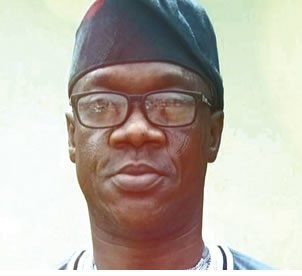
By Suyi Ayodele
The New York Times in its June 11, 2024, edition described Nigeria as a nation of 200 million citizens who are skilled at filling the gap for government. Let me quote it directly: “A nation of entrepreneurs, Nigeria’s more than 200 million citizens are skilled at managing in tough circumstances, without the services states usually provide. They generate their own electricity and source their own water. They take up arms and defend their communities when the armed forces cannot. They negotiate with kidnappers when family members are abducted. But right now, their resourcefulness is being stretched to the limit.” For writing this, our federal government thoroughly abused The New York Times at the weekend. It said the newspaper lied. You and I know it is the government that lied, denying the truth!
The piece, written by Ruth Maclean and Ismail Auwal, with graphics supplied by Taiwo Aina, is titled: Nigeria Confronts Its Worst Economic Crisis in a Generation. It dwells deeply into the ailments of the Nigerian economy under the Bola Ahmed Tinubu administration. It says: “People in Africa’s most populous nation are suffering as the price of food, fuel and medicine has skyrocketed out of reach for many. Nigeria is facing its worst economic crisis in decaldes, with skyrocketing inflation, a national currency in free-fall and millions of people struggling to buy food. Only two years ago, Africa’s biggest economy, Nigeria is projected to drop to fourth place this year. The pain is widespread. Unions strike to protest salaries of around $20 a month. People die in stampedes, desperate for free sacks of rice. Hospitals are overrun with women wracked by spasms from calcium deficiencies.” The nlewspaper knows where the problem lies. Again, I quote it: “The crisis is largely believed to be rooted in two major changes implemented by a president elected 15 months ago: the partial removal of fuel subsidies and the floating of the currency, which together have caused major price rises.”
The naked truth by the foreign newspaper drew the ire of the government. Rather than address the issues raised in the article, the government resorted to blame-game. Bayo Onanuga, President Tinubu’s Special Adviser on Information and Strategy, who responded on behalf of the government said that instead of blaming Tinubu for the current pains in the land, Nigerians should blame General Muhammadu Buhari, whose government, Onanuga accused of spending $1.5 billion monthly to defend the Naira! To Onanuga, and the presidency he represents, Tinubu should be absolved of all blames because he inherited the present economic problems from Buhari.
The above is the thinking in the circle of power. Everybody else must be blamed but themselves. I wonder what Onanuga was thinking when he penned all the incomprehensible verbiage contained in his rejoinder to The New York Times piece. What is the difference between Buhari and Tinubu? While Buhari was borrowing the “$1.5 billion monthly to defend the Naira”, what did Tinubu, Buhari’s godfather say? Or, if indeed, Tinubu made Buhari president, did he not have the responsibility of ensuring that his protégé did the right thing in government? During the 2023 electioneering, when Tinubu said that he would continue with the policies of Buhari, what exactly was he talking about? In the last one year, how much has Tinubu committed to support the Naira? When, about two months ago, Onanuga and other Aso Rock clappers said that we should thank President Tinubu for making the Naira to appreciate against the dollar, which magic did the president use then? What is the simple explanation of floating the Naira?
MORE FROM THE AUTHOR: OPINION: One Kano, Two Emirs
Nigerian government officials need neurological attention. I mean every alphabet in these words. I say so because I believe that most of them are suffering from auditory hallucination. Everyone in government appears to hear voices and noises that are not in tandem with the reality on the ground. The groaning in the land is too loud enough for the deaf to hear. But those in power hear something different, non existing reality! That calls for serious medical attention.
Medical experts are on the same page that auditory hallucinations are associated with schizophrenia and other mental health conditions. They explain it as “a disorder that affects a person’s ability to think, feel and behave clearly.” Nothing, in my opinion, aptly describes our leaders than this definition! If I were to be the only one to choose those who get to power, the first parameter I would set would be for all government officials, or would-be government functionaries to go for a mental health examination. When leaders are cut off from the reality of the situations of the masses, the poor in the society suffer. This is our case in Nigeria now. Those in charge of our affairs are far away in distant lands. They are as unfeeling as they are as unapologetic about their abysmal failure. The gap between the leaders and the led is too wide. In the comfort of their cozy offices, those in authority over us don’t feel the heat on the streets.
The current party in power got to the saddle over nine years ago. In the build-up to the 2015 general elections that produced this current administration under the banner of the All Progressives Congress (APC), Nigerians were so tired of the woeful outing of the then-ruling Peoples Democratic Party (PDP), such that they developed the cliché of “Anything or anyone but Jonathan.” A friend, who had since checked out of the country for second slavery in Europe because he could no longer cope with the crushing economic situation in Nigeria, told me then that if the APC fielded a goat against President Goodluck Ebele Jonathan (GEJ), he would go and vote for the goat. Truth be told, PDP, like we say in our street lingo here, nor dey give joy! So, when the APC threw up the most lethargic candidate in the person of General Muhammadu Buhari as its presidential candidate, some of us warned that the nation was heading for a calamity. Nobody cures a curse with another curse, we cautioned. But we were shouted down!
MORE FROM THE AUTHOR: OPINION: Distinguished Senator Cow And His Human Rights
We need to settle this once and for all. Nobody, especially any adult in Nigeria, who witnessed the perfidy of the PDP between 1999 and 2015, would give a thumbs up for the party and the government it ran for 16 years. However, for anyone who was already an adult when Buhari first came to the nation’s political limelight in 1983, such a fellow would never wish for a second time of Buhari in power and in government.
But it happened. For eight solid years, Buhari, as the President and Commander-in-Chief of the Armed Forces, ruled over us. For those eight years, all Buhari did was to blame the PDP and its 16-year rule for virtually everything from the mundane to the most bovine issue. Sadly enough, Nigerians, especially most of the educated class, joined the blame-game wagon. Everything bad was heaped on the PDP, particularly, Buhari’s immediate predecessor, GEJ. From being named a clueless president, to his wife, Patience, being body-shamed by one of the most celebrated scholars in the Black race, Professor Wole Soyinka, Nigerians indulged Buhari as he sat in the Aso Rock Villa flat-footed!
The nation’s economy went from being bad to being completely comatose. The security architecture, one of the crosses upon which GEJ’s administration was nailed, completely collapsed under the watch of the Daura-born retired General. Buhari became President-do-nothing! He was so toneless that he could not even effect any change in his cabinet! His wife, Mrs. Aisha Buhari, at a time was so frustrated that she voiced out that her husband barely knew anybody in his cabinet.
Buhari’s era was an era of presidential absenteeism. He was nowhere; he did nothing, yet many things did Nigeria in! Nigeria was literally dead! All Nigerians got was the blame on the PDP for ruining the nation. Even when we argued that Buhari was ‘voted’ in to correct the abysmal performance of the PDP, the government clappers said that the damage caused by the PDP was such that it would take eternity for anyone to correct them!
Among the Buhari clappers of those ruinous eight years are members of this present government of President Bola Ahmed Tinubu. Tinubu was indeed the chief promoter of Buhari! So, when the Buhari era was fading out and a new round of elections was around the corner, not a few Nigerians warned again that the APC’s failures under Buhari must not be rewarded with another electoral victory. Granted that the PDP’s perennial presidential candidate in the 2023 general elections, Atiku Abubakar, is in no way different from the old PDP, the nation was presented with an alternative in the avant-garde Labour Party (LP), and its candidate, Peter Obi. Unfortunately, sentiments came in and took the better part of us all! The major factor then was the silly political arrangement known as turn-by-turn, which the Tinubu campaign body nicknamed Emilokan! No other argument was allowed to flourish. The slogans being: “Tinubu made Buhari president. Tinubu ‘built’ Lagos. The man has paid so much for democracy. He has the magic wand. He uses technocrats and experts, bla bla bla!” Nigeria went to the February 2023 election a divided nation. The Igbo people outside the South-East became endangered species. The election was held. The rest is now history.
President Tinubu is in power today. He has spent one year and 20 days in office. What has he done differently from the past administration? Just as he promised to continue with the policies of his predecessor, Buhari, President Tinubu has taken the issue of blame game to the next level. Since May 29, 2023, when he assumed office as the President, Tinubu has blamed everybody else but himself for the woes that have been the lot of Nigerians in his over one year administration. A most interesting aspect of the blame game is that Tinubu’s tirades now are against his fellow party man and mentee, Buhari! For once, the PDP, and particularly, former President Jonathan, can now breathe fresh air of freedom. In any case, it would have been completely uncharitable of the Tinubu administration to turn to the PDP or GEJ as the proverbial scapegoats for the present economic tragedies.
There should be a limit to perfidy in government circles. I think government spokesmen should learn the art and act of communication. They should study the audience before emitting whatever they are asked to do. Methinks there is a problem with the guys handling Tinubu’s communication channel. The way they are going, a day will come when they will mistakenly blame the president himself. They have lied so much. There is nothing left in the bag of falsehood hanging on their shoulders. Where is Buhari, for God’s sake? On the moon, or he rubs disappearing cream every day? If he created the present woes, why not ask him some questions? And come to think about it: where is Tinubu’s famed strategy? Where is his legendary masterstroke? Why should the deity of success forsake him when it matters most?
MORE FROM THE AUTHOR: OPINION: Northern Nigeria’s Paedophilic Mass Weddings
Let this be my last shot at Onanuga and his fellow ranting gang in power. Nigerians are hungry, simple! They need food on their tables and in their bellies. Tinubu promised “Renewed Hope.” It is too late for him to change the narrative. He promised to fix the economy and make life more abundant. Anything short of that is an abysmal failure. Nigerians cannot differentiate between Buhari and his ‘maker’, Tinubu. To an average hungry Nigerian, APC is APC. They no longer remember the party called PDP; that is history. Let the president get down to work. Nobody wants to listen to the story of how much Buhari borrowed every minute to support the Naira without telling us how much Tinubu is spending on the same improvidence. That na old tori! A very nauseating one for that matter! Nigerians don’t need anyone else to tell them that Buhari was a huge mistake! If the Onanugas of Aso Rock don’t have any plausible explanation to give on why their idol has been so pitiable in government, can we advise them to cut the cackle and just get us there!



Headline
Moving Abroad? Essential Things Nigerians Should Pack Before Leaving Nigeria

Moving abroad from Nigeria is one of those life changes that makes a suitcase suddenly feel much smaller.
What looks like enough luggage in your bedroom can seem painfully limited once you start choosing between clothes, documents, electronics, personal care items and the small things that make an unfamiliar place feel like home.
That is why a good diaspora relocation packing list guide should not be about squeezing everything possible into your bags. It should help you decide what deserves precious luggage space, what can be bought after arrival and what should never go into your suitcase in the first place.
The distinction matters because airlines have strict baggage limits, while destination countries have their own customs rules.
Baggage allowances vary by airline, route, cabin class and aircraft, while individual checked bags are generally recommended not to exceed 23kg for handling reasons. Power banks and spare lithium batteries, for example, must generally remain in carry-on baggage rather than checked luggage.
Start with documents, not clothes
Before thinking about clothing or food, create a secure travel folder for the documents you cannot afford to lose. Your passport, visa or residence documentation, flight information, accommodation details, employment or school documents, insurance information and important contact details should stay accessible throughout the journey.
Carry originals where necessary and keep encrypted digital copies or secure backups of important documents. If you are relocating with children, their birth certificates, school records, vaccination documentation and immigration papers may also be important depending on the destination and circumstances.
Do not put irreplaceable documents in checked luggage. A suitcase can be delayed, misrouted or damaged, but losing access to your passport or immigration paperwork at the same time can turn a manageable travel problem into a serious one.
Pack for your first two weeks, not your entire future
One of the easiest ways to overpack is to imagine every possible situation you might encounter after moving. Resist that temptation. Your first luggage should support your transition, not reproduce your entire Nigerian household overseas.
Pack enough everyday clothes for your initial period, but consider the climate of your destination before filling a suitcase with Nigerian weather essentials. A person moving to the UK in winter, for instance, needs a very different wardrobe from someone moving to a warmer country.
The better strategy is to prioritize versatile clothing that can be layered and reused. Comfortable shoes, underwear, sleepwear, basic toiletries and weather-appropriate outerwear deserve more attention than multiple outfits you may rarely wear.
READ ALSO: UK Skilled Worker Visa: 10 Ways To Prepare For Your Interview
This also reflects advice commonly shared in relocation communities: keep an “open first” collection of essentials so you are not searching through every box or suitcase when you are exhausted after arrival. The practical principle is simple, make your first few days easy before worrying about everything else.
Take the Nigerian items that are genuinely difficult to replace
Food is where relocation packing becomes particularly personal. Nigerians living abroad frequently mention missing familiar foods and ingredients, especially regional items that may be difficult to find or expensive in ordinary supermarkets.
Discussions among Nigerians abroad show that the issue is not necessarily basic rice, pasta or common spices; it is often the distinctive ingredients and flavors associated with home.
That does not mean you should fill an entire suitcase with food.
Instead, prioritise small quantities of dry, commercially packaged items that are legal to import into your destination and that you genuinely use. Depending on the destination, these could include permitted spice blends, seasoning, certain dried ingredients or packaged Nigerian foods.
However, never assume that because something is dry, packaged or commonly carried by other Nigerians, it is automatically permitted. Import rules differ significantly between countries.
For Great Britain, for example, travelers can bring some packaged foods such as biscuits, chocolate, pasta and packaged soup, while meat, dairy, fruits, vegetables, nuts and seeds can be subject to restrictions.
READ ALSO: FULL LIST: US Warns Citizens Against Travelling To 23 Countries
The EU is stricter in several respects. Travelers arriving from outside the EU generally cannot bring meat or dairy products into the bloc, although specific exemptions apply to certain products and circumstances.
So if you are relocating from Nigeria to London, Paris, Amsterdam or another destination, check the destination’s official customs rules before sealing that bag of food.
Do not sacrifice luggage space for easily replaceable goods
A relocation suitcase should contain things that solve a problem, preserve something important or save you meaningful money—not everything you happen to own.
Basic toiletries, ordinary kitchen utensils, cheap hangers, bulky bedding and generic household products can often be purchased after arrival. Carrying large quantities simply because they are cheaper in Nigeria may not make economic sense once excess-baggage charges and limited suitcase space are considered.
The same applies to appliances. Check the electrical system and plug standard of your destination before taking Nigerian appliances abroad. A device that is cheap to replace may not be worth carrying if it is incompatible with the local voltage or requires additional equipment.
Ask yourself a blunt question before packing anything: Would I still pay to transport this if I had to buy extra luggage for it? If the answer is no, leave it behind.
Give electronics and valuables special treatment
Your laptop, phone, chargers, external drives, camera equipment and other essential electronics should be packed with both security and airline rules in mind.
READ ALSO: FULL LIST: Nigeria, 49 Others Affected By US’ $20,000 Visa Bond Policy
Keep valuable electronics in your carry-on whenever the airline permits it. IATA specifically advises passengers not to place valuable or irreplaceable items in checked baggage, while spare batteries and power banks have specific restrictions because of fire risk.
Keep chargers organized in a small pouch rather than scattering them throughout your luggage. If you use several devices, label unfamiliar cables before leaving Nigeria; it sounds trivial until you are sitting in temporary accommodation with three identical USB cables and no idea which one powers your laptop.
Think about health and personal-care essentials
Your relocation luggage should also cover the personal items that may be inconvenient to replace immediately. Prescription medicines, if applicable, should remain in their original packaging and be accompanied by the documentation required by the destination country.
Basic toiletries and personal-care products that you know work for you can be worth carrying in reasonable quantities, particularly during the first few weeks when you are still learning where to shop.
Do not, however, turn your suitcase into a pharmacy. Check the rules of the destination country for medicines and controlled substances before traveling, because something legally purchased in Nigeria may have different restrictions elsewhere.
Leave prohibited and questionable items behind
Some of the worst relocation-packing decisions are made with the assumption that customs officers will not notice.
READ ALSO: Travel Chaos: Air Canada Shut Down By Flight Attendant Strike
That is a dangerous gamble. The UK, for example, prohibits or restricts items including controlled drugs, offensive weapons, certain endangered species and personal imports of meat and dairy products from most non-EU countries.
Food restrictions also deserve serious attention. If you arrive in Great Britain with banned food and declare it, the Border Force can confiscate and destroy it; failing to declare prohibited products can result in penalties or prosecution.
When in doubt, check the official customs guidance for your destination before packing. If an item requires a permit, certificate or declaration, find that out before you arrive at the airport, not while standing in front of a customs officer.
Build one ‘first-night’ bag
Finally, separate the things you will need immediately from everything else.
Your first-night bag should contain a change of clothes, basic toiletries, essential documents, medications, chargers, important electronics and anything else you would need if your checked luggage were delayed. This simple step can save you considerable stress during the first 24 hours.
Your relocation luggage should make your new beginning easier, not burden you with your old life. Pack the things that are valuable, difficult to replace, culturally meaningful or immediately useful. Leave behind what is cheap, bulky and readily available.
Most importantly, remember that your airline’s baggage allowance and your destination country’s customs rules are separate issues. Staying within the weight limit does not mean every item inside the suitcase is legally admissible.
IATA emphasises that baggage conditions remain airline-specific, while governments set their own customs and import requirements.
For Nigerians relocating abroad, the smartest suitcase is therefore not necessarily the heaviest one. It is the one that contains exactly what you will need to begin your new life with less stress, fewer unnecessary expenses and no avoidable customs problems.
(TRIBUNE)
Headline
Why I Forgave Lindsay Clancy For Killing Our Children — Ex-husband Patrick

Patrick Clancy, the ex-husband of Lindsay Clancy, has spoken about his decision to forgive her for the deaths of their three children, saying he feared he would be “eaten up inside forever” if he could not reach a point of forgiveness.
In a new interview with CBS, Patrick said he believed he had done the best he could while his then-wife struggled with mental illness.
“I didn’t know how to manage a [postpartum illness]. I think mental illness has this ability to be tragically deceptive,” he said.
“When it comes to forgiveness, I also felt that if I didn’t get there, I would be eaten up inside forever,” he added.
Lindsay Clancy, a former labour and delivery nurse, was accused of killing the couple’s three children — Cora, five, Dawson, three, and Callan, eight months — in January 2023.
READ ALSO: Former Fox Business Producer Jennifer Eckhart Dies By Suicide
She attended her trial in a wheelchair after suffering permanent paralysis in the aftermath of the incident.
Patrick testified during the trial about his former wife’s mental health struggles following childbirth.
Clancy has never denied killing the children, while her defence argued that she was suffering from postpartum psychosis at the time and was not criminally responsible for her actions.
The case ended in a mistrial after one juror refused to find Clancy not criminally responsible.
Judge William Sullivan, who presided over the trial, has since sealed the jurors’ identities, citing a “real and present” risk of harm.
READ ALSO: NURTW: KWAM1 Settles Long-time Rift Between MC Oluomo, Tafa Sego
The prosecution had alleged that Clancy sent Patrick on an errand before the incident, deliberately removing him from the home.
Patrick became a focus of the trial during its seventh week, when he faced allegations that he was partly responsible for the deaths of the children.
“I think I did the best I could with what I had at the time.” Patrick said. “And I live with the outcome. I live with it every day.”
Speaking about the claims and speculation surrounding him, Patrick said they were “deeply harmful to the legacy of my children” and a “huge distraction from what really matters here, which is perinatal [mental health].”
READ ALSO: Premier League Predictions For Matchweek 5 Fixtures
Patrick has since moved to New York City with his new wife, Rachel Danis, where they hope to find some anonymity and normality.
He said he looks forward to starting a family with his new partner and telling his future children about their siblings.
The case remains unresolved and is scheduled to return to court on September 29 at Plymouth Superior Court in Massachusetts.
(Metro UK)
Headline
Former Fox Business Producer Jennifer Eckhart Dies By Suicide

Jennifer Eckhart, a popular podcaster and former associate producer at Fox Business, died by suicide at her home in Hobe Sound on Saturday morning, as reported by the Martin County sheriff.
Sheriff John Budensiek explained that he typically does not comment on suicides; however, he chose to speak publicly about Eckhart’s death to address conspiracy theories suggesting that she had been murdered.
“After thoroughly investigating the scene and the circumstances, we looked at it as if it were a homicide. However, it is not. It is a suicide. Unfortunately, she took her own life,” Budensiek stated.
Eckhart gained media attention after accusing a Fox News anchor of raping her. Investigators revealed that she had family and friends who attempted to help her, but she had been in and out of mental health facilities and had stopped taking her medications.
READ ALSO: FOX TV News Anchor Matt Vereen Arrested After child P0rn Is Found In His Laptop
Elizabeth Burrows, the director of development and communications with 211 Palm Beach and Treasure Coast, highlighted the tragedy of suicide and encouraged anyone struggling to seek help.
“Every death by suicide is a tragedy,” Burrows said.
She noted that anyone in crisis can call 211 or 988, which are available 24 hours a day, seven days a week, to provide resources or someone to talk to.
“You’d be surprised at how often just having someone who’s there to listen can help someone make it through their darkest moments,” Burrows said.
READ ALSO: PHOTOS: Jamie Foxx Steps Out In Public For First Time Since ‘Antisemitic’ Apology Post
Burrows also stressed the importance of being present and asking questions when supporting someone who may be struggling.
“It’s OK to ask. Asking about it does not make suicide more of a risk for them. If anything, it lets that person know that they are not alone,” she said. “The one answer I can always give is to never give up. As long as someone is still here, there is still an opportunity to support and assist them.”
The sheriff said Eckhart’s death remains an open investigation as they await toxicology results, but he emphasized that all evidence points to suicide.

 News2 days ago
BREAKING: Tinubu Extends Working Vacation
- News4 days ago
Six Hidden Health Benefits Of Unsweetened Zobo
- News4 days ago
Jehovah’s Witnesses Announce New Position On Blood Transfusion Policy
- News4 days ago
2027: Step-by-step Guide To Applying For INEC Ad Hoc Staff Recruitment
- News4 days ago
How 36 Nigerian States Got Their Names
- Headline4 days ago
Nigerian Man Jailed After Masturbating In Front Of Woman On UK Train
- Headline2 days ago
How To Format An Academic CV For US Master’s, PhD Applications
- News4 days ago
Stop Acid Reflux Pain: Foods You Must Ban From Your Kitchen
- Headline4 days ago
Nigerian Woman Arrested, Charged Over Illegal Voting In US
- News3 days ago
[OPINION] Wike-APC: Fights Always End Adultery


