
News
OPINION: If Tinubu Were Today’s Opposition Leader
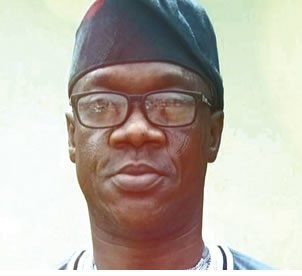
By Suyi Ayodele
I would have agreed that protests would happen on August 1, 2024, if the graph had been plotted by Godfather Bola Ahmed Tinubu. But he is the sitting president, not the opposition leader he used to be. You can’t ride a goat to intimidate a master horseman. The media can cry themselves hoarse, the street can cry and weep. Nothing is happening. The powerful dey kampe.
“This is not the age of pamphleteers. It is the age of the engineers. The spark-gap is mightier than the pen. Democracy will not be salvaged by men who talk fluently, debate forcefully and quote aptly.” Lancelot Hogben said the above in his ‘Science for the Citizen’ (1938). The mass media can only make its usual noise. Tinubu’s government is not the Wall of Jericho. No noise can threaten it.
And this is not peculiar to our situation. Governments in Africa hardly pay attention to write-ups and editorials. Nigeria is in a class of its own, when it comes to this. Apart from a very few, our leaders here have been the very dregs of humanity when it comes to literacy. A president once told us that he never read newspapers. One said he does not pay attention to social media. When a leader becomes naturally illiterate by closing his mind to any form of literature, we cannot but have the type of society we have in Nigeria. Worst still, the media aides of our leaders who are expected to fil in their principals on the daily editorials about their governments hardly do that. Whenever they get their principals to read what is in print about them, I bet it will be those third-party advocacy PR stuff planted. Those guys thrive in the illiteracy of their principals
A senior political aide of former governor of my Ekiti State once told me that the governor was so alienated from the happenings in town such that when the people rained curses on him while driving through the streets of Ado Ekiti, the state capital, and he asked what the people were saying, the response he used to get was that the people were hailing him as the true son of his father.
What about those articles in the newspapers? I asked. The ex-governor’s aide laughed. I was embarrassed. Nothing was funny. He looked at me and answered: “So, of all the issues with Oga, it is the newspapers he will be reading?” We had the discussion in our Ekiti dialect. I gave up.
Our leaders don’t, or hardly read. Governors and presidents are projected by their media aides as the darling of the people. This is why nothing changes no matter the number of articles written. But we will continue to write; we owe that as a sacred duty to the generations yet unborn. Let posterity record it that when it mattered, we did not lose our voices!
MORE FROM THE AUTHOR: OPINION: Supper For Nigeria’s Àkébàjé
This is why I don’t believe that anything tangible will happen on August 1. There may be nauseating noise here and there. There may be a bit of action in a few state capitals. But overall, nothing consequential will happen. The government will remain deaf. Hunger will continue to ravage the land. Inflation will not stop galloping. And our governments – state, local and federal, will remain lethargic. The pain will be more excruciating. The government won’t be moved a bit because it knows that the people’s goat will continue to shift even after hitting the wall.
There is no denying that things are hard, and the streets are not smiling. It is also a fact that as things stand now, the nation is standing on the edge of a cliff, precariously. The cord can snap, any moment, no doubt. But an organised protest remains ineffectual; it is never going to be the solution. I believe in protests. I believe that the people have the right to express their anger within the permissible limits of the law. Unlike Oga Bayo Onanuga, one of the media aides to President Bola Ahmed Tinubu, I don’t believe that the hunger and pains in the land wear any ethnic garment. I don’t believe, like Onanuga tried to project in his reaction to the planned protest, that a particular ethnic group is behind the so-called planned protest.
Poverty is not a native of any land. Abject want and lack is almost evenly distributed among all nationalities that make up Nigeria. Residents of Maiduguri are hungry; the people of Ibadan don’t have what to eat; just as those living in Nnewi don’t know where the next meal will come from. It is a partnership in deprivation! It does not rain anymore; it pours all over Nigeria. If August 1, 2024, ever happened, unlike Onanuga, I believe with every fibre of my being, that President Tinubu, rather than Peter Obi, the presidential candidate of the Labour Party (LP), should be held responsible. I tell you why I strongly feel this way.
Nigerians elected Tinubu as president and not Obi. If for anything, the bulk stops on Tinubu’s table. He is the one who holds the yam, the knife and the bellows to fan the embers that roast the yam. He is the one who should do all he could to bring an end to the sufferings in the land. The president, elected by the people, is the one to initiate policies that will make life more abundant for the people. He is to secure the country, revive and revamp the economy and provide an enabling environment for business to thrive.
If he fails in those responsibilities, he has the opposition to contend with. So, whatever Peter Obi is saying about this government, he is only doing his job as an opposition leader. Tinubu did worse, when he never contested election. I think Onanuga should stop acting like the old executioner who never wants the sword to be taken across his head! If the economy improves today, nobody will tell Obi to remain quiet. He has an audience because the government has gone to sleep. That should not be too difficult to understand!
MORE FROM THE AUTHOR: OPINION: Between Our Govt And New York Times
But if I were President Tinubu, I would not lose my sleep over the August 1 protest. Nothing tangible will happen. The president, if you ask me, should be worried about the organic eruption that will happen should we continue in this parlous state that Nigeria is. Nobody will plan it. Nobody will be its leader. It will be all-encompassing. It will spare nobody. The time ticks for the nation. That is what should bother President Tinubu; the day the people will, on their own, say, enough is enough! That is the day of great calamity that should be of concern to those in power. And guess what: nobody will be able to stop it! It will be like an earthquake that does not give any pre-knowledge. It would have started before we all knew what hit us! And there will be no escape route, anywhere!
Why should any government panic because an Omoyele Sowore said there will be a ‘revolution’? How many Nigerians can he mobilise? What will be his selling point? That he has remained on the side of the people all these years, or that he has no friends among the real enemies of the people? Will he ask the people to come to the streets when they know that his family is tucked away somewhere very impenetrable? Is he the one to tell the people that there is hunger in the land? Or that inflation which has eradicated the middle class is about to wipe out the lowest of the lowest? No!
Is it the unknown Northern Initiative for Growth that will mobilise those in the North to hit the streets? Won’t the people ask where the group was when General Muhammadu Buhari slept off for eight solid years? Why should anyone be scared about any Obedient Movement that was spontaneous only for the 2023 presidential election? If Peter Obi were to be a candidate today, where would he get the over six million votes of 2023? The real planner of the impending revolt is hunger. When it gets to that level that the people don’t have anything to eat anymore, they, like the proverbial tortoise, will enter the rain without being prompted. And that time is close; the real one that will create panic in government circles!
This is what Gizachew Tiruneh, a professor of Political Science at the University of Central Arkansas, United States, had in mind when, while writing for “Sage Journal” on September 18, 20214, in an article titled: “Social Revolutions: Their Causes, patterns, and Phases”, published online, said: “…The point is that nobody would be able to anticipate or predict, before the onset of a spontaneous revolutionary uprising, that popular opposition and resentment against the state would be exploding and catching fire across a given country.”
Tiruneh listed the French Revolution of 1789, the Russian Revolution of 1917, and the Chinese Revolution of 1911 as satisfying the “spontaneous” pattern of revolution. He went further to say that spontaneous revolution: “…occur when long-term socioeconomic development is followed by short-term and sharp economic reversals. More specifically, as people experience improving economic conditions over time, they come to expect that they will be able to obtain more and more. When the sharp reversal in economic fortune comes, the ability to obtain goods declines while the peoples’ expectations as to what they believe they should be able to obtain continue to rise. The gap between what people are able to obtain and what they believe they should be able to obtain grows and turns into a crisis of rising expectations. And unhappy, unsatisfied, and frustrated individuals then resort to political violence.” The question to ask is: what is the situation with Nigerians today? The political scientist warned that “How the state addresses the demands of its people for political reforms and economic welfare as well as how the state uses its coercive force responsibly would matter whether or not it faces revolution.” Tiruneh mentioned “gap”. Hogben also talked about “spark-gap”. The duo wrote decades apart. That, to me, is more than mere coincidence!
President Tinubu can still change the tide of time. All he needs to do is to pay more attention to governance than politics. Let the president prioritise the welfare of the people above second term and political ambitions. Mr President should pick one key area of the nation’s economic development, like power, and fix it. He does not have to put all his irons in the furnace at the same time. Fix power, fix insecurity and secure the food chain system. Get the farmers to go back to their farms and make food available Every other thing will begin to take shape. The distraction of a second term, when he has not done the first half of his first term, is one of the huge factors weighing Tinubu’s government down. This is what the hawks in, and around him are taking advantage of to exploit his human weakness. And, as for those, like Onanuga, who see every problem from the ethnic prism, may they have their day with the people when the bubble bursts!



News
YULETIDE: Edo Sports Commission Boss Preaches Unity, Peace

The Executive Chairman of the Edo State Sports Commission, Hon. Amadin Desmond Enabulele, has extended warm Christmas greetings to athletes, coaches, sports administrators, journalists, and the people of Edo State, urging them to uphold the enduring values of love, peace, and unity that define the festive season.
In a statement issued by his Media Officer, Edoko Wilson Edoko, Hon. Enabulele described Christmas as a period of reflection, gratitude, and renewed commitment to collective progress and shared responsibility.
“I sincerely appreciate all stakeholders in the sports sector for their cooperation, resilience, and unwavering support throughout the year. Your contributions have been instrumental to the growth and success of sports in Edo State,” he said.
READ ALSO:Edo SWAN Distances Self From Online Publication Against Enabulele
He further commended Edo athletes for their dedication and discipline, noting that their consistent performances have continued to bring pride and recognition to the state at both national and international levels.
According to him, the Commission remains committed to athletes’ welfare, grassroots sports development, and the creation of opportunities that will enable talents to flourish.
Enabulele also called on residents of the state to celebrate responsibly and show compassion to one another, particularly the less privileged, emphasizing that unity and peaceful coexistence are vital for sustainable development.
READ ALSO:How Enabulele Is Driving Okpebholo’s Agenda In Edo Sports Commission
He reaffirmed the Edo State Sports Commission’s resolve to strengthen collaboration with partners and stakeholders in the coming year, with increased focus on excellence, transparency, and inclusive sports development.
The Sports Commission boss concluded by wishing everyone a joyous Christmas celebration and a prosperous New Year filled with hope, good health, and greater achievements.
News
MOWAA: Okpehbolo Receives Edo Assembly Resolution Indicting Obaseki

Edo State Governor, Monday Okpebholo, received report and resolutions of the Edo State House of Assembly which indicted former Governor Godwin Obaseki on the Museum of West African Art (MOWAA) and the Radisson Hotel projects.
Recall that the Edo Assembly raised a five-man committee to investigate funding and ownership of both projects following a request by Governor Okpebholo.
Okpebholo, who spoke after receiving the report said its findings and recommendations would be fully implemented.
Okpebholo said the Economic and Financial Crimes Commission (EFCC) would be invited to further examine issues raised in the recommendations.
READ ALSO:MOWAA: Why I Will Not Appear Before Edo Assembly Panel — Obaseki
According to him, the Edo State Government has significant stakes in the MOWAA and Radisson Blu hotel having invested ₦3.8bn respectively in both projects.
He said changes in the structure and nomenclature of the MOWAA project made the investigation unavoidable.
Okpebholo said it was unacceptable to suggest Edo State has only 10 per cent stake in the Radisson Blu hotem despite investing over ₦28bn.
“Edo State has spent over ₦3.8 billion on this project, yet some people are saying the state has no stake in it. That is totally unacceptable. I will work with your recommendations and forward them to the relevant authorities to investigate what truly happened. We will also involve the EFCC.
READ ALSO:MOWAA Controversy: Edo Assembly Threatens Arrest Warrant On Obaseki, Others
“Our investment in this project is over ₦28 billion. We must invite the EFCC to step in and determine if this is how businesses are conducted in Nigeria,” he said.
In its recommendations passed by the Assembly, the five-man committee headed by Hon Addeh Isibor, urged the Edo State Government to take possession of both projects.
It asked Governor Okpebholo to contract competent hands to complete renovation of the Hotel and take all steps to put the Hotel to use.
The recommendations urged the Edo State Government to revoke “the fraudulent Certificate of Occupancy to the property issued in the name of Hospitality Investment and Management Company Limited and revert same to the Edo State Government that purchased the property.
READ ALSO:Edo Assembly Charges Contractor Handling Ekekhuan Road To Accelerate Work
“That the Edo State Government initiate legal action and work with relevant Anti-graft Agencies to retrieve both the complete statement of account and the balance of the Seventeen Billion, Five Hundred Million Naira (N17,500,000,000.00) Bond proceeds still in the possession of the Escrow Agents. Meristen Trustees Limited and Emerging Africa Trustees Limited.
“The title to the MOWAA Property having never been revoked, same remains the property of the Central Hospital, Benin City
“That the Edo State Government immediately takes all necessary step to put the property to good use in the best and overriding public interest of the people of Edo State.”
Speaker of the Assembly, Hon. Blessing Agbebaku, said the facts about MOWAA and Radisson Blu Hotel were now clearly documented in resolutions and outcomes.
News
Sheikh Gummi Sues Two Over Alleged False Facebook Publication

Prominent Islamic scholar, Sheikh Ahmad Gummi, has approached the Chief Magistrate Court in Kaduna, seeking the issuance of a criminal direct complainant summons against two Facebook users over alleged criminal conspiracy, attempt to cause public disturbance and criminal defamation.
The application, filed at the Chief Magistrate Court sitting on Ibrahim Taiwo Road, Kaduna, listed the defendants as George Udom and Bello Isiaka.
According to him, the defendants allegedly published a “Breaking News” statement on their respective Facebook pages on December 23, 2025, between 7:00 am and 10:00 am, attributed to him, threatening that the family of the Minister of Defence, General Christopher Musa, would be eliminated if military operations against bandits were not stopped.
Gummi alleged that the publication was falsely attributed to him, as his photograph was allegedly used alongside the statement, giving the impression that he issued the threat against the Defence Minister.
READ ALSO:Nigeria Army Alone Cannot Defeat Bandits — Sheikh Gumi
The Islamic scholar stated that following the publication, he received numerous phone calls from concerned members of the public who believed he authored the statement and was attempting to intimidate the Minister of Defence in the discharge of his official duties.
He further maintained that the publication portrayed him as a troublemaker and a threat to public peace, despite his long-standing reputation as a cleric known for preaching peace and harmony within and outside Nigeria.
The complainant argued that the alleged publication was capable of inciting public disorder in Kaduna State, particularly Southern Kaduna, and could expose him to danger by presenting him as a prime suspect in the event of any attack on the Defence Minister’s family.
READ ALSO:Insecurity: What Sheikh Gumi Told Me After Visiting Bandits Hideouts — Obasanjo
He also contended that the actions of the defendants amounted to an attempt to cause public disturbance and criminal defamation of his character.
Dr Gummi told the court that the alleged acts contravened Sections 59, 57, 372, 116 and 117 of the Kaduna State Penal Code Law, 2017.
The application, dated December 24, 2025, was filed by a team of lawyers led by Suleiman Danlami Lere, with the complainant urging the court to summon the defendants to answer to the allegations.

 News3 days ago
PHOTOS: New Era In Furupagha-Ebijaw As Okpururu 1 Receives Staff Of Office
- Metro5 days ago
JUST IN: Former Edo Information Commissioner Is Dead
- News2 days ago
UBTH CMD Marks 120 Days In Office, Expresses Commitment To Providing Conducive Working Environment
- News3 days ago
FG Declares Public Holidays For Christmas, New Year Celebrations
- Metro5 days ago
She Grabs, Pulls My Manhood Anytime We Fight — Husband
- News5 days ago
Coordinator, Edo First Lady Office, Majority Leader, Rights Lawyer, Others Bag 2025 Leadership Award
- News2 days ago
OPINION: Gumi And His Terrorists
- News2 days ago
FIRS Confirms NIN As Tax ID
- Metro5 days ago
Why I Charged My Husband Money For Sex —Woman
 News2 days ago
OPINION: My Man Of The Season


