
News
OPINION: Inside The Black Magic Pot Of Nigeria

By Festus Adedayo
A huge social dynamite recently exploded in the discourse of black magic. With the 2027 elections and early political manipulations already holding our lives by the jugular, the explosion went unnoticed. One of Yoruba’s leading musicians, Saheed Osupa, real name Saheed Okunola, openly detonated the dynamite. On March 30, 2026, at a live performance marking the birthday of a Yoruba actor, the musician admitted that he uses traditional spiritual power to fortify himself and enhance his musical success.
Osupa is a known Islamic faith adherent. Can anyone openly hoist two flags of black magic and Islam? A viral video of the Osupa confession instantly hit the airwaves. And tongues went wagging. Addressing his backup singers who were reportedly struggling to keep pace with his gobsmacking ability to memorize musical lines, Osupa urged them to make spiritualism the cornerstone of their existential pursuits. “Someone once advised me to grant an interview, denying I am a fetish person, but I refused. I didn’t harm anyone with it. I only seek progress. If I don’t engage in it, what else should I use? Is it Panadol that will make me successful?” he joked.
Osupa also maintained that he constantly pays obeisance to Ifa, an ancient Yoruba religious system of divination. Ifa, he said, is a major hub of his personal spiritual routine. Then, his damming revelation: “Everybody practises it. Some do theirs in secret, but I do mine openly”.
Black magic operates essentially with mystical power. Through black magic, mysterious things which overwhelm science, difficult to explain, happen. Magic is a mystical power brought to life through ritual performance. Magic also influences human or natural events in a way that is outside of the ordinary human understanding.
Osupa’s open confession provoked the question, which we must answer individually, as Muslims or Christians, does black magic, called Juju, influence how we think about existence? Does the traditional belief in mystical power, manifest in the use of herbs, divination, magic, witchcraft and sorcery, occupy a part of our daily existence? E. Bolaji Idowu, famous theologian and ethnographer, in his 1967 seminal article, «The Study of Religion with Special Reference to African Traditional Religion,» published in ORITA: Ibadan Journal of Religious Studies, agreed with Osupa. Idowu even went ahead to say that Africans regard African Traditional Religion (ATR) as a “contemporary living reality.”
As the negative effects of globalisation and western education, as well as changes in the socio-economic, political and religious life in every part of the earth, affect the African, they are forced to seek remedy in forsaken magic, herbs, witchcraft and sorcery. Many African beliefs and practices are almost all faded away. Yet, belief in mystical power is on the upsurge, daily gaining prominence in Africa. Christians and Muslims, great, great-grandchildren of the Whiteman’s African converts of early 15th century, are going back to the beliefs of their forebears practised before his advent.
MORE FROM THE AUTHOR:OPINION: Locating Gen Abacha On The 2027 Road
Today, the media is inundated with stories of pastors burying strange objects, including human parts, as foundation of their churches. In Yoruba magical realism, it is called awórò. It is believed to be a magical pull for multiplication of audience. Islamic clerics who double as dibia of Yahoo Boys seeking occult powers to fortify their trade get burst almost on a daily basis. Human parts traders, when burst, often lead investigators to pastors/Islamic clerics whose divination aids this nefarious trade. Many in political authority, when struck by strange ailments, go in search of native doctors who use combinations of incantations and sorcery to treat them. There are recorded healing from these exercises. Also, partly due to skyrocket in costs of drugs, reliance on orthodox medicine is waning as herbs and roots take over the job of medics. Many Nigerians have local incisions round their bodies, upon which they wear suits and flowery clothes that cover the scarification. Yet, mum is the word from what seems to be an implosion in the number of Africans who migrate to black magic for resolution of their earthly travails.
In 2018, a Kenyan scholar, Moses Kirimi Ndunjo, conducted a research on the effect of traditional worldview among evangelicals of Tharaka community of Nithi County, Kenya. He especially concentrated on its implications on their Christian discipleship. He found out that, although they accepted Christianity, with over 90 percent of them having confessed acceptance of Jesus, “this has not so much affected their belief in traditional mystical power as many of them continue to hold firmly to the belief in Urogi (witchcraft); Araguri (medicine men) and Kumerua i Kirimu (the traditional rite of being swallowed by a mythical creature, called Kirimu usually for boys shortly before initiation). This is regardless of whether they are educated or Christians.” These were the words of Professor Dickson Nkonge Kagema, an associate Professor of Religious Studies and Philosophy at Chuka University in Kenya.
The situation remains pretty the same in Nigeria. In February, an RCCG pastor, Bola Abiodun, was reported to have threatened an invocation of a deadly curse on a lady for addressing him as “Mr” rather than “Dr.” He then threatened the lady, “Don’t disrespect me if you don’t want to see my other side…If you don’t apologize to me in the next 5 minutes, you may not wake up tomorrow,” he wrote on his X handle. Many reasoned that the boldness of the pastor was rooted more in black magic than in Christendom.
While many Nigerians and Africans imbibe the precepts of modernity, with their medical, scientific and technological explanations, on another hand, they do not abandon mystical power and its magic. The main features of magic are divination, witchcraft, sorcery and other mysterious phenomena which are at cross purposes with modernity.
Very many magical situations have been reported which defeat scientific reasoning. Hunters have shot at games in the forest which morphed into humans. These are cases in criminal law which test the confines of law and tradition. While modern system of law mostly attributes such stories to hallucination of the hunter, it seems to confirm that a world exists for traditional belief and practices. In Kenya, four years ago, wrote Professor Kagema, “I heard from my wife that there were two young men who were eating grass in our local market because they had stolen a motor bike. As a scholar and a priest, I could not exactly comprehend how this was possible. I went to see for myself and to my amazement, it was a true story. Two young men were busy eating grass and making a noise similar to that of goats. I joined my fellow pastors to pray for them but nothing changed. It was only after their relatives accepted to pay the owner of the motor bike that the lads recovered when the responsible magician reversed the situation.”
MORE FROM THE AUTHOR:OPINION: Sunkúngbadé At Windsor, Gòngòsú And Èdìdàré
The position of magic in the African music industry where Osupa operates is notoriously dire. Persuaded that there is an enemy somewhere pursuing them and who wants to make mincemeat of their musical talents, African musicians are constantly in the pursuit of unseen enemies. As they do this, they search for black magic validation and deflection of potential attacks on them. It is why it is almost a rarity to find an African musician who does not fortify themselves with black magic.
In the early 1970s, gruelling wars were fought between musicians for individual validations. Ebenezer Obey, King Sunny Ade, Dele Abiodun, Emperor Pick Peters, Idowu Animashaun on the Yoruba Juju music turf; as well as Yusuff Olatunji, S. Aka, Kelani Yesufu, alias Kelly, Haruna Ishola, Kasumu Adio, Ayinla Omowura, Fatai Olowonyo, Ayinde Barrister, Kollington Ayinla, etc., in the Sakara, Fuji and Apala genres. These wars were fought with black magic, ending up neutralizing some and leading to the liquidation of others. Recipients of the fiery swords of those wars could never doubt the efficacy of black magic.
Also, many musicians, in search for protection, join occult associations. Alhaji Dauda Epo Akara, famous Awurebe music legend, who lived in Ibadan, the capital of Oyo State, was renowned for prologuing his songs with high dosage of Islamic verses recitation. It was only upon his death that it was found out that he belonged to an Ogboni cult. So also were many of the musicians of that era. Osupa’s confirmation that he does not neglect African traditional medicine and worship could be an indication that those fiery intra-genre wars among Yoruba musicians are still raging underground silently today and are being fought by magical spells.
Scientifically unexplainable occurrences of black magic happen daily in Africa. It is why, especially in Nigeria, in spite of modernity, as the 2027 election period gets nearer, indications of gravitation towards black magic by politicians will get higher. At junctures where three footpaths meet, calabashes, inside which are propitiation materials (heads of goats, palm oil sprinkling, cowries, èkuru – steamed white bean pudding – white cloths and many more) are placed there at dawn. It is believed that these black magic sacrifices have very strong hold on the outcome of elections.
The power in mystical Africa comes in different forms. It is mostly verbalised in words or incantations. Among the Yoruba, it is always alliteration and simile. For instance, in incantations to suborn obedience, the enchanter will say, “the leaf of Ogbó orders you to listen (gbó)”. Both words are alliterative.
John Mbiti, a renowned Kenyan Anglican priest, philosopher, major scholar of African Traditional Religion and theologian, who was famously reputed to be the founding father of African Christian theology, brought a new flavour to the mystique of magic. He said, in Africa, it is believed that words/curses spoken by an elderly to a younger one carry the power of force. The words of parents to their children are also viewed as possessing potent power, especially if they are uttered or pronounced in a fit of anger or time of crisis. Among the Yoruba, children court words of prayers from their parents and avoid curses from them. It is believed that such words enjoy efficacy.
MORE FROM THE AUTHOR:OPINION: Ayedatiwa’s Years Of The Locusts
Among the Ameru, a Bantu ethnic group indigenous to the eastern and northern slopes of Mount Kenya, the belief is that if parents die with their curses hanging on their children, such children run mad thereafter or die. Mbiti gave validation to this. In his 1969 book, African Religions and Philosophy, he said that formal ‘curses’ and ‘blessings’ from parents possess extremely potent powers and are believed to be very efficacious.
In this work cited above, Mbiti even confirmed that in Africa, there were mystical powers which, upon being adequately invoked, cause “people to walk on fire flames without getting burnt, to lie on thorns or nails without getting pierced, to harm people from a distance, to change into dangerous beasts which can hurt people or their property, to change nonliving things into living creatures, to see into hidden secrets, to detect thieves or even stupefy them so that they are caught unawares and to foretell the future.”
Africa is moving backwards towards these magical powers. It has probably realised the incapability of orthodox medicine, power and authority to protect the African from their existential realities. This has led to what is called syncretism. In it, people practice their individual religions of Christianity or Islam, play significant roles in mosques or churches, while at night, they go to their groves to offer propitiation to African gods, in exchange for protection or salvation. Some people have said that this is resorted to because of the perception that the Christian and Islamic God is not immediate in His intervention, unlike the potency of black magic, renowned for its immediacy.
Many Western-oriented persons, as well as Islamic and Christian organisations, refer to black magic as fantasy or inconsequential. A pastor was recently quoted in a news report as gloating that Osun River worshipers in Osogbo thought his members who touched the grove would die, but didn’t. However, black magic is the lived reality and experience of millions of African people. To them, it is efficacious if appropriately administered.
If only many Osupas who use the black magic could come out to attest to its efficacy and openly identify with it as this musician did, there is the probability that their testimonies would drive more converts into it. This may make faster the ongoing process of digging up the remnants of magic which our forefathers were lured to bury centuries ago.



News
UK Court Closes Diezani Trial As Jury Prepares Verdict
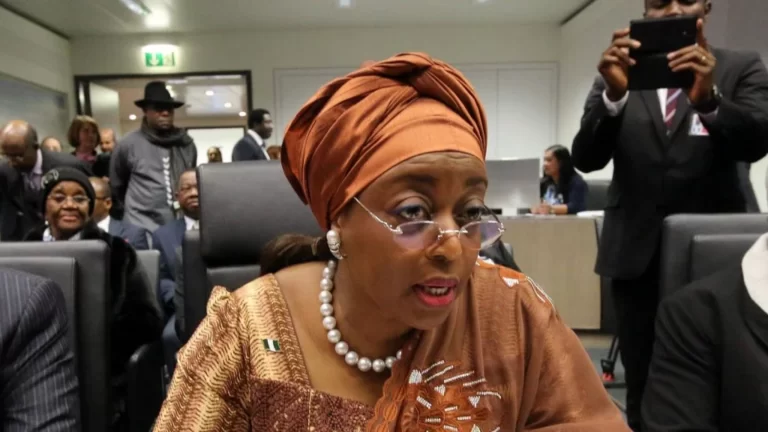
The defence and prosecution have closed their cases in the ongoing trial of former Nigerian Minister of Petroleum Resources, Diezani Alison-Madueke, at the Southwark Crown Court in the United Kingdom, with a jury now set to deliver its verdict later this week.
Alison-Madueke is standing trial alongside oil executive Olatimbo Ayinde and her brother, Doye Agama, on a five-count charge bordering on alleged bribery. All three defendants have pleaded not guilty.
British prosecutors allege that the former minister received bribes in the form of luxury items and high-value properties from oil industry actors seeking favourable treatment in the award of oil contracts during her tenure between 2010 and 2015.
The prosecution maintains that such benefits were improperly received and argues that there is no documentary evidence supporting claims of reimbursement or legitimate financial transactions backing the alleged transfers.
READ ALSO:Court Orders Final Forfeiture Of UK Property Linked To Useni, Ozekhome
In his closing submissions, defence counsel Jonathan Laidlaw accused the prosecution of failing to charge alleged bribe givers and relying on what he described as incomplete and unreliable evidence.
He questioned the handling of evidence from a 2015 raid on Alison-Madueke’s Abuja residence, alleging procedural irregularities, including the absence of key officials during the operation and lack of photographic records of items in their original locations.
Laidlaw further argued that critical documents that could support the defence case—such as records relating to reimbursements and official ministerial duties—were missing. He also faulted the prosecution’s reliance on evidence linked to Nigeria’s Economic and Financial Crimes Commission (EFCC), while challenging its rejection of parts of the same material in relation to co-defendant Ayinde.
He also disputed claims that official travel and financial records relating to the former minister were unavailable, describing the prosecution’s position as inconsistent.
READ ALSO:UK Rolls Out Digital Visit Visas For Nigerians
Responding, lead prosecutor Alexandra Healy maintained that oil executives provided improper benefits to the former minister while their companies benefited from lucrative state contracts. She argued that such arrangements were incompatible with public office and unsupported by any documentary evidence of reimbursement.
Healy further referenced a £1 million payment linked to businessman Benedict Peters, describing the use of intermediary structures as a deliberate attempt to conceal the nature of the transaction.
She also noted that Alison-Madueke had been aware of the investigation for nearly a decade.
With both sides having completed their submissions, the jury is expected to return its verdict later this week.
News
Sleep Timing Irregularity Could Double Risk Of Heart Attack, Experts Warn

Experts have warned that going to bed at different times each night, particularly during midlife, could be an early warning sign of future heart problems.
New research from the University of Oulu found a strong link between irregular bedtimes and an increased risk of major cardiovascular events, especially among people who spend less than eight hours in bed each night.
According to the study, individuals whose sleep schedules varied widely and whose time in bed was under eight hours faced roughly twice the risk of serious heart-related events compared with those who maintained more regular routines.
In contrast, irregular wake-up times did not show a clear association with cardiovascular problems.
READ ALSO:Eating Takeout Food Often May Increase Heart Disease Risk — Study
Major cardiovascular events examined in the study included conditions requiring specialised medical care, such as heart attack and ischaemic stroke.
The research, published in BMC Cardiovascular Disorders, followed 3,231 individuals born in northern Finland in 1966. Their sleep habits were monitored over a one-week period at age 46, while their health outcomes were tracked for more than a decade using healthcare register data.
Researchers measured sleep duration and timing using activity monitors that recorded how long participants remained in bed. The findings pointed to bedtime consistency as a particularly important factor for heart health.
Laura Nauha, a postdoctoral researcher at the University of Oulu, explained that earlier studies had already linked irregular sleep patterns to cardiovascular risks.
READ ALSO:Sleeping Late Can Trigger Heart Disease Later In life, Scientists Warn
However, she noted that this study is the first to show that variability in bedtime, wake-up time, and the midpoint of the sleep period are independently associated with major cardiovascular events.
According to Nauha, everyday routines play a major role in shaping long-term heart health.
“Maintaining a regular sleep schedule is one factor that most of us can influence,” she said.
“Our findings suggest that the regularity of bedtime, in particular, may be important for heart health. It reflects the rhythms of everyday life and how much they fluctuate,” Nauha added.
(Nigerian Tribune)
News
NMA Threatens N1bn Suit Against EFCC Over Alleged Assault On UUTH Professor

The Nigerian Medical Association, NMA, Akwa Ibom State Council, has concluded plans to initiate a one billion naira suit against the Economic and Financial Crimes Commission, EFCC, over the alleged assault of its member, Professor Eyo Ekpe, a Professor of Cardiothoracic Surgery at the University of Uyo Teaching Hospital, UUTH.
This was among the 10 resolutions reached by the body at the end of its emergency virtual meeting on Tuesday in respect of the arrest and alleged assault of Professor Ekpe by the commission.
Recall that EFCC operatives, on the grounds of authenticating a medical report presented by a suspect, were said to have invaded the hospital and subsequently arrested Prof. Ekpe under demeaning circumstances.
It was gathered that when the professor was accosted by the official, he told him that the office was already processing the request. However, the official allegedly went outside, mobilised other colleagues, and returned to hound the professor away after allegedly beating him and making him cry in public.
READ ALSO:EFCC Arraigns Two Over Alleged N8.9m Investment Fraud In Anambra
At a press conference held at Doctors’ Mess, Udoudoma, Uyo, on Wednesday, the NMA Chairman, Prof. Aniekan Peter, who also suffered during the crisis, said it was a slap on the integrity of the NMA as a body to allow anyone assault their member, not to talk of a professor who was only carrying out his lawful duties of saving lives and imparting knowledge.
Reading a communiqué endorsed by the chairman and the secretary, Dr Ighorodje Edesiri, respectively, the assistant secretary of the union expressed dismay that there has been a recurring pattern of harassment and assault of medical professionals and members of the association by security agencies within the state, adding that the union would no longer condone such acts.
The union, while observing that there was no formal invitation extended to Prof. Ekpe or the leadership of the NMA before the incident, described the act as barbaric, degrading, inhuman, and a gross violation of the sanctity of the hospital environment, thereby putting staff and patients at risk and undermining the dignity of the medical profession.
READ ALSO:EFCC Arrests Edo Traditional Ruler, One Other For Alleged fraud
The union, which has since embarked on an indefinite strike, said members would not return to work unless the EFCC tenders an apology to the assaulted professor, chairman, and members of the NMA, and identifies and prosecutes the officials who carried out the operation.
The union further stated that it has resolved not to offer any medical services to EFCC officials or their relatives, as they have chosen the path of cruelty against their member.
The communiqué read in part: “We observed that Prof. Eyo Ekpe was apprehended within the premises of UUTH by masked EFCC operatives who physically assaulted him, beat him to the point of bleeding, and handcuffed him alongside other doctors and hospital staff who attempted to intervene.
READ ALSO:EFCC Arraigns Ex-NRC MD Over Alleged $385,000, N165m Fraud
“Prof. Peter, Akwa Ibom NMA chairman, was shoved and exposed to teargas when he approached the scene seeking clarification from the operatives. Hospitals are sacred environments meant for the preservation of life and should not be subjected to violent invasions by security agencies.
“We shall institute legal action against the EFCC with a demand for damages in the sum of one billion naira (N1,000,000,000) for the physical, emotional, professional, and institutional damages caused. Congress further emphasised that this action shall serve as a deterrent against future harassment, intimidation, or assault of medical practitioners by any security agency. The association reaffirmed its commitment to protecting the welfare, dignity, and safety of all its members.”

 Politics5 days ago
BREAKING: NDC Zones Presidency
- Politics3 days ago
APC Clears Wike Loyalists, Disqualifies All Fubara-aligned Aspirants For State Assembly
- News5 days ago
Presidency Reveals Details Of Ribadu’s Meeting With US VP, Secretary Of State
- News4 days ago
Edo Bags NECO Excellence Award
- News5 days ago
EFCC Declares Ex-humanitarian Minister Sadiya Farouq Wanted
- Headline5 days ago
Gas Prices In US Edge Down After Two Weeks Of Increases
- Metro5 days ago
My Wife Goes To Mountains To Pray, Denies Me Sex For 9yrs
- News4 days ago
Edo Deputy Governor Pays Tribute As Dignitaries Honour Late Mother
- Headline5 days ago
‘Pioneer Of Cable TV News’: Key Facts About CNN Founder, Ted Turner
- Metro5 days ago
‘My Wife Deserted Me 4 Months After We Got Married, Took To Prostitution Abroad’


