
News
OPINION: Nigeria And The Echoes Of A People Unheard

By Israel Adebiyi
October 20 has become a date etched in the consciousness of modern Nigeria, a day that reminds us of two enduring truths: that power without accountability breeds resistance, and that a people’s voice, no matter how suppressed, never truly dies. Five years after the #EndSARS protest shook the very foundations of Nigeria’s civic conscience, the echoes still resound, muffled by fear perhaps, but alive in the restless hearts of a generation that refuses to be silenced. Coincidentally, on the same day, the #FreeNnamdiKanu protesters returned to the streets, invoking another chapter in the complex narrative of a nation walking a dangerous tightrope between governance and grievance.
It is, in every sense, a delicate balance, a thin line between hope and disillusionment, between democracy and dissent, between the people’s voice and a system that has perfected the art of defiance. For a nation that once seemed on the verge of awakening, the past five years have offered a sobering reflection of regression. The promises that trailed the tragic aftermath of the Lekki Toll Gate shooting have dissipated like smoke, committees inaugurated, panels convened, reports shelved, and justice deferred. The police reforms that were loudly proclaimed never saw the light of sincerity. The same system that promised change rebranded itself into old habits, more impunity, more tone, deaf leadership, more disconnection from the people it swore to serve.
The irony of it all is how Nigeria has managed to move forward in time but backward in essence. Inflation has soared, wages have stagnated, and the once fierce flame of civic optimism has dimmed under the weight of economic despair. The average Nigerian today stands not merely at the mercy of governance failure but at the edge of psychological exhaustion, caught between surviving a collapsing economy and maintaining faith in a country that constantly betrays its citizens’ expectations.
Yet, beneath the fatigue lies a simmering truth: the voice of the people does not die; it only waits. History teaches us that when systems become deaf to the cry of justice, they unwittingly orchestrate their own reckoning. The youth of 2020 were not the first to cry out, and they will not be the last. In Madagascar, a fresh generation took to the streets, chased away its leadership, protested poor governance, erratic energy supply, and economic mismanagement. The message is global, the pattern unmistakable, the age of passive citizenship is ending. The people’s patience is thinning, and when voices are ignored, they find other ways to be heard.
MORE FROM THE AUTHOR:OPINION: Nigerian Leaders And The Tragedy Of Sudden Riches
This is where Nigeria stands today, at an intersection of lessons unlearned and warnings unheeded. The government’s defiance in the face of legitimate grievances has become systemic. Those in power seem trapped in an echo chamber of self-congratulation, insulated from the grinding realities of those they lead. Policies are drafted in air-conditioned rooms far removed from the dusty markets and crowded bus stops where their effects are felt. Governance, instead of being a conversation, has become a monologue of decrees.
But the people are not voiceless. They are watchful, wounded, waiting. Every protest dispersed, every promise betrayed, every hardship endured adds to a growing moral deficit that no propaganda can offset. The defiant system may appear powerful, but it is brittle, its strength is sustained by fear, not legitimacy. And fear, history reminds us, is a poor foundation for governance.
The enduring lesson of #EndSARS is not in the streets that were filled or the hashtags that trended, it is in the awareness it birthed. For the first time, an entire generation understood the anatomy of their oppression. They saw how power could distort truth, how justice could be delayed into oblivion, how institutions could serve as shields for impunity rather than sanctuaries for justice. That awareness, though bruised, remains one of Nigeria’s most potent democratic gains.
It is this awareness that leaders must now reckon with. The youth of today are no longer satisfied with slogans; they demand systems that work. They will not be pacified by token gestures or cosmetic reforms. And as economic conditions worsen and social discontent deepens, the thin line between silence and resistance grows ever more fragile.
MORE FROM THE AUTHOR:[OPINION] Rivers: The Futility Of Power And The Illusion Of Victory
To govern a people effectively is to listen, not merely to their words but to their pain. Yet, Nigeria’s ruling class has mastered selective deafness. The cry for justice from 2020 still lingers unanswered; the call for Nnamdi Kanu’s fair trial remains shrouded in political calculation. Each unresolved grievance chips away at the credibility of the state, reminding the people that the system has learned nothing, and forgotten nothing.
Still, there is a flicker of hope, because awareness, once awakened, cannot be unlearned. The people’s voice may be subdued, but it is not silenced. It reverberates in conversations at bus parks, in social media threads, in the weary sighs of market women and the angry essays of students. It is the heartbeat of a nation that refuses to surrender.
Nigeria stands at a crossroads, between renewal and rebellion, between dialogue and discontent. The path chosen will determine whether this democracy deepens or disintegrates. For now, the system continues to walk the thin line, defiant and detached. But as the events of October 20 remind us, every silence imposed today becomes the shout of tomorrow.
MORE FROM THE AUTHOR:Nigeria @ 64: The One The World Troubles [OPINION]
To begin to heal the widening gap between the governed and the governors, leaders must rediscover the essence of empathy and accountability. Governance should no longer be an exercise in survival or personal enrichment but a genuine pursuit of the collective good. The first duty of leadership is to listen, not for applause, but for the silent groans beneath the noise of daily life. It is time to confront the uncomfortable truths about unemployment, insecurity, and the erosion of dignity among citizens. This means investing in human capital, rebuilding trust through transparency, and showing humility in leadership. When leaders engage citizens as partners rather than subjects, they ignite hope even in the face of hardship.
Equally, there must be a deliberate reawakening of public trust through the strengthening of institutions. Leaders must stop governing by impulse and start building systems that outlast individuals. Justice must not only be done but be seen to be done; public resources must be managed with integrity; and the young must see that honesty still pays in Nigeria. True leadership is not in silencing dissent but in understanding it, not in suppressing opposition but in channeling it toward progress. To assuage a weary people, the nation’s rulers must first acknowledge their pain and then chart a new path, one that replaces defiance with dialogue, and arrogance with accountability.
Because in the end, the people’s voice is not noise, it is the nation’s conscience. And no system, however defiant, can drown a conscience forever.



News
Edo SWAN Distances Self From Online Publication Against Enabulele

…demands retraction, warns member against unverified publication
The Sports Writers Association of Nigeria (SWAN), Edo State Chapter, has distanced itself from an online publication titled: ‘Samuel Ogbemudia Stadium Shut Against Stephen Keshi.’
A statement signed by the Secretary of the association, Comrade Idahosa Moses, Edo SWAN said neither was it consulted nor involved in the “framing of the narrative presented by the online publication.”
Edo SWAN described the publication as misleading, sensational and grossly lacking in factual balance.
The statement partly reads: “SWAN finds the report inconsistent with the ethical standards and core values of the journalism profession.
READ ALSO:SWAN Orders Nationwide Boycott Of NFF Activities
“While Edo SWAN recognises and respects the sentiments expressed by Mr. Austin Popo, Secretary of the Board of Trustees of the Stephen Keshi Football and Vocational Training Centre (SKFTVC), concerning the challenges encountered in securing the use of the Samuel Ogbemudia Stadium for this year’s Stephen Keshi Memorial National Under-17 Soccer Tournament, it is imperative to state that such concerns should not be reported in a manner that imputes motives, assigns blame without verification, or portrays public officials as acting in bad faith.”
On allegations against the Executive Chairman of the Edo State Sports Commission, Hon. Amadin Desmond Enabulele, in the publication, SWAN described Enabulele as a “seasoned professional with a proven track record of integrity and dedicated service to sports development in Edo State.”
“Any insinuation that he or the Commission deliberately acted to undermine the memory and legacy of the late Stephen Okechukwu Keshi is not only unfair but also unsupported by verifiable facts.”
Edo SWAN, therefore, “strongly cautions the publisher of Popular News to desist from publishing unverified and inflammatory reports capable of misleading the public and damaging reputations.”
READ ALSO:Botswana’s New President Sworn In As Voters Kick Out Ruling Party Of Nearly Six Decades
“The Association formally demands that the controversial publication be withdrawn immediately and that an unreserved apology be tendered to Hon. Amadin Desmond Enabulele.”
SWAN further “extends its sincere apologies to the Chairman of the Edo State Sports Commission, who is also a Patron of the Edo SWAN Chapter, for any embarrassment or misrepresentation arising from the said publication, and assures him of its continued respect, support and cooperation.”
Edo SWAN, while stating that it “shares in the collective responsibility of preserving and honouring the legacy of the late Stephen Keshi—a national icon whose contributions to Nigerian football remain indelible—the Association, maintained that “this noble course must be pursued through constructive engagement, professionalism and mutual respect among all stakeholders.”
Edo SWAN, thereafter, warned “all sports writers in the state to avoid unverifiable reports and sensationalism, stressing that any member found culpable of professional misconduct will be decisively sanctioned in line with the Association’s statutes.”
News
Court Dissolves Petitioner’s Marriage Over Lack Of Love, Care

An Area Court sitting at Centre-Igboro, Ilorin in Kwara State, on Thursday, dissolved the four-year-old marriage between Aminat Mustapha and Wahab Adeshina, following the petitioner’s insistence.
The petitioner told the court that she was no longer interested in her marriage to her husband following claims of lack of love and care.
According to the News Agency of Nigeria (NAN), while delivering ruling, the presiding judge, Mr Toyin Aluko, held that the respondent had written to the court, accepting the divorce application made by his wife.
READ ALSO:Why I Charged My Husband Money For Sex —Woman
Aluko, consequently, dissolved the marriage between the parties, and ordered the woman to observe one month iddah (waiting period) before she could remarry.
Meanwhile, the court granted custody of the two children in the marriage, ages one and three, to their mother.
He ordered the father to pay a monthly sum of N20,000 for the children’s feeding and maintenance.
The court also held that the respondent will be responsible for their education and healthcare.
Again, the court held that the father has unrestricted access to his children, but at reasonable time adding that he should be notified before any decision is taken on his children.
The judge ordered the petitioner to get a copy of the judgment and send same to the respondent.
News
Tinubu Embarks On Three-state Visit
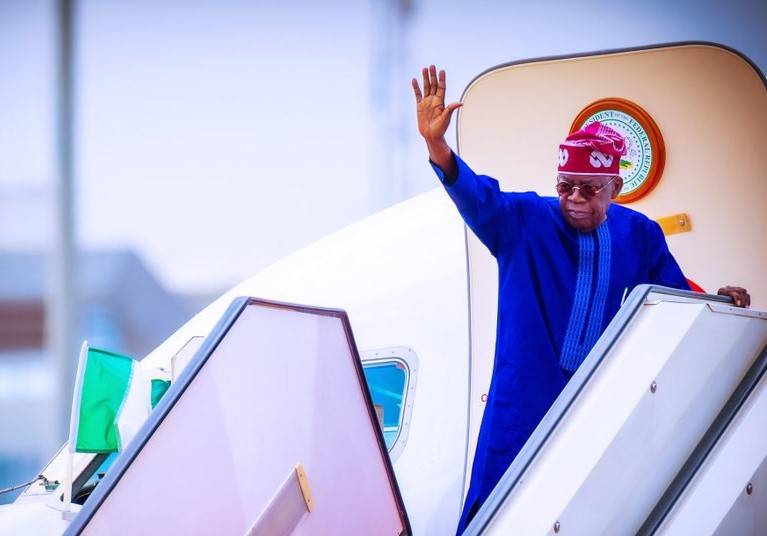
President Bola Ahmed Tinubu will depart Abuja on Saturday on a working visit to Borno, Bauchi and Lagos.
This is contained in a statement issued by Presidential Spokesperson, Mr Bayo Onanuga, on Friday in Abuja.
While in Borno, the President will commission projects executed by the Borno State Government under Gov. Babagana Zulum, in collaboration with the Federal Government.
He will also attend the wedding ceremony of Sadeeq Sheriff, son of former Borno Governor, Sen. Ali Modu Sheriff, and his bride, Hadiza Kam Salem.
READ ALSO:Ambassadorial Nominees: Ndume Asks Tinubu To Withdraw List
From Maiduguri, Tinubu will proceed to Bauchi State to condole with the state government and the family of Sheikh Dahiru Bauchi, the renowned Islamic cleric and leader of the Tijjaniyya Muslim Brotherhood.
Sheikh Dahiru Bauchi died on Nov. 27.
After the condolence visit, the President will travel to Lagos, where he will spend the end-of-year holidays.
During his stay in Lagos, Tinubu is expected to attend several engagements, including the Eyo Festival scheduled for Dec. 27.
The festival, to be held at Tafawa Balewa Square, will honour notable personalities, including the President’s late mother, Alhaja Abibatu Mogaji, former Lagos State governors Alhaji Lateef Jakande and Chief Michael Otedola.

 Metro4 days ago
Alleged Organ Harvesting: Bereaved Families Rush To Check Corpses
- News5 days ago
Forest Reserve: Okpebholo Broker Peace Between Host Communities, Investors
- News3 days ago
Police Confirm Edo Tanker Explosion, say No Casualty
- News3 days ago
Former Delta North senator Peter Nwaoboshi Dies
- News4 days ago
Edo SSG Calls On Media To Support Govt Policies, Assures Better Welfare
- Metro2 days ago
JUST IN: Former Edo Information Commissioner Is Dead
- News3 days ago
Grassroots To Global Podium: Edo Sports Commission Marks Enabulele’s First Year In Office
- News3 days ago
Otuaro Tasks Media On Objective Reportage
- News4 days ago
IPF Hosts Media Conference, Seeks Protection For N’Delta Environment
- News4 days ago
Okpebholo Sympathises With Otaru, People of Auchi Over Tragic Tanker Fire Incident


