
Headline
OPINION: Nigeria Nor Be Kenya
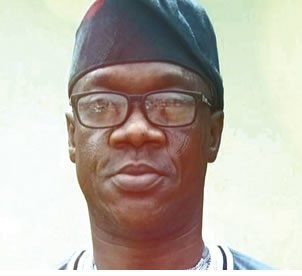
By Suyi Ayodele
“Kabiyesi, the message which I bring you today is the message of all the women who have left their stalls, their homes and children, their farms, and petty affairs to come and visit you today. They are the suffering crowd who are gathered on your front lawn… they are all the womanhood of Egba, and they have come to say – Enough is Enough” (Soyinka 1981, 208).
There is a trending trailer of a film titled “Funmilayo Ransome Kuti”. I have not watched the film, but I know the event that gave birth to the epochal event which forms the core of the plot. It was the Abeokuta Women’s Revolt of 1946. It was caused by the colonial government’s resolve to tax Abeokuta women. Wole Soyinka (WS), whose aunt, Funmilayo Ransome Kuti, and mum, Grace Eniola Soyinka, led the action, captures it well in his memoir, Aké: The Years of Childhood. The quote above explains the central theme of the ‘war’. I remembered it as I watched the Kenya young people’s action last week.
A friend and I discussed the Kenya riots. He was wondering why nobody appears to be bothered about the shenanigans going on in our government circle, especially in the last year. He concluded that Nigerians have become laid-back. I disagreed with him. I have a different theory about why nobody appears to be talking to protest the recent economic policies of the government that have impoverished the masses. In explaining my theory to him, I adopted the street lingo, Nigeria nor be Kenya, an adaptation of the 2020 political slogan of the Edo State chapter of the Peoples Democratic Party (PDP).
The then National Leader of the All Progressives Congress (APC), Bola Ahmed Tinubu, through a video, directed Edo people to vote for the APC governorship candidate, Pastor Osagie Ize-Iyamu, against the incumbent governor and PDP candidate, Godwin Obaseki. In reaction to that directive, the PDP coined the lingo, Edo nor be Lagos, meaning Edo is not Lagos, where Tinubu dictates who will be the governor. The people went ahead to demonstrate that they would not be directed by any godfather as they ensured that the APC candidate, who had earlier been the PDP candidate in the 2016 governorship election, Ize-Iyamu, lost 13 out of the 18 local government areas of the state. The margin of defeat was such that the votes the PDP got in Oredo Local Government Area alone cancelled out the APC votes in the five local governments it won in Edo North Senatorial District!
I told my friend that Nigeria nor be Kenya because there has never been any organic protest in Nigeria since the beginning of this present democratic dispensation in 1999. While the Kenya riots over the now rescinded Financial Bill were spontaneous, organic and impulsive, all the demonstrations we have had in Nigeria since 1999 have been politically motivated, sponsored and orchestrated to achieve just one aim – to put the kingmaker on the throne. For the three days or so that the Kenyan youths were on the streets, there was no room for social razzmatazz. I have not seen any video of the youths partying; of any comedian reeling out jokes and musicians dishing out hot vibes to the protesting youths. The Kenyan boys and girls were focused. They knew what they wanted and went straight for it. They mapped out their targets and went straight for them. Everyone in the Kenyan government, who is related, or perceived to be connected to the obnoxious Financial Bill either scampered to safety or was caught in the crossfire.
MORE FROM THE AUTHOR: OPINION: Distinguished Senator Cow And His Human Rights
From Monday to Wednesday last week, Kenya was on fire. Kenyans, mainly young men and women in their mid-30s and below, trooped out in large numbers to protest the insensitivity of the government of President William Ruto. Ruto proposed a bill termed Financial Bill 2024 to Kenya’s National Assembly. The summary of the proposed Bill was increased taxes to be paid by Kenyans. The young folks in that East African country, known as Gen-Zs, would not have any of that. They came out forcefully. The protest, spontaneous as it was, was well coordinated. All the three arms of government in Kenya collected, what in our street parlance, is known as wotowoto! I hate violence. My sanguinary disposition is low, if non-existent. Ironically, I nonetheless found the treatment meted to some government officials funny, though not totally amusing. Kenyans are lucky lots. Ordinary bill led to a three-day demonstration. I saw the video clips of the riots. Nigeria came to my mind. How will it happen that Nigerians will go on demonstration because of a mere bill?
Here, our leaders rape us serially. We don’t groan, irrespective of the bad bed on which we are raped, or the size of the instrument used in defiling us. Nigerians are used to different sizes of punishment from the various husbands that have been taking advantage of our ‘innocence’. Our husbands, especially those we have had between 2015 and date, would never bother to send any bill to our National Assembly before taking any action. They act first and inform our pliable legislators of the actions taken. How many Nigerians can recall the number of taxes we pay in this country? What about our budgets; how many do we run in one fiscal year? Nigeria is a cruise; a country of anything goes. Our resilience is like that of the proverbial woman under a man with a big phallus. She can only moan and thank her God that she survived while waiting in trepidation for when her assailant will be in the mood again. What a terrible situation!
Are Nigerians naturally complacent? I answer in the negative. History abounds about how our forebears fought oppression in the past. The Yoruba race, for instance, instituted traditional checks and balances in its political structures. Once an Oba veered off the acceptable norms and codes, the people, through their chiefs, presented the “calabash” to such a monarch. Many Yoruba Obas of yore were forced to “open the calabash”, an euphemism for suicide, because they did not rule well. The Alake of Egbaland, Oba Oba Ladapo Samuel Ademola, who was suspected to be in support of the 1946 women tax had, Mrs. Funmilayo Ransome-Kuti and her fellow women under the aegis of Abeokuta Women’s Union (AWU), to contend with. At the end of the Abeokuta Women’s Revolt, Alake was chased out of his palace and town. The Egba Native Authority was expanded to include more women. That was 78 years ago!
The same thing happened earlier in Aba in 1929 when, in November of that year, women in the Bende District of Umuahia and other locations in the present-day South-East, kicked against the tyranny of the colonial government-imposed Warrant Chiefs and their exploitative tax regimes. That protest led to the abolition of the Warrant Chief system in a region that is patently acephalous. The event also marked the beginning of women’s participation in politics in that zone. Those women of Igbo extraction remained heroines to date. They are pointers to the fact that Nigerians are not complacent by nature. However, the nature of the politics we adopted after the fall of the Second Republic in 1983 has changed a lot of things. We have greatly commercialised our politics and it is now a cash-and-carry venture! Again, sad!
The Kenyan incident cannot be compared to what we had in 2020 as #EndSARS! While the first two days of the 2020 youth protest police brutality could be seen and said to be organic, the subsequent days were characterised by politicking. I keep asking: who footed the bills incurred during the protests? I am talking here about the stage, the lighting, sound engineering, refreshments and artists’ appearances. Nobody should tell me about any mass funding, or the love of the “participating artists” for the Nigerian youths. I know enough of showbiz and organisation to know that what went into the #EndSARS was millions of naira. That, however, would never justify the brutality the Nigerian State visited on the armless youths, especially at the Lekki toll Gate axis of the protest. If not now, it shall surely come that posterity will ask for the blood of the poor citizens felled by the armed men sent by the State to disperse the youths.
MORE FROM THE AUTHOR:OPINION: Hunger For Us, Jet For Them
What about the January 2012 protest codenamed, #OccupyNigeria? Was that also spontaneous? Was it in any way a natural reaction of the people to the removal of subsidy by President Goodluck Jonathan? During his inauguration on May 29, 2023, President Tinubu, unceremoniously, announced that “subsidy is gone”. Immediately, everything that hitherto made life comfortable for Nigerians took flight. Life has been unbearable ever since. Yet, nobody has been on the streets in protest. Why? Is there any difference between what Jonathan announced in January 2012 and what Tinubu announced on May 29, 2023? Why then did Nigerians troop out in 2012 but have remained indoors since 2023.
The answer is simple. Those behind the January 2012 #OccupyNigeria protest are either in power today or have their friends in power. The 2012 anti-subsidy removal protest remains one of the most organised civilian coups against a sitting government. Everybody involved in the planning and execution of that 2012 event had one agenda, to wit: remove Jonathan at all costs. Nothing more. At Ojota, Lagos, the epicentre of the #OccupyNigeria protest were politicians, ‘human rights activists’, ‘philanthropists’ and ‘public-spirited’ individuals. If the late iconoclast, Fela Anikulapo Kuti, were to be alive, he would have “put them together” as political carpetbaggers and profiteers! Check the list of the leaders of the protest and you will see that those who are not in today’s government have friends in it!
While the #OccupyNigeria protest lasted, a one-time Nollywood actor, Desmond Eliot, for instance, asked: “Why does our president need six private jets? Why should our public officials keep their salaries when Obama slashed his? Why should we believe the government when it says the subsidy gain will be properly invested? Bad leadership and corruption must stop.” Three years later, Eliot was rewarded with one of the Surulere seats in the Lagos State House of Assembly, a position he has retained for the third term. Today, President Tinubu is asking for two additional jets for the presidency; corruption has spread its tentacles everywhere, but Eliot is as silent as the water in a clay pot. Corruption has assumed a life of its own, yet the Eliots of this world are deaf and blind to that!
What about Abike Dabiri-Erewa and Lauretta Onochie who were regarded as the ‘Amazons’ of the protests during the Jonathan government? After they found themselves in the succeeding governments, what has become of them? Are Nigerians better now than they were during the Jonathan era? Where are the likes of Banky W, El Dee, Kate Henshaw, Omoni Oboli, Bimbo Akintola, Ufoma Ejenobor and Ronke Oshodi-Oke in today’s Nigeria? Should I also mention the deafening silence of our dear Nobel Laureate, Professor Wole Soyinka (WS)? Or why the people’s lawyer, Femi Falana (SAN), has reduced his interventions to mere academic exercises of lectures, speeches, symposia and television screens? One person argued that it is wrong for Nigerians to expect someone like WS to lead a protest in his old age, and I asked: at what age should one accommodate bad governance and State insensitivity to the plight of the masses? If not on the streets, what about incisive statements from the stable of the world-renowned scholar? Our elders say: kìí d’àgbà kí á má lá obè, eegun eran nìkan ni a leè fó mó (old age cannot prevent one from liking soup; it only stops the aged from breaking meat bones)!
MORE FROM THE AUTHOR: OPINION: One Kano, Two Emirs
Nigerians will also recall the 2014 ‘Salvation Rally’, organised by the leadership of the APC to “draw global attention to the deliberate hijack of the Nigeria police and other security agencies by the ruling PDP.” At that rally was Rotimi Amaechi, who, as a PDP governor of oil-rich Rivers State, joined forces with the opposition against Jonathan. General Muhammadu Buhari, then APC presidential aspirant, was at that rally. So also, were Chiefs John Odigie-Oyegun, late Ogbonnaya Onu and a host of others. All these personalities became the beneficiaries of the government that took over from Jonathan in 2015. Buhari became president, Amaechi a minister, and Oyegun as APC National Chairman.
Many Nigerians who applauded the ‘Salvation Rally’ as a bold attempt at correcting the “bad policies” of the Jonathan administration, realised too late that those behind the rally had just one common goal: to take over the government. Femi Gbajabiamila, who was then the Minority Leader of the House of Representatives, said that the rally was to end impunity. Today, Gbajabiamila is the Chief of Staff to President Tinubu. Can we ask him to define “impunity” for us in simple terms, bearing in mind the shenanigans that have been the hallmark of the government in which he serves as the head of the president’s domestic staff?
At the Abuja ‘Salvation Rally’, Chief Oyegun said the ‘protesters’ wanted to end “the raging insurgency that is daily killing and maiming our compatriots. An end to the impunity that permeates the Jonathan administration. An end to the massive corruption that has left our compatriots impoverished in the midst of plenty. An unambiguous effort to ensure that 2015 elections will be free and fair.” Where is the Benin Chief today? Can we ask if the “killings and maiming” have stopped, or if “impunity” has ended, and if our electoral system now is better than what we had in 2015?
The difference between Nigerians and the Kenyans who went on a rampage last week is clear. The history of our ‘fight’ for independence in Nigeria cannot be compared to what was obtainable in Kenya. While our ‘freedom fighters’ were busy drinking cups of tea, the Kenyans were in the bush with their Mau Mau agitation. A Nairobi University professor of Business and Management Sciences, XN Iraki (Waithaka N Iraki), said that the Gen-Zs that led the riots are below 35 years old and constitute 80% of the Kenyan population.
He wrote: “Several economic factors have come together, creating the perfect storm for these mass protests. First, young Kenyans have endured hard economic times brought on by COVID-19 and the war in Ukraine. Tensions were already evident in the run-up to Kenya’s 2022 presidential elections, with complaints over rising national debt and the cost of living. At the time, President William Ruto’s alliance read the signs correctly and tapped into the discontent. As a presidential candidate, Ruto promised to lower the cost of living if he won the elections. He also promised the downtrodden, popularised as “hustlers”, better jobs. And they voted for him in droves. But in two years the economy did not grow as fast as expected. And the hustlers’ patience ran out. They have seen no transformation in their economic lives. This is despite the economy achieving a growth rate of 4.9% in 2022, edging up to 5.6% in 2023. This growth was not enough to deal with the economic backlogs. Hence, the popular question I have been asked as an economist is: if the economy is growing, where is the money?”
The same promises Ruto made to Kenyans are what Tinubu promised Nigerians. Kenyans took to the streets because they have never had the misfortune of having selfish politicians lead them in protests whenever government policies fail. But, here in Nigeria, political merchants have been the ones organising ‘protests’ on behalf of the people. Now, the ‘protesters’ of yesterday are in power; the people are helpless. Permit this last forecast: a day is coming when the Nigerian people shall take their destiny into their own hands. A day when they will chase the political merchants away and act on behalf of themselves. When that day comes, no fortress shall be impenetrable; not even the Aso of all Rock(s) Villa. That day, the monkey go go market and he no go return! May my generation witness that glorious day.



Headline
Moving Abroad? Essential Things Nigerians Should Pack Before Leaving Nigeria

Moving abroad from Nigeria is one of those life changes that makes a suitcase suddenly feel much smaller.
What looks like enough luggage in your bedroom can seem painfully limited once you start choosing between clothes, documents, electronics, personal care items and the small things that make an unfamiliar place feel like home.
That is why a good diaspora relocation packing list guide should not be about squeezing everything possible into your bags. It should help you decide what deserves precious luggage space, what can be bought after arrival and what should never go into your suitcase in the first place.
The distinction matters because airlines have strict baggage limits, while destination countries have their own customs rules.
Baggage allowances vary by airline, route, cabin class and aircraft, while individual checked bags are generally recommended not to exceed 23kg for handling reasons. Power banks and spare lithium batteries, for example, must generally remain in carry-on baggage rather than checked luggage.
Start with documents, not clothes
Before thinking about clothing or food, create a secure travel folder for the documents you cannot afford to lose. Your passport, visa or residence documentation, flight information, accommodation details, employment or school documents, insurance information and important contact details should stay accessible throughout the journey.
Carry originals where necessary and keep encrypted digital copies or secure backups of important documents. If you are relocating with children, their birth certificates, school records, vaccination documentation and immigration papers may also be important depending on the destination and circumstances.
Do not put irreplaceable documents in checked luggage. A suitcase can be delayed, misrouted or damaged, but losing access to your passport or immigration paperwork at the same time can turn a manageable travel problem into a serious one.
Pack for your first two weeks, not your entire future
One of the easiest ways to overpack is to imagine every possible situation you might encounter after moving. Resist that temptation. Your first luggage should support your transition, not reproduce your entire Nigerian household overseas.
Pack enough everyday clothes for your initial period, but consider the climate of your destination before filling a suitcase with Nigerian weather essentials. A person moving to the UK in winter, for instance, needs a very different wardrobe from someone moving to a warmer country.
The better strategy is to prioritize versatile clothing that can be layered and reused. Comfortable shoes, underwear, sleepwear, basic toiletries and weather-appropriate outerwear deserve more attention than multiple outfits you may rarely wear.
READ ALSO: UK Skilled Worker Visa: 10 Ways To Prepare For Your Interview
This also reflects advice commonly shared in relocation communities: keep an “open first” collection of essentials so you are not searching through every box or suitcase when you are exhausted after arrival. The practical principle is simple, make your first few days easy before worrying about everything else.
Take the Nigerian items that are genuinely difficult to replace
Food is where relocation packing becomes particularly personal. Nigerians living abroad frequently mention missing familiar foods and ingredients, especially regional items that may be difficult to find or expensive in ordinary supermarkets.
Discussions among Nigerians abroad show that the issue is not necessarily basic rice, pasta or common spices; it is often the distinctive ingredients and flavors associated with home.
That does not mean you should fill an entire suitcase with food.
Instead, prioritise small quantities of dry, commercially packaged items that are legal to import into your destination and that you genuinely use. Depending on the destination, these could include permitted spice blends, seasoning, certain dried ingredients or packaged Nigerian foods.
However, never assume that because something is dry, packaged or commonly carried by other Nigerians, it is automatically permitted. Import rules differ significantly between countries.
For Great Britain, for example, travelers can bring some packaged foods such as biscuits, chocolate, pasta and packaged soup, while meat, dairy, fruits, vegetables, nuts and seeds can be subject to restrictions.
READ ALSO: FULL LIST: US Warns Citizens Against Travelling To 23 Countries
The EU is stricter in several respects. Travelers arriving from outside the EU generally cannot bring meat or dairy products into the bloc, although specific exemptions apply to certain products and circumstances.
So if you are relocating from Nigeria to London, Paris, Amsterdam or another destination, check the destination’s official customs rules before sealing that bag of food.
Do not sacrifice luggage space for easily replaceable goods
A relocation suitcase should contain things that solve a problem, preserve something important or save you meaningful money—not everything you happen to own.
Basic toiletries, ordinary kitchen utensils, cheap hangers, bulky bedding and generic household products can often be purchased after arrival. Carrying large quantities simply because they are cheaper in Nigeria may not make economic sense once excess-baggage charges and limited suitcase space are considered.
The same applies to appliances. Check the electrical system and plug standard of your destination before taking Nigerian appliances abroad. A device that is cheap to replace may not be worth carrying if it is incompatible with the local voltage or requires additional equipment.
Ask yourself a blunt question before packing anything: Would I still pay to transport this if I had to buy extra luggage for it? If the answer is no, leave it behind.
Give electronics and valuables special treatment
Your laptop, phone, chargers, external drives, camera equipment and other essential electronics should be packed with both security and airline rules in mind.
READ ALSO: FULL LIST: Nigeria, 49 Others Affected By US’ $20,000 Visa Bond Policy
Keep valuable electronics in your carry-on whenever the airline permits it. IATA specifically advises passengers not to place valuable or irreplaceable items in checked baggage, while spare batteries and power banks have specific restrictions because of fire risk.
Keep chargers organized in a small pouch rather than scattering them throughout your luggage. If you use several devices, label unfamiliar cables before leaving Nigeria; it sounds trivial until you are sitting in temporary accommodation with three identical USB cables and no idea which one powers your laptop.
Think about health and personal-care essentials
Your relocation luggage should also cover the personal items that may be inconvenient to replace immediately. Prescription medicines, if applicable, should remain in their original packaging and be accompanied by the documentation required by the destination country.
Basic toiletries and personal-care products that you know work for you can be worth carrying in reasonable quantities, particularly during the first few weeks when you are still learning where to shop.
Do not, however, turn your suitcase into a pharmacy. Check the rules of the destination country for medicines and controlled substances before traveling, because something legally purchased in Nigeria may have different restrictions elsewhere.
Leave prohibited and questionable items behind
Some of the worst relocation-packing decisions are made with the assumption that customs officers will not notice.
READ ALSO: Travel Chaos: Air Canada Shut Down By Flight Attendant Strike
That is a dangerous gamble. The UK, for example, prohibits or restricts items including controlled drugs, offensive weapons, certain endangered species and personal imports of meat and dairy products from most non-EU countries.
Food restrictions also deserve serious attention. If you arrive in Great Britain with banned food and declare it, the Border Force can confiscate and destroy it; failing to declare prohibited products can result in penalties or prosecution.
When in doubt, check the official customs guidance for your destination before packing. If an item requires a permit, certificate or declaration, find that out before you arrive at the airport, not while standing in front of a customs officer.
Build one ‘first-night’ bag
Finally, separate the things you will need immediately from everything else.
Your first-night bag should contain a change of clothes, basic toiletries, essential documents, medications, chargers, important electronics and anything else you would need if your checked luggage were delayed. This simple step can save you considerable stress during the first 24 hours.
Your relocation luggage should make your new beginning easier, not burden you with your old life. Pack the things that are valuable, difficult to replace, culturally meaningful or immediately useful. Leave behind what is cheap, bulky and readily available.
Most importantly, remember that your airline’s baggage allowance and your destination country’s customs rules are separate issues. Staying within the weight limit does not mean every item inside the suitcase is legally admissible.
IATA emphasises that baggage conditions remain airline-specific, while governments set their own customs and import requirements.
For Nigerians relocating abroad, the smartest suitcase is therefore not necessarily the heaviest one. It is the one that contains exactly what you will need to begin your new life with less stress, fewer unnecessary expenses and no avoidable customs problems.
(TRIBUNE)
Headline
Why I Forgave Lindsay Clancy For Killing Our Children — Ex-husband Patrick
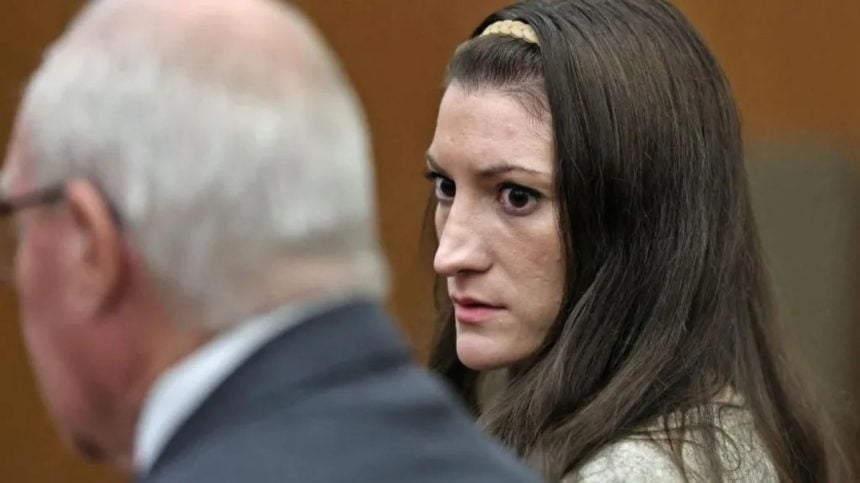
Patrick Clancy, the ex-husband of Lindsay Clancy, has spoken about his decision to forgive her for the deaths of their three children, saying he feared he would be “eaten up inside forever” if he could not reach a point of forgiveness.
In a new interview with CBS, Patrick said he believed he had done the best he could while his then-wife struggled with mental illness.
“I didn’t know how to manage a [postpartum illness]. I think mental illness has this ability to be tragically deceptive,” he said.
“When it comes to forgiveness, I also felt that if I didn’t get there, I would be eaten up inside forever,” he added.
Lindsay Clancy, a former labour and delivery nurse, was accused of killing the couple’s three children — Cora, five, Dawson, three, and Callan, eight months — in January 2023.
READ ALSO: Former Fox Business Producer Jennifer Eckhart Dies By Suicide
She attended her trial in a wheelchair after suffering permanent paralysis in the aftermath of the incident.
Patrick testified during the trial about his former wife’s mental health struggles following childbirth.
Clancy has never denied killing the children, while her defence argued that she was suffering from postpartum psychosis at the time and was not criminally responsible for her actions.
The case ended in a mistrial after one juror refused to find Clancy not criminally responsible.
Judge William Sullivan, who presided over the trial, has since sealed the jurors’ identities, citing a “real and present” risk of harm.
READ ALSO: NURTW: KWAM1 Settles Long-time Rift Between MC Oluomo, Tafa Sego
The prosecution had alleged that Clancy sent Patrick on an errand before the incident, deliberately removing him from the home.
Patrick became a focus of the trial during its seventh week, when he faced allegations that he was partly responsible for the deaths of the children.
“I think I did the best I could with what I had at the time.” Patrick said. “And I live with the outcome. I live with it every day.”
Speaking about the claims and speculation surrounding him, Patrick said they were “deeply harmful to the legacy of my children” and a “huge distraction from what really matters here, which is perinatal [mental health].”
READ ALSO: Premier League Predictions For Matchweek 5 Fixtures
Patrick has since moved to New York City with his new wife, Rachel Danis, where they hope to find some anonymity and normality.
He said he looks forward to starting a family with his new partner and telling his future children about their siblings.
The case remains unresolved and is scheduled to return to court on September 29 at Plymouth Superior Court in Massachusetts.
(Metro UK)
Headline
Former Fox Business Producer Jennifer Eckhart Dies By Suicide

Jennifer Eckhart, a popular podcaster and former associate producer at Fox Business, died by suicide at her home in Hobe Sound on Saturday morning, as reported by the Martin County sheriff.
Sheriff John Budensiek explained that he typically does not comment on suicides; however, he chose to speak publicly about Eckhart’s death to address conspiracy theories suggesting that she had been murdered.
“After thoroughly investigating the scene and the circumstances, we looked at it as if it were a homicide. However, it is not. It is a suicide. Unfortunately, she took her own life,” Budensiek stated.
Eckhart gained media attention after accusing a Fox News anchor of raping her. Investigators revealed that she had family and friends who attempted to help her, but she had been in and out of mental health facilities and had stopped taking her medications.
READ ALSO: FOX TV News Anchor Matt Vereen Arrested After child P0rn Is Found In His Laptop
Elizabeth Burrows, the director of development and communications with 211 Palm Beach and Treasure Coast, highlighted the tragedy of suicide and encouraged anyone struggling to seek help.
“Every death by suicide is a tragedy,” Burrows said.
She noted that anyone in crisis can call 211 or 988, which are available 24 hours a day, seven days a week, to provide resources or someone to talk to.
“You’d be surprised at how often just having someone who’s there to listen can help someone make it through their darkest moments,” Burrows said.
READ ALSO: PHOTOS: Jamie Foxx Steps Out In Public For First Time Since ‘Antisemitic’ Apology Post
Burrows also stressed the importance of being present and asking questions when supporting someone who may be struggling.
“It’s OK to ask. Asking about it does not make suicide more of a risk for them. If anything, it lets that person know that they are not alone,” she said. “The one answer I can always give is to never give up. As long as someone is still here, there is still an opportunity to support and assist them.”
The sheriff said Eckhart’s death remains an open investigation as they await toxicology results, but he emphasized that all evidence points to suicide.

 News1 day ago
BREAKING: Tinubu Extends Working Vacation
- News3 days ago
Six Hidden Health Benefits Of Unsweetened Zobo
- News4 days ago
Edo: Council Chairman Under Fire For Threatening Commercial Drivers Who Refuse To Wear APC Insignia
- News4 days ago
Edo: Ekpeson Redeems N20m Pledge To Family Of Fallen Soldier
- News3 days ago
Jehovah’s Witnesses Announce New Position On Blood Transfusion Policy
- News3 days ago
2027: Step-by-step Guide To Applying For INEC Ad Hoc Staff Recruitment
- News4 days ago
OPINION: Nigerian Pastors, Imams And Their Sex Sermon Obsession
- News3 days ago
How 36 Nigerian States Got Their Names
- News4 days ago
Otuaro Harps On Academic Excellence As Another 31 PAP Scholarship Beneficiaries Leave For UK
- Headline1 day ago
How To Format An Academic CV For US Master’s, PhD Applications


