

News
OPINION: Nigerian Leaders As CBEX Ponzi Chancers


By Festus Adedayo
On Page 28 of his very provocative book, The Present Darkness: A history of Nigerian organized crime, (2016), Stephen Ellis, British historian and Africanist, compared Nigerian politics to con artistry. Their practices, he said, were not different from acts of fabulists and fraudsters. Ellis’ take on Nigerian leaders synchronises with Henry Louis Gate’s The New Yorker piece of September 25, 1995. With the title, “Powell and the Black Elite,” the piece quoted ex-American Secretary of State, Colin Powell, as saying, “Nigerians as a group, frankly, are marvellous scammers… I mean, it is in their natural culture.”
As it is done in scholarship, traditional Africa also gives justification for the Ellis comparison. It says, when the shape and size of a peanut’s shell bears striking semblance to the coffin of a species of mouse called Eliri, then a justification is successfully established. Last week, there was an eruption of weeping, wailing and gnashing of teeth in many homes. Investors in the digital financial platform called CBEX met their financial waterloo. CBEX ultimately unraveled as a Ponzi scheme, with about 600,000 Nigerian victims in tow. It has given critical minds an opportunity to examine whether there is a meeting of minds between Ponzi chancers and Nigerian political leaders. Why do we dwell so much on Nigerian economic scams and scammers, while we sacralise the equally cancerous virus of political scammers?
The genealogy of this crave for quick wealth dates back in time. In 1925, J. K. Magregor, headmaster of Scottish-Presbyterian-founded, Hope Waddell Institute, of which the great Nnamdi Azikiwe was an alumnus, had written the Nigerian governor-general. His complaints were based on a motif of pupils of the school writing incredibly suspicious letters to unknown persons abroad. In the letter, the pupils asked to be sold medicines of esoteric teachings which guaranteed success and happiness. They turned out to be quack. In a single mail delivery, said Ellis, Magregor discovered 125 of such scam letters. One laughable example was a 12-year old pupil who had purchased through post from India a “Mystic Charm” with an instruction to him to send more money so that he could be sent “blessings from the Hindu deity Siddheswari”. The letter also told the boy that the sign he would get to confirm the efficacy of the deity was “by watching the flow of his nasal mucus”!
Our visible connect to this pre-colonial crave for mysticism was re-enacted during the First Republic Nigeria. During this period, secret societies played pivotal roles in governance. The barbarism and primitivism of killing people for sacrifice in order to gain ascendancy in political circles became rife. The Ogboni cult held a supremacist place in Western Nigerian politics. It was only the northern part of Nigeria that was saved the barbarity. By the end of the Third Republic, however, military despots like Sani Abacha had reportedly began to seek spiritual interventions of Muslim brotherhoods of Senegal for a mystic buy-in into their infernal rule. Cows were reportedly buried alive in all outposts of Abuja, the Federal Capital Territory by the goggled General. By the Fourth Republic, politicians had fully imported into Nigeria this Islamic mysticism which was spreading in sub-Saharan Africa. The marabouts were Islamic priests who combined Islam with the syncretic practice of local healers, fortune tellers, spiritual guides and diviners. Today, virtually all Nigerian politicians, like that 12-year Hope Waddell old boy, still seek mysticism, either from Islamic mullah, clergies, Babalawo or Senegalese marabouts to guarantee their political happiness and success.
Economic chancing of the CBEX kind is not purely native to Nigeria. In August 1920, after months of covert investigations by Clarence Barron, Boston Post newspaper’s top financial journalist, of the activities of Charles Ponzi, burst his bubble. Barron had found out that Ponzi, an Italian, born 1882, who immigrated to the United States in 1903, was a notorious con artist. In January 1920, Ponzi had established a “Securities Exchange Company” where he promised investors returns of up to 50% in 45 days. The scheme attracted thousands of local investors who, mimicking early Christians of Jerusalem’s mode of spread of the religion, engaged in a mouth-to-mouth spread of the “good news”. Gradually, they escalated its rapid growth and staggering participation. At the height of the scheme, Ponzi collected not less than $250,000 a day from unsuspecting victims, quadrupling his wealth to over $15million. Immediately after Barron’s investigation leaked, Bostonians rushed to and camped outside Ponzi’s offices. They were panicky crowds of local investors demanding a return of their money. Last week, same scenario was reenacted as angry and exasperated Nigerian victims of CBEX stormed its Nigerian offices.
MORE FROM THE AUTHOR: OPINION: Tell Your Papa As Spirit Of Rwanda’s Simon Bikindi
Ponzi and CBEX’s gambits were not dissimilar. They were predicated on paying existing investors funds that were collected from new investors. As the Ponzi scheme left thousands of investors devastated, having lost their life savings, its traits ultimately became known globally as the ‘Ponzi scheme’. After Ponzi’s infamy, the fraud ring mutated severally all over the world. Like in Bernard Madoff. For 17 years, Madoff duped investors of billions of dollars. He eventually got sentenced to 150 years. Nigeria also had the MMM. Launched in 2016, this infamous financial scheme attracted huge investment traffic, such that when it froze its transactions, it left thousands of investors crushed and heartbroken. CBEX is said to have ripped off Nigerians of over a trillion Naira.
The divide separating economic, political and leadership Ponzi in Nigeria is very thin. It is welded together by the glue of voodoo, talisman, juju and marabout. I learnt that victims of CBEX gave testimonies in churches before their waterloo, with some pastors telling congregants that the chancers had brought a new wave of God’s blessings. While greed and straitened economic times resulting in citizens seeking desperate escape have been attributed to the flourishing and successes of these scams, Prof Ellis established a corollary between Ponzi chancers of pre and post-colonial Nigeria and emergent political and military rulers. He then situated Nigeria as one huge forest of a fraud ring: “Most Nigerian practices of organized crime, including document fraud, embezzlement and large-scale smuggling, originate in politics and the state itself, or at least have important and durable connections to the state.”
As Ponzi scammers feed fat on the red blood corpuscles of trickery and deceit, so do Nigerian leaders and politicians. Ellis insinuates that scam can be found in the bloodstream of Nigerian politics and political leadership since they first began in the 1940s. If you break Ponzi to its most basic moral component, it is driven by unrighteousness, desire to outwit the other person, gain personal advantage and in most cases, leave sorrow as mementos. Nigerian politics and leadership are founded on same nefarious aspiration.
Only last week, the United States District Court for the District of Columbia ordered top US law enforcement agencies to release confidential information generated during a 1990s federal investigation. One Mr. Greenspan had, between 2022 and 2023, filed 12 FOIA requests seeking information about a joint investigation of the FBI, IRS, DEA, and the US Attorney’s Offices for the Northern District of Indiana and Northern District of Illinois. He wanted the charging decisions on the activities, including money laundering, of a Chicago heroin ring that operated in the early 1990s made open. The Nigerian president is said to be located at the vortex of this investigation.
MORE FROM THE AUTHOR: OPINION: Tinubu Is The Law!
While reacting to the American court ruling, the Nigerian presidential media office dismissed it as “having been in the public space for more than 30 years,” and did not in any way “indict the Nigerian leader” while concluding that “lawyers are examining the ruling.” My people say, if someone does not move in gaits that resemble an African pouched rat’s, no one would ask them to eat a meal of palm-nut seeds that is the culinary preference of this species of rats. (Bi eeyan ko bá rìn ìrìn awasa, wón o ní fi ekurọ lọ). The fact that the president’s name is enmeshed in such shame is already a national disaster. I don’t know of any scam bigger than a presidential Ponzi of paying millions of dollars to American lawyers so as to keep blocking American courts from disclosing to Nigerians and the world the truth or lie in the allegation that our president was involved in a heroin trade in the 1990s.
Ellis provided a nexus, no matter how tenuous, to the Ponzi. As far back as 1952, he wrote, Nigeria had become a staging point for heroin drug trade. According to him, the country was “a heavy dope traffic” from the near East to the USA via Europe, with one of those implicated at the Nigerian end of this pipeline being “one O. Chagoury.” Ellis’ conclusion on this pre-independence Nigerian drug trade gives the reader of the book today the latitude to connect its frightening nexus. He had written: “A few decades later, a Lebanese family with the same name had become very influential in both business and in political finance: Gilbert Chagoury, born in 1946…He was very close to the military dictator of the 1990s, Sani Abacha…It seems he is a descendant of a heroin trader who arrived Nigeria in 1952…the heroin trade may provide start-up capital for other forms of business…” You may find this on Page 92 of Ellis’ book.
While we lament the Ponzi scam of CIBEX, I put it to us that we are merely being hypocritical. Ponzi, MMM, CBEX, either figuratively or literally, have always constituted our ways of life. In our individual, collective and national relations, our modus operandi has never been dissimilar from these scammers’. We take delight in sucking the nectar of the joy of our fellow man. We elect known scammers into political offices and when they scam us, we complain. We are like the farmer who knew that the land he planted peanuts on was squirrel-infested. At the time of harvest, this same farmer became grumpy because squirrels had eaten up all his farm proceeds. When a man tells his people he was going on a two-weeks “working vacation,” which we all knew was a euphemism for a date with his Chagoury business partners or a date at the infirmary, didn’t both the man who spun the yarn and we, the people who received it, know we were mutually involved in a CBEX transaction? Or, didn’t we know that the spinner of the lie wasn’t dealing with us straight? Our forebears sounded alarm on characters like this in their saying that, when you meander round truth and refuse to walk straight, you are most likely encumbered by issues of finance (Sàn làá rìn, ajé ní mú ní pẹ kọ̀rọ̀)
MORE FROM THE AUTHOR: OPINION: ‘Our Doc, Who Art In The National Palace’
Our scam began from the very beginning when Nigerians brought in a presidential baggage they didn’t have access to its constitution. Last week, the White House released President Donald Trump’s annual health report. Nigerians are left to make guesswork on what ails theirs and the billions of their patrimony spent to maintain it. Our president’s health is run like a coven, which reminds one of the miasma that surrounded the health of monarchs of pre-modern Africa. The king must not be seen to have taken ill like a commoner. It is a sacrilege. What Ponzi is greater than this, full of its opacity!
Replying to criticisms that, after almost 200 Nigerians had been killed in the president’s absence, he is still oscillating like a spirit from France to London, his media office told us he could rule Nigeria through remote control from anywhere in the world. Nigerians instantly remembered they had walked that punishing road before. At Easter, the statement purportedly issued by the president was that, “evil forces will not triumph in Nigeria” at a time when Evil had been crowned as King. What evil is greater than the carnage ongoing in Plateau and Benue states which, as usual, was dressed beautifully in a refrain, “the president has ordered decisive action”. Both of us, the president and Nigerians at large, know that this statement is a complete scam. There is no action coming from anywhere, not to talk of its being decisive. When the killers strike again soon, the presidency will recalibrate the commiseration refrain. Charles Ponzi must be happy he has identical offspring in the Nigerian presidency.
In Nigeria, we live in a world of deception which the Yoruba call “Ìlú ẹtan”. It is an antonym for the kind of trade that catapulted Charles Ponzi into global infamy. Claude Ake, in his, Is Africa Democratizing (1996) slammed our brand of politics as one “that does not know legitimacy or legality, only expediency.” If you listened to Nyesom Wike’s media chat on Friday, you will see hope receding for a Nigeria of our dreams. You will see crude audacity and man God-ifying himself. It affirms the Ake expediency as the credo of Nigerian politics, in agreement with Ellis that Nigeria is one huge river of Ponzi traders. If it wasn’t CBEX on parade, why would a man gloat as his own party is bleeding?
Wherever you turn, Nigeria is a an ocean where sharks feast on sharks and lesser fishes devour one another. Atiku Abubakar and his co-travellers on a coalition have started spinning their own political Ponzi, which they know its end is not basically for the Nigerian people. Peter Obi is busy with his own Ponzi as well. Muhammadu Buhari, who regressed Nigeria colossally in eight years as president is the one to decide Nigeria’s political future now because he is patrons to millions of Almajiri voters who know not their right from left. As the week was ending, Reno Omokri, the Peter Obi-hating political Smart Alec, spun another of his serial Tinubu intervention Ponzi yarns. “Nigeria is safer now under Tinubu”, he said. If any of Omokri’s family members was among the almost 200 victims of Nigerian Ponzi rulers, killed in Benue and Plateau states in the last two weeks, a period when Nigeria had, not even a scare-crow placeholder for president in Aso Rock, will the “Ambassador” spew this undiplomatic puke?
What is glaring is, by the time this current CBEX government in Aso Rock finishes with us, we will have a long roll-call of victims.




News
Xenophobic Attacks: Oshiomhole Tells FG To Retaliate Against South African Companies In Nigeria

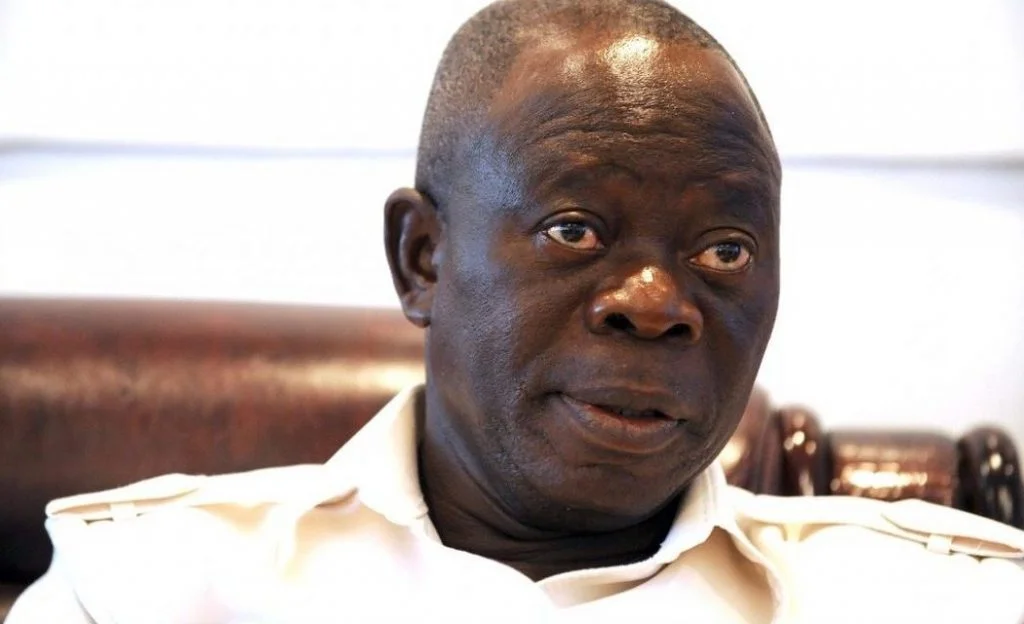
Senator Adams Oshiomhole has called on the Federal Government to retaliate against South African businesses operating in Nigeria following the recent attacks on Nigerians in South Africa.
Speaking during plenary on Tuesday, Oshiomhole said the Federal Government should consider revoking the working license of South African owned companies such as MTN and DSTV.
He argued that Nigeria must respond firmly to what he described as persistent hostility against its citizens.
READ ALSO:South Africa To Investigate ‘Mystery’ Of Planeload Of Palestinians
“I am not going to shed tears. If you hit me, I hit you. I think it is appropriate in diplomacy. It is an economic struggle,” Oshiomhole said.
He argued that while some South Africans accuse Nigerians of taking their jobs, Nigerians should return home and take over employment opportunities created by major South African companies operating in the country, including MTN and DSTV.
“When we hit back, the President of South Africa will not only talk but will also go on his knees to recognise that Nigeria cannot be intimidated.
READ ALSO:South African Ambassador Found Dead Outside Paris Hotel
“We will not condone any life being lost. If a crime has been committed under the South African law they have the right to bring any such person to justice, but to kill our people as if we are helpless, we will not allow that,” Oshiomhole added.
DAILY POST reports that several Nigerians in South Africa have reportedly been attacked, and their businesses destroyed, in ongoing xenophobic attacks in the country.
News
IGP Orders Officers Display Name Tag On Uniform, Gives Update On State Police

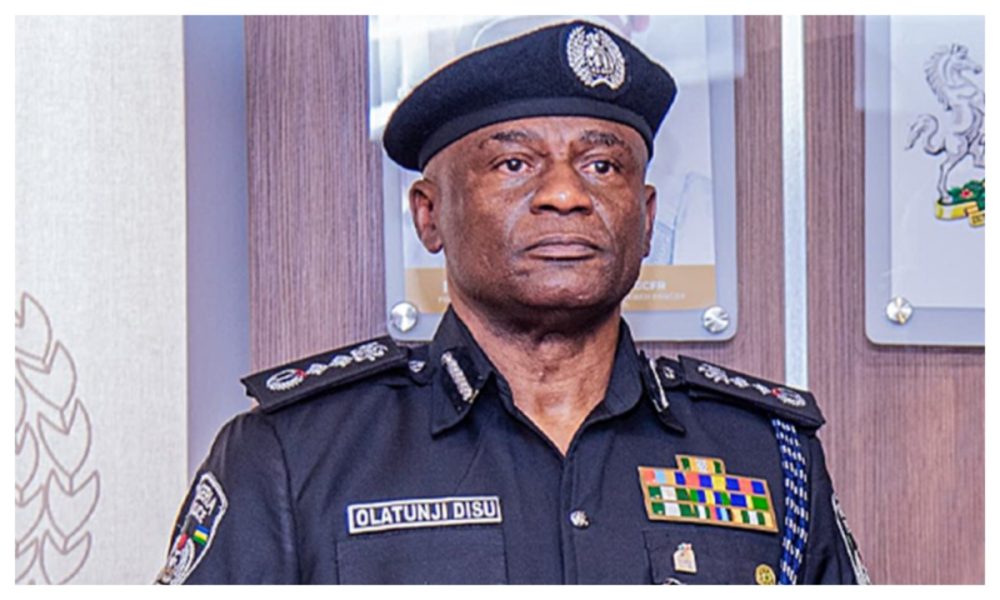
The Inspector General of Police, IGP, Tunji Disu, has ordered all police personnel to always have their name tags on their uniforms for easy identification.
Disu disclosed that only police personnel who are undercover are exempted from displaying their name tags.
Speaking on Tuesday, Disu said: “All police officers should have their name tags. All of us on the high table have our names apart from the undercover among us so if you look at all the Commissioners of Police we have our name tags, so it’s not our standard.
READ ALSO:
“All the Commissioners of Police are here and that is why we called this meeting, we have list of things like this that we will want to discuss with the Commissioners of Police, we have told them earlier and we will still let them know that every that happens within their area of jurisdiction falls under their control.”
On the issue of state police, the IGP said: “Since we got the signal that the Federal Government of Nigeria intend to establish State Police and since we are the federal police, we decided to take the bull by the horn and put down our own side of what we believe on how the state police should be run.
“A lot of things were taken into consideration, a lot of comparative analysis was done and it has been transmitted to the National Assembly.”
News
Court Orders SERAP To Pay DSS Operatives N100m For Defamation
The High Court of the Federal Capital Territory has ordered a non-governmental organization, the Socio-Economic Rights and Accountability Project, SERAP, to pay N100 million as damaged to two operatives of the Department of the State Services, DSS, for unjustly defaming them in some publications.
The court also ordered SERAP to tender public apologies to the defamed officers,
Sarah John and Gabriel Ogundele, in two national newspapers, two television stations and its website.
Besides, the organization was also ordered to pay the two operatives N1 million as cost of litigation and 10 percent post-judgment interest annually on the judgment sum until it’s fully liquidated.
Justice Yusuf Halilu of the High Court of the Federal Capital Territory gave the order on Tuesday while delivering judgment in a N5.5 billion defamation suit instituted against SERAP by the DSS operatives.
The judge found SERAP liable for unjustly defaming the two DSS operatives with allegations that they unlawfully invaded its Abuja office, harassed and intimidated its staff, in September 2024.
READ ALSO:How We Arrested Terror Suspect Who Threatened To Kill Students, Teachers In Abuja — DSS
In the offending publication on its website and Twitter handle, SERAP alleged that the two operatives unlawfully invaded and occupied its office with sinister motives.
The judge held that the publication was in bad taste especially from an organization established to promote transparency and accountability, as nothing in the publication was found to be truthful.
The DSS staff had listed SERAP as 1st defendant in the suit marked CV/4547/2024. SERAP’s Deputy Director, Kolawole Oluwadare, was listed as the 2nd defendant.
In the suit, the claimants – Sarah John and Gabriel Ogundele – accused the two defendants of making false claims that they invaded SERAP’s Abuja office on September 9, 2024..
Counsel to the DSS, Oluwagbemileke Samuel Kehinde, had while adopting his final address in the mater urged the judge to grant all the reliefs sought by his client in the interest of justice.
READ ALSO:DSS Arrests Suspected Gunrunner, Recovers 832 Rounds Of Ammunition
He admitted that although the names of the two claimants were not mentioned in the defamation materials, they had however established substantial circumstances that they are the ones referred to in the published defamation article by SERAP on its website.
The counsel submitted that all ingredients of defamation have been clearly established and the offending publication referred to the two officials of the secret police.
However, SERAP, through its counsel, Victoria Bassey from Tayo Oyetibo, SAN, law firm, asked the court to dismiss the suit on the ground that the two claimants did not establish that they were the ones referred to in the alleged defamation materials.
She said that SERAP used “DSS officials” in the alleged offending publication, adding that the two claimants must establish that they are the ones referred to before their case can succeed.
Similar arguments were canvassed by Oluwatosin Adefioye who stood for the second defendant, adding that there was no dispute in the September 9, 2024 operation of DSS in SERAP’s office.
READ ALSO:Alleged Cyberstalking: DSS Plays Video Evidence In Sowore’s Trial
He said that since SERAP in the publication did not name any particular person, the claimants must plead special circumstances that they were the ones referred to as the DSS officials.
Besides, he said that there is no organization by name Department of State Services in law, hence, DSS cannot claim being defamed adding that the only entity known to law is National Security Agency.
The claimants had in the suit stated that the alleged false claim by SERAP has negatively impacted on their reputation.
The DSS also stated, in the statement of claim, that, in line with the agency’s practice of engaging with officials of non-governmental organisations operating in the FCT to establish a relationship with their new leadership, it directed the two officials – John and Ogunleye – to visit SERAP’s office and invite them for a familiarization meeting.
The claimants added that in carrying out the directive, John and Ogunleye paid a friendly visit to SERAP’s office at 18 Bamako Street, Wuse Zone 1, Abuja on September 9 and met with one Ruth, who upon being informed about the purpose of the visit, claimed that none of SERAP’s management staff was in the country and advised that a formal letter of invitation be written by the DSS.
READ ALSO:DSS, Police Partner NCCSALW To End Terrorism, Mop Up Illegal Arms
John and Ogundele, who claimed that their interactions with Ruth were recorded, said before they immediately exited SERAP’s office, Ruth promised to inform her organisation’s management about the visit and volunteered a phone number – 08160537202.
They said it was surprising that, shortly after their visit, SERAP posted on its X (Twitter) handle – @SERAPNigeria – that officers of the DSS are presently unlawfully occupying its office.
The claimant added, “On the same day, the defendants also published a statement on SERAP’s website, which was widely reported by several media outfits, falsely alleging that some officers from the DSS, described as “a tall, large, dark-skinned woman” and “a slim, dark skinned man,” invaded their Abuja office and interrogated the staff of the first defendant (SERAP).
John and Ogundele stated that “due to the false statements published by the defendants, the DSS has been ridiculed and criticised by international agencies such as the Amnesty International and prominent members of the Nigerian society, such as Femi Falana (SAN)”.
“Due to the false statements published by the defendants, members of the public and the international community formed the opinion that the Federal Government is using the DSS to harass the defendants.”
READ ALSO:SERAP To Court: Stop CBN From ‘Implementing ‘Unlawful, Unjust ATM Fee Hike’
They added that the defendants’ statements caused harm to their reputation because the staff and management of the DSS have formed the opinion that the claimants did not follow orders and carried out an unsanctioned operation and are therefore, incompetent and unprofessional.
The claimants therefore prayed the court for the following reliefs: “An order directing the defendants to tender an apology to the claimants via the first defendant’s (SERAP’s) website, X (twitter) handle, two national daily newspapers (Punch and Vanguard) and two national news television stations (Arise Television and Channels Television) for falsely accusing the claimants of unlawfully invading the first defendant’s office and interrogating the first defendant’s staff.
“An order directing the defendants to pay the claimants the sum of N5 billion as damages for the libellous statements published about the claimants.
“Interest on the sum of N5b at the rate of 10 percent per annum from the date of judgment until the judgment sum is realised or liquidated.
“An order directing the defendants to pay the claimants the sum of N50 million as costs of this action.”
-

 Politics4 days ago
2027: Tinubu’s Re-election May Put An End To Nigeria — Baba Ahmed Warns
-

 Metro5 days ago
I’m A Street Girl’ – Bimbo Ademoye Clashes With Area Boys [VIDEO]
-

 Politics5 days ago
Senatorial Seat: Ogbakha-Edo Warns Against Imposition Of Candidates In Edo South
-

 Politics4 days ago
BREAKING: 2027: Former Adamawa APC Guber Candidate, Aishatu Binani Defects To NDC
-

 Business3 days ago
JUST IN: Nigerian Filling Stations Reduce Fuel Price After Hike
-

 Entertainment4 days ago
Actress Eniola Badmus Gets New Federal Appointment
-

 News5 days ago
10 African Countries With Highest Petrol Prices In Prices In April 2026
-

 News1 day ago
BREAKING: Wike Picks Alabo George For Rivers Governorship
-

 News3 days ago
OPINION: Why South Africans Murder Nigerians In Cold Blood
-

 News4 days ago
2027: Pastor Adeboye Speaks On Nigeria’s Next President
