
News
Outrage Over World Bank’s Report On Poverty In Nigeria
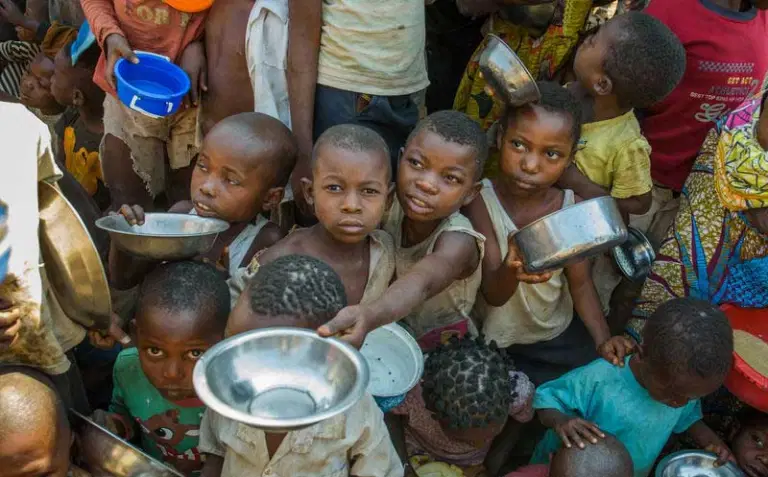
The World Bank’s verdict on Nigeria’s poverty level has attracted widespread outcry, with some interest groups demanding urgent action to avoid a poverty-induced economic meltdown.
The International Monetary Fund and the World Bank, at the just-concluded 2025 Spring meetings in Washington, D.C., United States of America, painted a gloomy picture of Nigeria’s economic outlook in the short to medium term.
Among the highlights was the downgrading of the country’s economic growth forecast, with an indication that the country’s economic policy reforms are largely ineffective in addressing inclusive growth. The institutions ended with a declaration that poverty rate in the country would increase by 2027.
Speaking to Financial Vanguard at the end of the World Bank/ IMF meetings economy observers and Civil Society Organisations, CSOs, expressed embarrassment over Nigeria’s rating in the Spring meetings.
While outlining the key challenges they also made recommendations aimed at salvaging the economy from the looming danger predicted by the global institutions.
Meanwhile, commenting on the World Bank’s verdict on Nigeria’s economy, President of the Nigerian Association of Chambers of Commerce, Industry, Mines, and Agriculture (NACCIMA), Dele Oye, proposed some short-term interventions that could help shield Nigeria’s vulnerable population and make meaningful progress in the fight against poverty.
But while expressing concerns about the World Bank’s verdict, the ActionAid Nigeria (AAN) said it was unsurprised by the grim projections of the World Bank.
The Country Director, AAN, Andrew Mamedu, said, “ActionAid Nigeria is deeply concerned, yet unsurprised, by the grim projections from the World Bank’s April 2025 Africa’s Pulse report, which forecasts a 3.6 percentage point increase in Nigeria’s poverty rate by 2027.
“Governance remains Nigeria’s greatest obstacle. The World Bank has clearly highlighted the country’s poor performance on governance indicators such as government effectiveness, accountability, and political stability, which remain among the weakest in Africa.
Public institutions continue to fail in managing resources and delivering basic services, which is also widening the trust deficit between citizens and government.
”Institutions like the National Assembly, Judiciary, and others, who are supposed to hold the government accountable and ensure resources are available for the people, are rather making routine approvals and focus on issues that do not support the populace.
”While poverty deepened, the federal, state governments and lawmakers prioritised luxury over lives, budgeting billions for new SUVs and renovation of offices.
”President Tinubu’s administration has continued to sidestep meaningful structural reforms, pushing social protection rhetoric that barely scratches the surface, while ignoring the real cries of the people.
”So, the World Bank is right to raise the alarm, but Nigerians have been raising it long before now.
”Let it be clear: the current trajectory will only fuel further migration, brain drain, instability, and disillusionment. Nigeria is at risk of becoming the global capital of extreme poverty, despite being Africa’s largest economy.
”While the government may claim economic progress, the reality is that the rich are getting richer, benefiting from policies like those in the banking sector where profits have soared to N3.41 trillion, while the poor are getting poorer.
”This is not inclusive growth. Reforms must ensure that the most vulnerable benefit.”
It’s a sobering picture for Nigeria — Adeyanju
Also speaking to Financial Vanguard on the World Bank’s verdict on Nigeria’s economy, a human rights lawyer and activist, Deji Adeyanju, said, “The World Bank’s Africa’s Pulse report for April 2025 paints a sobering picture for Nigeria, forecasting a 3.6 percentage point increase in poverty by 2027, driven by structural economic weaknesses, overreliance on oil, and national fragility.
”This projection highlights a harsh reality: Nigeria, despite being Africa’s largest economy, remains a global epicenter of poverty, hosting 15% of the world’s extremely poor population, with over 106 million Nigerians living below the $2.15 per day threshold in 2024.
“Nigeria’s poverty crisis is both deep and multifaceted, characterized by income poverty, multidimensional deprivation, and stark inequality.
READ ALSO: World Bank Expresses Concern Over Nigeria’s Data, Statistics Quality
”Key data points illustrate the scale of the challenge: In 2023, 38.9% of Nigerians (approximately 87 million people) lived below the national poverty line, making Nigeria the world’s second-largest poor population after India. By 2024, 106 million Nigerians were in extreme poverty, reflecting a persistent upward trend.
“Inflation, driven by food and fuel price spikes, erodes purchasing power. ”The naira’s 40% depreciation in 2024 amplified import costs, disproportionately affecting the poor.
“Insecurity disrupts agricultural production, displaces communities, and deters investment, particularly in northern Nigeria, where poverty is most acute.
“With 3.5 million Nigerians entering the labor force annually, weak job creation and entrepreneurial prospects drive unemployment and emigration, further entrenching poverty”.
All the signs of poverty, economic failures are present — CISLAC
Also speaking to Vanguard on the World Bank’s poverty rating for Nigeria, the Executive Director, Civil Society Legislative and Advocacy Centre, CISLAC, Awual Rafsanjani said, “This report coming from the World Bank is not surprising to us because all the signs are there. We have been advising the Nigerian government to carry out better reforms, economic reforms to address poverty, inequality, and ensure financing for development, and block or reduce or minimize opportunities for corruption and embezzlement.
”There’s no way you can have this kind of tendency of reckless spending, looting, excessive borrowing for just personal consumption or diversion, and lack of productivity in the economy without adverse consequence. ”Even our trade and investment is not yielding the result it’s supposed to yield, and definitely this projection by the World Bank will not be a surprising thing.
“In most of our States, the governors and the leadership are not harnessing the resources in their States. Rather they embark on gigantic unproductive projects just for the sake of taking money away, not for addressing gaps in education, in healthcare system, and even in the infrastructure.
”If this kind of mindset is continued, there’s no way you can deal with the issues of poverty and inequality because if the whole idea of governance is to grab the resources, is to steal the money, is to institutionalize impunity and recklessness in governance, definitely you will continue to witness more Nigerians experiencing poverty”.
How Nigeria can avoid the poverty crises — NACCIMA
Meanwhile, NACCIMA boss, Oye, who is also the current Chairman of the Organised Private Sector of Nigeria (OPSN), has made some recommendations on how Nigeria can escape the World Bank’s poverty prediction saying, “The government should implement well-structured and targeted stimulus packages focused on vulnerable populations”.
Such measures, according to him, should include cash transfers, food assistance programmes, and direct support to small and medium enterprises (SMEs) to stimulate job creation.
He stated further: “Independent monitoring and thorough evaluation must be instituted across all processes to curb instances of abuse and corruption.
“Given that a significant proportion of Nigerians rely on agriculture for their livelihoods, there is a need for targeted investment in this sector. Subsidising inputs, providing long-term single-digit credit, and expanding training programmes can help increase food security and foster sustainable livelihoods.
“Expanding access to microfinance for small businesses, cooperatives, and entrepreneurs will promote self-employment and help reduce poverty.
“Facilitating favourable lending conditions specifically for women and youth is crucial, alongside the urgent development of youth-targeted capital to address the ongoing trend of the “Japa Syndrome”.
“Establishing robust vocational and skills training programmes for the unemployed and underemployed will enhance employability and support new entrepreneurs in high-demand sectors.
“Improving infrastructure, particularly in rural areas, will increase market access for farmers and small businesses, leading to increased incomes and, ultimately, poverty reduction.
“There is a need to introduce tax incentives for businesses investing in underserved regions and for those prioritising local employment.
READ ALSO: World Bank Approves Fresh $700m Loan For Nigeria
“Public-private partnerships should be encouraged to finance economic development initiatives, leveraging combined resources and expertise for efficient delivery of social impact.
“Expanding social safety nets, which include unemployment benefits and healthcare access, will provide much-needed relief to those facing financial distress and support their pathways to recovery.
“It is vital for the government to act swiftly and decisively to restore peace and security, especially in rural communities, thereby creating a stable environment for agricultural productivity and investment.
“Nigeria should reduce its reliance on raw material exports and instead prioritise adding value through local manufacturing.”
Govt should address key drivers of poverty — Muda Yusuf
In a comment sent to Vanguard, the Chief Executive Officer of the Centre for the Promotion of Private Enterprise (CPPE), Dr Muda Yusuf, said Federal Government should take bold steps to address the key drivers of poverty to prevent the gloomy prediction by World Bank from coming to pass.
His words: “This kind of statement from the World Bank can only be conditional, because if the government does the right things, then the situation will not be as gloomy as it has been presented.
“If the government is able to address the key drivers of poverty, then the poverty situation may not deteriorate beyond what it is. If anything, it could be reversed. We have seen it done in other countries like China, where a lot more people have been taken out of poverty because of the kind of policies and governance that are in place.
“So, I think it’s more about how effectively we are able to address the social issues in the country. Therefore, we should be looking at drivers of poverty and how to correct them
“The first, in my view, is to address the rising cost of living. These are essentially the costs of food, energy, transportation, logistics and many other basic things that the poor consume.
“It is the increasing cost of living that makes a lot of people drop into poverty. If we are able to moderate the costs, then many more people will be able to live above poverty. These variables I mentioned are the critical issues as far as the cost of living is concerned.
“The second major thing that the government can do to ensure that this gloomy prediction does not come true is to address the macroeconomic management dimensions of the drivers of poverty. By this, I mean how well the government is able to tame inflation through its macroeconomic policies. Inflation is the greatest enemy of the poor.
“So, this means that we should be worried about the growth of fiscal deficit, reducing the debt level and debt servicing commitments which often squeezes the fiscal space. We should worry about growing money supply which is also, many times, inflationary.
“The third point is that the government should address the issue of productivity because when we have an economy where productivity is an issue, it affects everybody – both the small and large businesses. Because productivity determines the ability to be able to create wealth, to create value. It determines how much effort we need to put in to achieve a particular outcome.
“So, we need to ensure that we create the environment that enhances productivity. And at the centre of that is government investment in infrastructure – energy, logistics, roads, railway system, power sector e.t.c.
“Then the structure of government expenditure, particularly the social sector investment, that is investment in education and health. This is happening already but we need to do a lot more.
“And to prevent more people from falling into poverty is the responsibility of all tiers of government – federal, state and local government have roles to play. If they don’t spend resources available to them in a way to alleviate poverty, then the poverty situation may get worse.
“Another point is to watch the population growth. There is a need to ensure proper sensitization of citizens to reduce their fertility rate without necessarily offending their religious or cultural sensibilities. We should find a way to deal with that.
“We need to address the issue of insecurity. The growing insecurity led may people into poverty because it has affected their cost of living. That’s why many of them have ended up in IDP camps. So, tackling insecurity is one key way of tackling the problem of poverty.
“And finally, is the issue of corruption. Corruption is depleting the resources that belong to the people. When we have situations where resources meant for the people, either at the local government level, state or federal level, are cornered by a few for their own selfish ends, then it contributes to poverty.
“Because the opportunity cost of the resources that have been stolen or diverted for personal goals means that a lot of key commitments of government to infrastructure, education or health will suffer.
“So, we should be looking at the drivers of poverty and looking at how we can address those drivers. If we can address them, then we will not end up in that pessimistic position as proposed by the World Bank.”
Stop playing politics with people’s lives — AAN
While making some recommendations on the ways out of poverty, ActionAid Nigeria (AAN) called on the Federal Government to “Stop playing politics with people’s lives and fully strengthen and expand social protection, including universal cash transfers and food support for the most vulnerable”.
They also called for protection of smallholder farmers by tackling insecurity and ensuring access to markets, inputs, and tools to boost local food production.
They recommended further: “Scrap all non-essential public spending particularly the outrageous allocations to government officials’ lifestyles and channel funds to education, healthcare, and job creation; Stabilise the economy through transparent and people-centred fiscal and monetary policies that protect the purchasing power of citizens”.
READ ALSO: 5 Most Expensive Passports In the World
Making his own recommendations, Adeyanju stated: “To reverse the World Bank’s projected poverty increase by 2027, Nigeria must implement transformative, inclusive, and sustainable reforms.
“Diversify the Economy: Reduce oil dependence by investing in agriculture and technology, supporting agribusiness and job creation.
“Improve public spending transparency and engage citizens in budgeting to enhance governance; Invest in security and conflict prevention to stabilize regions and promote economic activities; Increase funding for education and healthcare to improve productivity and living standards; Support small and medium enterprises through financial incentives and incubation programs; Maintain tight monetary policies and subsidize essential goods to alleviate cost-of-living pressures.
“The World Bank’s forecast of rising poverty in Nigeria by 2027 is a clarion call for urgent action. By diversifying the economy, strengthening governance, expanding social protection, and investing in human capital and security, Nigeria can not only avert the projected poverty increase but also chart a path toward inclusive prosperity.”
Small-scale businesses need to be supported — CISLAC
CISLAC’s boss, Rafsanjani, outlined a battery of measures for averting the economic dangers facing Nigeria.
According to them, “The government needs to be deliberate in terms of its trade and investment opportunity to get Nigerians to engage in both local and national as well as international businesses, so the Small-scale businesses need to be supported, improved so that people can be actually busy doing work, not relying only on the government job that is not even coming.
“So this means that the ease of doing business has to be properly implemented.
“The last issue that I want to also suggest is that agriculture has been a major preoccupation job for Nigerians in the past but because of the insecurity, the farmers are not able to go to their farms and produce food for consumption in the country and also be able to send it out and that also militates the poverty that we see around because when people cannot even farm, they cannot eat, they cannot really take care of their basic needs of just survival and shelter because of the fact that insecurity has made it impossible for them to work and then be able to produce food for the country.”
READ ALSO: World Bank Forecasts Another Global Recession
Govt not serious in addressing poverty — Global Rights
In her comments, the Executive Director, Global Rights Nigeria, Abiodun Baiyewu, said, “Nigeria’s poverty gap has in the past three years risen exponentially and currently half of the nation lives below poverty line.
”I don’t think that the government has invested enough to reduce the current poverty level or even more importantly to prevent further decline. But should they be serious about addressing them and pulling Nigerians out of poverty, here are some obvious actions to take; ”Strengthen Social Protection Programmes: Expanding and enhancing social safety nets can provide immediate relief to vulnerable populations. For instance, the government has secured a $2.25 billion loan from the World Bank, allocating $800 million for a cash transfer program aimed at assisting up to 70 million Nigerians affected by recent economic reforms.
”Our worry is that like previous cash transfers, corruption and mismanagement will whittle away the $800 million. ‘However, more practical and sustainable steps to take would include investing in social safety nets like access to social security services for the unemployed, affordable housing, improving access to electricity, access to nutritious food particularly for children, ensuring the efficient and transparent implementation of such initiatives.
”Supporting small and medium-sized enterprises (SMEs) and improving access to finance can also stimulate job creation. Again, such investment should include greater infrastructural capacity.
”For example, the electricity sector in Nigeria as it currently stands is inimical to development and cannot leverage industrial growth.
”Predictability is also essential for businesses to thrive. Policies need to be stable and predictable.
“Enhance Agricultural Productivity
“Investing in agricultural infrastructure, providing access to modern farming techniques, and facilitating market access can increase productivity and incomes for a good chunk of the population.
”Lessons can be drawn from countries like Niger, where strong growth in the agricultural sector is projected to reduce extreme poverty from 45.3% in 2024 to 35.8% by 2027.
”Apart from lack of access to modern farming techniques, the bane of agriculture in Nigeria is insecurity and the lack of an efficient transportation system. Deal with those two and more people would invest in agriculture”.
(Vanguard)



News
Otuaro: Baseless Allegations, Disregard Them, Group Urges Public
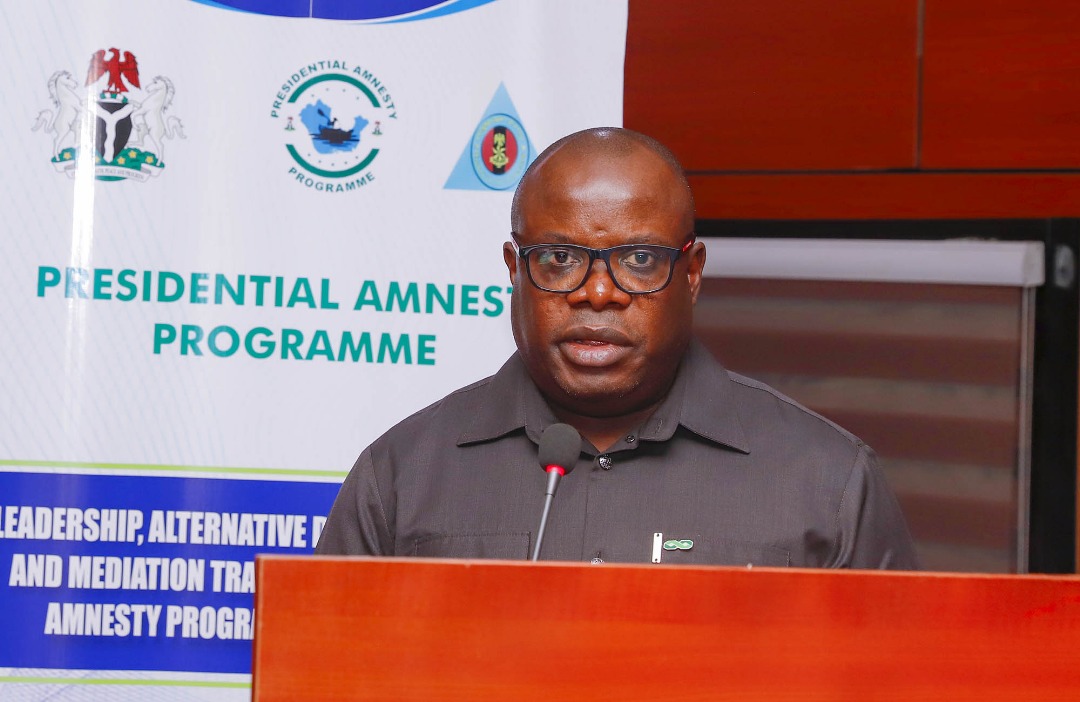
The Ijaw People’s Development Initiative, IPDI has reacted to a statement circulating online regarding the Presidential Amnesty Programme (PAP), describing it as baseless.
The statement under the disguise ‘Niger Delta Stakeholders Forum and Niger Delta Ethnic Nationalities,’ had demanded accountability regarding the management of the Programme and its administrator, Dr Dennis Otuaro.
Reacting to the statement, National President, IPDI, Comrade Austin Ozobo, said: “We consider it necessary to respond point by point to correct misconceptions, reject unsubstantiated claims, and keep the record straight in the interest of PAP beneficiaries, stakeholders, and the general public.
“It is worthy of note that the PAP operates under strict federal financial regulations and is subject to routine audits by the Office of the Auditor-General of the Federation, the Ministry of Finance, and other oversight bodies.
“All disbursements, including stipends, vocational training, education support, and third-party contracts, are processed through the Treasury Single Account, TSA, with verifiable records”, the statement read.
READ ALSO:PAP Sends Additional 15 Scholarship Beneficiaries For Post-Graduate Studies In UK
According to the IPDI, the Programme welcomes lawful criticism and scrutiny at any time. However, linking such a call to specific individuals without evidence amounts to trial by the media and undermines due process.
“Dr Dennis Otuaro, administrator of the Presidential Amnesty Programme has maintained a good record of financial management, hence no formal petition with verifiable evidence has been submitted to any anti-graft agency till date”.
“It may interest you to know that the N65,000 monthly stipend is fixed by the Appropriation Act and can only be reviewed through a budgetary process approved by the National Assembly and the Presidency.
‘The PAP management has consistently conveyed beneficiaries’ concerns on cost of living to relevant authorities”.
“Again, claims that allocations to the Programme have risen significantly while stipends remain unchanged misrepresents the budget structure.
READ ALSO:PAP: N’Delta Stakeholders Laud Otuaro’s 2 Years Of Strategic Reforms
“Note, increased allocations in recent years have been tied to expanded reintegration programs, education sponsorships, skills acquisition, and infrastructure support for training centers, not solely to stipend payments”.
The group reiterated that the allegation that the Amnesty Programme Office “kidnaps and detains delegates” is false, reckless, and defamatory, adding that the PAP has no paramilitary or law enforcement mandate, nor does it operate detention facilities and that any incident involving law enforcement is outside the control and purview of the Programme.
“We challenge the authors to provide verifiable details of time, place, and persons involved so the matter can be addressed through appropriate legal channels,” the group said
On Claims of Selective Empowerment and 500% Payment Increases, the group maintained that payments to contractors, ex-agitator leaders, and service providers were governed by existing contracts and agreements predating the current administration.
“No individual or camp has received unilateral increases without contractual basis or due process. Allegations of 500% increases are unsubstantiated and designed to stoke division among beneficiaries,” it added.
READ ALSO:Otuaro Links Increase In PAP Scholarship Beneficiaries To Tinubu
“The current administration has maintained a policy of transparency in engagement with leaders and has expanded inclusion by verifying and capturing previously omitted beneficiaries where due“, IPDI added.
The group further said, “The PAP remains a neutral, peace-building institution established under the 2009 Amnesty Declaration. Its mandate is to coordinate disarmament, demobilization, and reintegration. The Office does not engage in political victimization, intimidation, or exclusion of stakeholders. Engagement with ex-agitator leaders and community structures is conducted based on their role in maintaining peace and facilitating reintegration, not political alignment”.
“The PAP under Chief Denis Otuaro’s leadership remains committed to transparency, fairness, and the original mandate of the Amnesty Programme. Constructive criticism is welcome and has informed policy adjustments in the past. However, campaigns of calumny, unverified allegations, and attempts to drag the Programme into commercial or political disputes do not serve the interest of peace in the Niger Delta”, IPDI said.
“We urge all stakeholders to channel grievances through the established engagement channels of the Programme and to avoid statements that threaten the fragile stability we have worked to sustain”.
Consequently, the IPDI urges members of the public to disregard what its described as “flimsy and unsubstantiated allegations, misconception, and missives by faceless groups above“.
News
[OPINION] Olukoyede’s EFCC: Taming The ‘Fantastically-Corrupt’

Since its creation 23 years ago, by Chief Olusegun Obasanjo, as president of Nigeria, Africa’s most populous and influential country, the Economic and Financial Crimes Commission (EFCC), had apparently not gotten a head, who had piloted the affairs of the commission, like Mr. Olanipekun Olukoyede, its Executive Chairman, a chief-operations-officer of the Commission.
It could be said that Olukoyede, the Czar thief catcher and arrestor of economic saboteurs, has given the EFCC’s enemies such a tough time as he has taking the anti-graft fight to the doorsteps of the high-profile individuals across the country. These range from former state governors, serving and former ministers, retired and serving civil servants, businessmen, clergies, traditional rulers, cyber-influencer, entertainers, professionals and numerous others.
Olukoyede brings years of experience in law, fraud management, and business intelligence to bear on the position. Before him, Mallam Nuhu Ribadu was EFCC’s inaugural chair; succeeded by the first and only female, Mrs. Farida Waziri; Ibrahim Lamorde, Ibrahim Magu, and Abdul Rasheed Bawa.
The anti-graft agency has its hands full with massive financial fraud and money laundering cases. In the clause of “physicians, look at thyself”, EFCC in its resolve is known to have been flushing out officers within the body, who run foul to the law.
In the past, before Olukoyede’s appointment, it was widely believed that it was only the “fries and not the big fishes”, who the Commission could summon the courage to prosecute; and that most culprits were also left from the hook, because of compromise by some corrupt officers of the Commission, and feeble litigation processes.
Mr. Godwin Emefiele, former Governor of the Central Bank of Nigeria (CBN), happened to have opened to Olukoyede’s a deluge of “big-men and women”, who have been arrested, investigated and cooling their feet in detention or those bailed, that are facing severe court trials. There is the biggest 19-count charge at the Ikeja Special Offences Court, involving an alleged $4.5 billion fraud.
Immediate-paste governor of Kogi State, Yahaya Bello, faces two massive, but separate legal battles totalling over N190 billion on fraud allegation. EFCC secured from the Court of Appeal, forfeiture of 14 properties and huge money linked to him.
Abubakar Malami (former Attorney-General of the Federation), with his son, Abdulaziz and his wife, is currently charged on a-16-count of money laundering. The court has stayed interim forfeiture of 57 properties valued at over N213 billion.
MORE FROM THE AUTHOR:OPINION: Contesting The Portable Vs Carter Efe’s Cruel Ring-fight
EFCC had also secured the arrest of Sadiya Umar-Farouq, a female former Minister of Humanitarian Affairs, and a former Permanent Secretary, through a Federal High Court, on a 21-point alleged fraud and corruption charge, involving $1.3 million and N746.6m and others amounting to 37.1 billion.
Uju Kennedy-Ohanenye, also female and former Minister of Women Affairs, was removed from office by President Bola Tinubu, over alleged misappropriation and diversion of N138.4 million, and had been under EFCC questioning.
A recent discovery, which startled Nigerians and the world, the Commission (EFCC) had reportedly arrested a serving Director-General of the Energy Commission of Nigeria, Dr. Mustapha Abdullahi, over alleged money laundering involving about ₦500 billion.
Somewhat, this had deflated the claim that those arrested and persecuted are political opponents and not serving officers of the Tinubu’s government.
EFCC is a “Nigerian law enforcement and anti-graft agency that investigates financial crimes, such as advance fee fraud (419 Fraud) and money laundering. It was also set up to fight against corruption and to protect the country from economic saboteurs”.
The Commission, whilst responding to pressures from the Financial Action Task Force on Money Laundering (FATF), that named Nigeria as one of 23 countries not cooperating in the international community’s efforts to fight money laundering, had revved in performance, in a bid to roll back the blights.
And so, it is a strenuous goal for EFCC, as entrenched in the ‘EFCC Establishment Act 2004’, which gives it specialist jurisdiction against severe financial and commercial crime – covering multiple high and lower levels.
MORE FROM THE AUTHOR:OPINION: Tenebe Could Deprive Tinubu From Winning Edo Election
Born on 14 October 1969, Olukoyede, a civil servant, has had a clear break from past, where past executive chairmen of the Commission had left the Commission, where all serving officers were drafted from the Nigerian Police Force (NPF). However, President Bola Ahmed Tinubu is widely commended for Olukoyede’s appointment to the position, with the Senate also eulogized for screening him.
Whilst briefing the Press in Abuja, on his two-year activities in office, on October 23, 2025, the Commission’s boss certainly made unprecedented progress in the fight against economic and financial crimes. He spoke through the Director of Public Affairs of the Commission, Wilson Uwujaren, as he listed the recovery of N566 billion, alongside other currencies and assets, among the achievements of the Commission.
He further revealed that the Commission received over 19,000 petitions, conducted 29,240 investigations, filed 10,525 cases in court, and secured 7,503 convictions.
Olukoyede asserted that the Commission recovered ₦566,319,820,343.40, $411,566,192.32, £71,306.25, €182,877.10, and other foreign currencies from proceeds of financial and economic crimes. Added to this was the recovery of 1,502 non-monetary assets, comprising 402 properties in 2023, 975 in 2024, and 125 so far in 2025.
“Among these recovered assets are two notable landmarks: the final forfeiture of 753 units of duplexes in Lokogoma, Abuja, and the forfeiture of Nok University, now the Federal University of Applied Sciences, Kachia, Kaduna State,” he said.
He listed several high-profile cases prosecuted within the period, including those involving former governors Willie Obiano, Abdulfatah Ahmed, Darius Ishaku, Theodore Orji, and Yahaya Bello. Others are former ministers Olu Agunloye, Mamman Saleh, Hadi Sirika, Charles Ugwu, and former Central Bank Governor, Godwin Emefiele.
EFCC was also said to have reentered and invigorated some longstanding fraud cases, such as ones linking Fred Ajudua, former People Democratic Party, PDP National Chairman Haliru Bello Mohammed, ex-National Security Adviser Sambo Dasuki, and former Nigerian Social Insurance Trust Fund, NSITF boss, Ngozi Olojeme.
MORE FROM THE AUTHOR:OPINION: The Rough Games Arewa Bourgeoisies Play With The Talakawas
The EFCC said it arrested 792 suspects involved in asset and cryptocurrency frauds in Lagos, among who were 192 foreigners who were prosecuted and deported.
A Task Force on Naira Abuse and Dollarisation of the Economy was established by EFCC, which accordingly, had notable impacts in sanitizing money actions countrywide. “The campaign against naira abuse, racketeering, and speculative currency trading has helped reduce pressure on the naira and complemented the Central Bank’s efforts in stabilizing the economy,” he said.
Olukoyede also spoke on the Commission’s strengthened partnerships with foreign law enforcement agencies, including the Korean Police, Royal Canadian Mounted Police, Spanish Police, and German Police.
He also mention benefitting synergy with the FBI, the UK’s National Crime Agency (NCA), INTERPOL, and Japan’s JICA, in subsequent joint investigations and the repatriation of stolen assets to victims from Spain, Canada, and the United States.
Strengthening EFFC’s mandate at the regional level, and in Africa, Olukoyede and the Commission are said to be up and doing. For instance, a thing that had never happened to EFFC, he had been twice elected as President of the Network of National Anti-Corruption Institutions in West Africa (NACIWA), which led to the founding of a permanent secretariat in Abuja.
A strong media presence is needed to successfully inform the public of the ideals of EFCC and its update activities. And so, ‘EFCC Radio 97.3FM’, Nigeria’s first anti-corruption radio station, was established Olukoyede. EFCC should count itself very lucky for having in its fold, tested, diligent and veteran journalists who are ostensibly seasoned in the ideals and watchdog principles of the Commission.
News
APC Primaries: Johnny Rallies Support For Senator Thomas’ Re-election Bid

A chieftain of the All Progressives Congress in Delta State, Chief Michael Johnny, has called on Delta South Senatorial District’s party faithful to come out in large tomorrow and vote for Senator Joel-Onowakpo Thomas (JOT) in the party senatorial primary election.
Johnny, widely regarded as a leader par excellence within the APC, described the primary election as a critical moment that will determine the political stability, unity, and future direction of Delta South.
According to him, Delta South needs a detribalized leader with the capacity to unite people beyond ethnic sentiments and political divisions.
He warned against leaders whose style of politics promotes ethnic division and unnecessary tension within the region.
READ ALSO:Violence Rocks APC Reps Primary In Ekiti Ward, Exercise Declared Inconclusive
Chief Johnny stated that Senator Thomas has continued to distinguish himself as a leader who carries everyone along, irrespective of tribe, political background, or local government affiliation.
He noted that JOT’s leadership style has strengthened cooperation, peace, fairness, and political inclusion across Delta South.
Speaking further, Chief Johnny declared that the Ijaw people have resolved to stand firmly behind Thomas because fairness, justice, and political balance must prevail in Delta South.
“As Ijaw people, we have decided to support Senator Joel because this is the turn of the Isoko nation, and Ijaw stands for truth. That is our position,” he stated.
READ ALSO:APC Clears Wike Loyalists, Disqualifies All Fubara-aligned Aspirants For State Assembly
He also appreciated what he described as “genuine Itsekiri sons and daughters” who believe in fairness, equity, and peaceful coexistence, adding that Delta South can only move forward when the various ethnic nationalities work together in unity and mutual respect.
Chief Johnny maintained that the senatorial district must not be dragged backward by divisive politics or ethnic interests capable of weakening the collective strength of the region.
He stressed that all APC members in Delta South must remain united in their support for Senator Joel-Onowakpo Thomas.
“Delta South is bigger than personal interests. This election is about unity, stability, fairness, and the future of our people. Senator JOT represents continuity, experience, and inclusive leadership for all ethnic groups in Delta South,” Chief Johnny added.

 Politics5 days ago
Fubara Clears Air On ‘Defection’ To NDC [VIDEO]
- News4 days ago
Gun Battle In Oyo Forest As Police Disrupt ₦10m Ransom Collection Plot
- Politics3 days ago
Four Fubara Loyalists Disqualified As APC Clears 21 For Rivers Reps Primaries
 Metro4 days ago
Drama As Teenagers Stage Secret Wedding With N3,000 Bride Price
- Politics3 days ago
2027: Court Rebukes Plaintiff, Lawyer In Suit Against Jonathan, Awards N1m Fine
- News3 days ago
Lagos Sanctions 15 Money Lending Companies For Sharp Practices
- Politics5 days ago
2027: Daniel-Abiodun Feud Deepens Over Senatorial Ticket For Ogun East
- News4 days ago
PAP Sends Additional 15 Scholarship Beneficiaries For Post-Graduate Studies In UK
- Entertainment5 days ago
Grammy Announces Date For 2027 Awards Nominations
- Sports4 days ago
CAF Introduces New Laws After Chaotic AFCON Final In Morocco


