
News
Palliatives: NEC Rubbishes Buhari’s Social Register, says Its Lacks Credibility
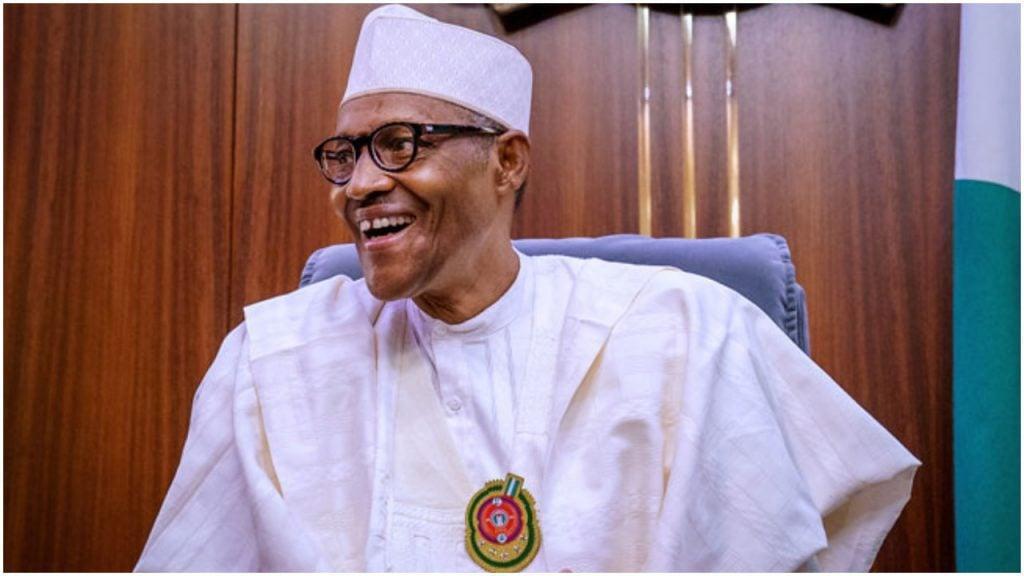
The National Economic Council, NEC, yesterday unanimously resolved to do away with the national social register used by the Buhari’s administration to implement its conditional cash transfer, saying it lacks credibility.
Consequently, it asked states to generate their own registers for such cash transfers.
This is even as the Federal Government announced that it would distribute 252,000 metric tons of grains to states at subsidised rates to cushion the effect of hardship occasioned by petrol subsidy removal.
However, most states yesterday could not give a definite date as to when they would be able to make the register available.
But the NEC meeting, presided over by Vice President Kashim Shettima at the Council Chamber, Presidential Villa, said the register had integrity issues as the criteria for its compilation was unclear.
Briefing State House correspondents at the end of the meeting, Governor Chukwuma Soludo of Anambra State said contrary to what the previous administration projected, it was not possible to digitally transfer money to the poorest of the poor, the majority of whom were unbankable.
He said it was agreed that states should generate registers that were comprehensive and ensure it was only for vulnerable people.
Professor Soludo, flanked by his Bauchi and Ogun states’ colleagues, Bala Mohammed and Dapo Abiodun, respectively, noted that beneficiaries of the supposed transfered cash could not be identified in the villages.
He said NEC resolved that the states should come up with their own registers, using formal and informal means to develop it, assuring that all beneficiaries at the sub-national level could easily be accessed that way.
“We need to face the problem of the fact that we don’t have a credible register,” he said.
Soludo affirmed that NEC deliberated on ways to cushion the impact of the recent petroleum subsidy removal.
Cost of governance issues
While fielding questions from journalists, Soludo said: “The first question that was raised is in relation to cost of governance. I think it’s an omnibus concept, and it’s not something you sit down in a meeting to legislate for each and every state.
“But the fact that the council recognizes that this is an issue that each tier of government should now focus on as an area of concern. That we mustn’t live… even the cost of running the state, the way we even live, so some gave an example of a state governor going with over 20 vehicles in a convoy and all these have to be fueled, and so on and so forth. And the fact that we’re even, among ourselves, almost like in a peer review, kind of setting, talking for ourselves.
“We need to be sensitive to the times, we need to live within the average of the people that we’re governing and so on and so forth, and knock off the waste and the irrelevance so to speak.
“I will like to give you a simple example, When I assumed office, it was costing about N137 million every month to clean up public offices, and so on. Today, in Anambra, we’re doing N11 million a month from N137 million on a monthly basis. Just an illustration.
READ ALSO: N8,000 Palliative: FG Robbing Poor To Pay The Rich – NLC
“It’s a thing we’re persuading each and every one of us to look into, check our books and look ourselves in the mirror and move with the times.
Big question on social register
“Second thing I’d like to respond is in relation to the social register that has been mentioned. I think at the council today, there was almost near unanimity among members that there’s a big question mark about the integrity of the so called National Social Register.
“We have questions about how those names in the register were brought about and I’m sure one question I hear asked is where it is for the most vulnerable group, and so on and so forth.
“Let’s talk about a social register and them distributing things through the social register by digital means, implying that these people already have account numbers and they have phone numbers.
“Maybe we are talking about some other people and not Nigerians. The poorest 25 per cent of Nigerians are likely, if not totally unbanked, and don’t have access to telephone.
“Now in thinking through that, we felt that sitting in Abuja and calling on somebody in Anambra to compile a list and send it to you and then the person depends on who he brings, and the registers are generated and people go to those villages and ask where are those people and they don’t show up. This is stress testing. We think we need to go down back to the drawing board.
“If you are delivering any such national or federal programme from Abuja, it needs to be delivered via the governments that are there using their own format and mechanisms to generate the register that is comprehensive.
“That meets certain criteria, that you can stress test and you can call out the people in the village and everyone will confirm that these are the vulnerable people, if you are targeting vulnerable people, as it were.
“So the integrity test is what is missing with that register. Many have just described what is being counted as national register as bogus, some describe it as a phantom, some in all manner of terms. So we need to face the problem, the fact that we don’t have a credible register and get back to work on this.
New minimum wage
“By the way, there’s something I think my colleagues missed out as part of those recommendations over the medium, longer term, and that is the possibility of negotiating a new minimum wage. That obviously will be on the table. But that has to be negotiated through the appropriate structures for doing that over time.”
Professor Soludo explained that packages to serve as palliatives were marshalled out to encourage the tiers of government to implement them in accordance with their respective fiscal space and fiscal capacities.
He said: “The federal, state and local governments I want to highlight as well, but that is quite some fiscal surplus that will be coming to the states and local government and the federal government and we suggested that it will be nice that you can implement cash transfers, subject to your financial capacity, based on peculiarities.
“Some might be able to do one, some might be able to do 10. Some might be able to do 20 as the case maybe. It depends on their own capacity.
“For example, if you have a state that has been owing salary arrears, workers have been owed for three years, or for four years, the priority would be to even start paying some of the salary arrears or where pensioners have been owed their pension and gratuity for seven years, for example, the priority now might be to use part of the surplus to pay them.
“Then, there are also states that are with bumper harvests and that will say you know what, I want to deploy a chunk of this to implementing cash transfer and several of the other immediate programs and that’s why we couched this point, that this is ultimately still a federation.
‘’The various states and local governments and federal government are at different levels in terms of their fiscal space and fiscal capacity. If the federal government decides to do the same cash transfers for example, we are recommending that they should do so using the framework of the states and local government that are nearer to the people, so to speak. That’s basically that.
‘’We didn’t sit down there to begin to say, oh, okay, this one your transfer will be like what is being bandied around in the media, whether it’s N8,000 or N10,000, or N1,000, or whatever. It will depend on what the state… I guess it’s very important we communicate this clearly.’’
READ ALSO: Tinubu Seeks Reps Approval Of N500bn For Subsidy Palliatives
252,000 tonnes of grains coming
The Bauchi State governor, Senator Bala Mohammed, said the Federal Government would distribute 252,000 metric tons of grains to states at subsidised rate to cushion the effect of subsidy removal.
Mohammed said the National Emergency Management Agency, NEMA, would also make available to the people its package.
On his side, Governor Dapo Abiodun of Ogun State said though the hardship the masses were facing, as a result of the removal of fuel subsidy, was not the doing of the government as market forces determined price, efforts are being made to cushion its effect.
Some of the packages include cash transfer to the poorest of the poor by states, cash award policy for all public servants which should be implemented for six months in first instance, payment to public servants on outstanding liabilities such as pension and allowances, among others.
He also said the government was looking at the possibility of funding Micro Small and Medium Enterprises.MSME, which he said were the engine room of business.
He said further that the government planned immediate implementation of energy transition plants, converting mass transit buses to Compressed Natural Gas, CNG, adding that the long term vision was to establish electric automobile plants.
The governor said: “As a responsible government, we extensively deliberated on immediate steps in appreciation of the fact that our people are already feeling the pains of these very laudable and noble steps and have been very patient with this administration.
“To that extent, a subcommittee of the National Economic Council was set up and that subcommittee reported some of the things the governor of Anambra has shared with us and their report is now the proposal of the National Economic Council and among what the governor of Anambra has shared with us.
“We also proposed accordingly that each state should begin to plan towards implementing a cash transfer program that will be based on the social registers of the states because it is the states that are better positioned to do that enumeration, so you can ensure the integrity of the social register.
“Again, it was also proposed by the Council that we should implement a cash award policy for all public servants. What’s a Cash Award Policy? That would be a policy that allows each sub-national to actually pay the public servants a certain prescribed amount of cash on a monthly basis and was prescribed that that should be implemented for six months in the first instance.
“You’ll be wondering why six months? The idea is that as much as we’re also particular about ameliorating the pains of our people immediately, a lot of sustainable measures are being put in place and it’s our hope that between now and the next six months, those sustainable measures would have begun to be visible and then we can begin to taper down these cash awards.
‘’These cash awards, by the way, would be funds that will be placed in the hands of civil servants that will be tax-exempt.”
On his part, the acting governor of Central Bank of Nigeria, CBN, Folashodun Shonubi said the Federal Inland Revenue Service, FIRS, briefed the council and announced that it was ahead of the half year target.
He said: “It was nice to know that the Federal Inland Revenue Service, FIRS, is ahead of its target for half a year. And we expect that before or by the time the year ends, they would exceed the target.
“They also gave us some idea of what next year should be like from them. And from this year, we hope to make some N10 trillion. It is planning that next year, we should be able, working with all the agencies, provide N25 trillion as their contribution to the national coffers.”
Meanwhile, states could not give definite dates yesterday on when their register would be ready for the cash transfer.
Aside from Kebbi, which said it could get its register ready in two weeks, others could not state when theirs would be ready.
‘’The governor has settle for at least two weeks to generate the palliatives register as he has ordered immediate commencement of compilation of a through register which would cover every body,’’ said Ahmed Idris, Chief Press Secretary to Governor Nasir Idris of Kebbi State.
On his part, the Special Adviser to Ekiti State Governor on Media, Yinka Oyebode, said the government would set machinery in motion to look into the matter as soon as possible .
“This step is necessary in order to ensure that only those identified and verified as indigent are registered for the financial assistance,’’ Oyebode said.
It’ll be done when Akeredolu resumes—Ondo govt
In its reaction, the Ondo State government promised to do the needful as soon as possible on the cash transfer register.
A top government official, who spoke on the condition of anonymity, said: “Such decisions would have to be tabled when the governor resumes from his medical leave.
“Since it’s the decision at the NEC meeting, it would be carried out to the letters, trust our governor, Rotimi Akeredolu. The state cash transfer register would soon be set up, that I can assure you.”
Rivers
Similarly, an official of River State government who pleaded anonymity said: “Just got that information but the deputy governor represented my principal and until she returns for proper briefing and action plans, we can’t give a definite date, so wait briefly”.
READ ALSO: Subsidy Removal: Roll Out Palliative Measures, ActionAid Tells Tinubu
Osun gov to meet stakeholders—Spokesperson
Contacted, spokesperson to the governor of Osun State, Olawale Rasheed, said his principal just left the meeting and would need to meet stakeholders in the state on best way to put a new register together.
Efforts on for a comprehensive data register—LASG
In its reaction, the Lagos State government said efforts were on to evolve a comprehensive data register that would capture reasonable number of residents in due course.
Chief Press Secretary to the state governor, Gboyega Akosile, said the governor would make a categorical statement on the issue soon.
He said: “We are taking a holistic look at the development and Lagos State, being a centre of excellence will soon come out with a stance on this.
“Lagos State already has a similar register called social register, though it is not comprehensive because series of dynamics have taken place. I just want to assure you that very soon, Lagos will come with a definite register. There is a template for it already.”
Stakeholders’ll be consulted before a register will be generated – Ebonyi govt
On its part, Ebonyi State government said it would consult relevant stakeholders across the state to come up with a register of individuals that would benefit from the federal government’s palliatives.
The Commissioner for Information and State Orientation, Engr. Jude Chikadibia Okpor, who disclosed this in Abakaliki, said: “After all relevant stakeholders must have been consulted, a list will be generated for the benefit of all and sundry.
“There’s no way a list will be generated immediately. Remember, nobody was aware that such decisions will be taken.
‘’Ebonyi people should rest assured that Governor Francis Ogbonna Nwifuru will ensure that democracy dividends get to the grassroots level and to every citizen.”
VANGUARD



News
Trump Places Nigeria, 14 Others On Partial Travel Restrictions To US

The United States has partially suspended the issuance of immigrant and non-immigrant visas to Nigeria and 14 other countries, citing concerns on radical Islamic terrorist groups such as Boko Haram and the Islamic State operating freely in certain parts of the West African country.
Specifically, the classes of visas affected include the B-1, B-2, B-1/B-2, F, M, and J Visas.
President Donald J. Trump, on Monday, signed a proclamation expanding and strengthening entry restrictions on nationals from countries with demonstrated, persistent, and severe deficiencies in screening, vetting, and information-sharing to protect the country from national security and public safety threats.
The United States also cited the Overstay Report, noting that Nigeria had a B-1/B-2 visa overstay rate of 5.56 per cent and an F, M, and J visa overstay rate of 11.90 per cent.
READ ALSO:Trump Using FBI To ‘Intimidate’ Congress, US Lawmakers Cry Out
The Proclamation includes exceptions for lawful permanent residents, existing visa holders, certain visa categories like athletes and diplomats, and individuals whose entry serves U.S. national interests. It narrows broad family-based immigrant visa carve-outs that carry demonstrated fraud risks, while preserving case-by-case waivers.
While the proclamation continues the full restrictions and entry limitations of nationals from the original 12 high-risk countries established under Proclamation 10949: Afghanistan, Burma, Chad, Republic of the Congo, Equatorial Guinea, Eritrea, Haiti, Iran, Libya, Somalia, Sudan, and Yemen, it adds full restrictions and entry limitations on 5 additional countries based on recent analysis: Burkina Faso, Mali, Niger, South Sudan, and Syria.
On October 31, the U.S. President Trump redesignated Nigeria as a “Country of Particular Concern (CPC)” for the persecution of Christians by violent Islamic groups.
In a Truth Social post, Trump hinted that the US will immediately stop all aid and assistance to Nigeria and may very well go into the country, “guns-a-blazing,” and that the military intervention “will be fast, vicious, and sweet, just like the terrorist thugs attack our cherished Christians.
In his first term, President Trump imposed travel restrictions that restricted entry from several countries with inadequate vetting processes or that posed significant security risks.
READ ALSO:Trump Blasts Ukraine For ‘Zero Gratitude’ Amid Talks To Halt War
The Supreme Court upheld the travel restrictions put in place in the prior Administration, ruling that it “is squarely within the scope of Presidential authority” and noting that it is “expressly premised on legitimate purposes”—namely, “preventing entry of nationals who cannot be adequately vetted and inducing other nations to improve their practices.”
Trump in recent weeks has used increasingly loaded languages in denouncing African-origin immigrants.
At a rally last week he said that the United States was only taking people from “shithole countries” and instead should seek immigrants from Norway and Sweden.
In June 2025, President Trump restored the travel restrictions from his first term, incorporating an updated assessment of current global screening, vetting, and security risks.
News
OPINION: Man-of-the-people, Man-of-himself
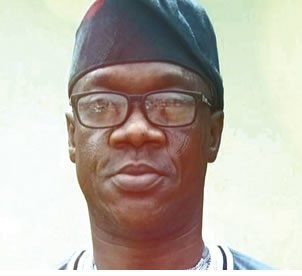
By Suyi Ayodele
Whatever Comrade Adams Oshiomhole lacks in height and body volume, he makes up for in mischief. If you are not prepared for the mud, don’t engage the pint-size Edo senator in any combat.
His greatest weapon is his tongue. This is why he prefers to be called ‘Comrade’ – just an appellation he acquired in his hey days in the Nigeria Labour Congress (NLC), when the masses thought that he was fighting their battles. His public persona tilts towards that of the man-of-the-people. But on a scrutiny, the man is a man-of-himself.
Comrade’s best strategy in any argumentation is sheer sophistry! His eloquence is top-notch, his argumentative prowess arresting and his rhetoric captivating. He can be sarcastic and can also be deadly acerbic! He speaks and gyrates at the same time. Give him a microphone stand a bit lower than his height; Oshiomhole still leaps forward to emit incomprehensible verbiage. He is a dramatist par excellence. No. He is the drama itself! He combines all the characterisation of a folklore as he quadruples as heroic, non-heroic; anti heroic and A-heroic figure – beating the trinity to a distant second place!
Oshiomhole is a man one cannot afford to hate. He is equally a man too dangerous to love. His basket of mischief remains inexhaustible, his repertoire of goodwill also bottomless! He disappoints when one expects wisdom; and equally excels just when one gives up on him. A master of confusion while he remains unperturbed, Comrade is a summary of the dysfunctionality of the Nigerian political system! He displayed that in good measure last week.
I would have made a huge cash-out last week if the childhood experience I had over gambling had not taken the better part of me. Someone, who was ready to put anything to it that President Bola Ahmed Tinubu’s ambassadorial nominees like Reno Omokri, Fani-Kayode and Mahmood Yakubu, the former Chairman, Independent National Electoral Commission (INEC) would not make it through the senate, had staked a huge amount of money. I held a different opinion. He asked us to bet, not like the small finger-thrust displayed by Governor Monday Okpebholo on national television recently. This was real-time betting.
I was tempted to enter the ring especially when he was willing to double his stake while mine remained static. But I remembered that I must honour the solemn pledge I made to my late father. I assured the old man that I would never gamble again in my life. I had used the two Kobo he gave to me to buy Phensic, a type of analgesic medicine of those days, to play kàlòkàlò. It was an experience I never hoped for again. As the offer came, my father’s voice rang in my head: É s’ómo kèé hì ta tété kì ha jalè (a child who gambles will eventually steal). I declined and I lost what would have been a Christmas bonus!
Alas, the screening turned out to be a hollow ritual; a drama of the absurd with Oshiomhole playing the lead villainous character! The former governor of Edo State was at his sophistry best at the screening of the 68 rotten tomatoes and sweet potatoes President Tinubu packaged as ambassadorial nominees and sent to the Senate for screening and approval. Many of us were entertained by the charade the National Assembly displayed at the ‘screening’. The only people who were disappointed were those who expected the senators to ‘skin’ the nominees.
As it turned out, all the 68 nominees were cleared. Any moment from now, Reno Omokri will be presenting his letter of credence endorsed by Tinubu, to the president of his ambassadorial post. By then, Tinubu would no longer be a “drug Lord” and certificate forger as Omokri alleged when he ‘was in the world’! It was Omokri’s screening that provoked Comrade Oshiomhole to tackle one of the oldest senators in this political dispensation, Ali Ndume of Borno State.
MORE FROM THE AUTHOR:OPINION: Nigerian Soldiers In Benin Republic
For Oshiomhole, who, in one of his numerous campaign frenzies, had once opined that once a politician decamped to the ruling All Progressives Congress (APC), all his sins are forgiven, one cannot put anything past the Iyamoh-born politician. No cause is too dirty for him to defend, no candidate is too unpopular for him to support, project and vow for.
A short voyage to the Comrade’s political shenanigans. In 2016, as the out-going governor of Edo State, Oshiomhole, while projecting the chairman of his economic team, Godwin Obaseki, as the governorship candidate of the APC, said that Obaseki was the “compressor” of the air conditioning of the state economic successes under his watch. He told the people to vote for Obaseki because Obaseki was the one who brought all the funds the government used in achieving feats for the people.
Then he went after the jugular of Obaseki’s opponent and the Peoples Democratic Party (PDP) candidate, Pastor Osagie Ize-Iyamu. Comrade Oshiomhole said that in his entire life, I quote him: “I have never seen a pastor who lies effortlessly like Ize-Iyamu.” He went further to label Ize-Iyamu as a violent pastor “who carries Bible in the day and gun at night.” The crowd cheered. He added so many other unprintable expletives and Ize-Iyamu lost the election.
Four years later in 2020, Obaseki and Oshiomhole fell apart. As the National Chairman of the APC, Oshiomhole denied Obaseki a second term ticket. Obaseki, who had earlier got Oshiomhole suspended from the APC, changed to the PDP and picked the party’s gubernatorial ticket.
On the other side, Ize-Iyamu left the PDP and picked the APC ticket. Edo people waited to see what Oshiomhole, who had been disgraced out of the APC national chairmanship office, would do. Brazenly, Comrade took over the campaign machinery of Ize-Iyamu. Oshiomhole on several occasions knelt to beg the people to vote for Ize-Iyamu!
Oshiomhole told bewildered audiences from town to town that he was misinformed of Ize-Iyamu’s character! He said so, jumping from one end of the podium to another without any modicum of remorse! According to him, after the practice of dipping Agege bread into a hot beverage, the next best thing that has ever happened to humanity is Ize-Iyamu! Fortunately, the people could see through the Comrade’s hypocrisy! His candidate was beaten blue-black at the count of the ballot.
That was the Oshiomhole that spoke last week in defense of Omokri’s nomination as an ambassador. In his warped reasoning, now that Omokri had weaned himself of his infantile perennial attacks on the character of President Tinubu, ‘all his sins are forgiven’ and he is worthy to be an ambassador! His argument, if projected further, is that once a man becomes transformed, his past would no longer count!
That argument did not sit down well with Senator Ndume, and possibly some others who would rather get Omokri to explain how he saw the light and heard the voice on his way to Damascus to persecute Tinubu! Oshiomhole’s response was his sophistry of “when I talk, those who have not been governors should listen”, as if we have not seen governors and former governors as witless as the next-door fatuous Gardner in this dispensation.
MORE FROM THE AUTHOR:OPINION: Nigeria’s ‘Sheikh Of The Slaughters’
The elders of my place said when a song is bad, nobody justifies it as being a palace song. That is exactly what Oshiomhole did in his defence of the irritation that Omokri and his ambassadorial nomination have constituted. Who would ever think that a day would come when a once fascinating character like Comrade would rise to defend a figure like Omokri!
The response by Ndume that he had been senator before Oshiomhole ever dreamed of becoming one took the argument to the highest buffoonery! What has been the impact of the decades Ndume has spent in the senate on his people? How many of his constituents are in captivity? How many of the people he represents are working as slaves on the farms of bandits so that they can live? Beyond the numeric of his years in the senate who Ndume epp?
Things happen. One of the things that have happened to Nigeria is the current senate – a dump site for former governors. No sane mind will not be scandalised by the conduct of the senate under Godswill Akpabio! The upper chamber has turned into a stinking chamber pot of anything goes. Last week, the chamber took the perfidy of “bow and go” to another annoying level when virtually all the ambassadorial nominees were cleared without any serious questions asked.
What, for instance, are the wives of former governors nominated as ambassadors bringing to the table? What are their pedigrees? Are they not the same peacocks we saw when their husbands were governors? Beyond rubbing pancakes and spending our patrimony as non-state actors, how else can we assess those ex-first ladies?
Without sounding pessimistic, except for the career diplomats among them, the rest of Tinubu’s ambassadors are disasters packaged in golden wrappers. The qualities of the figures nominated by the president and endorsed by the senate speak to the quality of those in power today. Sure, no man gives what he does not have. President Tinubu has given us his best men and women as our ambassadors. We wish them diplomatic successes!
Adibe Emenyonu and Michael Adeleye: It is hard to say goodbye
We lose those dear to us. That is what nature dictates. Every loss is painful. But when it doubles, it becomes very painful. I experienced double losses this last weekend. Two souls, very dear to me, were lowered to their graves. The reality that I would not see or talk to them again hurts!
I joined a group of other journalists led by Patrick Ochoga of the Leadership Newspapers, who doubles as the Chairman, Edo Correspondents Chapel of the Nigeria Union of Journalists (NUJ), Edo State Council, to Obibiezena community in Owerri, Imo State, for the funeral rites for Adibe Augustine Emenyonu.
Emenyonu, whom I called Adibs, slumped and died on October 18, 2025, at the age of 62. He was – imagine Adibs now being referred to in the past tense – until his death, the Edo State Correspondent of ThisDay Newspapers. Our paths crossed over two decades ago in Benin City where we plied the ‘he-said’ and ‘he-emphasised’ trade of journalism together. Adibs was a fearless and colourful writer.
MORE FROM THE AUTHOR:OPINION: Yerima And A Soldier Who Never Wore Uniform
Even when I left journalism for the corporate world, we continued to bond. On my return to the pen fraternity after 16 years, Adibs received me warmly, opening his contacts to me like many others did. We became closer, turning friendship to brotherhood!
I was devastated, when on the morning of Saturday, October 18, 2025, Ochoga called to announce: “Leader, I have bad news for you. We have lost Adibe!” The news was hurtful and seeing Adibs, naked in the morgue when I visited alongside the Edo State NUJ Chairman, Festus Alenkhe, and others, broke me.
Talk of a man who laboured and did not eat the fruits thereof; talk of Adibs. He was a good father to his four beautiful daughters. Three of them are university graduates today and the last baby of the house is a sophomore. Two of the three graduates attended private universities, and the last girl is also in a private university. But the man who toiled to ensure the girls got good education is no more. This is a tragedy!
Travelling to Obibiezena to pay my last respect to a wonderful friend was an eye opener. I saw Adibs’ modest country home bungalow. I saw his bust, commissioned by Genevieve, his first daughter, with Adibs’ traditional ishiagwu cap. I dared him on several occasions to wear the cap to Igbo land, and I felt sad. I became sadder with the reality that Adibs’ 93-year-old mother was inside a room in the house while the rites of passage were being performed for the son who travelled home every month to attend to her!
The entire Obibiezena mourned Adibs! The wailing, when his body arrived for the traditional lying-in-state was infectious. The old, walking with the aid of walking sticks turned up. Everyone spoke well of the departed. When I was asked to talk to his Obibiezena Development Union (ODU) executive, I gave a new name to Adibs – Adáraníléadáraníta. It means he who is good both at home and outside. Adibs was. His people testified to his goodness, his kindness, his generosity and his commitment to the community. He was, for many years, the Secretary General of ODU!
Adibs was a devout Catholic. He never joked with his creator and faith. In his ‘mischief’ whenever we talked about our religious inclinations, he would ask: “Are you sure you are a Pentecostal or a penterascal?” Adibs had a deep voice, and he equally had a deep character. Like all humans, he had his flaws. But his greatest strength was his inability to betray a trust. He was dependable, he was reliable!
I could not bring myself to go near his grave as Adibs’ remains were lowered. Coincidentally, Adibs was buried under the same avocado tree he used to taunt his friends, anytime he was in the village saying: “I am sitting under the avocado tree.” Now, Adibs sits no more, he rests, permanently, under the avocado tree! Fare thee well, Adibs!
As we journeyed back to Benin, my mind was in far away Canada, where another friend and brother, Michael Adeleye, simply Mike, was being committed to mother earth.
The news of Mike’s demise was broken to me by another friend, Tunde Laniyan. I met the duo during my voyage to the corporate world. Mike adopted me as his elder brother and all through, he called me “Oga Suyi”. His respect for age and experience remain inimitable. There was no time of the day Mike could not call to ask: ‘Oga Suyi, ki ni kin se’ (Oga Suyi, what should I do?). Mike resigned and left for Canada with his family. I was in the know of the plan to relocate from incubation to fruition. And while over there, we maintained that line of communication.
On October 9, 2025, at about 3.09 pm Nigerian time, I sent a message to him thus: “Hello. How are my people? Can you get this book for me: “For One More Day”, a novel by Mitch Albom.” Six minutes later, Mike responded with a screenshot of the book and asked for confirmation, which I did. “Okay, I will order it now. I should get it latest tomorrow. Then we shall discuss how to send it to you.” He responded and the following day, he had the book.
After the initial plan of sending the book by hand through someone travelling to Benin failed, Mike put the book in the mail on November 1, 2025. At my last tracking shortly before I dropped off this piece, the information on the tracking platform was to the effect that the book is with the Nigeria Customs having been presented to the agency on November 20, 2025, at 11.04 am! The country we live in!
We kept chatting and then the news came. Mike is dead! How? What killed him? Just like that! Mike, gone like vapour! Mid this year, Mike called to announce that he had completed his house in Lagos. “Oga Suyi, it is your project o”, he gleefully announced. I answered by saying that I was looking forward to being hosted to a meal of pounded yam whenever his family visited Nigeria. Now, Mike is gone and gone forever! What is this life!
As I penned this, my mind raced to Mummy Oyin, Mike’s wife. The two were inseparable; they were more than a husband and wife. How is she coping, herself? What about the two beautiful daughters? Why should nature be this cruel! Mike was industrious. He had hopes and aspirations.
They caution us in Christendom not to mourn as unbelievers. I will keep to that doctrine.
Rest on Mike; sleep from all your labour! May the good Lord comfort your wife and children. Good night, Mike, fare thee well!
News
Okpebholo Presents ₦939.85bn ‘Budget Of Hope, Growth’ To Edo Assembly
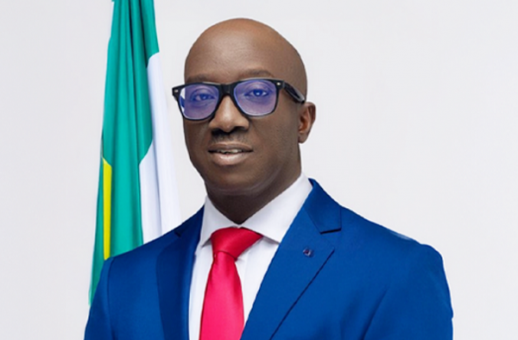
Governor Monday Okpebholo of Edo State on Tuesday presented a ₦939.85 billion 2026 Appropriation Bill christened ‘Budget of Hope and Growth,’ to the state House of Assembly.
Presenting the budget, Okpebholo said the 2026 fiscal plan was carefully designed to build on the foundation laid in 2025, while expanding the reach of government programmes to directly impact the lives of Edo people across all sectors of the economy.
The governor said the budget prioritises critical areas of sustainable development, including security, infrastructure, agriculture, education, job creation and healthcare.
He stressed that his administration remains committed to delivering “development the people can see and feel.”the governor, the budget prioritises critical areas of sustainable development, including security, infrastructure, agriculture, education, job creation and healthcare, stressing that his administration remains committed to delivering “development the people can see and feel.”
READ ALSO:Oshiomhole Criticises Obaseki’s Govt, Scores Okpehbolo High
A breakdown of the proposal shows a total expenditure of ₦939.85 billion, with capital expenditure standing at ₦637 billion, representing 68 percent of the budget, while recurrent expenditure is pegged at ₦302 billion, accounting for 32 per cent.
Okpebholo explained that the strong emphasis on capital spending reflects his administration’s determination to fast-track development through strategic investments in roads, schools, hospitals, water supply, housing and other high-impact economic projects across the state.
He disclosed that the 2026 budget would be funded through Internally Generated Revenue (IGR) estimated at ₦160 billion, Federation Account Allocation Committee (FAAC) allocations projected at ₦480 billion, capital receipts and grants of ₦153 billion, ₦146 billion from Public-Private Partnerships (PPP), as well as other viable revenue windows available to the state.
The governor, who assured Edo residents that his government would not impose unnecessary financial burdens on citizens, noted that the administration would instead intensify efforts to strengthen revenue systems, block leakages and improve public finance management.
READ ALSO:Okpebholo Pledges To Clear Inherited Salary Arrears, Gratuities At AAU
Under sectoral allocation, the economic sector received the largest share with ₦614.2 billion earmarked for agriculture, roads, transport, urban development and energy. Priority areas include rural and urban road construction, completion of two flyovers, drainage works, urban renewal, and expansion of farm estates and irrigation facilities.
The social sector was allocated ₦148.9 billion to cater for education, healthcare, youth development, women affairs and social welfare.
Planned interventions include extensive school renovations, recruitment and training of teachers, expansion of primary, secondary and tertiary healthcare facilities, as well as investments in youth skills, sports and entrepreneurship programmes.
READ ALSO:Okpebholo Believes In Courage, Capacity Says Edo Poly Rector
For governance and service delivery, the administration sector received ₦157.7 billion to drive civil service reforms, staff training, deployment of digital tools, improved revenue collection systems, support for ministries, departments and agencies, and the full rollout of e-governance platforms.
The justice sector was allocated ₦19 billion to strengthen the courts, improve justice delivery and support legal reforms and access-to-justice programmes, while regional development and local government support will focus on grassroots empowerment, community road construction, rural electrification, water and sanitation projects, and security outposts in border communities.
Governor Okpebholo said the 2026 Budget of Hope and Growth is anchored on his SHINE Agenda, built on five pillars—Security, Health, Infrastructure, Natural Resources/Agriculture and Education—with the overarching vision of creating a prosperous and united Edo State where every citizen feels the impact of governance.

 Metro1 day ago
Suspected Kidnappers Abduct 18 Passengers On Benin-Akure Road
- Sports11 hours ago
JUST IN: Dembélé Named FIFA Best Men’s Player, Bonmatí Wins Women’s Award
- News1 day ago
OPINION: Time For The Abachas To Rejoice
- News2 days ago
Edo Assembly Charges Contractor Handling Ekekhuan Road To Accelerate Work
- News1 day ago
I’m Not Distracted By Anti-Niger Delta Elements, Says PAP Boss, Otuaro
- Metro1 day ago
NDLEA Seizes 457kg of Cannabis, Arrests Suspected Trafficker In Edo
- News11 hours ago
Wage Dispute: Court Orders PSG To Pay Mbappe €61 Million
- Business9 hours ago
CBN Revokes Licences Of Aso Savings, Union Homes As NDIC Begins Deposit Payments
- News1 day ago
Okpebholo Pledges To Clear Inherited Salary Arrears, Gratuities At AAU
- News1 day ago
Ex-Nigerian Amb., Igali, To Deliver Keynote Address As IPF Holds Ijaw Media Conference


