
Headline
Ugandan President Ignores S’Court Ruling, Approves Law To Try Civilians In Military Courts

Ugandan President, Yoweri Museveni, on Monday, signed a new law allowing civilians to be tried in military courts that critics said could be used against opposition leaders ahead of next year’s election.
The new law comes despite a ruling by the Supreme Court in late January that it was unconstitutional for civilians to be tried in military courts as was the case for opposition leader, Kizza Besigye.
Besigye, 69, was abducted by armed men in Nairobi in November and re-emerged a few days later at a military court in Uganda, where he was charged with treason, which carries a potential death penalty.
READ ALSO: Police Uncover 17 Skulls In Ugandan Shrine
Following the Supreme Court ruling, his case was moved to a civilian court.
But the new law provides for “exceptional circumstances” under which civilians can be subjected to military law, including the “unlawful possession of arms, ammunition or equipment,” one of the other charges Besigye is facing.
The signing of the law was announced by Uganda’s parliament on X.
Besigye’s lawyer, Erias Lukwago, told AFP that the law was designed to facilitate the “illegal detention and trial of Besigye and others”.
Besigye has been in jail for more than the six-month legal limit for detention without trial.
Uganda’s other major opposition leader, Bobi Wine, whose real name is Robert Kyagulanyi, told AFP, “All of us in the opposition are being targeted by the Act.”
Human rights lawyer and activist, Eron Kiiza — who was jailed by a military court for six months for alleged misconduct while defending Besigye — said he would legally “challenge the Act”.
Rights groups said Besigye’s abduction and trial for treason were linked to the election in January when 80-year-old Museveni will seek to extend his 40 years in power.
AFP



Headline
How Our Airstrikes Stopped Christmas Attacks In Nigeria — US Lawmaker
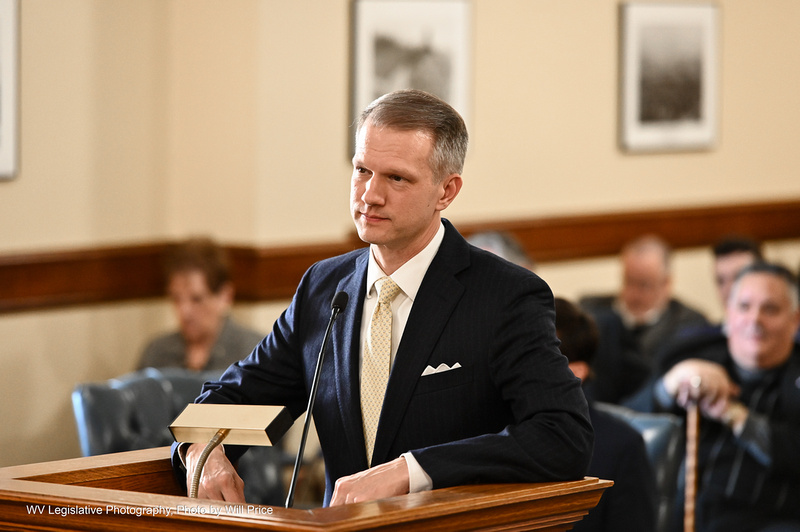
Riley Moore, a member of the United States House of Representatives from West Virginia’s 2nd District, has linked the absence of Christmas attacks in Nigeria this year to US military airstrikes carried out against Islamist militants on Christmas Day.
In a post on his official X account on Saturday, Moore contrasted the situation with the past two Christmas seasons, during which he claimed Christians were killed in attacks across parts of Nigeria.
The lawmaker noted that this year’s response targeted extremist groups instead of marking another period of violence.
READ ALSO:Rep Moore Confirms 12 Tomahawk Missiles Launched In Sokoto
He added that US forces acted decisively against militants in coordination with the Nigerian government.
“For the past two Christmases, Christians have been murdered in Nigeria. This year, thanks to @POTUS, Radical Islamic Terrorists were on the receiving end of 12 Tomahawk missiles as a present.
“The successful strikes on ISIS, in coordination with the Nigerian government, are just the first step to secure the country and end the slaughter of our brothers and sisters in Christ,” Moore wrote.
US President Donald Trump said on Thursday that American forces had conducted deadly strikes against Islamic State terrorists in north-western Nigeria.
Trump, who spoke via his Truth Social platform, warned that more attacks would follow if the militants continued killing Christians, adding that the Department of War executed numerous “perfect strikes.”
Headline
U.S. Lawmaker Reacts To Nigeria, U.S. Airstrikes
United States Congressman, Riley Moore, has stated that President Donald Trump is determined to put an end to the killing of Christians in Nigeria, warning that further action may follow if the violence persists.
Moore made the statement on Friday via his official X handle.
According to the lawmaker, the strike represents the first step in addressing what he described as the ongoing slaughter of Christians and the broader security crisis affecting Nigerians across religious and ethnic lines.
READ ALSO:US Dept Of War Shares Video Of Air Strikes In Nigeria
“President Trump has been clear that the killing of Christians in Nigeria must end,” he said.
He that the administration’s resolve on the matter should not be underestimated.
“As I stated at the outset: Do not test President Trump‘s resolved in this matter.
READ ALSO:JUST IN: US Forces Bomb Terrorists Camps In Nigeria
“Tonight’s strike in coordination with the Nigerian government is just the first step to ending the slaughter of Christians and the security crisis affecting all Nigerians,” he said.
He stressed that the operation signals a stronger stance by the United States in support of Nigeria’s efforts to tackle terrorism and violent extremism, noting that further measures could be taken if the situation does not improve.
Headline
US Dept Of War Shares Video Of Air Strikes In Nigeria
A video footage of the US military air strikes in Nigeria has emerged.
The video was released by the US Department of War following its air strikes against terrorists in Sokoto.
Earlier, the US secretary of War, Pete Hegseth had confirmed that military air strikes hit terrorists in Nigerians, saying it was deadly.
Later on, the US. African Command, confirmed that it conducted the attacks described as very deadly by President Donald Trump.
Trump said he was only keeping the promise he made earlier last month to strike the terrorists he believes are killing innocent Christians.
READ ALSO:JUST IN: US Forces Bomb Terrorists Camps In Nigeria
Although described as powerful and deadly, the casualty caused by the attack is yet to be released.
Explaining further, security expert, Brant Philip, said the strikes may have been launched “from the USS Paul Ignatius, using a Tomahawk missile.”
The Nigerian government through its ministry of foreign affairs has also confirmed that the strikes were successful.
Watch video here

 News4 days ago
UBTH CMD Marks 120 Days In Office, Expresses Commitment To Providing Conducive Working Environment
- News5 days ago
FIRS Confirms NIN As Tax ID
- Metro4 days ago
Fintiri Pardons Man Sentenced To Death For ‘Killing Herdsman In Self-defence’, Others
- News3 days ago
JUST IN: Kano Lawmaker, Sarki Aliyu Daneji, Dies Hours After Colleague’s Passing
- News4 days ago
FULL LIST: Churches That Don’t Celebrate Christmas
 News5 days ago
OPINION: My Man Of The Season
- News5 days ago
KWAM 1 Withdraws From Awujale Race, Ends Court Challenge
- Metro4 days ago
Petrol Tanker Crashes Into Akpabio’s Convoy, Kills Police Dispatch Rider
- Headline2 days ago
JUST IN: US Forces Bomb Terrorists Camps In Nigeria
- News2 days ago
Okpebholo Slams ₦25bn Libel Suit On Edo PDP Chairman


