
Headline
UK Immigration Crackdown Jolts Nigerian Youths
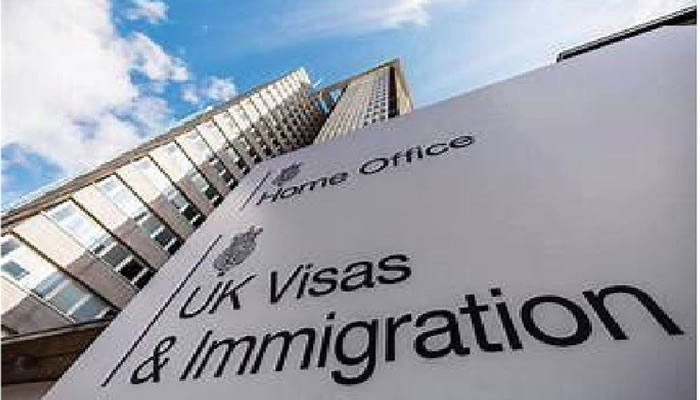
The dream of some Nigerian youths to relocate to the United Kingdom for work or academic pursuits is turning into a mirage following the recent unveiling of a controversial White Paper by the British government aimed at curbing net migration.
The proposed reforms, which have triggered reactions across the globe, are forcing a major rethink among prospective immigrants and those already navigating life in the UK.
The British Prime Minister, Keir Starmer, on Monday, presented the 2025 Immigration White Paper, titled, ‘Restoring Control over the Immigration System.’
The policy document outlines ambitious plans to slash net migration by 100,000 annually, with significant changes impacting work, study, family, and asylum routes.
According to the document, prospective and current immigrants will face an extended settlement period, a higher skilled worker threshold, a shortened post-study work visa duration, and more stringent English language requirements.
The White Paper is not yet a policy.
A bill is expected to be drafted based on feedback from the document, which will go through the parliament for consideration before it is passed into law and implemented.
However, the document has been met with widespread dismay, as many Nigerians lamented that the window for relocation is rapidly closing.
A particularly concerning clause in the paper states, “Legislation will be brought in to make clear that the government and parliament, not courts, determine who should stay, tackling misuse of Article 8 (right to family life) to block deportations.”
READ ALSO: How Much Is King Charles Worth? British Monarch Moves Up On UK’s Rich List 2025
Tougher conditions for workers, students
In a bid to reduce work-related migration, the UK government will now mandate that skilled workers possess university certificates and meet new, higher salary thresholds to qualify for visas.
The White Paper noted that the UK was turning into an “Island of strangers,” and announced that the “Immigration Skills Charge, paid by sponsors, will rise by 32 per cent for the first time since 2017, in line with inflation.”
The social care sector, a significant employer of Nigerian immigrants, also faces a severe clampdown.
The paper states, “Social care visas will close to new overseas applicants; people already in the UK with work rights can extend or switch visas until 2028, subject to review.”
International students and their sponsoring universities are not spared. Graduates will now only be permitted to stay in the UK for 18 months post-study, down from the current two years.
A levy on income from international students is also under consideration, with funds potentially redirected towards domestic skills training.
Sponsoring institutions will face stricter compliance, needing to demonstrate at least a 95 per cent course enrolment rate and a 90 per cent completion rate.
Furthermore, the default route to permanent settlement will be extended to 10 years, unless an individual makes “notable economic or social contributions.”
READ ALSO:29-year-old Nigerian-British Elected As UK’s Youngest Mayor
Nigerians eye alternative destinations
A senior lecturer at Nottingham Trent University, England, Dr. Oyedele Ogundana, advised Nigerians to critically reassess their UK plans in light of the stricter requirements.
He said, “Given the UK’s new immigration policies, such as extending residency requirements from five to 10 years, stricter English language criteria, and halting new social care visas, Nigerians should reassess their plans.”
“Countries like Germany, Portugal, Australia, and Canada offer more accommodating immigration policies. Germany is actively recruiting skilled workers; Canada and Portugal have a welcoming environment for African immigrants; Australia offers favourable conditions for skilled migrants and students.”
For those already in the UK, Ogundana recommended seeking legal counsel to understand their rights under the proposed policy.
Despite the stringent measures, some believe Nigerians in the UK can still adapt.
A London-based Nigerian attorney, Mrs Efuru Nwapa, noted that Prime Minister Starmer was under considerable pressure to regulate immigration.
“The British PM is under pressure to control immigration, and one of the strategies is to limit the number of legal migrants, which would, in turn, ease the pressure on public services,” she explained.
“Nigerians who want to relocate to the UK through the skilled worker route should ensure they meet the eligibility criteria, such as having at least a degree qualification.
READ ALSO:NATO Chief Berates Putin For Sending ‘Low-level’ Team To Ukraine Talks
“I do not believe that the contracts of Nigerians already in the UK working in relevant sectors would be terminated, but the contracts may not be renewed. Therefore, they should enrol in courses to meet the new eligibility criteria.”
A travel agent in London, Mrs. Elizabeth Nwachukwu, suggested that the policy might face review due to backlash from immigrants.
“I understand the panic among those affected, but the policy could still be thoroughly examined if more people stand against it. Meanwhile, Luxembourg and Scotland have fairer social care worker schemes, which Nigerians can explore.”
Upskilling and strategic planning
The President of the American Academy of Optometry, African chapter, Dr Uchechukwu Osuagwu, emphasised the importance of upskilling.
He advised Nigerians to “focus on high-demand and high-skilled professions that remain open to international recruitment, particularly in technology, engineering, and healthcare,” and to “pursue further education or certifications that align with the UK’s skill requirements.”
For social care workers already in the UK, he suggested they “engage with employers about sponsorship options and consider upskilling themselves to transition into roles less affected by policy changes.”
With the residency period extended, Dr Osuagwu stressed that “maintaining a good record of contributions to society is critical to strengthen future applications. Always pay taxes and keep records transparent and clean.”
He also recommended Australia, New Zealand, Canada, Germany, and Ireland as alternatives.
READ ALSO:Two Firefighters, One Other Die As Fire Rages At Former UK Airbase
“Germany just introduced the Skilled Migration Act, which allows easy access for qualified professionals, especially in engineering and IT,” he noted.
‘Stay in your country’
A Nigeria-based immigration lawyer, Yemi Opemuti, predicted that the policy could reduce Nigerian emigration to the UK by 50 per cent or more.
He described it as a reflection of a broader Western trend to “reduce the influx of legal migrants by imposing stricter conditions and discouraging long-term settlement by foreign nationals, especially from developing countries like Nigeria.”
Opemuti highlighted the severe restrictions on the student visa route.
“Before now, the reservation fund for international students used to be between £28,000 and £29,000, but it has increased to £38,000 or £39,000. The implication is that a Nigerian hoping to study in the UK may now need between N15m and N20m as a reservation fund,” he explained.
“Now, it’s going to almost N45m or N50m, which will make it harder for Nigerians to travel to the UK through the study route.
“To me, what this is telling us is that these countries want us to stay in our country,” Opemuti stated, “acknowledging that determined individuals would likely seek opportunities in EU countries like Germany and France, or even Australia and parts of Asia.”
READ ALSO:UK Unemployment Hits Highest Since 2021
He advised Nigerians to focus on building sustainable livelihoods at home before considering relocation amid such challenging global immigration climates.
Some Nigerian youths, who took to social media, criticised the move by the Labour Party.
On X, one J Adams wrote, “The same people who colonised us, exploited our resources, and reshaped our systems are now the ones setting up hurdles for our freedom of movement. History has a way of repeating itself, just in different forms.”
According to Allan Lawrence on Facebook, “They need your school fees, which you will pay to study, but they don’t need you to live in their country to work.”
“It is not negotiable to develop our continent. It is staring at us now. No hiding place anymore,” Oyinbo Adeniyi said on Facebook.
Another Facebook user, Ade BusyTee, said there was nothing unusual in the plan.
“Same with care and studying. Don’t worry, they will come back to reverse it again. Those employed to give care can’t survive 10 years in care homes with the loads of work and pay. They will come back for more soon,” he added.
(PUNCH)



Headline
British Family Accused Of Boarding Dead Grandmother On EasyJet Flight

A British family has been accused of trying to board a dead relative onto an EasyJet flight from Málaga, Spain, to London Gatwick on Thursday, passengers said.
The woman, reportedly 89 years old, was wheeled onto the plane by five family members, who told airline staff she was unwell and had fallen asleep.
Witnesses said the woman was pushed in a wheelchair to the rear of the plane and lifted into her seat. Some claimed they overheard a family member tell a boarding clerk, “It’s OK, she’s just tired,” adding, “It’s OK, we’re doctors.”
READ ALSO:Gunmen Invade Church, Kill Priest’s Wife In Anambra
Just before takeoff, the cabin crew realized the woman had died, and the plane was turned around, delaying the flight by 12 hours.
Petra Boddington, a passenger, said: “easyJet, when did you start letting dead people onto planes? Seriously!” Another, Tracy-Ann Kitching, added: “I saw her being wheeled onto the plane; someone was holding her head as they passed me! A doctor on board confirmed that was already dead when they sat her down.”
EasyJet has denied that a deceased person boarded the plane. The airline said the passenger had a fit-to-fly certificate and was alive when she boarded.
READ ALSO:UK Charges Nigerian-British Art Dealer Ochuko Ojiri With Terrorism-related Offence
“The flight returned to the stand prior to take-off due to a customer on board requiring urgent medical assistance. The flight was met by emergency services, but sadly the customer passed away,” a spokesperson said.
The Guardia Civil in Málaga confirmed officers attended the aircraft, and the woman was declared dead on board. No arrests have been made.
Headline
Russian Strike On Odesa Region Kills Eight, Injures 27
Ukraine’s State Emergency Service has reported at least eight people killed and 27 others injured on Friday night after a Russian ballistic missile strike hit the southern Ukrainian city of Odesa.
According to Ukrainian authorities, the attack targeted port infrastructure facilities in the town of Pivdenne, near Odesa, and damaged nearby civilian vehicles.
The strike came one week after much of Odesa was left without power, heat, and water following a “severe” aerial assault.
“Some of the injured were on a bus that was at the epicenter of the shelling. Trucks caught fire in the parking lot, and cars were also damaged,” the State Emergency Service said.
READ ALSO:Russia Insists Ukraine Must Cede Land Or Face Continued Military Push
Emergency officials said the deaths occurred at a port infrastructure facility. Medical teams and first responders were deployed after the strike, but their work was disrupted by “ongoing air raid alerts,” according to Oleh Kiper, head of Odesa’s regional administration.
Russia has carried out repeated attacks on Odesa in recent days, damaging port facilities, civilian vessels, and key infrastructure.
Two major bridges linking the northern and southern parts of the Odesa region have also been hit, with repairs under way, Kiper said.
Elsewhere, Ukraine’s State Emergency Service reported a “massive” drone attack on the southern Mykolayiv region, which damaged civilian infrastructure and vehicles. No casualties were reported.
READ ALSO:19 Die From Alcohol Poisoning In Russia
Odesa, Ukraine’s largest seaport and a major hub in the Black Sea region, has been a frequent target since the start of the war.
Last week, civilian, energy, and industrial sites in the city suffered extensive damage after what regional officials described as “one of the enemy’s most severe airstrikes,” leaving many areas without power and water.
Russia’s Defence Ministry has not commented on the attack.
Speaking hours before the strike during his annual Direct Line call-in show, Russian President Vladimir Putin said Russia was yet to “see Ukraine’s readiness for peace”.
“[Russia] is ready for negotiations and for ending the conflict via peaceful means,” Putin said, adding that it was up to Russia’s “Western opponents” to end the war.
(CNN)
Headline
Aircraft Crashes In Owerri With Four Persons Onboard

A Cessna 172 aircraft with registration number 5N-ASR, operated by Skypower Express, has crashed at the Sam Mbakwe International Cargo Airport, Owerri, Imo State.
The aircraft had departed Kaduna International Airport en route to Port Harcourt International Airport before diverting to Owerri after the crew declared an emergency.
The crash occurred at about 8:00 pm on the airport premises, with four passengers and crew members onboard.
Confirming the incident, the Director, Public Affairs and Family Assistance of the Nigerian Safety Investigation Bureau (NSIB), Mrs. Bimbo Oladeji, said the agency had been notified of the crash.
READ ALSO:Social Media Feud Spills Into Aircraft As VDM, Mr Jollof Exchange Blows
According to the NSIB, the aircraft crashed on the approach area of Runway 17, but no fatalities have been recorded so far.
The statement said: “Following the occurrence, airport emergency services were successfully activated and arrived on site promptly. Reports indicate that there was no post-crash fire, and the runway remains active for flight operations, with other aircraft taking off safely after the incident.
“Efforts are currently underway to coordinate the recovery and evacuation of the distressed aircraft from the crash site to allow for a detailed wreckage examination.”
The NSIB said it has officially activated its investigation protocols in line with its statutory mandate
READ ALSO:Ogun To Prosecute DJ Over Multiple Road Crashes
The Director-General of NSIB, Capt. Alex Badeh Jr., sympathised with the management of Skypower Express over the incident and expressed relief that no lives were lost.
Badeh Jr. added that the Bureau’s investigation team is already coordinating with relevant authorities to secure the crash site and commence a detailed investigation into the cause of the accident.
Two days ago, 11 persons narrowly escaped death as a private jet crash-landed at Mallam Aminu Kano International Airport, Kano, on Sunday morning.
The occupants, including passengers and cabin crew, were safely evacuated amid an intense atmosphere, eyewitnesses told The Guardian.
READ ALSO:Tanker Crash Kills Three, Fire Razes Shops In Kano
The private jet, owned by Flybird Aviation, crash-landed at about 9:30 a.m. while approaching Kano Airport en route to Abuja.
The incident attracted urgent attention, with emergency staff and other stakeholders converging at the runway to render rescue operations.
The management of the Federal Airports Authority of Nigeria (FAAN) is yet to release an official statement on the incident. Unofficial sources disclosed that the passengers have been taken to an unknown destination.
Several aircraft incidents have occurred at Kano Airport, with several lives lost.
The last incident occurred in May 2002, when an EAS Airline aircraft departed the runway at Aminu Kano International Airport at 1:29 p.m. local time en route to Lagos.

 News5 days ago
Wage Dispute: Court Orders PSG To Pay Mbappe €61 Million
- Headline4 days ago
Aircraft Crashes In Owerri With Four Persons Onboard
- Sports5 days ago
JUST IN: Dembélé Named FIFA Best Men’s Player, Bonmatí Wins Women’s Award
- Metro3 days ago
Alleged Organ Harvesting: Bereaved Families Rush To Check Corpses
- Business4 days ago
9th FirstBank Digital Xperience Centre Launched In UNIBEN
- News4 days ago
Okpebholo Presents ₦939.85bn ‘Budget Of Hope, Growth’ To Edo Assembly
- Business4 days ago
CBN Revokes Licences Of Aso Savings, Union Homes As NDIC Begins Deposit Payments
- News4 days ago
Trump Places Nigeria, 14 Others On Partial Travel Restrictions To US
- News3 days ago
Forest Reserve: Okpebholo Broker Peace Between Host Communities, Investors
 News4 days ago
OPINION: Man-of-the-people, Man-of-himself


