
Business
FG Announces Correction Underway For Nigeria’s New Tax Law, Admits Errors
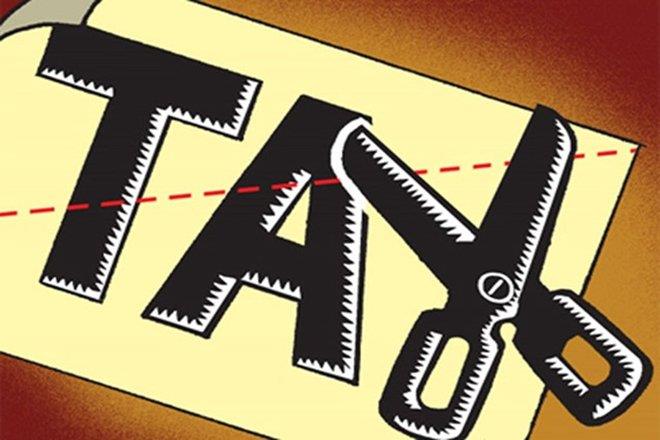
Nigeria’s minister of state for finance, Taiwo Oyedele, has finally admitted that Nigeria’s new tax reform laws contain errors.
He, however, assured that corrective measures are already underway to address the identified issues.
Oyedele made the known while speaking recently at the 2026 annual conference of the Nigerian Bar Association (NBA).
According to a statement from the Presidential Fiscal and Tax Reforms Committee on Friday, he admitted that inconsistencies emerged during the law-making process due to procedural lapses.
READ ALSO:Firm Unveils Platform To Ease Tax Compliance For Businesses
Oyedele urged Nigerians to await the outcome of the legislative probe into the alleged discrepancies.
Oyedele admitted, “That errors occurred due to manual processes and multiple stages of review” in the drafting and legislative process.
He, however, assured that the issues would be addressed through a proposed finance bill aimed at making corrections.
“What we need is a more transparent and reliable legislative process where every version of a law is publicly available,” he said.
READ ALSO:EXPLAINER: What Lagos Residents Need To Know Before March 31 Tax Return Deadline
Oyedele stressed that enforcement of the tax reforms would not be arbitrary, noting that the policy was anchored on transparency, fairness, and clear intent.
“If policies can change overnight, it sends the wrong signal to investors. Consistency is critical,” he said.
Recall that on December 17, 2025, Abdussamad Dasuki, a member of the House of Representatives from Sokoto State, had alleged that the versions of the tax laws in circulation differed from what lawmakers passed.
His revelation has sparked confusion; thereafter, the national assembly set up a committee to address the discrepancies.
The new tax laws took effect on January 1, 2026, after signing the tax bills on June 26, 2025.



Business
Dangote Refinery Reduces Diesel Price As Hope Rises For Fuel Cut

Dangote Refinery has reduced the gantry price of automotive gas oil, known as diesel.
The mega refinery slashed the diesel price to N1,600 per liter, up from N1,800.
The spokesperson of the Independent Petroleum Marketers Association of Nigeria, Chinedu Ukadike, confirmed the Dangote diesel price cut to DAILY POST on Thursday.
READ ALSO: Dangote Refinery Hikes Petrol Price
This means that the 650,000-barrel-per-day refinery cut diesel prices by N200 or 11.76 percent.
The development would push the retail diesel price, which stood around N1,800 and N2,000 per liter, downward nationwide.
The diesel price drop signals hope in premium motor spirit price reduction.
DAILY POST reports that fuel prices stood between N1,350 per liter and N1,365 in the majority of filling stations in Abuja and the surrounding area.
READ ALSO: Dangote Refinery Hikes Petrol Price
The volatility in domestic petrol product prices is linked to global energy price uncertainty due to the crisis in the Middle East since February 28th, 2026.
The conflict between Iran, the United States and Israel has caused a major shock in global energy prices.
Checks showed that Brent and West Texas Intermediate crude oil prices stood at $95 and $90 per barrel as of Thursday morning.
Business
Again, Dangote Refinery Hikes Fuel Price
Dangote Refinery has increased the ex-depot price of petrol by N75, bringing the price up to N1,350 per litre from the previous price of N1,275.
This is the first fuel increase by the Refinery in the month of May.
READ ALSO:JUST IN: Dangote Refinery Reduces Petrol Price
This latest development is coming seven days after the refinery raised its ex-depot price from N1,200 to N1,275 per litre.
Recall that the refinery on April 29 increased the ex-depot price of petrol by N75.
Business
Why We Sited Our Multi-Billion Naira Automobile Firm Branch in Benin – Skyewise Group CEO

Dr. Elvis Abuyere, Chief Executive Officer and Managing Director of Skyewise Group, an automobile firm, has explained the reason for establishing a branch of the company in Benin City, the Edo State capital, describing the ancient city as “a growing economy full of enormous potential for vibrant youth.”
He added that the company considers Edo State one of the most interesting states, noting that the decision aligns with its long-term vision.
Abuyere, who spoke in Benin on Monday while taking journalists on a tour of the new automobile facility, said:
“We started very small — from Abuja to Lagos and now Benin. It is a joy and privilege for us to have completed this amazing regional office with Skyewise Group.”
READ ALSO:BREAKING: Wike Picks Alabo George For Rivers Governorship
According to him, beyond the automobile business, Skyewise Group is in Benin to invest in real estate, logistics, youth empowerment, and credit management. “Aand also to lend our support to what the Edo State Government is doing, knowing the fact that there is an agenda,” he added.
The young CEO urged youths in Nigeria, particularly those in Edo State, to embrace entrepreneurship, stressing that “we believe it is the future of Africa,” especially Nigeria.
He said Nigeria stands as the giant of Africa and that its youth must take bold steps in the entrepreneurship landscape.
According to Abuyere, to ensure Edo youths actualise their entrepreneurial potential, the company has prepared soft loans to help them start businesses, adding that Skyewise Group is not limited to automobile operations.
READ ALSO:Senatorial Seat: Ogbakha-Edo Warns Against Imposition Of Candidates In Edo South
He said: “More importantly to us is youth empowerment. We want our youth to be empowered, and this is where the Skyewise Foundation comes in.
“We believe the future of Africa is entrepreneurship, and that future lies in the hands of the young people of Nigeria. We want to empower them to stand the test of time, build something meaningful, and reduce unemployment and insecurity in our land.
“I believe we need to begin taking bold steps by refining the mindset of our young people. We need to give them a sense of belonging and direction.
“We have been addressing the liquidity gap in society by providing microloans to support businesses in our environment and in Benin City.”
When asked why he chose Benin City for the multi-billion naira automobile firm, Abuyere noted: “I think this is the first automobile showroom in Edo State where you can see a car lifted from the ground floor to the first floor and beyond.”

 News3 days ago
Benefits Of Breast Sucking In Marriage
- News2 days ago
2026: ICPC Lists 30 Wanted Persons In Nigeria, Releases Names, Photos
- News4 days ago
Edo Unveils Simplified Disability Rights Law
- News2 days ago
OPINION: Sunday Igboho’s Iru Ekun As Sòbìà, The Guinea Worm
- Headline3 days ago
VIDEO: If Not For Me, There Won’t Be Israel Right Now — Trump
- News2 days ago
NELFUND Breaks Silence On Alleged Suspension Of Student Upkeep
- Headline2 days ago
Xenophobia: FG To Repatriate Over 1,000 Nigerians From South Africa
- Metro2 days ago
VIDEO: Footage Of Police Rescue Of Adelabu’s Sister, Twin Sons Emerges
- Metro2 days ago
Security Forces Foil Terror Attack In Kogi Community, Bandits Suffer Casualties
- News2 days ago
FCT Residents Turn To Firewood, Charcoal As Cooking Gas Prices Hit N2,000/kg


