
News
Gaza Or Jerusalem: Where Should Nigerians Be Found? [OPINION]

By Lasisi Olagunju
If history were a child, the Yoruba would insist on calling it an Abiku. History keeps climbing the chimney and, in Wole Soyinka’s voice, yelling at us: “I am Abiku, calling for the first/ And the repeated time.” And with J.P. Clark’s opening glee, his entrance chant, history revels in “coming and going these several seasons.” Hundreds of years before Christ, a rampaging General called Alexander the Great from Macedonia staged what history recorded as the Siege of Gaza. Second century Greek historian and military commander, Arrian of Nicomedia, wrote on the last days of the siege. He also gave a gripping account of the massacre which followed the siege: “Their land now in the hands of the enemy, the Gazanians stood together and fought; so that they were all slain fighting there as each man had been stationed. Alexander sold their wives and children into slavery…” That mass murder happened in October 332 BC. This year, another trouble started in Gaza on October 7. Fifty-years ago, on October 6, 1973, Israel suffered a surprise attack launched simultaneously by Egypt and Syria. Those two Arab countries said they wanted to correct the ‘error’ of the six-day war of June 1967 in which they lost land and honour and prestige to small Israel. In 1967, Syria lost the Golan Heights to Israel; Egypt lost the Sinai Peninsula to Israel; the Palestinian people lost the West Bank, Gaza Strip and East Jerusalem. It was those losses that provoked the 1973 war. And who won in 1973? History says both sides claimed victory but the real victor is the power occupying the occupied territories today.
On 7 October, 2023, Palestinian militant group, Hamas, launched a surprise, condemnable assault on southern Israel. Hundreds of innocent Israelis were killed. Israel has been fighting back with bombs and bullets. The entire Gaza is under a total siege. Israeli Defense Minister, Yoav Gallant, days ago told anyone who cared to listen that the strip would receive “no electricity, no food, no water, no fuel.” Suffering that measure are 2.2million souls who live there. Condemnable. And, in that cold announcement is a deja vu. At a postmortem of the six-day war of 1967, the then Prime Minister of Israel, Levi Eshkol, reportedly told his ministers his solution to the Arab problem in Gaza: “Perhaps if we don’t give them enough water they won’t have a choice…We’ll deprive Gaza of water, and the Arabs will leave.” This past weekend, Israel announced that it was about to begin a ground operation in Gaza to hunt down Hamas. It then ordered over one million Palestinian civilians living in northern Gaza to leave the place within 24 hours. The old people who live in today’s Gaza are refugees uprooted from the area that became Israel in 1948. The young ones there are their descendants. Both generations are about to be refugees again.
FROM THE AUTHOR: OPINION: The Certificate Elephant In Abuja
That corridor called Gaza is a jinxed strip. The International Dictionary of Historic Places puts its date of first habitation as the 15th century BCE. The introductory paragraph of an 11 October, 2023 report by Reuters news agency tells the city’s grim history: “Gaza is a coastal strip of land that lay on ancient trading and marine routes along the Mediterranean shore. Held by the Ottoman Empire until 1917, it passed from British to Egyptian to Israeli military rule over the last century and is now a fenced-in enclave inhabited by over two million Palestinians.” The unjust fencing was done by Israel in 1994 for security and economic reasons. The barrier notwithstanding, the Gaza-Israeli border has continued to be a thunderclap headache to Israel because of extremist reactions to its ‘overlordship’ from the other side.
This 2023 war is not the first and won’t be the last. But then, you want to ask why this war and all the others before it? At the centre of it all is land, the breath that comes with it and the duties attached to its protection. The Jews believe they were promised and gifted the land called Israel by the ‘God of Israel’ and it is their sacred duty to keep it. Palestinians call the land Palestine and they claim it as a bequest to them from the God of their ancestors. They hold that the land, particularly Jerusalem, hosts holy sites and buildings entrusted to their care by God. Both sides won’t surrender it; they won’t betray their ancestors; they won’t sin against God. That is my summary of the problem and why it is a war that may last till (or lead to) the end of the world.
FROM THE AUTHOR: OPINION: The North And Tinubu’s Appointments
While these historical racial rivals fight over their inheritance, should black Africa be divided between the warring two? Ghana and Kenya are officially with Israel; South Africa is with Palestine; Nigeria says it is neutral although its citizens are badly divided over the war. But the two fighting forces have zero respect for black people no matter how pious and religious we think we are. There are Afro-Palestinian people in Jerusalem. They suffer everything black South Africans suffered in apartheid South Africa. In a 2014 report, The Times of Israel reported that in spite of the strong identification of Afro-Palestinians with Palestine “there is nonetheless a degree of racial discrimination against them by the broader Arab population.” Also, writer and journalist, Charmaine Seitz, in a 2002 article published in Jerusalem Quarterly, said “some Palestinians still refer to those with dark skin as ‘abeed,’ literally translated as ‘slaves.’” Seitz was appalled that “racial slurs against blacks are oddly frequent in a society that has experienced its own share of prejudice and discrimination at home and abroad.” The discrimination is not from the Arab side alone. Israelis also loathe blacks mainly for the colour of their skin. A March 2018 report by Al Jazeera on the attitude of the Israeli state and its religious authorities to blacks comes to mind here. The title of that report is: “Black lives do not matter in Israel.” The author is not an Arab, not a Muslim. His name is David Sheen, a journalist from Canada but reporting from Israel and Palestine.
Twenty-three years ago, ‘mysterious’ musician, Lagbaja (Bisade Ologunde), told us to smile and laugh and be merry no matter what we were going through. That was at the beginning of this democracy. His song: ‘No Matter Condition, F’ẹyín ẹ’. I am not sure he would obey himself today. What has happened to Nigeria and its people is much more than what hit the Yoruba Akalamagbo and took laughter from its mouth. A newspaper screamed on Wednesday last week: ‘Naira plunges to $1,050; job losses, factory shutdown loom.’ This is October, not many people in this country are sure of what December will do to their jobs. However, despite the existential challenges ravaging Nigeria, I find it curious that what takes our time is much more than the post-election lightning striking the skies of Lagos and Yola. We’ve allowed into our discourse matters that should not concern us beyond what we feel as members of the human community. The war in the Middle East between Israel and Palestine is one of them. We are involved like the old man who carries a stranger’s load on his head and kicks his own down the hill.
I told a senior colleague mid last week that the war between Palestine and Israel would become a Nigerian war. I told him that I prayed my reading would be wrong. I also told him that there had been relative calm so far in Nigeria because the casualty figures on both sides appeared to be gruesomely equal. I said the moment one side overtook the other and the news was out, we should expect terrible reactions here. One week into the war, the omens here are not good at all. Some Muslim groups held a rally in Ibadan on Friday in solidarity with Palestinians. They called the Arabs their brothers. RCCG’s Pastor Enoch Adeboye also last week sent a solidarity message to the State of Israel: “Hello my beloved brothers in Israel, I want you to know that we are praying for you, that all members of the Redeemed Christian Church of God all over the world are standing by you at this critical moment. The Almighty God, the Holy one of Israel, will give you absolute victory and give you permanent peace from now on in the mighty name of Jesus.”
FROM THE OPINION: Wike And Abuja’s Corn Sellers
Ninety-eight percent of Israel won’t say Amen to the pastor’s prayers. They are not followers of Jesus Christ. The State of Israel which Nigerian pastors pray for has a population that includes Arab Muslims. The ‘Israel’ of today is not exactly the ‘Israel’ of the Bible. It is not just for cosmetic reasons that citizens of today’s Israel call themselves ‘Israelis’, not ‘Israelites’ that you find in the New Testament. Now, I go for available statistics. Real time data website, Wordometer, says the population of Israel, as of yesterday afternoon (15 October, 2023), is 9,214,951. Out of that figure, Jewish Virtual Library says the total Jewish population is 7,181,000 (73.3%). Jews say they practise Judaism although “roughly half (of them) describe themselves as secular and one-in-five does not believe in God” (Pew Research Centre; May, 2015). The State of Israel has 2,065,000 Arab people (21.1% of the population) out of which 1,728,000 are Muslims. This means that even among Arabs, there are Christians. The total number of Christians in Israel is just 184,400 (sbout two percent of the country’s population). The remainder of the people of that country are classified as ‘others’ and they include those “who identify themselves as Jewish but do not satisfy the Orthodox Jewish definition of ‘Jewish’”. Across the border in the State of Palestine, there are Palestinian Christians who suffer what Palestinian Muslims suffer from Israel. If Nigerian pastors would pray for their Christian brethren, they should include those in Palestine who are victims of attacks from extremist groups like Hamas in addition to restrictions and abuse from Israel. If Nigerian Muslims would rally for their brothers, they should not forget Arab Muslims in Israel who are exposed, like the Jews, to death from Hamas’ missiles.
As humans, we can pray for the innocent on both sides of this war. People who deserved to live are dead or dying. Many more will die today and tomorrow. Suffering and misery will continue to rule the streets until common sense forces a ceasefire. Both sides are grossly, grisly afflicted – that is what media reports tell us. “At local supermarkets, the shelves have become empty of some items, such as bread, batteries, milk, and eggs. With instructions telling people to have their safe rooms stocked for three days, people have grabbed what they can. Many workers do not come to work. A city usually full of tour groups has none. Many flights are canceled. People who had come on holiday or to see relatives have to scramble to find flights out, often with connections through countries they did not intend.” That was how Israel’s major newspaper, The Jerusalem Post, described the situation at the country’s capital last Tuesday. And it was just three days into the Israeli-Palestinian war. It is more than a week today; things are worse and may still get worse. On the Palestinian side, life is grimmer. Last Wednesday, Al Jazeera published a journalist’s personal experience of the war: “As I write this, I no longer believe we will get out of this alive. I woke from my sporadic sleep to the sound of the bombardment that has continued nonstop for the past four nights. Each day, we wake up in a different house. But each day the sounds and smells we wake to are the same…Early this morning, a blast blew in the windows, and I shielded my baby with my body and realised: No place is safe.”
Life is nasty and brutish for those gasping for life in Gaza without water and food – no thanks to Israel’s blockade. We should empathize with them and with victims of Hamas’ atrocious actions inside Israel. Our government has done very well by staying neutral and calling for peace. We should join the government in demanding an end to hostilities. We should abstain from justifying the evil of one side while excusing the other. The irony is that the supposed beneficiaries of our partisanship have near zero regard for us as members of the human community. The darker the skin, the more monkey the black person is to the Arabs and the Jews. If you’ve ever seen how villagers crack palm nuts, you would understand why the Yoruba say neither of the two stones involved in the cracking business is a friend of the nut. So, why are we taking sides? There are rallies across the world for peace and for a stop to attacks on the innocent, including women and children who have no share in this blame. That is where we should be found.



News
PAP Sends Additional 34 Foreign Post-graduate Scholarship Beneficiaries To UK Varsities

The Presidential Amnesty Programme (PAP) has deployed an additional 34 foreign post-graduate scholarship beneficiaries to various universities in the United Kingdom for the 2025-2026 academic year.
This was contained in a statement made available to newsmen in Warri by Mr Igoniko Oduma, Special Assistant on Media to Dr. Dennis Otuaro, the Administrator, PAP.
According to the statement, the scholars’ programmes include data science, fintech analytics, cyber security, international energy law and policy, construction project management, public health, agri-food technology, electrical and petroleum engineering, among others.
The statement added that more foreign post-graduate scholars will be sent to UK universities in the current academic session.
“In December 2025, nine students, who were the first set of offshore post-graduate scholarship developments by the PAP Administrator, Dr Dennis Otuaro, for the 2024-2025 academic year, graduated from their various programmes in UK universities.
READ ALSO:PAP Scholarship Scheme Vehicle For Better Future For Niger Delta —Otuaro
“Otuaro has deployed over 9000 students to universities within and outside Nigeria for different industry-relevant programmes since he assumed office in March 2024,” the statement partly reads.
Speaking at the pre-departure orientation programme for the scholars at the PAP headquarters in Abuja, on Thursday, Otuaro said that the large-scale deployment was aimed at making the Niger Delta a knowledge-driven region.
He said that his leadership reinvigorated the programme to give it a new momentum in service delivery to the people of the region based on the mandate of President Bola Tinubu.
Otuaro said, “We are sending all of you for post-graduate studies in various universities in the United Kingdom.
“The PAP now has a new momentum and direction because of the repositioning and broad reforms that we carried out in line with the mandate of His Excellency, President Bola Ahmed Tinubu GCFR.
READ ALSO:Otuaro Tasks Media On Objective Reportage
“The objective behind the huge scholarships deployment is to ensure that we develop the needed human capital to transform the Niger Delta and generate knowledge-wealth.
“We want to develop relevant manpower in critical disciplines for our region and by extension, the country, because you are expected to contribute your quota to national development after successful graduation.”
The PAP boss, who was represented at the event by his Technical Assistant, Mr Edgar Biu, advised the scholars to study hard to achieve academic excellence in their various fields of research.
According to him, the scholars have an obligation to justify the Federal Government’s investment in their education and future.
READ ALSO:I’m Not Distracted By Anti-Niger Delta Elements, Says PAP Boss, Otuaro
He reiterated his warning that beneficiaries should not take for granted the opportunity to further their academic pursuits in the interest of the Niger Delta and indeed the country.
Otuaro expressed appreciation to President Tinubu for his “enormous interest and support for the Programme”, particularly the approval of an upward review of the programme’s budget from N65billion to N150billion.
He also expressed gratitude to the National Security Adviser, Mallam Nuhu Ribadu, for his impeccable guidance and supervision of the programme’s initiatives.
Otuaro, therefore, cautioned the scholars to obey their host country’s laws and the rules and regulations of their various institutions, stressing that they are ambassadors of Nigeria, the Niger Delta and their communities and families.
Highpoint of the orientation programme was the presentation of laptops to the scholars to help them in their studies.
News
Industrial Court Bars Resident Doctors From Strike

The National Industrial Court in Abuja has issued an interim injunction restraining the Nigerian Association of Resident Doctors (NARD) and its agents from embarking on any form of industrial action, including strikes, go-slows, picketing, or preparatory steps for protest, from Monday, January 12, 2026.
Justice E.D. Subilim ordered that the injunction remain in force pending the hearing of the motion on January 21. The suit was filed by the Attorney General of the Federation (AGF) and the Federal Government against NARD, its president, Dr Mohammad Suleiman, and Dr Shuaibu Ibrahim.
The court order comes days after resident doctors at the Usmanu Danfodiyo University Teaching Hospital (UDUTH), Sokoto, declared their full support for the nationwide strike announced by NARD over the government’s alleged failure to honour critical welfare and training agreements.
UDUTH doctors cited the non-reinstatement of five disengaged resident doctors at the Federal Teaching Hospital, Lokoja, unpaid promotion and salary arrears, and incomplete implementation of the Professional Allowance Table as key grievances. Other unresolved issues include withheld specialist allowances, delayed house officers’ salaries, postgraduate training certification delays, and deteriorating hospital infrastructure.
READ ALSO:Resident Doctors Suspend Strike, Issue Fresh Four-week Ultimatum
However, NARD had on Tuesday noted that there was no going back on the industrial action, insisting that the strike is necessary and not politically motivated. Speaking in Abuja, Dr Suleiman said the withdrawal of services from midnight on Monday is a response to “unmet commitments, shifting government positions and worsening working conditions for resident doctors, not partisan considerations.”
He argued that none of the demands outlined in the Memorandum of Understanding signed with the Federal Government on November 27, 2025, have been implemented.
“Every issue is either at the same point where it was when we signed the MoU or we have even gone backwards,” Dr Suleiman said, adding that claims by the Ministry of Health that some issues had been resolved were misleading.
He further challenged the government to show where N90 billion, allegedly allocated in the 2026 budget for health workers’ professional allowances, has been provided.
READ ALSO:Doctors’ Strike Continues As NARD Demands Fair Deal, Better Pay
The association also demanded the immediate reinstatement of the five disengaged resident doctors at FTH Lokoja with full back pay and rejected plans to redeploy them elsewhere.
Other grievances include delayed promotion arrears across 62 tertiary institutions, non-recognition of specialist certificates, and outstanding salary and allowance payments affecting nearly 40 percent of resident doctors.
While NARD remains open to dialogue and has appealed to President Bola Ahmed Tinubu for decisive intervention, it warned that unless concrete action is taken, the planned industrial action will go ahead, potentially disrupting healthcare services nationwide. Dr Mujitaba Umar, President of the UDUTH chapter, described the situation as “difficult but unavoidable,” while the chapter’s General Secretary, Dr Muhammad Abdulrahman Hassan, urged the Federal Government to act swiftly “in the interest of the Nigerian populace and the healthcare system.”
News
Nigeria To Get Fresh $9.5m Abacha Loot From UK’s Jersey
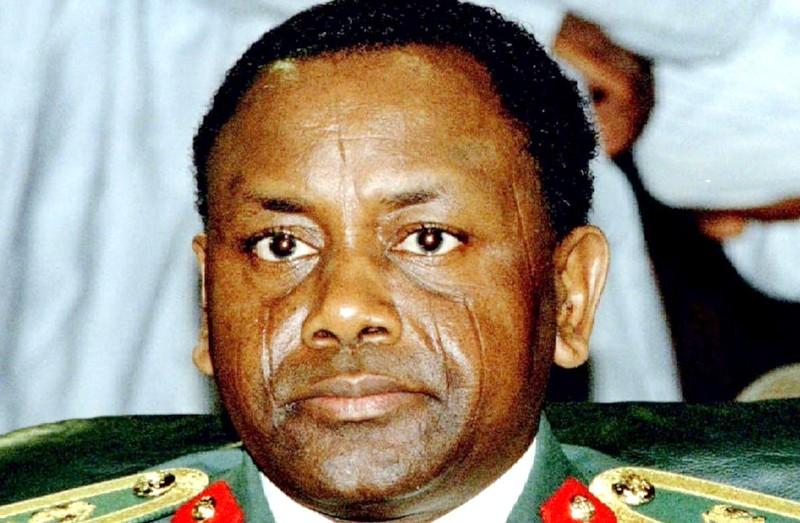
Nigeria to receive fresh $9.5 million (£7 million), believed to be stolen funds linked to former military Head of State, Sani Abacha, from the United Kingdom’s Jersey.
According to the BBC, Jersey has agreed to repatriate the fund to the Nigerian government.
The money, described as proceeds of “tainted property,” is said to be part of the vast fortune stolen by Abacha, who ruled Nigeria between 1993 and 1998.
READ ALSO:How I Transited From Abacha’s Friend To prisoner — Lamido
The funds were kept in a bank account in Jersey and had been tied up in legal proceedings for several years.
Although the assets were first recovered during the administration of former President Goodluck Jonathan, court challenges stalled their return to Nigeria. Progress was made in December 2025 when Jersey’s Attorney-General, Mark Temple, signed a memorandum of understanding, MoU, with Nigerian authorities to enable the repatriation.
The latest agreement builds on two earlier arrangements between Jersey and Nigeria that led to the return of more than $300 million (£230m) in recovered assets.

 News3 days ago
How To Calculate Your Taxable Income
- Business4 days ago
NNPCL Reduces Fuel Price Again
- Metro4 days ago
AAU Disowns Students Over Protest
- Metro4 days ago
Edo: Suspected Kidnappers Kill Victim, Hold On To Elder Brother
- Metro2 days ago
Edo widow-lawyer Diabolically Blinded Over Contract Seeks Okpebholo’s Intervention
- Headline3 days ago
Russia Deploys Navy To Guard Venezuelan Oil Tanker Chased By US In Atlantic
- Metro3 days ago
JUST IN: Court Grants Malami, Wife, Son N500m Bail Each
- Metro4 days ago
Nine Soldiers Feared Dead In Borno IED Explosion
- Entertainment3 days ago
VIDEO: ‘Baba Oko Bournvita,’ Portable Drags His Father, Alleges Bad Parenting, Extortion
- Politics3 days ago
2027: Details Of PDP Leaders, Jonathan’s Meeting Emerge


