
Business
Inflation: Where Are We Going From Here? [OPINION]

Richard Asoge
Nothing depresses a man of the house like waking up early in the morning in preparation for the task of the day but not without doing all mathematical economics considering the size of his lean pocket. His take home can no longer take him to the bus-stop not to talk of providing for his households. Same applies to CEO of various small and medium scale enterprises. On daily basis, if not on hourly business transactions, he does calculations on overheads, cost of replacement of raw materials or ordering to arrive at fair price of each of the items available for sale so that the firm will not go under. The worst hit are the salary earners whose salary hardly changed. All these mathematical economics on daily basis would not have been necessary if the prices of goods and services were relatively stabled and not dangling like water lettuce on the sea.
We are in dire situation where you keep racking your brain on calculations over the price for the meal of the day, the transport fare or cost of putting your car on the road and other basic things that define the existence of humanity. You keep adjusting your spending downward until a point where it is no longer possible. The calculations you used in the last 24hours for buying some items of goods are no longer reliable just because the prices have move up almost immediately. Where are we going from here?
For any economy to have not just growth but sustainable development, inflation must be well monitored and guided. As a matter of fact, it should not go beyond the threshold of single digit. Going by the report of NBS for November 2023, inflation rate was 28.2 percent. Breaking it down further, inflation in food sector is leading the component to the historical level of 32.8 percent. This should be a concern to every right thinking individual and institution, be it local or foreign.
FROM THE AUTHOR: 2024 Budget: What Average Nigerian Wants?
Statutorily, the primary responsibility of the CBN as an institution is price stability. Every other function comes after price stability. This is a serious challenge to the monetary regulatory authority. Continuous failing in the purchasing power of naira can make one interact with the history of dark days of trade by barter.
Unsatisfying taste for foreign goods and services contributed in no small scale to the persistence fall in the value of naira. It will always be in that trend until we roll up the sleeves of our shirts for production and create value on our local products in such a way that those living outside the shore of Nigeria can not take their eyes off them. This will in turn bring in the foreign currency needed for settling international transactions. The proceeds of crude oil, being the major item for exportation that generates foreign exchange, is no longer enough to keep us in a good liquidity position as a country. How better the country would have been if leaders of various groups and opinion molders can demonstrate high level of patriotism by not just believing in Nigeria products but buy and use them. The effect will trickle down to the common man on the street.
In 2017, during one of the medical vacations of the President Mohammed Buhari, his Vice, Yemi Osinbajo signed three executive orders. One was on ease of doing business. Within 30 days, there was respite. There was fresh breath across the length and breadth of the country. Infact, exchange rate came down. This well thought out approached endeared many people to him till date. Is it not time for President Tinubu to sign appropriate executive order(s) and activate necessary machineries to alleviate the suffering of the citizens and rescue the small and medium scale enterprises that are currently gasping for breath? Whatever happens to the small and medium scale enterprises has its implication on the economy. Nigeria can not afford to add to the current high level of unemployment. No government anywhere in the world can provide jobs for all its citizens but putting necessary framework in place gingers small and medium scale enterprises not only to prosper but engage all that are willing to work.
FROM THE AUTHOR: Subsidy Removal: A Measure To Re-Jig The Economy [OPINION]
The Recent killing of two kings and kidnapping of staff and students of a private secondary school in Emure Ekiti, Ekiti Sttate, is a strong justification for supporting local vigilante called Amotekun to bear light weapons against these marauder killers and evil doers. In the time past, nobody dare looked into the eye of a traditional king not to talk of pointing gun at him. Such a fellow will not live to tell the story.
Fountain of knowledge state is known for intellectual prowess and farming. Each family had farm until recently when farms are no longer safe. This is why hunger is on the faces on the people not only in the state but across the country. We can not continue to use the same approach on a knotty issue and expect different result. It is time to have special court to try kidnapping cases with a timeline to conclude the case. Whoever is found culpable must be sentenced to death without option. This will naturally bring down the incidence if not total eradication.
Negotiation and Implementation of new minimum wage by the federal government and others are long overdue. No matter the amount agreed upon by the parties concern may just be like a medicine to the symptoms and not the root cause. In a matter of months, the money would have lost its value and then back to where we were coming from.
I look forward to seeing our president, President Bola Tinubu working round the clock for the poor to breath and as well secure the country before it fails.
Richard Asoge
Clappahouse Analytics
chards001@gmail.com
08081492614.

Business
14 Nigerian Banks Yet To Meet CBN’s Recapitalization Deadline [FULL LIST]
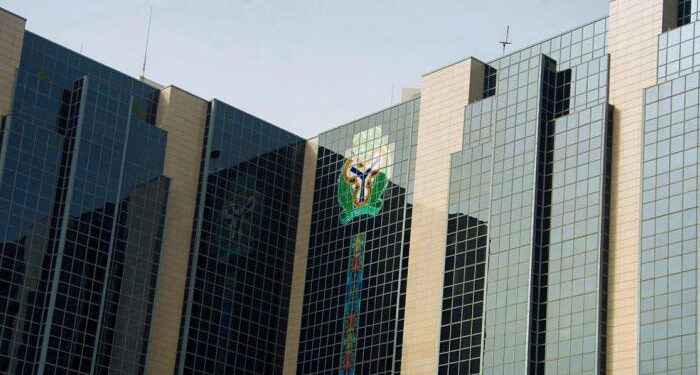
With barely eleven weeks to the Central Bank of Nigeria’s (CBN) recapitalisation deadline, fourteen banks are yet to meet the requirement.
This comes as DAILY POST reports that 19 Nigerian banks had met the apex bank’s recapitalisation requirements as of January 6, 2025.
The banks that have complied with the CBN’s minimum capital benchmark include Access Bank, Fidelity Bank, First Bank, GTBank (GTCO), UBA, Zenith Bank, and twelve others.
READ ALSO:CBN Revokes Licences Of Aso Savings, Union Homes As NDIC Begins Deposit Payments
However, as of the time of filing this report, fourteen Nigerian banks are yet to comply.
The banks that have not met the apex bank’s recapitalisation requirement include First City Monument Bank (FCMB), Unity Bank, Keystone Bank, Union Bank (Titan), Taj Bank, Standard Chartered Bank, Parallex Bank, and SunTrust Bank.
Others are FBH Merchant Bank, Rand Merchant Bank, Coronation Merchant Bank, Alternative Bank, and other non-interest banks.
Meanwhile, financial experts have predicted possible mergers and acquisitions ahead of the March 31 deadline.
Business
Naira Extends Appreciation Against US Dollar
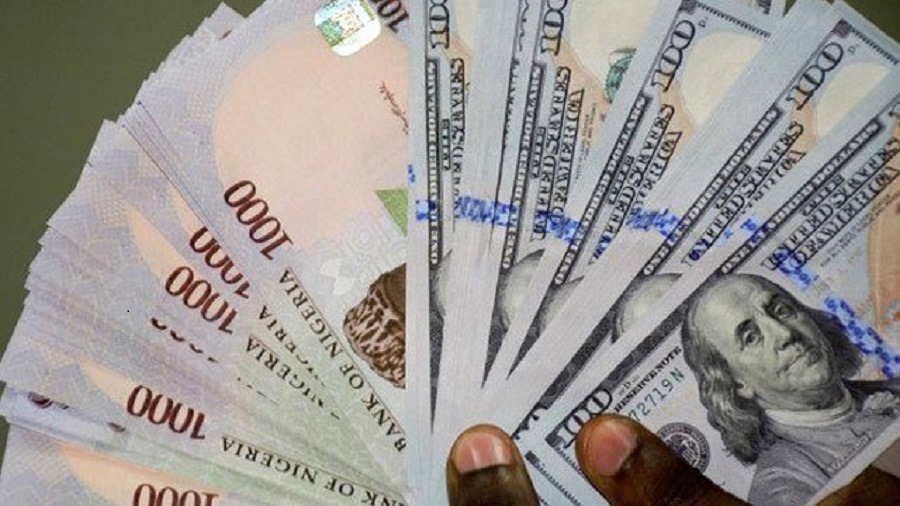
The naira extended appreciation against the dollar at the official foreign exchange market on Wednesday.
The Central Bank of Nigeria’s data showed that the Naira further firmed up on Wednesday to N1,418.26 per dollar, up from N1,419.07 exchanged on Tuesday.
Wednesday’s uptrend represents a slight N0.80 gain against the dollar on a day-to-day basis.
READ ALSO:Naira Records Significant Appreciation Against US Dollar
Meanwhile, at the black market, the Naira remained unchanged against the dollar at N1,480 per dollar on Wednesday, the same rate recorded the previous day.
The development comes as Nigeria’s foreign reserves further rose to $45.62 billion as of January 6th, 2026.
Recall that on Tuesday, the Naira posted a N10.24 gain against the dollar.
Business
Naira Continues Gain Against US Dollar As Nigeria’s Foreign Reserves Climb To $45.57bn
The Naira appreciated further against the United States Dollar at the official foreign exchange market, beginning the week on a good note.
Central Bank of Nigeria data showed that the Naira strengthened on Monday to N1,429.31 per dollar, up from N1,430.85 exchanged on Friday, 2 January 2026.
This means that the Naira gained N1.56 against the dollar on Monday when compared to N1,430.85 last week Friday.
READ ALSO:Naira Records Significant Appreciation Against US Dollar
At the black market, the Naira dropped by N5 to N1480 per dollar on Monday, down from N1475 traded Friday.
The development comes as the country’s external reserves rose to $45.57 billion as of Friday last week.

 News5 days ago
What I Saw After A Lady Undressed Herself — Pastor Adeboye
- Headline5 days ago
PROPHECY: Primate Ayodele Reveals Trump’s Plot Against Tinubu
- Metro5 days ago
Armed Robbers Shot PoS Operator To Death In Edo
- Business3 days ago
NNPCL Reduces Fuel Price Again
- Metro4 days ago
AAU Disowns Students Over Protest
- Metro5 days ago
Joint Task Force Kills 23 Bandits Fleeing Kano After Attacks
- Metro4 days ago
Edo: Suspected Kidnappers Kill Victim, Hold On To Elder Brother
- Metro4 days ago
Nine Soldiers Feared Dead In Borno IED Explosion
- Politics5 days ago
2027: Rivers APC Pledges To Follow Wike’s Instructions
- Headline2 days ago
Russia Deploys Navy To Guard Venezuelan Oil Tanker Chased By US In Atlantic


