
Headline
OPINION: Britain Is Nigeria’s ‘Bad’ Teacher
By Lasisi Olagunju
Number 10, Downing Street has been home to Britain’s prime ministers since 1735 AD. Why would a hugely popular new prime minister move into a 289-year-old mansion without spending good pounds on it to buff it up to today’s taste? Keir Starmer, the new British prime minister, moved into that official residence soon after he was appointed last Friday. There was neither a renovation of the building nor a sanctification of the rooms by clerics and priests. Red candles, white tapers were not lit; neither was turari (incense) assigned a role.
“I’ll teach you differences,” Shakespeare wrote in King Lear. He also wrote about “sweet fool” and “bitter fool” and how they are not the same. Britain used the last election to teach us the difference between good and bad; sanity and madness. The British held their elections on Thursday, declaring neither a public holiday nor a restriction of movements. Schools opened, businesses flourished, votes were cast and counted, results were announced without shots fired and machetes wielded. There was no election tribunal, no lawyer to hire and no judge to bribe. Those who lost simply agreed they lost, offered thanks for past favours and apologies for failing their people. Wearing regrets as lapels, the defeated went quietly into the night counting their loss under the dim light of their mourning moon.
You would think that the British who always hailed the way we elected our leaders would copy our ways. This past weekend, the teacher didn’t do the nonsense they taught their students. Their dog refused to follow our monkey to do what locusts do to grain farms. They chose those they wanted as leaders without our usual fireworks and water cannons. For the winner, it was straight from the polling booth to the Government House; there was no interlude, no respite, no recess. There was even no transition committee; neither was there a budget for new furniture and new cars for the prime minister’s family. The Prime Minister took over almost immediately after the sun set for the man whose party lost in spectacular detail. Ministers were appointed the same day and portfolios assigned them on the spot, leaving us to wonder why the haste. We didn’t hear of the parliament grilling the appointees and asking them to sing ‘God save the King’ – their national anthem. Was the head of government even sworn in? Who did?
There is nothing they do in the husband’s bedroom that does not happen in the concubine’s bedchamber. We have rats here that eat vital documents and get presidents sick. The British have over there too. But the PM’s residence in London has a simple solution to the problem: a mouser, a celebrity cat is in firm control of the rodent issues there. The cat’s name is Larry; for the past 13 years, it has been helping heads of government in that country to fix what our cowardly presidents run away from here. We’ve not heard that Labour’s Starmer aims at sacking the cat from the residence because the conservatives took it there.
MORE FROM THE AUTHOR: OPINION: Let Kenyans Enjoy Their Kenya
Since his appointment on Friday last week, Starmer, with his family, has settled in properly in 10 Downing Street.
Our own President Muhammadu Buhari moved into our Presidential Villa late in June 2015 – three weeks after he was sworn in. The old man needed to be sure that the residence was properly fumigated of the sacked party and be rid of rodents and cockroaches – visible and invisible. Despite all his carefulness, impudent rats still ran the ramrod General out of the building and out of the country. He was away in London for months suffering from what could be anything. He came back and, again, got run out of the office part of the building by the same rats. We forget things here. Seven years ago (August 2017), one of Buhari’s spokespersons announced (with uncommon sensation) that rodents had damaged furniture and air conditioning fittings in the president’s “official” office while he was in London receiving treatment. The gentleman said our leader wouldn’t, therefore, be seen working in the president’s office until the damage was undone. And that was it. The big boss stayed off work until the rats accepted his sacrifice and said he should come in.
In his own case, President Bola Tinubu has been more attentive to details. The Yoruba man is well acquainted with the functional relationship between the rolling eyes of the crab and its delicate head. He was sworn in on May 29, 2023, made a rash of careless policy pronouncements but was careful about where he would be accommodated. Unlike Starmer who rushed into the PM’s mansion like a hungry cat, Tinubu rushed nothing and overlooked nothing. Sixty-three days after he took over power, a reluctant Tinubu gingerly detoured into a villa building called the Glass House on Sunday, July 31, 2023. It was there he hibernated until the main residence begged him to come and occupy it. Perhaps because he is the Capone, we have not heard stories about ratty encounters in the nation’s most secure edifice.
In his inaugural speech, Starmer spoke of “the gap between the sacrifices made by the people” and “the service they receive from politicians.” He said when this grew “big,” the heart of the nation became infested with “weariness”. He spoke about that and about the “draining away of the hope, the spirit, the belief in a better future.” That is today’s Nigeria. To hope here is to be stupid – if not downright silly. Starmer could be speaking about this Nigeria where those who preach sacrifice overeat and belch, and the people hunger and yawn.
MORE FROM THE AUTHOR: OPINION: Kings And Imams In Yorubaland
‘Equal distribution of pain’ is the title of a piece written by good old Nosa Igiebor in the January 13, 1986 issue of Newswatch magazine. It was his panting analysis of the 1986 budget of this country which required “Nigerians to live with less of everything.” Today is a degeneration of what was bad with us yesterday. Here, now, we not only roll in the mud of a regime of unequal distribution of pain; we are daily left to live with less of nothing.
A very senior professor sent to me a text two weeks ago: “Olagunju, I was granted permanent residency in the US in 2017. I have not taken it up. Most of my friends and colleagues believe I’m stupid. I keep hoping against hope that things cannot get worse here. I had my first offer of appointment after PhD in the UK in 1988. I declined because I didn’t apply. My supervisor was asked to source for a good candidate. He called me and told me of the offer. It was a guaranteed position. Instead, I chose to return to Nigeria. My friend, an Englishman who is now a professor at … University told me I was making a mistake returning to Nigeria. I said he was wrong. I did not realise he is the grandson of Nostradamus.” My prof is not the only one who now agrees that things can always get worse here.
The parliament is supreme in the United Kingdom; in Nigeria, the president is the supremo before whom nothing existed and after whom nothing will. The heroes of the past didn’t bargain for this when they were fighting for independence for Nigeria and for democracy. We lost it, and it is sad. How easy is it now for our leper to pick up his slipped needle? (The Yoruba say abéré bó l’ówó adétè, ó d’ète). The British gave us a system designed to make it easy for us to live in peace, punish insults and reward good behaviour. They gave us a constitutional arrangement which allowed us to engage and to throw out our husbands when they went mad. We messed it up within five years of independence. In 1979, after 13 years in the wilderness of the military, we went for the most expensive of the systems in the books – presidential democracy. It may have worked in all other places, but, here, it has steadily evolved into a most fiendish monarchy – a kábíyèsí system where the legislature and the judiciary are the king’s phlegm eaters.
In the opening lines of his ‘Two Thousand Seasons’, Ghanaian writer, Ayi Kwei Armah, warns our spring water to stop “flowing to the desert.” He says “there is no regeneration” where it flows. It is there in the Bible (and in the Quran) that the Lord restored Job’s fortunes only after he changed his course and did as he ought to do. “In fact, the Lord gave him twice as much as before” – Job: 42:10. The afflicted got reprieve because he cooperated with his Maker. Here, we cling to what will never work and pray for increased blessings. When we talk about restructuring of Nigeria, it is because we want Nigeria to regain what it lost to unitary presidentialism. We saw how simple the UK elections were last week. There was no movement of ballots across constituencies. The man who emerged as prime minister contested for votes only in his Holborn and St Pancras constituency. It was exactly like that with the December 1959 election which ushered us into independence in 1960. Prime Minister Abubakar Tafawa Balewa did not have to break the bank to contest that election. His constituency was his Tafawa Balewa locality.
MORE FROM THE AUTHOR: OPINION: Reps’ Drunkard Democracy
For 99 years (1861 – 1960), the British were officially here working hard on their broth of strange ingredients. With the magical deft and expertise of the enchanter, they came up with an arrangement that should work for the happiness of all. They gave each region a constitution and the country itself a super constitution. And, so, Nigeria started on a note of globally expressed optimism. At the British House of Lords on Thursday 28 July, 1960, while debating the bill that granted Nigeria independence, the then Earl of Swinton said “Nigeria has proved how diverse peoples can combine in successful union while maintaining their own individuality.” Indeed, the whole House – and the other one, the House of Commons – hailed our negotiated federalism and expressed confidence in our commitment to constitutional parliamentary democracy.
But, in less than six quick years of that constitutional arrangement, we tore it and plunged ourselves down beyond ground zero. Today, the country is centralized – unitarized – and atrophied. The central government owns and controls everything with an imperial presidency summoning governors to its presence for daily obeisance.
“It is easy to go down into Hell,” Virgil, Roman poet (70 BC – 19 BC), warned. He added that “night and day, the gates of dark Death stand wide; but to climb back again, to retrace one’s steps to the upper air – there’s the rub, the task.” We have a very complex structural issue which we have not managed well. We continually subvert our federalism because it is suicidally sweet to do so. But how long will the leaky titanic remain afloat? The way to regeneration is for our river to stop flowing towards the desert of unitarism. Nigeria is not irredeemable if it chooses redemption. Britain has as much complicated structure; but it is a delicate balance well managed. We read of a kingdom of four countries – England, Scotland, Wales and Northern Ireland – and the kingdom is paradoxically a working democracy. We saw it last week.
Will democracy ever work for Nigeria? Or, will Nigeria ever allow democracy to work for Nigerians? Multi-genre performer, Tar Ukoh, was engaged at the Eagle Square in Abuja on 29 May, 1999 for the inauguration of President Olusegun Obasanjo. Everyone around him exuded joy at the dawn of that new day. They were sure the exit of the military after so many years meant the good times had come. Tar Ukoh was asked by The New York Times how he felt about Nigeria’s brand new democracy. He cautiously told the American newspaper that he feared that the joy of that moment might be misplaced or short lived. The New York Times still has the report of that encounter on its website. The man said: “I hope this event is not a re-awakening of illusions of freedom, or a Eureka, like we had during independence in my youth.” Tar Ukoh, who was 46 years old at that time, concluded that “having returned to civilian rule, we now have to fight for democracy.” Nothing can be truer than his fears and his conclusion. The “fight for democracy” entered its 25th year this year. It is still on. But, the battle will be lost unless we ‘borrow’ ourselves sense and go back to “the way.”



Headline
‘Pioneer Of Cable TV News’: Key Facts About CNN Founder, Ted Turner
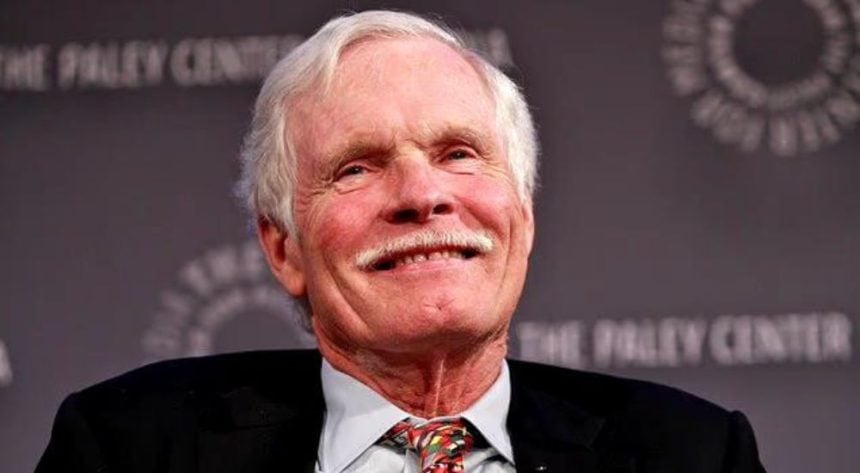
Ted Turner, the media businessman who founded CNN died at the age of 87. He died peacefully on Wednesday, surrounded by family, according to Turner Enterprises.
Contents
Launched 24-hour news television
Built a media network
Expanded through sports
Recognition and influence
Philanthropy and global causes
Environmental efforts
Health and later years
Early career path
Leadership and legacy
Personal life
Exit from business
Family
Below are key facts about his life and impact:
Launched 24-hour news television
Turner founded CNN on June 1, 1980, introducing the first 24-hour news channel and changing how audiences follow global events.
READ ALSO:CNN To Layoff 200 Staff Amid Attempts To Modernise Business
Built a media network
He moved from billboards into broadcasting, turning an Atlanta TV station into a national superstation in 1976. His business later grew to include CNN International, TNT, Turner Classic Movies and Cartoon Network.
Expanded through sports
Turner invested in sports broadcasting and owned teams including the Atlanta Braves and the Atlanta Hawks, using television to reach wider audiences.
Recognition and influence
In 1991, he was named Time magazine’s Man of the Year for his role in shaping modern news coverage.
Philanthropy and global causes
He founded the United Nations Foundation and supported campaigns against nuclear weapons. In 1997, he pledged $1 billion to the United Nations.
READ ALSO:CNN President, Jeff Zucker Resigns After Failing To Disclose Secret Affair With Colleague
Turner supported conservation work, including reintroducing bison in the United States, and backed environmental education through the “Captain Planet” cartoon.
Health and later years
In 2018, Turner revealed he had Lewy body dementia. He also recovered from a mild case of pneumonia in early 2025.
Early career path
He took over his father’s billboard company at 24 after his father’s death and later expanded into radio and television, despite limited experience in journalism.
“I worked until 7 o’clock, and when I got home the news was over,” he once said. “So I missed television news completely. And I figured there were lots of people like me.”
Leadership and legacy
READ ALSO:CNN Reporter Protests Nigeria’s $215 Single Entry Visa Fee
“Ted was an intensely involved and committed leader, intrepid, fearless and always willing to back a hunch and trust his own judgement,” Mark Thompson, Chairman and CEO of CNN Worldwide, said in a statement. “He was and always will be the presiding spirit of CNN. Ted is the giant on whose shoulders we stand, and we will all take a moment today to recognize him and his impact on our lives and the world.”
Personal life
Turner married actress Jane Fonda in 1991, and they later divorced after 10 years, though they remained close.
“I would never love anyone like I love him,” she said. “But I just couldn’t keep moving in his world, along the surface for the rest of my life. I knew that I would get to the end of my life and regret not doing the things that I also needed to do for me.”
Exit from business
He sold his company to Time Warner in 1996 and later stepped away following its merger with AOL.
Reflecting on his life, Turner once said: “I lost Jane. I lost my job here. I lost my fortune, most of it. Got a billion or two left. You can get by on that if you economize.”
Family
He is survived by his five children, 14 grandchildren and two great-grandchildren.
Headline
Iran’s Nationwide Internet Shutdown Hits 70 Days

NetBlocks, a monitoring group, has disclosed that an internet shutdown enforced by the Iranian regime has entered its 70th day, severing key access from swathes of the population under the shadow of war.
NetBlocks reported on Friday that the blackout has now surpassed 1,656 hours, marking more than two months since US-Israeli strikes pounded Tehran and escalated across the Middle East.
“Digital connectivity is vital in times of crisis,” NetBlocks said in a post on X. “Limiting service harms those most in need – people with disabilities, students, small businesses and the general public.”
READ ALSO:US Underestimated Iran Before War – France’s Bardella
According to CNN, Iran imposed a separate internet shutdown on the country’s 92 million people earlier this year, when it launched the most lethal crackdown on anti-government protesters since the Islamic Republic’s founding 47 years ago.
CNN further reports that the latest blackout has cut off another potential lifeline for Iranian residents faced with high unemployment and economic pressure exacerbated by the US-Israeli campaign.
(CNN)
Headline
Gas Prices In US Edge Down After Two Weeks Of Increases

The cost of a gallon of regular gas in the United States (US) has edged down a little more than a penny to $4.55.
According to AAA’s readings, this marks the first decline in the average gas price after 15 straight days of increases.
The decline is minuscule compared to the large increases in gas prices over the last two weeks.
According to CNN, gasoline costs rose an average of nearly 4 cents a day during that period and had several daily increases of between 7 and 9 cents.
READ ALSO:Gas Station Explosion Rocks Calabar, Scores Injured, Property Destroyed
Also Read: Trump insists US-Iran ceasefire intact despite recent exchange of fire
CNN also reports that based on past gas spikes, it will likely take weeks for gas prices to get down below $4 a gallon.
The report, however, states that a previous two-week stretch of gas price declines only shaved 14 cents off the average price, taking the average price to $4.02, before the recent 15-day run of increases.
READ ALSO:Tinubu Signs Executive Order To Protect Nigeria’s Oil & Gas Revenue
According to CNN, it could take months for the average price to fall below $3 per gallon, as it did before the war in Iran.
CNN further reports that only one state – Oklahoma – now has an average price of less than $4 a gallon, and its average stands at $3.98. California has the highest average price at $6.16.
(CNN)

 Politics5 days ago
Fubara Clears Air On ‘Defection’ To NDC [VIDEO]
- News4 days ago
Gun Battle In Oyo Forest As Police Disrupt ₦10m Ransom Collection Plot
- Politics3 days ago
Four Fubara Loyalists Disqualified As APC Clears 21 For Rivers Reps Primaries
 Metro4 days ago
Drama As Teenagers Stage Secret Wedding With N3,000 Bride Price
- Politics3 days ago
2027: Court Rebukes Plaintiff, Lawyer In Suit Against Jonathan, Awards N1m Fine
- News3 days ago
Lagos Sanctions 15 Money Lending Companies For Sharp Practices
- Politics5 days ago
2027: Daniel-Abiodun Feud Deepens Over Senatorial Ticket For Ogun East
- News4 days ago
PAP Sends Additional 15 Scholarship Beneficiaries For Post-Graduate Studies In UK
- Sports4 days ago
CAF Introduces New Laws After Chaotic AFCON Final In Morocco
- Entertainment5 days ago
Grammy Announces Date For 2027 Awards Nominations


