
News
OPINION: Can I Tell Our First Lady That Graduates Drive Cabs Here, Too?
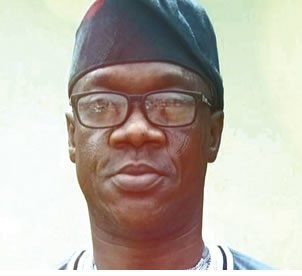
By Suyi Ayodele
My people have different social stratifications. One of them is a group of people they call olórí àpésín. That simply means those who chose destiny that makes people worship them. Mrs. Oluremi Tinubu numbers among that group. And when you are an olórí àpésín, you don’t feel what the common man feels. And olórí àpésín is like the proverbial child strapped to the mother’s back. He will never get to know how long the journey is. This is exactly Mrs. Tinubu’s fate. She has been strapped to her husband’s back for too long to know how long the journey has been for an average Nigerian, especially in these nine months of her husband in power.
Again, our first lady is not just an olórí àpésín. She is a lot more than that. Looking at her political, financial and social trajectories in the last 25 years, we can comfortably call her an obìrin tí a nfi orí è súre fún obìrin (a woman whose destiny we call upon as blessing to other women). When you are in that classification, reality is completely lost on you. No matter how people in that stratification struggle, they remain apathetic. When you see such persons, you don’t blame them when they are in their most insensitive mode. Rather, you pity them. And, in all honesty, Mrs. Tinubu, and everyone in her class among the pitiless Nigeria’s elite class, has my sympathy.
Last week, Mrs. Tinubu played host to three senators from her home state, Lagos. The trio of Senators Adetokunbo Abiru, Wasiu Eshinlokun Sanni and Ranti Idiat Adebule were in Aso Rock Villa on a courtesy visit to the First Lady. Just imagine how many lucky Nigerian women and housewives have the privilege of receiving in audience, three councillors from their wards. But here, three ‘Distinguished’ senators left whatever they were doing to go to the Presidential Villa to pay homage to the woman after the president’s heart. It was during that visit that Mrs. Tinubu spoke about our conditions. While Nigerians would not know what led to it, we all woke up to watch the video of that visit and what Madam Tinubu said. I hate to make guesses. But, here, I am tempted to think that probably, the three wise men asked Madam Excellency to help talk to her husband to do something about the agony in the land. Don’t take that to the bank, anyway. Then Mrs. Tinubu chose to respond by lashing out at Nigerians who travelled overseas to seek greener pastures and derided them for going abroad to do menial jobs they would not touch with a 10-foot pole in Nigeria.
This is what the wife of our president said: “Look at all those people saying they are going to Japa; they go there. What work are you going to do? You know, work that you refused to do at home where you have loved ones, you now end up to go and do there. With all their education, they’re driving cabs, but they won’t drive cabs here”. She called on Nigerians to help the “poor” among them but added that it is difficult to know the real poor as “…you don’t even know who are the poor. If they don’t ride a car, they will say they are poor. If you don’t have your own home, they will say they are poor.” The president’s wife agreed with the Scripture that “…in the Bible, we even talk about Jesus saying the poor you will always have in the land, and it’s for people whom God has blessed to help the poor.” The summary of her speech as relayed on the Arise TV later is a complete mockery of fellow Nigerians who would not be drivers here in Nigeria but would go to the United Kingdom, Canada, the United States of America and other European countries to go and do menial jobs.
READ ALSO: OPINION: Odi, Zaki Biam And Okuama: Beyond Sentiments
Truth be told, Mrs. Tinubu is right. Yes, Nigerian graduates abroad are cab drivers. Many are caregivers, a euphemism for nannies to old people. Quite a huge number of them are into guard duties. We have those who are cleaners, shop attendants; human payloaders and everything else we can imagine! Many of these folks, and their spouses, hold postgraduate degrees from reputable Nigerian universities. Pity! Again, another truth from Mrs. Tinubu is that these Nigerians would never accept those menial crafts they do with all enthusiasm abroad back home in Nigeria. Truth is bitter. But that is where it ends for Mrs. Tinubu and those other elites with similar warped mentality.
I don’t know much about the activities of witches and their act and art – witchcraft. But I know a little bit of their categorisation. I know the female ones called Àjé (witches), and their male counterparts known as Osó (wizards). Àjé and Osó, are the mildest of the group. At times, they can be appeased. Their level of wickedness can also be curtailed and managed. Next to that class is the Olubi (purveyor of evil). This set ranks higher than Àjé or Osó in that you don’t have to offend an Olubi before she attacks you. These ones are simply not at home with their victims’ wellbeing, the generosity or kindness of the victims towards them notwithstanding. In fact, it is better not to show an Olubi any kindness than to seek to please her. The elder sibling of Olubi is Ofíndòdo. Those in this league combine wickedness with fury. They fight their victims without relenting. They are simply temperamental! And they don’t need any reason to strike. They are the sadists of the groupings. The worst of them all is what people in my locality call Ukòtò (Pit). Ukòtò does not fight her victims. She swallows them. She afflicts them with all manner of plagues. Ukòtò ruins her victims to no end. If for instance, a victim is taken to those who should know and they discover that he or she is under the affliction of an Ukòtò, the one consulted to help stylishly backs out. Why? Ukòtò gets angrier the moment an attempt is made to pacify her. Victims of an Ukòtò don’t get help; no antidote works for them. They are simply ruined for life except the cosmic intervenes on its own. Nigerians are at the mercy of Ukòtòs at the moment. Our leaders combine all the peculiarities of the aforementioned esoteric beings to afflict the citizenry. That is why they have no pity on us. They speak to us as if we don’t matter. And, really, we don’t matter to our leaders. Their hearts have been seared with hot iron; they have sold their souls to Hades. They are as cold-hearted, as they are dead to our pains. Nothing moves them. Nothing pricks their conscience.
A woman at the level of Mrs. Tinubu should have been more circumspect. But she can’t be because that is not the nature of people in her caste. Yes, Nigerians go abroad to work as cab drivers; a job they would not do in Nigeria. But, has Madam Tinubu asked herself where the roads for those Diasporan Nigerians to drive cabs in Nigeria are? If they elect to be drivers here, who guarantees their safety from kidnappers, killer-herdsmen, bandits and other criminals that have taken over our highways and local roads? Does it occur to our First Lady that many of those Nigerians driving cabs abroad were frustrated out of this country? The other time, I saw a video of a young lady, who left her banking job in one of the most prominent banks in Nigeria to pick up a cleaning job in the UK while also going to school there. I asked a friend who also left that same bank as a senior manager to take up a less paying job somewhere else in Nigeria, what the problem is with that particular bank. His response was that the problem cuts across the Nigerian banking industry. He explained that our banking industry is a place where you employ a young graduate and you give her unachievable targets. When such a marketer, mostly a beautiful lady, cannot go the “extra mile”, a sort of euphemism for “corporate prostitution”, she gets fired! He added that that is what is responsible for high staff turnover in most banks. What other options do those victims of the wicked corporate environment have other than to Japa (migrate) to go and do cab-driving (for the males), and cleaning or care-giving (for the females). The banks and other exploitative corporate bodies get away with all the inhuman treatments of their employees because the regulatory bodies saddled with the responsibilities of checking those excesses and near-second slavery treatments have been compromised. That in itself is a failure on the part of the government and that is where Mrs. Tinubu should direct her attention to rather than deriding Nigerians who travel out to do jobs that are below their qualifications. At a time in his life, Mrs. Tinubu’s husband also japed to God’s Own country, America, before he became somebody. So, what’s the fuss about?
READ ALSO: OPINION: Where Are Yoruba’s Soldier Ants?
It is convenient for the First Lady to talk the way she did because she would never be in the position of parents who laboured to train their children and wards in schools and those graduates stay at home for years without any job. Mrs. Tinubu’s children, I believe, have never had any reason to Japa, because they are either Abimbola (born with wealth), or Mobolanle (I met wealth at home). Her children will never think of going abroad to drive cabs because if they are not Iyaloja General of Nigeria, their husbands are chairmen of Boards of big government parastatals. When we talk about children born with silver spoons, Madam Tinubu’s children simply swallowed the silver spoon and the melting machine at birth. How would their mother not reason the way she did? Has it occurred to her that most parents, whose children are the cab drivers she referred to, are at pains seeing their medical doctor-trained children turn mere cab drivers? When was the last time Mrs. Tinubu took a cab in Nigeria? I have come across scores of Bolt cab drivers who are university graduates on the streets of Nigeria. So, I can conveniently tell Her Excellency that it is not true that Nigerian graduates are not cab drivers here. Some of them are dry cleaners, shoemakers, sales girls and boys in malls and other menial jobs. Most kiosks where the business of Point of Sales (POS) is carried out are owned and manned by graduates! Madam first lady should get on the street to know this fact!
Methinks our leaders need to think more deeply before they talk. Nothing is more painful for victims of Ukoto than to see the same people who put them in such terrible conditions laugh at them! Mrs. Tinubu’s husband was once a senator. He later became governor of Lagos State for eight years. For those eight years, Madam was the First Lady of Lagos. She had all the good things in life. At a time, the husband made her a senator and she occupied that position for another 12 years. In the last nine months, Mrs. Tinubu has occupied the unconstitutional office of the First Lady of Nigeria. A few months ago, she had the privilege of having the sum of N1.5 billion ‘voted’ to her office for cars and other sundry items. Everything she has enjoyed in the last 25 years is at the expense of our common patrimony. In the real sene of it, she an omo ijobo (government pikin)! She is the typical ant in a bowl of sugar (eera inu sugar); she can never understand that there is pain in the land. She lives in a fortress, secured by the State. When she ventures out of the Villa, she has a company of soldiers and other security agents attending to her safety. How would she know then that many of us recite Psalm 91 almost seven times before we dare travel from one location to another? She is a typical eni aye ye (the one life has favoured). The tendency for her to look down on others is high. I only hope she knows the full meaning of Atubotan (the hereafter). Vengeance will one day cry on all our leaders! Ise!
It is sad that Nigerians are being shipped daily abroad for second slavery. If our leaders, especially of this ruinous epoch, had done what is right, we would have no reason to travel to be slaves in the UK, Canada, or any other country for that matter. My late parents-in-law studied in the UK in the late 60s. My late mother-in-law told me that they did not wait for the results of their final examinations to be out before they sailed back to Nigeria. Why? Because Nigeria was good then. That was a period we had human beings as leaders; leaders who put the country first before selves. Those were leaders who never boasted of being richer than a state. Our situation became bad when locusts took over our political space. We are worse off now because we have Ukotos at the helm of our affairs. Witches and their siblings don’t normally fly in the daytime. However, the present ones in power hold courts in broad daylight. While the electioneering that brought Mrs. Tinubu and her husband to Aso Rock lasted, she told all of us that her family was too rich to be bothered about our treasury. Mrs. Tinubu knows how far her riches and those of her husband would go in solving the problems of our graduates going abroad to drive cabs! In her last week’s engagement, she referred us back to the Bible. She made a biblical allusion to the presence of the poor in our midst. I love that! Today is Tuesday. As a good Christian, and in the spirit of Bible study, permit me to commend Her Excellency to the injunction of our Lord Jesus Christ, who told one of the ‘righteous’ Pharisees thus: “If thou wilt be perfect, go and sell that thou hast, and give to the poor, and thou shalt have treasures in heaven; and come and follow me” (Matthew 19-21).



News
NAF Launches Attack On Terrorists In Borno

The Nigerian Air Force, NAF, operating as part of the joint task force of Operation Hadin Kai, has carried out a coordinated air interdiction at AbbagaJiri in the Timbuktu Triangle, Borno State.
According to Air Commodore Ehimen Ejodame, Director of Public Relations and Information of NAF, the air strikes successfully paved the way for ground troops.
He explained that the operation was based on actionable intelligence from multiple sources, which confirmed the presence of terrorists, their structures, and concealed logistics facilities in the area.
Ejodame stated that NAF air assets were deployed in integrated surveillance and precision strike roles to target identified threats.
READ ALSO:NAF Hits Bandit Logistics Hub, Neutralises Many In Zamfara
The operation aimed to degrade terrorist capabilities, deny them sanctuary, and shape the battlefield for ground forces, all while strictly adhering to rules of engagement and protecting civilians.
He added, “The Identified terrorist structures were decisively engaged and destroyed, denying the terrorists freedom of action, while a follow-up engagement neutralised armed elements observed converging on the location.”
“Subsequent advances by ground troops into the area confirmed the effectiveness of the air strikes and validated the success of the joint air–land operation.”
Speaking on the mission, Chief of the Air Staff (CAS), Air Marshal Sunday Aneke, said, “The success of the mission reflects the NAF’s resolve to dominate the air domain in support of joint operations.”
READ ALSO:NAF Hits Bandit Logistics Hub, Neutralises Many In Zamfara
Aneke further emphasized that the operation highlighted the service’s commitment to providing precise and decisive air power in support of ground forces.
In his words, “We will continue to deny terrorists freedom of movement, sanctuary, and logistics wherever they seek to hide. Air operations will remain relentless and intelligence-driven.”
“Our operations are carefully planned and intelligence-led, ensuring maximum effect on hostile elements while safeguarding innocent civilians.”
READ ALSO:NAF Announces Two-hour Road Closure In Abuja For 10km Walk
“The Nigerian Air Force will sustain pressure until terrorist networks are completely dismantled.”
He further noted that the operation showcased NAF’s aggressive stance, precision employment of airpower, and dedication to sustained joint operations.
Aneke added that such missions play a crucial role in enabling ground troops to maintain momentum and deliver decisive outcomes against terrorist networks threatening lives, property, and Nigeria’s national security.
News
Lagos Parks To Close For Maintenance – State Govt

The Lagos State Parks and Gardens Agency, LASPARK, has announced that all public parks under its management across the state will be temporarily closed for routine maintenance and upgrades.
In a statement released on January 9 and shared via its official platforms early Saturday, LASPARK said, “All parks under our management will be closed to the public from January 12 to January 31, 2026.
“This follows increased visitor activity during the recent festive season.”
The agency listed several popular recreational spots that will be affected, including “Ndubisi Kanu Park, Alausa JJT Park, Dr. Finnih Abayomi Park in Oregun, and all other LASPARK-managed parks across Lagos State.”
READ ALSO:
Explaining the reason for the closure, LASPARK added, “The temporary shutdown is necessary to carry out essential landscaping, facility repairs, and general upgrades to ensure that our parks remain safe, clean, and enjoyable for residents and visitors.”
The agency also stressed that the exercise aligns with its broader mandate, noting, “This maintenance programme is part of our commitment to providing well-maintained green spaces that promote relaxation, wellness, and environmental sustainability.”
LASPARK assured residents that “all parks will reopen at the end of the maintenance period.”
News
PAP Sends Additional 34 Foreign Post-graduate Scholarship Beneficiaries To UK Varsities

The Presidential Amnesty Programme (PAP) has deployed an additional 34 foreign post-graduate scholarship beneficiaries to various universities in the United Kingdom for the 2025-2026 academic year.
This was contained in a statement made available to newsmen in Warri by Mr Igoniko Oduma, Special Assistant on Media to Dr. Dennis Otuaro, the Administrator, PAP.
According to the statement, the scholars’ programmes include data science, fintech analytics, cyber security, international energy law and policy, construction project management, public health, agri-food technology, electrical and petroleum engineering, among others.
The statement added that more foreign post-graduate scholars will be sent to UK universities in the current academic session.
“In December 2025, nine students, who were the first set of offshore post-graduate scholarship developments by the PAP Administrator, Dr Dennis Otuaro, for the 2024-2025 academic year, graduated from their various programmes in UK universities.
READ ALSO:PAP Scholarship Scheme Vehicle For Better Future For Niger Delta —Otuaro
“Otuaro has deployed over 9000 students to universities within and outside Nigeria for different industry-relevant programmes since he assumed office in March 2024,” the statement partly reads.
Speaking at the pre-departure orientation programme for the scholars at the PAP headquarters in Abuja, on Thursday, Otuaro said that the large-scale deployment was aimed at making the Niger Delta a knowledge-driven region.
He said that his leadership reinvigorated the programme to give it a new momentum in service delivery to the people of the region based on the mandate of President Bola Tinubu.
Otuaro said, “We are sending all of you for post-graduate studies in various universities in the United Kingdom.
“The PAP now has a new momentum and direction because of the repositioning and broad reforms that we carried out in line with the mandate of His Excellency, President Bola Ahmed Tinubu GCFR.
READ ALSO:Otuaro Tasks Media On Objective Reportage
“The objective behind the huge scholarships deployment is to ensure that we develop the needed human capital to transform the Niger Delta and generate knowledge-wealth.
“We want to develop relevant manpower in critical disciplines for our region and by extension, the country, because you are expected to contribute your quota to national development after successful graduation.”
The PAP boss, who was represented at the event by his Technical Assistant, Mr Edgar Biu, advised the scholars to study hard to achieve academic excellence in their various fields of research.
According to him, the scholars have an obligation to justify the Federal Government’s investment in their education and future.
READ ALSO:I’m Not Distracted By Anti-Niger Delta Elements, Says PAP Boss, Otuaro
He reiterated his warning that beneficiaries should not take for granted the opportunity to further their academic pursuits in the interest of the Niger Delta and indeed the country.
Otuaro expressed appreciation to President Tinubu for his “enormous interest and support for the Programme”, particularly the approval of an upward review of the programme’s budget from N65billion to N150billion.
He also expressed gratitude to the National Security Adviser, Mallam Nuhu Ribadu, for his impeccable guidance and supervision of the programme’s initiatives.
Otuaro, therefore, cautioned the scholars to obey their host country’s laws and the rules and regulations of their various institutions, stressing that they are ambassadors of Nigeria, the Niger Delta and their communities and families.
Highpoint of the orientation programme was the presentation of laptops to the scholars to help them in their studies.

 News4 days ago
How To Calculate Your Taxable Income
- Metro3 days ago
Edo widow-lawyer Diabolically Blinded Over Contract Seeks Okpebholo’s Intervention
- Headline4 days ago
Russia Deploys Navy To Guard Venezuelan Oil Tanker Chased By US In Atlantic
- Politics3 days ago
APC Leaders, Tinubu/Shettima Group Call For Wike’s Removal As FCT Minister
- Entertainment4 days ago
VIDEO: ‘Baba Oko Bournvita,’ Portable Drags His Father, Alleges Bad Parenting, Extortion
- Metro4 days ago
JUST IN: Court Grants Malami, Wife, Son N500m Bail Each
- Politics4 days ago
2027: Details Of PDP Leaders, Jonathan’s Meeting Emerge
- News3 days ago
Expert Identify Foods That Increase Hypertension Medication’s Effectiveness
- Politics2 days ago
Wike A ‘Pestilence’ On Rivers, I Resigned Because Of It – Ex-Commissioner
- Business5 days ago
Naira Continues Gain Against US Dollar As Nigeria’s Foreign Reserves Climb To $45.57bn


