
News
OPINION: Dangote’s Oily Wars

By Lasisi Olagunju
In February 2025, Daily Trust quoted him as saying:
“I’ve been fighting battles all my life and I have not lost one yet.”
In May 2025, Business Day quoted him as saying: “I have been fighting all my life. And I will win at the end of the day.”
Aliko Dangote, President of Dangote Group, speaks those words each time there is a war to fight. In the last two, three weeks, I have heard him repeat that statement about fighting all life and winning all the time.
There is a bird in the Yoruba forest called Òrófó. Its mouth is its executioner. If I fought and won all the time, I would not display the trophy all the time.
Each time I hear people boast about their strength and blessings, I reach for my favourite quote:
“Travel and tell no one,
Live a true love story and tell no one,
Live happily and tell no one,
People ruin beautiful things.”
It is one of my priceless quotes; it is from Khalil Gibran, Lebanese-American poet who lived from January 6, 1883 to April 10, 1931. There is a reason why the light travels light; it is because the world is heavy.
Dangote may be correct in his self-assessment as the unbeaten. He is the lion in Nigeria’s industrial jungle. He fought and won in cement, in sugar, in flour. But did he win the noodles war? When he started his refinery project, I heard people who said we should expect another war in that sector. And that is what we see. But if I were him, I would reflect that even the lion has limits. A lion that fights hyenas, leopards, wild dogs, and hunters all at once will soon learn that its roar and paws are not enough. If I were him, I would know that there is a difference between the unbeaten and the unbeatable. I would know that strength spread too thin becomes weakness. A lion who fights every creature in the forest risks exhaustion. It risks even worse: isolation.
The wealthy man who fights and wins all wars now has his hands full. At the beginning of his refinery journey, Aliko fought the regulators over approvals and compliance issues; he crossed that river and turned his cannon on depot owners and marketers; this week he is fighting the unions. And now the unions are responding by shutting the valves. PENGASSAN at the weekend ordered a blitzkrieg on Nigeria’s fuel lifeline: it instructed its members to stop all gas supply to Dangote refinery with immediate effect; it ordered crude oil supply valves to the facility shut; it directed loading operations for vessels headed to the refinery suspended. Its grouse was the mass sack of workers there.
MORE FROM THE AUTHOR:OPINION: Every democracy ‘Murders Itself’
It has been one war after another, a rolling theatre of conflicts that raises the question: can one man, no matter how wealthy, fight every battle and still win the war?
But the unions are not saints either. Nigerian unions roar justice but feed like hyenas. They thrive in disruption. They fight for rents. A union that turns every quarrel into a weapon or business may one day find that it has destroyed its own leverage.
Sword that destroyed its sheath is homeless. I do not know what democracy calls pulling the plug on a promising patient. But I know that under the military, those who did what PENGASSAN ordered at the weekend were deemed to have committed grievous crimes. Luckily, we are in a democracy.
Shortly before the PENGASSAN bombardment, there was the war with DAPPMAN, the depot owners and marketers. Dangote said they demanded ₦1.5 trillion in hidden subsidies each year. He said he would not pay. He said they wanted him to cover coastal charges and logistics. He insisted that his gantry price was fair. He dared them to sue. The marketers replied that Dangote sold cheaper petrol abroad than at home. They called him disruptive. They accused him of undermining competition. So, the drama grows. The lion roars at unions, at traders, at depot owners, and at those he called the mafia in the oil industry. The elephant struggles with its own bulk. But wisdom says no hunter fights every battle.
MORE FROM THE AUTHOR:OPINION: A Minister’s Message To Me
I had this hearty discussion with some friends yesterday. They think the unions were unreasonable and exploitative. I agreed with them but asked them to also check what a monopoly in fuel refining and supply does to national security. All monopolies are dangerous.
I told my friends what a voice told me: If one refinery is the nation’s fuel heart, don’t we know that one strike or sabotage can paralyze the country?
What if the refinery owner even decide to ‘go on strike’ or produce and refuse to sell?
When a country’s situation is as it is, will that be said to be sovereignty? That will be fragility disguised as progress. I hope you agree with this.
No village entrusts its present and future sustenance to one farm, no matter how large. Nigeria does not need monopolies, whether in refineries or in unions. What it needs is balance, competition, and choice.
Nigeria needs competition, not concentration. It needs many refineries, not one. But where are the investors? Where is the government? Why do we need more than the behemoth in Ibeju-Lekki? Foklorists tell of an elephant. It was the envy of the savannah. Grass bent under its feet. Trees shook at its steps. But when drought came, its size became its curse. Its massive body needed more water than the land could give. Smaller animals survived on little streams. The elephant collapsed under its own weight.
That is the risk with this lone refinery. It is an elephant mighty and heavy. The body and its demands are a burden to it. Its operational environment is choky. I pity the promoter. He must have found out too late that this terrain is not solid and firm as concrete; not as soft as dough. The refinery ground is crude, oily, slippery, and treacherous.
MORE FROM THE AUTHOR:OPINION: HID Awolowo And The Yoruba Woman
Those who know told me that in this business of refinery and refining, tension will remain forever high because margins are thin. In there, refineries buy crude in dollars; they sell fuel in naira. Debts keep breathing in banks while workers hum discontent with the life they live. As investors juggled the figures to stay afloat, at the UNGA, we heard rhetorics that tell the world to accelerate its movement towards clean energy. Clearly, the elephant carries more weight than the land may sustain.
But what kind of country fears convulsion, or even convulses, because a private company has issues with its stakeholders? Ask around how many refineries Egypt has. Google says Egypt currently has eight operating oil refineries, with a total nameplate capacity of approximately 763,000 barrels per day. And Algeria? Six: five operational, the sixth about to be commissioned. How about small Ghana? I asked Google and this is its final answer: “Ghana currently has two main operational refineries, the state-owned Tema Oil Refinery (TOR) and the Sentuo Oil Refinery… In addition to these two, the nation is also developing the Petroleum Hub Project, a large-scale initiative that includes the construction of three new refineries as part of a three-phase project aiming to significantly reduce Ghana’s reliance on imported refined fuels.” What is Nigeria as a country building? Do not bother to check. If you check, what you will find is 2027.
Back to the feuding Dangote refinery and its union of workers. Negotiation and bargaining and agreeing (rather than stone-throwing) are key in human transactions. In his ‘Bargaining and War’, R. Harrison Wagner notes that “nearly all wars end not because the (feuding parties) are incapable of further fighting but because they agree to stop.”
It is sweet to fight and win. But that is where it ends. The one who killed an elephant with his hat enjoyed the fame for just 24 hours. The next day, everyone avoided him. Enough of unhelpful tough talking and disruptions. As I watch the drama of this oily war, I see the two entitled camps unravelling. I see both sides losing ultimately. But their loss will be our loss, a disaster. The country will grind to a halt.
So, I ask the oily fighters in Lagos to read Khalil Gibran’s ‘The Two Cages’: “In my father’s garden there are two cages. In one is a lion, which my father’s slaves brought from the desert of Ninavah; in the other is a songless sparrow. Every day at dawn, the sparrow calls to the lion, ‘Good morrow to thee, brother prisoner.’”
There is no winner in this war.



News
NAF Launches Attack On Terrorists In Borno
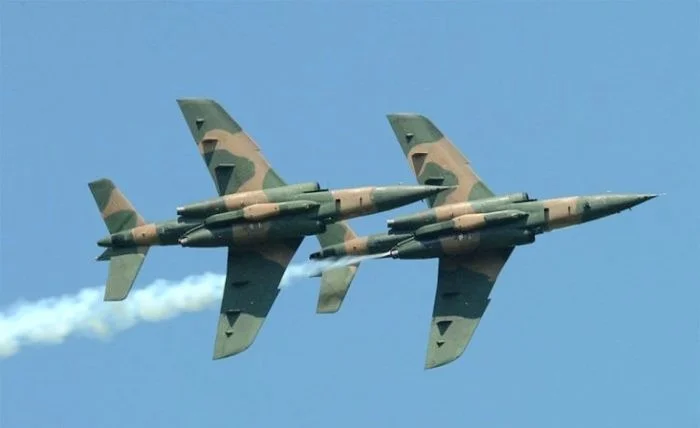
The Nigerian Air Force, NAF, operating as part of the joint task force of Operation Hadin Kai, has carried out a coordinated air interdiction at AbbagaJiri in the Timbuktu Triangle, Borno State.
According to Air Commodore Ehimen Ejodame, Director of Public Relations and Information of NAF, the air strikes successfully paved the way for ground troops.
He explained that the operation was based on actionable intelligence from multiple sources, which confirmed the presence of terrorists, their structures, and concealed logistics facilities in the area.
Ejodame stated that NAF air assets were deployed in integrated surveillance and precision strike roles to target identified threats.
READ ALSO:NAF Hits Bandit Logistics Hub, Neutralises Many In Zamfara
The operation aimed to degrade terrorist capabilities, deny them sanctuary, and shape the battlefield for ground forces, all while strictly adhering to rules of engagement and protecting civilians.
He added, “The Identified terrorist structures were decisively engaged and destroyed, denying the terrorists freedom of action, while a follow-up engagement neutralised armed elements observed converging on the location.”
“Subsequent advances by ground troops into the area confirmed the effectiveness of the air strikes and validated the success of the joint air–land operation.”
Speaking on the mission, Chief of the Air Staff (CAS), Air Marshal Sunday Aneke, said, “The success of the mission reflects the NAF’s resolve to dominate the air domain in support of joint operations.”
READ ALSO:NAF Hits Bandit Logistics Hub, Neutralises Many In Zamfara
Aneke further emphasized that the operation highlighted the service’s commitment to providing precise and decisive air power in support of ground forces.
In his words, “We will continue to deny terrorists freedom of movement, sanctuary, and logistics wherever they seek to hide. Air operations will remain relentless and intelligence-driven.”
“Our operations are carefully planned and intelligence-led, ensuring maximum effect on hostile elements while safeguarding innocent civilians.”
READ ALSO:NAF Announces Two-hour Road Closure In Abuja For 10km Walk
“The Nigerian Air Force will sustain pressure until terrorist networks are completely dismantled.”
He further noted that the operation showcased NAF’s aggressive stance, precision employment of airpower, and dedication to sustained joint operations.
Aneke added that such missions play a crucial role in enabling ground troops to maintain momentum and deliver decisive outcomes against terrorist networks threatening lives, property, and Nigeria’s national security.
News
Lagos Parks To Close For Maintenance – State Govt
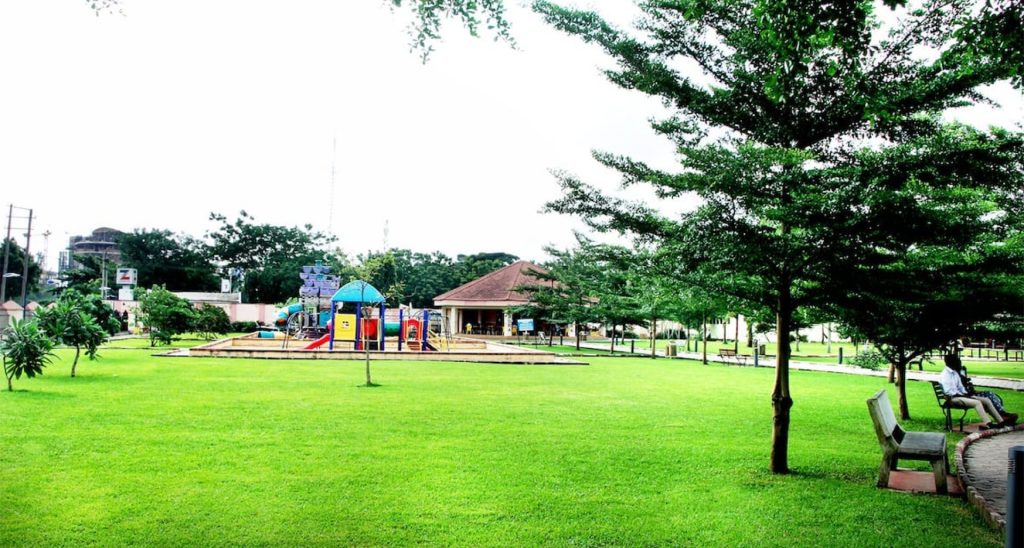
The Lagos State Parks and Gardens Agency, LASPARK, has announced that all public parks under its management across the state will be temporarily closed for routine maintenance and upgrades.
In a statement released on January 9 and shared via its official platforms early Saturday, LASPARK said, “All parks under our management will be closed to the public from January 12 to January 31, 2026.
“This follows increased visitor activity during the recent festive season.”
The agency listed several popular recreational spots that will be affected, including “Ndubisi Kanu Park, Alausa JJT Park, Dr. Finnih Abayomi Park in Oregun, and all other LASPARK-managed parks across Lagos State.”
READ ALSO:
Explaining the reason for the closure, LASPARK added, “The temporary shutdown is necessary to carry out essential landscaping, facility repairs, and general upgrades to ensure that our parks remain safe, clean, and enjoyable for residents and visitors.”
The agency also stressed that the exercise aligns with its broader mandate, noting, “This maintenance programme is part of our commitment to providing well-maintained green spaces that promote relaxation, wellness, and environmental sustainability.”
LASPARK assured residents that “all parks will reopen at the end of the maintenance period.”
News
PAP Sends Additional 34 Foreign Post-graduate Scholarship Beneficiaries To UK Varsities

The Presidential Amnesty Programme (PAP) has deployed an additional 34 foreign post-graduate scholarship beneficiaries to various universities in the United Kingdom for the 2025-2026 academic year.
This was contained in a statement made available to newsmen in Warri by Mr Igoniko Oduma, Special Assistant on Media to Dr. Dennis Otuaro, the Administrator, PAP.
According to the statement, the scholars’ programmes include data science, fintech analytics, cyber security, international energy law and policy, construction project management, public health, agri-food technology, electrical and petroleum engineering, among others.
The statement added that more foreign post-graduate scholars will be sent to UK universities in the current academic session.
“In December 2025, nine students, who were the first set of offshore post-graduate scholarship developments by the PAP Administrator, Dr Dennis Otuaro, for the 2024-2025 academic year, graduated from their various programmes in UK universities.
READ ALSO:PAP Scholarship Scheme Vehicle For Better Future For Niger Delta —Otuaro
“Otuaro has deployed over 9000 students to universities within and outside Nigeria for different industry-relevant programmes since he assumed office in March 2024,” the statement partly reads.
Speaking at the pre-departure orientation programme for the scholars at the PAP headquarters in Abuja, on Thursday, Otuaro said that the large-scale deployment was aimed at making the Niger Delta a knowledge-driven region.
He said that his leadership reinvigorated the programme to give it a new momentum in service delivery to the people of the region based on the mandate of President Bola Tinubu.
Otuaro said, “We are sending all of you for post-graduate studies in various universities in the United Kingdom.
“The PAP now has a new momentum and direction because of the repositioning and broad reforms that we carried out in line with the mandate of His Excellency, President Bola Ahmed Tinubu GCFR.
READ ALSO:Otuaro Tasks Media On Objective Reportage
“The objective behind the huge scholarships deployment is to ensure that we develop the needed human capital to transform the Niger Delta and generate knowledge-wealth.
“We want to develop relevant manpower in critical disciplines for our region and by extension, the country, because you are expected to contribute your quota to national development after successful graduation.”
The PAP boss, who was represented at the event by his Technical Assistant, Mr Edgar Biu, advised the scholars to study hard to achieve academic excellence in their various fields of research.
According to him, the scholars have an obligation to justify the Federal Government’s investment in their education and future.
READ ALSO:I’m Not Distracted By Anti-Niger Delta Elements, Says PAP Boss, Otuaro
He reiterated his warning that beneficiaries should not take for granted the opportunity to further their academic pursuits in the interest of the Niger Delta and indeed the country.
Otuaro expressed appreciation to President Tinubu for his “enormous interest and support for the Programme”, particularly the approval of an upward review of the programme’s budget from N65billion to N150billion.
He also expressed gratitude to the National Security Adviser, Mallam Nuhu Ribadu, for his impeccable guidance and supervision of the programme’s initiatives.
Otuaro, therefore, cautioned the scholars to obey their host country’s laws and the rules and regulations of their various institutions, stressing that they are ambassadors of Nigeria, the Niger Delta and their communities and families.
Highpoint of the orientation programme was the presentation of laptops to the scholars to help them in their studies.

 News4 days ago
How To Calculate Your Taxable Income
- Metro4 days ago
Edo widow-lawyer Diabolically Blinded Over Contract Seeks Okpebholo’s Intervention
- Headline4 days ago
Russia Deploys Navy To Guard Venezuelan Oil Tanker Chased By US In Atlantic
- News3 days ago
Expert Identify Foods That Increase Hypertension Medication’s Effectiveness
- Entertainment4 days ago
VIDEO: ‘Baba Oko Bournvita,’ Portable Drags His Father, Alleges Bad Parenting, Extortion
- Politics3 days ago
APC Leaders, Tinubu/Shettima Group Call For Wike’s Removal As FCT Minister
- Politics4 days ago
2027: Details Of PDP Leaders, Jonathan’s Meeting Emerge
- Metro4 days ago
JUST IN: Court Grants Malami, Wife, Son N500m Bail Each
- Headline2 days ago
Science Discovers Why Hungry, Broke Men Prefer Bigger Breasts
- Politics2 days ago
Wike A ‘Pestilence’ On Rivers, I Resigned Because Of It – Ex-Commissioner


